Category: Startups and innovations

  • PLN 40 million for startup acceleration: Startup Booster Poland call is launched

    PLN 40 million for startup acceleration: Startup Booster Poland call is launched

    The Polish Agency for Enterprise Development (PARP) is making a significant move towards professionalising the domestic innovation ecosystem by launching a call for applications in the Startup Booster Poland – Tech Impact programme. With a total budget of PLN 40 million, funded by the European Funds for the Modern Economy (FENG), the initiative is focused on identifying specialised operators who will take on the burden of guiding young companies through the most risky stage of their development. Organisations such as technology transfer centres, technology parks or incubators can apply for funding of between PLN 15 and 20 million. The deadline for applications is 17 July, and what is at stake is not only capital, but above all a change in the survival statistics of young companies.

    The current landscape of the Polish SME sector, which accounts for almost half of the country’s GDP, shows a clear gap in the resilience of the youngest players. Only 68 per cent of startups continue to operate after the first year, while for two-year-old companies the figure rises sharply to 91 per cent. This data sheds new light on PARP’s strategy – the Tech Impact programme is not just another grant mechanism, but an attempt to systemically secure the ‘valley of death’. The focus on *impact* projects, i.e. solutions to the social and environmental challenges of the UN’s Agenda 2030, suggests that the Polish administration is beginning to see sustainability as a real competitive advantage, not just a regulatory requirement.

    In view of these developments, it is worth noting the need for future operators to build interdisciplinary mentoring teams. Successful acceleration in the area of Tech Impact today requires a combination of hard business competencies and expertise in ESG reporting or environmental certification. It also seems reasonable for operators applying for operator status to integrate their activities with private investors already at the application stage, which will allow startups to make a smoother transition from the incubation phase to market funding rounds.

    Greater intensification of educational activities aimed at traditional business should also be considered; after all, the role of the operator is only successful when the innovative solution finds a viable customer or strategic partner. Building such bridges between science, startups and mature industry may prove to be a key factor that will determine the sustainability of the effects of this programme in the long term business perspective.

    Innovation actors with relevant experience in the implementation of acceleration programmes, in particular, can apply for funding:

    • technology transfer centres,
    • innovation centres
    • technology incubators
    • academic business incubators,
    • technology parks.

    How to apply? Applications for the operators of the FENG Startup Booster Poland – Tech Impact programme are accepted until 17 July via the LSI platform: https://lsi.parp.gov.pl.

    More information about the call can be found on the PARP website.

  • Space sector in CEE. Poland and neighbours create CEE Space

    Space sector in CEE. Poland and neighbours create CEE Space

    When the global attention of the space sector is often focused on the Silicon Valley giants or the state-owned powerhouses of Western Europe, the CEE (Central and Eastern Europe) region has just started to implement a strategy to change the previous balance of power. Signed on 23 April in Bratislava, the CEE Space agreement is an attempt to consolidate the fragmented market and create a united front in the fight for capital and technology contracts.

    The initiative, which included organisations from Poland, Slovakia, Croatia and Hungary, aims to address the region’s biggest problem: fragmentation. Although the local ecosystems have skilled engineers and innovative startups, they have so far lacked the scale necessary to compete for major European Space Agency (ESA) projects or funding from transatlantic programmes. Łukasz Wilczyński, president of the European Space Foundation, points out that the new structure is intended to serve as a common accelerator for innovation and talent that will finally make the region visible on the global investment map.

    From a business perspective, the most important element of CEE Space is the construction of a coherent channel for reaching venture capital. The partners have pledged to mobilise funds to develop the ecosystem, which in practice means easier access to investors for New Space companies operating in the four countries. Instead of building relationships with four separate markets, foreign players and decision-makers gain a single, integrated point of contact.

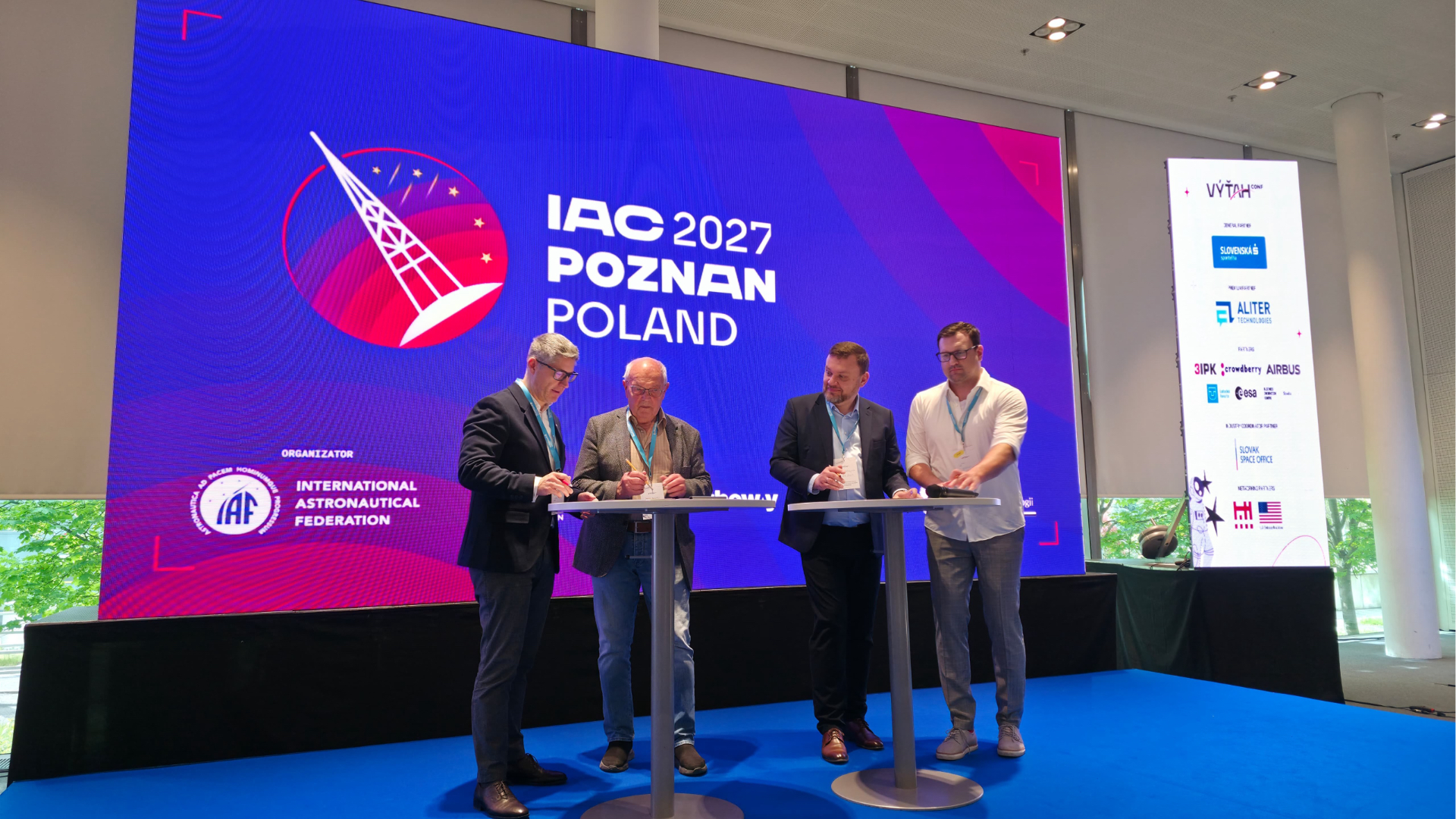
    The schedule of activities suggests that the signatories are betting on building brand recognition through major industry events. The first test will be a regular conference, which will debut in Budapest in spring 2027. However, this is merely a prelude to the wider game. The key point on the horizon remains the International Astronautical Congress (IAC) 2027 in Poznań. Poland, in its role as regional leader here, plans to use the event to finally confirm CEE’s position as a mature partner in the global technology race.

    If the announced integration of innovation pipelines goes smoothly, the region may cease to be a mere component supplier and become a hub that independently creates and finances advanced orbital projects. Central and Eastern Europe stops playing defensively and starts building its own business architecture in space.

  • Creotech Quantum will make its debut on the WSE. The first such company in Europe

    Creotech Quantum will make its debut on the WSE. The first such company in Europe

    Creotech Quantum ‘s debut on the main floor of the Warsaw Stock Exchange is a moment of significance beyond the local capital market. It signals that the European deep tech sector is no longer the domain of laboratories and venture capital funds alone, and is beginning to seek validation on the public market. As the first public company in Europe to focus on quantum technologies, Creotech is throwing down the gauntlet to US players who have been trading at valuations running into billions of dollars on the New York stock exchanges for years.

    CEO Anna Kaminska’s strategy is based on a pragmatic transition from the research phase to hard commercialisation. Central to this plan is the quantum key distribution (QKD) system, whose market debut the company announces later this year. In an era of growing concerns about cyber security and the potential ability of quantum computers to break classical ciphers, QKD offers a solution based on the laws of physics, not just the complexity of algorithms. For sectors such as finance, logistics and defence, it is no longer just a futuristic vision, but a viable tool for data protection.

    The company’s strength lies in its skilful diversification and synergies with its parent Creotech Instruments. Creotech Quantum is not limited to theory; it provides the infrastructure necessary to build a quantum ecosystem. A portfolio including precision White Rabbit timing systems and high-speed CMOS cameras for monitoring quantum processors positions the company as a key component supplier. What’s more, ambitions extend to orbit – collaboration on space-based QKD systems could give the company a unique competitive advantage on a global scale.

    Investors must remember, however, that the quantum market is a long-distance and extremely capital-intensive game. While the debut is an image success, the real test will be to prove the announced commercial deployments. If Creotech Quantum successfully commercialises its systems in the coming months, it could become a role model for other European technology players who have so far been cautious about the stock market. The stakes are high: what is at stake is not just returns, but whether Europe manages to build its own pillars in the most crucial technological area of the 21st century.

  • Anthropic’s strategic restraint: Why aren’t Claude’s creators rushing for billions?

    Anthropic’s strategic restraint: Why aren’t Claude’s creators rushing for billions?

    In the venture capital world, an $800 billion valuation usually ends with the immediate opening of champagne. But for Anthropic, the startup behind the Claude model, the latest offers from investors have become a test of discipline, not just a cause for celebration. Although the market is rumbling about a potential doubling of the company’s value in just a few months, the company’s management is showing a restraint rarely seen in Silicon Valley.

    Underpinning this optimism is hard financial data. Anthropic’s revenues have grown from $9 billion at the end of 2025 to a staggering $30 billion today. Such exponential scaling of the business makes another round of private funding an option rather than a necessity for the company. Rather than diluting the shares with the current euphoria, the company seems to prefer a path leading directly towards an IPO, which speculation suggests could happen later this year.

    The key to Anthropic ‘s market dominance was the launch of the Mythos model. It redefined the concept of the ‘agent model’, that is, a system capable of autonomously performing complex tasks rather than just answering simple queries. Advertised as the most powerful coding tool on the market, Mythos has become an essential resource for the engineering departments of major corporations. However, this technological advantage brings with it new challenges; experts are sounding the alarm that such a high level of code handling prowess can be a double-edged sword, making it easier to identify cyber security vulnerabilities.

    For business decision-makers, Anthropic’s stance signals the maturity of the AI sector. The time of ‘burning cash’ in pursuit of pure reach is giving way to models that generate real returns and have tangible utility in automating processes. By rejecting offers of close to a trillion dollars, Anthropic is sending a clear message: their technology is worth more than the current gold rush in the VC market, and the company’s true value will be verified not by private rounds, but by the public floor and Mythos’ ability to safely manage autonomous code.

  • Satellite connectivity and AI: AMD collaborates with NEC and NASA on new technologies

    Satellite connectivity and AI: AMD collaborates with NEC and NASA on new technologies

    As NASA shifts its focus from short exploration missions to a sustained presence on the moon, the frontline of the battle for technological supremacy shifts to where data latency becomes a critical bottleneck. In the new reality, where distance from Earth’s server rooms makes ongoing data analysis impossible, the key to success is becoming ‘intelligent edge’ (edge computing) – and it is here that AMD sees its chance to define the standards of the new space age.

    The Santa Clara giant’s strategy is based on a simple premise: in order for America to lead in space, it must have an edge in the production of advanced chips capable of operating in extreme conditions. The traditional approach of sending raw data back to Earth is no longer efficient for projects such as the NISAR mission or the Artemis programme. The solution is the Versal series of adaptive SoCs, which combine programmable logic with AI engines, allowing information to be processed directly on board the spacecraft.

    For commercial partners such as Blue Origin, the choice of AMD technology is not only a question of performance, but above all flexibility. The flight computers powering the Mark 2 lander test vehicle need to be ready to update AI algorithms after launch, something that was previously impossible with rigid hardware architectures. The ability to reconfigure systems on orbit allows the mission to be optimised in response to unforeseen challenges, dramatically increasing the return on investment for multi-year space programmes.

    The application of these technologies goes beyond NASA’s ambitions. Japan’s NEC is using adaptive AMD chips to build a constellation of optical communications satellites, which is set to revolutionise data routing in extraterrestrial space. This shows that the competition for silicon in space is not just a matter of national prestige, but a real market for infrastructure services.

    AMD’s success on Mars, where FPGAs supported the Perseverance rover’s navigation, provides a solid foundation of confidence. However, the real test for the company will be the coming decade, where autonomous systems will have to cope with radiation and extreme temperatures without support from the base. In this high-margin sector, where reliability is more valuable than raw computing power, AMD is positioning itself as an essential architect of the new orbital data economy.

  • NVIDIA introduces Ising – AI as an operating system for quantum processors

    NVIDIA introduces Ising – AI as an operating system for quantum processors

    In the race for quantum supremacy, NVIDIA is making a move that could change the balance of power not only in the labs, but also in the data centres. The NVIDIA Ising family of models just unveiled is the world’s first open attempt to harness artificial intelligence to solve the ‘Achilles’ heel’ of quantum computers: their extreme instability.

    Today’s quantum processors (QPUs) are technologically impressive but business-wise unusable. They generate an error on average once per thousand operations. For the technology to realistically compete with traditional silicon in pharma or logistics, this rate needs to drop to one error per billion. Jensen Huang, Nvidia’s chief executive, makes it clear: AI is not just an add-on here, but an essential ‘operating system’ to manage this fragile architecture.

    Architecture instead of promises

    Instead of building its own quantum computer, NVIDIA is positioning itself as a critical layer provider. The Ising family consists of two specialised tools that hit the industry’s narrowest bottlenecks. The Ising Calibration model uses computer vision technology to automate processor settings. What previously took physicists days of painstaking work, AI can cut down to a few hours.

    Ising Decoding, on the other hand, is a 3D neural network designed for real-time error correction. The results are promising. Compared to the current market standard, pyMatching, Nvidia’s solution shows three times the accuracy and 2.5 times the speed. In a world where milliseconds of delay determine the decay of a quantum state, such an advantage is fundamental.

    Open door strategy

    The decision to make models available in an open source format is a smart business move. By integrating Ising with the existing CUDA-Q platform and NVQLink hardware link, the green giant is creating an ecosystem that will be difficult to disconnect from. Companies and universities can train these models on their own data while retaining full control of the infrastructure, which is crucial for sectors such as cyber security or finance.

  • MedApp enters the US. FDA certification and expansion of AR technology

    MedApp enters the US. FDA certification and expansion of AR technology

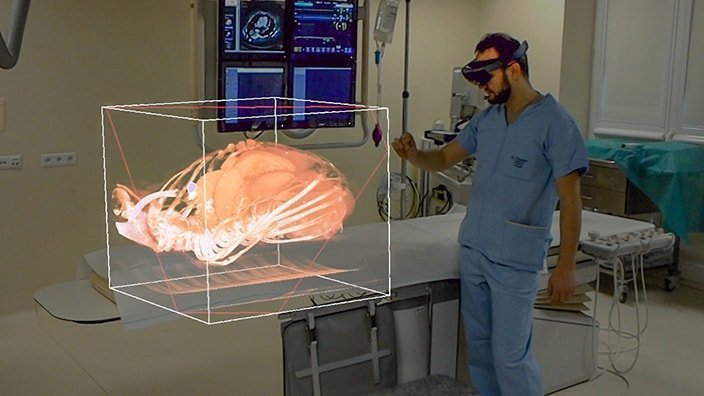
    NewConnect-listed Polish company MedApp is stepping up its activities in the world’s most lucrative medical market. Following a series of business meetings in the US, CEO David Odrakiewicz is signalling a real chance of a commercial breakthrough. The key to success is expected to be CarnaLife Holo, a proprietary solution using augmented reality (AR) for 3D visualisation of medical data, which already has the necessary FDA certification.

    MedApp’s US offensive is based on building relationships with key players in the health-tech ecosystem. The company’s representatives have actively participated in prestigious industry events such as Sages and BioFlorida, where they presented the technology to surgeons, innovators and medical executives. Of particular note is the visit to AdventHealth – one of the largest independent medical networks in the US. For the Polish company, this institution’s openness to modern infrastructure and innovation is a litmus test of the needs of a market that is increasingly shifting towards digital medicine and precision procedure planning.

    MedApp’s strategy, however, goes beyond just selling software. The company is currently in talks with a distribution partner to help scale operations on the continent. A key figure in this process is Habeel Gazi, COO of MedApp USA, who is tasked with building local structures and ‘opening doors’ that have so far remained closed to Central European players.

    An interesting business thread is a potential collaboration with Snke, a company working on AR goggles dedicated to the medical sector. This hardware-software synergy could significantly raise the barrier to entry for competitors and offer doctors a complete tool for real-time data visualisation.

    MedApp does not treat the US merely as an export destination, but as the focal point of its long-term strategy. Having FDA certification removes the biggest regulatory barrier, and being present in state-of-the-art centres such as AdventHealth confirms that Polish 3D technology is in line with US medical standards. Success in this market will depend on the speed of converting established contacts into hard contracts, which in the complex US healthcare system is an arduous process, but – as the management’s declarations show – currently a priority.

  • Scanway scales up production: key agreement with Lukasiewicz – ILOT

    Scanway scales up production: key agreement with Lukasiewicz – ILOT

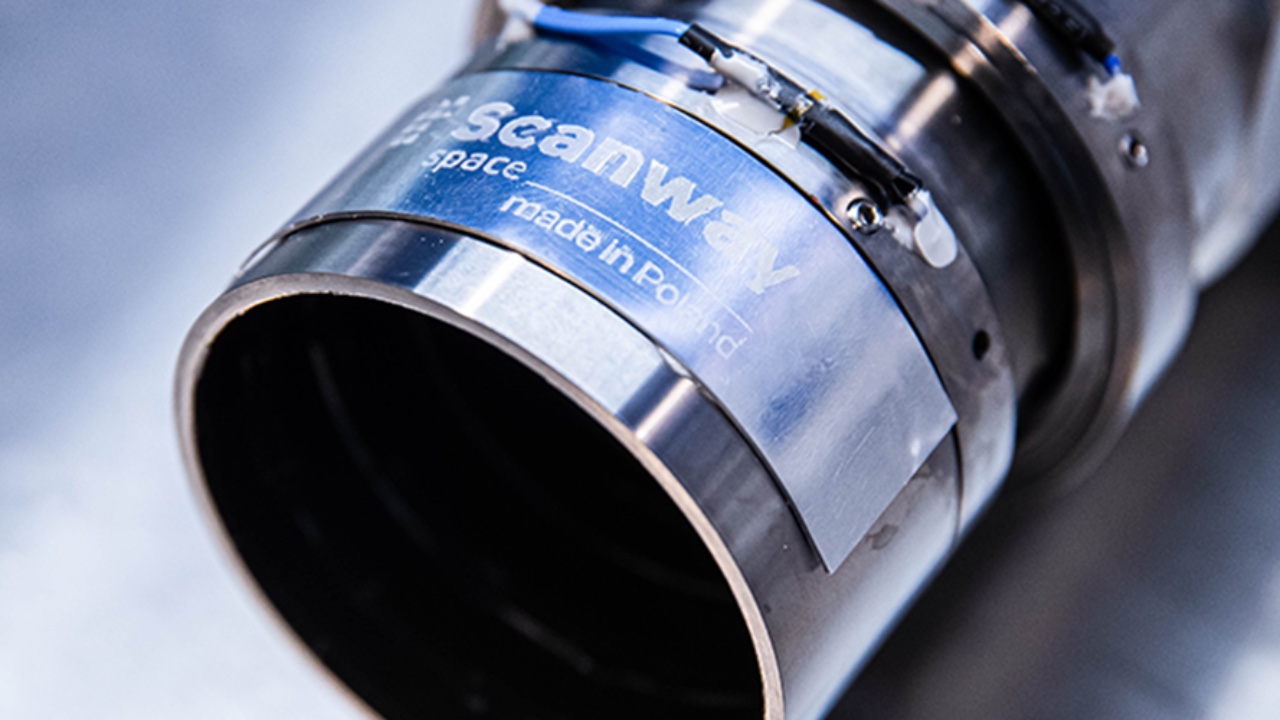
    Wrocław-based Scanway, one of the key players in the European New Space sector, has just taken a significant step towards transforming from a boutique design office into a serial supplier. The signed framework agreement with the Łukasiewicz Research Network – Institute of Aviation (ILOT) for comprehensive environmental testing of optical instruments is a signal that the Polish space sector is maturing to industrial scale.

    For Scanway, access to a certified test infrastructure in the country is a critical element of its scaling strategy. Up until now, the testing processes – necessary for flight heritage – have often involved logistical and financial challenges due to the need to use foreign centres. The partnership with the Warsaw Aerospace Institute allows the full certification path, from structural-thermal models to final flight models, to be realised within a single ecosystem.

    The collaboration focuses on the two most demanding stages of equipment verification: vibration tests, which simulate the overloads during rocket launches, and thermal-vacuum chamber (TVAC) tests. The latter are crucial for the Scanway Optical Payload (SOP) family of telescopes, which must maintain optical precision under extreme orbital conditions, where temperature amplitudes and lack of atmospheric pressure can permanently damage unprepared instruments.

    From a business perspective, the move strengthens Scanway’s position in negotiations with global microsatellite integrators. Ensuring repeatability and compliance with ECSS (European Cooperation for Space Standardisation) standards with the support of ILOT’s accredited laboratory minimises design risk. For Łukasiewicz – ILOT, in turn, confirms its status as a key technology hub that monetises its unique research infrastructure, supporting the local supply chain.

    The trend is clear: Polish companies are beginning to supply complete, mission-critical systems for observation missions. Stable access to test facilities is the missing piece of the puzzle to realistically think about series production of optical instruments for the global New Space market.

  • ICEYE sends 6 new satellites. A breakthrough in space sovereignty

    ICEYE sends 6 new satellites. A breakthrough in space sovereignty

    For decades, the space technology sector has had one rule of thumb: national security relies on individual satellites, worth billions of dollars and built over years. But the latest mission of the Polish-Finnish ICEYE, which has just launched six more SAR satellites, demonstrates that the industry is undergoing a fundamental shift towards agile, software-based constellations.

    Launched on 30 March 2026, the 25cm resolution craft are not just another step in the development of a commercial fleet. They are part of a broader strategy to deliver ‘sovereign intelligence’ on demand. Among the new satellites are devices dedicated to the Polish Army as part of the MicroSAR programme and to Portugal’s Atlantic Constellation initiative.

    The approach of ICEYE, led by Rafal Modrzewski, hits the most sensitive point in modern geopolitics. Nations no longer want to rely solely on data purchased from external providers; they want full operational control over their own space assets. The key to the company’s success is to drastically shorten the deployment cycle. While traditional government programmes take years, ICEYE delivers a complete, turnkey system within just 12 months of signing a contract.

    The company’s business model is evolving towards ‘software-defined satellites’. Instead of costly hardware replacements, new functionalities are implemented through software updates from the ground. This allows the company to maintain its technological edge without having to continually produce new platforms. At the same time, ICEYE is scaling capacity, aiming to produce one satellite per week. This is a pace that seemed unattainable just a decade ago in the segment of radar (SAR) satellites, capable of imaging the Earth regardless of cloud cover or time of day.

    From a market perspective, ICEYE shifts the centre of gravity from strategic to tactical intelligence. As Modrzewski points out, in modern defence, what counts are answers given in minutes, not days. The future of the SpaceTech market belongs to companies that can combine the industrial scale of manufacturing with the flexibility of software, offering governments what they need most – resilience and information independence in uncertain times. The company has already sent 70 satellites into orbit since 2018, cementing its position as a leader that not only builds devices, but redefines the architecture of global security.

  • IBM and Polish universities build new AI PLLuM model

    IBM and Polish universities build new AI PLLuM model

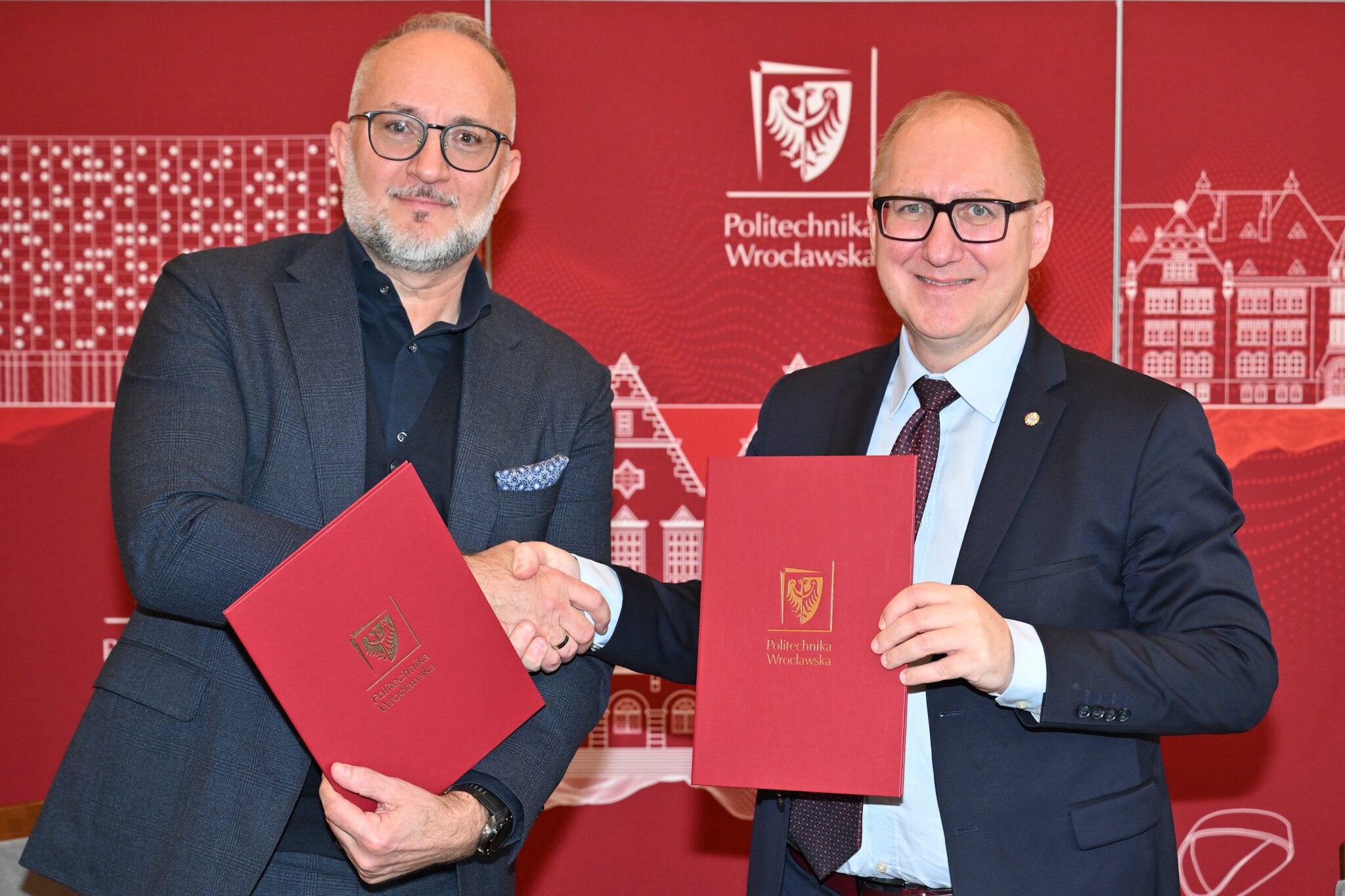
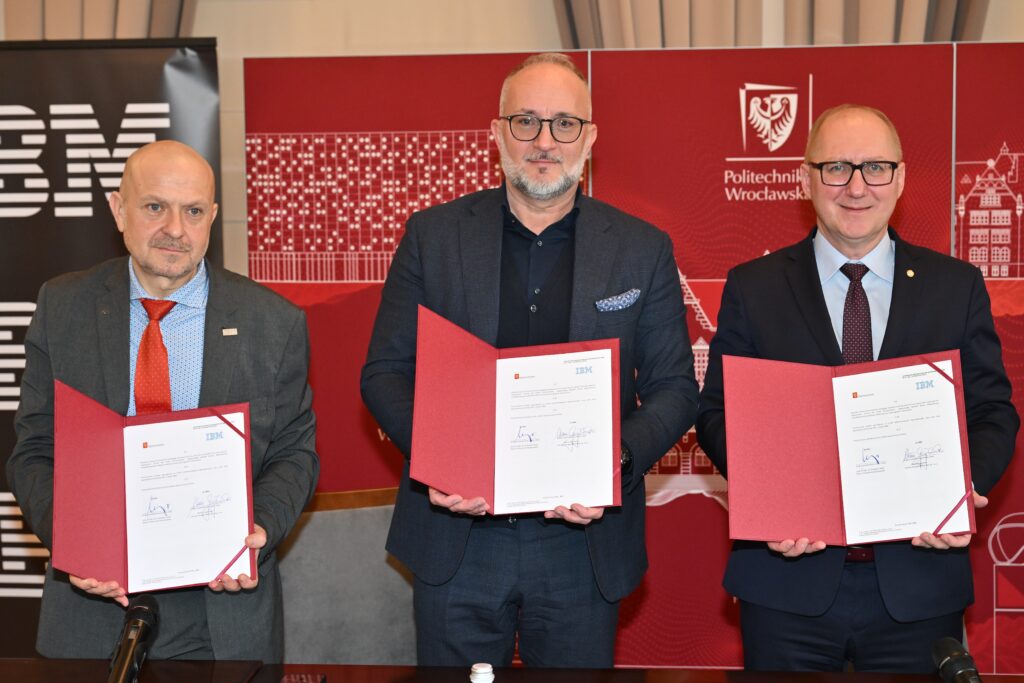
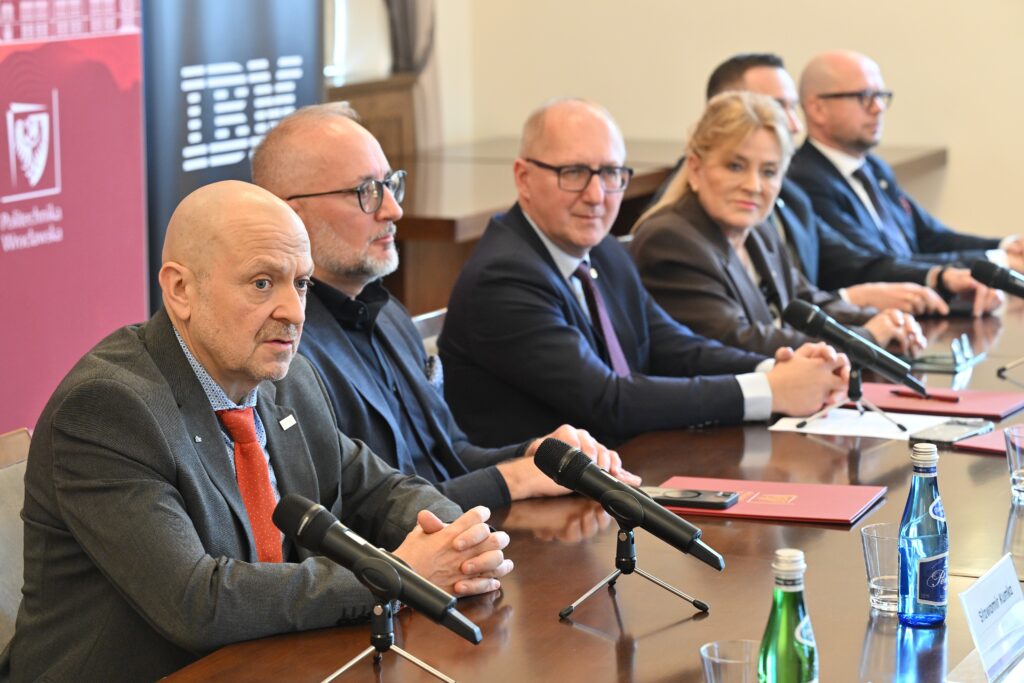
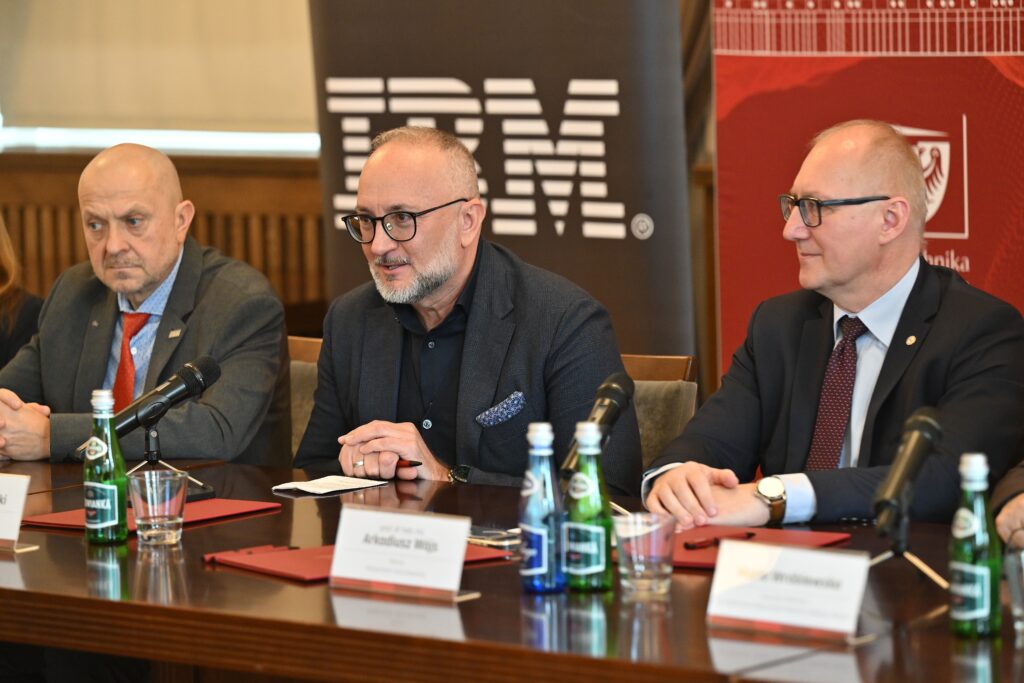
    IBM, the Wrocław University of Technology and the University of Lodz are starting work on a new variant of PLLuM, a family of AI models created with the Polish language and the use of ‘Polish AI’ in the public and private sectors in mind. The new model in the PLLuM series will be created by researchers from both universities and specialists from the IBM Software Laboratory in Kraków, using IBM Granite 4.0 as an open base model. The project coincides with IBM’s 35th anniversary in Poland.

    PLLuM has been of particular importance to the Polish digital ecosystem since its inception. This is due to the fact that it concerns the development of AI capable of understanding the Polish language along with its context, nuances and the specifics of communication in Poland. In the development of PLLuM to date, Wrocław University of Technology has acted as one of the leading centres, setting the substantive and research direction of the project.

    The current collaboration between the Department of Artificial Intelligence at Wrocław University of Technology and the Department of Corpuscular and Computational Linguistics at the University of Łódź with IBM is another element contributing to the development of the PLLuM family, created with real-world implementations and high standards of AI management in mind, which plays an important role in the context of technological sovereignty. Both entities emphasise that the venture is reinforcing to the PLLuM family development activities coordinated by the Ministry of Digitalisation. IBM is providing the base model and technological competence, while the development of language competence, tuning and direction of the work are on the side of the Polish teams from the universities, with the support of IBM’s Krakow software laboratory.

    “PLLuM is an example of how AI can be developed in an ambitious yet pragmatic way, with the language and needs of users in Poland in mind. We are bringing to the development of this family the IBM Granite 4.0 open model, which was developed for applications that require predictability, security and responsible management. This is an important initiative being implemented in 2026, the year we celebrate our 35th anniversary in Poland,” – says Marcin Gajdzinski, general manager of IBM in Poland, the Baltics and Ukraine.

    The project will use IBM Granite 4.0, an open language model designed to address the performance and security of AI implementations. Granite is designed to facilitate the construction of solutions that operate in a stable and predictable manner where infrastructure and cost are critical. Importantly, from the perspective of organisations deploying AI, Granite is being developed in an enterprise-ready approach, assuming that the model itself is only a part of a larger whole, not least the rules for its use, the ability to assess the quality of the response and the monitoring of system performance.

    IBM Granite 4.0 is compliant with the requirements of ISO/IEC 42001, a standard that addresses the full lifecycle of AI systems. For Polish public institutions and companies considering using the new PLLuM variant, this can mean easier management of AI, from defining rules and responsibilities, to assessing risks, to monitoring and improving the system. In simple terms, compliance with ISO/IEC 42001 helps to build AI in a way that is more auditable and predictable, which is important especially where procedures, security and trust matter.

    “Wroclaw University of Technology has played a key role in the development of PLLuM to date, and now we are going one step further. Using IBM’s experience and technology, we will develop a variant of the PLLuM model based on the Granite 4.0 model. This is a modern, open and well-documented architecture for a large language model that conforms to the standard for managing artificial intelligence systems. It will provide a high level of security, transparency and opportunities for further tuning to Polish language and the development of trusted national AI solutions,” – says Tomasz Kajdanowicz, Ph.D., university professor at the Wrocław University of Technology.

    “In co-creating the new PLLuM variant, we are focusing on the use of large, legally acquired and responsibly developed language resources. Those that do not infringe copyright and meet the highest quality standards. It is transparent data and competence developed in Poland that fosters technological sovereignty. If we want PLLuM to realistically strengthen the Polish public and private sector, we need to be in control of what data and principles it is built on,” – explains Dr Piotr Pęzik, Professor at the University of Lodz.

    IBM’s collaboration with the Wroclaw University of Technology and the University of Lodz is part of the company’s broader commitment to the development of digital competencies in Poland. Currently, IBM is also collaborating with several other academic centres, including in Gliwice, Gdansk, Kielce, Lublin and Poznan in the area of research and development of AI, cyber security and quantum technologies.


    source: IBM

  • WAT in NATO elite: highest status of logistics courses in Poland

    WAT in NATO elite: highest status of logistics courses in Poland

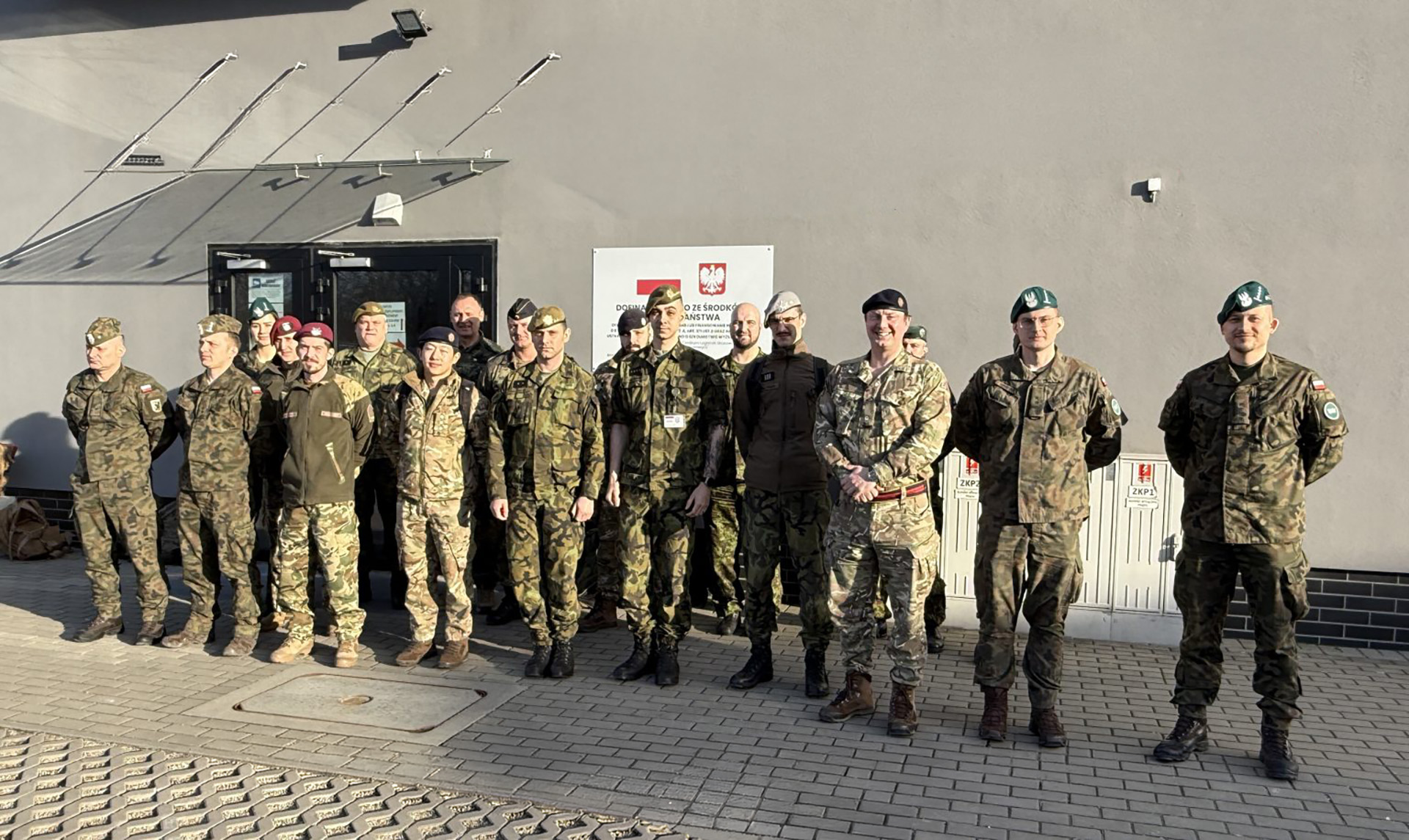
    In March 2026, the NATO global training map gained a new focus. The Military University of Technology (WAT) in Warsaw has officially closed the certification process of its education portfolio, achieving ‘NATO Approved’ status for all its logistics courses. While the news sounds like a purely military announcement, its significance for the regional security ecosystem and the defence industry is much deeper.

    The Polish university has joined the exclusive group of only seven institutions in the world with such high Allied Command Transformation (ACT) accreditation. For the business and technology sector, this sends a clear signal: Warsaw is becoming a key competence hub in the area of supply chain management under crisis conditions.

    Interoperability Architecture

    At the heart of WAT’s success is its integration with LOGFAS, an advanced software environment for planning and coordinating troop movements. In an era of escalating geopolitical tensions, logistical agility ceases to be a mere back-office issue and becomes fundamental to operational effectiveness. WAT is currently one of only four centres in the world authorised to certify specialists in the use of this tool.

    Col. Bartosz Kozicki, Ph.D., dean of the Faculty of Security, Logistics and Management, emphasises that full accreditation is not only prestigious but, above all, proof of the university’s real impact on building the Alliance’s operational capabilities. The data confirms this dynamic: since the first accreditation in 2024, the number of students has increased dramatically and WAT experts have so far trained nearly 900 specialists from 39 countries.

    Why is this important to the market?

    For companies operating at the intersection of technology and defence, the presence of such a strong centre in Poland means easier access to personnel who speak the common language of NATO procedures. Standardisation, which is key to the success of courses at WAT, also underpins civilian supply chains that increasingly need to adapt military resilience and mobility solutions.

    The co-organisation of exercises such as ‘Connected Logisticians 2026’ positions the Warsaw academy not just as a theoretical training centre, but as a living laboratory of logistics of the future. In a world where technological superiority depends on the speed at which resources are moved, the Polish contribution to the NATO training system is becoming one of our most important know-how export assets.

  • HPN IMPAKT: Akces NCBR announces call for startups and researchers

    HPN IMPAKT: Akces NCBR announces call for startups and researchers

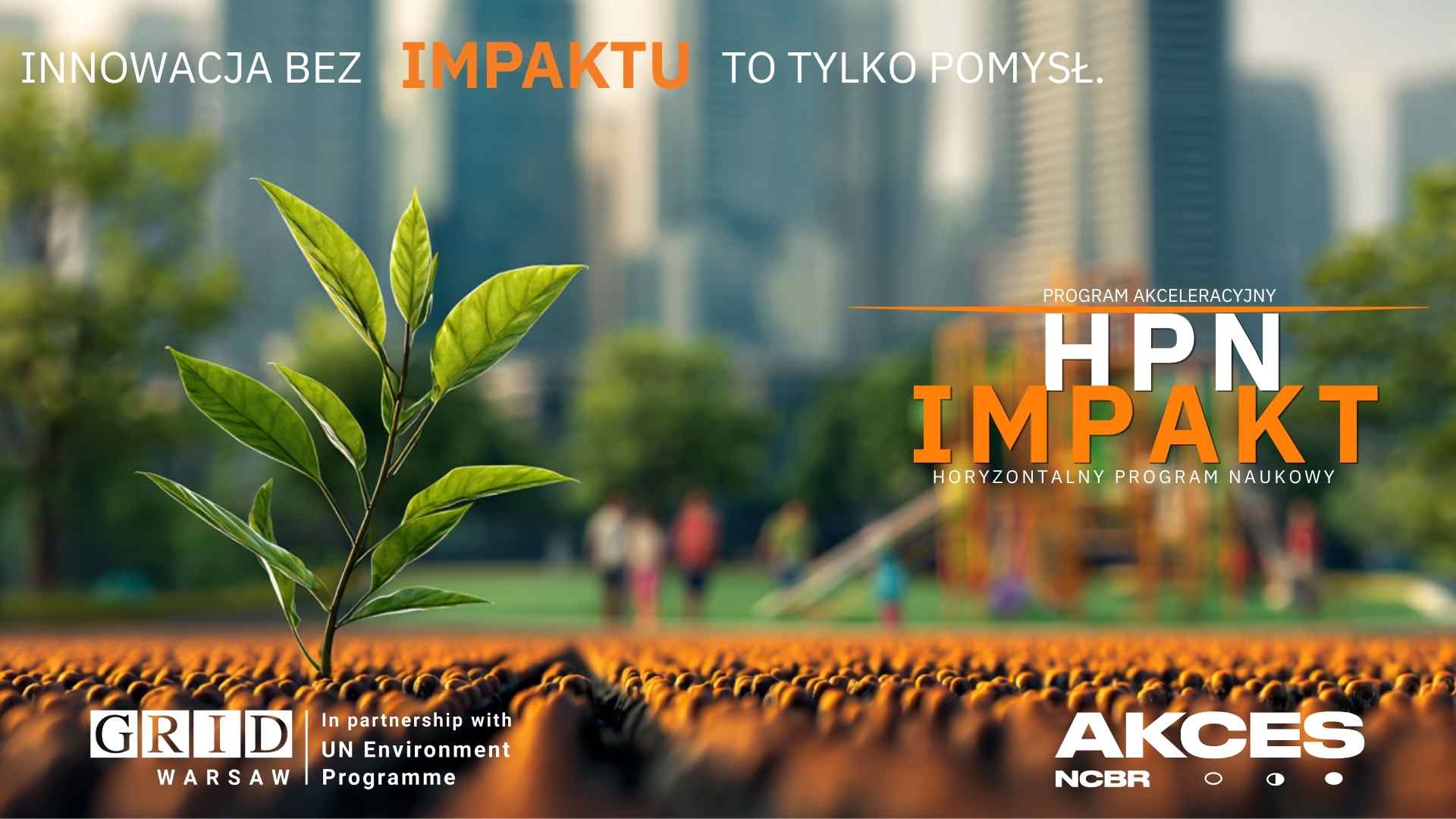
    Akces NCBR, the market arm of the National Centre for Research and Development, has announced a call for applications for the HPN IMPAKT programme. This initiative is not just another grant competition; it is an attempt to formalise ‘impact’ as a key business performance indicator.

    The mechanism of the programme is clear. The organisers are looking for solutions at technology readiness levels from TRL 3 to 8, which means that both advanced prototypes and products close to commercialisation are of interest. The key differentiator of this edition, however, is the scoring system: projects that can prove their real social or environmental impact will be given the highest priority.

    Partnership and hard currency

    In order to avoid the trap of ‘impact washing’, Akces NCBR has established cooperation with UNEP/GRID-Warsaw. The participation of the centre affiliated to the United Nations Environment Programme is to guarantee that declarations about the pro-environmental nature of the technology will be verified by experts. As Maria Andrzejewska, Director General of UNEP/GRID-Warszawa points out, innovations must accelerate systemic transformation and not just look pretty in ESG reports.

    For startups and research teams, a package worth PLN 400 000 is at stake. This consists of a direct grant of PLN 300 000 and mentoring support valued at PLN 100 000. At a time of a more cautious approach by VC funds to early-stage startups, such non-dilutive (non-capital dilution) funding represents a significant liquidity injection for deep-tech (deep-tech).

    Horizontality as a business opportunity

    Arleta Malasińska, CEO of Akces NCBR, emphasises the horizontal nature of the call. The programme is not limited to one industry. Energy optimisation systems, as well as tools for increasing the availability of public services or water retention technologies all stand a chance. This approach reflects a broader trend in global markets: investors are increasingly looking for solutions to fundamental problems that are resilient to cyclical fluctuations in the consumer sector.

    The call for proposals remains open until 31 May 2026. For the Polish R&D sector, this is a moment of testing – whether it can turn scientific ideas into measurable change that will defend itself on the free market.

  • Robotaxi in Europe: Uber invests in Croatian startup Verne

    Robotaxi in Europe: Uber invests in Croatian startup Verne

    Uber ‘s autonomous vehicle strategy is entering a crucial new phase. Rather than building its own cars, the San Francisco-based giant is consistently becoming a global technology aggregator. The latest evidence of this evolution is the just-announced partnership with Chinese leader Pony.ai and Croatian startup Verne. Together, they intend to launch the first commercial robotaxi service in Europe, choosing Zagreb as the launch city.

    The business model for this venture is finely segmented, reflecting the maturity of the sector. Pony.ai, an established company in Asia, will provide the ‘brains’ of the system – advanced autonomous driving technology. Verne, a startup named after the visionary Julius Verne, will take on the role of fleet operator and local infrastructure manager. Uber, meanwhile, will close the ecosystem by integrating the service with its global app, providing immediate access to a broad customer base.

    For Uber, the investment in Verne is a purely strategic move. The company, which under Dara Khosrowshahi has moved away from costly research into its own Autonomy Corp, is now positioning itself as an essential partner for anyone looking to commercialise autonomous transport. By partnering with nearly two dozen AV companies – from trucking to drones – Uber is becoming the operating system for urban mobility, while minimising the capital risk associated with hardware production.

    The choice of Zagreb is not accidental. Croatia is becoming an interesting market for transport innovation, and Verne is actively coordinating regulatory processes, which are much stricter in the European Union than in the US or China. Success in the Croatian capital is expected to be the foundation for scaling the service to other European metropolises. The partners plan to have thousands of autonomous vehicles on city streets under the banner of this alliance in the coming years.

    Road tests in Zagreb are already underway. If the trio manages to overcome the legislative and technical barriers specific to European infrastructure, this model could become the gold standard for the implementation of autonomous technologies. The future of transport does not belong to a single player, but to integrated ecosystems in which technology, operations and customer access are an inseparable whole.

  • Russia is building a ‘rival’ for Starlink. First launch of Bureau 1440

    Russia is building a ‘rival’ for Starlink. First launch of Bureau 1440

    The Russian space sector, for years struggling with the shadow of its former Soviet glory, is taking a risky step towards modernity. On Tuesday, the company Bureau 1440 announced the launch of the first batch of sixteen operational satellites into low earth orbit (LEO).

    Although a modest debut on the space scale, for the Kremlin it represents a symbolic transition from the experimental phase to the construction of a viable communications infrastructure to become a sovereign response to the power of Starlink.

    The difference in scale, however, remains drastic. While Bureau 1440 is celebrating the launch of a dozen units, Elon Musk’s network already operates a fleet of more than 10,000 satellites, controlling the lion’s share of the global broadband market.

    For Russian engineers, the challenge is not only technological but also historical. Russia, which once set the standard with Sputnik and Yuri Gagarin, fell into a spiral of underfunding and corruption after 1991.

    From a business perspective, the project is an attempt to regain relevance in a sector from which Russia has just been effectively pushed out by SpaceX. It remains ironic that at the beginning of the century it was Russian officials who disregarded Musk, deeming him an unreliable partner.

    Today, it is Moscow that must play the role of the chaser, trying to prove that it can create a service capable of competing in the new commercial space age. The success of Bureau 1440 will depend on whether young engineers can break decades of bureaucratic stagnation and build a system that can survive in technological isolation.

  • EPO report: Poland is the innovation leader in the region despite slowing growth

    EPO report: Poland is the innovation leader in the region despite slowing growth

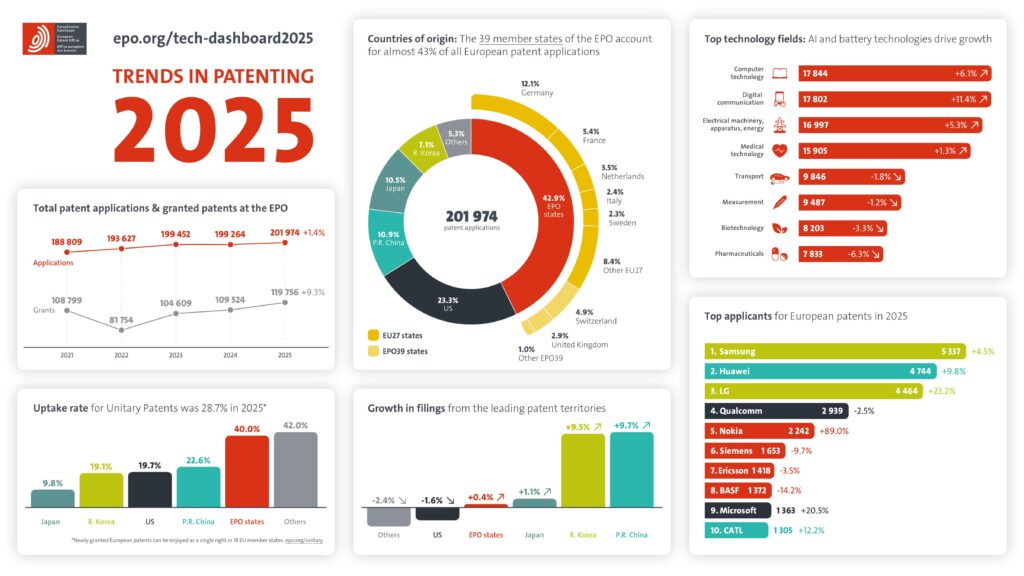
    The latest data from the EPO Technology Dashboard 2025 report brings a bittersweet picture of the Polish innovation ecosystem. Although the number of patent applications to the European Patent Office (EPO) fell by 10.3% year-on-year, Polish inventors shifted their focus towards high value-added sectors such as pharmaceuticals and biotechnology. With 621 applications, Poland maintains its 12th position in the European Union, remaining the undisputed innovation leader in the CEE region.

    Turning from quantity to strategic quality

    The decline in dynamics after a period of intense growth lasting from 2021 can be interpreted as a market correction, but the long-term outlook remains optimistic. Compared to 2016, the number of Polish applications increased by 58%, twice the average dynamics of the EPO as a whole (27%).

    What is most interesting about this year’s list is the changing of the guard in key sectors. The previous leader, medical technology, gave way to pharma, which recorded a spectacular 51.7% year-on-year growth. Strong growth was also recorded in transport and automotive, as well as machinery and energy, which directly correlates with the global race for renewables and battery technology.

    Academic innovation engine

    A peculiarity of the Polish market, which distinguishes it from Western economies, is the dominant role of the public sector and science. While globally the EPO rankings are dominated by technology giants, in Poland half of the leading applicants are universities and research institutes. Jagiellonian University, the Medical University of Gdansk and the University of Warsaw remain the main drivers of domestic intellectual property.

    From a business perspective, this raises the question of the effectiveness of technology transfer from the walls of academia to industry. However, the record interest in the Single European Patent** suggests that Polish innovators are thinking broadly about commercialisation. As many as 59.6% of patents granted to Poles were granted unitary status, which is significantly higher than the EU average (40.7%) and facilitates expansion into the markets of 18 EU countries.

    Human capital and regional bastions

    Poland also stands out from Europe in terms of inclusiveness. Every third patent application from the Vistula (35%) mentions a woman as a co-inventor. This result is well above the European average (26%), giving Poland 5th place in the entire EPO.

    Geographically, the innovation map remains stable, although there are signs of decentralisation. Warsaw, despite a decline in the number of applications, controls more than a quarter of the market. Malopolska is strengthening behind it, and Lower Silesia is the only one of the leading regions to record an increase in activity (by 8.5%), confirming Wrocław’s status as a growing technology hub.

    At a time of a global race in fields such as AI, 6G or quantum technologies, Poland’s breathlessness in 2025 may only be a stopgap before the next leap – if the research momentum of universities can be sustainably translated into market successes for companies.

    “The record number of European patent applications underlines our continent’s innovation potential and its attractiveness as a global technology market,” said EPO President António Campinos. “The Technology Dashboard 2025 examines progress as well as gaps in specific industry sectors, helping decision makers in Europe to identify priority areas and guide actions and investments that strengthen technological sovereignty and competitiveness. While the European unitary patent is already removing barriers and accelerating the transition to a more integrated innovation market, the topic still deserves our attention, especially in strategic sectors such as artificial intelligence, semiconductors, health and quantum technologies,” adds the EPO President.

    260318 EPO Technology Dashboard 2025 infografika

  • Grants for green transformation: How to fund green AI in your company?

    Grants for green transformation: How to fund green AI in your company?

    Artificial intelligence today faces a paradox that defines a new era of technology. On the one hand, it promises to optimise resources; on the other, it is becoming one of the most energy-intensive sectors of the economy.

    The ICT sector already accounts for 5-9% of global power consumption, and data centres, driving the AI arms race, could consume up to 8% of global energy by 2030. In the US, the scale of the problem is forcing radical steps: from the reactivation of old oil-fired power plants to the construction of private power grids by tech giants.

    It becomes crucial to distinguish between two concepts: green AI and AI for Green. The first is about technological hygiene itself – designing algorithms to be energy efficient (which can reduce energy consumption by up to 90%) and conscious auditing of infrastructure. The second is about using AI as a tool to fix the world.

    Examples are coming from the Polish startup ecosystem supported by PARP. Systems such as the Planter System from Agri 4 Zero optimise precision farming by reducing fertiliser and water consumption, while Waterly’s autonomous buoys monitor the quality of water bodies in real time.

    The foundation for this transformation is data from IoT sensors. The use of energy harvesting technology, which derives energy from machine vibrations or temperature differences, allows building management systems (HVAC) to be implemented without generating additional operating costs.

    At the scale of a large enterprise, optimising temperature and lighting with AI translates into savings of 20-30%, which means hundreds of thousands per year and real support for CSRD reporting.

    However, the real challenge remains to move away from ‘AI fashion’ to substantive implementation. Krzysztof Gulda, President of the Polish Agency for Enterprise Development (PARP), emphasises that efficiency must not overshadow responsibility. There are a number of support programmes available to companies, such as ‘GOZ – it pays‘ or ‘Green Recommendations‘, which fund consultancy on the circular economy.

  • Factorial AI fund: 10 mln euro for HR digitisation

    Factorial AI fund: 10 mln euro for HR digitisation

    Just a decade after its debut, Spanish software provider Factorial is reaching for a technology market-proven strategy to stimulate growth. The company, which has impressively surpassed the $100 million annual recurring revenue (ARR) threshold, has announced the creation of a Factorial AI accelerator fund.

    The €10 million pot is intended to serve as a catalyst for digital transformation in European companies with between 20 and 1,000 employees, with a particular focus on the growing Polish market.

    Contrary to market nomenclature, the new project is not a classic venture capital vehicle seeking equity in startups. It is a strategic programme to subsidise its own ecosystem, aiming to address financial concerns about the implementation of artificial intelligence in HR, finance and IT.

    The capital has been divided into two equal tranches, precisely addressing the different stages of technological maturation of customers. The first five million euros are direct discounts for the implementation of a business process automation platform, lowering the barrier to entry already at the time of signing the contract.

    The remaining amount takes the form of flexible loans for advanced AI-based functions. This structure is intended to prevent the technology from being abandoned after initial deployment, giving organisations a financial buffer to safely scale tools in the areas of recruitment, performance management or strategic planning.

    Factorial ‘s decision is part of a wider market battle for the digital back office of European business. Jordi Romero, the company’s CEO, directly points out that the financial performance of businesses in the coming decade will be directly correlated to the effectiveness of the implementation of artificial intelligence in daily operations.

    By offering direct support, the company not only stimulates the digitalisation of HR processes, but also aggressively fights for the loyalty of medium-sized companies. With a customer base of more than fifteen thousand customers in one hundred and twenty countries, Factorial is sending a clear signal to market rivals.

  • Central and Eastern Europe (CEE) vs. Western Europe: where does the heart of innovation really beat?

    Central and Eastern Europe (CEE) vs. Western Europe: where does the heart of innovation really beat?

    For decades, Europe’s technological landscape was based on a simple divide: innovative, capital-rich centres in the West and talented but mostly cheaper hinterlands in the East. Central and Eastern Europe (CEE) was mainly seen through the prism of cost arbitrage, ideal for nearshoring.

    Today, this stereotype is not only outdated, but actually inhibits an understanding of the real dynamics of the continent. We are witnessing a fundamental change – the CEE region, led by Poland, the Czech Republic and Romania, is undergoing a transformation from a peripheral service provider to a self-sufficient ‘technology tiger’.

    Its new competitive advantage is no longer based solely on lower costs, but on a unique combination of value, deep specialisation and unparalleled growth momentum.

    To verify this thesis, let us look at the hard data, comparing the key pillars of the innovation ecosystems in CEE and Western Europe.

    The talent equation: more than cost, unparalleled value

    Traditional analysis of IT markets is often reduced to a comparison of nominal salaries. However, a full picture of the value of the CEE region only emerges when three dimensions are examined: the total cost of employment, the purchasing power of the employee and the objective quality of their skills.

    The total cost of employing an experienced software engineer in Warsaw is still significantly lower than in western hubs. Taking into account the gross salary and contributions on the employer’s side, the annual cost of employing a Senior Developer in Warsaw is approximately EUR 88,568.

    This compares to €101,035 in Berlin and €106,704 in Dublin. This means that it is 12-17% cheaper to acquire a world-class specialist in Poland.

    However, the real advantage of CEE lies in purchasing power. The lower cost of living means that a salary here has a much higher real value. A key factor is the cost of renting a flat: a one-room flat in the centre of Warsaw costs between €740-990 per month, while in Berlin it is already €1,100-1250 and in Dublin an astronomical €1,950.

    Similar disparities can be seen in the prices of public transport, catering or entertainment. As a result, the developer in Warsaw, while earning nominally less, enjoys a higher standard of living and greater financial freedom.

    The most important argument overturning the old paradigm, however, is quality. Data from global programming rankings proves that the CEE region is a breeding ground for talent of the absolute highest order. The HackerRank platform ranks Poland 3rd in the world in terms of programmer skills, ahead of countries such as Switzerland, Germany and France.

    Polish programmers are recognised as the best in the world in Java, and Czechs dominate in shell programming. Companies investing in CEE are therefore not making a trade-off between cost and quality – they are gaining access to world-class talent at a more sustainable price.

    Pulse of capital: ecosystem dynamics and resilience

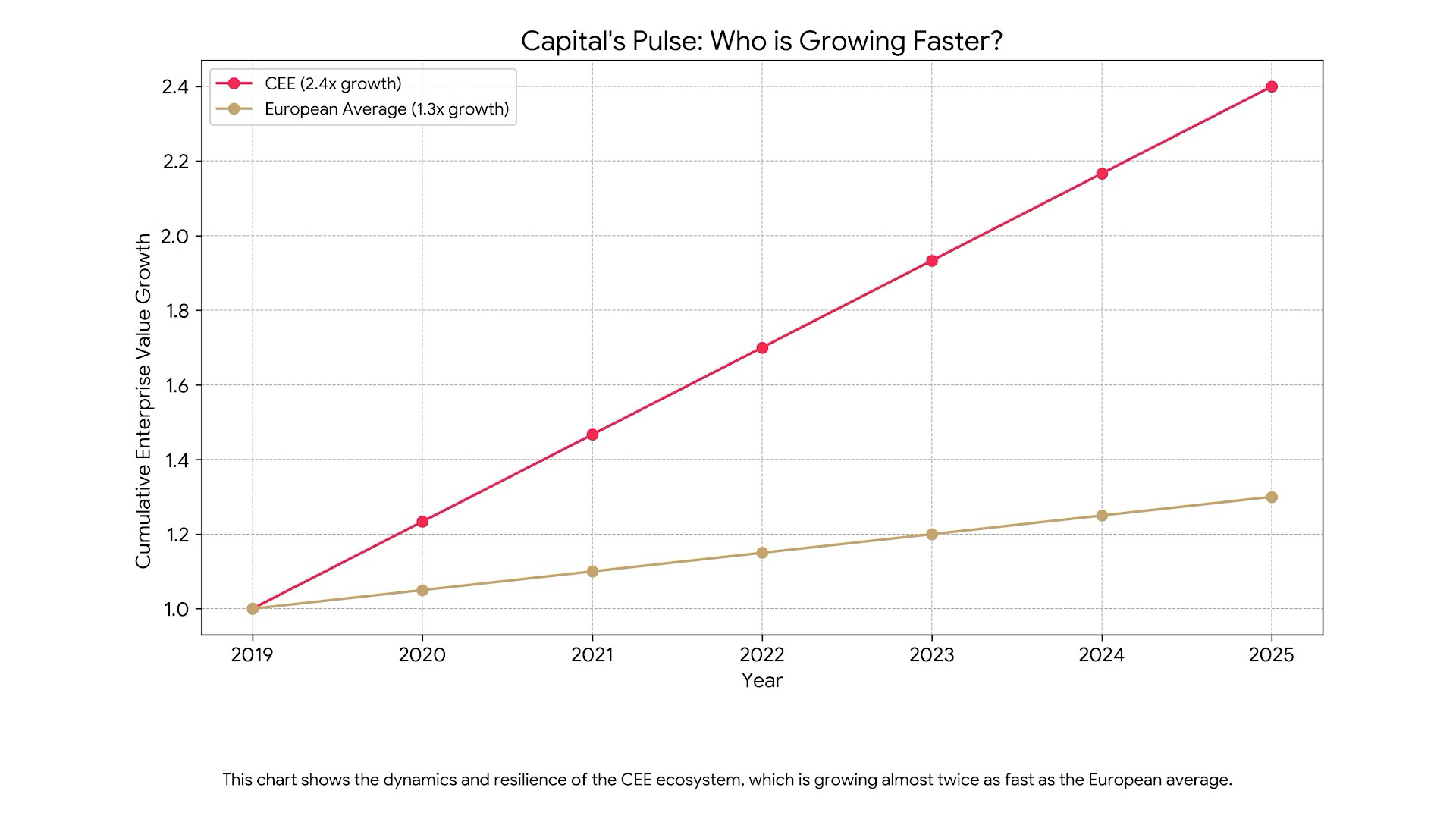
    Venture capital (VC) flows are a seismograph for the innovation ecosystem. Analysis of the data shows that while Western Europe still dominates in terms of volume, it is CEE that shows greater dynamism and remarkable resilience to global slowdowns.

    The total value of businesses in the CEE startup ecosystem has increased 2.4 times since 2019, reaching €243 billion in the first quarter of 2025 – a growth rate almost double the average for Europe as a whole.

    What’s more, during the global slowdown in the VC market in 2023, when investments in Western Europe fell by 35%, the CEE region saw a decline of only 15%. Already in 2024, the market has rebounded, recording growth of 56%. This ability to recover quickly suggests that the foundations of the CEE ecosystem are healthier and better adapted to changing conditions.

    The growing interest from global investors is due to a unique investment thesis for the region. CEE founders, in contrast to the ‘growth at all costs’ culture, are taking a more pragmatic approach, focusing on early revenue generation and capital efficiency.

    This, combined with a strong engineering background, fostering the emergence of deep tech companies, and a ‘global from day one’ mentality, makes for an extremely attractive model for investors looking for not only high returns, but also lower risk.

    Map of the giants: where global companies are locating their future

    Investment decisions by global technology giants are the strongest signal of the region’s strategic importance. Over the past decade, CEE has become an arena for spectacular investments.

    Google invested $2 billion to launch the Google Cloud region in Warsaw, followed by nearly $700 million in The Warsaw HUB office complex, which has become its largest cloud technology development centre in Europe.

    Microsoft has announced a $1 billion plan to create a ‘Polish Digital Valley’, with a cloud computing centre near Warsaw. Intel, in turn, has been developing its largest R&D centre in the EU in Gdansk, employing more than 3,000 engineers working on future technologies such as AI and machine learning.

    A key driver of this is access to world-class talent. Technology leaders know that in order to maintain an edge, they need to be present where engineers capable of delivering the most complex projects can be recruited.

    The presence of these giants creates a powerful flywheel effect: it raises standards in the labour market, creates ‘start-up mafias’ (experienced workers setting up their own companies) and acts as a global quality certificate for the entire region.

    Technological DNA: from monolith to specialisation

    As the CEE ecosystem matures, we are seeing the emergence of deep specialisations. Poland has made a name for itself as a global leader in video game production (Gamedev) and financial technologies (FinTech). With revenues in excess of €1.28 billion and an almost total export orientation (96-97%), Polish gamedev is a powerhouse driven by the success of companies such as CD Projekt. In parallel, with more than 300 startups, Poland has become one of the liveliest FinTech hubs in Europe.

    Romania, with a strong tradition in mathematics, has grown into a European cyber security powerhouse. It is where the globally recognised Bitdefender comes from, and the overall market is expected to grow at a rate of nearly 11% per year.

    The Czech Republic, on the other hand, with its rich history in engineering, has naturally become a leader in artificial intelligence (AI) and its applications in Industry 4.0. The country has world-class research institutions and already more than 11% of Czech companies are using AI technology. This diversification is a source of strength for the entire region and evidence of its growing maturity.

    Hunting unicorns: the ultimate measure of success

    The ability of the ecosystem to regularly generate ‘unicorns’ – companies with a valuation of more than $1 billion – is the ultimate proof of its maturity. Although Western Europe still leads in terms of absolute number (UK – 104, France – 34, Germany – 30), the CEE region has already generated a total of 52-57 unicorns, with Poland as the leader (18).

    However, the dynamics are key: more than half of all CEE unicorns were created in just the last two years (2022-2024), indicating a rapid acceleration. What’s more, the region’s unicorns often have their roots in deep technology (deep tech), such as Lithuania’s Nord Security or Poland’s ICEYE.

    They are also developing a ‘global hybrid’ model, as exemplified by ElevenLabs – a company founded by Poles, with a key R&D centre in Poland, but with offices in London and New York, allowing them to draw on the best talent in the country while having access to the largest capital markets.

    The verdict on the “technological tiger”

    The data clearly shows that the narrative of Central and Eastern Europe as merely a ‘cheaper hinterland’ is outdated. The region offers unparalleled talent value, its VC ecosystem exhibits anti-fragility characteristics, it has become a strategic R&D centre for global giants, it is developing deep specialisations and is an increasingly efficient unicorn factory.

    Although Western Europe still dominates in terms of scale and maturity, the heart of innovation – defined as the epicentre of dynamism, growth and resilience to crises – beats loudest and fastest today precisely in Central and Eastern Europe. “Europe’s technological tiger” is no longer just a promise – it is a reality that can no longer be ignored.

  • Venture Capital market in 2025. Decline in small investments and new trends in IT

    Venture Capital market in 2025. Decline in small investments and new trends in IT

    The year 2025 has brought to the global venture capital market a phenomenon that analysts describe as the ultimate awakening. From the data released by GlobalData, a picture is emerging of an environment that has stopped buying the dream itself and has started to uncompromisingly reward profitability. Although the overall number of venture capital funding deals has fallen by around three per cent year-on-year, the real revolution lies in the structure of these investments. Particularly from the perspective of the European innovation ecosystem, these figures imply the need to completely redefine the growth strategy of young and medium-sized technology companies.

    The desert at an early stage of development

    In the world of technology investment, the term ‘Valley of Death’ refers to the riskiest period in which an innovative company absorbs capital without yet generating stable revenues. Recent transactional analysis indicates that this area has widened considerably. There has been a painful, almost ten per cent decline in the number of low-value investments, defined as rounds of less than ten million dollars.

    This phenomenon hits a particularly sensitive spot in the European IT market, which has historically relied on an extensive network of seed funds, business angel support and numerous institutional programmes. The reduction in access to early-stage capital means that the phase of testing market hypotheses solely with investors’ money is slowly becoming a thing of the past. Capital no longer acts as an unconditional drip for unproven business models. Market validation is now occurring much more quickly, and entities lacking immediate, measurable traction are facing an entry barrier that is proving insurmountable for many.

    A flight to quality, or the new financial elite

    A surprising contrast to the shrinking early investment segment is the impressive growth at the higher end of the market. The apparent shift of investors towards upscale opportunities is evidenced by a twenty-five per cent jump in the volume of deals exceeding one hundred million dollars. Equally importantly, the market has also seen an eight per cent increase in the mid-market segment of deals between ten and one hundred million dollars. The number of so-called megatransactions above one billion dollars is also on the rise.

    The above data lead to one fundamental conclusion – there is absolutely no shortage of capital on the market, only the way it is allocated has radically changed. Venture capital fund managers have adopted a broad strategy of resource consolidation. Instead of dispersing funds to dozens of promising but highly risky initiatives, financial decision-makers prefer to support fewer entities with incomparably larger resources. The beneficiaries of this trend are becoming organisations with a proven, highly scalable operating model, which have managed to defend their unit profitability even before talks of a large funding round began.

    The European paradigm for survival in the IT world

    The shift in the market centre of gravity towards larger deals is a very concrete signpost for European technology companies. The pursuit of mid-market investment rounds is now becoming the most important strategic objective to escape the drying up early-stage funding ecosystem.

    In order to successfully compete for quotas that guarantee stable growth and global expansion, IT companies need to demonstrate operational maturity much faster than they did in the past decade. It becomes crucial to manage budgets rigorously from the first days of operation and to strive to achieve full product-market fit in no time. Optimising operating costs using modern technological tools ceases to be merely a competitive advantage and becomes a condition for survival. Companies that fail to build stable financial foundations early enough risk market stagnation or being forced to accept unfavourable M&A conditions from larger corporate players.

    Global venture capital fund activity today is a fascinating study of a maturing market. The flight to quality by investors described in the report is a mechanism that will bring tangible benefits to the technology industry in the long term. The focus on reliable metrics at the expense of pure deal volume effectively eliminates the phenomenon of artificially inflated valuations of entities whose only market asset was the charismatic vision spread by their founders.

    The increase in the number of highest-value deals proves that disruptive innovations can still count on powerful support. The venture capital ecosystem is thus returning to its optimal form: it is becoming a powerful accelerator for those technologies that have proven their effectiveness and value to the economy in practice. From a business perspective, this is an extremely valuable signal, confirming that the path to scale in the IT industry today is primarily through iron-clad financial discipline and unquestionable product quality.

  • Poland invests PLN 2.4 billion in the space sector. New Łukasiewicz Network programme

    Poland invests PLN 2.4 billion in the space sector. New Łukasiewicz Network programme

    Warsaw officially challenges European leaders in the Space sector. The inauguration of the Space Research Programme of the Łukasiewicz Research Network is first and foremost a hard business declaration. With a budget estimated at PLN 2.4 billion over the next decade, the project is set to transform the dispersed competences of 22 institutes into a consolidated technological powerhouse led by the Institute of Aviation (Łukasiewicz – ILOT).

    From a market perspective, the key word is ‘autonomy’. Poland is ceasing to aspire merely to be a supplier of components to giants such as Airbus or Thales Alenia Space, and is beginning to build its own value chain. The strategy is based on three pillars: satellite platforms, launch systems and so-called payloads. It is an end-to-end approach to ensure that Polish companies have a real stake in a global cake worth hundreds of billions of dollars.

    The programme is tailored to the requirements of modern geopolitics, as can be seen in the emphasis on dual-use technology. Solutions developed for civilian purposes, such as advanced Earth imaging or green propulsion, will find direct application in defence systems. The project’s funding, combining own resources, defence funds and private capital, suggests that the state is looking for a public-private partnership model that minimises investment risk for business.

    Adam Okniński, Ph.D., programme coordinator, rightly points out that space is now ‘fuel’ for AI, Big Data and quantum technologies. This is where the Polish IT sector can find new space for expansion. Particularly promising is the niche market for servicing satellites in orbit – an area with huge commercial potential, where the barriers to entry are still high and competition is lower than in the production of satellites themselves.

    The first test of the credibility of the new strategy will be the SPARK satellite mission, planned for the next two years. If Łukasiewicz proves that he can manage such a complex project within his own structures, Poland may permanently enter the premier league of the European space industry. This is a chance to go from being a ‘promising emerging market’ to becoming a technology hub that not only sends people into space, but above all makes money from it.

  • Space support for services: Civil Security Hub Poland starts

    Space support for services: Civil Security Hub Poland starts

    In the world of space technology, the biggest challenge is rarely the lack of data itself – it is its usefulness. While the Earth’s orbit is dense with observation satellites, emergency services down below often still operate in an information vacuum. This gap is to be closed by the just-launched Civil Security Hub Poland (CS Hub PL) in Warsaw, the first initiative of its kind in Europe within the European Space Agency ‘s (ESA) Space Resilience Nodes network.

    The project is not just another research centre, but a strategic operator linking the space technology sector with public administration. In an era when the number of natural disasters has quintupled over the past half-century, the Hub is becoming an essential filter. Raw data from constellations such as ICEYE – which has SAR radars capable of ‘seeing’ through clouds and at night – are here translated into concrete operational maps for fire services or governors.

    The Hub’s business and operational model is based on a unique consortium. CloudFerro provides the cloud infrastructure to securely process petabytes of data, the Warsaw University of Technology automates the monitoring of environmental risks, and the Crisis Information Centre of the Polish Academy of Sciences (CBK PAN) acts as coordinator and quality verifier. This approach solves a key ‘last mile’ problem in tech-business: delivering a complex product in a form that the end-user can realistically use under stress, under time pressure.

    The experience of the 2024 floods, where satellite monitoring provided more than one hundred precise maps of, among others, Kłodzko and Stronie Śląskie, proved that orbit-based situational awareness directly translates into less property damage and higher security for citizens. CS Hub PL offers technology providers a ‘fast track’ to testing solutions, which for private NewSpace companies means a shorter implementation cycle and a product better suited to the rigorous requirements of the public sector.

    This initiative positions Poland as a leader in the practical use of space resources for civilian security in the region. Satellite technologies are moving out of the experimental phase and becoming a standard tool for crisis management, on a par with a radio station or a fire truck.