The enterprise AI agent market is gaining a new, heavily funded player. Wonderful, a startup founded just in early 2025, has announced the raising of a $100 million Series A round. The funding, led by Index Ventures with participation from Insight Partners and IVP, comes just four months after an impressive $34 million seed round. This dizzying speed of funding signals that investors see more than just another AI platform.
In a world saturated with generic models, Wonderful is positioning itself as a company solving the ‘last mile’ problem. CEO Bar Winkler admits that the potential of technology alone is not enough, and that the real challenge remains “implementation in large-scale production”. The company is combining its AI platform with what it calls “best-in-class deployment”, focusing on customer service agents via voice, chat and email, but with a key focus on deep integration with enterprise systems.
This strategy involves rapid geographical expansion, including a recent entry into Poland. As Marcin Motel, General Manager for Poland, points out, it is not about simple translation. The company is investing in local implementation teams and ‘AI that speaks Polish’, understanding the cultural context and industry specifics. It is this adaptability that is supposed to be a competitive advantage in a market where many companies are still struggling to scale digital customer service.
Wonderful declares that its agents already manage tens of thousands of complex interactions a day, from billing disputes to diagnosing problems, achieving a resolution rate of more than 80% without human intervention. Investors such as Hannah Seal of Index Ventures point out that the market does not want ‘generic agents’, but solutions that work in any language and in any market.
Although the company is starting with customer service, the funds raised are expected to drive expansion into new areas such as employee training, internal IT support and compliance verification. Wonderful’s business model is based on the premise that in the age of AI, the real value is not the algorithm itself, but its reliable implementation, tailored to business realities.
John M. Martinis, a recent winner of the Nobel Prize in Physics (2025) and one of the architects of Google’s breakthrough in ‘quantum supremacy’, is starting a new chapter. This time his goal is not a laboratory record, but the creation of a practical, mass-produced quantum supercomputer. On Monday, he announced the formation of the Quantum Scaling Alliance, bringing in the heavy artillery: supercomputing giant HPE and key players in the semiconductor supply chain.
The initiative is a direct response to the industry’s biggest pain point. Quantum computers, promising a revolution in chemistry or medicine, remain largely unitary works. As Martinis put it, since the 1980s quantum chips have been produced “in an artisanal way”. The Quantum Scaling Alliance aims to change this by moving the production of qubits from laboratories to factories.
That’s why the presence in the alliance of Applied Materials, a supplier of chip-making machines, and Synopsys, a leader in chip-design software (EDA), is crucial. The idea is to use the same sophisticated tools that today produce millions of processors for smartphones and AI servers to build quantum systems. This signals the industry’s desire to move “to a more standardised, professional model”.
However, building stable cubits at scale is only half the battle. The real challenge, the partners emphasise, lies in integration and scaling. Masoud Mohseni, head of the quantum team at HPE, tones down the enthusiasm, noting that moving from hundreds to thousands of qubits raises entirely new issues. “People naively think [scaling] is linear. This is simply not true,” Mohseni stated.
HPE’s task will primarily be to integrate delicate quantum circuits into classical supercomputers. It is they who are to manage the system in real time and handle the crucial error correction process, without which qubits are useless. The consortium also included specialised companies such as Riverlane and 1QBit (responsible for error correction) or Quantum Machines (control systems), which shows that the aim is to build a complete, commercial technology stack.
The race to build a functional quantum computer has entered a new stage. IBM has announced a major breakthrough in error correction that solves one of the fundamental problems of the technology. Crucially, the solution is based on widely available components, which could dramatically accelerate commercialisation.
The problem with quantum computing is well known: qubits, the basis of its computing power, are extremely prone to errors that quickly build up and prevent useful results. IBM signalled back in June that it had developed an algorithm capable of solving this problem on the fly.
The latest reports, to be published on Monday, confirm that this is no longer just a theory. IBM has demonstrated that its error correction algorithm works in real time. The real breakthrough, however, is the hardware platform. Instead of relying on exotic, custom-designed processors, IBM has run its algorithm on standard field-programmable gate array (FPGA) chips manufactured by AMD.
Jay Gambetta, director of research at IBM, highlighted that the implementation not only works, but is also 10 times faster than current requirements. Using off-the-shelf AMD chips means the solution is not ‘ridiculously expensive’, removing a significant financial barrier to scaling the technology.
This move strengthens IBM’s position in competition with technology giants such as Google (Alphabet) and Microsoft, who are also investing heavily in quantum research. For IBM, it also means a significant acceleration of its own schedule. Algorithm work, crucial to the ‘Starling’ quantum computer planned for 2029, was completed a year ahead of schedule.
The financial market reacted with immediate optimism. Friday’s trading of IBM shares closed up 7.88%, while AMD shares gained 7.63%. This is a clear signal that investors see this alliance of quantum and classical technology as a viable step towards practical applications of next-generation supercomputing.
Today’s technological revolution has an epicentre, and that is undoubtedly artificial intelligence. It is not just another innovation; it is a fundamental force transforming the global economy, military strategy and social fabric.
In this new era, marked by an unprecedented pace of change, patents have become the equivalent of territorial claims during the gold rush era. They are a hard, measurable indicator of national strategy, innovative capacity and, most importantly, future economic power. Leadership in AI is seen as a prerequisite for competitiveness, security and prosperity in the 21st century, with the technology revolutionising every sector from healthcare to defence.
The global scene is dominated by two hegemons: The United States, with its capital power and dominance in the creation of fundamental models, and China, which is pursuing a monumental state-led strategy to achieve quantitative superiority. In this bipolar balance of power, a key question arises about Europe’s position. Is the Old Continent merely a distant third player, condemned to watch the giants compete from the sidelines? Or is it, contrary to common narratives, building its own unique path to technological sovereignty and competitiveness? Is Europe realistically catching up?
Drawing on hard data from the world’s leading intellectual property organisations – the European Patent Office (EPO) and the World Intellectual Property Organisation (WIPO) – and in-depth reports from leading research institutions such as the Stanford Institute for Human-Centered AI (HAI) and the OECD, this analysis aims to separate the facts from the media hype. We will trace the dynamics of patent applications, examine the quality and strategic focus of innovation, and place this data in a broader geopolitical context to provide a nuanced answer to the question of Europe’s future in the global AI race.
The global AI patent arena: a numbers game and exponential growth
An analysis of global patent trends in the field of artificial intelligence reveals a picture of unprecedented dynamism. The scale and pace of growth in this field eclipses previous innovation cycles, signalling a fundamental technological shift. In just over a decade, the world has witnessed an explosion of patent activity that has redefined the map of global innovation.
An unprecedented wave of innovation
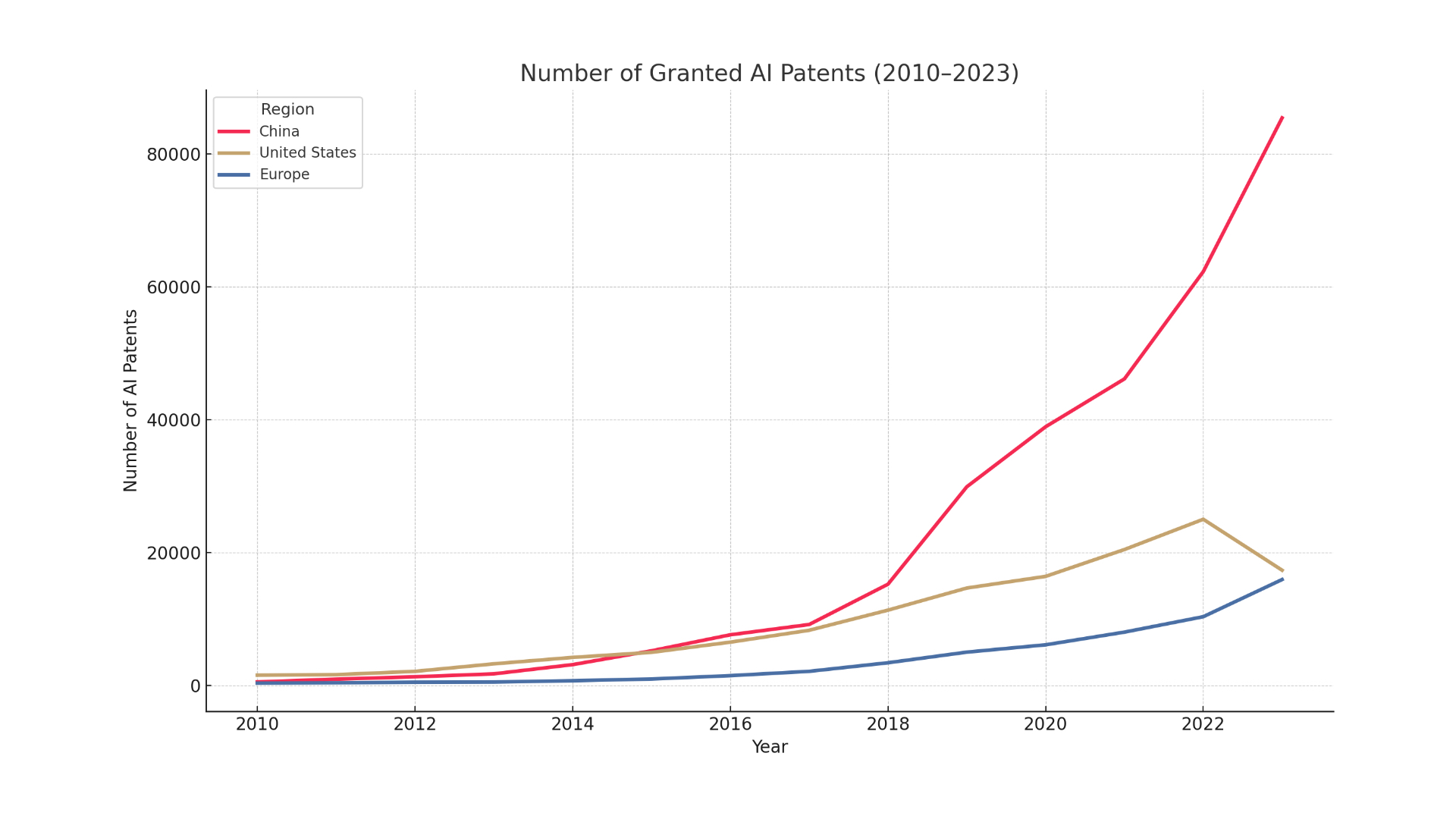
The data is clear: the number of AI-related patents granted globally has increased more than 31-fold since 2010. In 2010, only 3,833 patents were granted worldwide in this field. By 2023, this number has risen to a staggering 122,511, an increase of 29.6% on the previous year alone. This exponential growth is testament to the intense and ever-accelerating investment in AI research and development worldwide.
The tri-polar balance of power
When we look at the geographical distribution of these patents, a clear three-layered landscape emerges, with different players operating at very different scales.
China’s quantitative supremacy: China is the undisputed leader in terms of volume, accounting for an overwhelming 69.7% of all AI patents granted worldwide in 2023. This share has increased dramatically over the past decade, cementing China’s position as the most prolific innovator in terms of number of applications. Already in 2022, China has been granted more AI patents (around 40,000) than the rest of the world combined, while the US, in second place, has been granted around 9,000….
Position of the US and Europe: the US ranks a distant second with a share of 14.16% in 2023, and Europe is third with a share of 13.00%. These figures clearly indicate that in terms of pure patent numbers, Europe is not only failing to catch up with the US, but both regions are dominated by the scale of Chinese activity.
The scale of China’s quantitative dominance is so massive that it suggests more than just organic, market-driven innovation growth. Historically, in globally competitive technology fields, such a rapid and massive accumulation of intellectual property in one country is unusual. The data confirms that this is the result of a deliberate national strategy, supported by massive government funding and top-down directives. This means that China’s patent statistics cannot be interpreted solely as a measure of commercial innovation in the Western sense. They are also an indicator of the implementation of a state industrial policy aimed at declaring a technological presence and building a powerful national IP portfolio. This fundamentally changes the context of the comparison – it is no longer just a race for the best ideas, but for China, also a race for sheer volume as a strategic goal.
The European innovation frontline: analysis of data from the EPO
Global statistics, while impressive, only tell part of the story. To reliably assess Europe’s competitiveness, it is necessary to transfer the analysis to its ‘own backyard’ – the European Patent Office (EPO). This is because the EPO data reflects the real battle for the lucrative and technologically advanced European market, and these shed a whole new light on the continent’s position.
AI as the new engine of European innovation
The EPO Patent Index 2024 report brings breaking news: for the first time ever, Computer Technology, a category that includes Artificial Intelligence, has become the leading technology field in terms of the number of patent applications at the EPO, reaching 16,815 applications. This proves that AI is at the heart of the most advanced R&D aimed at the European market.
The main drivers of this growth over the past five years have been inventions directly related to AI – such as machine learning, pattern recognition and neural networks. Applications in these subcategories have grown at an average annual rate of 28% since 2019. In 2024 alone, the number of AI-related applications at the EPO increased by 10.6% compared to the previous year, confirming the unrelenting momentum in this area.
European innovators leading their own market
Most importantly, the EPO data shows that in the key area of AI-related inventions, it is “applicants from EPO member states that have maintained a leading position throughout this period [of the last five years]”. Although in the broader category of ‘computer technology’, US entities lead the way (with a 34.4% share compared to 29.5% for EPO countries), in the narrower but strategically key area of AI, Europe is in the lead.
The growth in filings from EPO countries in computer technology was very solid at +5.9% in 2024, driven by significant innovation jumps from Germany (+12.7%), Switzerland (+37.4%) and the UK (+12.4%). This indicates the existence of a thriving and dynamic innovation ecosystem in Europe.
Analysis of the EPO data leads to an important conclusion. Filing a patent application, especially at an office as rigorous and expensive as the EPO, is a significant strategic investment. Companies do not take such steps without a firm belief in the commercial potential of their inventions. The high level of EPO filings from all regions – the US, Asia and Europe – is indicative of the widespread perception that the European market is a key and highly profitable one. The fact that it is European entities that lead the way in AI-specific filings at their own patent office suggests that they are not only conducting advanced research, but are strategically focused on protecting and commercialising these innovations in their home economic zone. Global statistics may reflect broad research activity and national strategies, but EPO data is a much better indicator of the real-world, commercial race for Europe. And in this race, Europe is not just a participant – it is a leader. This completely changes the ‘catching up’ narrative.
Quality vs. quantity: a deeper look at patent strategies
The number of patents alone is an imperfect measure of innovative power. To fully understand the global dynamics, it is necessary to introduce the dimensions of quality, impact and strategic purpose behind patent portfolios. An analysis of these factors reveals that the US, China and Europe are not in one, but in three separate races, each with different rules and objectives.
US strategy: fundamental models and high-impact intellectual property
The US has a clear focus on the quality and fundamental importance of its innovations. The best evidence of this is the citation rate – US AI patents are cited almost seven times more often than Chinese patents, indicating that they form the basis for later inventions around the world.
What’s more, the US absolutely dominates the creation of ‘notable AI models’ – systems that represent key technological breakthroughs. In 2024, US institutions have created 40 such models, compared to 15 by China and just three by Europe.
This leadership is driven by corporate giants such as Google, Microsoft and IBM, who are investing billions in basic research.
China strategy: Volume, applications and academic innovation
The Chinese strategy is based on massive scale. However, the quality of this portfolio is subject to debate; the grant ratio for AI patents in China is estimated at only 32%. Furthermore, the vast majority of these patents are filed only in the domestic market, suggesting a focus on the domestic market and the building of a defensive IP wall.
A key differentiator is the source of innovation. In China, as many as 65 of the top 100 patenting organisations in computer vision are universities. In the US, the number is only three. This shows a model driven by the state and the academic sector, in contrast to the US model, which is commercially oriented and dominated by the private sector.
The European model: Industrial integration and applied AI
Europe’s leading patent applicants reflect the continent’s industrial strength. Companies such as Siemens and Bosch from Germany are key players, focusing on the application of AI in industrial automation, manufacturing and transportation.
This suggests a strategy of integrating cutting-edge artificial intelligence into already established, highly developed sectors of the economy, rather than competing directly in the creation of foundational models.
The patent data shows not one race, but three parallel, strategically distinct endeavours. The US ecosystem, driven by massive private capital, seeks to create and own the foundational platforms – the ‘shovels and picks’ of the AI era – on which others will build their solutions. Its patent strategy is selective and geared towards maximum impact. China’s state-controlled ecosystem is focused on rapid and widespread adoption, technological self-sufficiency and achieving dominance in specific application areas such as computer vision. Its patent strategy is a game of volume and control of the domestic market. Finally, the European ecosystem is a mature industrial economy that is adapting AI to strengthen its existing competitive advantages. Its patent strategy focuses on protecting highly specialised, high-value applications in key sectors. The question of whether Europe is ‘catching up’ with the US is therefore like asking whether a Formula One team is ‘catching up’ with an aerospace company. Both are competing in engineering, but in completely different disciplines and with different objectives.
Behind the numbers: strategic and geopolitical context
Patent trends do not exist in a vacuum. They are a direct reflection of deeper national strategies, investment realities and structural conditions. Analysis of this context is crucial to understanding Europe’s true position in the global AI race.
Europe’s dilemma: A pioneer of regulation, a marauder of investment
The European Union has adopted a proactive, regulation-oriented approach, culminating in the AI Act. The aim is to establish a global standard for ‘trustworthy’ artificial intelligence as a showcase for the European model. However, this ambitious regulatory vision is accompanied by a massive investment gap. In 2024, private investment in AI in the US reached USD 109.1 billion. This is almost 12 times more than in China (USD 9.3 billion) and significantly more than in the European Union, where estimates suggest around USD 8 billion. European strategic initiatives such as the ‘AI Factories’ programme (with a budget of EUR 20 billion) or the ‘Apply AI Strategy’ (EUR 1 billion) attempt to respond to this challenge. However, their scale pales in comparison not only to total US private investment, but even to individual corporate projects such as OpenAI’s Stargate.
Infrastructure gap – Europe’s Achilles heel
Europe’s greatest structural weakness is its critical dependence on foreign technology infrastructure. It is estimated that around 70% of Europe’s digital services run on the clouds of three US giants (so-called hyperscalers). At the same time, the European semiconductor manufacturing sector accounts for less than 10% of global production, making the continent dependent on chips designed in the US and manufactured in Asia. This fundamental weakness poses a direct threat to the EU’s strategic goal of achieving ‘digital sovereignty’.p
The table below synthesises the key differences between the three ecosystems, providing a summary of the AI strategic landscape.
Indicator
Europe
USA
China
Private Investment in AI (2024)
approx. USD 8 billion
USD 109.1 billion
USD 9.3 billion
Regulatory Philosophy
Proactive, risk-based, horizontal (AI Act)
Reactive, free market, voluntary framework
State-controlled, information control, sectoral regulation
Potential risk of lack of regulation, concentration of power in the hands of a few companies
Quality issues and international recognition of patents, political barriers
What does the future hold for Europe in the AI race?
After an in-depth analysis of the patent data and the strategic context, the answer to the question of Europe’s position in the global AI race becomes clear, albeit multidimensional.
Firstly, in terms of pure patent numbers, Europe is not catching up and will probably never catch up with China. The scale of Beijing’s state strategy makes volume an inadequate and misleading measure of success for Europe.
Secondly, Europe is significantly behind the US in developing fundamental models and raising venture capital. The financial strength and risk appetite of the US ecosystem are currently out of reach.
However, the key conclusion of this analysis is that Europe’s success should not be measured by its ability to copy American or Chinese models. On the contrary, its future lies in the skilful exploitation of its unique strengths. Europe is not a marauder, but a leader in the race for high-value, industrial and applied artificial intelligence. Its strength lies in the deep integration of AI into the world-class manufacturing, automotive, medical and green technology sectors. Data from the European Patent Office clearly confirms that in its own core market, Europe is winning the innovation race.
The future competitiveness of the continent will depend on two critical factors:
Bridging the infrastructure and investment gap: The success of initiatives such as AI Factories is absolutely crucial. Without sovereign computing power and a stronger venture capital ecosystem, Europe will always build its innovative applications on foundations owned by foreign powers.
Strategic use of regulation: Europe must effectively present its AI Act not as a barrier to innovation, but as a global competitive advantage. The aim is to create a premium market for ‘trustworthy’, secure and human-centred AI systems, which will increasingly be demanded by corporate customers and citizens around the world.
Europe may not win the sprint for the number of patents, but it is perfectly placed to compete in the marathon for sustainable, valuable and trustworthy integration of AI into the real economy. The race is far from over, and Europe is running its own distinct and well-considered path in it.
Rubicon Partners, a fund known for building deeptech and IT companies, is entering the defence market – it has become a shareholder in Polish Innovation Labs (PIL), a manufacturer and distributor of small-calibre ammunition. Remigiusz Talarek’s Elephant Rock Family Foundation and a group of business angels also participated in the PLN 10 million investment round. Although the amount is not impressive compared to global deals in defence tech, in Poland it is a signal of the growing appetite of private capital for the military sector.
Polish Innovation Labs operates at the interface between the public and civilian markets. It supplies ammunition to, among others, the KAS, the Border Guard or the Prison Service, but also to commercial shooting ranges and specialist shops. The business model today is based on the import of components – mainly from Europe, Western Asia and the USA – with maritime logistics dominating, which means a 1-2 month wait and the need for upfront financing. The investment is expected to allow the company to make a key return: launching its own production of some components in Poland.
This is not only a move towards greater independence from global supply chains, but also an attempt to fit into the wider trend of defence reindustrialisation. Since the start of the war in Ukraine, the European defence sector has seen a record pace of orders and governments are encouraging the localisation of production. PIL also promises to diversify – manufacturing facilities may be partly diverted to civilian industries, which fits in with the dual-use model valued by institutional investors.
Rubicon Partners, which has so far focused mainly on deeptech, chemicals and energy transformation, is bringing not only capital but also operational know-how to the company. The fund pledges support in the process of reaching a potential IPO on the WSE in 2026, suggesting that PIL is thinking about consolidating its market position and scaling its operations beyond the domestic market.
Rubicon Partners’ entry into the defence sector can be read as a signal of the maturing of the Polish venture market: so far bypassed by VCs due to regulations, political risk and a long sales cycle. However, today’s environment – increasing security spending, pressure for local production and the need for innovation – is creating space for new players.
The coming months will show whether PIL manages to realistically reduce its dependence on imports. If so, it could become one of the first Polish defence tech entities ready to go public – and not just a supplier of niche components.
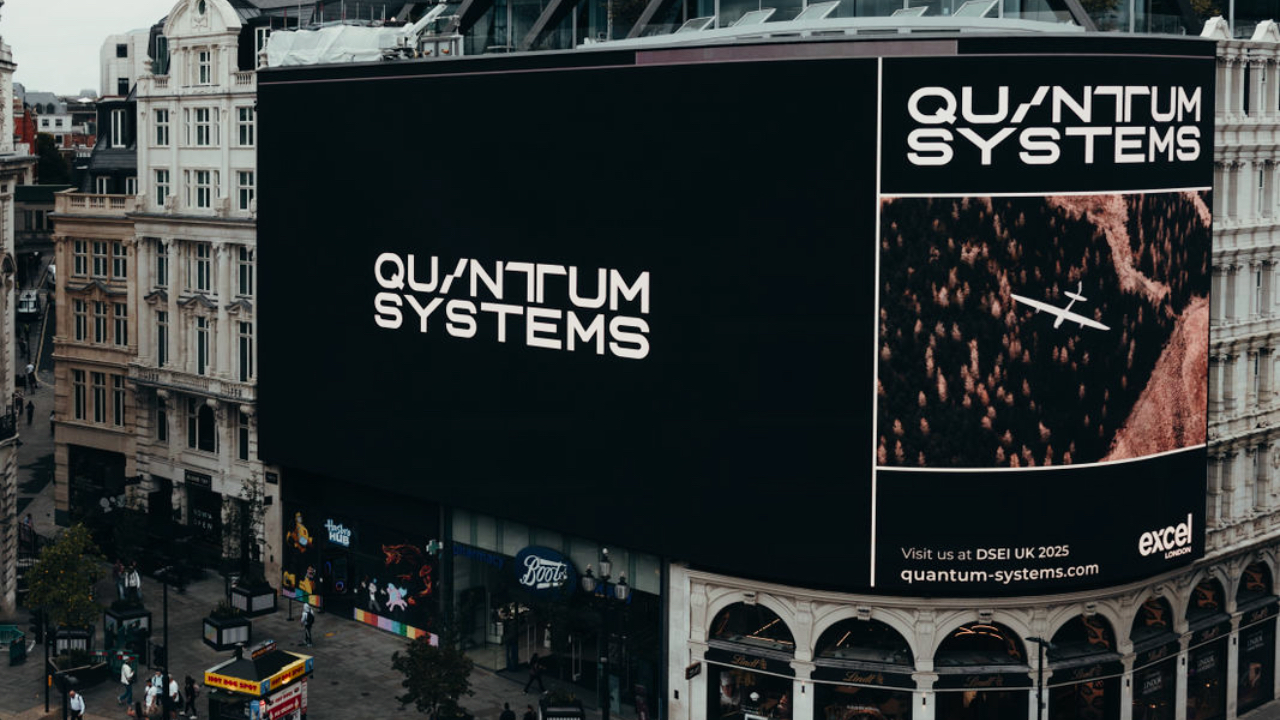
German drone manufacturer Quantum Systems is gearing up for a €150 million funding round which, according to Manager Magazin magazine sources, could raise the company’s valuation to €3 billion. This is a threefold increase compared to the last valuation and a clear signal of how fast the market for unmanned defence systems is growing in Europe.
Quantum Systems, founded in 2015, has gone from a niche manufacturer to a key player in the military and infrastructure drone segment. The company’s latest model, the ‘Jaeger’, designed to intercept hostile drones, gained attention after a series of incidents at airports in Germany and the UK. Growing concerns about the security of critical infrastructure are making anti-drone technology a priority for state services – especially after the German government’s declaration to grant police the right to shoot down unauthorised UAVs.
According to market insiders, Quantum Systems is targeting revenues of €300 million in 2025 and more than €500 million a year later. The company has made no secret of its expansion ambitions – it plans acquisitions of startups and technology providers to strengthen its competences in AI, flight autonomy and electronic defence.
Europe, hitherto dependent on suppliers from the US and Israel, is trying to build its own technological base in the drone field. Investors see Quantum Systems as a potential ‘European Palantir’ for the airspace – a company combining hardware, software and data analytics.
Another, larger capital round is announced for 2026, which could raise the valuation to €5bn. If current growth rates continue, Quantum Systems will become one of Europe’s most valuable defence-technology startups – at a time when the continent is urgently seeking security autonomy.
UK start-up Nscale, which specialises in infrastructure for artificial intelligence, has signed an extended deal with Microsoft. As part of the collaboration, the company will supply around 200,000 Nvidia chips to data centres in the US and Europe – one of the largest contracts of its kind announced publicly. According to the Financial Times, the deal could be worth up to $14bn, although Nscale does not comment on financial details.
It is a move that is part of the global race for computing power, which today defines the real position of AI players. Microsoft – a key investor in OpenAI – is intensively expanding its own infrastructure to become independent of external providers and secure resources for years to come. For Nscale, in turn, this is an opportunity to join the exclusive group of Big Tech infrastructure partners.
Deliveries will begin in 2025 and will include new data centres in Texas and Portugal, among others. Dell Technologies will also be involved in the contract, suggesting that Nscale will act as an AI infrastructure integrator rather than just a hardware supplier. This follows an earlier project in Norway, where a joint venture between Nscale and Aker is preparing an AI campus with 52,000 Nvidia GPUs for Microsoft.
Nscale, which in September raised $1.1bn in funding from Aker and Nokia, among others, has consistently positioned itself as the European answer to US-based hyperscalers. The ambition is clear: to build a continental AI infrastructure at scale to rival AWS and Google Cloud.
In the background, the strategic question remains – will Europe manage to maintain control of key AI resources if the US giants remain the main beneficiaries? The Microsoft contract strengthens Nscale, but at the same time shows how strong the AI market’s dependence on capital and demand from the US is
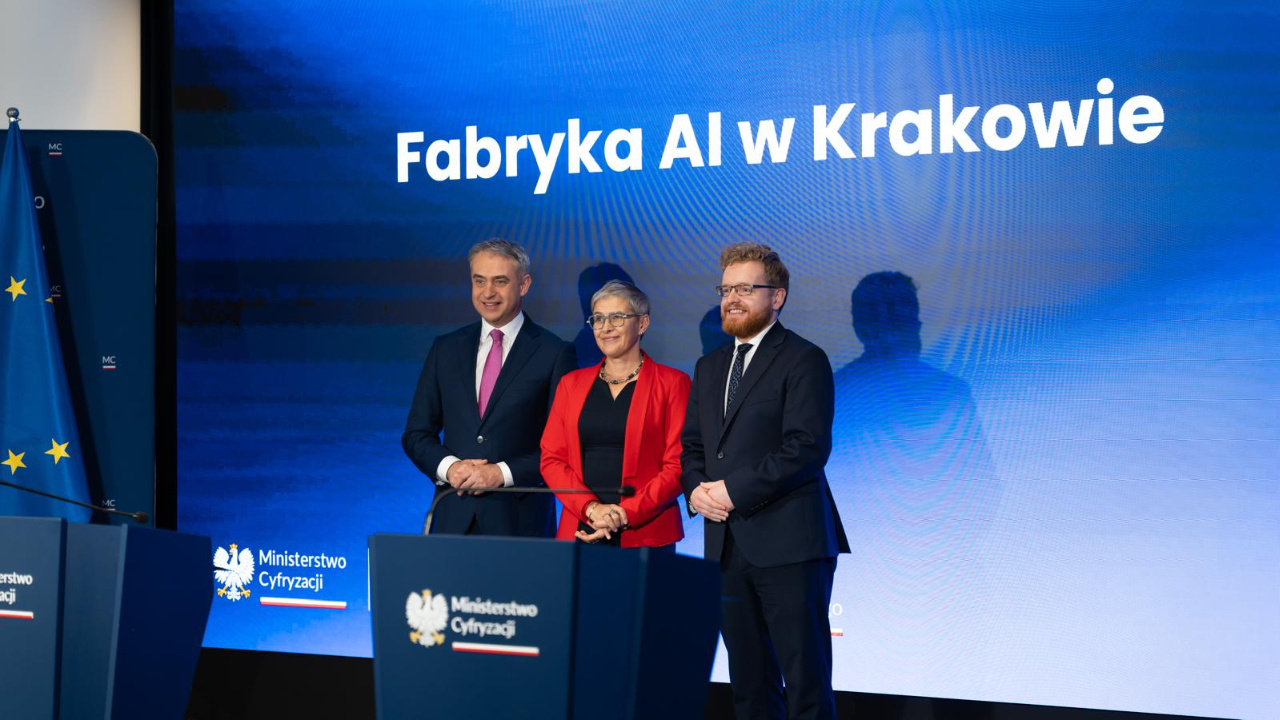
Poland is joining the ranks of countries that are investing realistically in infrastructure for advanced artificial intelligence. After Poznań’s PIAST AI Factory comes the Gaia AI Factory – a new centre in Kraków, built by a consortium led by the Academic Computer Centre Cyfronet AGH. The €70 million project, funded half each by Poland and the European Commission, is to be part of a European network of AI Factories coordinated by EuroHPC JU.
This will not be another token research project. The Gaia AI Factory is to provide a next-generation supercomputer – equipped with more than a thousand GPUs, optimised for large language models and AI systems. According to the government’s announcement, it will be several times faster than the current Helios, putting Kraków among the key locations for European computing facilities.
The politicians’ declarations – of ‘digital sovereignty’ and ‘trusted AI’ – are part of a broader Brussels strategy. Europe is keen not to become a mere consumer of models developed in the US and China. AI factories are to create a space to train, test and implement models that comply with European standards: transparency, accountability and data protection.
In practice, Gaia AI Factory is to operate at the interface between science and industry. Priority areas are health, the space sector and the development of large language models. Deputy Science Minister Maria Mrówczyńska emphasised that the project is expected to accelerate the transfer of technology from academia to business – which has remained a weak link in the Polish innovation ecosystem for years.
Poland is also becoming a participant in the next stage – the AI Gigafactories consortium, which is to create a European infrastructure for models with trillions of parameters. This signals that Brussels is treating our country not only as a recipient of funds, but as a partner in building strategic resources for AI.
The biggest challenge, however, will be the use of this infrastructure – not only by researchers, but also by technology companies and the public sector. The AI factory can become a boost for the local deep tech market, but only if it is open to entrepreneurs and competence development programmes.
If Krakow actually becomes the place where European AI models are trained, Poland will gain something more than a supercomputer – it will gain influence on what the future architecture of digital Europe will look like.
Jeff Bezos, founder of Amazon, charts a vision of the future in which the gigawatt data centres powering the development of artificial intelligence leave Earth and move into orbit. In his view, this will happen in the next 10-20 years. The main argument is simple: constant and unlimited access to solar power in space will ultimately make such a solution more efficient than terrestrial infrastructure.
The forecast, presented at the Italian Technology Week in Turin, addresses one of the technology industry’s biggest problems. Earth-based data centres, especially those used to train advanced AI models, consume huge amounts of electricity and water for cooling. Moving them to orbit, where solar energy is available 24/7 without weather disruption, seems a logical step in the evolution of infrastructure.
Bezos sees this as a continuation of a trend that began with weather and communications satellites – using space to optimise life on Earth. The next step, after data centres, would be industrial manufacturing.
However, this vision faces fundamental technological and physical barriers. The biggest challenge is latency. Even at the speed of light, transmitting data from Earth to orbit and back generates latency that is unacceptable for many applications that require immediate response. Another hurdle is hardware maintenance and upgrades. Replacing a broken server or updating components in space would be an extremely complex and expensive operation, if at all possible on a large scale.
Add to the list of problems the high cost and risk of launching payloads, the threat from space junk and the need to develop effective heat dissipation systems in a vacuum.
Bezos compared the current AI boom to the internet bubble of the early part of the century, suggesting that even if there is a market correction, the fundamental benefits of the technology will remain. The same may be true of his space vision – although it seems distant today, it solves a real, growing energy problem that the AI industry will have to face.
Record amounts of venture capital funding are flowing into AI startups, but leading global investors are beginning to publicly warn of disconnected valuations. There is growing concern that the early-stage AI sector is becoming overheated, with fear of falling behind (FOMO) replacing rational calculation.
According to PitchBook data, AI startups raised $73.1 billion globally in the first quarter of 2025 alone, accounting for nearly 58% of all VC funding. Such a huge result was driven by giant rounds like the one for OpenAI worth $40 billion. Investors are racing to gain a foothold in the technology race of the decade.
However, at the recent Milken Institute Asia Summit 2025 in Singapore, managers from Singapore’s sovereign fund GIC and the TPG fund expressed scepticism. They pointed out that the ‘AI’ label alone today allows companies without significant revenues to achieve astronomical valuations that are multiples of their current financial performance.
The problem is that market expectations may be well ahead of the technology’s real capabilities. The current boom in AI capital spending may effectively mask potential weaknesses in the global economy, creating the illusion of a general boom.
While no one is denying the potential of AI, and some companies in this sector are able to reach $100 million in revenue in just a few months, the valuations of others are astonishing. There are early-stage startups with per-employee valuations ranging from $400 million to as much as $1.2 billion. According to experts, such figures are “breathtaking” and raise fundamental questions about whether the current investment frenzy is creating a speculative bubble that will soon burst.
The European Central Bank has taken a key step towards the realisation of the digital euro by selecting Portuguese startup Feedzai as the main provider of an AI-based fraud detection system.
Under the framework agreement, Feedzai, together with PwC, is to develop a transaction risk model for the digital euro – analysing deviations from the normal pattern of customer behaviour, payment history and interactions. This system is to support payment service providers in deciding whether to approve remittances in digital wallets.
The contract is for four years with an option to extend to 15 years. The initial value stands at €79.1m, with a maximum budget limit of €237.3m. In the same framework contract process, the ECB awarded contracts for other key components of the digital euro – from offline solutions to data exchange mechanisms – with values ranging from €27.6 million to €220.7 million.
It is worth noting that the framework agreements do not provide for disbursements until the project actually starts, allowing the ECB the flexibility to adjust the scope in light of legislative changes. The start of the de facto phase depends on the adoption of the Digital Euro Regulation by the EU institutions – a decision expected in mid-2026. The digital euro is scheduled to take off in 2029.
Feedzai, a Coimbra-based company, already operates $8 trillion worth of payment systems annually for clients such as Portugal’s Novobanco and Abu Dhabi’s Wio Bank. At the same time, it has announced a $75 million funding round, bringing it to a valuation of $2 billion.
This move by the ECB is part of a broader political and technological project: building European sovereignty in digital payments and reducing dependence on US-based payment systems. – While the project remains highly dependent on the regulatory and implementation framework, the choice of Feedzai itself reflects the Eurozone’s ambition to make the digital euro not only a means of payment, but also the central security infrastructure for a new generation of payments.
Creotech Instruments has announced a significant expansion of its collaboration with the European Space Agency (ESA) on the CAMILA project – a new addendum raises the value of the contract to more than €59 million, of which €29.1 million will accrue to Creotech alone. This is an increase of around €7.1 million, up from €3.5 million under the previous arrangement.
A key component of the upgrade is the delivery, launch and commissioning of a fourth observation satellite – the HyperSat Eagle 2.0 platform. The approximately 100 kg design has been equipped with a new orientation control system, larger solar panels and batteries, an open architecture with an interchangeable payload board and an interface to enable in-orbit data processing using artificial intelligence. With this, Eagle 2.0 is set to become a fully multi-mission platform – the identical satellite core already supports different missions with different payloads in parallel.
The second pillar of the annex is the integration of services of the commercial ground station network providing global connectivity, improving mission management and data transmission. Consequently, the contract provides for an updated schedule and new milestones. Creotech’s commitments at CAMILA are expected to be completed by November 2029 at the latest, although the company does not rule out further extensions.
CAMILA (Country Awareness Mission in Land Analysis) is a programme comprising four observation satellites and a ground segment for control and data processing – with maximum participation of Polish technology. Creotech functions here as the main contractor. The project is part of the country’s and ESA’s broader strategy to build European technology chains in the space sector. An earlier contract from April 2025 was worth nearly €52 million – with three satellites and ground infrastructure.
The contract extension signals Poland’s growing importance in the European space sector – while also testing the maturity of HyperSat’s technology and Creotech’s ability to carry out large-scale, complex missions at the first-tier integrator level.
Polish-Romanian company Orbotix Industries, operating in the DefenseTech sector, has secured €6.5 million in funding to develop autonomous drone systems supported by artificial intelligence. The round was led by Bravo Victor Venture Capital, a US fund specialising in defence technologies. European investment firms Gustav Söhne Verwaltung and Leryon Global Holdings also participated in the deal.
The funds are expected to accelerate work on drone swarm-based systems and enable the creation of a research and development unit in Poland dedicated to defence technologies using AI. Orbotix also plans to develop distributed micro-manufacturing within the European Union, which is expected to increase the resilience of supply chains.
The company, founded by Bogdan Ochiana and Sebastian Straube, is based in Warsaw and has operational operations in Romania, Spain and Ukraine. Its team is made up of engineers from various European countries, and the systems under development are designed to respond to the continent’s specific defence needs.
The investment is part of a wider trend to modernise the defence sector in Europe, where young technology companies funded by private capital are playing an increasing role, following the example of US initiatives to support defence innovation.
The development of technologies based on artificial intelligence and autonomous unmanned systems is considered crucial for Europe’s future technological independence and security. The establishment of an R&D centre in Poland further strengthens the importance of the Central and Eastern European region on the map of modern defence technologies.
A consortium of nine leading European banks, including giants such as ING and UniCredit, has announced the creation of a new, Amsterdam-based company. Its goal is one: to bring euro-linked stablecoin to market.
This is a bold and strategic move to respond directly to the growing hegemony of US companies in the digital currency and payments sector.
The data leaves no illusions. While the global stablecoin market is valued at nearly $300 billion, the value of euro-based tokens is only around $620 million. This overwhelming disparity shows how digital finance is dominated by assets linked to the US dollar.
The European banks’ initiative is intended to be a viable alternative and a step towards strategic autonomy for Europe in the payments space. The aim is to create a token that will enable fast, cheap and secure settlements within the European financial ecosystem, reducing reliance on solutions from overseas. The new stablecoin is expected to be launched in the second half of next year.
The project is born in an interesting regulatory environment. The European Central Bank (ECB) has long expressed scepticism towards privately-issued stablecoins, citing potential risks to financial stability and monetary policy. ECB President Christine Lagarde has repeatedly called for rapid implementation of regulation and promoted the idea of the digital euro as a safer, public alternative.
On the other hand, commercial banks are concerned that the digital euro could lead to an outflow of customer deposits directly to the ECB. In this context, their own private stablecoin could be seen not only as competition for US tokens, but also as an attempt to present their own solution to the market before the central bank does.
The pressure is mounting on Europe. As Deutsche Bank analysts point out, the world is facing a monetary dilemma: implement stablecoin-based solutions or risk being left behind. Emerging economies in particular are increasingly looking to dollar tokens as an alternative to local currencies.
However, it is worth remembering that simply launching a token does not guarantee success. An example is the euro-based stablecoin launched by French bank Societe Generale in 2023, whose market capitalisation remains relatively low.
However, the new consortium, which also includes KBC, Danske Bank and Raiffeisen Bank International, among others, has a much larger reach, which could be the key to widespread adoption and a real shift in the balance of power in the global digital asset market.
Snowflake is stepping up its efforts in the artificial intelligence space , targeting start-ups directly. The company has announced the launch of the Snowflake for Startups programme, which aims to make it easier for young technology companies to build and scale advanced AI applications. It is a strategic move to strengthen the Snowflake ecosystem and attract a new wave of innovators before they tie up with competing cloud platforms.
Lowering the entry threshold
A major problem for many AI start-ups is the need to build and secure complex infrastructure, which consumes time and capital that could be spent on product development. Snowflake addresses this problem by offering access to the same off-the-shelf, enterprise-grade infrastructure on which its own services, such as Cortex AI, are based.
In practice, this means that start-ups can skip the foundation-building stage and immediately focus on developing their models and applications in a secure, managed environment. They get access to computing power and popular LLM models, allowing them to deploy solutions and reach customers faster.
Four pillars of support
The Snowflake initiative is based on four key elements beyond the technology itself:
1 Go-To-Market strategy: start-ups are given the opportunity to distribute their applications and solutions through the Snowflake Marketplace, giving them access to a base of more than 12,000 potential corporate customers. This is a powerful tool to quickly build market traction.
2. cooperation with Venture Capital: the company is strengthening its cooperation with leading VC funds such as Greylock Partners, Redpoint Ventures and Altimeter. Portfolio companies of these funds receive preferential terms, including free loans for Snowflake’s services. In turn, Snowflake Ventures, the company’s investment arm, plans to increase the pace of its own investments by more than 30% this year.
3 Acceleration and Advice: the Snowflake Startup Accelerator programme provides participants with technical support, platform credits and market strategy advice. The initiative is growing in interest, recording over 300% growth in applications this year.
4 Physical Space: The SVAI Hub, a coworking and event centre, is being built in Menlo Park in Silicon Valley. It is intended to serve as a meeting place, making it easier for start-ups to build relationships with the Snowflake team, VC funds and other key AI players.
Snowflake’s efforts are a textbook example of building a competitive advantage by creating a strong ecosystem. At a time when AWS, Google Cloud and Microsoft Azure are also heavily courting AI start-ups, offering a comprehensive package – from infrastructure to funding to sales support – is key. For Snowflake, this is an investment in the future: start-ups that succeed on their platform will become big, loyal customers in the future. The programme is therefore not so much an act of philanthropy as a deliberate business strategy to establish the company as a focal point for the next generation of data-driven and artificial intelligence solutions.
Israeli cyber security startup Vega has raised $65 million in a combined seed and Series A round, reaching a valuation of $400 million. The funding was led by Accel Fund, with participation from Cyberstarts, Redpoint and CRV.
Such a high valuation for a company that has been on the market for only 18 months shows the great confidence investors have in its technology and team.
Founded by graduates of the 8200 military intelligence unit, Vega is entering the crowded but still challenging security operations (SecOps) market.
The company aims to solve one of the key problems facing security operations centres (SOCs) today: the overload of data and alerts generated by existing systems such as SIEM. Vega’s technology aims to change the way organisations perform incident analysis, which is expected to reduce response times and increase analyst efficiency.
The funds raised will be used to intensify research and development and for dynamic expansion in the company’s main target market, the US.
Representatives of the startup report early interest from large US companies in the retail and finance sectors.
London-based startup Nothing, led by Carl Peia, has raised $200 million in a new funding round. Led by the Tiger Global fund, the company’s valuation has risen to $1.3 billion. The funds are to be used for a key goal: deep integration of artificial intelligence into its devices.
Founded in 2020 by the OnePlus co-founder, the company has quickly made its mark on the market. Since the debut of its first smartphone in 2022, Nothing has launched successive generations of phones and popular wireless handsets.
To date, the company has shipped millions of devices, with cumulative revenues exceeding $1 billion. The last significant funding round of nearly $100 million closed in 2023.
The new investment is not only fuel for further growth, but above all a strategic shift towards AI. In line with the company’s vision, artificial intelligence, in order to reach its full potential, requires a fundamental rethinking of the interaction with hardware.
Nothing intends to start with smartphones and audio accessories, creating a cohesive ecosystem in which AI will be an integral part of the software and not just an additional feature. In the long term, the company’s operating system would also drive other device categories.
The move is a bold attempt to stand out in a market dominated by the duopoly of Apple and Samsung. While a handful of European players such as Fairphone and HMD Global are looking for their niches, Nothing is betting on software innovation as a key element in the battle for customers.
Existing shareholders including GV (Google Ventures), EQT and Highland Europe also participated in the round, signalling their confidence in the brand’s long-term strategy. The capital raised will be crucial to translate the ambitious AI plans into viable features that will convince consumers.
The UK venture capital market experienced a noticeable slowdown in the first seven months of 2025. Analyst data shows a decline in deal volume of around 14% and a reduction in total deal value of 11% year-on-year.
This cooling off is not an isolated phenomenon, however, but rather a reflection of a global trend in which investors are moving away from rapid growth strategies to a more disciplined approach.
The main reason for this change is the continuing macroeconomic difficulties, which have prompted funds to recalibrate their strategies.
Rather than dispersing capital in numerous early-stage projects, investors are focusing on companies with solid foundations and a clearly defined path to profitability.
This turn towards quality is a sign of a maturing market, not a collapse. Similar caution is being observed in other key markets, including China.
Despite the slowdown, the UK maintains a strong position in the global innovation ecosystem, ranking among the top five VC markets in terms of number and value of deals. During the period under review, UK firms accounted for around 7% of all global deals and raised nearly 4% of the total value of global funding.
The high-tech and healthcare sectors remain the driving force.
This is borne out by the significant funding rounds that have managed to close in 2025. Isomorphic Labs tops the list with a $600 million round, closely followed by Verdiva Bio ($411 million) and PS Miner ($350 million).
Other large deals, such as those for Rapyd (USD 300 million), CMR Surgical (USD 200 million) and Synthesia (USD 180 million), show that capital continues to flow to the most promising companies.
The current phase is therefore not a retreat, but a recalibration of capital discipline. The long-term outlook for the UK VC ecosystem remains robust.
As economic conditions stabilise, sectors such as deep tech and life sciences, which offer real value, will be in the best position to attract sustained investment.
The year 2025 on the European technology scene is a time of apparent contradictions. On the one hand, data points to historically low levels of Venture Capital fundraising, with just €5.2 billion raised in the first half of the year, putting the current year on track for the weakest performance in a decade.
On the other hand, the same market is witnessing record multi-million dollar funding rounds for selected companies, with valuations of mature companies rising to previously unseen levels. This dichotomy is not a sign of weakness, but of a profound recalibration of the entire ecosystem.
In 2025, the European technology market is moving from a phase of broad, opportunistic growth to one of strategic depth. Capital, although more difficult to access, is being deployed in a more concentrated and deliberate manner.
Investors are targeting sectors critical to the continent’s future competitiveness and sovereignty: Artificial Intelligence (AI), Deep Tech, HealthTech and defence technologies. This is a turnaround driven by both the pragmatism of private investors and the conscious industrial policy of public funds.
The global AI arena: a European gambit in a race dominated by the US
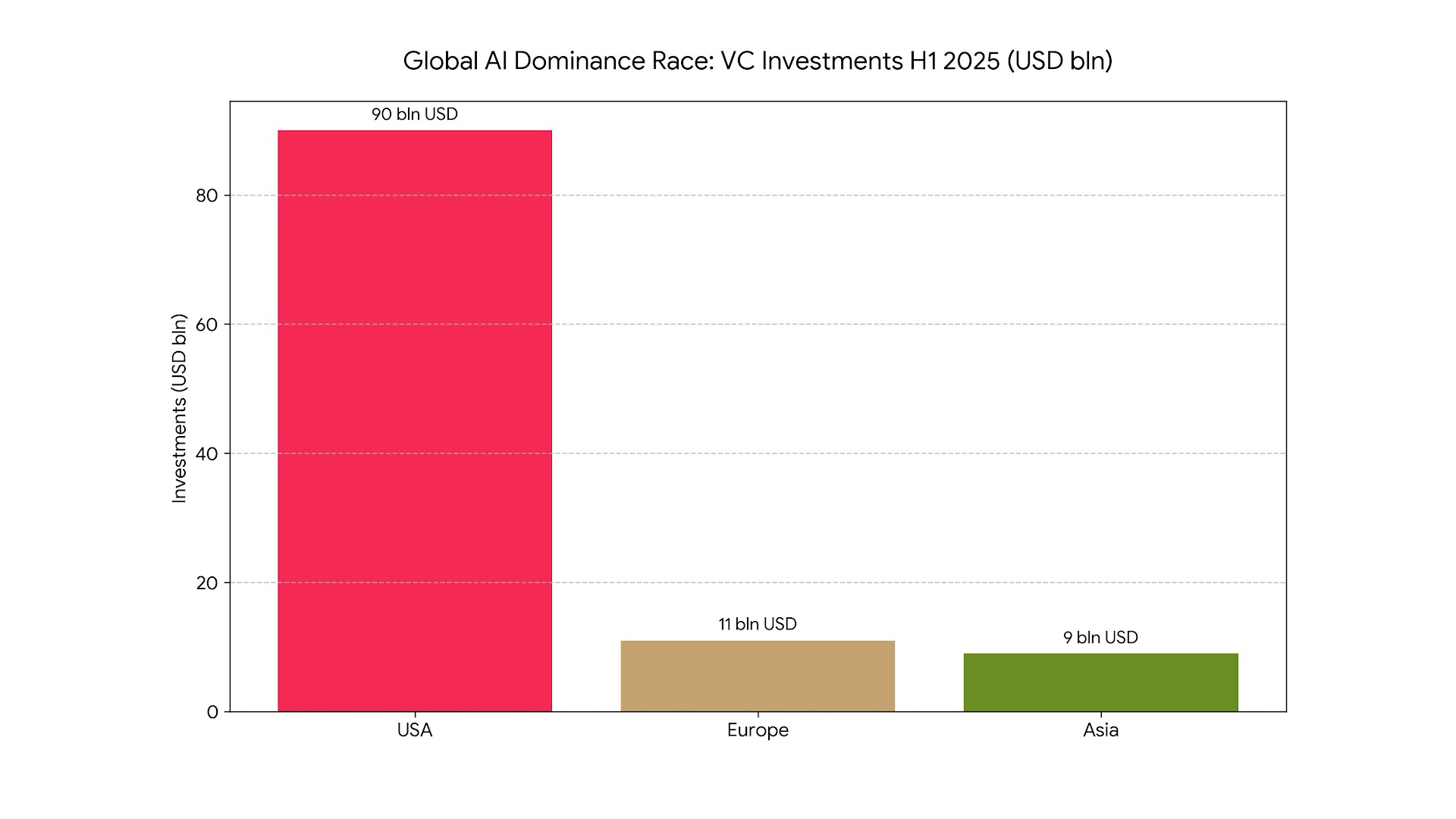
Data from the first half of 2025 clearly shows that the global AI landscape is dominated by the US. The scale of US dominance is overwhelming.
In H1 2025, VC investment in the US reached US$91.5bn, compared to US$18bn in Europe and just US$12.9bn in Asia-Pacific. In the area of generative AI, which is attracting the most attention, the gap is even deeper, with US companies accounting for 97% of global deal value in H1 2025.
There is also a reshuffle in the European backyard. Traditionally, the UK has been the undisputed leader. However, in the second quarter of 2025, Germany, for the first time in more than a decade, overtook the UK in terms of the value of VC funding raised.
Backed by powerful public investment pledges – President Emmanuel Macron announced a €109 billion plan to develop AI – France is dynamically consolidating its position.
The inability to compete with the US giants in the extremely capital-intensive foundational ‘model war’ has forced Europe to adopt a more pragmatic strategy. Instead of trying to build their own competitive language models (LLMs) from scratch, European investors and founders are focusing on the so-called ‘application layer’ of AI.
The approach is to use existing, powerful models to solve specific vertical business problems. Examples of this strategy in action abound. Germany’s Helsing, which raised €600m, is applying AI to battlefield data analysis, becoming a key player in the defence sector.
UK-based Synthesia, with a US$180m round, dominates the market for generating video for corporate training and marketing.
Beyond AI hype: a map of the hottest investment sectors
Although artificial intelligence dominates the headlines, an analysis of capital flows in the first half of 2025 reveals a much more nuanced picture. Investors are diversifying their portfolios, directing significant funds to sectors of fundamental importance to the economy and society.
H1 2025 figures show a clear changing of the guard. HealthTech (medical technology) became the best-funded sector, raising an impressive €5.7 billion. Deep Tech (deep technology) and B2B SaaS (software as a service for business) followed closely behind, with €5.2bn each.
FinTech, once the undisputed leader, fell further down the list with €3.7 billion, recording a 20% year-on-year decline. In contrast, GreenTech (also referred to as Climate Tech), despite the global slowdown, remains a key pillar of European investment, attracting USD 5.3 billion (around EUR 4.9 billion) in the first half of the year.
HealthTech: a new leader driven by demographics and AI
The growth of the HealthTech sector is indisputable. Europe has seen a 1.65-fold year-on-year increase in funding in this sector, reaching USD 3.3 billion. This boom has solid foundations: Europe’s ageing population and the AI revolution in diagnostics and drug discovery. The mega-rounds for the UK’s Verdiva Bio (USD 410 million) or Sweden’s Neko Health (USD 260 million) are proof of this.
GreenTech: a resilient pillar in the consolidation phase
The GreenTech sector is experiencing a period of correction. Funding in H1 2025 fell by around 40-50% compared to the previous year. However, this decline signals a shift from broad market funding to investment in capital-intensive and strategically important Deep Tech.
Money is flowing to companies working on fusion energy (Proxima Fusion), sustainable aviation fuel (Skynrg) and large-scale battery systems (Green Flexibility).
FinTech: a mature sector in search of efficiency
FinTech is entering its maturity phase. The drop in total funding to €3.7bn in H1 2025 is a fact. However, the median round size has increased by 38% over the same period, meaning that capital is concentrated in fewer but more mature and proven companies.
Cyber security and defence tech: rising stars
The growth of these two sectors is directly driven by the geopolitical environment. The European cyber security market grew by 13% in H1 2025, stimulated by new regulations and AI threats.
At the same time, the Aerospace & Defence sector attracted a record €1.5 billion, following growing tensions and EU initiatives to strengthen European defence.
Public money: how Brussels is building technological sovereignty
In 2025, the investment landscape in Europe is shaped not only by private capital, but equally by the strategic interventions of public funds.
With a budget of €95.5bn for 2021-2027, Horizon Europe is the EU’s main vehicle for funding research and innovation, of which around 35% is earmarked for digital transformation.
The programme focuses on strategic areas such as quantum technologies, graphene, advanced computing and AI, supporting them, among others, through flagship initiatives with a budget of €1 billion each.
The National Recovery Plans (NRPs), in turn, are an unprecedented injection of money into member state economies. Each country was obliged to allocate at least 20% of the funds to digital and 37% to climate.
France, for example, is allocating around €8.5 billion to digital transformation, including €1.8 billion for technologies such as cyber security and the cloud. Germany has earmarked more than 52% of its plan for digital transformation (approximately €14.5 billion) , and Italy 25.6% (approximately €49.8 billion).
These actions show that public funds are not just a form of subsidy, but a tool for a conscious industrial policy. The aim is to build ‘technological sovereignty’ , i.e. making Europe independent of key technologies from the US and China.
The exit equation: a mature ecosystem seeks liquidity
In 2025, the European technology ecosystem faces a major challenge: how to deliver return on investment in an environment where traditional capital exit paths are limited.
The market for initial public offerings (IPOs) remains stagnant, with a dramatic 65% decline from H1 2024. In response, mergers and acquisitions (M&A) are growing rapidly, with H1 2025 in the UK alone seeing the highest number of takeover bids in 15 years.
Despite the general slowdown, the market is highly polarised. The median pre-money valuation in Europe reached a decade-long peak of €8.6m in June 2025.
This is indicative of the ‘flight to quality’ phenomenon, in which investors are concentrating capital on the most promising, proven companies. The best indicators of this trend are the largest funding rounds, which perfectly illustrate the key trends: the dominance of AI, the strategic importance of Defense Tech and HealthTech, and the capital intensity of GreenTech.
Polish growth: Dynamo from Central and Eastern Europe
In a European VC market landscape characterised by caution, Poland stands out as one of the most dynamically growing ecosystems. The Polish VC market recorded a spectacular 155% year-on-year increase in deal value in the first quarter of 2025, reaching PLN 444 million (approximately EUR 106 million).
This impressive growth is driven by several fundamental changes indicative of the maturation of the Polish ecosystem:
Moving on to later rounds: Almost half (48%) of the deals in Q1 2025 were Series A or later rounds, showing that the Polish market is already capable of not only creating but also scaling innovative companies.
Capital internationalisation: As much as 42% of the capital invested in Polish startups in Q1 2025 came from foreign funds, including from the US, Germany and the UK.
Flagship successes: The funding round for ElevenLabs, exceeding PLN 700 million and attracting leading US funds such as Andreessen Horowitz (a16z) and Sequoia Capital, is an unprecedented event. As is the investment in Nomagic (approximately PLN 140 million). These transactions definitely put Poland on the global innovation map.
The analysis of the European technology market in 2025 leads to a clear conclusion: we are facing a more mature, selective and strategically focused market.
The time of easy money and financing growth at any cost is over. It has been replaced by an era of fewer deals, but bigger, smarter and concentrated in sectors that are fundamental to the continent’s future.
For investors, the greatest opportunities lie at the intersection of global technology trends (AI in particular) and Europe’s strategic priorities (sovereignty, energy transition, security).
For the founders, success in the current climate requires more than just innovative technology – investors expect a clear product-market fit and a credible path to profitability.
The year 2025 is a maturity test for the European technology ecosystem. It is a time when Europe, perhaps out of necessity, learns to invest not only broadly, but above all wisely, building the foundations for its long-term competitiveness on the global stage.
A quiet revolution has been playing out in the landscape of Poland’s technology economy for several years. Devoid of the global publicity that accompanies the biggest tech hubs, the transformation of the HealthTech sector is fundamentally changing the face of national healthcare, while attracting record streams of capital.
What was a niche for enthusiasts just a decade ago is now becoming one of the hottest and most stable segments of the investment market. Driven by the growing maturity of the ecosystem and digitalisation catalysed by the pandemic, Poland is establishing itself as a leading HealthTech hub in Central and Eastern Europe.
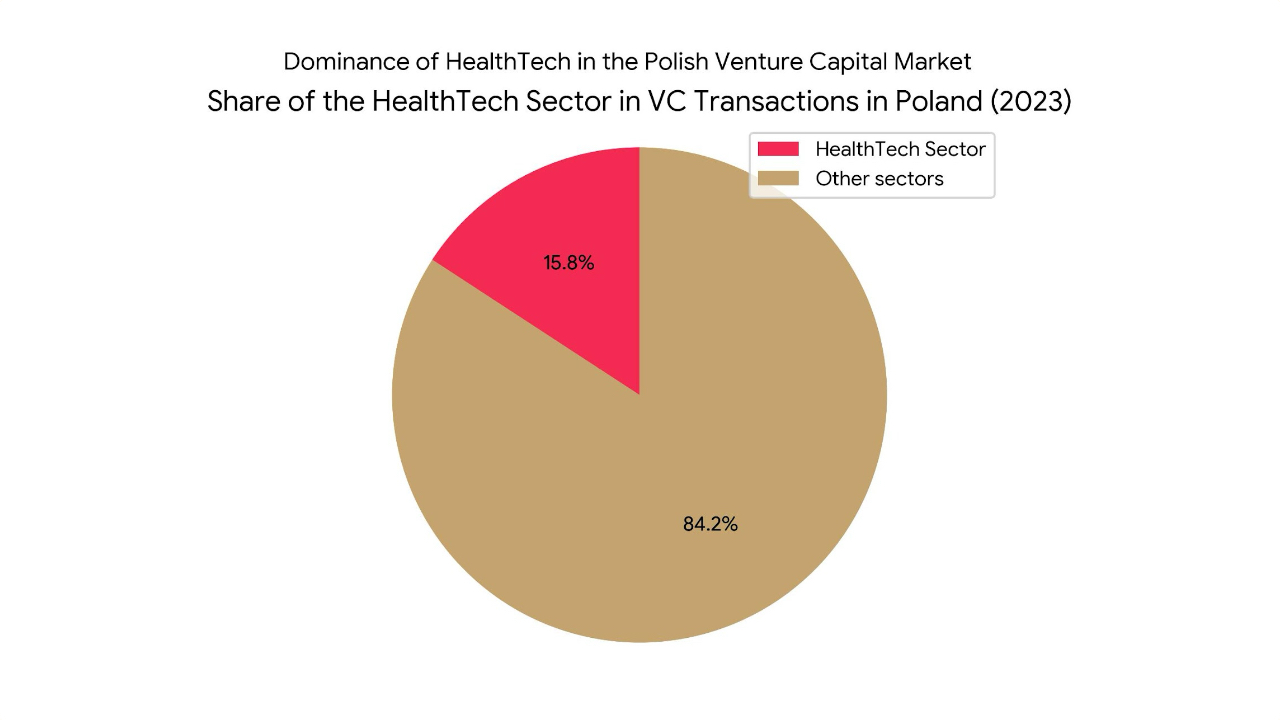
This thesis is strongly supported by the data. The health sector has consistently held the leading position in terms of the number of Venture Capital (VC) deals in Poland for the past four years, accounting for 15.8% of all funding rounds in 2023.
This is a sign that investors have not only recognised the potential, but are treating HealthTech as a strategic and volatility-proof area of capital investment. A symbol of the maturity of the market has been the global success of Docplanner (known in Poland as ZnanyLekarz), the first Polish unicorn in this sector, whose valuation has exceeded one billion euros.
This quiet revolution is gaining momentum, transforming Poland from a technology adopting country to a technology creating and exporting country.
Capital flows to health in a broad stream
Analysis of data from the Polish Venture Capital market leaves no illusions – the health sector has become its undisputed leader. Reports from the Polish Development Fund (PFR) and PFR Ventures consistently indicate that HealthTech, MedTech and BioTech startups have attracted the largest number of investment rounds since 2020.
In 2023 alone, they raked in as much as 15.8 per cent of all transactions in the market, outclassing other popular sectors.
The scale of this growth is impressive. As recently as 2019, VC funds had funded just 17 projects in the health area. By 2023, this number has risen to nearly 70. This more than fourfold increase in the number of deals has also translated into a huge increase in the value of capital.
Over the past five years, local and international VC funds have invested approximately PLN 1.3 billion in Polish medical innovations.
What is particularly telling is that the HealthTech boom is taking place against the backdrop of a global and local VC market downturn. In 2023, the overall value of the Polish VC market shrank by as much as 42% compared to the record year of 2022. In these uncertain times, HealthTech has proven to be an investment ‘safe haven’.
Its resilience stems from the fact that healthcare is based on fundamental, non-cyclical needs and that structural problems in the system, such as rising costs and staff shortages, create huge potential for technological solutions.
The development of the market is also supported by institutional initiatives such as the Healthcare Investment Hub created by PFR, which builds bridges between Polish companies and specialised European VC funds .
An ecosystem built on a foundation of unicorns
The Polish HealthTech ecosystem has reached a critical mass, counting, according to various estimates, between 100 and over 300 operating medical startups. Geographically, the scene is strongly concentrated in two centres: Warsaw (Masovian Voivodeship) and Wrocław (Lower Silesian Voivodeship), where 50% and 46% of the companies in the sector operate respectively.
However, the maturity of the market cannot be fully understood without analysing the Docplanner phenomenon. This company, founded in Poland, became the unofficial first VC-backed unicorn in the country’s history.
Its success, based on a model combining a patient-free appointment booking platform (B2C) with SaaS software for doctors and clinics (B2B), has been a powerful catalyst for the entire ecosystem.
Docplanner’s global success has proven to international investors that a Polish startup is capable of building a profitable global business. What’s more, the company has trained hundreds of managers and specialists who, having gained unique experience, have gone on to found their own startups or feed the ranks of others, creating a new wave of innovators and business angels.
As a result, the market has matured, moving from solving ‘first order’ problems (how to make an appointment) to challenges that are much more complex. Today, the ecosystem is diverse, led by companies such as Infermedica, a pioneer in the use of AI for initial symptom assessment, Tomorrow Medical, linking telemedicine to a network of physical PCPs, and StethoMe, developer of a smart stethoscope for home use that uses AI to analyse lung and heart auscultation.
HealthTech – 3 waves of the technological revolution
The evolution of the Polish HealthTech market is taking place in three distinct technological phases that build on each other.
Phase I – Normalising Telemedicine: the COVID-19 pandemic acted as a powerful accelerator. In 2020 alone, as many as 56.8 million teleconsultations were provided in primary care in Poland, accounting for 36.4% of all consultations. At the peak of the pandemic, the proportion of teleconsultations in Poland reached 62%, one of the highest rates in Europe. Remote consultation has ceased to be a curiosity and has become a standard, laying the digital foundation for a further revolution.
Phase II – The Era of Artificial Intelligence in Diagnostics: As remote communication became the norm, the market began to move from simple video consultations to sophisticated decision support systems. Artificial intelligence (AI) found its way into medical data analysis and the initial assessment of a patient’s condition. An example is the aforementioned Infermedica, whose platform conducts an initial interview with the patient and recommends the most appropriate form of assistance based on an analysis of symptoms.
Phase III (Future) – Internet of Things (IoT) and Proactive Medicine: the next phase is the Internet of Things (IoT) in medicine, which enables a shift from reactive to proactive and predictive medicine. Wearables and smart sensors can collect data on vital signs in real time, allowing early detection of health problems. Global forecasts indicate a compound annual growth rate (CAGR) for this market of around 21%. For Poland, a stable growth rate of 10.79% per year is forecast, making this segment a very promising growth area.
Challenges on the horizon: from lab to market
Despite its dynamic growth, the Polish HealthTech ecosystem faces serious challenges. The most important of these is the so-called “commercialisation gap” – the barrier between the huge scientific potential and its market exploitation.
Polish universities and research institutes conduct advanced research, but there is still a lack of effective mechanisms to turn scientific discoveries into scalable products, especially in the capital-intensive MedTech and BioTech segments.
Awareness of these barriers is growing, and with it come initiatives to build bridges between the worlds of science and business.
Examples include the POLMED Health Hub, a platform that facilitates collaboration between start-ups and mature medical companies, or the MedTech Forum created by the AstraZeneca Group, where scientists can meet entrepreneurs and gain practical business knowledge.
What does the future hold for Polish healthtech?
The Polish HealthTech sector has undoubtedly completed the ‘digital spurt’ phase and is entering a period of maturity. “Silent revolution” is getting louder and louder, and its further fate will depend on the ability of the ecosystem to overcome key challenges.
Future growth will be determined by further capital inflows, success in commercialising advanced technologies (deep-tech) and the effective integration of innovative solutions into the public healthcare system.
Poland has a unique opportunity to grow from a regional leader in technology adoption to become a significant European centre for the creation and export of medical innovations. If existing barriers can be overcome, the ‘silent revolution’ has every predisposition to become a resounding global success for the Polish economy.
Warsaw rarely features in the global discussion of financial centres. London, Frankfurt or Zurich dominate. Yet it is in Poland, far from the traditional bastions of banking, that a quiet revolution is taking place. A country that is not a global financial capital has built one of the most dynamic and innovative FinTech ecosystems in Europe. This is not a journalistic thesis, but a reality that can be measured and counted.
Poland’s position as a leader in payment innovation rests on three solid pillars: an astonishingly mature and profitable sector of domestic technology and financial companies, the unprecedented success of the national payment standard BLIK, and the rapid adoption of ‘Buy Now, Pay Later’ (BNPL) services. Analysis of hard data shows how Poland is methodically setting the standard for the entire continent.
The foundation for success: a healthy and mature ecosystem
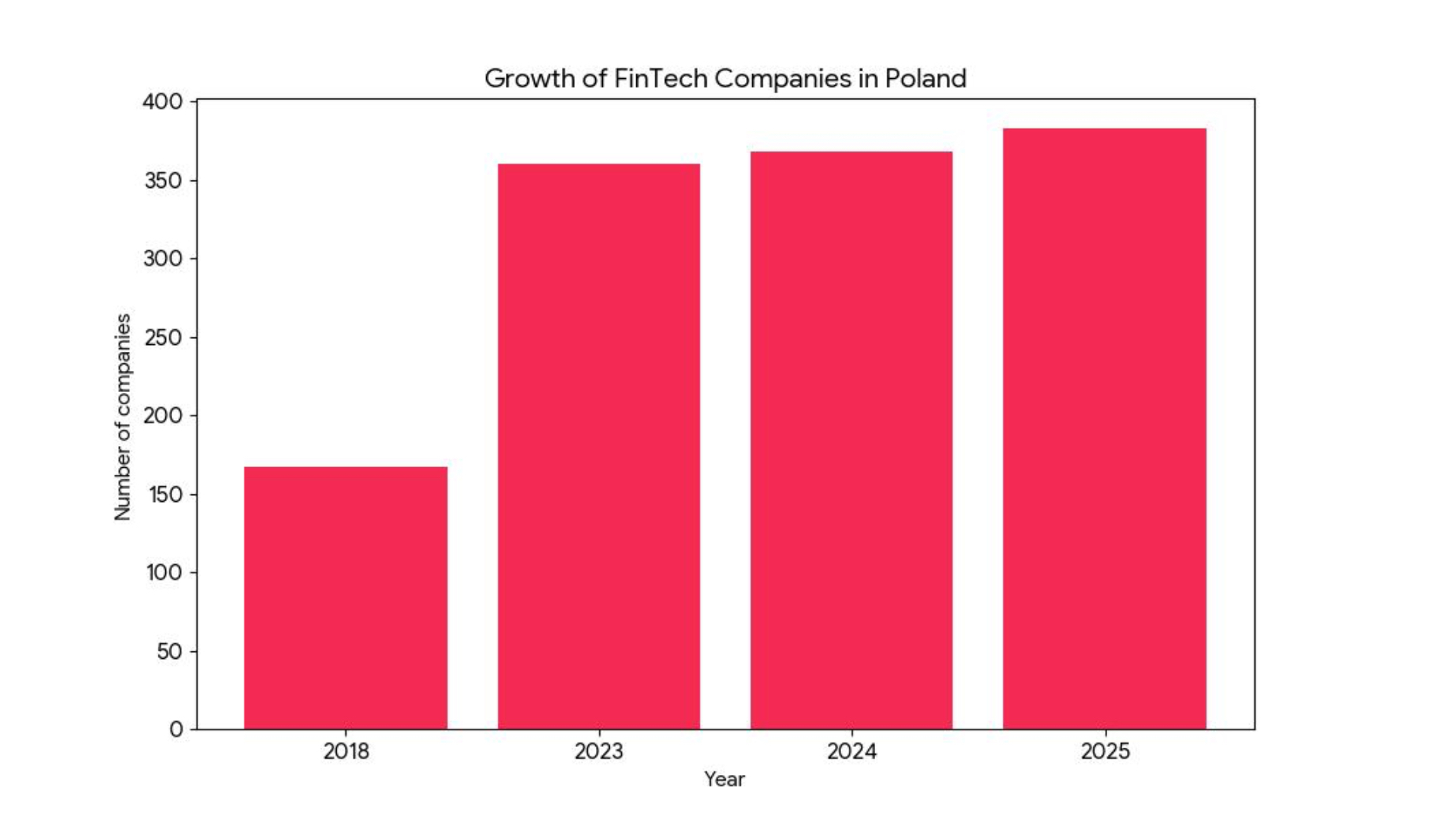
The strength of Poland’s FinTech sector is no accident. It is the result of years of building a deep and, most importantly, financially healthy ecosystem. The data unequivocally points to sustained and dynamic growth. According to the report ‘Map of Polish Fintech‘, the number of companies in the sector has grown from just 167 in 2018 to a record 383 in 2025. This is no longer a handful of promising start-ups, but a fully-formed branch of the digital economy, of which Warsaw is the centre with 45% of companies located in the capital.
The structure of the market is indicative of its maturity. In addition to agile, small entities employing up to 10 people (31% of companies), there are large, well-established companies with more than 100 employees (30% of companies). The distribution of revenues is similar – as many as 34% of entities are market leaders generating more than PLN 100 million per year.
However, the most telling indicator that differentiates Poland from many global technology hubs is profitability. In an environment where start-ups often prioritise growth at the expense of profit, Polish FinTech stands on solid foundations. As many as 86% of companies in the sector can boast a profit, while only 14% ended last year in the red. This is evidence of healthy business models that generate real value from the outset. This strong, profitable domestic market has served as an ideal incubator for world-class solutions ready for international expansion.
BLIK – how Poland has redefined mobile payments
If the Polish FinTech ecosystem is the foundation, then BLIK is the jewel in its crown. Its success is the result of a globally unique collaboration between competing banks, which created a single, common national standard within the Polish Payments Standard (PSP) company. This strategic decision avoided market fragmentation and gave BLIK access to millions of customers from day one.
The figures speak for themselves. In the first half of 2025, users completed 1.39 billion transactions with a total value of PLN 207.3 billion . This represents an increase in value of almost a third year-on-year. The active user base reached 19.4 million, growing by 2.5 million in just one year . The scale of operations is huge – on average, Poles make 7.4 million BLIK transactions every day.
BLIK’s initial strength was e-commerce, where it remains the undisputed leader to this day, accounting for nearly half of all operations. However, the system has evolved into a truly versatile tool. Phone-to-phone (P2P) transfers have become a daily habit for more than 18.7 million registered users. The real revolution, however, has been contactless payments at point-of-sale (POS) terminals, which are recording an astronomical growth rate of 86% year-on-year. This move is transforming BLIK into a direct competitor to the global card giants in the world of physical commerce.
On a European scale, BLIK is the absolute leader. In 2023, it processed more than 1.7 billion transactions, making it the largest mobile payment system on the continent in terms of volume . Its success is an exemplary example of synergy between the banking and technology sectors, which has become an inspiration for other markets.
“Buy now, pay later” (BNPL) – the second wave of innovation
The dynamic development of the ‘Buy Now, Pay Later’ (BNPL) sector is testament to the continued innovation of the Polish market. Poland has not only adapted this global trend, but has become one of the leaders in its implementation. The value of the deferred payment market in Poland is expected to reach USD 1.74 billion in 2025, with forecasts predicting further growth to USD 2.80 billion by 2030.
Significantly, Polish consumers show exceptional enthusiasm for this form of payment. Already in 2021, the percentage of Poles who used BNPL services (62%) was higher than in Sweden (58%) – a country considered to be the cradle of this type of service . Widespread adoption is progressing – the percentage of users increased from 15% at the end of 2023 to 21% in July 2024 . For e-commerce sellers, BNPL has become a powerful tool that can increase conversions by up to 20%.
A strategic move that further drives the market is the entry of BLIK with the BLIK Pay Later service. It leverages the huge user base and brand trust to accelerate BNPL adoption on a mass scale. Data shows that the average transaction value of this service (PLN 321) is more than double that of standard BLIK payments (PLN 155), proving that Poles are keen to finance larger purchases in this way .
Outlook: from local leader to global player
The success of Polish FinTech is based on the unique synergy of banks and technology companies, a demanding internal market and a strong technology base. In contrast to the confrontational model of Silicon Valley, cooperation dominates in Poland. Banks such as PKO BP, Alior Bank and Santander run their own accelerator programmes, actively implementing solutions created by start-ups .
Having established itself domestically, international expansion is a natural step. BLIK is already pursuing its strategy, implementing the system in Slovakia and preparing to enter the market in Romania . This is not an isolated case. Polish companies such as Verestro (operating on five continents), Authologic (integrated with sources in nearly 200 countries) or PayU (a global player with Polish roots) have already achieved significant success on the international stage.
The future of Polish FinTech will be shaped by global trends such as artificial intelligence and embedded finance, but also by new EU regulations and growing competition from global technology giants .
However, an analysis of the numbers leaves no doubt. A mature, profitable ecosystem, the BLIK phenomenon and the boom in the BNPL market unequivocally confirm that Poland is today one of the most important centres of payment innovation in Europe. It is a leader that not only keeps up with trends, but increasingly sets them.
Zarządzaj swoją prywatnością
To provide the best experiences, we and our partners use technologies like cookies to store and/or access device information. Consenting to these technologies will allow us and our partners to process personal data such as browsing behavior or unique IDs on this site and show (non-) personalized ads. Not consenting or withdrawing consent, may adversely affect certain features and functions.
Click below to consent to the above or make granular choices. Your choices will be applied to this site only. You can change your settings at any time, including withdrawing your consent, by using the toggles on the Cookie Policy, or by clicking on the manage consent button at the bottom of the screen.
Funkcjonalne
Always active
Przechowywanie lub dostęp do danych technicznych jest ściśle konieczny do uzasadnionego celu umożliwienia korzystania z konkretnej usługi wyraźnie żądanej przez subskrybenta lub użytkownika, lub wyłącznie w celu przeprowadzenia transmisji komunikatu przez sieć łączności elektronicznej.
Preferencje
Przechowywanie lub dostęp techniczny jest niezbędny do uzasadnionego celu przechowywania preferencji, o które nie prosi subskrybent lub użytkownik.
Statystyka
Przechowywanie techniczne lub dostęp, który jest używany wyłącznie do celów statystycznych.Przechowywanie techniczne lub dostęp, który jest używany wyłącznie do anonimowych celów statystycznych. Bez wezwania do sądu, dobrowolnego podporządkowania się dostawcy usług internetowych lub dodatkowych zapisów od strony trzeciej, informacje przechowywane lub pobierane wyłącznie w tym celu zwykle nie mogą być wykorzystywane do identyfikacji użytkownika.
Marketing
Przechowywanie lub dostęp techniczny jest wymagany do tworzenia profili użytkowników w celu wysyłania reklam lub śledzenia użytkownika na stronie internetowej lub na kilku stronach internetowych w podobnych celach marketingowych.