Tag: Innovations

  • HPN IMPAKT: Akces NCBR announces call for startups and researchers

    HPN IMPAKT: Akces NCBR announces call for startups and researchers

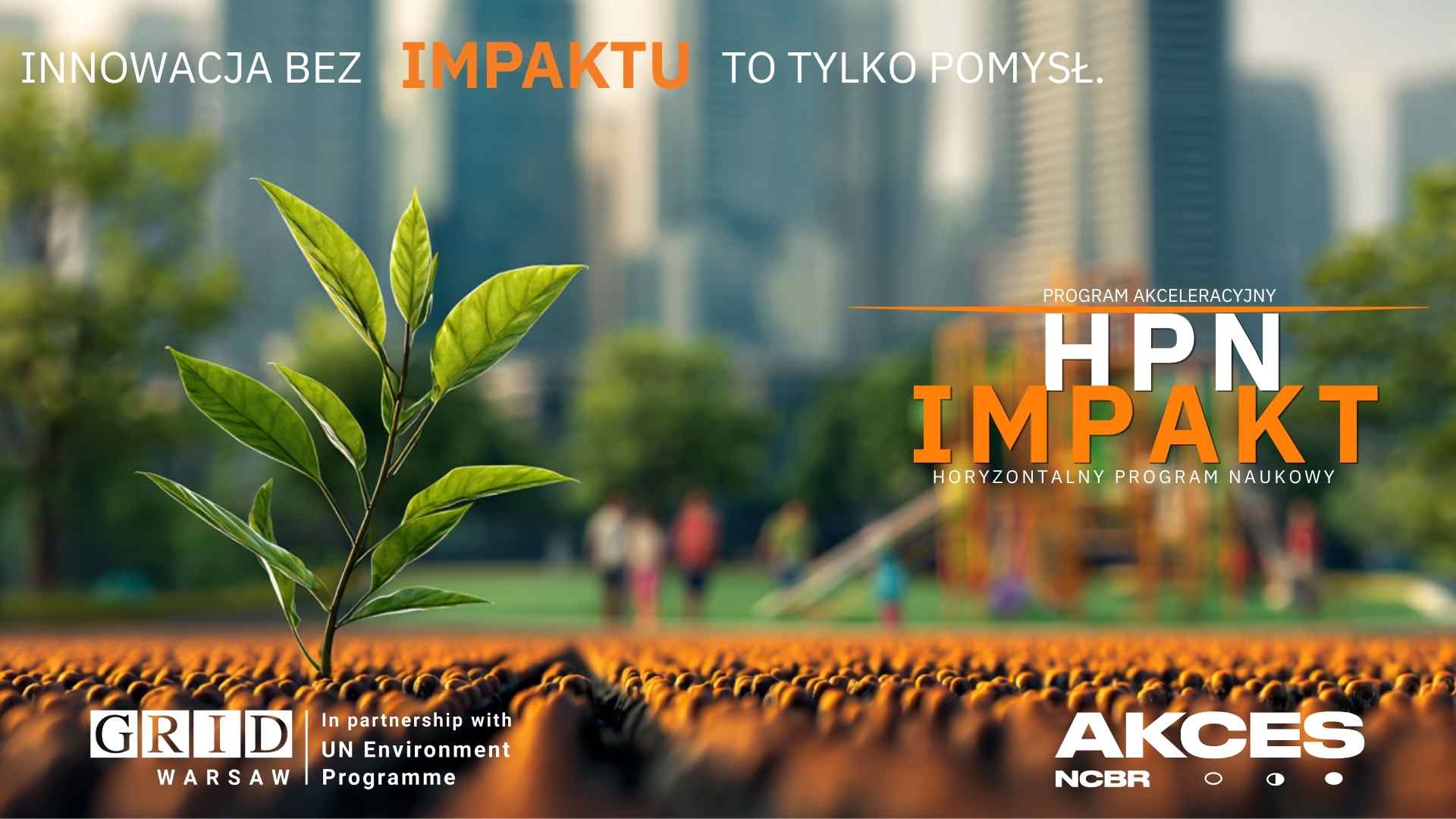
    Akces NCBR, the market arm of the National Centre for Research and Development, has announced a call for applications for the HPN IMPAKT programme. This initiative is not just another grant competition; it is an attempt to formalise ‘impact’ as a key business performance indicator.

    The mechanism of the programme is clear. The organisers are looking for solutions at technology readiness levels from TRL 3 to 8, which means that both advanced prototypes and products close to commercialisation are of interest. The key differentiator of this edition, however, is the scoring system: projects that can prove their real social or environmental impact will be given the highest priority.

    Partnership and hard currency

    In order to avoid the trap of ‘impact washing’, Akces NCBR has established cooperation with UNEP/GRID-Warsaw. The participation of the centre affiliated to the United Nations Environment Programme is to guarantee that declarations about the pro-environmental nature of the technology will be verified by experts. As Maria Andrzejewska, Director General of UNEP/GRID-Warszawa points out, innovations must accelerate systemic transformation and not just look pretty in ESG reports.

    For startups and research teams, a package worth PLN 400 000 is at stake. This consists of a direct grant of PLN 300 000 and mentoring support valued at PLN 100 000. At a time of a more cautious approach by VC funds to early-stage startups, such non-dilutive (non-capital dilution) funding represents a significant liquidity injection for deep-tech (deep-tech).

    Horizontality as a business opportunity

    Arleta Malasińska, CEO of Akces NCBR, emphasises the horizontal nature of the call. The programme is not limited to one industry. Energy optimisation systems, as well as tools for increasing the availability of public services or water retention technologies all stand a chance. This approach reflects a broader trend in global markets: investors are increasingly looking for solutions to fundamental problems that are resilient to cyclical fluctuations in the consumer sector.

    The call for proposals remains open until 31 May 2026. For the Polish R&D sector, this is a moment of testing – whether it can turn scientific ideas into measurable change that will defend itself on the free market.

  • The cost of AI in 2030 – Why will agent-based AI deployment not be cheap?

    The cost of AI in 2030 – Why will agent-based AI deployment not be cheap?

    According to recent analysis by Gartner, the cost of inference on AI models with a trillion parameters will fall by more than 90% by 2030. From a spreadsheet perspective, this seems like a harbinger of digital abundance, in which powerful computing power becomes an almost free commodity. However, a deeper analysis of market mechanisms and the evolution of the technology itself suggests a very different scenario.

    Although the per-unit price of process data, or tokens, is decreasing dramatically, overall business spending on artificial intelligence is likely to continue its upward trend. This phenomenon, known as the cheap token paradox, is now becoming a key focal point for the digital strategy of modern organisations.

    Understanding these dynamics requires looking beyond the technology itself, towards the economics of the providers of large language models. The current market landscape resembles a phase of intense colonisation, with major players such as OpenAI, Google and Anthropic operating at, and often below, the break-even point. Investment in infrastructure and research is gigantic, and the optimisation of inference costs mentioned by Gartner is primarily a route to profitability for these players, rather than a mechanism for lowering prices for the end customer. Efficiencies resulting from better chip design and improved model architecture will allow suppliers to balance their own balance sheets before real savings are fully passed on to the market.

    However, the real cost revolution will not take place in the field of simple queries, but in the area of the next generation of agent-based artificial intelligence solutions. So far, interaction with models has largely been based on the paradigm of the assistant – a tool that responds to a specific command and generates a static response. Today, the market is shifting towards autonomous agents, capable of autonomous planning, using external tools and correcting their own errors in the decision loop. This qualitative shift has powerful financial implications. Every second of autonomous agent work, which has to repeatedly ‘think through’ a task before taking action, consumes many times more tokens than a single user prompt. It is estimated that moving from a simple bot to an executive agent increases the demand for process data by five to as much as thirty times. As a result, although the price per thousand tokens becomes symbolic, their massive consumption leaves the final bill unchanged or increasing.

    Executives face the challenge of redefining the concept of value in IT projects. A strategy based on the search for the cheapest solution may turn out to be a dead end, leading to systems with low business usability. The key to success becomes the so-called barbell strategy, a two-pronged approach.

    On the one hand, organisations should aim to maximise the utilisation of lower-cost, smaller-scale models for routine, repetitive tasks where high-precision reasoning is not critical.

    On the other hand, the financial resources thus freed up are worth directing to the ‘technological frontier’ – the most advanced agent models which, although costly, are capable of generating unique added value, impossible to copy by competitors using off-the-shelf, cost-optimised solutions.

    The development of inference on edge devices and specialised chips will also be an important factor in the expenditure architecture. Moving some computing directly to laptops, phones or local company servers will allow some emancipation from the cloud giants, but even here there is a hidden cost in the form of the need to upgrade the hardware fleet and maintain the distributed infrastructure. Deciding what to process ‘in-house’ and what to process in the cloud will become one of the most important operational competencies of modern CIOs.

    Ultimately, the role of the technology leader is evolving from resource manager to intellectual efficiency strategist. Instead of focusing on negotiating token rates, the focus should be on optimising the return on each unit of computing invested in business processes. Indeed, the cheapness of technology is only an opportunity to increase the complexity of the tasks performed. If a company in 2030 spends as much on artificial intelligence as it does today, but in return receives full autonomy of logistical processes instead of a simple report generator, this will represent a triumph of strategy over pure accounting.

    In this context, Gartner’s predictions should not be read as an announcement of budget cuts, but as a signal to prepare organisations for an unprecedented increase in the appetite for data. The future belongs to entities that understand that in the knowledge economy, the most expensive resource is no longer the technology itself, but the ability to scale it properly where it brings real market advantage.


  • EPO report: Poland is the innovation leader in the region despite slowing growth

    EPO report: Poland is the innovation leader in the region despite slowing growth

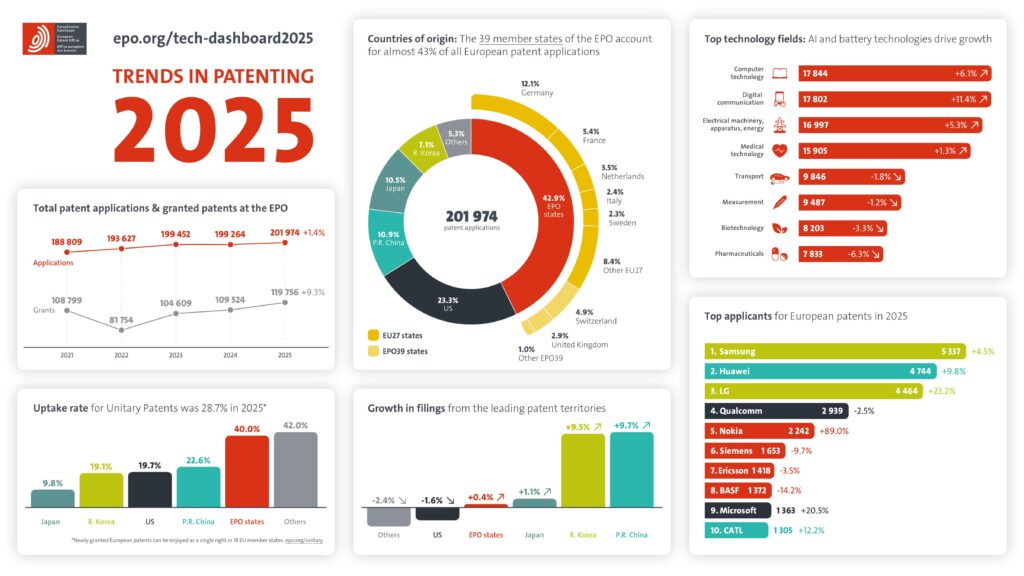
    The latest data from the EPO Technology Dashboard 2025 report brings a bittersweet picture of the Polish innovation ecosystem. Although the number of patent applications to the European Patent Office (EPO) fell by 10.3% year-on-year, Polish inventors shifted their focus towards high value-added sectors such as pharmaceuticals and biotechnology. With 621 applications, Poland maintains its 12th position in the European Union, remaining the undisputed innovation leader in the CEE region.

    Turning from quantity to strategic quality

    The decline in dynamics after a period of intense growth lasting from 2021 can be interpreted as a market correction, but the long-term outlook remains optimistic. Compared to 2016, the number of Polish applications increased by 58%, twice the average dynamics of the EPO as a whole (27%).

    What is most interesting about this year’s list is the changing of the guard in key sectors. The previous leader, medical technology, gave way to pharma, which recorded a spectacular 51.7% year-on-year growth. Strong growth was also recorded in transport and automotive, as well as machinery and energy, which directly correlates with the global race for renewables and battery technology.

    Academic innovation engine

    A peculiarity of the Polish market, which distinguishes it from Western economies, is the dominant role of the public sector and science. While globally the EPO rankings are dominated by technology giants, in Poland half of the leading applicants are universities and research institutes. Jagiellonian University, the Medical University of Gdansk and the University of Warsaw remain the main drivers of domestic intellectual property.

    From a business perspective, this raises the question of the effectiveness of technology transfer from the walls of academia to industry. However, the record interest in the Single European Patent** suggests that Polish innovators are thinking broadly about commercialisation. As many as 59.6% of patents granted to Poles were granted unitary status, which is significantly higher than the EU average (40.7%) and facilitates expansion into the markets of 18 EU countries.

    Human capital and regional bastions

    Poland also stands out from Europe in terms of inclusiveness. Every third patent application from the Vistula (35%) mentions a woman as a co-inventor. This result is well above the European average (26%), giving Poland 5th place in the entire EPO.

    Geographically, the innovation map remains stable, although there are signs of decentralisation. Warsaw, despite a decline in the number of applications, controls more than a quarter of the market. Malopolska is strengthening behind it, and Lower Silesia is the only one of the leading regions to record an increase in activity (by 8.5%), confirming Wrocław’s status as a growing technology hub.

    At a time of a global race in fields such as AI, 6G or quantum technologies, Poland’s breathlessness in 2025 may only be a stopgap before the next leap – if the research momentum of universities can be sustainably translated into market successes for companies.

    “The record number of European patent applications underlines our continent’s innovation potential and its attractiveness as a global technology market,” said EPO President António Campinos. “The Technology Dashboard 2025 examines progress as well as gaps in specific industry sectors, helping decision makers in Europe to identify priority areas and guide actions and investments that strengthen technological sovereignty and competitiveness. While the European unitary patent is already removing barriers and accelerating the transition to a more integrated innovation market, the topic still deserves our attention, especially in strategic sectors such as artificial intelligence, semiconductors, health and quantum technologies,” adds the EPO President.

    260318 EPO Technology Dashboard 2025 infografika

  • Factorial AI fund: 10 mln euro for HR digitisation

    Factorial AI fund: 10 mln euro for HR digitisation

    Just a decade after its debut, Spanish software provider Factorial is reaching for a technology market-proven strategy to stimulate growth. The company, which has impressively surpassed the $100 million annual recurring revenue (ARR) threshold, has announced the creation of a Factorial AI accelerator fund.

    The €10 million pot is intended to serve as a catalyst for digital transformation in European companies with between 20 and 1,000 employees, with a particular focus on the growing Polish market.

    Contrary to market nomenclature, the new project is not a classic venture capital vehicle seeking equity in startups. It is a strategic programme to subsidise its own ecosystem, aiming to address financial concerns about the implementation of artificial intelligence in HR, finance and IT.

    The capital has been divided into two equal tranches, precisely addressing the different stages of technological maturation of customers. The first five million euros are direct discounts for the implementation of a business process automation platform, lowering the barrier to entry already at the time of signing the contract.

    The remaining amount takes the form of flexible loans for advanced AI-based functions. This structure is intended to prevent the technology from being abandoned after initial deployment, giving organisations a financial buffer to safely scale tools in the areas of recruitment, performance management or strategic planning.

    Factorial ‘s decision is part of a wider market battle for the digital back office of European business. Jordi Romero, the company’s CEO, directly points out that the financial performance of businesses in the coming decade will be directly correlated to the effectiveness of the implementation of artificial intelligence in daily operations.

    By offering direct support, the company not only stimulates the digitalisation of HR processes, but also aggressively fights for the loyalty of medium-sized companies. With a customer base of more than fifteen thousand customers in one hundred and twenty countries, Factorial is sending a clear signal to market rivals.

  • Central and Eastern Europe (CEE) vs. Western Europe: where does the heart of innovation really beat?

    Central and Eastern Europe (CEE) vs. Western Europe: where does the heart of innovation really beat?

    For decades, Europe’s technological landscape was based on a simple divide: innovative, capital-rich centres in the West and talented but mostly cheaper hinterlands in the East. Central and Eastern Europe (CEE) was mainly seen through the prism of cost arbitrage, ideal for nearshoring.

    Today, this stereotype is not only outdated, but actually inhibits an understanding of the real dynamics of the continent. We are witnessing a fundamental change – the CEE region, led by Poland, the Czech Republic and Romania, is undergoing a transformation from a peripheral service provider to a self-sufficient ‘technology tiger’.

    Its new competitive advantage is no longer based solely on lower costs, but on a unique combination of value, deep specialisation and unparalleled growth momentum.

    To verify this thesis, let us look at the hard data, comparing the key pillars of the innovation ecosystems in CEE and Western Europe.

    The talent equation: more than cost, unparalleled value

    Traditional analysis of IT markets is often reduced to a comparison of nominal salaries. However, a full picture of the value of the CEE region only emerges when three dimensions are examined: the total cost of employment, the purchasing power of the employee and the objective quality of their skills.

    The total cost of employing an experienced software engineer in Warsaw is still significantly lower than in western hubs. Taking into account the gross salary and contributions on the employer’s side, the annual cost of employing a Senior Developer in Warsaw is approximately EUR 88,568.

    This compares to €101,035 in Berlin and €106,704 in Dublin. This means that it is 12-17% cheaper to acquire a world-class specialist in Poland.

    However, the real advantage of CEE lies in purchasing power. The lower cost of living means that a salary here has a much higher real value. A key factor is the cost of renting a flat: a one-room flat in the centre of Warsaw costs between €740-990 per month, while in Berlin it is already €1,100-1250 and in Dublin an astronomical €1,950.

    Similar disparities can be seen in the prices of public transport, catering or entertainment. As a result, the developer in Warsaw, while earning nominally less, enjoys a higher standard of living and greater financial freedom.

    The most important argument overturning the old paradigm, however, is quality. Data from global programming rankings proves that the CEE region is a breeding ground for talent of the absolute highest order. The HackerRank platform ranks Poland 3rd in the world in terms of programmer skills, ahead of countries such as Switzerland, Germany and France.

    Polish programmers are recognised as the best in the world in Java, and Czechs dominate in shell programming. Companies investing in CEE are therefore not making a trade-off between cost and quality – they are gaining access to world-class talent at a more sustainable price.

    Pulse of capital: ecosystem dynamics and resilience

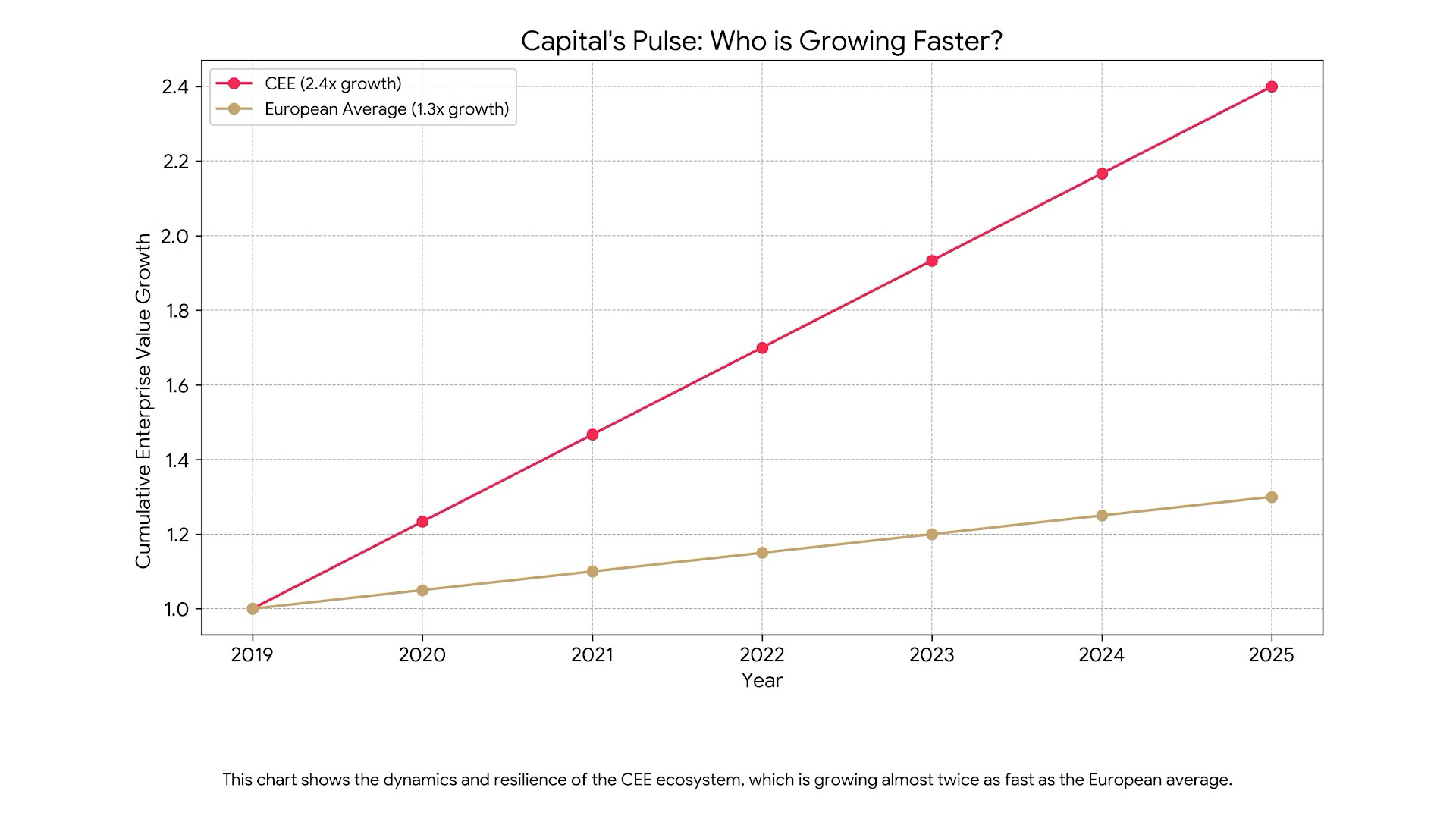
    Venture capital (VC) flows are a seismograph for the innovation ecosystem. Analysis of the data shows that while Western Europe still dominates in terms of volume, it is CEE that shows greater dynamism and remarkable resilience to global slowdowns.

    The total value of businesses in the CEE startup ecosystem has increased 2.4 times since 2019, reaching €243 billion in the first quarter of 2025 – a growth rate almost double the average for Europe as a whole.

    What’s more, during the global slowdown in the VC market in 2023, when investments in Western Europe fell by 35%, the CEE region saw a decline of only 15%. Already in 2024, the market has rebounded, recording growth of 56%. This ability to recover quickly suggests that the foundations of the CEE ecosystem are healthier and better adapted to changing conditions.

    The growing interest from global investors is due to a unique investment thesis for the region. CEE founders, in contrast to the ‘growth at all costs’ culture, are taking a more pragmatic approach, focusing on early revenue generation and capital efficiency.

    This, combined with a strong engineering background, fostering the emergence of deep tech companies, and a ‘global from day one’ mentality, makes for an extremely attractive model for investors looking for not only high returns, but also lower risk.

    Map of the giants: where global companies are locating their future

    Investment decisions by global technology giants are the strongest signal of the region’s strategic importance. Over the past decade, CEE has become an arena for spectacular investments.

    Google invested $2 billion to launch the Google Cloud region in Warsaw, followed by nearly $700 million in The Warsaw HUB office complex, which has become its largest cloud technology development centre in Europe.

    Microsoft has announced a $1 billion plan to create a ‘Polish Digital Valley’, with a cloud computing centre near Warsaw. Intel, in turn, has been developing its largest R&D centre in the EU in Gdansk, employing more than 3,000 engineers working on future technologies such as AI and machine learning.

    A key driver of this is access to world-class talent. Technology leaders know that in order to maintain an edge, they need to be present where engineers capable of delivering the most complex projects can be recruited.

    The presence of these giants creates a powerful flywheel effect: it raises standards in the labour market, creates ‘start-up mafias’ (experienced workers setting up their own companies) and acts as a global quality certificate for the entire region.

    Technological DNA: from monolith to specialisation

    As the CEE ecosystem matures, we are seeing the emergence of deep specialisations. Poland has made a name for itself as a global leader in video game production (Gamedev) and financial technologies (FinTech). With revenues in excess of €1.28 billion and an almost total export orientation (96-97%), Polish gamedev is a powerhouse driven by the success of companies such as CD Projekt. In parallel, with more than 300 startups, Poland has become one of the liveliest FinTech hubs in Europe.

    Romania, with a strong tradition in mathematics, has grown into a European cyber security powerhouse. It is where the globally recognised Bitdefender comes from, and the overall market is expected to grow at a rate of nearly 11% per year.

    The Czech Republic, on the other hand, with its rich history in engineering, has naturally become a leader in artificial intelligence (AI) and its applications in Industry 4.0. The country has world-class research institutions and already more than 11% of Czech companies are using AI technology. This diversification is a source of strength for the entire region and evidence of its growing maturity.

    Hunting unicorns: the ultimate measure of success

    The ability of the ecosystem to regularly generate ‘unicorns’ – companies with a valuation of more than $1 billion – is the ultimate proof of its maturity. Although Western Europe still leads in terms of absolute number (UK – 104, France – 34, Germany – 30), the CEE region has already generated a total of 52-57 unicorns, with Poland as the leader (18).

    However, the dynamics are key: more than half of all CEE unicorns were created in just the last two years (2022-2024), indicating a rapid acceleration. What’s more, the region’s unicorns often have their roots in deep technology (deep tech), such as Lithuania’s Nord Security or Poland’s ICEYE.

    They are also developing a ‘global hybrid’ model, as exemplified by ElevenLabs – a company founded by Poles, with a key R&D centre in Poland, but with offices in London and New York, allowing them to draw on the best talent in the country while having access to the largest capital markets.

    The verdict on the “technological tiger”

    The data clearly shows that the narrative of Central and Eastern Europe as merely a ‘cheaper hinterland’ is outdated. The region offers unparalleled talent value, its VC ecosystem exhibits anti-fragility characteristics, it has become a strategic R&D centre for global giants, it is developing deep specialisations and is an increasingly efficient unicorn factory.

    Although Western Europe still dominates in terms of scale and maturity, the heart of innovation – defined as the epicentre of dynamism, growth and resilience to crises – beats loudest and fastest today precisely in Central and Eastern Europe. “Europe’s technological tiger” is no longer just a promise – it is a reality that can no longer be ignored.

  • Poland invests PLN 2.4 billion in the space sector. New Łukasiewicz Network programme

    Poland invests PLN 2.4 billion in the space sector. New Łukasiewicz Network programme

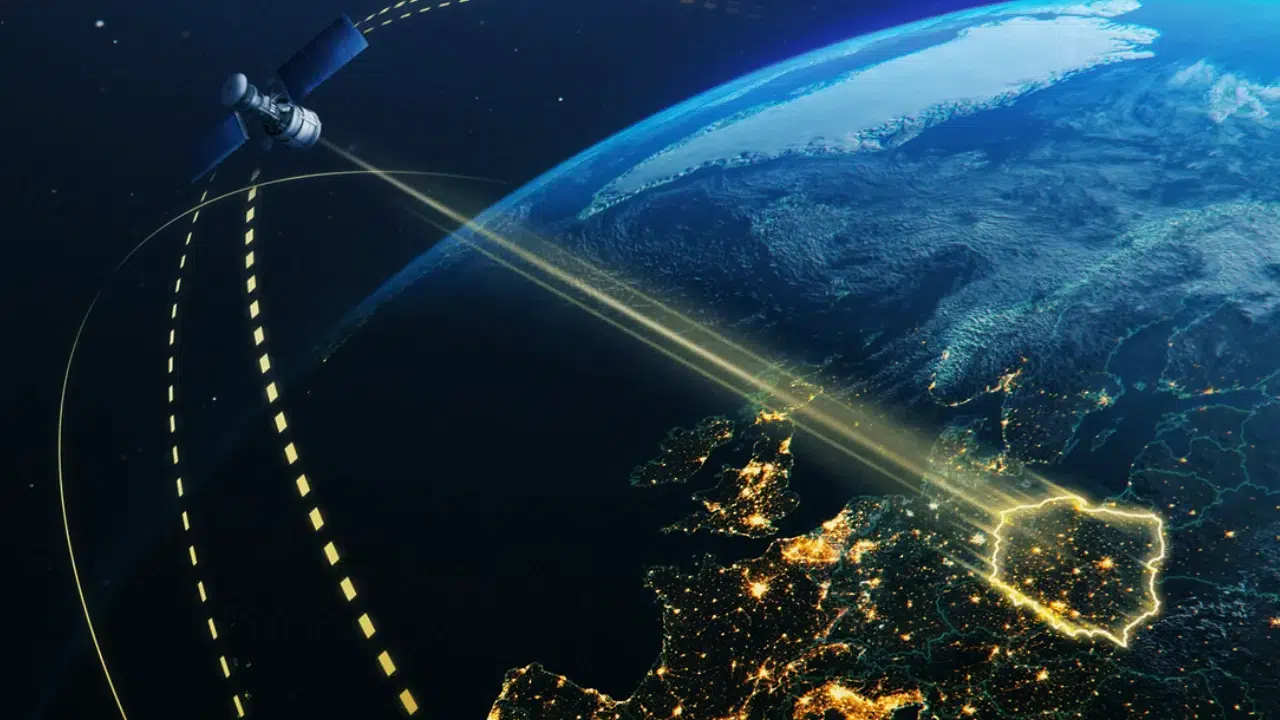
    Warsaw officially challenges European leaders in the Space sector. The inauguration of the Space Research Programme of the Łukasiewicz Research Network is first and foremost a hard business declaration. With a budget estimated at PLN 2.4 billion over the next decade, the project is set to transform the dispersed competences of 22 institutes into a consolidated technological powerhouse led by the Institute of Aviation (Łukasiewicz – ILOT).

    From a market perspective, the key word is ‘autonomy’. Poland is ceasing to aspire merely to be a supplier of components to giants such as Airbus or Thales Alenia Space, and is beginning to build its own value chain. The strategy is based on three pillars: satellite platforms, launch systems and so-called payloads. It is an end-to-end approach to ensure that Polish companies have a real stake in a global cake worth hundreds of billions of dollars.

    The programme is tailored to the requirements of modern geopolitics, as can be seen in the emphasis on dual-use technology. Solutions developed for civilian purposes, such as advanced Earth imaging or green propulsion, will find direct application in defence systems. The project’s funding, combining own resources, defence funds and private capital, suggests that the state is looking for a public-private partnership model that minimises investment risk for business.

    Adam Okniński, Ph.D., programme coordinator, rightly points out that space is now ‘fuel’ for AI, Big Data and quantum technologies. This is where the Polish IT sector can find new space for expansion. Particularly promising is the niche market for servicing satellites in orbit – an area with huge commercial potential, where the barriers to entry are still high and competition is lower than in the production of satellites themselves.

    The first test of the credibility of the new strategy will be the SPARK satellite mission, planned for the next two years. If Łukasiewicz proves that he can manage such a complex project within his own structures, Poland may permanently enter the premier league of the European space industry. This is a chance to go from being a ‘promising emerging market’ to becoming a technology hub that not only sends people into space, but above all makes money from it.

  • Genomtec tests in Asia: Wroclaw-based deep-tech on the final straight to merger

    Genomtec tests in Asia: Wroclaw-based deep-tech on the final straight to merger

    Wrocław-based deep-tech, Genomtec, is about to make one of the most challenging moves in its history to date. The company, which specialises in molecular diagnostics, has announced that it has begun preparing for the operational testing of the Genomtec ID system in Asian markets. While the announcement sounds like a standard expansion step, it is in fact a critical part of the ongoing M&A process that could define the future valuation and ownership structure of the Polish startup.

    Asia, currently one of the most receptive markets for Point-of-Care (POCT) technology, is becoming a testing ground for Genomtec. Potential strategic partners with whom the company is in advanced talks have set a clear condition: the SNAAT® technology must prove its efficacy under local conditions. For investors, this signals that the process of selling the company or its key assets has entered the product due diligence phase, where promises of the analyser’s speed and mobility will be confronted with the operational reality of Far Eastern healthcare systems.

    The logistics of this project are as complex as the technology itself. Miron Tokarski’s team must now manage not only the production of reaction cards for validation, but more importantly the thicket of biosafety regulations. Each jurisdiction in the Asia-Pacific region has specific requirements, which, for a technology based on genetic diagnostics, can sometimes be an impenetrable barrier to entry for less prepared players.

    The success of these assays may position Genomtec as a sweetheart for global medical corporations looking for an alternative to the dominant but often less mobile PCR systems. The flagship product from Wroclaw offers a unique combination: the precision of a laboratory test encapsulated in a device the size of a desktop printer, which in the densely populated metropolises of Asia is a value in itself.

    For technology market observers, the move is a lesson in pre-transaction value building. Genomtec is not waiting for a buyer with a ready-made product on the shelf, but is actively adapting its validation process to the expectations of specific partners. If the Breslau devices pass the Asian trial by fire, the finalisation of the M&A process may come sooner than the market expects.

  • The Trump administration is betting on XLight. US$150m for former Intel CEO’s startup

    The Trump administration is betting on XLight. US$150m for former Intel CEO’s startup

    Donald Trump’s administration has made the unprecedented decision to make a direct capital entry into XLight, a deep-tech startup led by former Intel CEO Pat Gelsinger. As reported by the Wall Street Journal, citing the Department of Commerce, the US government will invest up to $150 million in the company. The move represents a major adjustment in US semiconductor strategy. Washington is no longer limiting itself to subsidising factories and is beginning to build an active portfolio of holdings in technologies that could revolutionise the supply chain.

    XLight is targeting the ‘holy grail’ of chip manufacturing – next-generation EUV lithography based on particle accelerators, which has the potential to break the technology monopoly and cost barriers of current solutions. For Pat Gelsinger, this is a ‘new card’ and a return to the highest stakes game just moments after leaving Intel. The White House’s decision sends a clear signal to the IT channel: the stream of federal funding is shifting from bailing out ‘legacy’ giants to supporting risky but critical hardware innovation. This investment could, in the long term, change the balance of power in global silicon production, making the US independent of external suppliers of lithography machines.

  • The race for quantum advantage: IBM bets on Nighthawk and accelerated manufacturing

    The race for quantum advantage: IBM bets on Nighthawk and accelerated manufacturing

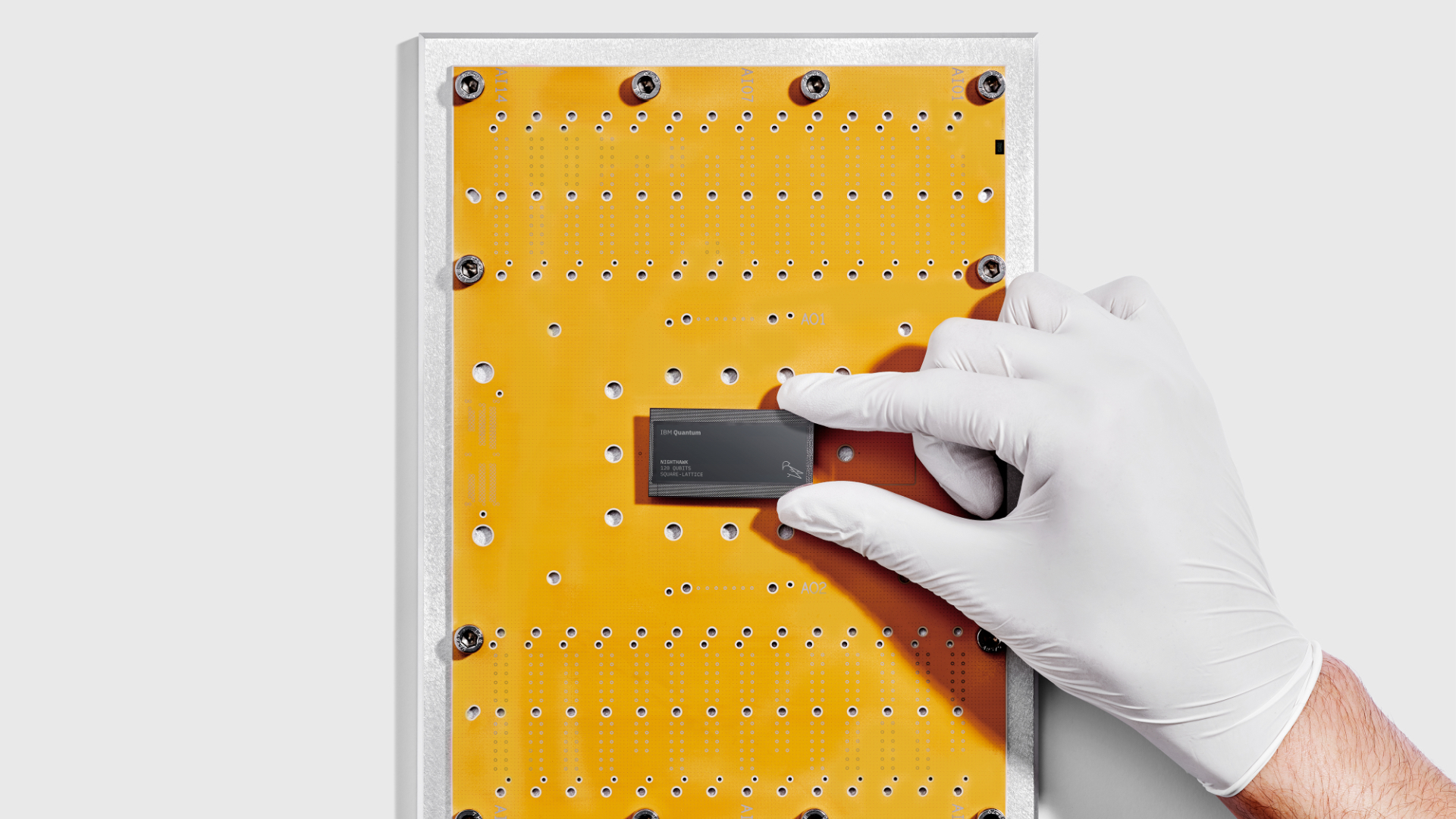
    IBM has stepped up its efforts in the race to build a usable quantum computer with the unveiling of its new Quantum Nighthawk processor. The goal is clearly defined and strategically differentiated from the competition: the company wants to achieve a ‘measurable quantum advantage’ (Quantum Advantage) by the end of 2026. As opposed to purely theoretical ‘supremacy’, quantum advantage refers to the point at which quantum systems solve real scientific or business problems faster and more efficiently than the most powerful classical supercomputers.

    Featuring 120 qubits and 218 connectors, Nighthawk is an evolution of the previous generation Heron, which prioritised quality over quantity. IBM stresses that the improved architecture allows it to run circuits 30% more complex while maintaining a consistently low error rate. It is this rate, rather than the sheer number of qubits, that remains the biggest engineering challenge. Cubits are extremely sensitive to noise (decoherence) and errors that add up during computation render the results useless. Nighthawk is expected to be available to users by the end of 2025.

    The key to achieving this ambitious roadmap – which calls for, among other things, 15,000 two-bit gates by 2028 – is scaling production. IBM has moved quantum processor manufacturing to a 300mm wafer fabrication facility at the Albany NanoTech Complex. This move, taken directly from the mature semiconductor industry, has already doubled the speed of development and increased the physical complexity of the chips tenfold, according to the company.

    In parallel, the company is working on the foundations of the future. The experimental Quantum Loon processor demonstrates the components necessary for fault-tolerant quantum computing, a goal for 2029. A breakthrough in error correction has also been reported, with a new decoding method operating ten times faster than existing methods, a year ahead of the original plan.

    To give credibility to its progress and set a market standard, IBM is launching an open, community-based Quantum Advantage Tracker with partners such as Algorithmiq. The initiative aims to transparently monitor and verify new demonstrations of the real-world benefits of quantum technology.

  • Quantum computers on a massive scale. Nobel laureate and HPE announce groundbreaking plan

    Quantum computers on a massive scale. Nobel laureate and HPE announce groundbreaking plan

    John M. Martinis, a recent winner of the Nobel Prize in Physics (2025) and one of the architects of Google’s breakthrough in ‘quantum supremacy’, is starting a new chapter. This time his goal is not a laboratory record, but the creation of a practical, mass-produced quantum supercomputer. On Monday, he announced the formation of the Quantum Scaling Alliance, bringing in the heavy artillery: supercomputing giant HPE and key players in the semiconductor supply chain.

    The initiative is a direct response to the industry’s biggest pain point. Quantum computers, promising a revolution in chemistry or medicine, remain largely unitary works. As Martinis put it, since the 1980s quantum chips have been produced “in an artisanal way”. The Quantum Scaling Alliance aims to change this by moving the production of qubits from laboratories to factories.

    That’s why the presence in the alliance of Applied Materials, a supplier of chip-making machines, and Synopsys, a leader in chip-design software (EDA), is crucial. The idea is to use the same sophisticated tools that today produce millions of processors for smartphones and AI servers to build quantum systems. This signals the industry’s desire to move “to a more standardised, professional model”.

    However, building stable cubits at scale is only half the battle. The real challenge, the partners emphasise, lies in integration and scaling. Masoud Mohseni, head of the quantum team at HPE, tones down the enthusiasm, noting that moving from hundreds to thousands of qubits raises entirely new issues. “People naively think [scaling] is linear. This is simply not true,” Mohseni stated.

    HPE’s task will primarily be to integrate delicate quantum circuits into classical supercomputers. It is they who are to manage the system in real time and handle the crucial error correction process, without which qubits are useless. The consortium also included specialised companies such as Riverlane and 1QBit (responsible for error correction) or Quantum Machines (control systems), which shows that the aim is to build a complete, commercial technology stack.

  • The digital innovation trap: Why SMEs are losing out by chasing trends

    The digital innovation trap: Why SMEs are losing out by chasing trends

    The competition is already implementing AI, but are we? Will we be left behind? – This is the question that keeps many SME managers and business owners awake at night. Bombarded by headlines about revolutions, conferences promising breakthroughs and vendors guaranteeing that nothing will work without X, they feel immense pressure. Is this pursuit of every technological innovation a deliberate strategy or is it an act of panic?

    Unfortunately, it is too often the latter. Blindly following trends is a costly digital innovation trap. Instead of solving problems, it generates new ones. In an age of ubiquitous information noise, the real strength of mid-market business turns out to be not pursuit but pragmatism – its traditional foundation.

    The SME sector is particularly susceptible to trend pressure. It is not even about real competitive advantage, but about perception itself. The fear of being perceived as a backward company and on the threshold of extinction is sometimes stronger than cool business calculation. This psychological background sets in motion a typical vicious implementation cycle. It starts with panic and fear of missing a breakthrough (technological FOMO – Fear of Missing Out). Then a hasty implementation is undertaken, where a tool is chosen before the problem is defined. This ends in frustration, operational chaos and expensive island solutions. In the end, there is a bitter conclusion: this technology does not work, while only a flawed decision-making process was to blame.

    Decision-makers often focus on the cost of licensing, which is a mistake. The real costs of chasing trends are hidden and much deeper. The financial cost is not just the purchase, but the gigantic integration expenses, endless training, consultant support and the risk of dependence on a single supplier (vendor lock-in). Equally acute is the human cost. Frustration and resistance from the team is a guarantee of project failure; if employees see the new tool only as a pointless chore, the project will fail. However, the most serious is the strategic cost. The time, energy and budget spent on fighting a failed AI implementation are resources that have not been devoted to solving the company’s real problems. A chatbot has been implemented, but the company is still drowning in a flood of emails and critical data languishing in Excel sheets.

    No technology is bad in itself – what is bad is sometimes its application. Let’s look at the three most talked-about trends through the lens of pragmatism. The cloud offers flexibility, but does a company really need everything in the cloud? A hasty migration is sometimes unprofitable and generates serious legal risks. Blockchain is a revolutionary technology, but it is not the answer to everything. Do we really need a distributed registry to manage HR records when a robust database is 90% cheaper and 100% sufficient? Finally, AI – the biggest buzz of recent years. It’s supposed to automate and predict, but fed with chaos and junk data, it only produces expensive, junk results. Before we buy AI, we need to have something to analyse.

    So how do we escape this trap? Escaping the FOMO trap does not mean technological stagnation. It means returning to the foundations of healthy management, based on three steps.

    Firstly, diagnosis before prescription is essential. The order of asking the question needs to be fundamentally changed. Not “What technology should we implement?”, but “What specific problem do we want to solve?”. The problem is not a lack of AI, but invoices issued a week late. The solution then is to improve the workflow in the ERP system, not a chatbot.

    Secondly, you need to do your digital homework. High-tech is an arbitrary programme that is only possible once you have mastered the mandatory programme. For most SMEs, this homework is the foundations: mapped processes, clean CRM, structured data and consistent interfaces (APIs) between systems.

    Thirdly, it takes courage to say No. Nowadays, true business courage is not the pursuit of novelty. It is a conscious decision, backed up by analysis, not to implement something that does not fit in with the company’s strategy, is unprofitable or is implemented prematurely. This is not a sign of backwardness, but of strategic maturity.

    Medium-sized companies should not see technology as an end in itself. It doesn’t matter if there is a trendy AI, Blockchain or Cloud label on the solution box. What is decisive is only whether the solution realistically makes work easier, reduces costs or inspires customers. True innovation in SMEs is not an expensive pursuit of fashion. It is the continuous, pragmatic improvement of processes using the right tools – even if they are as unfashionable as a solidly implemented ERP system.

  • European Union sets conditions for China: investment only for know-how

    European Union sets conditions for China: investment only for know-how

    The European Union is entering a new phase of thinking about economic security. At a meeting of ministers in Denmark, which holds the rotating presidency, there was a proposal to impose additional conditions on Chinese investment in Europe – including the compulsory transfer of technology and know-how. This is a clear departure from the previous model of market openness and signals that Brussels is beginning to play by the rules that Beijing and Washington have been using for years.

    Danish Foreign Minister Lars Rasmussen admitted that Europe had for too long assumed that adherence to free trade rules was enough in itself to win global competition. “If we invite Chinese investment to Europe, it must be linked to technology transfer,” he – he stressed. This phrase could become a turning point in EU industrial policy.

    Brussels has been looking for months at how to mitigate the risks of capital inflows from authoritarian countries, particularly in strategic sectors – semiconductors, RES, critical infrastructure and electromobility. The European Commission is working on a document that is expected to present concrete tools by the end of the year: from screening investments to requiring ‘real investments’, as Trade Commissioner Maroš Šefčovič put it – those that create jobs, bring IP and transfer knowledge.

    Beijing’s reaction was immediate. Chinese Foreign Ministry spokesperson Lin Jian criticised the idea, speaking of “protectionist and discriminatory practices”. China officially opposes forced technology transfer – although European manufacturers of cars, industrial goods or wind turbines have indicated for years that such transfer was often a condition for entering the Chinese market.

    Thus, in the background, there is a dispute over the definition of fairness in global trade. Europe, which for decades has relied on openness, is beginning to adopt a logic of reciprocity: access for access, technology for technology.

    Is the EU ready for the policies it has criticised so far? And will European companies – especially those dependent on Chinese supply chains – support such a direction? The coming months will show whether Brussels manages to create common rules that balance competitiveness with security. One thing is certain: the era of naive free trade in Europe is about to come to an end.

  • 5 smartphone technologies that have changed the world in the last decade

    5 smartphone technologies that have changed the world in the last decade

    In just one decade, the smartphone has undergone a transformation from a useful gadget to the almost invisible centre of our lives, eliminating everyday frustrations along the way that we have managed to forget. This is the story of the key innovations that made technology finally fade into the background, becoming a seamless extension of ourselves.

    The end of the password era: How biometrics gave us back time and peace of mind

    It all started with a single touch. Apple ‘s introduction of the Touch ID reader in the iPhone 5s in 2013 was more than a technological innovation. It fundamentally changed our relationship with digital security. A cumbersome action became an instant, subconscious gesture. This moment sparked the mass acceptance of biometrics, which has become the new standard at an incredible rate. By 2022, as many as 81% of all smartphones were equipped with it, and consumers considered it more secure than traditional passwords.

    The evolution was rapid. In 2017, Apple unveiled Face ID, offering even smoother facial scan authentication. At the same time, Android device manufacturers, aiming for perfectly bezel-less screens, faced a dilemma: where to put the reader? The solution came in 2018, when Vivo unveiled the world’s first phone with a fingerprint reader embedded in the display. However, the real power of biometrics did not lie in mere convenience. It became the key foundation for a revolution that was lurking just around the corner – mobile payments. Without fast and trusted one-touch authentication, the idea of paying with your phone would never have taken off.

    Wallets in reverse: The quiet triumph of contactless payments

    Mobile payments is the story of how a small NFC chip and clever software made the leather wallet a relic of the past. Apple Pay, introduced in 2014, was perfectly timed. Its success was the result of a confluence of three key factors: technological readiness (NFC-enabled phones), regulatory impetus (the mandatory switch to EMV chip cards in the US forced shops to upgrade terminals) and the promise of unparalleled convenience and security.

    The scale of this change is staggering. The global mobile payments market, valued at $3.84 trillion in 2024, is forecast to grow to more than $26 trillion by 2032. For retailers, the benefits were immediate. By simplifying the payment process to a single tap, they have reduced the main cause of shopping cart abandonment, reporting an increase in conversions on mobile devices of up to 58%.

    Pocket studio: The invisible genius of computational photography

    A smartphone, by virtue of its size, will never be able to accommodate the optics of a professional camera. And yet the pictures we take are getting better and better. This is thanks to a silent hero – computational photography. The software in our phones has learned to bend the laws of physics, and the effects of this revolution have been devastating for the traditional market. Between 2010 and 2023, global camera shipments fell by an incredible 94%.

    Computational photography has automated techniques that once required knowledge and equipment. Portrait mode, using artificial intelligence, digitally blurs the background, mimicking the effect of expensive lenses. HDR combines several photos with different exposures into one perfectly balanced image. The real breakthrough, however, was Google’s Night Sight mode, introduced in 2018, which assembles multiple frames into one bright and sharp image, working wonders in almost total darkness. A year later, the Huawei P30 Pro, with its Periscope lens, enabled powerful optical zoom without thickening the body. In this way, the smartphone not only replaced the compact camera; it democratised photography, giving millions of people the tools to create high-quality content and driving the visual nature of the modern internet.

    The screen that came to life: From liquidity to the folding revolution

    For years, screens were all about size and resolution. The last decade has brought innovations that have changed how we experience interacting with the display, and even the shape of the display itself. The first, subtle change was to raise the refresh rate. Pioneered by the Razer Phone in 2017, the 120Hz standard made scrolling and animations incredibly smooth. It’s one of those innovations you don’t appreciate until you’re back to the old 60 Hz standard – then everything seems to ‘stutter’.

    The second change was much bolder. The idea of a foldable screen, present in concepts for years, finally became a reality with the launch of the Samsung Galaxy Fold in 2019. Although still a niche market, it is growing rapidly, with forecasts predicting it to be worth more than $63 billion by 2029. Foldable smartphones are a radical attempt to break the glass panel paradigm that has dominated recent years.

    InnovationPioneering technology/deviceThe year of the breakthrough
    Mass BiometricsApple Touch ID (iPhone 5s)2013
    NFC Mobile PaymentsApple Pay2014
    High refresh rate screenRazer Phone (120 Hz)2017
    3D facial biometryApple Face ID (iPhone X)2017
    On-screen fingerprint readerVivo X20 Plus UD2018
    AI Night PhotographyGoogle Night Sight (Pixel 3)2018
    Periscope lensHuawei P30 Pro2019
    Foldable screenSamsung Galaxy Fold2019

    The invisible foundations of progress

    All these breakthroughs would not have been possible without the quiet revolutions in the background. The arms race in fast charging technology, spearheaded by standards such as Qualcomm’s Quick Charge, reduced charging times from hours to minutes, finally freeing us from ‘battery anxiety’. At the same time, the advent of 5G networks, with its ultra-low latency, has opened the door to cloud-based game streaming and reliable video calls on the move, solving the ‘connectivity anxiety’ problem.

    Looking back, the overarching innovation goal of the last decade was to make technology invisible. Biometrics, mobile payments, computational photography and fast charging have systematically removed the barriers between us and the digital world. The greatest inventions were the ones we stopped thinking about, allowing technology to finally fade into the background of our lives.

  • Creotech and ESA develop CAMILA project – four satellites by 2029

    Creotech and ESA develop CAMILA project – four satellites by 2029

    Creotech Instruments has announced a significant expansion of its collaboration with the European Space Agency (ESA) on the CAMILA project – a new addendum raises the value of the contract to more than €59 million, of which €29.1 million will accrue to Creotech alone. This is an increase of around €7.1 million, up from €3.5 million under the previous arrangement.

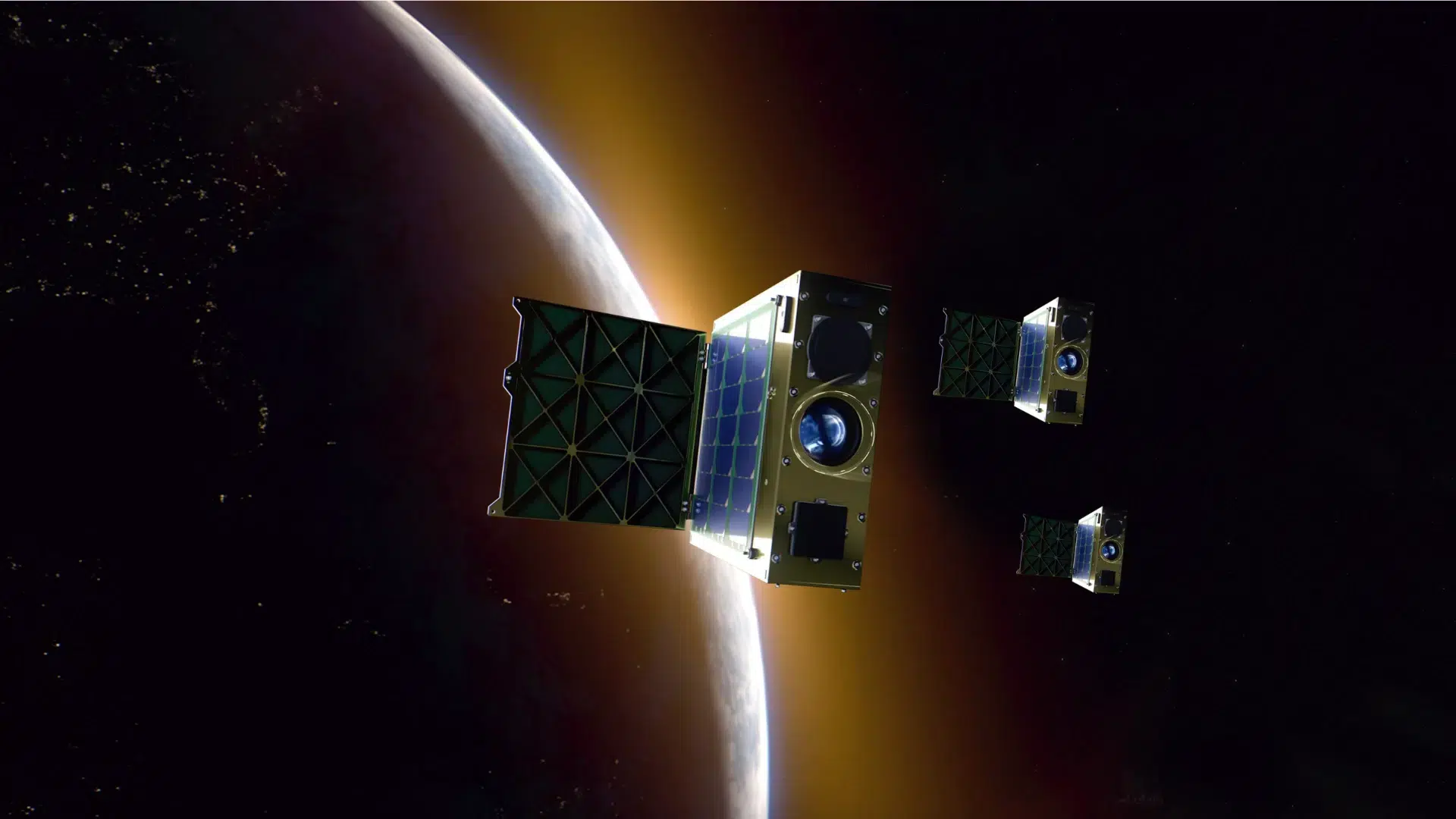
    A key component of the upgrade is the delivery, launch and commissioning of a fourth observation satellite – the HyperSat Eagle 2.0 platform. The approximately 100 kg design has been equipped with a new orientation control system, larger solar panels and batteries, an open architecture with an interchangeable payload board and an interface to enable in-orbit data processing using artificial intelligence. With this, Eagle 2.0 is set to become a fully multi-mission platform – the identical satellite core already supports different missions with different payloads in parallel.

    The second pillar of the annex is the integration of services of the commercial ground station network providing global connectivity, improving mission management and data transmission. Consequently, the contract provides for an updated schedule and new milestones. Creotech’s commitments at CAMILA are expected to be completed by November 2029 at the latest, although the company does not rule out further extensions.

    CAMILA (Country Awareness Mission in Land Analysis) is a programme comprising four observation satellites and a ground segment for control and data processing – with maximum participation of Polish technology. Creotech functions here as the main contractor. The project is part of the country’s and ESA’s broader strategy to build European technology chains in the space sector. An earlier contract from April 2025 was worth nearly €52 million – with three satellites and ground infrastructure.

    The contract extension signals Poland’s growing importance in the European space sector – while also testing the maturity of HyperSat’s technology and Creotech’s ability to carry out large-scale, complex missions at the first-tier integrator level.

  • The digital open-air museum, or who turned out the lights over Europe

    The digital open-air museum, or who turned out the lights over Europe

    In the global race for technological dominance, Europe is increasingly falling behind. While the US and China are surging ahead, building digital empires based on artificial intelligence, advanced cloud and innovation, the Old Continent is facing a growing investment gap.

    The latest analyses leave no illusions – we stand at a crossroads. If we do not take immediate and bold action, we risk losing our digital sovereignty and becoming permanently dependent on technologies designed and controlled outside our borders. This is no longer a question of prestige, but of strategic security and future prosperity.

    Brutal reality in numbers

    To understand the scale of the challenge, one only needs to look at hard data. Between 2019 and 2024, annual venture capital (VC) investment in the European Union averaged $68 billion.

    This is an amount that may seem impressive in itself, but pales in comparison to the competition. During the same period, Asia invested $110 billion in its technological gems, while the Americas, driven by Silicon Valley, invested as much as $221 billion. This financial gap is a major brake on the development of European unicorns.

    The problem does not end with money. Equally worrying is the innovation gap, which is perfectly illustrated by the number of patents filed. In the key high-tech sector, China has filed as many as 7.6 times more patents than the whole of Europe put together. This proves that the gap between us and global leaders is growing at an alarming rate, and is underpinned by a lack of capital to develop and commercialise breakthrough ideas.

    Europe’s untapped potential

    Despite these alarming signs, Europe is not a technological desert. We are still a powerhouse in many specialised and vitally important niches. Our companies are at the forefront of industrial automation, robotics or power semiconductors, components crucial to the energy transition and electromobility. Our engineering and scientific potential is unquestionable.

    So what if we lack the fuel for growth? The diagnosis is simple and painful. European startups lack capital at the crucial stage of scaling – the transition from a promising project to a global player. This is when they are most often acquired by American or Asian giants or simply fail to withstand the competition. The second brake is the lack of a bold political vision and effective regional cooperation. Instead of creating a unified, powerful market, we are still struggling with fragmentation, which makes it difficult to build companies of a scale comparable to Google, Tencent or Amazon.

    The stakes are higher than we think

    Why is this technological impotence so dangerous? Because the high-tech sector long ago ceased to be just one of many industries. Today, it generates 8% of global GDP, and its impact on industry, services, medicine and our daily lives is absolutely fundamental. Generative AI, smartphones or software-driven vehicles are the defining technologies of today.

    Analysts warn that 2025 will be a defining moment for Europe. It is the last bell to take up the fight for a digital future. Passivity will mean progressive dependence on foreign platforms, algorithms and infrastructure. At stake is not only our economic competitiveness, but also our ability to shape the social and ethical framework of technological development ourselves.

    The rescue plan: How can Europe catch up?

    Fortunately, the dependency scenario is not yet a foregone conclusion. There is a concrete roadmap that can reverse this negative trend. The key is to create a coherent, resilient and sovereign technology ecosystem that leverages our strengths.

    Firstly, we need to radically increase investment and open up to the best talent from around the world through a smart migration policy. Second, we need pan-European initiatives along the lines of the Airbus project to consolidate resources and knowledge in strategic areas such as artificial intelligence, quantum computers or semiconductor manufacturing. Thirdly, a leap in R&D spending is needed to catch up with the US and China. Finally, we need to rebuild local manufacturing capacity to become independent of fragile global supply chains.

    Europe faces a historic choice. We can remain a passive consumer of other people’s innovations or we can take the future into our own hands. The potential is still here, but the window of opportunity is closing very quickly. The time for bold decisions is now.

  • EC identifies 12 vectors that will determine Europe’s technological future

    EC identifies 12 vectors that will determine Europe’s technological future

    The European Commission’s ‘State of the Digital Decade 2025‘ report is an annual barometer of ambitions and realities in the Union’s digital landscape. This year’s edition, while pointing to progress, is first and foremost a sober assessment of the fundamental challenges.

    The document identifies 12 key areas that will determine whether Europe becomes a digital leader or remains in the shadow of technological powers outside the continent. The conclusions are clear: without strategic investment in infrastructure, cyber-security and competence, European digital sovereignty will remain a mere political buzzword.

    Foundations: infrastructure dependency and the race for computing power

    Europe’s digital aspirations are overshadowed by its deep dependence on key suppliers. Analysis shows that more than 80% of digital products, services and infrastructure originate outside the EU. This statistic underpins the first and most important vector identified in the report: sovereign computing power.

    Without its own scalable resources in the cloud, edge computing and supercomputing (HPC), the Union will not be able to control its digital future. The report emphasises the need to accelerate funding processes and project deployment to meet strategic cloud and artificial intelligence objectives.

    The problem of dependency also extends to physical infrastructure. The international submarine cables, referred to as the digital arteries of Europe, require increased redundancy and the creation of coordinated repair mechanisms.

    The same is true in space, where EU projects such as IRIS² (Infrastructure for Resilience, Interconnectivity and Satellite Security) are expected to make the continent independent of external satellite constellations.

    However, growing computing power comes at a price. The Commission warns that energy consumption in data centres could increase by 70% by 2030. This makes it imperative that planning for digital growth is inextricably linked to an energy strategy based on renewable sources and efficiency.

    The Shield: cyber security in the quantum age

    The second pillar on which the report is based is cyber security. The European Union already has an advanced legal framework in place, such as the NIS2 Directive or the CRA (Cyber Resilience Act) and CSA (Cybersecurity Act). However, legislation is only the beginning.

    The key now is to implement them effectively, including managing the risks associated with high-risk providers in 5G networks.

    At the same time, a new existential threat is on the horizon: quantum computers, capable of breaking current encryption standards. Europe already has a post-quantum cryptography (PQC) roadmap with the goal of migrating systems between 2030 and 2035, but national implementation strategies are lacking.

    Time is running out, as data captured today can be decrypted in the future.

    Cyber-hygiene in the SME sector remains a weak link. European SMEs often lack advanced technology and knowledge, making them an easy target and increasing the vulnerability of the entire supply chain.

    Network and people: uneven adoption and the skills gap

    The report also highlights the slower-than-expected pace of upgrading the network itself. Although 5G network coverage is growing, adoption of its fully autonomous version (Standalone) is low. This is hampering the development of advanced services and delaying preparations for the 6G era.

    Similarly, the implementation of fundamental internet standards such as IPv6 (crucial for scalability) or DNSSEC (a secure domain name system) is similarly uneven, generating systemic risk.

    Progress can be seen in the area of digital public services and e-identity, but here too there is the problem of technological dependence on external platforms. However, the human factor remains the biggest challenge. There is a shortage of nearly 300,000 cybersecurity professionals in Europe and the overall number of ICT experts is insufficient.

  • VC investment in Europe 2025: Analysis of trends in AI, HealthTech and GreenTech

    VC investment in Europe 2025: Analysis of trends in AI, HealthTech and GreenTech

    The year 2025 on the European technology scene is a time of apparent contradictions. On the one hand, data points to historically low levels of Venture Capital fundraising, with just €5.2 billion raised in the first half of the year, putting the current year on track for the weakest performance in a decade.

    On the other hand, the same market is witnessing record multi-million dollar funding rounds for selected companies, with valuations of mature companies rising to previously unseen levels. This dichotomy is not a sign of weakness, but of a profound recalibration of the entire ecosystem.

    In 2025, the European technology market is moving from a phase of broad, opportunistic growth to one of strategic depth. Capital, although more difficult to access, is being deployed in a more concentrated and deliberate manner.

    Investors are targeting sectors critical to the continent’s future competitiveness and sovereignty: Artificial Intelligence (AI), Deep Tech, HealthTech and defence technologies. This is a turnaround driven by both the pragmatism of private investors and the conscious industrial policy of public funds.

    The global AI arena: a European gambit in a race dominated by the US

    Data from the first half of 2025 clearly shows that the global AI landscape is dominated by the US. The scale of US dominance is overwhelming.

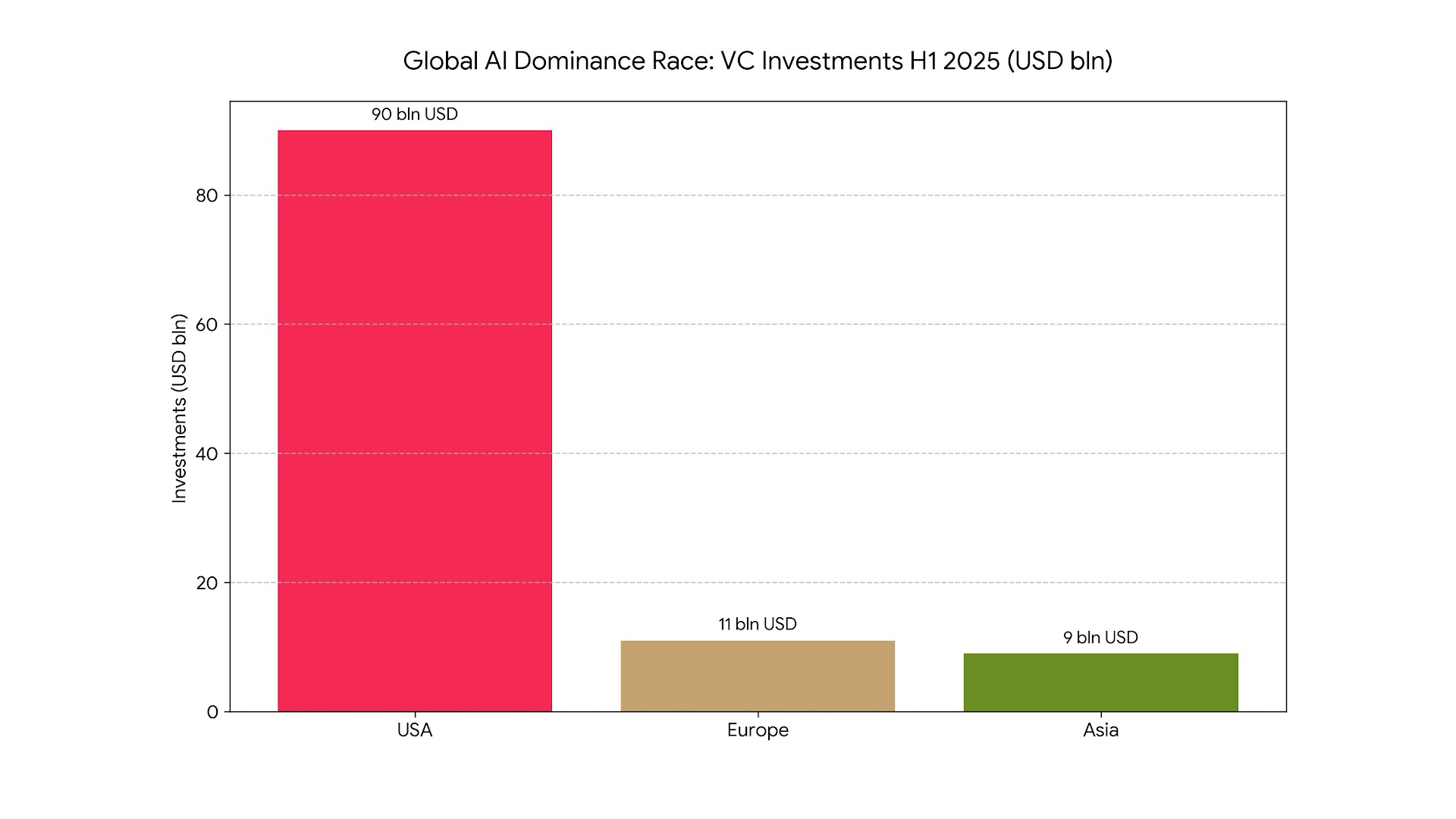
    In H1 2025, VC investment in the US reached US$91.5bn, compared to US$18bn in Europe and just US$12.9bn in Asia-Pacific. In the area of generative AI, which is attracting the most attention, the gap is even deeper, with US companies accounting for 97% of global deal value in H1 2025.

    There is also a reshuffle in the European backyard. Traditionally, the UK has been the undisputed leader. However, in the second quarter of 2025, Germany, for the first time in more than a decade, overtook the UK in terms of the value of VC funding raised.

    Backed by powerful public investment pledges – President Emmanuel Macron announced a €109 billion plan to develop AI – France is dynamically consolidating its position.

    The inability to compete with the US giants in the extremely capital-intensive foundational ‘model war’ has forced Europe to adopt a more pragmatic strategy. Instead of trying to build their own competitive language models (LLMs) from scratch, European investors and founders are focusing on the so-called ‘application layer’ of AI.

    The approach is to use existing, powerful models to solve specific vertical business problems. Examples of this strategy in action abound. Germany’s Helsing, which raised €600m, is applying AI to battlefield data analysis, becoming a key player in the defence sector.

    UK-based Synthesia, with a US$180m round, dominates the market for generating video for corporate training and marketing.

    Beyond AI hype: a map of the hottest investment sectors

    Although artificial intelligence dominates the headlines, an analysis of capital flows in the first half of 2025 reveals a much more nuanced picture. Investors are diversifying their portfolios, directing significant funds to sectors of fundamental importance to the economy and society.

    H1 2025 figures show a clear changing of the guard. HealthTech (medical technology) became the best-funded sector, raising an impressive €5.7 billion. Deep Tech (deep technology) and B2B SaaS (software as a service for business) followed closely behind, with €5.2bn each.

    FinTech, once the undisputed leader, fell further down the list with €3.7 billion, recording a 20% year-on-year decline. In contrast, GreenTech (also referred to as Climate Tech), despite the global slowdown, remains a key pillar of European investment, attracting USD 5.3 billion (around EUR 4.9 billion) in the first half of the year.

    HealthTech: a new leader driven by demographics and AI

    The growth of the HealthTech sector is indisputable. Europe has seen a 1.65-fold year-on-year increase in funding in this sector, reaching USD 3.3 billion. This boom has solid foundations: Europe’s ageing population and the AI revolution in diagnostics and drug discovery. The mega-rounds for the UK’s Verdiva Bio (USD 410 million) or Sweden’s Neko Health (USD 260 million) are proof of this.

    GreenTech: a resilient pillar in the consolidation phase

    The GreenTech sector is experiencing a period of correction. Funding in H1 2025 fell by around 40-50% compared to the previous year. However, this decline signals a shift from broad market funding to investment in capital-intensive and strategically important Deep Tech.

    Money is flowing to companies working on fusion energy (Proxima Fusion), sustainable aviation fuel (Skynrg) and large-scale battery systems (Green Flexibility).

    FinTech: a mature sector in search of efficiency

    FinTech is entering its maturity phase. The drop in total funding to €3.7bn in H1 2025 is a fact. However, the median round size has increased by 38% over the same period, meaning that capital is concentrated in fewer but more mature and proven companies.

    Cyber security and defence tech: rising stars

    The growth of these two sectors is directly driven by the geopolitical environment. The European cyber security market grew by 13% in H1 2025, stimulated by new regulations and AI threats.

    At the same time, the Aerospace & Defence sector attracted a record €1.5 billion, following growing tensions and EU initiatives to strengthen European defence.

    Public money: how Brussels is building technological sovereignty

    In 2025, the investment landscape in Europe is shaped not only by private capital, but equally by the strategic interventions of public funds.

    With a budget of €95.5bn for 2021-2027, Horizon Europe is the EU’s main vehicle for funding research and innovation, of which around 35% is earmarked for digital transformation.

    The programme focuses on strategic areas such as quantum technologies, graphene, advanced computing and AI, supporting them, among others, through flagship initiatives with a budget of €1 billion each.

    The National Recovery Plans (NRPs), in turn, are an unprecedented injection of money into member state economies. Each country was obliged to allocate at least 20% of the funds to digital and 37% to climate.

    France, for example, is allocating around €8.5 billion to digital transformation, including €1.8 billion for technologies such as cyber security and the cloud. Germany has earmarked more than 52% of its plan for digital transformation (approximately €14.5 billion) , and Italy 25.6% (approximately €49.8 billion).

    These actions show that public funds are not just a form of subsidy, but a tool for a conscious industrial policy. The aim is to build ‘technological sovereignty’ , i.e. making Europe independent of key technologies from the US and China.

    The exit equation: a mature ecosystem seeks liquidity

    In 2025, the European technology ecosystem faces a major challenge: how to deliver return on investment in an environment where traditional capital exit paths are limited.

    The market for initial public offerings (IPOs) remains stagnant, with a dramatic 65% decline from H1 2024. In response, mergers and acquisitions (M&A) are growing rapidly, with H1 2025 in the UK alone seeing the highest number of takeover bids in 15 years.

    Despite the general slowdown, the market is highly polarised. The median pre-money valuation in Europe reached a decade-long peak of €8.6m in June 2025.

    This is indicative of the ‘flight to quality’ phenomenon, in which investors are concentrating capital on the most promising, proven companies. The best indicators of this trend are the largest funding rounds, which perfectly illustrate the key trends: the dominance of AI, the strategic importance of Defense Tech and HealthTech, and the capital intensity of GreenTech.

    Polish growth: Dynamo from Central and Eastern Europe

    In a European VC market landscape characterised by caution, Poland stands out as one of the most dynamically growing ecosystems. The Polish VC market recorded a spectacular 155% year-on-year increase in deal value in the first quarter of 2025, reaching PLN 444 million (approximately EUR 106 million).

    This impressive growth is driven by several fundamental changes indicative of the maturation of the Polish ecosystem:

    • Moving on to later rounds: Almost half (48%) of the deals in Q1 2025 were Series A or later rounds, showing that the Polish market is already capable of not only creating but also scaling innovative companies.
    • Capital internationalisation: As much as 42% of the capital invested in Polish startups in Q1 2025 came from foreign funds, including from the US, Germany and the UK.
    • Flagship successes: The funding round for ElevenLabs, exceeding PLN 700 million and attracting leading US funds such as Andreessen Horowitz (a16z) and Sequoia Capital, is an unprecedented event. As is the investment in Nomagic (approximately PLN 140 million). These transactions definitely put Poland on the global innovation map.

    The analysis of the European technology market in 2025 leads to a clear conclusion: we are facing a more mature, selective and strategically focused market.

    The time of easy money and financing growth at any cost is over. It has been replaced by an era of fewer deals, but bigger, smarter and concentrated in sectors that are fundamental to the continent’s future.

    For investors, the greatest opportunities lie at the intersection of global technology trends (AI in particular) and Europe’s strategic priorities (sovereignty, energy transition, security).

    For the founders, success in the current climate requires more than just innovative technology – investors expect a clear product-market fit and a credible path to profitability.

    The year 2025 is a maturity test for the European technology ecosystem. It is a time when Europe, perhaps out of necessity, learns to invest not only broadly, but above all wisely, building the foundations for its long-term competitiveness on the global stage.

  • HealthTech leading investment in Poland – analysis of a market that is attracting record capital

    HealthTech leading investment in Poland – analysis of a market that is attracting record capital

    A quiet revolution has been playing out in the landscape of Poland’s technology economy for several years. Devoid of the global publicity that accompanies the biggest tech hubs, the transformation of the HealthTech sector is fundamentally changing the face of national healthcare, while attracting record streams of capital.

    What was a niche for enthusiasts just a decade ago is now becoming one of the hottest and most stable segments of the investment market. Driven by the growing maturity of the ecosystem and digitalisation catalysed by the pandemic, Poland is establishing itself as a leading HealthTech hub in Central and Eastern Europe.

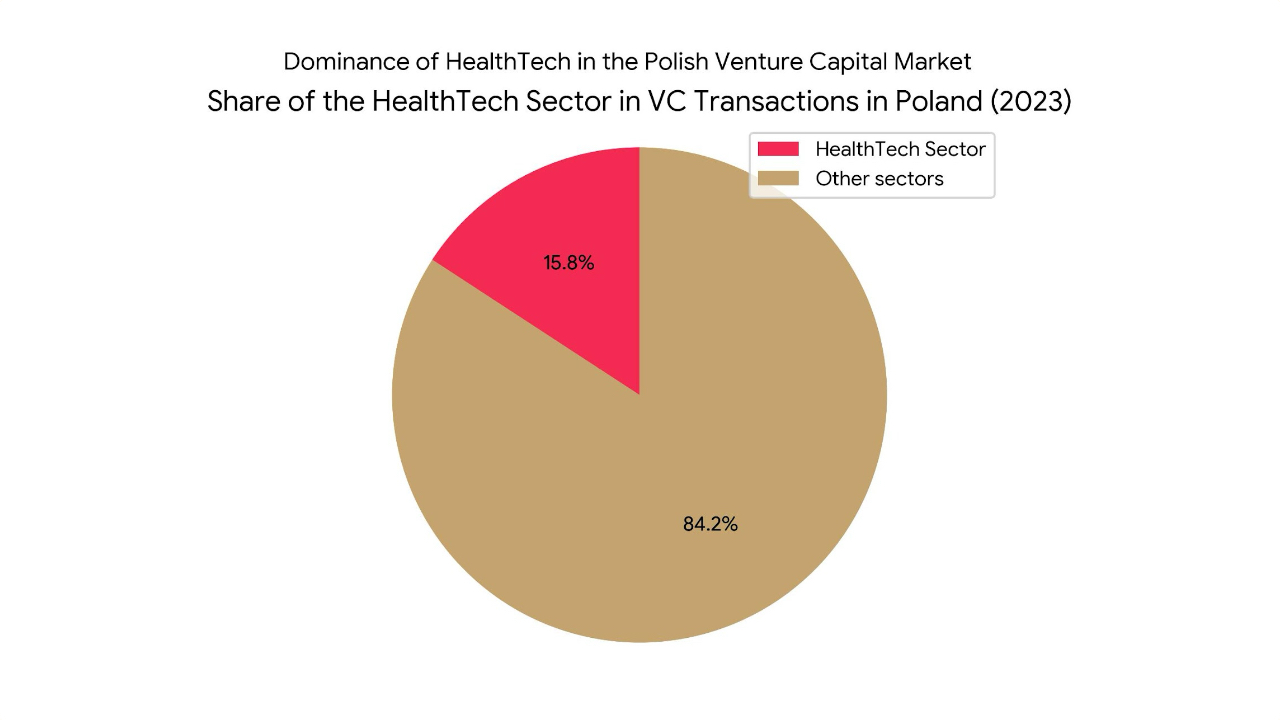
    This thesis is strongly supported by the data. The health sector has consistently held the leading position in terms of the number of Venture Capital (VC) deals in Poland for the past four years, accounting for 15.8% of all funding rounds in 2023.

    This is a sign that investors have not only recognised the potential, but are treating HealthTech as a strategic and volatility-proof area of capital investment. A symbol of the maturity of the market has been the global success of Docplanner (known in Poland as ZnanyLekarz), the first Polish unicorn in this sector, whose valuation has exceeded one billion euros.

    This quiet revolution is gaining momentum, transforming Poland from a technology adopting country to a technology creating and exporting country.

    Capital flows to health in a broad stream

    Analysis of data from the Polish Venture Capital market leaves no illusions – the health sector has become its undisputed leader. Reports from the Polish Development Fund (PFR) and PFR Ventures consistently indicate that HealthTech, MedTech and BioTech startups have attracted the largest number of investment rounds since 2020.

    In 2023 alone, they raked in as much as 15.8 per cent of all transactions in the market, outclassing other popular sectors.

    The scale of this growth is impressive. As recently as 2019, VC funds had funded just 17 projects in the health area. By 2023, this number has risen to nearly 70. This more than fourfold increase in the number of deals has also translated into a huge increase in the value of capital.

    Over the past five years, local and international VC funds have invested approximately PLN 1.3 billion in Polish medical innovations.

    What is particularly telling is that the HealthTech boom is taking place against the backdrop of a global and local VC market downturn. In 2023, the overall value of the Polish VC market shrank by as much as 42% compared to the record year of 2022. In these uncertain times, HealthTech has proven to be an investment ‘safe haven’.

    Its resilience stems from the fact that healthcare is based on fundamental, non-cyclical needs and that structural problems in the system, such as rising costs and staff shortages, create huge potential for technological solutions.

    The development of the market is also supported by institutional initiatives such as the Healthcare Investment Hub created by PFR, which builds bridges between Polish companies and specialised European VC funds .

    An ecosystem built on a foundation of unicorns

    The Polish HealthTech ecosystem has reached a critical mass, counting, according to various estimates, between 100 and over 300 operating medical startups. Geographically, the scene is strongly concentrated in two centres: Warsaw (Masovian Voivodeship) and Wrocław (Lower Silesian Voivodeship), where 50% and 46% of the companies in the sector operate respectively.

    However, the maturity of the market cannot be fully understood without analysing the Docplanner phenomenon. This company, founded in Poland, became the unofficial first VC-backed unicorn in the country’s history.

    Its success, based on a model combining a patient-free appointment booking platform (B2C) with SaaS software for doctors and clinics (B2B), has been a powerful catalyst for the entire ecosystem.

    Docplanner’s global success has proven to international investors that a Polish startup is capable of building a profitable global business. What’s more, the company has trained hundreds of managers and specialists who, having gained unique experience, have gone on to found their own startups or feed the ranks of others, creating a new wave of innovators and business angels.

    As a result, the market has matured, moving from solving ‘first order’ problems (how to make an appointment) to challenges that are much more complex. Today, the ecosystem is diverse, led by companies such as Infermedica, a pioneer in the use of AI for initial symptom assessment, Tomorrow Medical, linking telemedicine to a network of physical PCPs, and StethoMe, developer of a smart stethoscope for home use that uses AI to analyse lung and heart auscultation.

    HealthTech – 3 waves of the technological revolution

    The evolution of the Polish HealthTech market is taking place in three distinct technological phases that build on each other.

    Phase I – Normalising Telemedicine: the COVID-19 pandemic acted as a powerful accelerator. In 2020 alone, as many as 56.8 million teleconsultations were provided in primary care in Poland, accounting for 36.4% of all consultations. At the peak of the pandemic, the proportion of teleconsultations in Poland reached 62%, one of the highest rates in Europe. Remote consultation has ceased to be a curiosity and has become a standard, laying the digital foundation for a further revolution.

    Phase II – The Era of Artificial Intelligence in Diagnostics: As remote communication became the norm, the market began to move from simple video consultations to sophisticated decision support systems. Artificial intelligence (AI) found its way into medical data analysis and the initial assessment of a patient’s condition. An example is the aforementioned Infermedica, whose platform conducts an initial interview with the patient and recommends the most appropriate form of assistance based on an analysis of symptoms.

    Phase III (Future) – Internet of Things (IoT) and Proactive Medicine: the next phase is the Internet of Things (IoT) in medicine, which enables a shift from reactive to proactive and predictive medicine. Wearables and smart sensors can collect data on vital signs in real time, allowing early detection of health problems. Global forecasts indicate a compound annual growth rate (CAGR) for this market of around 21%. For Poland, a stable growth rate of 10.79% per year is forecast, making this segment a very promising growth area.

    Challenges on the horizon: from lab to market

    Despite its dynamic growth, the Polish HealthTech ecosystem faces serious challenges. The most important of these is the so-called “commercialisation gap” – the barrier between the huge scientific potential and its market exploitation.

    Polish universities and research institutes conduct advanced research, but there is still a lack of effective mechanisms to turn scientific discoveries into scalable products, especially in the capital-intensive MedTech and BioTech segments.

    Awareness of these barriers is growing, and with it come initiatives to build bridges between the worlds of science and business.

    Examples include the POLMED Health Hub, a platform that facilitates collaboration between start-ups and mature medical companies, or the MedTech Forum created by the AstraZeneca Group, where scientists can meet entrepreneurs and gain practical business knowledge.

    What does the future hold for Polish healthtech?

    The Polish HealthTech sector has undoubtedly completed the ‘digital spurt’ phase and is entering a period of maturity. “Silent revolution” is getting louder and louder, and its further fate will depend on the ability of the ecosystem to overcome key challenges.

    Future growth will be determined by further capital inflows, success in commercialising advanced technologies (deep-tech) and the effective integration of innovative solutions into the public healthcare system.

    Poland has a unique opportunity to grow from a regional leader in technology adoption to become a significant European centre for the creation and export of medical innovations. If existing barriers can be overcome, the ‘silent revolution’ has every predisposition to become a resounding global success for the Polish economy.

  • New Fujitsu technology: Quantum computing improves robot precision by 43%

    New Fujitsu technology: Quantum computing improves robot precision by 43%

    The hybrid approach from Fujitsu and leading universities reduces posture calculation errors by 43%, paving the way for more complex humanoid machines.

    A consortium involving Fujitsu, Shibaura Institute of Technology and Waseda University has developed a novel hybrid method to control the posture of multi-jointed robots. By harnessing the power of quantum computing, the researchers have solved one of the classic problems of robotics – the high computational complexity of inverse kinematics.

    A key challenge in advanced robotics is inverse kinematics, i.e. the process of calculating the angles in the individual joints of a robot to bring its tip (e.g. the gripper) to a precisely defined point. In the case of machines with a large number of degrees of freedom that mimic the human body (e.g. 17 joints), the number of possible combinations becomes so enormous that classical computers cannot cope with real-time calculations. This leads to simplifications, limiting the fluidity and range of movement of the robot.

    The new approach involves representing the orientation and position of each part of the robot using cubits. Crucially, the technique uses quantum entanglement to recreate the physical relationships between joints – the movement of one segment immediately affects the segments connected to it. The calculation of the simple kinematics (the position of the tip based on the angles) takes place in the quantum circuit, while the task of inverse kinematics remains with the classical computer.

    Verification on a Fujitsu quantum simulator showed a reduction in positioning error of up to 43% with fewer calculations compared to conventional methods. The effectiveness of entanglement was also confirmed in an experiment on a 64-kubit quantum computer built by Fujitsu and the RIKEN institute. Trial calculations for a complex 17-set model were achieved in about 30 minutes.

    The method is so efficient that it can be implemented on existing, still noisy Intermediate-Scale Quantum (NISQ) era computers. In the future, the technology could find applications in real-time control of humanoid robots and manipulators, optimisation of their energy consumption or advanced obstacle avoidance.

  • Quantum computers create new jobs. Here is the most important role at the interface between IT and science

    Quantum computers create new jobs. Here is the most important role at the interface between IT and science

    Quantum computers, long seen as the domain of physics laboratories, are beginning to find practical application in business. With the increasing availability of hardware via the cloud, there is a demand for a new type of specialist – a hybrid of data scientist and physicist who can translate business problems into the language of qubits.

    For decades, quantum computers were a technological promise, a distant vision with computing power capable of cracking modern cryptography and simulating molecules with unimaginable precision. This vision is slowly becoming a reality, albeit in a more subdued and pragmatic form. The discussion in the IT industry is quietly shifting from ‘if’ to ‘how and when’ we can use these machines to solve real-world problems.

    The fundamental change that is driving this transformation is accessibility. Technology giants are making their, for now imperfect and ‘noisy’ (NISQ – Noisy Intermediate-Scale Quantum), quantum processors available via cloud platforms. In parallel, software libraries such as Qiskit or Cirq are being developed that abstract away much of the complexity of quantum physics. They allow programmers and analysts to focus on the logic of the algorithm rather than directly manipulating the states of individual particles.

    This opens the door for an evolution in the world of data analytics and artificial intelligence. And it creates a gap that needs to be filled by a new professional profile: the quantum data scientist (Quantum Data Scientist).

    Who is a quantum data scientist?

    This is not a theoretical physicist locked in an academic ivory tower. Nor is it a classic data scientist who merely swaps the `scikit-learn’ library for `qiskit-machine-learning’. The quantum data scientist is a bridge specialist who stands at the interface of three worlds:

    1. a deep understanding of business problems in sectors such as finance, pharmaceuticals, logistics or energy.

    2. proficiency in data modelling and classical artificial intelligence techniques.

    3. a working knowledge of quantum architectures and the algorithms that can operate on them.

    His key task is to identify problems that have the potential for ‘quantum supremacy’ – that is, where even early quantum computers can offer better, faster or more accurate results than the most powerful classical supercomputers. He or she must then be able to translate this problem into the language of quantum algorithms, integrate them with classical data flows and interpret the probabilistic results that cubits generate.

    Where does the potential lie?

    While a universal, fault-tolerant quantum computer is still a distant future, applications are already being experimented with in several key areas:

    • Optimisation: Logistics problems (e.g. optimising routes for a fleet of vehicles), financial problems (e.g. optimising an investment portfolio) or manufacturing problems are challenges in which the number of possible combinations grows exponentially. Quantum algorithms, such as QAOA (Quantum Approximate Optimisation Algorithm), are designed to search this huge solution space more efficiently.
    • Simulations: The chemical and pharmaceutical industries stand to gain the most in the near term. Simulating the behaviour of molecules to design new drugs or materials (e.g. more efficient batteries) is extremely difficult for classical computers. Since nature at its core is quantum, simulating it on a quantum computer is more natural and potentially much more efficient.
    • Artificial intelligence: The area of quantum machine learning (Quantum Machine Learning) is also being explored. The idea here is to use quantum phenomena to improve predictive models, recommendation systems or inference engines, especially when working on complex, multidimensional data sets.

    A collaborative ecosystem

    Creating valuable quantum applications is not a one-man job. It is a team sport, requiring interdisciplinary collaboration. A quantum data scientist will work hand in hand with:

    • Domain experts (chemists, engineers, financial analysts) who understand the physical or business ground on which they operate.
    • Computer scientists and software engineers who can build robust, scalable data pipelines that integrate classical and quantum systems.
    • Physicists and mathematicians to help develop new algorithms and understand the limitations of current hardware.

    The dynamics are also fuelled by a global open source community that collectively develops algorithms, frameworks and platforms, creating an unprecedented pace of innovation.

    We stand at the threshold of a new era in technology. Like the early days of the internet or the Big Data revolution, the quantum phase will create new roles and require new skills. Companies that start exploring this area today and invest in developing talent capable of quantum thinking will gain a strategic advantage. The race for the hardware is on, but the real battleground in the coming years may be the battle for the people who can use it. The quantum data scientist will be one of the key protagonists in this change.