Category: Data

Data is a source of in-depth reports, visualisations and market analyses that show the real picture of the IT industry and the IT sales channel. These are unique breakdowns on vendors, distributors, integrators and trends.

  • How to increase IT sales in the SME sector? KPMG segment analysis

    How to increase IT sales in the SME sector? KPMG segment analysis

    Small and medium-sized enterprises account for 99.8% of all active companies in Poland. Although they are the foundation of the national economy, their level of digitalisation lags behind the European average. Poland ranks only 24th in the DESI ranking, and only 40% of domestic SMEs have reached a basic level of technology use. By comparison, this figure reaches 55% in the European Union. However, these overall figures do not reflect the complexity of the market. Detailed research conducted by KPMG as part of its report ‘Advancing the Digital Transformation of Polish Enterprises‘ showed that the SME sector is not homogeneous. It can be divided into six distinct segments, each with a different approach to technology, development motivation and transformation barriers.

    Digital map of Polish SMEs

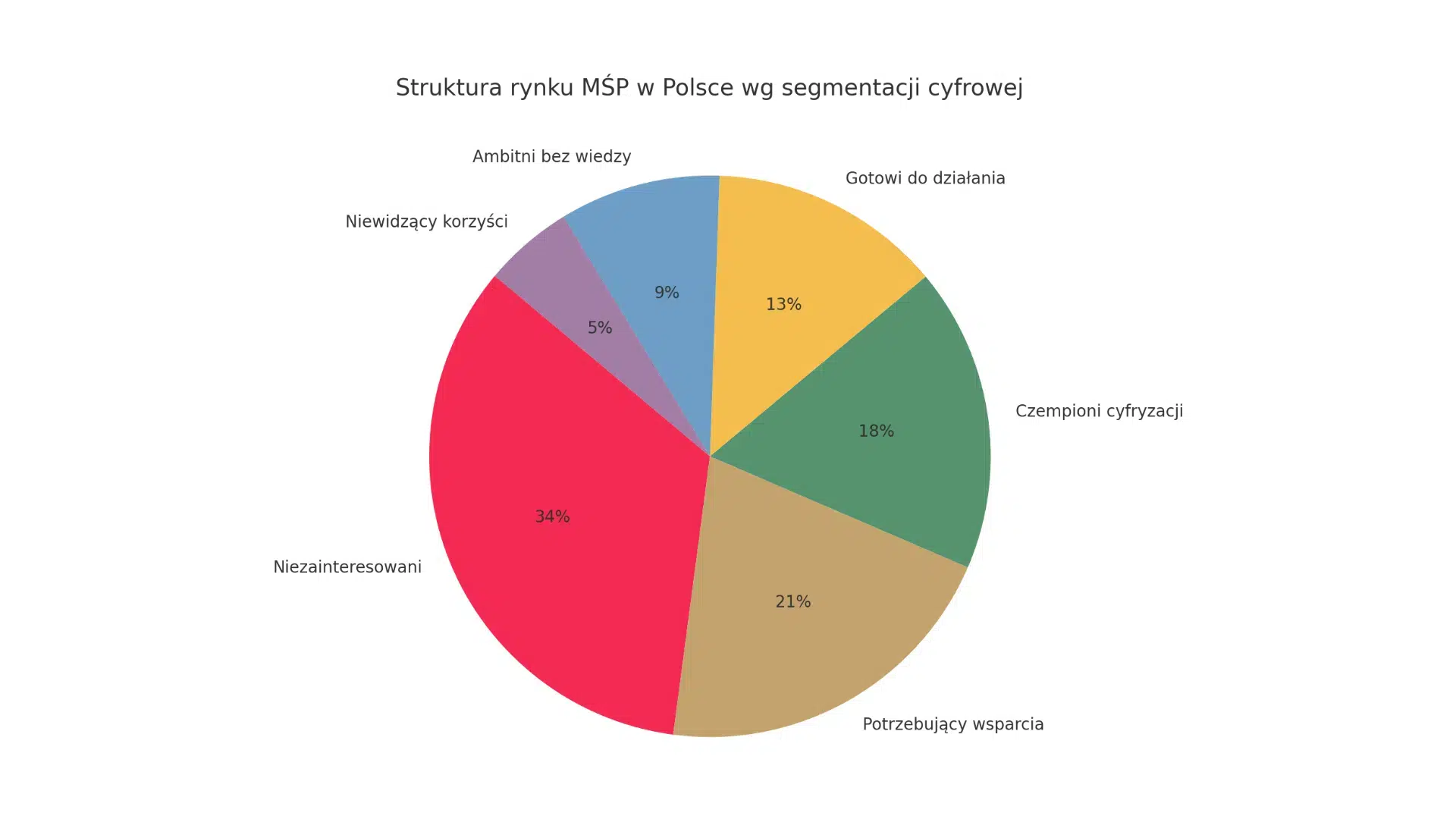
    The largest group are companies identified as ‘Uninterested’, accounting for as much as 33% of the market. Their attitude towards technology is passive – they only implement new solutions when they are forced to do so, and digitisation itself makes them anxious. On the other side are the “Champions of digitisation”. – 17% of companies that treat technology as a key element of their business strategy and actively seek innovation. In between these poles, there are segments that are more diverse: ‘Needing support’ (20%), ‘Ready to act’ (13%), ‘Ambitious without knowledge’ (9%) and ‘Not seeing the benefits’ (5%).

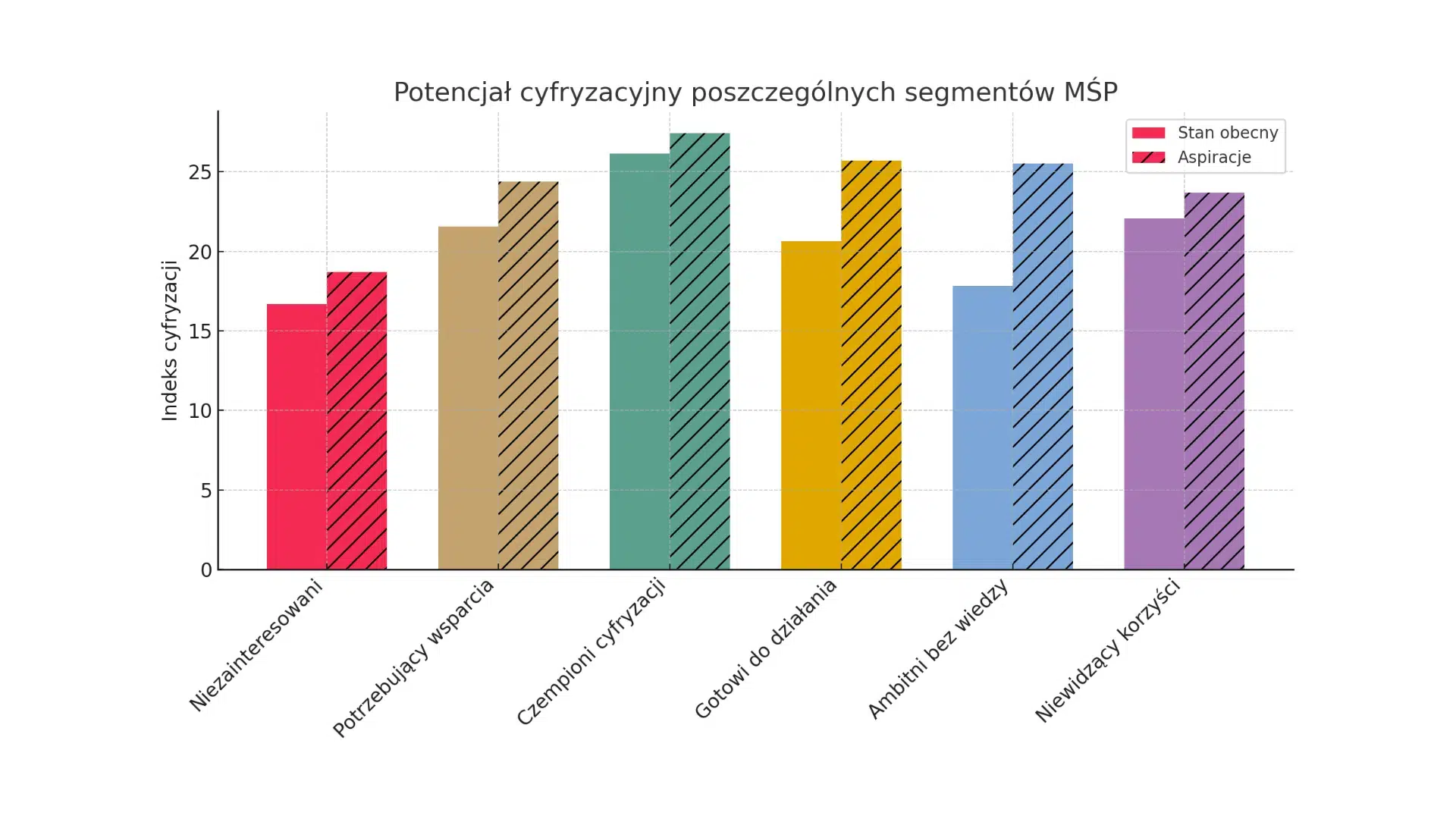
    A juxtaposition between the current level of digitalisation and the digital aspirations of the different groups reveals their development potential. The biggest differences between the current state and declared plans concern the ‘Ambitious without knowledge’ and the ‘Ready for action’. These are companies that are aware of the need for change and want to grow, but often lack knowledge, resources or the right technology partner.

    What distinguishes each segment and how to talk to them?

    “Uninterested” are usually long-established companies, operating locally, often in a B2C relationship. Their digitalisation is limited to basic areas such as finance or workflow. They are apprehensive about digital transformation and a key barrier is a lack of internal need for change. For this group, effective sales should be based on external impulses – such as regulatory changes – and simple financial messages. The offer should be as simple as possible and tailored to minimum expectations.

    A completely different approach should be taken with the ‘Ambitious without knowledge’. These younger companies are aware of the benefits of digitalisation and are strongly motivated to change, but face competence and budgetary constraints. An effective way to reach this segment is to take on the role of advisor and educator. Educational content such as webinars, tutorials or free audits are valuable support tools. The recommended offer should be scalable and flexible, allowing development according to the pace and capabilities of the company.

    “Not seeing the benefits” are companies that have already invested in technology and are using a relatively broad set of tools (8 out of 12 respondents on average), but do not see the point of further transformation. Their attitude is one of scepticism, and digitisation raises concerns especially among employees. For this group, concrete evidence – especially well-documented case studies from their industry – is crucial. It is not worth talking about revolution – it is better to focus on optimisation, integration of existing systems and improving efficiency.

    There is great potential for growth in the ‘Needs Support’ segment. These companies are convinced of the need to digitise, but lack the resources, time and access to knowledge about available forms of support. Their main motivation is the desire to keep up with modernity. Operational implementation is a key challenge – so comprehensive offers, including both consultancy and implementation and training, will be most effective. Of particular value here is assistance in obtaining funding, especially through public programmes.

    “Ready for action” is a segment that is aware of and well prepared for the next technological steps. Their main challenge is the lack of integration between existing systems – they have many solutions, but they do not form one coherent ecosystem. In this case, the merchant should be a knowledgeable partner, able to propose integration projects, infrastructure audits and training for more advanced users.

    At the end are the “Digitalisation Champions” – companies that are already using most of the solutions available today and are looking for innovations that will maintain their competitive edge. These are the customers who demand a strategic approach, technological innovations and partnerships. They are open to pilot projects, AI experiments, process automation or R&D joint ventures.

    potencjal cyfryzacyjny

    What are the lessons for the IT sales channel?

    Firstly, segmentation is a must. Trying to sell technology in a one-size-fits-all way is unlikely to work today. Precise customer qualification – even if only by asking a few questions about the strategy, challenges and the team’s approach to new tools – significantly increases the chance of success.

    Secondly, education is the most important sales tool today. Lack of knowledge, uncertainty and competence constraints appear in all less sophisticated segments. Providers who can deliver educational content and share expertise will not only sell more, but also build customer loyalty.

    Thirdly, the future belongs to services. The report clearly shows that SMEs do not have the resources to manage the digital transformation themselves. This signals that the market will grow where the offering goes beyond the provision of technology to include operational support: from consulting to implementation to managed services and IT outsourcing.

  • IT outsourcing in Poland: fashion, necessity or trap?

    IT outsourcing in Poland: fashion, necessity or trap?

    IT outsourcing, at its core, is a strategic partnership where organisations outsource the management, development or maintenance of key technology processes. With the dynamic changes in the global economy and accelerated digital transformation, outsourcing has evolved from a cost-cutting tactic into a fundamental element of business strategy. It enables companies to not only focus on their core business, but also provides access to specialist competencies, resource scalability and operational optimisation.

    In the context of Poland’s growing position on the global IT services map, a complex question arises about the nature of outsourcing in this country: is it merely a fad driven by the search for quick savings, a ‘necessity’ resulting from global talent shortages and relentless innovation pressure, or a potential ‘trap’ carrying hidden risks and threats to the stability of outsourcing companies and contractors? This article will attempt to unravel this question by analysing the growth dynamics of outsourcing contracts against data on IT company insolvencies.

    Poland as an IT outsourcing hub: position and strengths

    International recognition and rankings

    Poland has consistently maintained its position as one of the world’s most attractive locations for business services and IT outsourcing. This is confirmed by numerous reports from leading analyst firms. For example, in Deloitte‘s 2023 Global Shared Services and Outsourcing Survey report, Poland was identified as the second most popular location for service centres, behind only India and ahead of Mexico, the United States and Malaysia. Similarly, the KPMG report ranks Poland as the second most preferred outsourcing location, behind India and ahead of Brazil. This consistently high ranking underlines the global recognition of the Polish IT ecosystem.

    Poland’s persistently high position in the global IT outsourcing rankings is a phenomenon of deeper significance than just a confirmation of cost competitiveness. The fact that Poland has been in the top spot for years demonstrates that the market perceives it as a mature, reliable and strategic partner, and not just a temporary solution to reduce expenses. This enduring market position is due to a combination of high quality talent, English language proficiency and cultural compatibility with Western markets, all of which go beyond simple cost arbitrage. The shift from seeing Poland as a place to cut costs to seeing it as a source of added value and innovation is key. This means that IT outsourcing in Poland is not a temporary ‘fad’ that will pass with changing market conditions, but has become a strategic ‘necessity’ for global companies looking for robust, long-term IT solutions and innovation opportunities.

    Size and dynamics of the Polish IT outsourcing market

    The Polish IT/ICT sector is a significant driver of economic growth. In 2018, it accounted for around 8% of the country’s GDP and employed 430,000 people. The most recent ABSL data for Q1 2024 shows that the contribution of the entire business services sector to GDP increased to 5.3%, which, while it may reflect a different methodology or a broader range of services than IT/ICT alone, confirms its significant contribution to the economy.

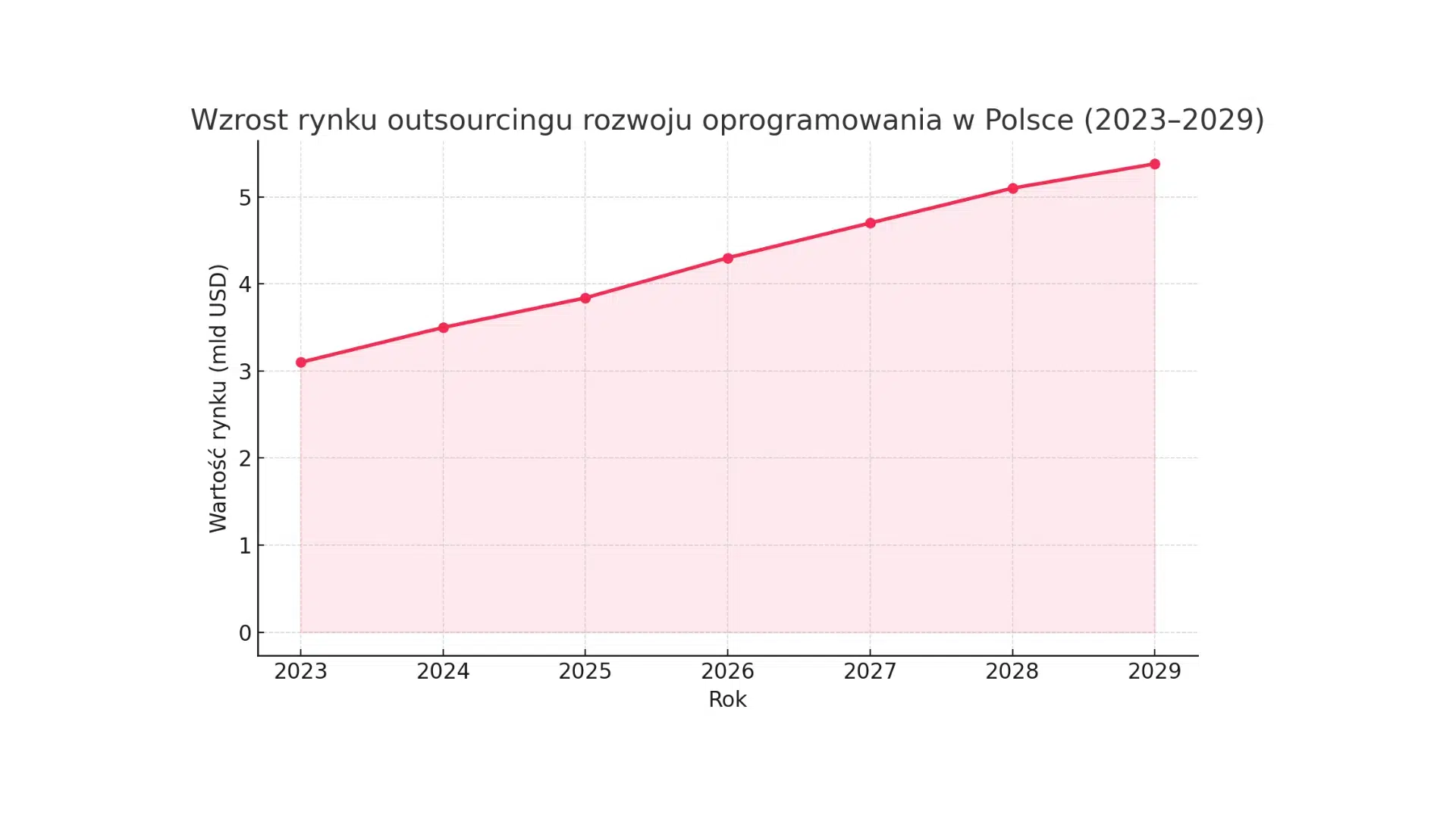
    The IT market in Poland is experiencing impressive revenue growth. Revenues from the software market in Poland are forecast at USD 10.44 billion by the end of 2025. In particular, the software development outsourcing segment in Poland is expected to reach USD 3.84 billion over the same period, with further growth projected to reach USD 5.38 billion by 2029. The overall IT sector in Poland is expected to grow at a compound annual growth rate (CAGR) of 5.92%, reaching more than USD 13 billion by 2029.

    The pool of IT professionals in Poland is huge and growing, which is a key asset. Numbers range from 255,000 to over 520,000 or even 600,000 depending on the source and year, making Poland the largest talent hub in the Central and Eastern European (CEE) region. The ABSL report for Q1 2024 shows that employment in the entire business services sector exceeded 457.1k, with a forecast for further growth to 471.6k by Q1 2025.

    The increase in the number of outsourcing contracts in Poland is a direct consequence of the global demand for IT services and the ability of the Polish market to meet this demand. There is a significant global shortage of IT talent, which is cited as a major barrier to business transformation by 63 per cent of company leaders in the 2025-2030 outlook . In this situation, Poland, with its large and growing pool of highly skilled IT professionals, is becoming a key solution for international companies. Poland’s ability to provide the necessary human capital in the face of a global talent shortage transforms this shortage into a significant opportunity for the Polish IT sector. This dynamic clearly positions IT outsourcing in Poland as a strategic ‘must’ for companies seeking to overcome staffing constraints and maintain competitive advantage.

    Key success factors and competitive advantages

    The Polish IT outsourcing market is distinguished by a number of strengths that contribute to its strong global position:

    • Human resources: Poland has a huge and growing pool of highly skilled and motivated developers. Polish developers are considered among the best in the world, ranking 3rd in terms of technical skills and topping international coding competitions, including 6th place on TopCoder in terms of wins. Annually, around 15,000 computer science graduates feed into the job market, providing a steady flow of fresh talent.
    • Costs and efficiency: Despite the undeniably high quality of services provided, the rates of Polish IT specialists remain much more competitive than in Western markets. Contracting companies can achieve savings of 25-50% compared to hiring local staff. The average cost per employee in the Polish outsourcing sector is approximately USD 205, which is an attractive value proposition.
    • Economic and legal stability: Poland’s membership of the European Union provides a stable and predictable legal framework, including stringent information security and cyber-security regulations such as RODO. This is crucial for projects requiring the processing of sensitive data. Poland is seen as a safe and stable investment choice due to its economic and political situation. In addition, investments by global technology giants such as Microsoft and Google in local cloud regions significantly strengthen the country’s digital infrastructure and build trust with international partners.
    • Location and cultural compatibility: Poland’s central location in Europe (in the CET time zone) offers a convenient time zone, enabling effective real-time collaboration with clients from both Europe and North America. The high proficiency in English among Polish IT professionals and the similarity in working standards and business culture with Western countries minimise communication and cultural barriers, resulting in smoother cooperation and fewer misunderstandings.

    The synergy of these strengths creates a sustainable competitive advantage for Poland in the global IT outsourcing market and changes the perception of the market. Having at the same time a huge and highly qualified talent pool, competitive costs, a stable legal and economic environment and high cultural compatibility, Poland offers a unique value proposition. It is not just the sum of individual advantages, but their interplay that allows Polish companies to engage in increasingly complex and knowledge-intensive projects, as evidenced by the growing share of such services in the business services sector. This comprehensive offering means that Poland’s dominant position in IT outsourcing is not a temporary ‘fad’ that will falter with minor changes in global cost structures. Instead, it is based on fundamental, structural advantages that make it a compelling ‘must’ for companies seeking long-term, high-quality and secure IT partnerships. The potential ‘pitfalls’ of outsourcing in Poland, if any, are therefore less related to the inherent flaws of the Polish market itself and more to the due diligence of the client in choosing the right partner and managing the outsourcing relationship effectively.

    IT outsourcing: a strategic necessity in the digital age

    Evolution of the motivation to outsource

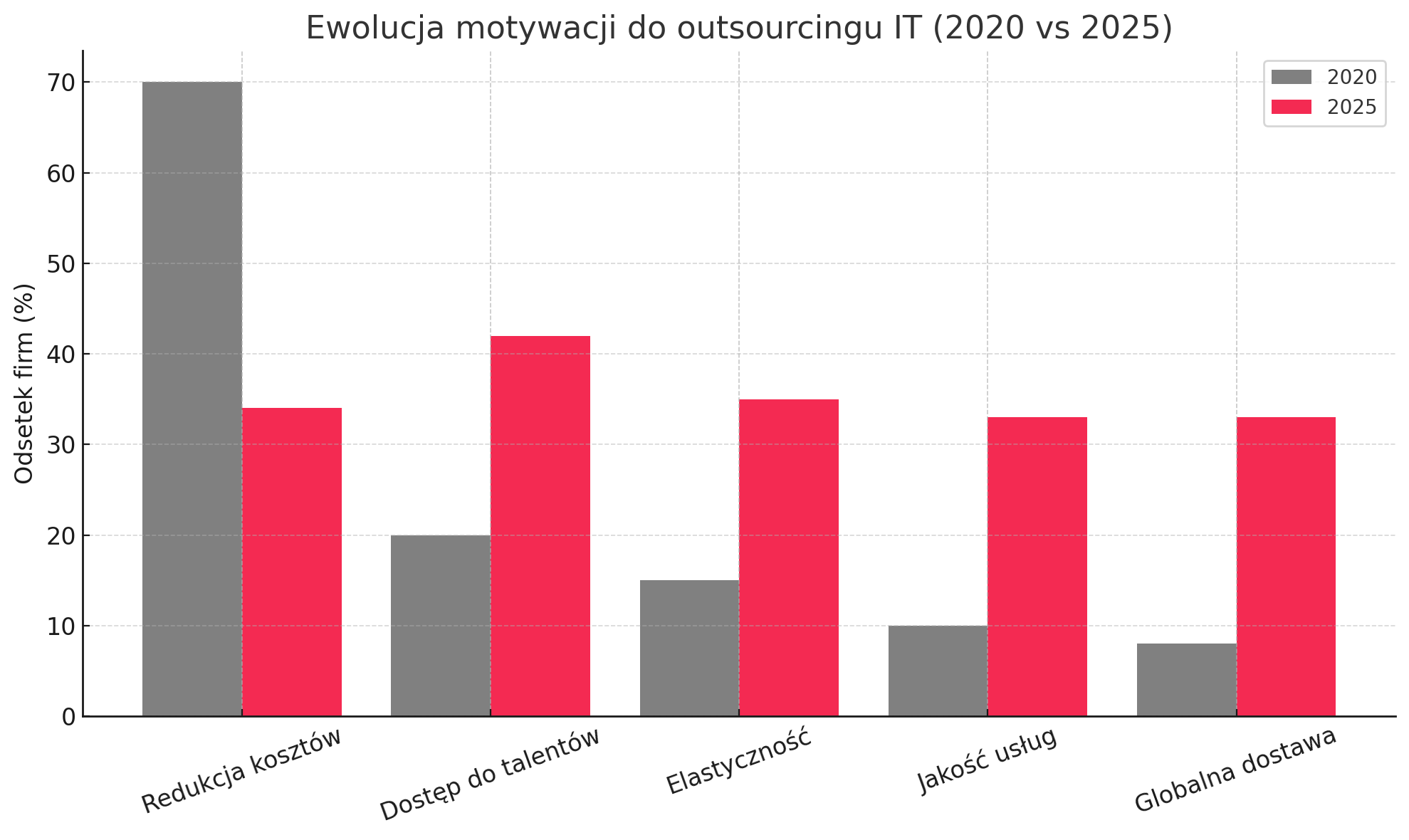
    Global trends in IT outsourcing clearly indicate an evolution in companies’ motivations. While cost reduction was the main objective in 2020 (70% of companies), today, while optimising spend remains important (34%), companies increasingly value access to specialist talent (42%), flexibility (35%), high service quality (33%) and global delivery (33%). This shift in priorities signals a strategic transformation in the perception of outsourcing – from a cost-cutting tool to a key partnership to support business growth and innovation.

    This shift in motivations is closely linked to the global IT talent shortage. Research shows that the skills shortage is the biggest barrier to business transformation for 63% of company leaders between 2025 and 2030. In this situation, IT outsourcing, especially to countries such as Poland that have a rich and highly skilled talent pool, is no longer just an optimisation option. It is becoming a fundamental “strategic necessity” for companies that need to acquire specialised IT competencies in order to achieve their digital transformation goals and remain competitive. Poland, with more than 520,000 IT professionals and around 15,000 IT graduates per year , is effectively filling this gap, turning the global talent deficit into its competitive advantage. This trend confirms that outsourcing in Poland is not a ‘fad’, but a sustainable part of a global sourcing strategy.

    The role of outsourcing in accelerating digital transformation

    Outsourcing is now seen as a key strategy in accelerating digital transformation. Companies are investing heavily in cloud services, which was particularly evident during the pandemic. Poland has the potential to become a leader in cloud services, supported by the launch of local cloud regions by Google and Microsoft, thanks to significant investments and developed competences.

    Adoption of Generative Artificial Intelligence (GenAI) is another powerful driver of global IT spending, with projected growth of 9.8 per cent in 2025 to US$5.61 trillion, and 50 per cent of employers planning to reorient their business in response to AI. The Polish market for AI software development is expected to exceed USD 5.8 billion by 2030 , demonstrating the growing competence in this area. Cyber security is a priority for 71% of business leaders, with 81% of companies choosing to outsource security functions due to the high cost of data breaches.

    IT outsourcing, especially to Poland, which is actively developing competencies in GenAI, cloud and cyber security, is becoming a key accelerator of innovation and adaptability for companies. Companies not only reduce operating costs, but above all gain rapid access to advanced technologies and specialists, which is essential for their future growth and maintaining a competitive advantage. The focus on these areas, rather than simple infrastructure maintenance, shows that outsourcing has evolved into a strategic partnership. Poland, with its extensive IT infrastructure and innovation centres , is well placed to meet these demands, confirming the thesis of the ‘necessity’ of outsourcing in the context of a dynamically changing technological landscape and increasing pressure for innovation.

    Growth in outsourcing contracts – data and forecasts

    The software development outsourcing market in Poland is expected to reach USD 3.84 billion in 2025 and USD 5.38 billion by 2029. The business services sector in Poland as a whole recorded a year-on-year employment growth of 3.8% in Q1 2024, with further growth forecast to 471,600 employees by Q1 2025. What’s more, knowledge intensive business services (KIBS) exports from Poland reached an impressive USD 36.8 billion in 2023, a year-on-year increase of 22.9%.

    The continued growth in the number of contracts and value of outsourcing services exports in Poland is a strong indicator of the growing confidence of global companies in the Polish IT ecosystem. Such dynamics are not a feature of short-term ‘fashion’ that will quickly pass, but rather reflect strategic decisions based on Poland’s proven ability to deliver high quality services, innovation and stability. The fact that foreign centres dominate new investments and job creation in the Polish business services sector , further confirms the deep strategic integration. This growth demonstrates that outsourcing in Poland is perceived as a stable and future-proof business ‘necessity’ that is an integral part of the long-term strategies of global companies.

    Potential pitfalls of IT outsourcing: risks and challenges

    Despite its many advantages, IT outsourcing, like any business strategy, comes with potential pitfalls and challenges that need to be consciously managed.

    The main risks associated with outsourcing

    • Vendor credibility: One of the key risks is engaging with an inexperienced, unprofessional or financially unstable software house that may not be able to meet project requirements and business objectives.
    • Loss of control: Companies are often concerned about losing real or perceived influence over key IT processes and project management once a project has been outsourced. This applies to both communication and working methodologies.
    • Inadequate quality of service: There are concerns about whether the new technology partner will be able to deliver software of the same quality as the in-house teams, and whether it will fully meet business expectations. This risk also includes project delays.
    • Hidden costs: Unexpected cost increases that are not clearly stated in the contract, such as charges for hardware upgrades, working environments, or additional working hours beyond the agreed scope, can significantly reduce the profitability of outsourcing.
    • Data security and confidentiality: Outsourcing always involves securing the organisation’s data and intellectual property. Concerns about data leakage, information theft or non-compliance with regulations (e.g. RODO) are key.
    • Communication and cultural barriers: challenges due to geographical differences, time zones and different working cultures can lead to misunderstandings and delays. Although Poland has advantages here (CET, high English proficiency, cultural compatibility), these risks still exist and need to be managed.
    • Legal risk: The lack of a single, coherent law exclusively regulating employee outsourcing in Poland may lead to inconsistent interpretations of regulations by various state institutions (PIP, ZUS, Border Guard), which makes it more difficult to prepare for inspections and increases legal risks for companies.

    output 4

    The aforementioned risks associated with IT outsourcing do not result from fundamental weaknesses or instability of the Polish IT market. Rather, they are universal challenges that accompany the management of any relationship with an external service provider, regardless of location. Their materialisation depends largely on the diligence, strategy and due diligence of the outsourcing company. Poland, thanks to its convenient time zone, high English language proficiency and cultural compatibility with Western markets , significantly mitigates some of these risks compared to traditional offshore destinations. Legal risks, although specific to the Polish context, are fully manageable through expert consultation. This means that outsourcing in itself is not inherently a ‘trap’, but requires conscious and proactive risk management. Focusing on these aspects is crucial for a successful collaboration.

    The specifics of ‘IT per hour’ versus comprehensive outsourcing partnerships

    Risk analysis requires distinguishing between different outsourcing models. The article points out in detail the specific pitfalls associated with less structured and fragmented IT services, such as the ‘IT per hour’ model. These include:

    • Lack of substitutability: The company is left without IT support in the event of holiday, illness or unavailability of a single specialist, which can lead to costly downtime.
    • Unreliable approach to tasks: The service provider may prioritise more profitable clients, resulting in delayed assistance or intervention only at a critical time.
    • Limited competence: A single person rarely has comprehensive knowledge in all aspects of IT, which can lead to suboptimal solutions.
    • Unsafe configurations: Lack of a comprehensive approach can result in security vulnerabilities, such as unsecured RDP access, weak passwords or lack of backup power for critical databases.

    The risks associated with the ‘IT on an hourly basis’ model are much higher and fundamentally different from those of working with large, mature outsourcing companies in Poland. These larger entities, such as those mentioned in the ABSL report, are characterised by structured processes, comprehensive teams, project and risk management mechanisms, and provide substitutability and a wide range of competencies. In this way, they minimise the problems of availability, quality or security that are inherent in less formal and scaled forms of outsourcing. This means that while the ‘trap’ exists in the context of single, unstructured services, it is not representative of the mature Polish IT services market, which leans towards comprehensive, long-term partnerships. This distinction is key to accurately assessing the risks and choosing the right model of cooperation.

    Risk minimisation strategies

    To effectively manage risk in IT outsourcing and avoid potential pitfalls, companies should implement the following strategies:

    • Thorough analysis of supplier credibility: It is essential to carry out a thorough vetting of potential partners, including their experience, company size, technology specialisations, quality of project portfolio, as well as obtaining references from previous clients. It is also advisable to visit the supplier’s offices to assess the organisational culture and working conditions.
    • Transparent contracts and precise communication: It is crucial to draw up detailed contracts that clearly define the scope of services, quality metrics (SLAs), responsibility for delays, dispute resolution mechanisms and any potential hidden costs. Clear expectations, project requirements, collaboration methodologies (e.g. Agile, Scrum, Kanban) and developer roles should also be defined, ensuring full access to project data and communication tools.
    • Protect data and intellectual property: Signing a non-disclosure agreement (NDA) is standard, but also make sure the supplier has experience working with sensitive data and complies with regulations such as RODO.
    • Managing communication barriers: Despite Poland’s strengths, communication needs to be proactively managed, setting standards for customer service, frequency of meetings and ensuring the supplier’s team has the required level of English language skills.
    • Legal consultation: In the case of employee outsourcing, it is advisable to consult legal experts to ensure compliance with local regulations and to avoid ambiguous interpretations.

    Increase in number of contracts vs. number of IT company bankruptcies: correlation analysis

    A key element in assessing the nature of IT outsourcing in Poland is to analyse its impact on the stability of the local IT sector, particularly in terms of the number of company bankruptcies.

    Dynamics of bankruptcies in the IT sector in Poland

    The overall number of bankruptcy proceedings in Poland has increased in recent years. Data from the Central Statistical Office (CSO) shows an increase in the number of insolvencies in Q2 and Q3 2024, although a decrease was recorded in January 2025. Coface reports a record 5576 insolvencies in 2024, an increase of 19% compared to 2023, with the highest growth in construction and transport. There were 100 insolvencies in Q1 2025, unchanged year-on-year, but higher than in Q4 2024 (95 insolvencies).

    However, when analysing the ‘Information and Communication’ sector (PKD J), the picture is much more stable. In 2021, a year in which the overall number of new businesses in Poland increased by 12.4% and the number of insolvencies fell by nearly 30%, the Information and Communication sector stood out as having the largest increase in new business registrations (by nearly 43%). Significantly, in the same year, the Information and Communication sector saw only nine insolvencies, accounting for just over 2% of all business failures.

    The above data shows that the number of bankruptcies in the IT/ICT sector in Poland remains relatively low and stable compared to the overall insolvency dynamics in the economy. Despite an overall decline in business registrations in Q4 2024, including the largest in information and communication (by 17.7%) , this does not translate directly into an increase in the number of insolvencies in this sector.

    The main causes of company bankruptcies in Poland, such as excessive operating costs, lack of a growth strategy, dishonest counterparties, liquidity problems, excessive debt or strong competition, are universal and affect all sectors. There is no specific data to indicate that the IT sector is particularly exposed to these factors in a way that would lead to mass bankruptcies, especially in the context of the growth of outsourcing contracts.

    No direct negative correlation

    When comparing the dynamic growth of outsourcing contracts and the overall development of the IT sector in Poland (as presented in Section 3) with the data on bankruptcies in the “Information and Communication” sector, no direct negative correlation is observed. On the contrary, despite the general increase in the number of insolvencies in the Polish economy, the number of bankruptcies in the IT/ICT sector remains relatively low and stable.

    This situation suggests that the increase in the number of outsourcing contracts does not lead to a wave of bankruptcies among Polish IT companies. In fact, it can be said to be a stabilising and strengthening factor for the sector. The growing demand for outsourcing services, especially in the areas of advanced technologies and specialised competence, provides Polish IT companies with a steady stream of orders and development opportunities. Access to global markets and a diversified customer base help them maintain liquidity and resilience to economic fluctuations that may affect other, less specialised industries.

    Implications for the market

    The lack of a negative correlation between the growth of outsourcing contracts and IT company bankruptcies has important implications. It indicates the maturity and resilience of the Polish IT sector, which is effectively taking advantage of the global demand for its services. Rather than being a ‘trap’ leading to bankruptcy, outsourcing is proving to be an engine for growth, stability and innovation. IT companies in Poland, especially those involved in outsourcing, appear to be well prepared to manage operational and financial risks, benefiting from a growing number of international partnerships. This strengthens Poland’s position as a reliable and secure partner in the global IT supply chain.

  • Will energy costs halt AI development in Poland? – analysis 2025

    Will energy costs halt AI development in Poland? – analysis 2025

    Artificial intelligence(AI) is revolutionising the global economy, becoming a key competitive advantage for businesses. The pace of its development is unprecedented, surpassing even the dynamics of internet popularisation. Companies that proactively implement coherent AI strategies gain market advantage, while those that do not, risk being left behind. Poland, in the context of the global technology race, is showing an impressive acceleration in the implementation of solutions based on artificial intelligence. According to a report by Strand Partners, commissioned by Amazon Web Services (AWS), 34% of Polish companies have already applied AI technologies, and on average, one Polish company implements new solutions in this area every two minutes.

    AI adoption in Polish companies is growing rapidly. Data from the Central Statistical Office (CSO) and the European Leasing Fund (EFL) show an increase in the percentage of companies using AI from 3.7% in 2023 to 5.9% in 2024. For large companies, the rate is even higher, with one in ten organisations already using AI. EY’s survey of more than 500 companies at the end of 2024 reveals a high readiness for further AI deployments (89% of companies, up from 78%) and a prioritisation of investment in the technology (59%, up from 53%). More than half of the companies surveyed plan to increase spending on AI in the next 18 months.

    The benefits of implementing AI are measurable and provide strong motivation for further investment. As many as 78% of companies that have implemented artificial intelligence tools confirm that the expected results have been achieved. What’s more, 87% of companies have seen an increase in revenue, averaging 35%, and 90% of companies have seen an increase in productivity, particularly in routine areas such as data analysis, task automation or reporting. McKinsey & Company’s research further confirms that companies that integrated AI into their operational processes increased productivity by an average of 25%, while reducing operational costs by 10%. In the recruitment sector, the implementation of AI reduced the time it took to close a process by 35% and reduced costs by 20%.

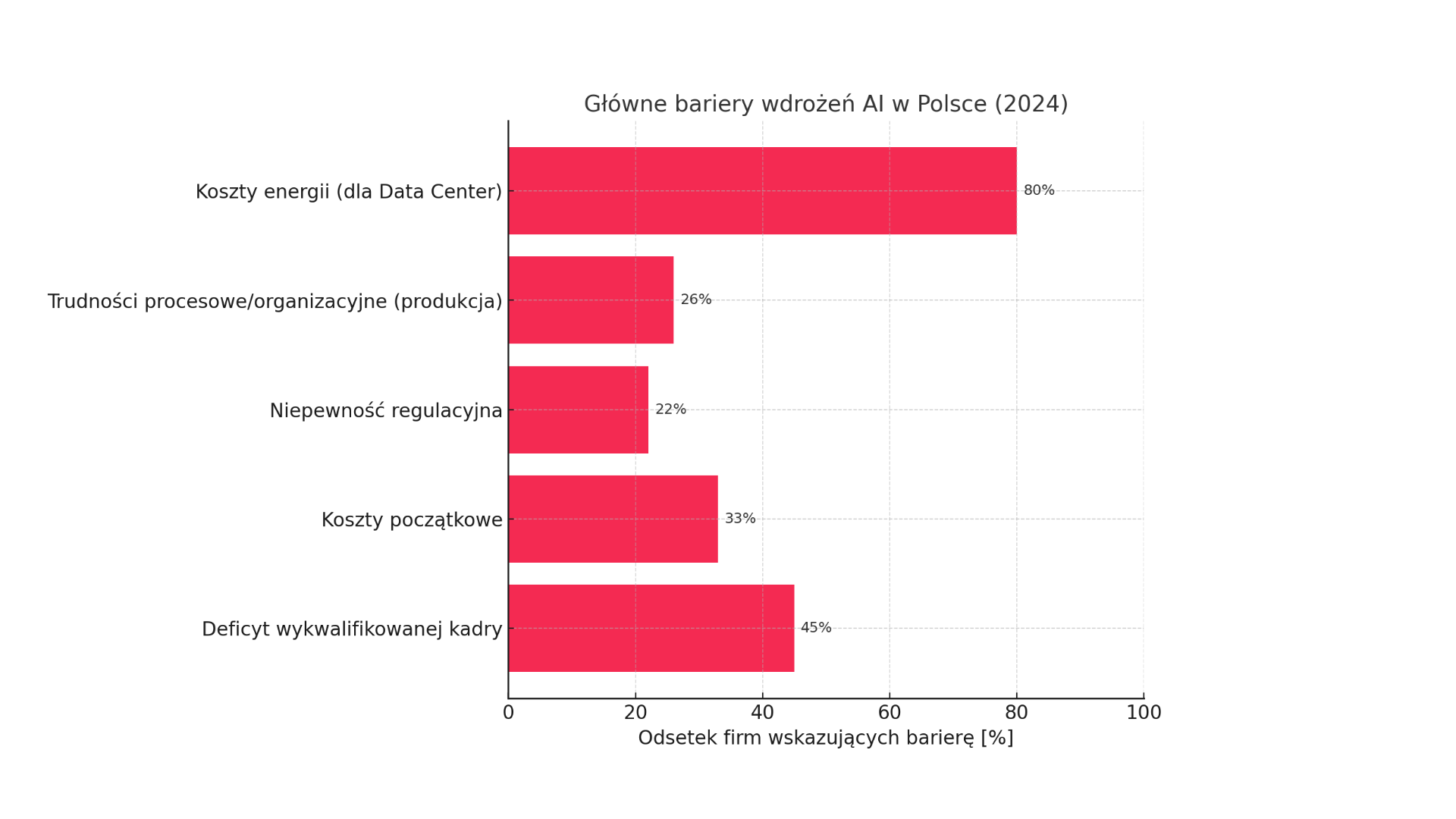
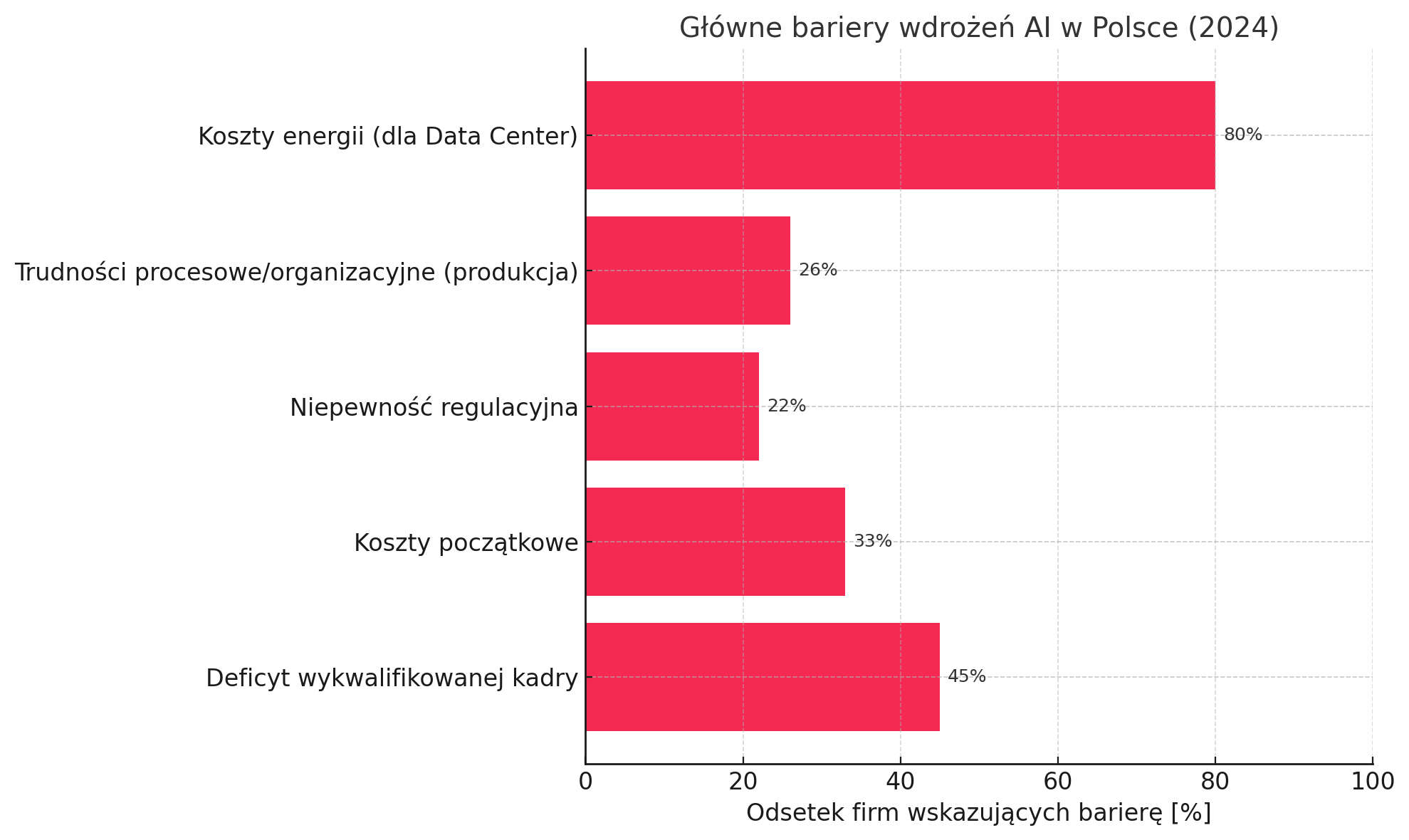
    However, the rapid growth of AI is inextricably linked to the increasing demand for electricity. AI infrastructure, which relies heavily on data centres, is becoming increasingly energy-intensive, and its electricity requirements are growing exponentially. In this context, rising electricity costs are identified as the biggest challenge facing Poland’s data centres, as indicated by 80% of respondents in a survey commissioned by Kingston.

    The issue of the impact of energy costs on the development of AI in Poland is of fundamental importance for the entire economy and the IT sector. Investment in disruptive technologies such as artificial intelligence has the potential to accelerate economic growth and strengthen Poland’s position in the global value chain. Countries that are the first to adapt their energy systems to the new digital reality can become transformational leaders. In contrast, regions that fail to increase energy availability or ensure competitive energy prices may be left out of the global technology race.

    Analysis of the available data indicates that the strong growth in AI adoption in Poland, driven by real business benefits, is creating fundamental pressure on energy infrastructure. This changes the question posed in the title from “will the growth of AI stop?” to “how do we manage energy to sustain this growth?”. Since the business benefits of AI are so significant and widely felt, companies will push for its deployment, regardless of rising energy costs. This means that high energy prices will not stop the development of AI, but will force companies to look for solutions that optimise energy consumption or provide access to cheaper sources. This fundamental pressure on energy means that the energy sector and policymakers need to treat AI development as a key, growing energy consumer, rather than a marginal issue. It is imperative that the energy transition and grid modernisation is accelerated so that Poland can remain competitive in the global AI race and avoid the lack of adequate energy infrastructure becoming a real barrier to investment.

    Electricity price dynamics in Poland: forecasts for the business sector

    Electricity costs are an important element in calculating the profitability of investments in AI infrastructure, including artificial intelligence systems. An analysis of the dynamics of energy prices in Poland, both historical and forecast, is key to understanding the challenges facing the business sector.

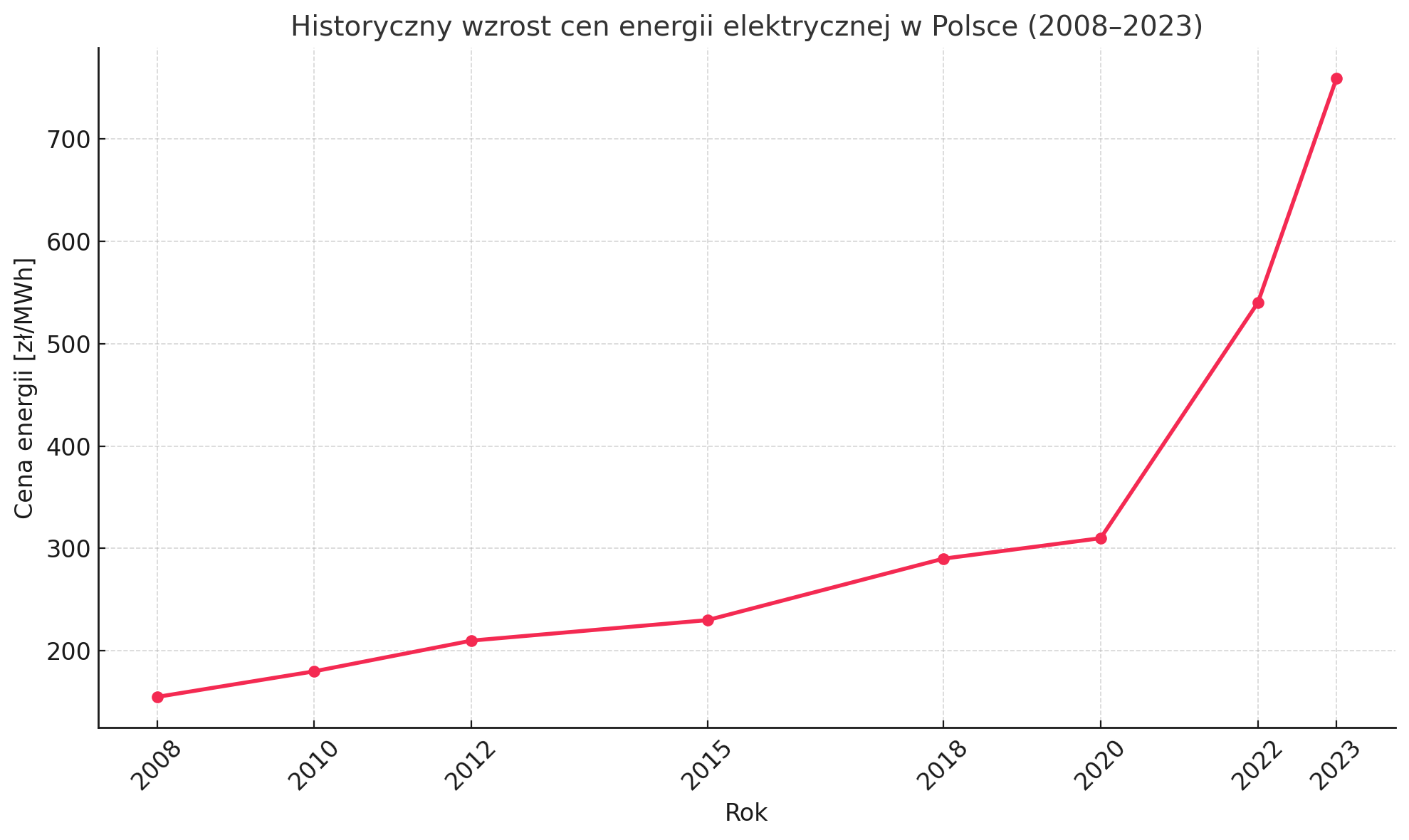
    Over the past 15 years, electricity prices in Poland have increased nearly fivefold, from 155 PLN/MWh in 2008 to 759 PLN/MWh in 2023. The main reason for this significant increase was the rising cost of power generation in coal-fired power plants and the dynamic increase in the price of carbon emission allowances (EU ETS), which reached around €90/tCO₂ in April 2023, stabilising at €65/tCO₂ in April 2024. Wholesale electricity prices in Poland, despite some stabilisation after sharp increases in 2022-2023, still remain at one of the highest levels in Europe. In the second quarter of 2024, the average electricity price in Poland was around 390 PLN/MWh, while the European average was 340 PLN/MWh.
    output 13

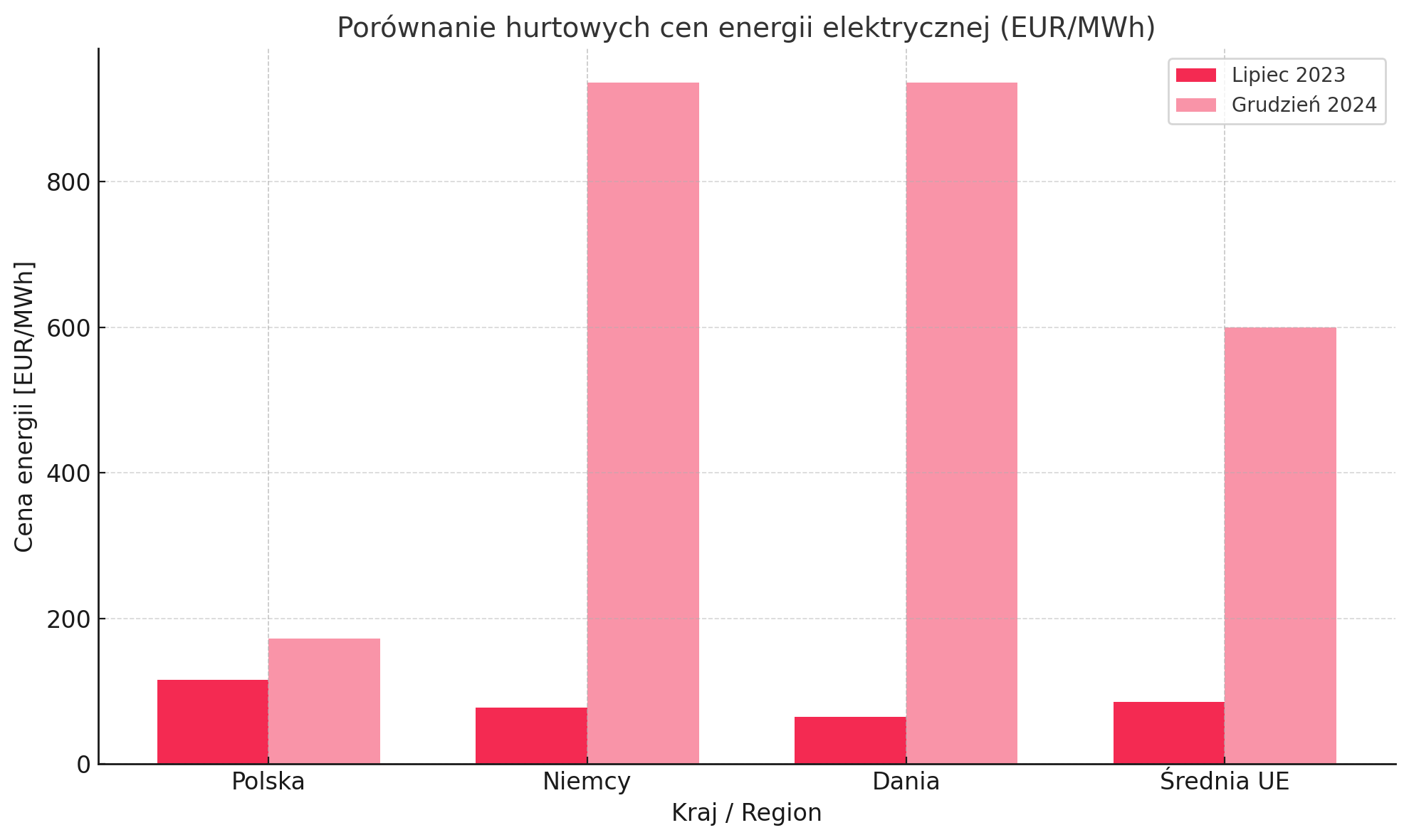
    Detailed comparisons show that in July 2023, the wholesale price of 1 MWh in Poland (€115.73) was approximately 49% higher than in Germany (€77.48) and at the same time the highest in the entire European Union. Bartłomiej Derski of WysokieNapiecie.pl emphasises that such an unfavourable price difference between Poland and Germany (more than PLN 200) has not occurred in history. This is largely due to the fact that Poland pays more for CO2 emission allowances and the cost of generating electricity from Polish coal, exceeding PLN 330 per MWh, is more expensive than imported coal. At the end of 2024, small companies had the opportunity to contract energy for 2025 at a price of less than 50 gr/kWh net. Nevertheless, in December 2024, Polish energy cost an average of 172 euros per megawatt hour, which was significantly less than in Germany or Denmark, where rates reached 936 euros/MWh. Nevertheless, the cost of annual contracts for 2025 in Poland (around 100 euro/MWh) is already 9% higher than in Germany and 25% higher than in Denmark. This indicates that temporarily lower spot prices do not translate into a long-term competitive advantage.

    Electricity price forecasts for 2025-2030

    In the context of the forecasts, for households, electricity prices have been frozen at a net price of 50 gr per kWh until 30 September 2025. However, after this period, for companies that have not secured contracts or sent in the required statements in time, prices could rise drastically, even to 2.31 gr/kWh, although offers of 60 gr/kWh are still available on the market. Such a situation means that a lack of proactive management of energy contracts can result in significant amounts of money having to be returned to the energy retailer’s account.

    Projections by Polskie Sieci Elektroenergetyczne (PSE) and the National Industrial Sector Development Plan (NRDP) for 2025-2040 indicate that energy consumption in Poland in 2030 will be 175.0 TWh. On the other hand, McKinsey experts estimate that the energy transition in Poland will reduce average electricity prices by around 70 PLN/MWh (15%) by 2030 and by around 150 PLN/MWh (30%) by 2050, which would translate into an average of 25 billion PLN in savings per year for the entire economy.

    Comparison of energy prices in Poland with other EU countries for data centres

    As already mentioned, wholesale energy prices in Poland were the highest in the European Union in July 2023. Europe currently accounts for around 15% of global data centre power use, but has seen its share fall by the end of 2023. Global energy demand by data centres could more than double by 2030, reaching around 945 TWh globally, of which up to 113 TWh in Europe alone.

    Poland’s short-term price freeze for households, while politically justified, masks deep, structural challenges for the business sector, especially for energy-intensive industries such as AI. These companies, after 2025, could face drastic cost increases that threaten their profitability. The price freeze policy for residential consumers creates an illusion of stability in the energy market that does not reflect the real costs of generation and wholesale prices for business. Companies, especially those with large AI infrastructures, cannot count on similar shielding mechanisms in the long term. The lack of proactive management of energy contracts therefore becomes not only an operational error, but a strategic risk to the profitability of AI projects. This forces companies to think about long-term sourcing strategies, such as PPAs, rather than relying on government interventions. This situation highlights the urgent need to accelerate the energy transition in Poland. As long as the energy mix remains coal-based and burdened by EU ETS costs, wholesale prices will remain high and the AI sector will operate in an environment of cost uncertainty. The lack of stable and competitive energy prices may slow down the inflow of foreign investment in large AI data centres that seek optimal operating conditions around the world.
    output 1 4

    Despite temporarily lower spot prices compared to some EU countries, Poland has structurally higher wholesale energy prices and higher annual business contract costs. This poses a systemic barrier to the global competitiveness of the Polish AI sector and may inhibit the development of large infrastructure projects. This structural difference in energy prices puts Poland at a competitive disadvantage. Global companies, especially hyperscalers that plan to build large data centres, make location choices based on the long-term stability and cost competitiveness of energy. If Poland offers higher contract prices, it becomes less attractive, which may limit the inflow of key AI investments. The decline in Europe’s share of global data centre power usage is a wake-up call. In order for Poland to become a leading AI hub in Europe, it is necessary not only to transform energy, but also to achieve regionally competitive energy prices. Investments in RES and nuclear power are crucial not only for sustainable development, but, above all, to provide an economic basis for the further unfettered development of AI.

    AI development in Poland: trends and barriers

    The development of artificial intelligence in Poland is characterised by a dynamic pace, as confirmed by numerous market data. The percentage of companies using AI has increased from 3.7% in 2023 to 5.9% in 2024, and in large enterprises, one in ten organisations is already using these technologies. A report by Strand Partners, prepared for AWS, indicates that 34% of Polish companies have implemented AI solutions, and the dynamics are so high that, on average, another Polish company starts using AI every two minutes.

    Companies that have decided to implement AI report significant benefits. As many as 87% have seen an increase in revenue, by an average of 35%, and 90% have experienced an increase in productivity, especially in routine areas such as data analysis, task automation or reporting. The EY study confirms that AI contributes to process optimisation, improved data analytics, improved cyber security and product and service development. Additionally, McKinsey & Company analysis shows that companies that have implemented AI in their operational processes have increased productivity by an average of 25 per cent, while reducing operational costs by 10 per cent. In the recruitment sector, the implementation of AI reduced the time to hire by 35% and reduced the associated costs by 20%.

    The Polish Development Fund (PFR) has developed a Map of Polish AI Solutions, grouping solutions also in the area of sustainable development. Key Polish companies developing AI include Infermedica, Molecule.one, DeepFlare (medicine and biotechnology), Authologic, Nethone (finance, cyber security), Nomagic, AI Clearing (industry and logistics), Synerise, Cosmose AI (customer service and marketing) and Eleven Labs, Addepto (generative AI and future technologies). Bitrix24 and HubSpot are also popular platforms with AI features in Poland.

    Investments in AI and infrastructure development

    Poland is actively investing in the development of AI infrastructure. The construction of 13 ‘AI Factories’ is planned to become key access points to the shared computing power needed to train language models and process data on a massive scale. These factories will be available to both businesses and research units. Spending on AI in Poland has increased by an average of 20% over the past year, placing the country close to the European average. An important part of the R&D ecosystem is the NCBR’s IDEAS, a centre established by the National Centre for Research and Development, whose mission is to support the development of AI in Poland by bringing together the academic and business communities.

    Barriers to AI development

    Despite the rapid growth in adoption and demonstrable benefits, Poland faces what can be described as a ‘triple barrier’ to AI fully flourishing: energy, human resources and regulation. These barriers are not isolated, but reinforce each other, creating a complex ecosystem of challenges that requires coordinated action.
    output 2 4

    Firstly, a lack of suitably qualified staff is cited as the main barrier to further AI expansion by 45% of companies. In response to this deficit, employers are offering attractive bonuses and salaries, on average 42% higher for AI experts. Secondly, initial costs are a challenge for 33% of companies. Although cost concerns are decreasing in manufacturing (from 33% to 10%), process and organisational difficulties are increasing in importance (26% in manufacturing). Thirdly, regulatory uncertainty affects 22% of companies, and in the start-up sector the problem is felt by up to 80% of entities. In the services sector, regulatory uncertainty is cited (17%) and in commerce, data security (26%). Kingston’s survey for data centres in Poland confirms that, in addition to rising energy prices, a lack of qualified staff and cyber security regulations are challenges.

    High energy costs may discourage investment in physical AI infrastructure, such as the construction of large data centres, which in turn may reduce demand for AI professionals or make Poland less attractive for talent. Regulatory uncertainty may slow down both investment in energy-efficient AI solutions and the development of innovative projects that could reduce energy demand. In turn, a lack of human resources may hinder the implementation and optimisation of energy-efficient systems, exacerbating the problem of energy costs.

    Poland’s success in AI development does not depend solely on individual investments by companies or government programmes such as ‘AI Factories’. It requires a holistic approach that simultaneously addresses all these interrelated barriers. Neglecting one area, such as the lack of stable energy prices, can undermine the effects of actions in other areas, such as investments in human resources or regulation. This means that Poland needs to create a coherent ecosystem to support AI, where energy, education and regulatory policies are synchronised to ensure long-term international competitiveness.

    Energy intensity of AI infrastructure

    The development of artificial intelligence is inextricably linked to the increasing demand for computing power and, consequently, electricity. Data centres, the backbone of AI infrastructure, are becoming some of the largest consumers of electricity in the world.

    Global and Polish energy demand by data centres

    Global data centres are consuming increasing amounts of energy. The International Energy Agency (IEA) forecasts that they could consume 80% more energy by 2026 than they did in 2022, even allowing for efficiency gains. Goldman Sachs analysts estimate that by 2030, data centre energy consumption will more than double from 498 TWh to 1,076 TWh, equivalent to the energy consumption of all of Japan today. IDC and Deloitte make similar predictions, pointing to the exponential growth in data centre energy demand driven by AI.

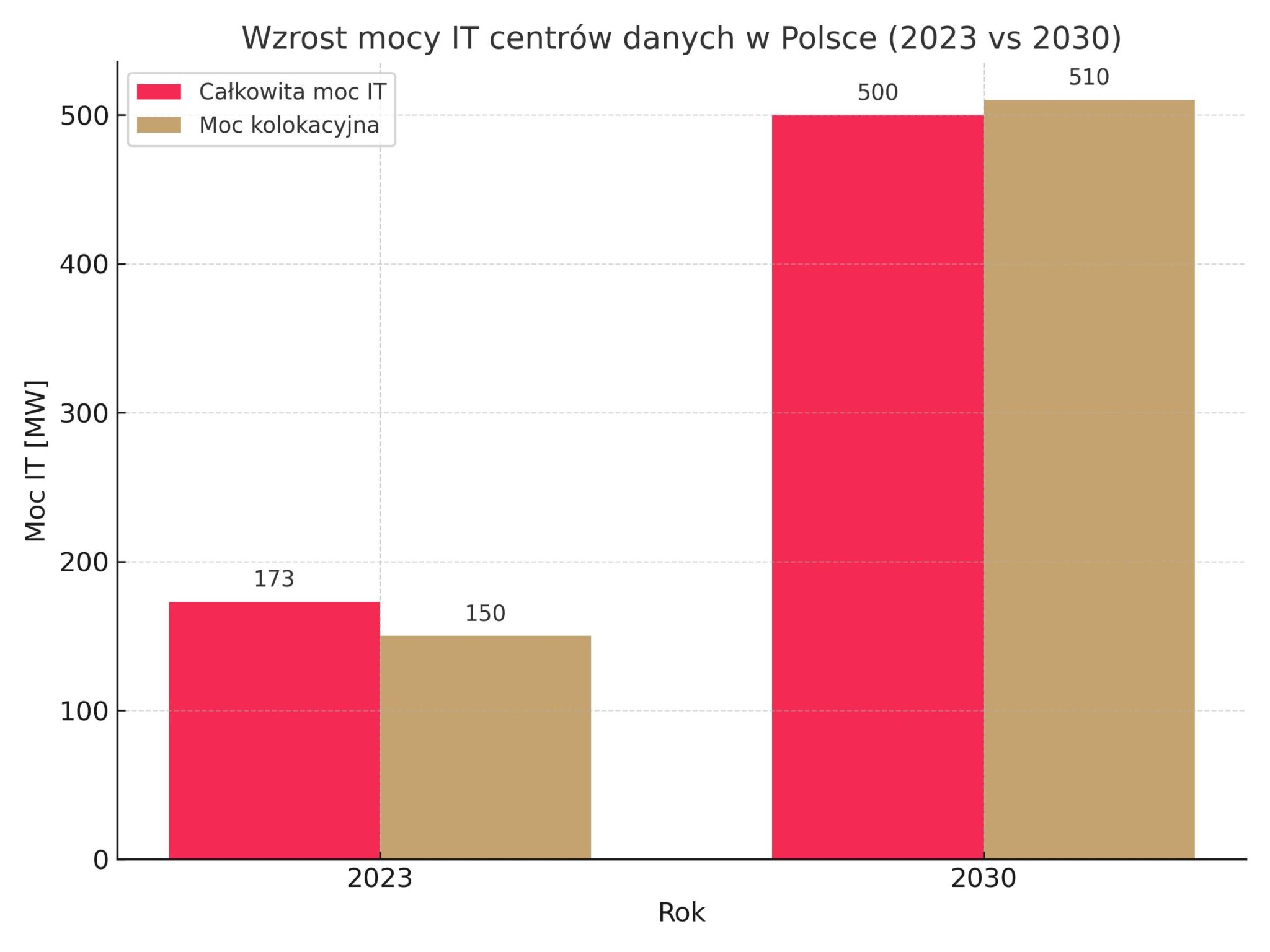
    In Poland, the power allocated to data centres in 2023 was 173 MW, an increase of almost 43% year-on-year. The forecast for 2030 indicates a minimum of 500 MW, representing a compound annual growth rate (CAGR) of 25%. Polskie Sieci Elektroenergetyczne (PSE) predicts that the share of data centres in national electricity consumption will be around 4.2-4.5%. Moreover, large data centres, such as those that Microsoft will launch in Poland, may require even more than 100 MW. Annual energy consumption at this level would be enough to charge all the electric cars in Poland twice over.

    AI contributes to energy consumption both during the training phase of the models and during the inference phase. The training phase of AI models is extremely energy-intensive, requiring enormous computing power and taking weeks or months, involving hundreds or thousands of graphics processing units (GPUs) or tensor processing units (TPUs). For example, training the GPT-3 model (which has 175 billion parameters) consumed about 1287 MWh of electricity, equivalent to the annual consumption of about 120 US households.

    Inference is the operational phase in which the trained model generates predictions or responses to new data. Although training is intensive, the inference phase accounts for 70-80% of the total energy consumption in the model’s lifecycle due to its continuous and iterative nature. Each query to an AI model such as ChatGPT consumes at least four to five times more computing power than a traditional web search. A single query to ChatGPT3 consumes about 10 times more energy than a typical Google search.

    To mitigate this consumption, the use of smaller AI models for simpler tasks is an effective method of saving energy – they are more cost-effective and environmentally friendly. In addition, the model quantisation technique, which reduces the precision of model weights and activations, significantly reduces memory usage and speeds up inference, resulting in lower energy consumption.

    Operating cost structure of AI infrastructure

    Global investment in AI infrastructure already exceeds $100 billion per year, indicating that the scale of the problem will only increase. McKinsey estimates that by 2030, companies will need to invest $5.2 trillion in data centres to support AI alone. Energy and facility maintenance costs are a key factor in this structure. Approximately 25 per cent ($1.3 trillion) of the projected $5.2 trillion investment is for ‘energisers’ – those responsible for power generation and transmission, cooling and electrical equipment.

    Operating costs for on-premise solutions include significant capital expenditure (CapEx) for hardware and software, as well as ongoing energy and facility maintenance costs. In contrast, cloud solutions (cloud) offer reduced upfront costs and lower maintenance requirements, but involve ongoing operational costs (OpEx) in the form of subscription fees. In the case of on-premise infrastructure, data centre power and cooling costs can be high and volatile due to fluctuating energy prices.

    AI development costs vary depending on the complexity of the project: simple solutions (e.g. chatbots) can cost between $20,000 and $80,000, advanced solutions (e.g. risk management systems) between $50,000 and $150,000, and customised, complex systems (e.g. advanced trading platforms) between $100,000 and more than $500,000. Infrastructure costs for AI workloads in the cloud start at around $2,000 per month and increase rapidly as computing power is used. Linguistic model fees (LLM), based on the number of tokens, can range from $500 to more than $5,000 per month with high volumes of interaction. In Poland, energy costs are the biggest challenge for data centres, as confirmed by 80% of respondents.

    The exponential growth of AI means that data centres will become major consumers of energy, far outstripping traditional IT. The shift from training to inference as the dominant driver of energy consumption means continued high operational costs. This phenomenon forces a strategic focus on energy efficiency, renewables and optimising AI models to effectively manage the long-term financial and environmental impacts.

    The choice between on-premise (on-premise) and cloud (cloud) AI infrastructure is increasingly driven by energy cost considerations. The cloud offers scalability and operating cost advantages, while on-premise solutions provide greater control. Higher energy prices in Poland are amplifying the financial risks associated with on-premise solutions, driving companies towards the cloud or green data centres. This dynamic could transform the local data centre market and accelerate the adoption of sustainable energy practices.

    Mitigation strategies and growth prospects

    With the increasing energy demands of AI infrastructure, it becomes critical to implement effective strategies to mitigate costs and ensure sustainability.

    Investment in data centre energy efficiency

    Energy efficiency is fundamental to the sustainability of data centres. Modern solutions include the use of closed-loop liquid cooling and the recovery of IT components for reuse, as practised by OVHcloud, for example. The goal for all new data centres by 2030 is to use only renewable energy and achieve a PUE (Power Usage Effectiveness) of 1.3 in cold climates and 1.4 in warmer climates.

    Actions such as energy efficiency audits, the implementation of smart energy management systems and heat recovery can deliver significant savings and contribute to decarbonisation. An example is Beyond.co.uk, which recovers heat from server chambers to heat its own office building. At the software level, quantising AI models, which reduces the precision of model weights and activations, significantly reduces memory usage and speeds up inference, resulting in lower energy consumption. Similarly, using smaller AI models for simpler tasks is more energy efficient. New techniques, such as the AI developed by BitEnergy, can reduce AI energy consumption by up to 95%, although they require specialised hardware.

    Use of RES and PPAs

    Renewable energy sources are seen as the future of the data centre industry. Beyond.co.uk is an example of a company that powers its data centres with 100% renewable energy and aims for climate neutrality by 2040, being the only Polish member of the Climate Neutral Data Centre Pact. Co-location of facilities close to sources of renewable energy generation allows providers to reduce both construction expenses and energy losses associated with distribution, increasing overall efficiency and sustainability. Power Purchase Agreements (PPAs) allow companies to secure the supply of green energy, which is key to meeting the growing demand for electricity.

    The role of cloud vs. on-premise infrastructure

    The choice between cloud and on-premise infrastructure has significant implications for energy costs. Cloud offers scalability, flexibility, reduced upfront costs, lower maintenance requirements and access to advanced AI tools and technologies. On-premise solutions, on the other hand, provide greater control over data and infrastructure, which is beneficial for companies that process sensitive information, but lack the scalability of the cloud and require significant capital investment (CapEx). Energy costs are a key factor in comparing the two models. Power and cooling costs for on-premise data centres can be high and volatile due to fluctuating energy prices. The pay-as-you-go model for cloud services eliminates the need to forecast future capacity and offers long-term savings and flexibility.

    Government support and regulation

    Regulations, such as the EU AI Act, increasingly include requirements for energy consumption and transparency, which will impact companies developing or using AI technologies. Providers of general purpose AI models (GPAI models) are required to create and maintain technical documentation, including energy consumption data. Models with systemic risk are subject to additional obligations, which further incentivises minimising energy consumption.

    The EU energy ecosystem is currently poorly prepared for the AI revolution, which requires the development of nuclear power. In Poland, Polskie Sieci Elektroenergetyczne (PSE) will receive more than PLN 1.3 billion in non-refundable funding from the National Reconstruction Plan (NRP) for the expansion and modernisation of key transmission lines. The government has also adopted a draft law on deregulation of the energy sector, aimed at accelerating the green transition and increasing the share of RES in the Polish energy mix. In addition, the Enea Group has raised more than PLN 9 billion for the development and modernisation of electricity grids and RES. At the European level, initiatives such as the EU InvestAI and French AI computing projects, as well as the EuroHPC Joint Undertaking, aim to develop supercomputing infrastructure and research capabilities.

    Proactively adopting energy-efficient practices in data centres, such as liquid cooling and PUE optimisation, combined with a rapid transition to renewable energy sources through PPAs, is not only an environmental requirement, but also a critical economic strategy for AI development in Poland. This approach directly counteracts rising energy costs and increases Poland’s attractiveness for AI investment.

    The EU AI law’s emphasis on energy transparency and systemic risk for AI models, combined with significant Polish and EU investments in grid modernisation and RES, signals a clear regulatory and strategic direction towards sustainable AI. This creates both compliance obligations and competitive advantages for Polish companies that prioritise energy efficiency and green infrastructure, potentially shaping the future landscape of AI development in the region.

    Conclusions

    The dynamic development of artificial intelligence in Poland is undeniable, with tangible business benefits ranging from revenue and productivity growth to process optimisation. The Polish IT sector shows a strong readiness to further invest in AI, as evidenced by rapid growth in adoption and plans to expand infrastructure, including the creation of ‘AI Factories’.

    However, this ambitious development faces significant challenges, of which rising electricity costs are one of the most pressing. Poland, despite some temporary fluctuations, is characterised by structurally high wholesale energy prices compared to other EU countries, as a result of the dominance of coal in the energy mix and the high cost of CO2 emission allowances. Forecasts indicate that after a period of price freezes for households, the business sector may experience significant cost increases if it fails to secure adequate contracts. This situation puts Polish companies, especially those with energy-intensive AI infrastructure, at a competitive disadvantage internationally.

    The analysis indicates that the development of AI in Poland faces a ‘triple barrier’: high energy costs, a shortage of skilled personnel and regulatory uncertainty. These factors are closely interrelated and mutually reinforcing. High energy prices can discourage investment in infrastructure, which affects the demand for specialists and the overall attractiveness of the market. A lack of human resources can hinder the implementation and optimisation of energy-efficient solutions, while unclear regulation slows down innovation.

    The rise in energy costs will not stop the development of AI in Poland, but will certainly shape it. Companies will be forced to take a strategic approach to energy management, investing in data centre energy efficiency (e.g. liquid cooling, PUE optimisation), and in renewable energy sources, often through long-term PPAs. The growing importance of cloud computing, which offers scalability and cost flexibility, will also influence investment decisions.

    Government support and EU regulations, such as the EU AI Act with its energy transparency requirements, as well as investments in grid modernisation and RES development, are key to creating an enabling environment for AI. In order for Poland to maintain its competitiveness and become a leading AI hub in Europe, a holistic and coordinated action that simultaneously addresses energy, human resources and regulatory challenges is necessary. Only in this way will it be possible to ensure the long-term, sustainable and economically viable development of AI in the country.
  • Cyber paradox: Why, despite billions for cyber security, are companies increasingly vulnerable?

    Cyber paradox: Why, despite billions for cyber security, are companies increasingly vulnerable?

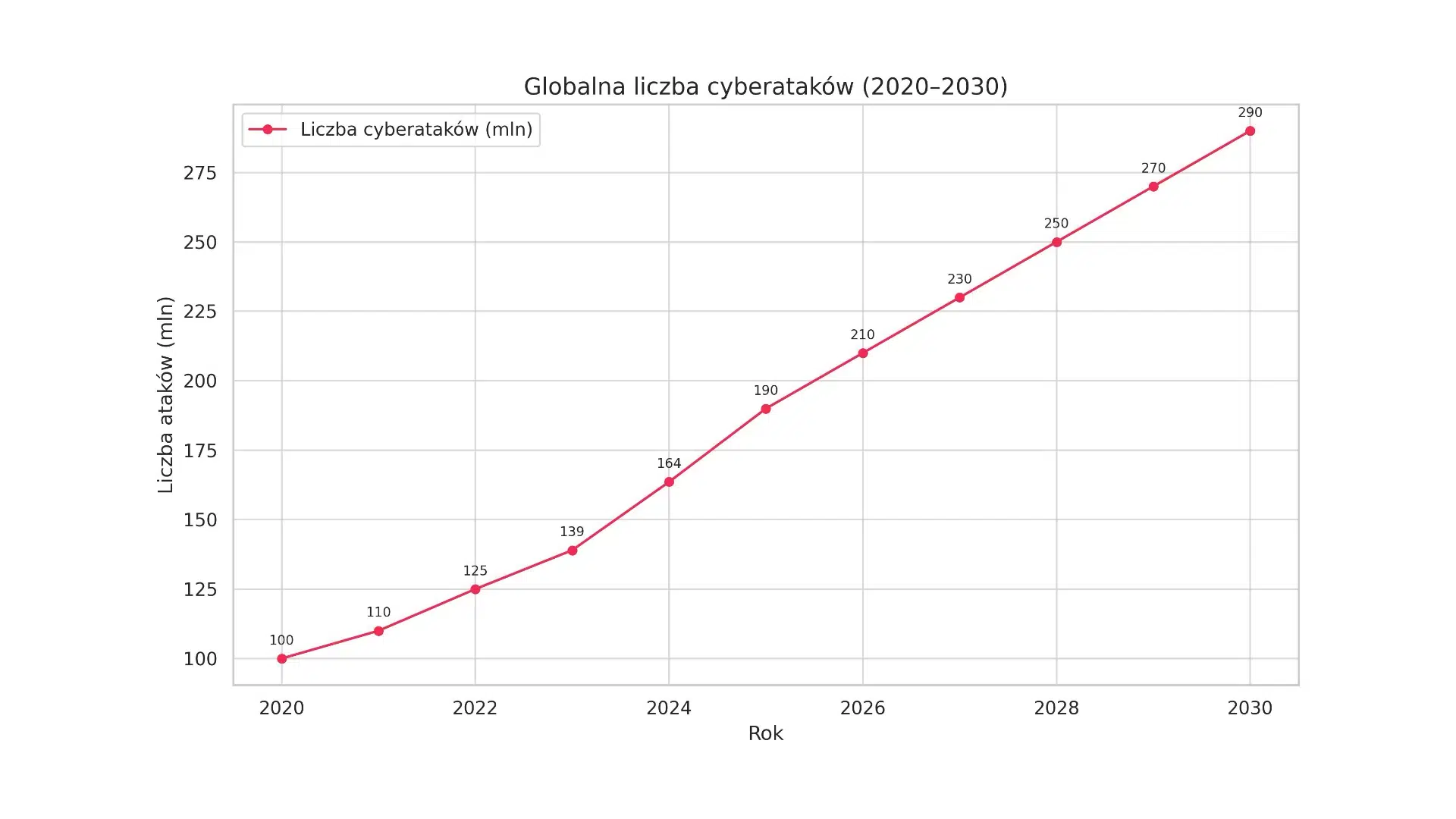
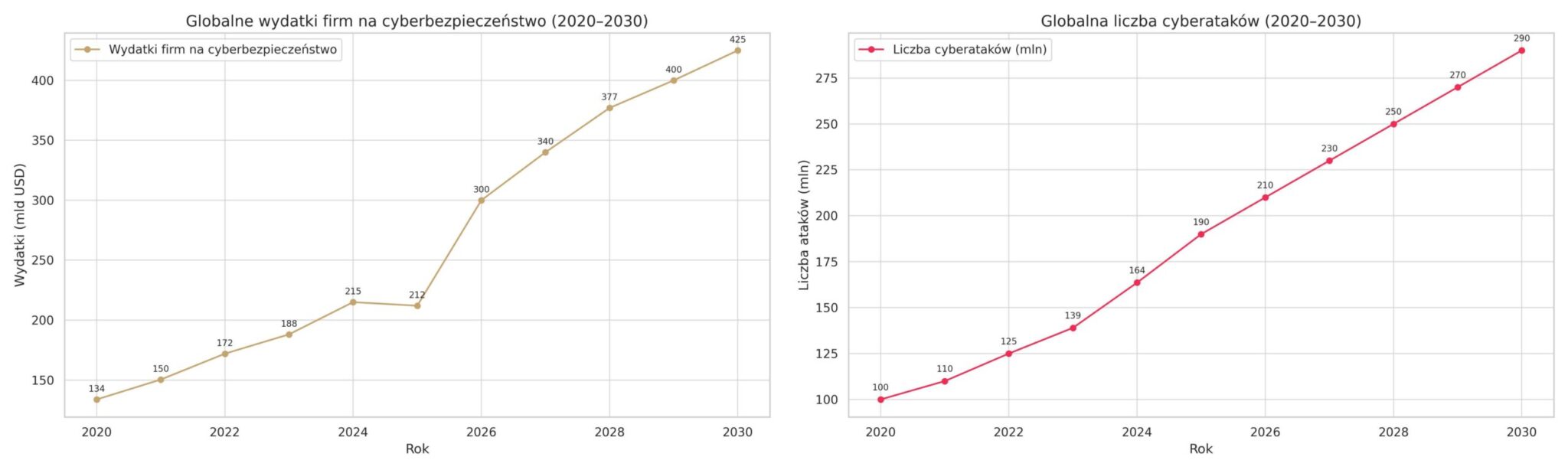
    Today’s digital landscape presents business leaders with a paradox: despite increasing investment in cyber security, the number and scale of incidents are not decreasing – quite the opposite. This is causing concern among executives and undermining the effectiveness of existing strategies. Cyber security, once the domain of IT, has now become a key management topic. The Allianz Risk Barometer 2024 report confirms this, identifying cyber incidents as the biggest global business risk.

    The scale of the threat is enormous. By 2025, losses from cybercrime are expected to reach $10.5 trillion annually. The average cost of a data breach in 2024 rises to $4.88 million – up 10% year-on-year, reaching an all-time high. At the same time, spending on information security is expected to reach $212bn in 2025, up 15.1% from 2024 ($183.9bn – Gartner data).

    This parallel increase in expenditure and incidents is the so-called ‘cyber arms race’. Organisations are increasing budgets to keep up with increasingly sophisticated attacks, often based on AI. Investment does not eliminate threats, but only reduces their impact – the goal becomes resilience, not total security.

    The increase in the cost of breaches despite higher expenditure suggests that the allocation of resources may be suboptimal. The effectiveness of investments is still sometimes difficult to prove and the expected return is lower than expected.

    The cyber threat landscape – what is worrying CEOs?

    Despite increasing spending, business and cyber security leaders are grappling with an increasingly complex and dynamic threat landscape.

    Evolution and scale of incidents

    • Ransomware – a major threat: In 2023, as many as 72% of companies worldwide were victims of a ransomware attack. In 2024, the average cost of such an incident was $4.99 million, including ransomware, downtime and recovery. The development of the ‘Ransomware-as-a-Service’ (RaaS) model has enabled less experienced criminals to carry out attacks, resulting in the creation of more than 30 new groups in 2024. In the first five weeks of 2025, 378 organisations in the US were already targets of ransomware.
    • AI/GenAI attacks – a new chapter in threats: Generative AI is driving the rise of social engineering. As many as 47% of organisations cite the rise of GenAI threats as a key concern. In 2024, 42% of companies experienced such incidents, and GenAI-driven phishing increased by as much as 1265%. More than 989,000 phishing attacks were reported in Q4 2024 alone. Tools such as ChatGPT can mimic the style of corporate communications, making messages extremely believable. Gartner predicts that GenAI will be used in 17% of all cyber attacks and data leaks by 2027.
    • Supply chain vulnerabilities and attacks on critical infrastructure: For 54% of large companies, supply chain threats are the main barrier to achieving cyber resilience. Concerns focus on third-party software vulnerabilities and the spread of attacks across the ecosystem. Up to 45% of organisations are expected to experience a supply chain attack by 2025, confirming the systemic risk of digital interconnectedness. At the same time, the activity of state actors is increasing and, driven by geopolitical tensions, they are increasingly attacking critical infrastructure.
    • Statistics – an increase in incidents: In 2024, organisations recorded an average of 1,636 attacks per week – 30% more than the year before. As many as 72% of companies reported an increase in cyber risk. According to the ITRC, the number of data breaches increased from 2365 in 2023 to 3205 in 2024.
      Key concerns of executives (CEO/CISO)

    One in three CEOs see cyber espionage and loss of intellectual property as the biggest threats, while 45% of cyber security leaders are concerned about operational disruption. Image damage and loss of customer trust are also among the key worries. The increasing complexity of threats – driven by technological advances, supply chain integration and geopolitical tensions – exacerbates the risks. In addition, up to 76% of CISOs indicate that fragmented regulations across jurisdictions make it difficult to ensure regulatory compliance.

    A new dimension of threats: GenAI

    Generative AI not only creates new risks, but changes the nature of known ones – especially in the area of social engineering. With its ability to mimic communication styles, phishing becomes harder to detect and the human element a prime target for attacks. As a result, defence strategies must focus not only on technology, but also on employee education and awareness-raising.

    Growing investment in cyber security: where does the money go?
    In the face of growing threats, companies are significantly increasing cyber security budgets, treating it as a strategic element of risk management.

    Global expenditure

    Global spending on information security is expected to reach $212bn in 2025, up 15.1% from 2024 ($183.9bn – Gartner forecasts). IDC forecasts a 12.2% year-on-year increase. In turn, 63% of companies plan to increase their cyber security budgets, including training (HCLTech Cyber Resilience Study 2025).

    Investment priorities:

    • AI and automation: two-thirds of board members recognise AI and automation as key to tackling new threats. Spending on AI across all industries is expected to exceed USD 200 billion in 2025. Companies using AI in security save an average of US$2.22 million per breach and reduce incident response times by more than 100 days, reducing costs by 45%.
    • Security for cloud and hybrid environments: Gartner forecasts that the CASB and CWPP market will reach US$8.7bn by 2025, confirming the growing importance of cloud native solutions. Investment in IaaS grew by 22.6% in 2024 and this trend is expected to continue, with increasing reliance on cloud infrastructure.
    • Critical infrastructure and public sector: the 2025 US budget provides more than USD 13 billion for cyber security for civilian agencies, with a particular focus on the health sector (95% increase in big data breaches). Investment priorities include protecting critical infrastructure, combating threats, strengthening resilience and international cooperation.
    • Growth of security services: Security services will dominate the market in North America, reaching US$50bn by 2025. Accenture, with 18.2% revenue growth, is leading the segment, highlighting the growing role of external expertise and managed security services.
    • Zero Trust Adoption (ZTA): The Zero Trust market was worth US$31.63bn in 2023 and is expected to grow to US$133bn by 2032. Gartner forecasts that by 2025. 60% of companies will adopt ZTA as a cornerstone of their security strategy, and by 2026, 81% plan to implement it. ZTA can reduce the cost of a data breach by an average of US$1m.

    The increase in spending on AI and automation is a reaction to increasingly sophisticated AI-assisted attacks. A ‘cyber arms race’ is emerging in which both sides – attackers and defenders – are constantly upgrading their technology. The effectiveness of these investments depends on the thoughtful integration of AI rather than a haphazard proliferation of tools.

    The growing investment in Zero Trust Architecture (ZTA) reflects a shift in approach: from a perimeter to a model of continuous verification and minimum privilege. In the age of remote working and distributed infrastructure, traditional network protection is losing its effectiveness. ZTA assumes that no one – inside or outside – is trusted by default. High adoption and market growth show that this is not a temporary trend, but a necessary evolution of security strategy.

    Why are incidents rising despite increased spending?

    This paradox is due to a number of interrelated factors that undermine the effectiveness of classic defence strategies.

    Complex IT environments and point solutions

    Medium and large companies use 51-58 different security tools, leading to overloaded IT teams and inattention to vulnerabilities. According to Cisco, up to 80% of companies believe that an excess of ‘point solutions’ hinders detection, response and recovery from incidents.

    The growing number of IoT devices – often with default passwords and poor support – creates billions of entry points. Additionally, the integration of legacy systems with modern infrastructure and the rapid adoption of the cloud are increasing the complexity and vulnerability of hybrid environments.

    The paradox of AI: implementation without safeguards

    Although 66% of companies believe AI will have the biggest impact on cyber security in the coming year, only 37% assess the security of AI tools before deployment. As many as 53% of organisations do not have adequate safeguards against AI-based attacks (VikingCloud 2025), revealing a serious gap between risk awareness and deployment practice.

    The competence gap in cyber security

    The skills gap has increased by 8% since 2024, with two-thirds of organisations reporting moderate to severe staff shortages. Only 14% of companies believe they have the right team. Globally, there is a shortage of 4 million cyber security professionals, increasing the cost of breaches by an average of US$1.76 million. The SME and public sectors are particularly affected, with staff shortages leading to overstretched and burned-out teams.

    Risks in supply chains

    93% of companies have experienced breaches through vulnerabilities at suppliers, and 29% of all incidents originated from external partners. Lack of oversight and transparency in supply chains is one of the main risks in cyber security today.

    Wydatki vs Ataki 2020 2030 scaled

    Strategies for the future: how to break the paradox?

    Overcoming the paradox of increasing incidents despite greater investment requires a shift from response to integrated, proactive resilience – taking into account both technology and the human factor.

    Zero Trust as the new standard

    Zero Trust, based on the principle ‘never trust, always verify’, is becoming the new norm. Gartner predicts that by 2025. 60% of companies will adopt ZTA as the foundation of security and by 2026, 81% will have implemented it. ZTA can reduce the cost of data breaches by US$1m and addresses the challenges of cloud, supply chain and human risk.

    Consolidation of tools – fewer but more effective

    Current, distributed systems cannot cope with modern threats. By 2028. 45% of companies will reduce the number of tools in use to fewer than 15 (vs. 13% in 2023). Unified platforms increase efficiency, visibility and enable AI analytics, reducing detection and response times to minutes.

    AI as a pillar of SOC – responsibly and purposefully

    AI supports threat detection and automates responses. Implementing ‘tactical AI’ – focused on measurable outcomes and consistent with KPIs – is key. Building trust requires transparency in models, data sources and decisions.

    Secure supply chains

    By 2025. 60% of organisations will make decisions about working with suppliers based on their risk profile. Partner security assessments and the application of ZTA to third parties will become key.

    Investment in people and safety culture

    Competence development is a priority. Training, certification and user education – e.g. phishing programmes with a 50x ROI – are essential. Organisations need to foster a culture of shared responsibility for cyber security and develop ‘cyber-judgement’ at every level.

    Public-private cooperation – the foundation of collective resilience

    Stronger cooperation between the public and private sectors and at the international level is key to countering cross-border threats and harmonising security policies.

    Cyber-resistance instead of prevention alone

    Organisations are shifting their focus from prevention to resilience – the ability to survive, respond and recover quickly from an incident. By 2025, around 70% of CEOs will have introduced resilience as part of their organisational culture.

    New technologies – preparing for tomorrow

    Companies should already be implementing post-quantum cryptography (PQC) standards to protect themselves against future threats from quantum computers.

    The combination of Zero Trust adoption and tool consolidation is a response to ‘sprawl’ and complexity, identified as the main sources of defence ineffectiveness. Zero Trust requires continuous verification and precise controls, which is difficult to achieve with distributed systems. Unified platforms centralise data and operations, making ZTA easier to implement. These two trends work synergistically to simplify and strengthen cyber security.

    The growing emphasis on measurable return on security investment is transforming the perception of the CISO – from a technical supervisor to a strategic partner. Executives expect real results: shorter downtimes, avoided penalties, improved reputation. CISOs must therefore translate security into the language of the business, fostering a lasting commitment and embedding security into the organisational culture.

    The message to CEOs is clear: cyber security is no longer just a cost or IT issue, but a key element of business continuity, innovation and competitive advantage. In an era of rising incident costs and the importance of digital operations, effective protection directly affects finances, reputation and stability. Only a strategic, holistic approach – taking into account the complexity of the environment, people and competencies – will allow companies to safely thrive in an increasingly hostile digital environment. It is a shift in perspective: from ‘what we fear’ to ‘how we protect our future’.


  • Digital infrastructure boom – how increased investment in data centres correlates with demand for IT integrator services

    Digital infrastructure boom – how increased investment in data centres correlates with demand for IT integrator services

    Today’s digital economy is experiencing an unprecedented acceleration, referred to as the ‘digital infrastructure boom’. This phenomenon is characterised by the rapid growth and expansion of technological foundations that are supporting innovation and transforming the way businesses operate and consumers’ lifestyles. It is a direct response to rapid shifts in market preferences, the growing desire for sustainability and the need to adapt to a turbulent business environment characterised by a high degree of dynamism and discontinuous change.

    A key element of this boom is the ubiquitous digital transformation of businesses. This includes the deployment of advanced solutions such as the robotisation of processes, the implementation of artificial intelligence and the end-to-end digitisation of operations, technologies, products and services. This process is not just about increasing the amount of infrastructure in place, but a qualitative change that requires technological systems to adapt to new, complex and interconnected requirements. The infrastructure must be highly flexible, secure and able to handle increasingly demanding workloads.

    The main factors driving this development are multiple. The increase in interest in advanced online applications, both in the B2B and B2C sectors, the continuous growth of social media users and the increasing requirements for data security are generating a huge demand for computing resources. Developments in technologies such as artificial intelligence (AI), the Internet of Things (IoT), 5G networks, cloud computing and the rapid growth of e-commerce are the main drivers of this unprecedented growth. IoT devices, including sensors and cameras, generate gigantic amounts of data that must be stored and processed efficiently, which directly translates into the need to expand and upgrade data centres.

    Data centres are the cornerstone of modern digital infrastructure, enabling the storage, processing and transmission of data with the highest requirements for security and technical efficiency. Their dynamic growth, driven by the aforementioned megatrends, has a cascading effect on the entire IT ecosystem. The growing demand for complex and high-performance digital environments inherently generates an increased demand for the specialised services of IT integrators. These integrators are the architects and implementers of these complex environments, responsible for connecting disparate components into coherent and efficient systems.

    Data centre boom – what is driving investment?

    The digital infrastructure market, and in particular the data centre sector, is experiencing rapid growth both globally and locally. Forecasts point to a further acceleration in IT spending. Forrester predicts that global IT spending will grow by 5.6 per cent in 2025, reaching $4.9 trillion, while Gartner is even more optimistic, forecasting an increase of nearly 10 per cent to $5.61 trillion in 2025 .

    Poland is playing an increasingly strong role in this global landscape. By the end of 2022, there were nearly 140 facilities designed as data centres in the country, with the largest concentration in Warsaw, where the total power supply was estimated at 130 MW. The Polish market is dominated by indigenous companies, although major global players are also present. Despite the significant difference in scale compared to the FLAPD markets (Frankfurt, London, Amsterdam, Paris, Dublin), Warsaw maintains a strong position, comparable to other European capitals, and is the leader in Central and Eastern Europe. This position is not only the result of current demand, but also the country’s strategic positioning as a regional digital hub, which attracts foreign cloud providers and drives further investment.

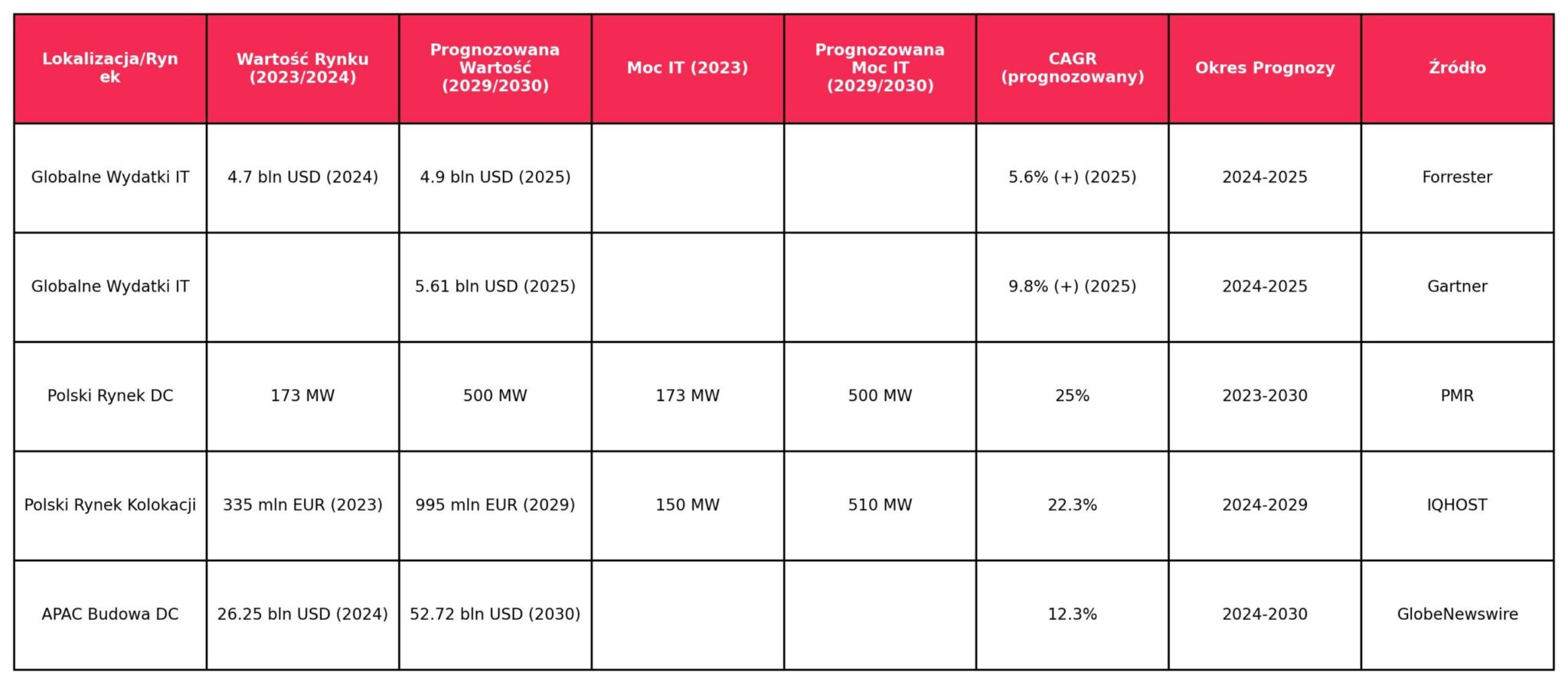
    Forecasts for the Polish data centre market are extremely optimistic. PMR indicates that the size of the market could exceed 500 MW by 2030, implying a compound annual growth rate (CAGR) of 25%. The year 2023 was a record year, with 173 MW of capacity allocated to data centres in Poland, an increase of almost 43% compared to 2022. In just three years (2021-2023), the Polish data centre market doubled its power resources. The colocation market in Poland, valued at €335 million in 2023, represents around 1.8% of the European market, but is forecast to grow fastest in Central and Eastern Europe, with a CAGR of 22.3% between 2024 and 2029, reaching a value of €995 million and IT capacity of 510 MW in 2029. It is estimated that the volume of data centres in Poland will grow by several per cent per year over the next few years. On a global scale, the APAC data centre construction market is expected to grow from USD 26.25 billion in 2024 to USD 52.72 billion in 2030, with an average annual growth rate of 12.3 per cent.

    The table below shows the key growth projections for the data centre market, illustrating the scale and dynamics of the sector.

    tabela centra danych naglowek czytelny scaled

    The main drivers of these investments are complex and interrelated:

    • Artificial intelligence (AI) and high-performance computing (HPC): Artificial intelligence (AI) is currently a key driver of growth in computing power demand. As many as 70% of market research respondents indicate that AI is increasing their demand for resources, with 37% forecasting an increase of 10-25% and 6% even 100%. Goldman Sachs forecasts that energy demand from AI will increase by around 200 TWh between 2024 and 2030, while experts at McKinsey predict that by 2030, the energy load in data centres will double to 35 GW per year. This trend is so strong that AI is expected to drive data centre market growth by more than half by 2029. It is estimated that around 40% of all data centre resources will be used for generative AI operation. AI installations require a much higher power density, in the order of 15-30 kW per rack, compared to 5-10 kW for standard workloads, forcing data centres to adapt to efficient liquid cooling. The growing demand for AI-based system architectures (up 84% year-on-year) directly translates into the need for investment in specialised infrastructure.
    • Cloud Computing adoption: The global cloud market is currently worth around USD 350 billion, with an annual growth rate of 20-30%. Analysts predict that this market will grow to approximately USD 850 billion within five years. The Polish B2B cloud market is expected to grow above 20% year-on-year until 2026, reaching a value of PLN 10bn in six to seven years. In 2023, the value of the cloud market in Poland was PLN 3.9bn (up 34% year-on-year), with a forecast of PLN 4.8bn in 2024 and close to PLN 13bn in 2029. This is a sustainable trend, with less than 1% of large companies in Poland declaring a reduction in cloud spending. The development of infrastructure in Poland, including data centres and networks (including 5G mobile access and fixed FTTx), creates a solid foundation for new cloud applications. PMR forecasts indicate that the share of the public cloud in the total value of the data centre market in Poland will triple between 2024 and 2030, reaching 50%. Multi-cloud and hybrid strategies are becoming a key trend, increasing the resilience and flexibility of systems, although they come at an additional cost, estimated at around a 10% increase in billings.
    • Edge computing and the dispersal of infrastructure: Edge computing, or data processing at the ‘edge’ of the network, moves computing and data storage closer to where it is generated, changing the traditional model of centralised data centres. The development of 5G networks is further driving the adoption of Edge Computing, providing the necessary connectivity infrastructure for low latency. Key is the growth in the number of smaller facilities, so-called micro data centres (200-500 kW),located closer to end users. This is essential for real-time, Internet of Things (IoT) and augmented/virtual reality (AR/VR) applications. This dispersal of infrastructure represents a fundamental architectural change, requiring different integration strategies than traditional hyperscale centres.
    • Sustainability (ESG): Increasing sustainability (ESG) requirements are making the construction and operation of data centres increasingly complex. Energy efficiency is a key priority for 68% of respondents, with companies emphasising optimising energy consumption and reducing CO2 emissions. New green technologies and renewable energy sources are influencing the development of data centres, making them more environmentally friendly. The energy demand is so huge and growing so fast that in some regions (e.g. Ireland) the construction of new centres is already being blocked at national level. This raises the issues of energy efficiency and the use of renewables from ‘welcome’ to ‘necessary to keep the business going’.
    • Security requirements and regulations: Data security is the most important criterion when choosing a data centre provider for 75% of respondents. Companies need to invest in advanced cyber security strategies and physical facility security. Local and pan-European security certifications (e.g. ENISA, national cyber security certificates) and compliance with regulations such as RODO, SOC 2, NIS2 or DORA are growing in importance. These requirements not only increase the complexity of projects, but also create demand for specialised security consulting and implementation services.

    All these factors indicate that the data centre market is not only growing in volume, but is undergoing a profound qualitative transformation in which advanced technologies, energy efficiency and stringent security standards are becoming key.

    wykres moc dc polska 2023 2030

    IT integrators – architects and implementers of digital infrastructure

    The role of IT integrators is becoming absolutely crucial. An IT integrator is an entity whose main task is to create an infrastructure that effectively supports the client’s business objectives. They act as architects and implementers, combining the various technological elements – hardware, software, networks, facilities and all the necessary components that support the management, processing and storage of information – into coherent and functional systems. The market for integration services is extremely heterogeneous, encompassing both independent consultants and large IT companies that offer both a broad spectrum of services and narrow specialisations, adapting to specific industry or technology needs.

    The range of services of IT integrators in the context of data centres is wide and includes:

    • Design and implementation of solutions: Integrators are responsible for designing and implementing comprehensive technology solutions. This process includes the selection of appropriate technologies, configuration of systems, installation of hardware and software, and rigorous testing of solutions prior to implementation to ensure full compatibility and performance.
    • Data and application migration: As infrastructure grows and modernises, migrating data and applications to new data centre environments becomes a frequent need. Integrators ensure that data and applications are moved securely and optimised, ensuring that their integrity and availability are fully maintained. Every step of the migration is thoroughly tested to ensure a smooth transition and business continuity.
    • Infrastructure optimisation and management (including hybrid and multi-cloud): IT integrators help organisations optimise their technology infrastructure. By analysing and optimising resources, they help to reduce unnecessary costs and ensure efficient use of infrastructure, enabling companies to be more competitive. This includes full management of servers, storage, networking and applications in the new data centre environment, as well as support for complex hybrid and multi-cloud environments. Their role goes beyond purely technical implementation; they become strategic partners to ensure business continuity and digital sovereignty. An example is the project for ProService Finteco, where the integrator implemented a hybrid IT architecture, providing Disaster Recovery as a Service (DRaaS) and meeting ISO standards and FSA regulations.
    • Ensuring IT security and regulatory compliance: Security of data and technology infrastructure is a priority in an era of increasing cyber threats. IT integrators implement advanced security solutions such as firewalls, threat detection systems and incident response procedures to minimise the risk of data loss and cyber-attacks. They also manage compliance with regulations such as RODO and SOC 2 , which is crucial for companies operating in an increasingly regulated environment.
    • Technical support and maintenance: once solutions have been implemented, IT integrators provide ongoing technical support and maintenance of the infrastructure. This means regular upgrades, repairs, performance monitoring (often 24/7) and rapid response to any technical issues. An example is the implementation of ManageEngine’s customer service and advanced reporting products, which enhances service delivery.

    The diversity and specialisation of integrator services (from full-scale to narrow niches) is a direct response to the growing complexity and diverse requirements of the digital infrastructure boom. As the data centre landscape becomes more fragmented – into hyperscale, co-location and edge centres – and as technologies such as AI and IoT introduce new specific requirements (e.g. liquid cooling, high power density racks), no single integrator can be an expert in everything. This heterogeneity of the market allows specialised integrators to emerge to meet the needs of specific industries (e.g. fintech ) or technology niches (e.g. RPA/AI automation). This specialisation is key to effectively navigating the complex and rapidly evolving digital infrastructure environment.

    Synergies of data centre investment and demand for IT integrator services

    The growth in data centre investment and the increasing demand for IT integrator services are inextricably linked, creating a dynamic synergy. The direct correlation stems from the increasing complexity and scale of digital infrastructure. Galloping investment in hyperscale data centres, driven in large part by the development of generative artificial intelligence, is leading to a new data centre every 2-3 days. This pace and scale requires complex planning, design and implementation, which is the domain of integrators. Poland’s data centres are stepping up infrastructure investment in response to growing demand for computing power, changing regulations and ESG requirements. Each of these areas – from energy optimisation to regulatory compliance – requires integration expertise. A 5% increase in IT spending in Europe by 2025, in excess of $1.5 trillion, driven by investments in cloud, cyber-security and AI, means a direct increase in demand for IT services, including integration.

    Demand for the services of IT integrators is particularly evident in several key areas as a direct result of the data centre boom:

    • Integrating infrastructure for AI: The explosion of interest in artificial intelligence is forcing data centres to fundamentally change their infrastructure. Often, this means building facilities from scratch, rather than simply extending existing facilities. Integrators are needed to design and implement these new, high-density environments, which require advanced cooling systems, including liquid cooling, to effectively manage the huge energy demands. The growing demand for AI-based system architectures, with an increase of 84% year-on-year , directly translates into the need to engage integrators to create and optimise these complex environments.
    • Implementing and managing hybrid and multi-cloud environments: The rise of hybrid and multi-cloud environments, as well as cloud consulting, implementation and integration services, is a key trend and presents significant opportunities for local service providers and data centres. Integrators are helping companies transition to cloud services and implement complex multi-cloud strategies that increase resilience and operational flexibility. An example is the deployment of a hybrid IT infrastructure for the fintech industry that provides Disaster Recovery as a Service (DRaaS), which is critical for business continuity.
    • Developing and integrating Edge Computing solutions: Edge computing, driven by the growth of 5G and the Internet of Things, requires the creation of micro data centres and the dispersal of infrastructure closer to data sources. Integrators are key in the design and implementation of these distributed environments, which must operate at low latency to support real-time applications. There is also a noticeable skills gap in Edge Computing , increasing the need for external experts capable of designing and implementing these new architectures.
    • Automating processes in data centres and for customers: The increase in data volumes and complexity of data centre operations is making automation a necessity. Artificial intelligence is being used to automate routine tasks such as system updates, backups or infrastructure monitoring, as well as to analyse information and respond to errors. Many activities in data centres are monotonous and repetitive, and automation tools increase productivity and adaptability. In logistics, IoT enables the automation of warehouse and supply chain processes, reducing workload and the risk of human error. Integrators are deploying RPA and AI solutions to automate business processes such as invoice accounting and accounts receivable management, delivering significant savings and efficiency gains.
    • Cyber security and regulatory compliance: As data centres become central points for critical data, security becomes an absolute priority. IT integrators are responsible for implementing advanced security solutions, such as firewalls and threat detection systems, and managing compliance with regulations such as RODO or SOC 2. The growing importance of regulations such as NIS2 and DORA is a significant challenge for data centres , which in turn is driving demand for integrators specialising in cyber security and compliance.
    • ESG and energy efficiency: Increasing energy demand, especially from AI, is pushing data centres to find innovative ways to power and minimise their carbon footprint. Energy efficiency is a key priority , and integrators are essential to implement solutions that optimise energy consumption, such as liquid cooling systems that are more reliable and energy efficient. Investment in sustainability is becoming a necessity and integrators are helping to adapt infrastructure to new climate standards and regulations.

    The market for IT services, including integration, is showing significant growth. Gartner forecasts point to a 9.8 per cent increase in global spending on IT services by 2025. With more than 410,000 IT specialists and 60,000 technology companies, Poland is a leader in the Central and Eastern European region and a key player in the global IT market. Investments by technology giants such as Microsoft and Google in Polish data centres and AI infrastructure further cement this position.

    The synergy between investment in data centres and demand for IT integrator services is therefore a feedback loop. The growth and complexity of data centres are generating demand for advanced integration services, and the solutions provided by integrators are in turn enabling further expansion, optimisation and innovation in the data centre sector. Integrators are key in navigating through challenges such as rising energy consumption, changing regulations and talent shortages. Demand for their services is evolving into expertise in the areas of AI, Edge Computing and sustainable solutions.

  • Managed services need a new model. AI is already writing it

    Managed services need a new model. AI is already writing it

    Managed services are currently undergoing their biggest transformation since the emergence of the MSP model. MSPs are operating in an increasingly challenging environment – increasing competitive pressures, economic uncertainty and cyber security threats. In the face of these challenges, AI is becoming a key growth driver: up to 90% of MSPs consider AI solutions important or very important to their growth strategy. What’s more, most providers are already implementing AI in their operations – from infrastructure monitoring to customer service – redefining traditional service delivery models. This handout presents key trends and market data related to automation and AI in managed services, illustrating how the technology is changing MSPs’ efficiency, market dynamics and key areas of their business.

    AI adoption trends in the SME sector

    The percentage of companies declaring the use of AI in at least one business function increased from ~20% in 2017 to 78% in 2024. The rapid jump occurred especially between 2023 and 2024 due to the uptake of generative AI (pink line, 71% in 2024). For IT managers and service providers, this means that AI has become a common business tool on a global scale. This trend is also reflected in the SME industry – according to the survey, more than two-thirds of SMEs have implemented AI in areas such as systems monitoring or ticket automation. Importantly, the transformation is accelerating: in Q4 2023 alone. 62% of MSPs have expanded their use of AI, and analysts predict up to 11% growth in their revenues in 2024 thanks to these technologies. The world of managed services is thus entering a new era, where AI-supported automation is becoming the standard that defines competitiveness.

    Impact of AI on service efficiency and quality

    AI promises significant operational improvements for SME companies. By automating routine tasks and using machine learning, they can speed up responses and improve customer service. Suppliers report tangible benefits: AI-enhanced teams can handle more requests and issues in the same amount of time, reducing delays and errors.

    Impact of AI implementation on the operational efficiency of the SME. The baseline (100) represents team productivity without AI support. The use of AI tools raises this indicator to ~120, representing a ~20% increase in productivity. This order of magnitude improvement translates into faster incident resolution and reduced operational costs. For example, the introduction of AI-based automation has reduced the average time to resolve a ticket by up to 68%, and operational costs have fallen by ~20%. This allows staff to focus on more complex tasks and proactive customer support, which increases customer satisfaction. As a result, MSPs using AI are seeing a marked increase in internal productivity and the quality of services provided, building a competitive advantage.

    wzrost rynku msp 2020 2033 scaled

    Market dynamics of managed services in the AI era

    Automation is driving not only efficiency, but also growth in the overall SME market. More and more companies are opting to outsource managed IT services, expecting providers to use modern AI technologies for better performance. Global forecasts indicate a continued high growth rate for this industry in the coming years. The global managed services market is forecast to grow from approximately USD 348 billion in 2024 to approximately USD 393 billion in 2025 and over USD 1 trillion by 2033. By 2030, the market could already reach approximately USD 730 billion, representing high double-digit average annual growth. Such rapid expansion reflects the growing demand for specialised IT services delivered efficiently and at scale. Automation and AI are a key driver of this growth – streamlining the work of SMBs, enabling new services and business models, and attracting customers looking for innovative solutions. According to experts, AI is becoming one of the main drivers of managed services, and providers investing in these technologies can expect a greater share of the rapidly growing market.

    afa973fc 04d8 4c94 8116 a42636e4bf9e

    Key application areas for AI in SME services

    AI is being applied to many aspects of managed service providers. The main domains in which automation and intelligent algorithms are changing the way MSPs deliver services, and the degree of adoption, are highlighted below. Percentage of MSPs using AI in different business domains. The most common use of AI is in infrastructure monitoring (67% of MSPs) and service request automation (54%). A slightly smaller percentage uses AI in the areas of cyber security (56%), customer support (chatbots – 55%) and predictive analytics (51% ). It is clear that IT systems monitoring and cyber security are at the forefront – AI here helps with 24/7 anomaly detection, threat detection and proactive incident response. Customer service automation (e.g. chatbots) relieves the burden on support teams, speeding up the resolution of common issues and improving customer satisfaction. Request and incident management gains agility thanks to AI – systems automatically categorise and prioritise tickets, reducing queues and response times. Predictive analytics tools, in turn, enable MSPs to predict failures or resource expansion needs before problems occur, minimising customer downtime.

    As can be seen from the data above, AI-supported automation covers the full range of managed IT services processes – from the basics of infrastructure maintenance to advanced analytics. In each of these areas, AI not only improves efficiency (e.g. fewer alerts slipping through the cracks, fewer false alarms in the SOC), but also expands the range of services that MSPs can offer (e.g. predictive customer optimisation recommendations, intelligent advice through assistants). This shows that AI has become a versatile tool to improve MSP operations on many fronts simultaneously.

    Challenges in implementing AI automation

    Despite the obvious benefits, implementing AI in managed services brings with it a number of challenges. IT managers need to consider these when planning automation strategies to avoid pitfalls and maximise return on investment. The main obstacles include:

    • Data quality and availability – AI requires large sets of reliable data to train models. Many companies struggle with scattered, incomplete or poor quality data, which limits the effectiveness of algorithms.
    • Complexity of integration – Implementing AI into existing processes and systems can be difficult. It is necessary to adapt the IT infrastructure, integrate with a variety of tools and ensure that the new solutions are compatible with current procedures.
    • Security and privacy – AI-based automation raises questions about data security (especially in the context of models that learn from customer data) and potential new attack vectors. MSPs need to ensure that the models they implement do not introduce additional security vulnerabilities.
    • Skills gaps – Effective use of AI requires expertise that may be lacking in typical SME teams. The problem is a shortage of machine learning experts and the need to train staff to use the new tools.
    • Costs and ROI – AI technology (from tool purchase to integration and maintenance) involves significant financial outlay. Companies must carefully calculate whether the expected improvements and savings will outweigh the costs incurred.
    • Ethical aspects and regulatory compliance – With the increasing use of AI, issues of accountability of algorithms, transparency of decisions made by models and compliance with regulations (e.g. RODO for automated processing of personal data) arise. MSPs need to develop appropriate AI management policies to maintain customer trust and meet regulatory requirements.

    Awareness of the above barriers is key to successful AI implementation. Technology leaders should prepare a comprehensive transformation plan, including phased implementation (e.g. piloting on a limited function), providing training for employees and selecting proven, secure AI solutions. This will ensure that automation becomes a permanent part of the MSP’s strategy and not just a one-off experiment.

    Prospects for the future

    Automation and AI are redefining the managed services model, but many changes are yet to come. In the coming years, expect the MSP offering to continue to evolve, with MSPs increasingly delivering AI-based services beyond the traditional framework. For example, the concepts of proactive, predictive services are already emerging: providers can anticipate customer needs and propose solutions before a problem arises (e.g. preventative upgrades before a failure occurs, automated suggestions for performance improvements). More integrated service platforms are also being developed, where the customer receives a personalised, adaptive set of managed services that adapt dynamically to their needs. All this means that MSPs that adopt AI quickly will gain an advantage. They will be able to offer innovative, higher value-added services that are difficult to achieve through traditional methods. In contrast, providers that delay investing in intelligent automation risk being left behind – their services may prove to be less efficient, more expensive and unable to meet growing customer expectations of proactivity and personalised service. As one industry report put it, this is only the beginning of the transformation: the most innovative MSPs will be able to provide services still unimaginable today, from ‘bespoke’ marketplaces that adapt to user needs to cyber security bordering on precognition (predicting and stopping breaches before they happen).

    In summary, automation and AI are becoming the new face of managed services. What this means for IT managers and technology decision makers is the need to boldly but thoughtfully enter the world of AI – to harness its potential to increase efficiency and create new value for the business, while consciously managing the challenges. MSPs that successfully integrate AI into their offerings can bring service quality to unprecedented levels, shaping the future of the entire industry. Conversely, those who stay with old methods risk losing competitiveness in the face of the coming automated future of IT services.

  • Competency gap in IT – how many IT specialists per 1000 companies in Poland?

    Competency gap in IT – how many IT specialists per 1000 companies in Poland?

    The skills gap in IT is becoming one of the main challenges for the Polish economy, especially in the SME sector. Although the number of IT specialists is growing, micro and small companies still have limited access to key technological talent. The scale of the shortage is revealed in the data: over 90% of the smallest companies do not even attempt to recruit IT specialists.

    The SME sector is the foundation of the Polish economy – it accounts for 98% of companies and almost half of GDP. It is dominated by the micro-enterprise segment (95.7% of active companies in Q4 2024), which affects the limited possibilities of digitalisation and access to IT specialists. In 2023, the SME sector will have 2.3 million entities, employing 6.9 million people. Most of these companies operate without their own IT departments, which hinders digital transformation and widens the skills gap, especially in the smallest companies.

    At the same time, the Polish IT sector is growing dynamically and generates around 8% of GDP. In 2021/2022, it employed some 586,000 IT specialists (3.5% of the workforce), a figure which increased by 192,000 over the decade. Other estimates from 2023 put the number at 410,000 specialists and over 60,000 IT companies, placing Poland at the forefront of the CEE region.

    However, the IT market is bipolar in nature. A strong export sector attracts the best professionals, offering competitive rates and interesting projects. The domestic SME segment, on the other hand, is struggling to attract them, limiting its ability to digitally transform and perpetuating a skills gap outside the IT sector.

    Structure of the Polish business sector and IT specialist resources

    Understanding the structure of companies in Poland and the availability of IT professionals is key to assessing the skills gap in SMEs.

    In Q4 2024, there were 2 788 814 active enterprises in Poland – 3.7% more than a year earlier. As many as 95.7% of them were micro-enterprises (up to 9 employees). In 2023, the number of non-financial enterprises was 2,307.1 thousand, of which 2,240.1 thousand were microenterprises (97.1%). The entire SME sector comprised 2 303.3 thousand entities, which accounted for 99.8% of non-financial enterprises.

    In the ‘Information and communication’ sector (PKD J), 180,020 companies were operating in 2023, of which 177,405 were micro-enterprises. The share of this sector increased by 4.6 percentage points compared to 2010, but still only accounts for about 2.7 per cent of the total number of companies.

    Data from the Polish Economic Institute shows that more than 90% of small and micro businesses have not attempted to recruit IT specialists. This means that digital transformation in SMEs is often outsourced or not undertaken at all, exacerbating the uneven allocation of IT resources across the sector.

    Number and profile of IT specialists in Poland compared to the EU

    There are approximately 586,000 IT professionals working in Poland (2021/2022), representing 3.5% of the workforce – one of the lowest rates in the EU, where the average is 4.5%. Poland remains 4.5 percentage points below the leader, Sweden. Although the number of IT professionals in Poland has increased by 192,000 in a decade, the distance to the EU average remains.

    Only 15.5% of IT professionals in Poland are women, compared to an EU average of 19.1%. Such a low representation of women limits the inflow of new talent and makes it difficult to reduce the skills gap. Increasing the number of graduates in STEM fields is not enough without measures to level the playing field through educational and promotional initiatives.

    Self-employment in IT and availability of talent for SMEs

    At the end of 2023, there were 219,000 IT software and consultancy businesses, of which 193,000 (90%) were sole proprietorships (JDG). Many self-employed provide services to large companies and foreign clients, taking advantage of the flexibility and higher rates offered by B2B contracts.

    This model limits the availability of experts to SMEs, which have smaller budgets, less advanced projects and weaker JDG experience. As a result, the most sought-after specialists are often beyond the reach of domestic SMEs, widening the skills gap – despite the large number of IT-talents in Poland.

    The skills gap in IT: challenges for SMEs

    The shortage of IT specialists is one of the main development challenges in Poland, particularly affecting the SME sector. The problem is structural and multifactorial in nature.

    The Polish Economic Institute (PIE) estimates that Poland lacks 147,000 IT specialists to reach the EU average level of employment in this area, or 25,000 in relation to the potential of the economy. As many as 42% of IT vacancies are difficult to fill, and 64% of companies have hired fewer specialists than planned. Staff shortages translate into real losses: 20% of companies have had to abandon projects due to skills shortages.

    In SMEs, the scale of the problem is particularly evident. According to PIE, only 4% of companies in Poland hired an IT specialist (2020), and in 2022 only 8% were recruiting in this area. More than 90% of small and micro businesses were not looking for IT specialists at all. This shows that the skills gap is not just down to a lack of candidates, but also a lack of awareness, resources or willingness of companies to invest in IT competencies.

    The so-called ‘hidden gap’ means that many SMEs are opting out of digital transformation or undertaking it in a reactive manner, limiting their competitiveness and adaptability. Official vacancy rates (e.g. 3.85% in the Information and Communication sector) do not fully reflect the scale of these unmet needs across the SME sector.

    Main causes of the skills gap in IT

    • Education system – The number of STEM graduates in Poland has been falling since 2017. 3.5 times as many such graduates are needed to close the gap in IT. Although IT attracted more than 43,000 applicants in the 2023/24 academic year, many students drop out of further education due to high salaries already during their studies.
    • Job market and salary pressure – IT professionals are among the best paid in Poland – in 2021, the lower median spread was PLN 13,000 net, the upper median was PLN 18,400. In 2022, the average salary in the ‘Information and Communication’ sector is PLN 11,133 gross, and forecasts for 2025 indicate an average of PLN 8821.25 gross. The best (DevOps, data analysts) can earn up to PLN 27.7k. Although these rates are high in Poland (on average around PLN 19k gross), they are three times lower than in the US – which drives remote job offers from abroad.
      Large IT companies, especially export companies, are able to pay competitively.In contrast, SMEs, operating on local margins, are unable to withstand the pressure of wages, which closes off their access to specialists. This drives the cycle: lack of resources → lack of specialists → lack of transformation → lack of growth → lack of resources.
    • Low digital competences of the population – Only 43% of Poles have basic or secondary digital skills (2021), which places Poland third from last in the EU (average: 59%). Poor digital competences of employees hinder business development and recruitment and limit demand for IT services.
    tabela luka IT szeroka kolumna1

    Consequences of the shortage of IT specialists for SMEs

    The shortage of IT professionals has serious, multidimensional effects on the functioning and competitiveness of small and medium-sized companies:

    • Greater risk of cyber threats – Lack of in-house IT increases the risk of failures, poor system performance and hacking attacks. As many as 70% of companies in Poland have experienced a data security incident and the average cost of an attack is more than PLN 1 million.
    • Decline in productivity and innovation – The IT skills deficit limits SMEs’ operational agility and ability to innovate and adapt to market changes.
    • Project constraints – 20% of companies have had to refuse assignments due to staff shortages and 61% have exceeded planned deadlines.Employee overload – In companies without sufficient IT support, employees often work beyond the norm: 40% do it sometimes, 16% often and 3% very often. According to SW Research, 44% of SME entrepreneurs work more than 40 hours a week – indicating a potential role for AI in relieving their workload.

    Cumulative impact of the IT skills gap on SMEs

    IT staff shortages translate into higher risk of cyber threats, lower operational efficiency, reduced innovation and lost business opportunities. Together, they inhibit the growth potential of SMEs.

    As the SME sector generates almost half of Poland’s GDP, its digital stagnation negatively affects the pace of economic development and the country’s level of digital maturity. Therefore, solving the IT skills gap is not only an industry challenge, but a key macroeconomic priority for Poland’s future competitiveness and prosperity.

    Forecasts and key trends on the Polish IT and labour market

    IT spending – globally and locally

    According to Gartner, global IT spending will reach US$5 trillion in 2024 (+6.8% y-o-y), rising to US$5.61 trillion in 2025 (+9.8%). Growth is driven by investments in software, IT services, public cloud (+20%) and cyber security. Spending on artificial intelligence is also becoming key.

    The Polish ICT market reached USD 24.5 billion (+11.4%) in 2022, of which the IT sector accounted for USD 18 billion (+14.7%). In 2023, the IT market was forecast to decline by 3%, mainly through lower hardware sales. The cloud market is growing rapidly – USD 1.3bn in 2022 (+30%), with a projected CAGR of 22.7% to 2027.

    Companies’ new approach to technology

    Despite global uncertainty and a drop in spending in 2023, the long-term trend is positive. Technology is no longer a discretionary cost – today it is a key investment in business efficiency, optimisation and resilience.

    This sustained demand for IT, even during the downturn, implies constant – albeit changing – staffing needs. The IT job crisis of 2023 was a correction and a shift in demand towards more specialised roles, rather than a permanent decline in employment.

    Evolution of IT competences and new market needs

    Generative AI (GenAI) is gaining traction, with 29% of companies using it in 2024 (up from 9% y-o-y) and 97% of CEOs anticipating its business impact. 99% of organisations plan to increase their investment in AI, and the AI agent market is expected to grow from $5.1bn (2023) to $47.1bn (2030).

    The biggest growth in demand is in the areas of cyber security (+126% y/y), systems architecture (+84%), AI integration (+63%). Key technologies are AI/ML, cloud (AWS, Azure, GCP), DevOps (CI/CD, Kubernetes), Big Data (SQL, NoSQL, Spark), and the most popular languages are Python, JavaScript, Java and Rust. There is also a growing demand for testers and technical support.

    Soft skills are also in demand: analytical thinking (70%), flexibility (65%), AI/ML skills (70%), cyber security (65%) and adaptation to new tools (59%).

    GenAI is changing the demand for skills – it’s less about a shortage of general IT professionals, more about a shortage of experts with advanced AI and cyber security skills. This is a particular challenge for SMEs, which are struggling to attract or retrain staff in a rapidly changing environment.

    Employment prospects for IT and SMEs up to 2030

    Poland’s IT labour market stabilises after correction. ManpowerGroup’s Q2 2025 forecast indicates +21% net hiring, with the highest growth in SMEs: +26% in small companies and +20% in medium-sized ones. The main reasons are company growth (43%) and market expansion (29%).

    Poland’s IT industry is growing – 410,000 professionals and 60,000 companies. AI will increase productivity and GDP, but it can also automate 14% of jobs and transform 32%. Poland, as an IT service provider, stands to gain more than Western countries.

    The increasing propensity of SMEs to hire IT specialists signals a breakthrough: a shift away from survival to investment in internal technological competence. It’s a key step towards digital maturity and containment5. Strategies and initiatives to close the skills gap in SMEs

    In view of the growing IT gap, especially in the SME sector, comprehensive measures – from financial support to educational programmes and cross-sector cooperation – are key.

    The Polish IT market is growing dynamically, but SMEs face a serious skills gap. The dominance of micro-enterprises and the prevalence of self-employment in the IT industry create unique barriers to talent.

    Key findings:

    • Structural gap in SMEs: More than 90% of small companies do not recruit IT professionals. The problem is not just a lack of candidates, but also a lack of strategy and awareness of digitalisation, which limits their growth.
    • Dualism of the IT market: Export IT companies attract the best professionals, mainly in a B2B model. SMEs outside the industry are unable to compete on wages, exacerbating labour market segmentation.
    • Competency shift: There is a growing demand for AI, cyber security and systems architecture specialists. For SMEs, retraining employees or acquiring such competences is particularly difficult.
    • Costs and risks: IT staff shortages increase the risk of cyber threats (70% of companies have experienced them), reduce productivity, lead to overloads and hold up projects – affecting companies’ competitiveness and national GDP.
    • New recruitment trend: forecasts for 2025 show a growing willingness of SMEs to hire IT professionals, which may signal a breakthrough in the approach to building in-house digital competence.

  • Artificial intelligence as a tool of the future in the UX/UI industry

    Artificial intelligence as a tool of the future in the UX/UI industry

    In a rapidly changing technological world, the emergence of artificial intelligence(AI) and its sudden development has caused considerable confusion for representatives of various IT-related positions. Some perceive it as an opportunity and a support, while others worry about losing their jobs and sense the real threat it may bring.

    Can artificial intelligence completely replace designers?

    This is a question that has come up frequently in many forums recently. However, the correct approach seems to be that AI will be an indispensable assistant, allowing us to focus on creative and strategic aspects. In this article, I will discuss how AI affects the UX/UI design process, what benefits and challenges it brings, and what changes can be expected in the near future, where intuitiveness and simplicity of use are key.

    With the development of artificial intelligence, the market for UX/UI design tools has been enriched by a number of innovative AI-supported solutions. These technologies not only make the design process faster and easier, but also allow for a more precise and efficient approach to creating interfaces and user experiences.

    One category of tools that seems to carry a lot of value for the designer are those related to automating the process of generating prototypes and mockups. The algorithms of tools such as: FIGMA AI, Sketch AI, Uizard or Designs AI, are able to analyse user data, visual trends and best design practices to create initial versions of interfaces that can then be customised by designers. This makes the design process faster and more efficient, allowing designers to focus on the more creative aspects of their work.
    After using some of the tools a few times, it is clear that they are still far from perfect. The designs created often deviate from the original intentions. However, I am convinced that in the future the process will be refined and the results of work using AI will increasingly meet the expectations and needs of users.

    Another branch of AI worth looking at for design is assisting and systemising project work. Artificial intelligence can significantly influence and facilitate the project and schedule management process. Advanced algorithms can automatically analyse the progress of the work, detect difficulties and delays and immediately present changes to help meet the objectives.

    AI effectively allocates tasks, taking into account the skills and availability of team members, allowing for optimal work distribution and minimising the risk of overload. Additionally, by monitoring performance in real time, AI provides valuable data that enables faster decision-making. Tools such as Trello, Asana or Monday, enhanced with AI, allow for more organised and predictable project management, saving time and increasing efficiency. In this way, artificial intelligence supports designers, enabling better planning and execution of tasks.

    Another example is the use of AI to collect user data and analyse it afterwards, enabling a better understanding of behaviour and needs. Tools that enable such analysis include Hotjar, Mixpanel, Amplitude and Google Analytics 4 (GA4). Artificial intelligence allows designers to process and interpret vast amounts of data, which can then be used to more accurately determine user needs and what the interface of the systems or services being designed should look like.

    Projects based on data, not just intuition

    Artificial intelligence helps to identify behavioural patterns, predict future user actions and automatically segment users based on their interaction with the product. For example, Google Analytics 4 uses predictive models to determine the probability of conversion, while Hotjar allows you to analyse recordings of user sessions and heatmaps, pinpointing areas that need to be optimised. As a result, UX/UI designers can respond more quickly to customer needs and make more accurate business decisions based on data rather than just intuition.

    In an era of increasing importance of accessibility and inclusivity, artificial intelligence tools cannot be forgotten to support the design of user-friendly and accessible solutions for all users.

    Accessibility – which is one of the most important aspects of modern design – means creating digital products that are accessible to all users, regardless of their technological, cognitive or physical limitations. In this area, artificial intelligence has really great potential. It allows the automatic generation of subtitles for audiovisual material (e.g. Whisper from OpenAI) and, during design, makes it possible to analyse parts of the interface for users with disabilities.

    Look at the project from the perspective of a person with a disability

    Artificial intelligence is able to bring the designer closer to how people with specific dysfunctions can use the solution being created. This makes digital solutions more inclusive and better suited to a wide audience. The Stark plug-in, developed for the Figma design tool, offers a range of features to simulate how people with different visual problems might perceive a design.

    In summary, AI-supported automation is becoming an increasingly important part of the UX/UI design process. AI-based tools and technologies offer designers a range of opportunities that can significantly speed up and streamline their work, while maintaining high quality and customisation for users. In the future, we can expect AI to play an increasingly important role in UX/UI design, supporting designers and making their work easier. However, it will not completely replace human input in design, but rather become an invaluable support, enabling better and more advanced solutions to be created in far less time. Collaboration between humans and AI will be crucial for further development and innovation in UX/UI design.


    Karol Danis Opi Pib

    About the author: Karol Danis – Information Processing Centre – National Research Institute.
    Junior UX Designer with a passion for learning by doing. Believes that simplicity and intuitiveness are the foundation of any design. In her work she seeks a balance between aesthetics and functionality. She values empathy and enjoys working close to users and the team.