Tag: Partnership

  • Trusted Tech Alliance: Giants, led by Microsoft and Ericsson, build a wall against digital isolationism

    Trusted Tech Alliance: Giants, led by Microsoft and Ericsson, build a wall against digital isolationism

    The formation of the Trusted Tech Alliance, jointly announced by Microsoft, Ericsson and thirteen other industry leaders, is a clear signal: business is no longer a passive observer of the political fragmentation of the world. Faced with the escalating rhetoric of the new US administration and Europe’s push for ‘digital sovereignty’, corporations are trying to seize the narrative before politicians do it for them.

    Business versus geopolitics

    The initiative is born at a critical moment. Instead of waiting for inconsistent local regulations, companies such as Google, SAP and Amazon Web Services (AWS) want to impose their own supranational definition of ‘trust’. The foundation of the alliance consists of five pillars, intended to act as a universal security certificate:

    • Secure by design.
    • Ethical conduct and corporate governance.
    • Rigorous standards in supply chains.
    • Adherence to global safety standards.
    • Support for an open digital environment.

    For Microsoft’s Brad Smith and Ericsson’s Börje Ekholm, the goal is clear: to save the scalability of services. Ekholm points out that total technological sovereignty in today’s economy is an illusion and a straight path to trade barriers that will hit innovation.

    Escape to the front?

    Analysts point out, however, that under the guise of caring about standards is a classic defence mechanism. The Trusted Tech Alliance can be read as an attempt to get ahead of hard regulation (like the European AI Act) through soft law. Companies set rules that are convenient for themselves before governments impose costly ones.

    Moreover, the criticism of ‘digital sovereignty’ coming from Silicon Valley is sometimes perceived as hypocritical. For many countries, data localisation is the only defence mechanism against digital colonialism. There is also a risk that the alliance’s exorbitant standards – requiring costly independent audits – will become a protective moat for giants, effectively cutting off smaller startups and competitors from emerging markets.

  • IT partner in 2026: Why is the partner channel generating $2 trillion in SME sector spend?

    IT partner in 2026: Why is the partner channel generating $2 trillion in SME sector spend?

    Paradoxically, it is not algorithms but trusted human capital that is becoming the most valuable asset of smaller business. The SME sector is increasingly shifting its budgets towards specialised partners, looking to them not only as suppliers, but above all as architects of survival. In 2026, as much as 79% of IT spending in the SME sector flows through the hands of commercial partners. In regions such as EMEA or Latin America, this figure is even higher than 80%.

    This is no coincidence, but proof that relationship and local trust are becoming the hardest currency in business.

    Partner as ‘external brain’ of the operation

    For a small or medium-sized company, technology is rarely an end in itself – it is a tool for survival and growth. At the current rate of innovation, managing the technology stack alone is becoming an insurmountable barrier for SMEs. The difference between the market average (66.7% spend by partners) and the SME sector (79%) shows that the smaller the scale of the business, the greater the need for a trusted guide.

    The IT partner in 2026 has become the de facto ‘external technology director’ . Companies with between 100 and 499 employees, which account for as much as 42% of spend in their segment, are not looking for products on the shelves of digital giants. They are looking for someone who will take responsibility for consultancy, implementation and, most importantly, ongoing operational support.

    The end of the dictatorship of “boxed” solutions

    The SME market in 2026 has developed a defence mechanism against technological chaos. Although this sector’s spending is growing more slowly than the broader enterprise market, its structure is becoming increasingly consolidated around external advisors. While the largest corporations are pumping billions directly into hyperscale data centres, smaller companies have almost completely handed over the reins to local partners.

    This change is not a coincidence, but a pragmatic calculation. The medium-sized company is not looking for access to raw computing power, but a ready continuity of processes. In EMEA, where partners control as much as 82% of spending, technology has become a service whose stability must be vouched for by a specific individual, not the anonymous rules and regulations of a global provider

    Managed services: A new standard for security and peace of mind

    Omdia’s data analysis sheds light on a fascinating trend: the dynamic growth of managed services, which is expected to reach $251 billion at 9.7% growth. This signals a profound mental shift in business. Entrepreneurs have realised that a one-off implementation is only the beginning.

    Technology in the hands of smaller companies has become a test of character and trust. While the market giants are tempted by direct access to powerful infrastructure, the SME sector in 2026 is massively opting for the intermediation of local partners, seeing them not only as suppliers, but above all as guarantors of operational peace of mind. The eighty per cent dominance of the partner model is clear evidence that it is the personal relationship that is becoming the most effective fuse for business growth.

    Cloud and connectivity – foundations built by intermediaries

    Although cloud computing is associated with giants such as AWS, Microsoft and Google, partners are the ones ‘bringing it under the roof’ of medium-sized companies. The predicted 22.3% growth in cloud infrastructure services is largely due to integrators who can carry out a secure migration without paralysing the customer’s current operations.

    A similar mechanism is observed in the area of Unified Communications (UC). Since 9 out of 10 UC platforms are purchased through partners, this means that the key for the business is not the chat application itself, but its integration with sales processes, customer service and ERP systems. The partner is the architect here, making the individual building blocks from different suppliers start to form a coherent whole.

    cloud

    Regional dependency

    Geographical data confirms that reliance on the partner channel is a global trend and resilient to cultural differences. From Asia (81%) to Latin America (86%), the SME sector needs local support. Even in North America, where direct sales models are historically the strongest, up to 73% of budgets go through partners.

    The battle for the SME market is not taking place in the data centres of the hyperscalers, but in the relationships built by thousands of local IT companies. They are the ‘last mile’ of digitalisation, without which the global technology revolution would be bogged down by configuration problems and lack of technical support.

    Pragmatism instead of fascination

    An interesting phenomenon is the evolution of approaches to artificial intelligence. Although half of SME companies are already using AI tools, the time for hobbyist testing of chatbots is over. In 2026, AI has become an invisible component of analytics and compliance, and its implementation depends almost entirely on the competence of the IT partner. It is up to them to decide whether the technology will save money or merely increase the client’s technology debt.

    The real strength of the partner channel lies in its flexibility. While global providers standardise their offering to the limit, the IT partner adapts it to local legal and operational realities. It is this ‘last mile’ of implementation that generates the lion’s share of the $2 trillion that the SME sector puts on the table.

    The renaissance of relationships

    The addressable market for partners serving SMEs is expected to be worth as much as $1.87 trillion in 2026. This is evidence of a renaissance in professional advisory services, making it clear that the role of the partner as a trusted advisor is becoming more important than ever. Channel partners have won this battle because they are the only ones offering something that cannot be bought in a subscription model: personal accountability for the business outcome. For the SME sector, which cannot afford downtime and failed experiments, the professional IT partner has become the most important fuse for growth.

    Finally, it is worth adding that, according to Omdia data, the SME sector, with a budget of $2.38 trillion, will capture nearly 40% of the IT pie in 2026, creating a powerful space for partners to build business value.

  • Sharp Europe’s strategic turnaround: Full AI and Security accreditation from Microsoft

    Sharp Europe’s strategic turnaround: Full AI and Security accreditation from Microsoft

    It is rare for a company historically associated with office equipment to make such a radical and effective turn towards highly specialised digital consultancy. Sharp Europe, through its Sharp DX unit, has just sent a clear signal to the market by winning a set of six Microsoft Solutions Partner certifications. This achievement places the company in a small group of global players capable of comprehensively supporting the Redmond-based giant’s ecosystem.

    From a business perspective, this is not just a marketing gesture. In an era of increasing cloud complexity and stringent data regulation, enterprise customers are moving away from working with a range of niche providers to end-to-end partners. With accreditations in areas ranging from security and modern working to Azure infrastructure and data and AI, Sharp is positioning itself as a strategic integrator. For CIOs, this means less implementation risk and technology consistency, which in highly regulated industries is a more valuable currency than ever.

    This success is the result of a consistent consolidation of the company’s European IT structures. Under the Sharp DX banner, regional competences from markets such as the UK, France and Switzerland have been integrated, supported by a strong technology centre in Warsaw. This structure makes it possible to combine a local presence with a powerful operational scale, which, in the Microsoft AI Cloud Partner Program model, is crucial to support large-scale transformation processes.

    Roland Singer, Vice President of Sharp DX Europe, rightly points out that these certifications are the foundation for the next phase: the AI era. With the upcoming Microsoft AI Tour in 2026, Sharp is moving from being seen as a device supplier to becoming an architect of the digital workplace. The company’s strategy shows that survival in modern business depends on the ability to manage data and security in the cloud, rather than just providing hardware.

  • AWS and NBA join forces: data, AI and new experiences for fans

    AWS and NBA join forces: data, AI and new experiences for fans

    The arrival of NBA Inside the Game powered by AWS is the next step in the evolution of sports in the AI era – a move that is part of a wider trend of partnerships between sports leagues and technology providers. Amazon Web Services and the NBA have announced that the new platform will transform massive amounts of game data into interactive experiences for fans, while also providing teams with machine learning-based analytics tools.

    The platform is expected to analyse data tracking players’ movements and on-field events – including 29 points on an athlete’s physique – to generate statistics that have hitherto remained beyond the reach of traditional counting. Example metrics include:

    • Shot Difficulty – an assessment of the difficulty of a shot, taking into account the position of the defenders and the positioning of the player,
    • Defensive Box Score – identifying which defender was responsible for which striker,
    • Gravity – measuring the space a player generates for the benefit of the team, even when he does not have the ball.

    Additionally, Play Finder, an AI tool that will search from a catalogue of thousands of actions to find similar patterns and provide historical context to current events, is planned for the platform. The new features will make their way to live broadcasts, NBA apps, league websites and social channels.

    The NBA gains a technology and analytics superstructure in this collaboration – AWS will become the league’s official cloud and AI partner, including the WNBA, G League and other related structures. For Amazon, it’s a way to grow its AI portfolio in the entertainment and sports sectors – a market that invests heavily in data and engaging experiences.

    Key questions concern scalability and transparency: models that calculate statistics that are ‘invisible’ to the eye need to be well justified. Without proper scrutiny, tools may emerge that amplify data from the margins but lose meaning in real match interpretation.

    This AWS-NBA move is no exception – the sports sector is increasingly covenanting with AI as the next layer of media product. In July 2025. The Premier League entered into a five-year deal with Microsoft, which sees the league deploy Copilot’s AI for fans, as well as migrating its digital back office to Azure.

    While such partnerships are often announced without disclosing financial value, their technical and media significance is growing. For AWS, it’s an opportunity to not just be an infrastructure provider, but a creator of AI-powered sports experiences. For the NBA, a new channel for monetising and differentiating content in an era when viewer attention is becoming increasingly valuable.

  • Apple a lifesaver for Intel? Unexpected alliance could change the chip market

    Apple a lifesaver for Intel? Unexpected alliance could change the chip market

    As part of a broad strategy to return to the top, Intel is in early talks with Apple about a potential investment and closer collaboration. For Intel, struggling in the AI market, financial and technological support from the Cupertino giant would send a powerful signal to the market.

    For Apple, it would be an opportunity to diversify its supply chain in geopolitically unstable times.

    The initiative is the latest in CEO Pat Gelsinger’s ambitious plan to reclaim Intel’s former glory. The company, once synonymous with innovation in Silicon Valley, has been overshadowed by competitors such as Nvidia and AMD in recent years, particularly in the booming artificial intelligence segment.

    To fund its costly transformation and build new factories in the US, Intel is actively seeking strategic partners. The talks with Apple come just days after Nvidia announced a $5 billion investment in exchange for a roughly 4% stake.

    Earlier, the company also secured $10 billion from the US federal government (in exchange for a 10% stake) and $2 billion from SoftBank Group. These cash injections have already improved investor sentiment, which has translated into a more than 40% increase in share value since mid-August.

    Why would Apple, which abandoned Intel ‘s processors in favour of its own Apple Silicon chips in 2020, now return to the negotiating table? The answer lies in strategy and risk management.

    Firstly, diversification of the supply chain. Apple today is heavily dependent on Taiwanese manufacturer TSMC. A potential partnership with Intel would allow the company to diversify production of key components and hedge against escalating geopolitical tensions in the Taiwan region.

    Secondly, the relationship with the US administration. The investment in a key US chipmaker is part of Apple’s commitment to increasing domestic investment, which could further strengthen the company’s position in Washington.

    Although the talks are at an early stage and there is no guarantee of success, the very fact that they are taking place is significant. For Intel, gaining Apple as a customer for its foundry business would be the ultimate validation of its chosen IDM 2.0 strategy.

    This would be a much bigger success than the deal with Nvidia, which, while including joint chip development, does not involve manufacturing its computing chips in Intel’s factories.

    Intel’s future depends on its ability to attract external customers to its factories. A potential alliance with a former key partner could prove to be a decisive step in this game.

  • Indeema and Vakoms announce merger to jointly create a global IoT powerhouse

    Indeema and Vakoms announce merger to jointly create a global IoT powerhouse

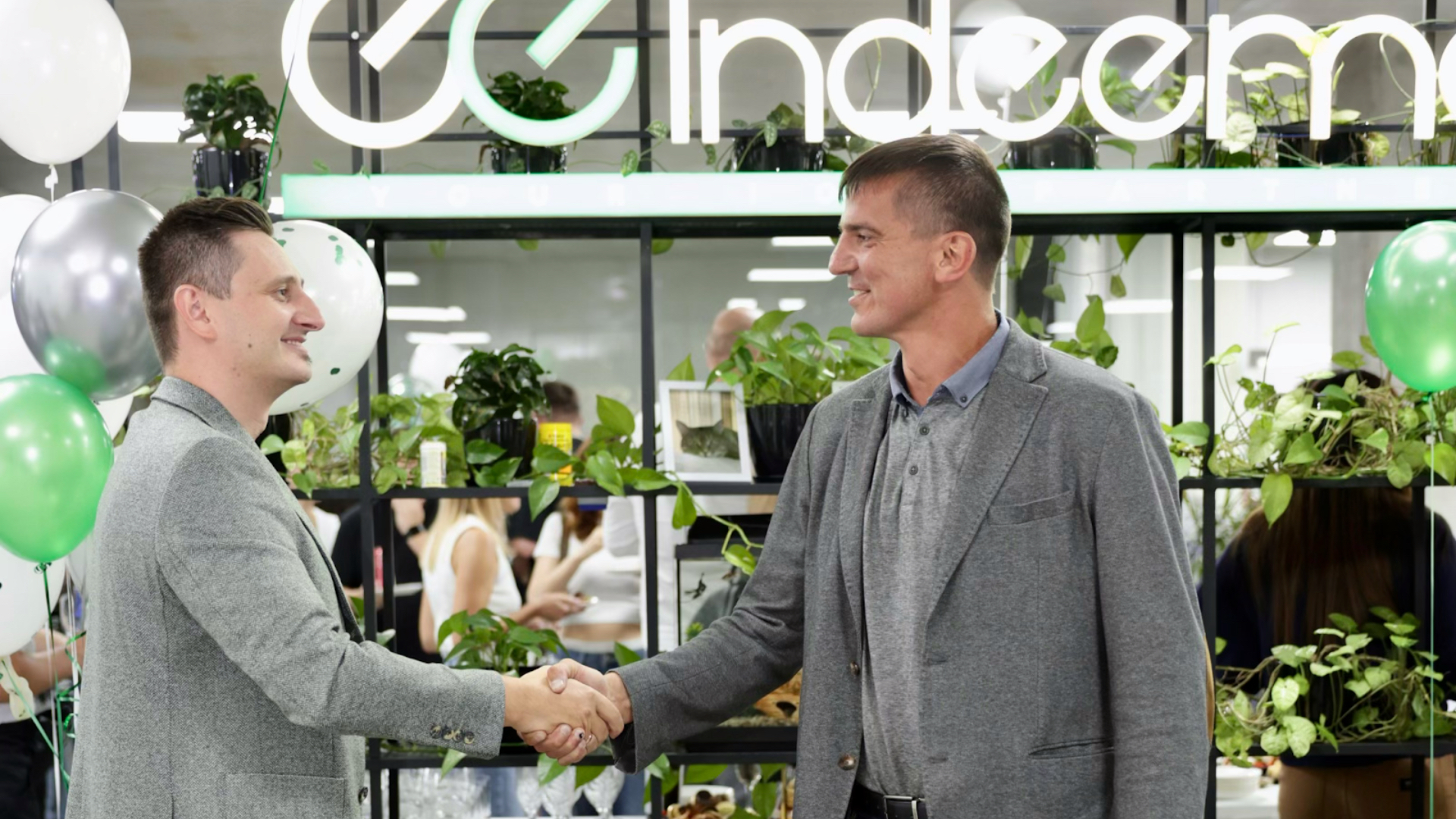
    On 16 September 2025, two Polish technology companies – Indeema Software and Vakoms – announced their merger under the Indeema brand. Together, they are creating a global competence centre for IoT and engineering, with an R&D office in Wrocław.

    Management

    Volodymyr Shevchyk has been appointed CEO of the new company, while former Vakoms CEO Pavlo Pelekh will take over as Chairman of the Board of Directors of the merged organisation.

    Shared vision

    Combining its strengths in software and cloud, Vakoms brings deep expertise in middleware and Linux engineering, while Indeema adds competence in IoT, hardware and firmware – together creating a full-stack of engineering services.

    Both companies have been present in Poland for over a year, with offices in Wrocław to support local operations and customer relationships. The decision to merge under one brand strengthens their ability to serve customers in Europe, while continuing to grow in the Polish market.

    “It is hard to imagine two companies that would have more in common,” – Volodymyr Shevchyk, CEO of Indeema, said. “Together with Vakoms, under the Indeema brand, we are better positioned to support local partners in Wroclaw, while extending our reach to customers across Europe and the world.”

    Experience and customer success

    Both companies retain more than 80% of their customers for more than three years, reflecting strong trust and long-term partnerships.

    Indeema has a proven track record in IoT – in energy, smart homes, industrial applications, as well as drone solutions. One of its long-standing customers, a European solar energy company, uses an IoT solution developed by Indeema to monitor and optimise energy production.

    Vakoms has delivered dozens of IoT projects, in addition to also creating large software solutions for global clients such as fuboTV in the US, helping the company grow from a startup to a leading entertainment platform backed by large investors.

    What this means for customers

    • One brand, larger scale – operating under the Indeema brand, now more united and with an international presence.
    • Extended expertise in IoT – from firmware and connectivity to IoT systems and cloud platforms.
    • A larger, united team – with a solid base in Wroclaw and partnerships around the world, clients gain a reliable and scalable partner ready to support projects of any size.
    • A common heritage, a stronger future – based on years of collaboration and shared innovation.

    Indeema remains true to its mission: Engineering the Things of Tomorrow. This merger makes the company a bigger and more competent partner to meet the IoT needs of customers around the world.


    About Indeema
    Indeema Software is a Polish engineering company specialising in IoT, connecting devices and systems through smart technologies. With expertise in hardware, firmware, cloud and drones, Indeema has delivered transformative IoT projects for industries across Europe and beyond.

    About Vakoms
    Vakoms is a Polish full-cycle software company with proven experience in web, mobile, desktop and enterprise application development. Known for its high-quality solution delivery and long-lasting client relationships, Vakoms has helped global enterprises transform ideas into successful digital products.

  • Partner network integrator – the new standard for competitiveness in IT

    Partner network integrator – the new standard for competitiveness in IT

    A scenario that a decade ago might have been considered a sign of weakness is today becoming a market standard. A medium-sized IT integrator faces the prospect of a lucrative contract that exceeds its internal competence resources. Instead of opting out, the company turns to partners within a formal network. The result? The project is won and the client receives a solution that could not be delivered by a single entity. This is a sign of the times in a market whose value is growing at a dizzying pace.

    The role of the IT systems integrator has undergone a fundamental transformation. Corporate customers are no longer just looking for hardware and software suppliers. They expect strategic partners who not only support, but actively guide their digitalisation process. This trend, identified, among others, in research by the analyst firm Lünendonk, is driving demand for advanced and comprehensive IT services.

    This is borne out by hard data. Analysts at Gartner forecast that global spending on IT services will reach nearly $1.7 trillion in 2025, continuing its rapid growth in the years to come. This is a huge and attractive market, but it is becoming increasingly difficult to enter it with a full range of offerings, especially for small and medium-sized companies that cannot afford to build all their niche specialisations internally.

    In this new reality, traditional fierce competition, especially between like-minded companies, is beginning to give way to cooperative models. The solution is becoming associations and networks of integrators, which are evolving from loose interest groups into strategic alliances. Their aim is not only to survive, but above all to successfully compete for the largest contracts.

    The main benefit of such cooperation is synergy. Companies gain access to a wider market, to the unique competences of other partners, and to preferential terms with suppliers and distributors. The pooling of resources allows the implementation of complex, multi-phase projects, and the transfer of knowledge and experience within the network increases the competitiveness of each member. Support in technical, legal or marketing issues is an added value that allows you to focus on your core business activities.

    Key to the success of such platforms is a culture based on trust and the elimination of internal competitive pressure. Rather than competing, network members act as one organism, exchanging knowledge and experience on an equal basis. Informal communication and peer relationships build an environment where innovation and out-of-the-box solutions are easier to come by. Importantly, the best networks take care to preserve the independence of their members, avoiding the creation of centralised structures, such as joint purchasing departments. Instead, they negotiate favourable framework agreements from which everyone can benefit on their own terms.

    Membership of an elite network, however, is not given to everyone. It is a model based on reciprocity – ‘give and take’. These organisations place specific requirements on candidates, expecting not only a willingness to compromise, but above all an active contribution to the community. Criteria often include proven financial stability and a certain minimum volume of turnover in the IT industry, reaching, for example, €2.5 million per year. This is a selection mechanism to ensure that only reliable and committed partners are brought into the network.

    The ‘lone wolf’ model, which builds all competences on its own, is becoming a relic of the past in the face of increasing technological complexity and market pressures. The future belongs to ecosystems in which the strength of a single company is measured not only by its internal potential, but above all by the quality of its partner network. This is a strategic shift that redefines the rules of the game on the Polish and global IT market.

  • Revolut and Google Cloud are stepping up their collaboration. Target: 100 million users

    Revolut and Google Cloud are stepping up their collaboration. Target: 100 million users

    Revolut, a global fintech player, is strengthening its strategic partnership with Google Cloud, signalling its ambitious plans to scale its business. Under the new multi-year agreement, the company intends to leverage advanced infrastructure and AI tools from Google to serve a target of more than 100 million active users every day.

    This is a key move for the fintech, which is busily expanding its offering and global reach.

    The basis of the expanded partnership is to move Revolut’s key operational elements onto Google Cloud infrastructure. This is to provide the company with the stability and efficiency needed to support its rapidly growing customer base, which now exceeds 60 million.

    This decision is no coincidence – as Revolut transforms from a currency exchange app to a comprehensive financial platform, technological reliability becomes crucial to maintaining user trust.

    An important part of the deal is the implementation of advanced analytics tools and artificial intelligence models from Google, including Gemini. Revolut plans to use them for two main purposes.

    Firstly, to improve fraud detection systems, which is critical in the face of a growing number of transactions and increasingly sophisticated threats. Secondly, AI will be used to better personalise offerings, which is expected to allow products and services to be more precisely tailored to the individual needs of customers in different markets.

    The partnership with Google Cloud is part of Revolut’s wider strategy to diversify its revenue and product offering. Over the past year, the company has launched its own ATMs, developed savings tools and announced its entry into the telecoms sector.

    Such a wide range of activities requires a powerful and flexible technology base, which is precisely what Google’s cloud is designed to provide.

    For Revolut, which despite its impressive financial performance is still waiting for key banking licences in some markets, such a partnership is also a way to strengthen its technological position vis-à-vis traditional banks.

    By investing in scalable infrastructure and cutting-edge AI solutions, the company wants not only to keep up with growth, but also to maintain its lead in innovation and speed of deployment of new solutions.

  • Between vendors and customers – How IT partners manage loyalty both ways

    Between vendors and customers – How IT partners manage loyalty both ways

    An IT partner today is not just a sales channel, but a meeting point between two worlds – technology vendors and end customers. Both sides expect loyalty, but often in contradictory directions: the vendor wants a result, the customer wants independent advice.

    Leaders of partner companies must therefore play on two fronts without losing their own identity. And increasingly, it is this ability that determines their market advantage.

    Growing expectations of vendors

    There is less and less room for informality in partnerships. Vendors expect concrete results: fulfilment of sales plans, participation in marketing campaigns, pipeline reporting, gaining certification. All measurable, verifiable – and increasingly conditioning partner status.

    For many companies in the channel, this means increasing pressure. Partner models today resemble elaborate loyalty programmes more than relationships based on trust. A partner who does not ‘deliver’ quickly falls out of the vendor’s priorities – regardless of the history of the relationship.

    From the perspective of a partner IT company leader, the question arises: how long can you be loyal to a manufacturer that only accounts for numbers? Especially when these numbers are not always in line with what the customer needs.

    The customer wants a partner – not a sales representative

    The end customer does not ask what kind of partner programme the integrator has. He asks if he can trust him. He expects a conversation about business challenges, not about which vendor has a higher discount in a given quarter.

    Companies are increasingly seeing the partner as more than a contractor – they are looking for an independent adviser who can challenge the brief, not just execute it. A partner who ‘sticks’ too much to one supplier starts to be seen not as a consultant but as an extension of the vendor’s sales department.

    This costs the relationship. Because where objectivity disappears, trust disappears – and without it, there is no room for strategic discussions or long-term cooperation.

    Between loyalty and choice – how to manage tension

    The best IT partner leaders know that vendor loyalty cannot mean losing credibility with the customer. The key is to skillfully manage expectations on both sides – and to set boundaries before the market does it for them.

    This starts with clear communication: with the client – what the partner’s role is, with the vendors – where the manufacturer’s influence on consulting decisions ends. More and more companies are separating ‘product’ and ‘consulting’ teams to avoid conflicts of interest in client discussions. Others are formalising technology-neutrality principles in presales offerings.

    These are difficult conversations, but necessary. Because if the partner doesn’t define his position himself, the vendor will do it for him – or the client, who stops to ask his opinion.

    Building the value of your own partner brand

    In a world where vendors are increasingly ‘spinning’ partners as if they were a sales channel, the one who stands out is the one who can put their own brand on the line. Not as a logo next to the manufacturer’s logo, but as a real value: know-how, methodology, an original approach.

    Partner company leaders who invest in competence, build their own tools (e.g. configurators, integrations, add-ons) or introduce consultancy services independent of a specific solution gain more than a higher margin – they gain recognition and influence.

    Vendors increasingly respect this. The customer – even more so. A partner who has something of his own to say is not just selling someone else’s technology. It helps the customer choose – and build something lasting.

  • Salesforce honours partners of the year 2025 at Agentforce World Tour Warsaw

    Salesforce honours partners of the year 2025 at Agentforce World Tour Warsaw

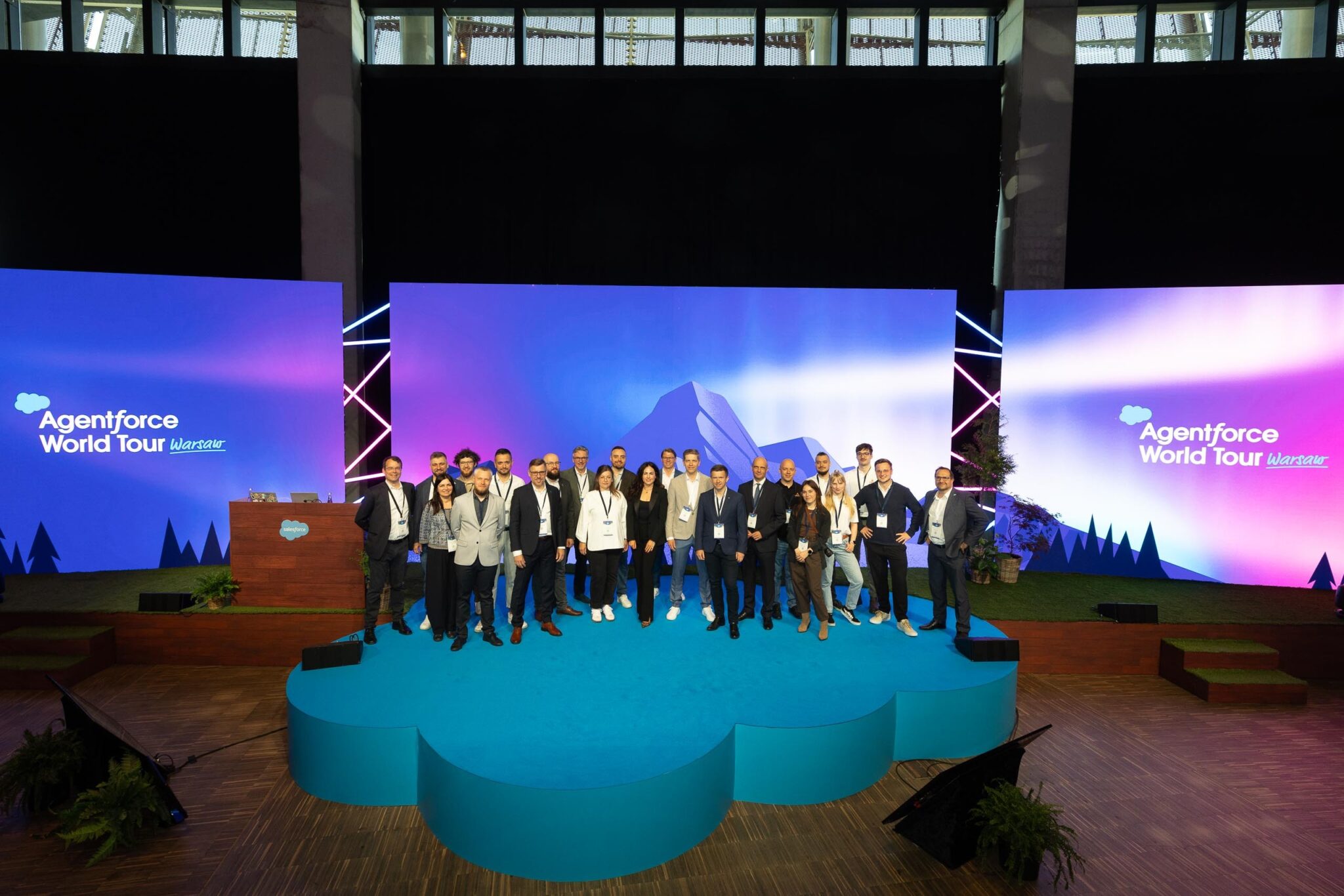
    Salesforce honoured partners who have made significant contributions to the market by responding to growing customer demand for automation, data analytics and artificial intelligence. The award winners came together last week at the Agentforce World Tour Warsaw to celebrate successes, be inspired by innovative projects from industry leaders and network within the Salesforce ecosystem – with a view to exploring new opportunities in the era of AI and autonomous agents.

    Digital transformation is accelerating and technologies such as AI, data analytics and business process automation are becoming fundamental to the competitiveness of companies. A key role in this transformation is played by partners who understand the local context, the needs of specific industries and can turn advanced technology into real business value. It is precisely such partners that Salesforce has singled out.

    Here are the Partners of the Year 2025:

    • Partner of the Year: Craftware – Awarded for the highest financial impact on local business and close cooperation with Salesforce in Poland.
    • Sales Excellence Partner: Finally – With impressive business growth, exemplary collaboration with the Salesforce sales team and high quality solution presentations, Finally has demonstrated what a true One Team partnership is – across the Emerging Growth Market region.
    • Agentforce Readiness Partner: Enxoo – Distinction for the highest number of Agentforce Specialist certifications earned by the end of 2024.
    • Digital Award (Commerce & Marketing): Cloudity – Award for successful acquisition and finalisation of projects in the Commerce Cloud and Marketing Cloud.
    • Top Tableau Partner: NDLS (New Data Labs) – Distinction for consistently delivering data-driven value – from a leadership position in the Tableau solution area.
    • Community Impact Partner: Sii Poland – a partner that not only develops its own business, but also actively supports local communities – e.g. by helping two NGOs during the floods in Poland.

    – Partners like the ones we are awarding today are driving our Agentforce transformation. We see them successfully combining local market knowledge with the power of our technology – resulting in faster value for customers and more relevant, scalable and efficient implementations,comments Pamela Hetmaniok, Partner Sales Leader CEE at Salesfroce.

  • The IT industry is narrowing the circle of trust. Partnership not for everyone

    The IT industry is narrowing the circle of trust. Partnership not for everyone

    The IT industry is transforming, especially in the sales channel. Over the years, many IT manufacturers have relied on a broad presence in the channel – the more partners, the greater the growth potential. Today, this approach is losing relevance. More and more vendors are deliberately reducing the number of active partners, focusing their activities on a select group of resellers and integrators who have a real impact on sales.

    Instead of scaling the number of accounts, vendors prefer to deepen relationships with those who already have access to strategic customers and competence in delivering complex solutions. Such selectivity means higher demands, but also a greater willingness to invest on the vendor side – from joint sales planning to priority access to presales and MDF resources.

    Some global vendors, such as Dell Technologies and HPE, have already signalled that the priority is on the quality of partnerships, not their number. In 2024, this trend has also clearly accelerated among software vendors, especially in the subscription model, where customer retention has become as important as acquisition.

    What was once the norm – i.e. open registrations, low entry thresholds and minimal expectations of activity – is increasingly giving way to a ‘closed club’. For many partners, this means they need to redefine their position in their relationship with vendors.

    The focus on fewer partners entails a new logic of cooperation. Vendors are no longer just looking for a distribution channel – they expect active participation in the sales process and customer development. Increasingly, the relationship resembles a joint go-to-market rather than the classic ‘manufacturer-reseller’ model.

    In practice, this means deeper commitment on both sides: joint pipeline planning, shared sales targets and regular performance reviews. For partners, it also means greater transparency – manufacturers expect insight into CRM data, detailed forecasts and clearly defined project contributions.

    In return, they offer more than just a discount. Access to technical teams, priority in lead allocation and priority in implementing new solutions are becoming the new currency in channel relationships. Vendors – especially those operating on an as-a-service model – want to be assured that the partner will not only sell the solution, but also help retain the customer throughout the contract lifecycle.

    This shift towards ‘value-added engagement’ can be seen particularly in the cloud and security sector, where sales rarely end with a single deployment. Partners who can deliver not only the product, but also ongoing support, are becoming a natural extension of manufacturer teams.

    Domino effect in the canal

    Producer selectivity is not without its impact on the rest of the channel. Smaller and medium-sized partners – hitherto operating on a transactional model – are increasingly finding that access to technical support, leads or marketing resources is becoming limited. Vendors are shifting resources to where they see greater return potential.

    As a result, for many ‘mid-tier’ partner companies, collaboration with the manufacturer becomes more one-sided: less communication, less attention, fewer opportunities for joint initiatives. Partners still have access to basic tools – portals, e-learning programmes, documentation – but the personalised approach that used to be standard is missing.

    This gap is being attempted to be filled by distributors. They offer their own development programmes, pre-sales as a service, flexible financing models or dedicated engineering resources. In practice, they are now taking over part of the role previously played by vendors vis-à-vis smaller partners – especially in the SME segment and local integrators.

    This also marks a shift in power dynamics: partners who have hitherto built their position directly with the manufacturer are increasingly having to accept indirect relationships – with less influence over strategy and access to key information. For many, this is the beginning of having to make a choice – either to increase scale and competence or to redefine their business model.

    Is it worth the effort?

    For partners who are not among the ‘preferred’, the question becomes: is it worth investing in a relationship with a vendor who is shifting resources elsewhere? Increasingly, the answer is yes – provided they can demonstrate value beyond the sale itself.

    Manufacturers are increasingly rewarding partners who show initiative – not waiting for leads, but generating demand themselves, sharing the pipeline and taking risks in pilot projects. It is also becoming crucial to have certified competences – not only technical, but also business competences, such as the ability to conduct consultative sales or service integration.

    Less obvious strengths are also at stake: access to niche vertical markets, a strong local brand or an efficient implementation process. Vendors are looking for partners who don’t just ‘sell the product’, but can build it into the customer’s real-world environment – and do so quickly, predictably and with minimal risk.

    For many partners, this means transforming from an infrastructure provider to a technical and business advisor. It is a difficult process, but in the long term – the only way to maintain direct access to manufacturer support and stay in the game for larger projects.

    The IT industry and the 2025 outlook: will only the elite remain?

    If the current direction continues, in 2025 the IT sales channel could become more polarised than ever before. At the top – a narrow group of strategic partners, tightly integrated into the manufacturer’s operations. Below – a broad base of smaller companies, operating in a transactional mode, supported mainly by distribution or self-service portals.

    This raises the question of long-term sustainability. Focusing on ‘top performers’ brings faster growth and better cost control, but also risks losing flexibility. Especially in local markets, where relationships and regional presence still matter, too narrow a network of partners can limit scalability.

    Some vendors are trying to balance – offering different partnership paths, depending on their business model. Others put it all on the line, hoping that the rest of the market will be taken up by an ecosystem of services, cloud platforms or value-added distribution anyway.

    For the partners themselves, this is a moment of strategic decisions. Maintain the current model and accept a second-tier role – or invest in competences, specialisations and relationships that can bring them closer to the forefront. The new normal in the IT industry does not mean the end of the channel. But it definitely changes the rules of the game.