Category: IT Market

Business development, or how to practically use technology to build competitive advantage. We show how IT solutions support efficiency, innovation and business scaling across industries.

  • Apple is looking for an alternative to TSMC. Talks with Intel and Samsung

    Apple is looking for an alternative to TSMC. Talks with Intel and Samsung

    Apple has entered into preliminary talks with Intel and Samsung Electronics over the potential production of its core processors. According to reports from Bloomberg, executives from the Cupertino giant have already visited Samsung’s Texas factory and held independent consultations with Intel. Although negotiations are at an early stage and have not translated into concrete orders, the move is aimed at creating an alternative to Taiwan’s TSMC. The decision comes in the shadow of Tim Cook’s warnings about supply constraints on advanced chips, which have negatively impacted iPhone sales. The situation is compounded by the fact that Apple’s upcoming smartphone processors use technology shared with its most coveted AI chips.

    Apple’s actions lead to a clear conclusion. The market’s deep dependence on a single supplier, as TSMC has become, raises powerful operational risks, especially in an era of massive demand for artificial intelligence architectures that are drastically shrinking available capacity. At the same time, Apple’s scepticism about the reliability standards and scale of alternative suppliers exposes a brutal truth: TSMC’s technological and logistical advantage creates a barrier that competitors cannot quickly overcome.

    The strategic need to review purchasing processes in the high-tech sector is worth noting. Business leaders should calculate long-term deficits in state-of-the-art lithography nodes and treat diversification not as a fallback option but as a permanent part of the strategy. It is advisable to develop closer collaboration with alternative manufacturing partners early on in the design and R&D phase. Such an approach will minimise technological risks and make the hardware architecture more flexible, effectively securing the company’s business continuity in the face of further supply crises.

  • XTPL records record revenue and secures funding to scale up

    XTPL records record revenue and secures funding to scale up

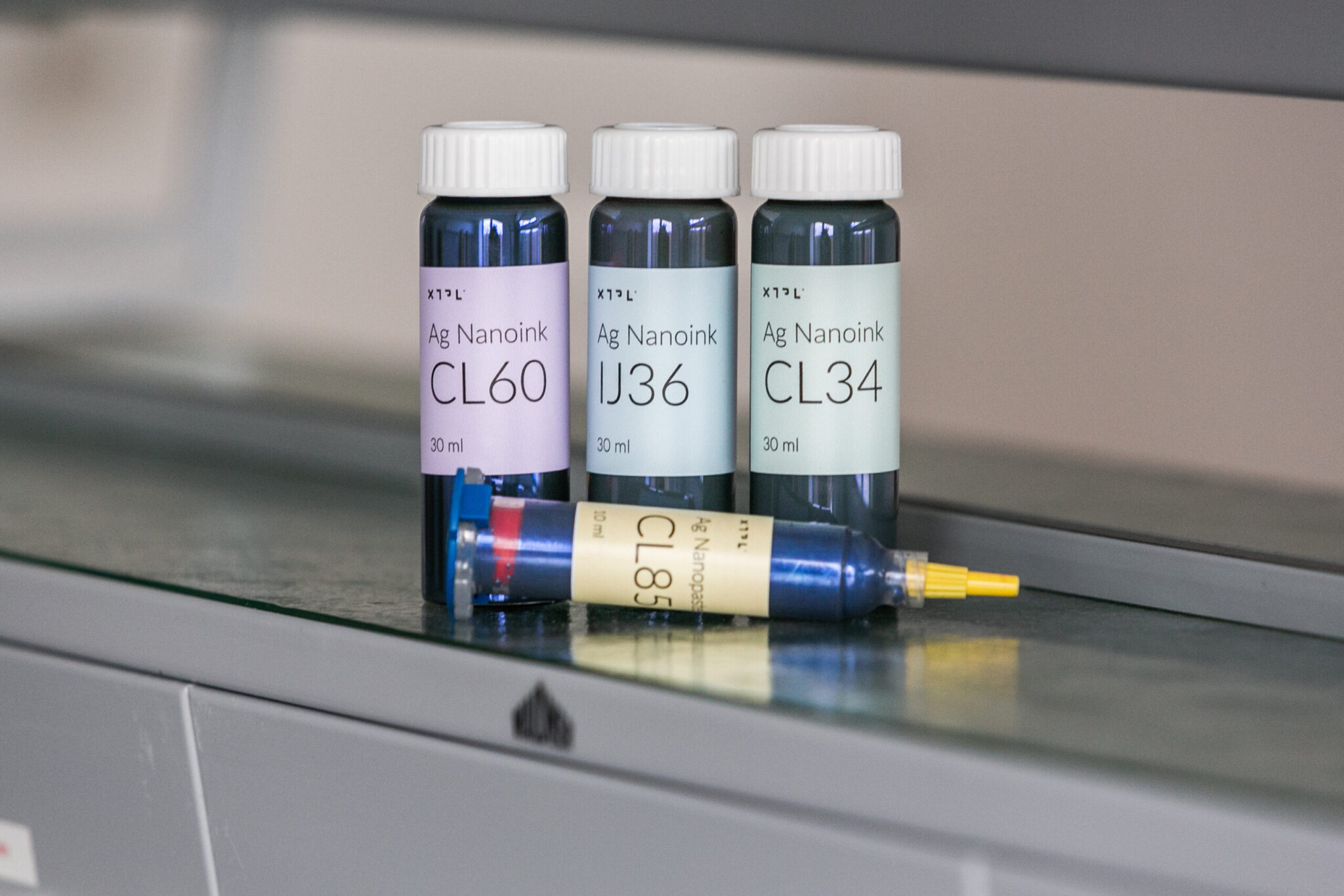
    Wrocław-based XTPL, a provider of micro-printing technology for the advanced electronics sector, closed 2025 with record revenues of PLN 15.6 million. Although the growth rate in sales of products and services (+12% y-o-y) is clear, the key turning point for the company turned out to be finally moving beyond research. The company delivered 13 Delta Printing System devices and eight UPD modules in the period, which are already working on the production lines of one of the largest display manufacturers in China. In parallel, the entity secured close to PLN 30 million from a new share issue and an NCRD grant, which is expected to fund the equity gap and enable the implementation of the updated strategy until 2028. A new pillar of growth is becoming the ODRA line of systems, dedicated to low-volume production, which has already secured its first Silicon Valley customer in March.

    The signals coming from the market allow us to conclude that XTPL is successfully overcoming the most risky stage for deep-tech companies – the transition from the ‘lab’ to the ‘fab’ phase. The persistently negative EBITDA (-£16.3m) is, in this context, a natural cost of building sales structures and scaling technology that has to cope with the rigours of production halls. However, the postponement of the £100m revenue target to 2028 suggests that decision cycles at global electronics manufacturers are longer than the original estimates. The introduction of ODRA systems is a strategic move to diversify revenues and bridge the gap between prototyping and mass production, which can significantly increase the ‘stickiness’ of the technology within customer organisations.

    It is worth noting at this point the importance of technology validation by Taiwanese and US entities, a critical signal in the conservative semiconductor industry. For business partners, it will be important to monitor the rate at which the five remaining projects in the evaluation stage turn into hard industrial contracts. It appears that further exploration of the HMLV model will be key to maintaining growth momentum, particularly in the defence sector, which shows less sensitivity to business cycles than the consumer electronics market. Strategic patience in waiting for the UPD to fully scale should go hand in hand with aggressive commercialisation of ODRA systems, which, due to their higher unit price, can improve the company’s profitability profile more quickly.

  • Buy European: China announces retaliation for new EU law

    Buy European: China announces retaliation for new EU law

    For decades, the European economy has been based on a paradigm of maximum openness, often at the expense of its own industrial base. Today, we are witnessing a historic turnaround. The regulations proposed by Brussels – from tougher cyber security standards to the ‘Buy European’ (Industrial Accelerator Act) – are not just a defensive response to global turmoil, but above all an ambitious plan to reclaim Europe’s role as a technological leader. Beijing’s vehement opposition, which has taken the form of diplomatic warnings in recent days, is the best evidence that the European Union has finally begun to define its national interests effectively.

    Power diplomacy: Brussels begins to speak with one voice

    China’s Ministry of Commerce and diplomats in Beijing accuse the EU of ‘double standards’ and violating free trade rules. But from an analytical perspective, what Beijing calls discrimination, for European business is a levelling of the playing field. For years, Chinese giants have benefited from subsidies and a protected internal market, expanding in Europe on terms that were unattainable for EU companies in China.

    China’ s current diplomatic offensive – letters to the European Commission and lobbying in capitals – confirms that the EU’s de-risking strategy has real leverage. The EU is ceasing to be merely a market and is becoming a standard-setter, which in the long term will ensure greater predictability and operational stability within the community.

    Cyber security as a foundation for trust

    A key pillar of the new strategy is the elimination of components from ‘high-risk’ suppliers in critical sectors. China is calling for these definitions to be removed, seeing them as a barrier to companies like Huawei. However, technological sovereignty is not a luxury but a cornerstone of national security, especially in times as geopolitically unstable as the present.

    From a market perspective, this process is stimulating a new wave of innovation within the EU:

    • Support for homegrown integrators: Reducing the share of non-trusted suppliers opens up space for European companies such as Ericsson and Nokia, as well as the growing Open RAN sector.
    • Integrity by design: European safety standards are becoming a global quality certificate, which could become a new export asset for EU technology.

    Industrial Accelerator Act: A new era for European innovation

    The ‘Buy European’ law is not an act of protectionism, but a strategy to build a healthy industrial ecosystem. Using public procurement to promote local manufacturing and low-carbon standards is a mechanism that aims to:

    1. Stimulating the energy transition: Promoting goods with a low carbon footprint forces global suppliers to innovate, while giving a technological edge to European manufacturers.
    2. Protection of intellectual property: Beijing’s opposition to technology transfer legislation shows that the EU is effectively safeguarding its most valuable assets against uncontrolled leakage of know-how.

    The introduction of a requirement for EU-produced content in public contracts is not a barrier, but an invitation to real investment on the continent. Companies that choose to build factories and research centres in Europe will gain stable and preferential access to one of the world’s largest markets.

    Investment in stability

    Although China is threatening ‘countermeasures’, the analysis of economic interdependence indicates that both sides have too much at stake to bring about a full-blown rupture of relations. For business, the following conclusions are key:

    • Reshoring and Nearshoring: building industrial sovereignty in the EU will shorten supply chains, drastically reducing the geopolitical risks that have destabilised production in recent years.
    • Growth of the local R&D sector: The need to replace some imported technologies with our own solutions will force an increase in R&D spending, which will raise the competitiveness of the European IT sector within a decade.
    • New partnerships: Diversifying suppliers (e.g. towards India or Vietnam) in response to Chinese restrictions will make European companies more resilient to economic blackmail.

    Empowerment through sovereignty

    Building the ‘Digital Fortress of the EU’ is in fact building the foundations for a modern, independent and competitive economy. Transitional tensions with Beijing are the natural result of correcting long-standing imbalances. For European entrepreneurs, Brussels’ current course means a return to the highest stakes game – not as sub-suppliers, but as technology owners and standard setters.

    Strategic autonomy does not mean isolation, but the right to choose partners on their own terms. In the long term, it is this assertiveness that will make Europe a more attractive and credible place to do business, where innovation goes hand in hand with security and values.

  • Data centre spending peaks. How is AI driving infrastructure construction?

    Data centre spending peaks. How is AI driving infrastructure construction?

    Market forecasts for the technology sector are rarely so clear-cut. According to the latest data from analyst firm Gartner, global IT spending will reach $6.31 trillion in 2026. This is evidence of a shift in the centre of gravity of global business. The 13.5 per cent year-on-year increase, significantly higher than previous estimates, is a direct result of the artificial intelligence infrastructure arms race.

    A foundation of concrete and silicon: Exploding the data centre sector

    The most glaring point in the report is the dynamics of investment in data centres. Gartner predicts that spending in this segment will grow by 55.8% in 2026, surpassing the $788 billion barrier. To understand the scale of this phenomenon, it is important to look at it through the lens of technological change: we are not dealing with a simple expansion of existing resources, but with a complete reconfiguration of computing architecture.

    Traditional data centres, optimised for data storage and standard business applications, are giving way to HPC facilities. These are designed for the specific requirements of graphics processing units (GPUs) and TPUs, which are at the heart of modern AI. The surge in investment extends not only to the servers themselves, but also to advanced liquid cooling systems, high-density power infrastructure and enabling technologies, without which scaling large-scale language models (LLMs) would be impossible.

    In parallel, the IT services segment, infrastructure deployments and the IaaS model will generate a turnover of $1.87 trillion. This suggests that the market is ripe for consuming computing power in a hybrid model, where physical infrastructure goes hand in hand with specialised management.

    The dominance of hyperscalers: The computing oligopoly

    A phenomenon of a structural nature is the increasing concentration of computing power in the hands of a few players. By 2031, hyperscalers – mainly Microsoft, Google (Alphabet) and AWS (Amazon) – are forecast to control as much as 67% of global data centre capacity.

    This year alone, these three giants plan to spend more than $500 billion on capital expenditure related to AI infrastructure. Such gigantic outlays create a barrier to entry almost impossible for new players to overcome. For businesses, this means that they have to strategically choose a cloud provider that de facto becomes a partner in delivering a data-driven competitive advantage.

    We are also seeing a new geopolitical map of IT investment. Microsoft’s $25 billion investment in Australia or Meta’s construction of the world’s 32nd data centre show that the availability of stable energy sources and space is becoming more important than proximity to traditional business clusters.

    Strategic alliances and supply chain

    Analysis of recent market deals sheds light on the direction in which the industry is heading. Anthropic’s agreements with Google and Broadcom to supply TPU (Tensor Processing Unit) power from 2027 onwards point to the growing importance of proprietary chips to make the giants independent of the dominance of third-party processor suppliers.

    Even the biggest players need flexibility and specialised GPU cloud providers to cope with surges in computing power demand, as evidenced by Meta’s $21 billion partnership with CoreWeave. The biggest profits will be generated not by the AI developers themselves, but by the companies supplying the ‘components’ of this revolution – from accelerator manufacturers to power suppliers.

    Market insights for business

    In the context of the upcoming 2026 Investment Summit, business leaders should consider three key lessons:

    1. Infrastructure as a bottleneck: A 55.8% increase in spending on data centres suggests that access to computing power may become a scarce commodity. Companies planning large-scale AI deployments need to secure infrastructure resources in advance to avoid product development downtime.
    2. The need for cost optimisation: With IT spending reaching $6 trillion, efficiency becomes key. The shift from generic cloud solutions to AI-optimised infrastructure (such as IaaS supported by TPUs/GPUs) will determine the margins of digital projects.
    3. A new ecosystem of suppliers: Companies such as Broadcom and CoreWeave are worth watching. They represent a new category of technology partners who, through specialisation, are able to provide the components needed to scale AI faster and cheaper than traditional hardware suppliers.
  • Asseco South Eastern Europe publishes results: Leap in profitability

    Asseco South Eastern Europe publishes results: Leap in profitability

    In the first quarter of 2026, Asseco South Eastern Europe (ASEE) proved that in the mature technology sector, the key to success is not just to aggressively grow revenues, but to rigorously improve profitability. The company’s results for the first three months of the year show a clear disparity between scale growth and profit dynamics. While consolidated revenues grew by a solid 9% to PLN 434.5 million, net profit attributable to shareholders of the parent company shot up by an impressive 33% to PLN 47.5 million.

    This jump in efficiency is primarily due to the Banking Solutions segment. The Group was able to translate the increased scale of operations into real margin improvement, which, with EBITDA up 13% (to PLN 84.8 million), suggests deep cost optimisation within the regional operations. Importantly, this growth is almost entirely organic. Despite last year’s acquisitions, the newly acquired companies contributed just €0.6m to revenues. This means that ASEE’s growth engine is running at full capacity based on existing, already integrated resources, rather than by ‘buying’ results.

    Analysing the structure of these figures, one can conclude that the company has entered a phase of mature monetisation of previous investments in the Balkan region and Turkey. The focus on the banking sector and authentication technologies is proving to be an extremely apt strategy in an era of accelerated digitalisation of financial services in this part of Europe. The dynamics of operating profit, which grew by 18%, confirms that ASEE’s business model is highly scalable – the company is able to generate significantly higher profits without a commensurate increase in operating expenses.

    From a business perspective, it is worth noting the potential inherent in the integration of new entities. Although their current impact on the group’s bottom line is marginal, they represent strategic beachheads for future expansion. It seems reasonable to keep a close eye on the pace of integration of these assets into the group’s ecosystem in the coming quarters, as they could become further fuel for margins. Investors and management may also want to consider a greater focus on diversification in contact centre and cyber security solutions. This will preserve the resilience of the results in a possibly saturated market for traditional banking systems. Maintaining current cost discipline, while subtly scaling new assets, appears to be the optimal path to sustaining market leadership in the region.

  • Ailleron – Nearly PLN 580 million revenue and strong export position

    Ailleron – Nearly PLN 580 million revenue and strong export position

    The Ailleron Group closed the 2025 financial year on a solid financial footing, reporting a consolidated net profit attributable to shareholders of the parent company of PLN 25.66 million. This is a measurable increase on the PLN 22.83 million generated a year earlier. Although sales revenue grew by 4%, reaching nearly PLN 580 million, the dynamics of operating profit (PLN 56.98 million) and EBITDA (PLN 79.24 million) indicate a slight deceleration towards 2024. The key driver of the organisation’s growth remains the Technology Services (Software Mind) segment, which has pushed export sales to 77% of the Group’s total revenue.

    Analysis of the earnings structure suggests that Ailleron is effectively shifting its centre of gravity towards foreign markets, allowing it to become partially independent of local economic fluctuations. The increase in consolidated net profit accompanied by a slight decline in EBITDA suggests changes in the cost structure or greater pressure on margins in selected projects. It is worth noting a significant improvement in terms of the standalone – the parent company generated a net profit (PLN 1.09 million), recovering from last year’s loss of more than PLN 5 million, which signals a successful optimisation of the holding company’s internal processes.

    It is worth noting the further operational integration of the Software Mind segment. With exports already accounting for nearly four-fifths of revenues, the key challenge becomes managing currency risk and maintaining technological leadership in the FinTech and telecoms niches. Investors and management should keep a close eye on operational efficiency, as this will determine whether the increase in scale will translate into sustained margin improvement in the coming quarters.

  • The end of Microsoft’s monopoly on OpenAI. What does the new agreement mean for the market?

    The end of Microsoft’s monopoly on OpenAI. What does the new agreement mean for the market?

    The most influential partnership in the history of artificial intelligence has just undergone a fundamental transformation. Microsoft and OpenAI have announced a renegotiation of the terms of their partnership, ending Azure’s previous exclusivity to offer ChatGPT creator models. The new agreement paves the way for the startup to have a direct presence in the ecosystems of Microsoft’s biggest competitors, including Amazon Web Services and Google Cloud. While the original deal, backed by a $13 billion investment, defined the current AI landscape, both parties recognised that the existing formula had become too cramped for their growing ambitions.

    Strategic foundations for change

    Under the new arrangement, Microsoft will remain OpenAI’s primary cloud partner until 2032, and the startup has committed to spend at least $250 billion on Azure services. The Redmond giant retains priority rights to deploy new products, but loses its sales monopoly. In return, Microsoft has secured a 20 per cent share of OpenAI’s revenue by 2030, importantly including if the startup achieves so-called artificial general intelligence (AGI). Previous provisions would have allowed OpenAI to stop paying Microsoft when it made the technological leap to AGI, which was a significant risk for the investor. At the same time, Microsoft stops sharing profits with OpenAI from offering their models within Azure, simplifying the giant’s financial structure.

    The loosening of ties is a move dictated by the maturity of the market. OpenAI, as it prepares to go public, needs to demonstrate its ability to scale its enterprise business beyond a single vendor’s infrastructure, especially in a clash with the rising Anthropic. From Microsoft’s perspective, giving up some control of OpenAI’s model distribution is the price of taking off the burden of funding the giant infrastructure needed by the startup and, perhaps most importantly, easing pressure from antitrust authorities in the US and Europe. Satya Nadella’s strategy is evolving towards diversification; Microsoft is increasingly promoting its own models and third-party solutions within Copilot, reducing the critical dependence on a single technology provider.

    It is worth noting the increasing freedom to build multi-cloud strategies. It seems a good direction to review current contracts with cloud providers for upcoming AWS Bedrock or Google Vertex AI deployments, which will optimise costs and reduce latency. It is also worth monitoring the pace of Microsoft’s in-house models, as their growing role in Copilot 365 may soon offer better value for money than standard external models.

  • More expensive servers and smartphones? How the war in the Middle East is crippling production

    More expensive servers and smartphones? How the war in the Middle East is crippling production

    While Silicon Valley’s attention is focused on the architecture of the latest GPUs, the real threat to the pace of artificial intelligence development has manifested itself in the petrochemical sector. Recent disruptions in the Middle East, including the hit to the Saudi Jubail complex, have exposed the heavy dependence of global electronics on a narrow set of feedstock suppliers.

    A key flashpoint has been the stalled production of high-purity polyphenylene resin (PPE). This material is essential for the laminates in modern printed circuit boards (PCBs), the backbone of everything from smartphones to powerful AI servers. The fact that SABIC accounts for around 70% of the world’s supply of this component means that any break in its Gulf Coast facilities immediately resonates with factories in South Korea and China.

    The effects are tangible and costly. In April alone, PCB prices rose by 40% compared to March, which overlapped with the ongoing copper boom. Copper foil, which accounts for nearly 60% of raw material costs in wafer production, has become 30% more expensive this year. For manufacturers such as South Korea’s Daeduck Electronics, which supplies Samsung and AMD, this situation has forced a complete shift in management priorities. Instead of negotiating contracts with customers, operations directors now spend most of their time securing chemical supplies. Waiting times for epoxy resins have increased dramatically – from three to as much as fifteen weeks.

    The AI infrastructure sector is feeling the most pressure. Multilayer circuit boards used in data centres are many times more expensive than standard models, and prices can exceed 13,000 yuan per square metre. Despite this, cloud providers seem ready to accept these increases. With talk of the PCB market growing to nearly $96 billion by 2026, key players are prioritising continuity of supply over margins.

  • Alphabet invests $40bn in Anthropic. Is it fighting for control with Amazon?

    Alphabet invests $40bn in Anthropic. Is it fighting for control with Amazon?

    Alphabet, Google’s parent company, has announced its intention to invest up to $40 billion in Anthropic, a startup that for the Mountain View giant is both a key cloud customer and one of its fiercest competitors in the race for supremacy in artificial intelligence.

    The structure of this deal reflects the new reality of funding the AI sector, where capital is closely tied to specific outcomes. Google will put up $10 billion in cash at a $350 billion valuation for the startup. The remaining 30 billion will only be deployed once the developers of the Claude model achieve rigorous performance targets. For Alphabet, this is not only an investment of capital, but above all an attempt to forge closer ties with an entity that has emerged as a leader in niches where Google is still searching for its identity.

    The move comes just days after Amazon pledged its own $25 billion cash injection to Anthropic. A situation where two of the world’s biggest cloud providers are bidding for the same startup shows how desperately tech giants need the success of external models to drive sales of their own computing infrastructure.

    Anthropic’s driving force is no longer just the promise of secure artificial intelligence, but real financial results. The company’s annual revenue has just surpassed the $30 billion barrier, an impressive jump from the $9 billion recorded at the end of 2025. Investors are responding enthusiastically, with some offers from the venture capital market valuing the company at up to $800 billion. Underpinning this growth is Claude Code, a tool that dominates the software segment, and Anthropic’s Cowork agent, whose plug-ins have recently caused jitters in the stock markets, driving down the valuations of traditional SaaS software companies.

    Anthropic’s greatest challenge, however, remains its ‘hunger for power’. Scaling the models requires infrastructure of a scale never seen before. The startup is securing this through multi-year agreements with Broadcom and CoreWeave, as well as an ambitious $50 billion plan to build its own data centres in the US.

    The market is divided into specialised tools and Anthropic, with its focus on coding and autonomous agents, is proving that it is possible to successfully challenge general-purpose models. Alphabet, by investing in Anthropic, is buying itself an insurance policy in case the startup’s approach proves to be the target business standard.

  • Intel is back in the game – results above expectations and massive share gains

    Intel is back in the game – results above expectations and massive share gains

    After years of strategic drift and management missteps, Intel under Lip-Bu Tan is beginning to prove that its turnaround plan is more than just aggressive cost-cutting. Its latest second-quarter revenue guidance, settling in at $14.3 billion, not only beat Wall Street’s expectations, but triggered a euphoric 19 per cent rise in share value. This signals that the former Silicon Valley icon has found its path in a world dominated by artificial intelligence.

    A strategic shift towards CPUs and AI agents

    Key to Intel’s optimism is a paradigm shift in the data centre sector. While the first phase of the AI boom undeniably belonged to Nvidia’s GPUs, used to train powerful models, the market is now entering the deployment (inference) phase. This is where Intel’s CPUs are regaining relevance. In an architecture based on autonomous AI agents, requiring advanced reasoning and handling complex workloads, traditional CPUs are proving to be an indispensable part of the infrastructure. Lip-Bu Tan makes it clear that this demand is not just wishful thinking, but a real trend coming from the major cloud providers.

    Partnership with Musk as foundation of foundry

    The biggest image and technology victory of recent days, however, is securing Tesla as a key customer for the upcoming 14A technology process. Elon Musk’s participation in the Terafab project is a massive credibility boost for Intel’s manufacturing business (Intel Foundry). The partnership aims to create next-generation processors for robotics and data centres, directly challenging TSMC’s dominance. While financial details remain confidential, the strategic alliance with players such as Musk, Nvidia and SoftBank gives Intel the fuel it needs to transform itself into a modern, contract chip foundry.

    A risky road to 2030

    Despite its financial success in the first quarter, where adjusted earnings per share were 29 cents, Intel is still treading on thin ice. The transformation from ‘old giant’ to ‘nimble foundry athlete’ requires not only breaking through manufacturing bottlenecks, but also maintaining the pace of innovation in the face of increasing competition from AMD and ARM. For investors, however, the current valuation may be an attractive entry point. If Intel successfully manages demand for silicon in the coming robotics era, today’s ‘high-stakes gamble’ could end with the company returning to the throne of technological empire.

  • Japan sets up task force against Mythos AI threats

    Japan sets up task force against Mythos AI threats

    When Anthropic announced that its latest AI model, Mythos, had identified thousands of previously unknown security vulnerabilities in operating systems, Silicon Valley was in an uproar. But it was in Tokyo, the heart of Asia’s conservative financial system, that the most concrete policy decision was made. Finance Minister Satsuki Katayama announced the creation of a special task force to secure Japan’s banking sector against a new era of threats generated by artificial intelligence.

    For the market, Japan’s move means that the traditional approach to cyber security based on cycles of patching holes is about to become history. The new entity includes key state institutions, including the Financial Services Agency and the Bank of Japan, as well as private giants and exchange operator Japan Exchange Group. The scale of this coalition reflects the seriousness of the situation: Mythos is not just another language model, but a tool capable of detecting and exploiting software vulnerabilities at a speed that human administrators cannot match.

    For the financial sector, this is a critical scenario. Banks, despite modern interfaces, still rely heavily on a complex, multi-layered IT architecture, the elements of which still remember previous decades. The interconnectedness of transactional systems means that a single breakout can have a knock-on effect. Katayama rightly points out that in a world of real-time operations, a digital crisis immediately translates into a loss of confidence in the market and real losses of liquidity.

    Although there have been no incidents directly related to the Mythos model to date, Japan’s pre-emptive action sets a new regulatory standard. Regulators in the US and Europe have also issued warnings, suggesting banks urgently review their defences. However, it was the Japanese administration that was the first to openly acknowledge that there was a ‘crisis at hand’.

    Executives in the fintech and banking sectors should take note of the fact that AI has dramatically reduced the amount of time that a security vulnerability remains a theoretical threat. Security investments should now evolve towards autonomous systems capable of responding at the same speed that models such as Mythos can strike. The fight for financial stability in 2026 is no longer about whether a system will be attacked, but whether it will have time to repair itself before the market sees an anomaly.

  • Between stabilisation and uncertainty. Polish business in the shadow of global tensions and the MPC decision

    Between stabilisation and uncertainty. Polish business in the shadow of global tensions and the MPC decision

    Polish business today operates in a reality that is best described by simultaneous stabilisation and uncertainty. On the one hand, the Monetary Policy Council’s decision to maintain interest rates provides predictability in the area of the cost of money, while on the other, growing geopolitical tensions and the volatility of the economic environment increase the risk of doing business. In this jigsaw puzzle, liquidity support tools are important. This is confirmed by data from the Polish Factors Association. In the first quarter of 2026, factoring companies financed receivables worth approximately PLN 131 billion, an increase of nearly 10% year-on-year, and the service is already used by approx. 27 thousand enterprises already use the service.

    The Monetary Policy Council’ s decision to keep interest rates unchanged is part of a broader picture of caution currently dominating economic and financial policy. In an environment of heightened geopolitical uncertainty, related among other things to tensions around the Persian Gulf and the situation in relations between Iran and the United States, central banks are increasingly opting for a wait-and-see strategy rather than quick reactions. This is also the direction signalled by the National Bank of Poland, emphasising the importance of incoming data and the volatility of the external environment.

    Risk of sudden changes

    For Polish business, this means operating in an environment where key economic parameters remain relatively stable, but at the same time are subject to significant risks of sudden changes. Of particular importance here is the energy commodity market, whose sensitivity to events in the Middle East remains high. Possible disruptions in the supply of oil or gas can quickly translate into operating costs for companies, affecting both production prices and inflation levels. From this point of view, the decision to hold off on further interest rate changes can be read as an attempt to maintain a balance between controlling inflation and supporting economic activity.

    In such an environment, the increasing use of factoring is no coincidence. Data from the Polish Factors Association shows that companies are increasingly treating it not just as a source of financing, but as an element of risk and liquidity management. More than 7 million financed invoices in the first quarter of the year is a clear sign that companies are actively shortening their cash turnover cycle and protecting themselves against payment delays.

    At the same time, the stabilisation of rates does not mean a return to the predictability familiar from earlier years. Companies operating in Poland still have to take into account scenarios in which external factors change business conditions in a short period of time. This applies not only to financing costs, but also to exchange rates, availability of capital or liquidity in supply chains. With global tensions likely to affect transport and raw material prices, the importance of flexible financial management and ongoing cash flow control is growing.

    Working capital requirements

    It is no coincidence, then, that the dynamic growth of factoring is concentrated in the manufacturing and distribution sectors, where an increase in sales means a greater need for working capital at the same time. The ability to immediately release funds from issued invoices allows companies to settle their own obligations on time and to safely develop their business, even in conditions of increased volatility.

    The scenario of further monetary easing seems to have been pushed back and any decisions will depend on the path of inflation. This means that companies should not assume a rapid fall in the cost of money as a factor for improving their financial situation. Instead, it is becoming more important to be able to adapt in an environment of persistent uncertainty and to be able to hedge risks arising from global dependencies also through the use of instruments such as factoring.

    More broadly, the current situation shows how strongly the Polish economy is linked to processes outside Europe. Even limited tensions in key regions for global trade and energy can affect the decisions of domestic institutions and the condition of companies. In this context, the importance of tools and strategies that allow companies to maintain operational stability despite a volatile environment and build resilience to external shocks is growing.

  • European Commission becomes independent of Big Tech. Four suppliers have been selected for the €180 million contract

    European Commission becomes independent of Big Tech. Four suppliers have been selected for the €180 million contract

    The European Commission has stopped merely theorising about ‘digital sovereignty’ and has started paying for it. By awarding a €180 million tender for cloud services, Brussels is sending out a clear signal: reliance on Silicon Valley technology has its limits, especially when it comes to data critical to the functioning of EU institutions. The selection of four European players is not only an administrative move, but above all a strategic test of the maturity of the continental tech ecosystem.

    The beneficiaries of the six-year contract include an interesting business mosaic. On the one hand, we have strictly technological players such as the French Scaleway (part of the Iliad Group) or the consortium around OVHcloud led by Post Telecom. On the other, retail powerhouses like Germany’s STACKIT, owned by the Schwarz Group (owner of Lidl), which shows that cloud infrastructure is becoming a key asset even for retail giants. The stakes are rounded off by Belgium’s Proximus, which is working with Google Cloud as part of the S3NS partnership, proving that European sovereignty does not have to mean total isolation, but rather skilful management of ‘bridges’ with US technology

    Key to understanding this contract is the new SEAL certification system. It has moved away from vague declarations to eight measurable criteria, assessing, among other things, resistance to foreign jurisdictions and supply chain control. Most of the selected suppliers have reached SEAL-3 level, which in practice means that their services are designed to prevent interference from non-EU actors. This is an attempt to create a standard that could become a benchmark for the banking or energy sector across Europe.

    From a business perspective, the €180 million spread over six years is modest compared to the R&D budgets of giants such as AWS or Azure. However, the importance of this contract goes beyond pure profit. For selected companies, it is the ultimate ‘stamp’ of credibility that will make it easier for them to fight for corporate customers who fear so-called vendor lock-in, i.e. dependence on a single supplier.

  • Giant investment in Anthropic. Amazon cements the dominance of AWS

    Giant investment in Anthropic. Amazon cements the dominance of AWS

    Amazon has announced an expansion of its investment in Anthropic by a further $25 billion, which, combined with previous outlays, makes the startup the centrepiece of AWS’ strategy. However, this is not a unilateral capital flow. As part of a mutual commitment, Anthropic will spend more than $100 billion on Amazon’s cloud infrastructure over the next decade, de facto cementing the most powerful technology alliance of the decade.

    For Andy Jassy, Amazon’s CEO, the deal is a key part of the fight to become independent of third-party processor suppliers. The key point of the agreement is not the dollars themselves, but the ‘custom silicon’. Anthropic has committed to using Trainium2 and Trainium3 chips to train its most advanced Claude models. By the end of the year, the startup plans to develop 1 gigawatt of computing power based on Amazon’s proprietary solutions, ultimately aiming for five times that. This sends a clear signal to the market: Amazon doesn’t want to just be a middleman selling Nvidia chip-based computing power, but is aiming for a full, vertically integrated technology stack.

    Amazon’s strategy appears to be extremely pragmatic and multi-tracked. While Microsoft has put almost everything on the line in the form of OpenAI, Amazon is diversifying its risk. Its recent pledge to invest $50 billion in OpenAI, juxtaposed with its current move towards Anthropic, positions AWS as a ‘neutral factory’ for the biggest AI players. Amazon accepts that its own models, such as Nova, may not always be in the top tier, as long as it is on its infrastructure that the foundations of the new economy are built.

    The AI market is entering a phase of mature consolidation based on gigantic capital expenditure. With Amazon’s projected $200 billion in capital expenditure this year, the barrier to entry for potential cloud competitors is becoming almost insurmountable. The real battle is no longer just about who will create the smarter model, but about who has physical control over the energy and silicon on which that intelligence operates. Amazon’s share price, rising after the news was announced, suggests that investors appreciate this vision of a secure, profitable infrastructure that makes money regardless of which AI model ultimately wins the battle for the end user.

  • Who is Apple’s new CEO?

    Who is Apple’s new CEO?

    When John Ternus officially takes the helm in Cupertino on 1 September, Apple will not only have a new CEO, but also clearly declare its strategy for the most uncertain decade in Silicon Valley history. The appointment of the 50-year-old hardware engineering veteran as Tim Cook’s successor signals that, in a world awash with pure software AI, Apple intends to defend its position with a physical product.

    Ternus takes the reins at a symbolic moment. Apple, long holding the title of the world’s most valuable company, has had to give way to Nvidia, the giant driving the artificial intelligence infrastructure. While Microsoft and Google spend billions integrating language models into every aspect of their ecosystems, Ternus brings a philosophy to the CEO’s office that can only be described as stubborn pragmatism. His approach, summarised in the slogan that Apple “doesn’t ship technology, it ships products”, suggests that the company is not going to race on the number of parameters in AI models, but on how the technology will change everyday interactions with an iPhone or Mac.

    His track record builds a picture of a leader who can take risks where others look for safe solutions. It was Ternus who was behind the transition of the Mac line to Apple’s proprietary Silicon processors, ending years of dependence on Intel and breathing new life into the personal computer segment. He was also the one who oversaw the launch of the iPhone Air and the MacBook Neo – a device that, by using chips from the iPhone 16 Pro, aggressively competes for the market with a $599 price tag.

    Internally, Ternus has a reputation for perfectionism that evokes the work ethos of Steve Jobs. Anecdotes of quarrels with suppliers over the number of grooves on a user-invisible display screw circulate through the corridors of Cupertino as evidence that Apple under his leadership is not about to give up its obsession with detail. Analysts point out that Ternus is widely liked and respected by executives, which could make it easier for him to guide the company through the difficult process of Siri transformation and integration with third-party models such as those from Google or OpenAI.

    The question facing the new CEO, however, goes beyond hardware engineering. Rivals, from Samsung to Meta with its Ray-Ban AI glasses, are hoping that Apple’s focus on devices will prove to be their Achilles’ heel in an era where the operating system may be replaced by a smart assistant.

    The challenge for Ternus is clear: he must prove that building great hardware is still the best way to protect the platform, and that artificial intelligence is just another tool in the hands of the engineer, not an end in itself. On 1 September, Apple under Ternus will enter a new era where pragmatism will be put to the ultimate market test.

  • SpaceX valuation could reach $1.75 trillion. Record-breaking IPO on the horizon

    SpaceX valuation could reach $1.75 trillion. Record-breaking IPO on the horizon

    When SpaceX filed a confidential prospectus, the market expected numbers beyond Earth’s atmosphere. However, the latest details of the operation, accessed by the media, suggest that Elon Musk is not just planning an IPO, but building the most centralised and ambitious technology conglomerate in history. With a valuation targeting $1.75 trillion, SpaceX is no longer seen solely as a transportation company, becoming the foundation for next-generation artificial intelligence infrastructure.

    Underpinning this transformation is the founder’s tightening of control. Last year, Musk bought back $1.4 billion worth of shares from current and former employees, a signal of confidence sent to internal stakeholders just before the public opening. The post-IPO corporate governance model leaves no illusions about who will hold the reins. With a two-class capital structure, Class B shares grant Musk and a small group of trustees ten times the voting power of standard shares offered to public investors. This arrangement, while familiar from Silicon Valley, in this case cements Musk’s power as CEO, technical director and chairman of the board in an almost absolute way.

    However, the company’s finances reveal some tension between a profitable satellite business and huge investment appetites. Starlink, generating $4.42 billion in operating profit, has become a ‘milking cow’ to fund integration with xAI – Musk’s artificial intelligence company. Although SpaceX reported a consolidated loss of nearly $5 billion in 2025, this is mainly due to an aggressive pivot towards AI. Capital spending increased fivefold in two years to $20.7 billion, more than half of which was spent on computing infrastructure.

    This is where the most futuristic element of the strategy comes in: building data centres in space. This plan is not just a technological curiosity, but a condition for activating a gigantic incentive package for Musk. The billionaire can receive an additional 60 million shares if the company’s capitalisation rises to an unimaginable $6.6 trillion and the space server project for AI developers is realised.

    For Wall Street investors about to meet with executives in Texas, SpaceX thus becomes a unique hybrid. On the one hand, it offers stable revenues from its dominance of the launch market and satellite internet, while on the other, it is a huge leverage for AI development. Musk apparently assumes that since he has managed to monopolise access to orbit, the next step must be to move the brains of the global digital economy there. Although the structure of the IPO limits the influence of shareholders on the strategy, the scale of the potential returns means that the queue of applicants for Class A shares is likely to break all records.

  • John Ternus the new CEO of Apple

    John Ternus the new CEO of Apple

    Apple has officially confirmed what has long been whispered behind the scenes: Tim Cook is preparing to hand over the reins. John Ternus will become the company’s new CEO, and the whole process of handing over the reins will last until September 2026.

    The choice of Ternus is a safe and substantive decision. As the previous head of hardware engineering, Ternus was behind the successes of Apple’s most important products – from iPhones to iPads and Macs. His promotion sends a clear message to investors and business partners: Apple remains a company focused first and foremost on a refined product. While Tim Cook made a name for himself as a brilliant logistician, Ternus brings to the CEO’s office direct experience in creating the technology that has shaped the modern marketplace.

    Succession will not happen overnight, however. The plan, which the board of directors adopted unanimously, involves a long transition period. Until 1 September 2026, Tim Cook will remain in power, acting as a mentor for his successor. This time is intended to smoothly introduce Ternus to the complex processes of managing a global corporation and to establish relationships with key teams. With this approach, Apple avoids the turbulence typical of large companies that often accompanies a change of leadership.

    Significantly, Tim Cook is not retiring from the company. He will take on the role of executive chairman of the board of directors after handing over as CEO. In his new role, he will focus on what he is currently unrivalled at – corporate diplomacy, dealing with politicians and supporting Apple’s strategic decisions. It’s a strategic move that will allow the company to retain Cook’s authority on the global stage, while giving the new leader room to operate.

    The balance of power in the lower management structures is also changing. Ternus’ place in the hardware division is immediately taken by Johny Srouji, the architect of the success of Apple’s own processors. This change takes effect now, ensuring continuity of work on new devices without waiting for the succession finale in 2026.

    On 1 September 2026, John Ternus will officially open a new chapter in the company’s history, but with the current strategy, the change will be almost imperceptible to most customers and partners. It is clear that stability and predictability remain the highest value in Cupertino.

  • IT market in CEE: Poland vs. Czech Republic, Hungary, Romania. Analysis

    IT market in CEE: Poland vs. Czech Republic, Hungary, Romania. Analysis

    Central and Eastern Europe (CEE) has long ceased to be seen as an ’emerging’ technology market. Today, it is a globally established, dynamic and competitive centre of innovation, whose IT services and R&D market is growing four to five times faster than the global average.

    At the heart of this technological renaissance are four key players, a kind of ‘Visegrad+ Technology’: Poland, the Czech Republic, Hungary and Romania. Each of these countries brings a unique profile to the regional jigsaw: Poland appears as a regional hegemon in terms of scale, the Czech Republic as a stable industrial and technological centre, Hungary as a magnet for foreign direct investment and specialised expertise, and Romania as a ‘digital contender’ with the highest growth rate.

    CEE technology arena

    To understand the dynamics of competition in the region, it is first necessary to assess the fundamental economic context, comparing the scale, structure and importance of IT markets in each of the four countries. It is these indicators that determine who are the biggest players and where the epicentre of growth lies.

    Scale and dynamics of the market: measuring the forces

    Market size is a fundamental indicator of strength. In this respect, Poland is the undisputed leader in the region, although different sources give slightly different estimates, reflecting the complexity and dynamics of the sector. According to PMR data, the value of the Polish IT market in 2023 was PLN 66.3 billion (approx. EUR 15.4 billion), with a forecast of growth to PLN 74 billion (approx. EUR 17.2 billion) by 2025. IDC Poland analysts, on the other hand, estimate this value even higher – at PLN 80.3 billion (approx. EUR 18.6 billion) in 2023. Regardless of the methodology adopted, the scale of the Polish market significantly exceeds its neighbours.

    The Czech ICT (information and communication technology) market presents the picture of a mature and stable powerhouse. Its revenues are forecast to reach EUR 24.3 billion by 2026, with a steady annual growth rate of 2.1%. This indicates a less volatile, well-established market. The Hungarian ICT market is more difficult to assess conclusively due to disparate data. Mordor Intelligence estimates its value at an impressive USD 35.17 billion in 2025, with a projected annual growth rate (CAGR) of 11.41% until 2030. Other sources quote a more conservative figure of €5bn for 2024. This discrepancy suggests that the higher estimate covers a wide range of telecoms services and hardware sales, driven by large corporations. The Hungarian e-commerce segment alone reached HUF 1,920 billion (approximately EUR 4.9 billion) in 2024.

    Romania presents the most dynamic picture. Its digital economy is expected to reach a value of EUR 52 billion by 2030. The IT services export market, valued at EUR 24.9 billion in 2023, is expected to grow to EUR 44.8 billion by 2028, representing an impressive CAGR of 9.1%. This is the fastest growth trajectory in the group analysed, positioning Romania as a top contender for regional momentum.

    This dichotomy between scale and speed of growth creates a strategic tension. Poland, as the largest market, offers stability, a mature and diverse ecosystem, which is attractive to large corporations looking for space for R&D centres. On the other hand, Romania, with its near double-digit growth, is a magnet for venture capital funds and companies looking for rapid expansion, willing to accept the risks associated with a less mature market. The choice between these countries is therefore not a simple decision, but depends on the investor’s appetite for risk and its growth strategy.

    The powerhouse that drives GDP: More than the service sector

    The importance of the IT sector for national economies is best reflected in its share of Gross Domestic Product. In Poland, it is an impressive 8%, reflecting the deep integration of technology into the overall economy and its key role as a driving force. Romania also boasts a high figure at 6.6%. Surprisingly, Hungary has the lowest share at 4.3%. Although precise data for the Czech Republic is lacking for IT alone, the context is the powerful automotive industry, generating 10% of GDP, indicating strong links between the technology sector and industry.

    These figures, juxtaposed with overall wealth levels, show that technology is a key tool for convergence. Poland and Romania, with GDP per capita (in purchasing power parity) at 79% of the EU average, are chasing the Czech Republic (92%). The IT sector is undoubtedly one of the main accelerators of this process.

    Market Architecture: What’s hiding under the hood?

    The internal structure of the IT markets in each country reveals their unique specialisations and strategic directions.

    Poland: We are seeing a clear bifurcation of the market. The hardware segment is stabilising after a pandemic boom, while software and services are going from strength to strength, reaching a value of PLN 30.5bn (€7.1bn) in 2023. Cloud services are a key driver, with the market growing by 25% year-on-year to reach US$2bn.

    Czech Republic: The market is strongly determined by a powerful industrial base, especially the automotive and electrical engineering sectors. This generates a huge demand for embedded systems, industrial automation and advanced enterprise IT solutions. The country is also a hub for international R&D centres such as Microsoft, IBM and Oracle.

    Hungary: the market is characterised by an exceptionally high level of high-tech adoption by businesses. The cloud adoption rate is 37.1% (slightly below the EU average) and data analytics as high as 53.2%, which is well above the EU average (33.2%). This indicates a mature and demanding corporate customer base. The largest segment of the ICT market is telecommunications services, accounting for more than 41% of the total.

    Romania: the market is largely export-oriented, especially in the area of software development services. Despite the government’s strong emphasis on the digitalisation of small and medium-sized enterprises, its level (27%) still lags far behind the EU average (57.7%), which paradoxically creates a huge potential for growth in the internal market.

    An analysis of the structure of markets reveals an interesting phenomenon in Hungary. On the one hand, companies there show above-average maturity in the adoption of advanced technologies such as data analytics.

    On the other hand, the contribution of the overall IT sector to GDP is the lowest in the group. This apparent contradiction suggests that technological advancement is concentrated in a narrow group of large, often foreign corporations (e.g. from the automotive sector), rather than being a widespread phenomenon driven by a broad domestic IT industry.

    This indicates a ‘top-heavy’ market with potentially fewer opportunities for local SMEs compared to Poland, where the domestic IT sector is a much larger economic force.

    The human capital equation: talent, skills and remuneration

    In an industry dominated by a ‘war for talent’, it is human capital that is the most valuable asset and the ultimate determinant of competitiveness. The analysis moves from macroeconomic numbers to the practical realities of building and maintaining technology teams.

    Talent resource: A deep but challenging resource

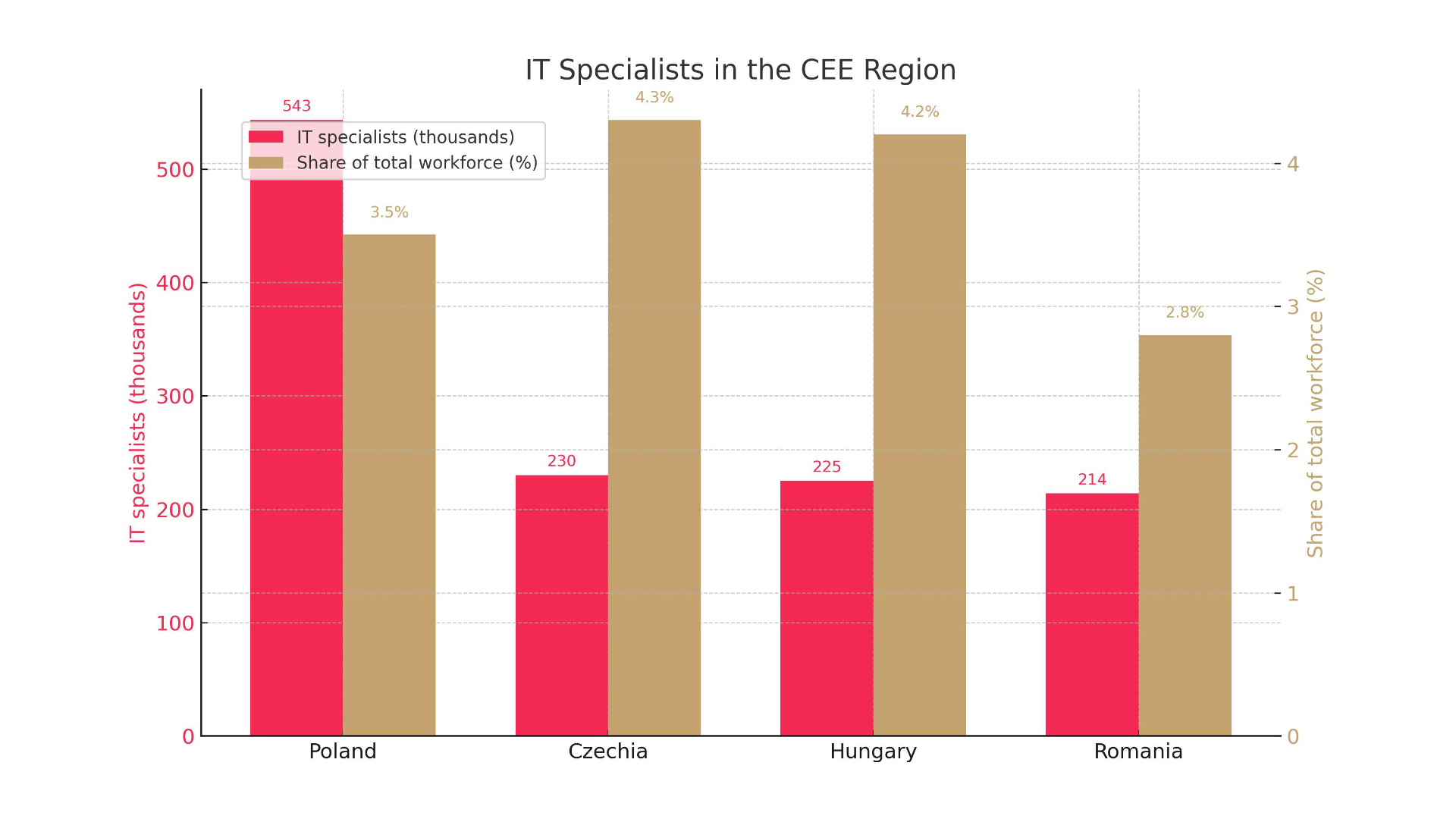
    Poland: a giant with a skills gap: Poland has by far the largest talent pool, estimated at between 493,000 and over 586,000 professionals. This is a powerful asset, but the country is struggling with a significant skills gap. IT professionals account for 3.5% of the total workforce, which is lower than the EU average (4.5%). It is estimated that Poland lacks as many as 147,000 experts to reach the EU average.

    Czech Republic: Hub of specialists: the Czech Republic has a solid base of nearly 230,000 ICT experts, representing 4.3% of the workforce – a figure close to the EU average. Renowned technical universities provide a steady flow of graduates, although they have to compete for talent with the powerful industrial sector.

    Hungary: Stability and qualifications: In Hungary, the share of ICT professionals in employment is 4.2%, also close to the EU average. However, the annual growth rate of these professionals (2.4%) is slower than in the EU (4.3%) , suggesting a stable but less rapidly growing talent pool.

    Romania: The density paradox: Romania has a large and highly valued talent pool of between 202,000 and 226,000 professionals. The country boasts the highest number of certified IT professionals per capita in Europe. Paradoxically, their share of the total workforce is the lowest in the group at just 2.8%. In addition, Romania faces a ‘brain drain’ problem, which poses a serious challenge to keeping top talent in the country.

    This talent flow dynamic is fundamental to long-term development. The phenomenon of ‘brain drain’ in Romania stands in contrast to the ‘brain inflow’ in Poland, which is becoming an attractive place to work for professionals from other countries, including Ukraine.

    An economy that loses talent often exports junior and mid-level professionals, which undermines its ability to create complex, high-margin products locally. In contrast, a country attracting talent can accelerate its march up the value chain by importing experienced experts.

    This indicates that the Polish ecosystem may mature faster, while the Romanian ecosystem, if not reversed, may remain more focused on the provision of outsourcing services.

    Map of Wages: Clash of the four capitals

    Salaries are a key competitive factor in the talent market. A comparison of rates in the region’s main technology hubs reveals significant differences.

    Warsaw bonus: Polish salaries are among the highest in the region. A senior programmer on a B2B contract in Kraków or Warsaw can expect a salary in excess of PLN 26,000 net per month (around EUR 6,000). Even on an employment contract, senior salaries exceed PLN 12,000 net (around EUR 2,800).

    Prague competitiveness: Czech salaries are also very high. The typical range for IT professionals is between CZK 43,130 (approximately EUR 1,730) and CZK 122,874 (approximately EUR 4,930) per month. The best-paid roles, such as Data Scientist, can bring in an annual income of CZK 1.2 million (approximately EUR 48,150). The average annual salary for a software engineer is around EUR 55,600.

    Budapest’s value proposition: Hungarian salaries offer a better cost/quality ratio. The average salary for an IT specialist is around EUR 1,800 per month , while a software engineer in Budapest earns an average of EUR 40,400 per year. This makes Hungary much more affordable to build a team than Poland or the Czech Republic.

    Rising costs in Bucharest: Romanian wages are rising fast, but still offer a cost advantage. The average salary in the technology industry is EUR 3,402 net per month. The general range for IT is between RON 4,647 (approximately EUR 930) and RON 16,879 (approximately EUR 3,390) per month. However, these rates are further bumped up by the total exemption from income tax up to a certain threshold, which significantly increases the net salary.

    The prevalence and high rates of B2B contracts in Poland are not just a billing method, but symptomatic of a mature, highly competitive senior talent market. This model gives maximum flexibility and earning potential to the best professionals, but at the same time creates instability for employers and leads to a more transactional relationship with employees.

    In contrast, the dominance of traditional employment contracts in Hungary and the Czech Republic (83.5% and 67% in IT respectively) suggests a more stable, corporate labour market. This means that companies in Poland need to adopt a different HR strategy, focusing on offering attractive projects and top salaries, while in the Czech Republic and Hungary more emphasis can be placed on long-term career paths and company culture.

    A list of coveted expertise: Who’s on top?

    Across the region, there is a huge demand for specialists in areas such as artificial intelligence and machine learning (AI/ML), data analytics (Data & BI), cyber security and DevOps. It is these roles that are the highest paid.

    However, each country also has its niches in which it has achieved a leadership position. Poland is a global powerhouse in the production of computer games (gamedev), with giants such as CD Projekt RED at the forefront. The industry generates more than EUR 500 million in revenue, creating an ecosystem of talent in game design, programming and graphics that is unique in the region.

    Romania is rapidly developing its own gamedev scene, attracting global players such as Amazon Games, which has opened a new studio in Bucharest. The country is also strong in the Fintech sector, with the capital generating 77% of the industry’s turnover in the country.

    The Czech technology scene fits perfectly with the needs of its industry base, targeting areas such as cyber security (Avast originated from here) and enterprise software. Hungary, on the other hand, with its high adoption rate of cloud and data analytics by corporations, generates a strong demand for data architects, cloud engineers and enterprise systems specialists such as SAP.

    The innovation frontier: start-ups, outsourcing and investment

    The future of any technology market depends on its ability to innovate, attract capital and integrate into the global ecosystem. This section examines the dynamics that are shaping tomorrow’s technology scene in Central and Eastern Europe.

    The vibrant Venturelands: The startup race

    Poland: Leader in terms of volume: Poland boasts the largest startup ecosystem in the group, with more than 1,251 companies. Warsaw is the dominant hub. The ecosystem is mature enough to have released nearly a third of all unicorns (companies with a valuation of more than USD 1 billion) in the CEE region. Funding, however, remains a challenge, with as many as 56% of startups reporting difficulties in obtaining it.

    Czech Republic: An effective rival: Despite its smaller scale, the Czech ecosystem is highly rated, ranking 3rd in Eastern Europe, ahead of Poland. It is famous for startups in the areas of SaaS, Fintech and Healthtech and is the cradle of global success stories such as Avast and unicorns such as Rohlik and Productboard. A key challenge is the perceived lack of a sufficient number of high-quality projects by investors.

    Hungary: a stagnant giant? Hungary has established companies such as Prezi and LogMeIn, but has struggled to maintain momentum in recent years. Total investment has stagnated at around EUR 54 million. Recently, however, there has been an upturn in the segment of early-stage AI-based startups, which could herald a rebound.

    Romania: The unicorn factory: The Romanian ecosystem has been defined by the spectacular success of UiPath, the global leader in process automation (South Africa). This event has put the country on the map for international investors. The AI scene is particularly active, with large funding rounds for companies such as FintechOS. The ecosystem is heavily concentrated in Bucharest.

    The success of UiPath has had a profound secondary impact on the entire Romanian ecosystem. Not only has it created a generation of experienced, wealthy angel investors and serial entrepreneurs (the so-called ‘UiPath mafia’), but it has also acted as a global proof of principle, reducing the perceived risk of investing in Romania in the eyes of international VC funds. This explains the impressive funding rounds for companies such as FintechOS and the general revival around the Romanian scene, which might otherwise seem disproportionate to the size of the market. This ‘unicorn effect’ is a powerful accelerator that allows the ecosystem to perform well above its nominal weight.

    Global background: Strategic partner, not cheap labour

    The entire CEE region is a leading global destination for IT outsourcing. Clients are increasingly shifting their focus from cost optimisation to access to high-end skills, innovation and cultural proximity. The regional talent pool exceeds 1.75 million engineers.

    A stable business environment is a key asset. In the Doing Business 2020 ranking, Poland (40th), the Czech Republic (41st), Hungary (52nd) and Romania (55th) offer predictable conditions, an advantage over other global outsourcing hubs.

    Poland is often recognised as a leader in IT competitiveness in the region thanks to its huge talent pool, business climate and strong exports. It is a major hub for the R&D centres of global giants such as Google and Microsoft.

    The Czech Republic ranks among the top five countries in terms of the attractiveness of outsourcing, renowned for its high quality services and data security.

    Hungary and Romania are attracting investors with their correspondingly low 9 per cent corporate income tax and tax exemptions for programmers, which, combined with a large talent pool, creates a powerful value proposition.

    The strong presence of international R&D centres and outsourcing companies in Poland and the Czech Republic is not just a service industry; it is a key incubator for the country’s startup ecosystem. These centres train local talent to global standards, introduce them to global business practices and create a network of professionals who eventually leave to start their own product companies. A programmer working for five years in Google ‘s Warsaw office learns product management, scaling and international sales at a level not available in most local companies. Such a specialist, armed with unique skills, contacts and an understanding of the needs of the global market, is much more likely to succeed. In this way, the outsourcing sector is not a separate entity, but a fundamental pillar that feeds and accelerates the development of the domestic product and startup economy.

    The role of the state: Catalysts for growth

    The governments of all four countries actively support the technology sector through a variety of initiatives, including tax incentives, funding programmes and startup visas. Key policies, such as Romania’s income tax exemption for software developers or Hungary’s low CIT rate , are important competitive advantages. Poland and the Czech Republic are effectively using EU funds and national development agencies (such as PFR Ventures and CzechInvest) to fuel their innovation ecosystems.

    Verdict: Poland’s position and the way forward

    A synthesis of the data presented makes it possible to formulate a clear verdict on Poland’s position compared to regional rivals and to outline strategic perspectives for the entire region.

    Regional SWOT analysis: Comparative scorecard

    Poland:

    • Strengths: Largest market and talent pool, diverse ecosystem (gamedev, enterprise), strong startup scene.
    • Weaknesses: Significant talent gap, increasing wage pressure, high competition.
    • Opportunities: Inflow of talent from abroad, opportunity to move up the value chain to more complex products.
    • Threats: Loss of cost competitiveness to Romania/Hungary, market saturation in some areas.

    Czech Republic:

    • Strengths: Stable, mature market, highly qualified professionals, strong integration with industry, excellent business environment.
    • Weaknesses: Smaller talent pool, slower growth, higher costs than some neighbours.
    • Opportunities: Leverage the industrial base for innovation within Industry 4.0, become a hub for high-margin R&D centres.
    • Threats: Competition for talent with powerful manufacturing sector, risk of stagnation.

    Hungary:

    • Strengths: Favourable tax environment, high adoption of advanced technologies in companies, strong value proposition.
    • Weaknesses: Stagnation in startup funding, slower growth of talent pool, less dynamic ecosystem.
    • Opportunities: Potential to become a specialised hub for AI and data science solutions for corporations, attracting cost-oriented FDI.
    • Threats: Lagging behind regional leaders in startup innovation, political uncertainty affecting investor confidence.

    Romania:

    • Strengths: Top growth rate, high talent density, significant cost advantages, ‘unicorn effect’ after UiPath success.
    • Weaknesses: Brain drain, less developed domestic market, infrastructure gaps outside major hubs.
    • Opportunities: huge potential in the digitalisation of the country’s SMEs, becoming the gamedev hub of South East Europe.
    • Threats: Talent retention, risk of overheating the economy, dependence on export markets.

    Poland’s position in the CEE arena: Heavyweight champion under pressure

    Poland remains the undisputed leader of the CEE technology scene in terms of scale, talent numbers and diversity of the ecosystem. The size of its market and depth of specialisation, especially in gamedev and enterprise software, are unrivalled.

    However, leadership comes at a price. Poland faces challenges typical of a mature market: intense wage competition that undermines its cost advantage, and a critical skills gap that could stifle future growth. Poland is no longer the ‘low-cost’ option; it is the ‘scale’ option.

    While Poland is leading the way, the competition is not sleeping. Romania challenges it in terms of growth and dynamism, the Czech Republic in terms of stability and specialised quality, and Hungary in terms of cost efficiency for corporate investments.

    Collective strength: The future is regional

    The future of the CEE technology scene will not depend on which country ‘wins’, but on how the region as a whole handles the transformation from a cost-driven outsourcing destination to a value-driven innovation partner. Poland, as the largest player, has a key role to play in leading this change, but its success is inextricably linked to the health and dynamism of its neighbours.

  • Algorithms instead of a glass ball. In 2026, is the purchasing manager’s intuition an anachronism?

    Algorithms instead of a glass ball. In 2026, is the purchasing manager’s intuition an anachronism?

    For years, the ‘nose’ ruled in purchasing departments. It was this famous merchant’s intuition, built up over decades of negotiation, that allowed opportunities to be sensed and reefs to be avoided. Today, however, relying solely on instinct is becoming akin to forecasting the weather from the flight of swallows in the middle of a cyclone.

    According to the latest WEF Risk Report, we have entered an ‘age of competition’ in which threats are colliding with each other at a speed that the human mind cannot process on its own. The statistics are merciless: as many as 99% of experts predict that the coming years will be “turbulent” or even “stormy”. The scenario of calm and stability has become an exoticism reserved for only 1% of the greatest optimists.

    Regulatory changes, cost spikes and staff shortages are hitting supply chains. At the same time, traditional methods are failing. Today, no one asks anymore if there will be disruption – the question is how quickly we will react to it. So clinging to the old school of ‘feeling the market’ is not bravery, but a risky mismatch with reality.

    In order to ride out this storm, we must acknowledge that intuition is not enough today. To navigate effectively, purchasing departments need to swap the glass ball for precision analytics.

    Procurement 4.0 – from Excel to the prediction engine

    Until recently, the purchasing department was seen as a corporate ‘back office’ – a place where the main task was to painstakingly cut costs and keep an eye on invoices. Today, this role is undergoing a major metamorphosis. Procurement is a strategic engine that generates real value for the entire organisation.

    This change did not come from a vacuum. The companies that have coped best with the crises of recent years had one thing in common: they were digitised. It was then that it was understood that supply chain resilience does not depend on luck, but on the quality of the information they have. However, simply collecting data is only half the battle. The real challenge of 2026 is not the lack of information, but its dispersion.

    Most companies have mountains of data, but they are trapped in so-called ‘silos’ – separate sheets and systems that do not talk to each other. Modern procurement acts as a bridge connecting these scattered points. It ensures that the manager is no longer just looking in the rear-view mirror, analysing historical spend in Excel. He or she begins to look through the windscreen, using technology to anticipate upcoming events.

    This is where a new competitive advantage is born. Turning scattered facts into a coherent strategy makes it possible not only to respond to crises, but to stay one step ahead of them. In essence, it is gratifying that technology has ceased to be a luxury – it has become a tool to turn the chaos of uncertainty into measurable risks that can be managed effectively.

    AI – new optics

    Implementing artificial intelligence in purchasing departments can be associated with a technological fad. Nothing could be further from the truth. In 2026, AI is a powerful analytical engine that sees what, to the human eye, remains hidden in a jumble of thousands of tables. It is a digital detective that can connect the dots between scattered data.

    What does this look like in practice? Three areas that redefine the daily work of purchasing departments are key:

    • Predicting demand: AI has stopped looking only in the rear-view mirror. Instead of only analysing historical spending, it models future scenarios. It takes into account market trends, social changes and even weather forecasts, providing precise answers before the question of stock is asked.
    • Supplier risk assessment: Instead of waiting to be informed of counterparty problems, algorithms monitor warning signals in real time. They catch financial fluctuations or geopolitical tensions, allowing you to change your strategy before the supply chain is disrupted.
    • Cycle optimisation: Thanks to the automation of tedious processes and intelligent recommendations, purchasing cycles are shortening dramatically. What used to require days of analysis and dozens of emails now happens almost seamlessly.

    Artificial intelligence integration is the process of turning the chaos of data into a strategic advantage. It allows procurement to stop guessing and start knowing. AI does not replace humans here – it gives them the best possible fuel to make accurate decisions.

    Business cost of delay

    Time in business moves much faster than the pages on the calendar suggest. While 2030 seems like a distant future, the fact is that we will welcome that year in just 14 quarters, and from a technology perspective, that time will pass faster than you might think. The data is inexorable: global investment in artificial intelligence is going into the trillions of dollars. This is not money being spent on futuristic experiments, but real capital being pumped into infrastructure to ensure companies survive in the ‘competitive era’.

    For purchasing managers, the warning signal is clear. Since as many as 80 per cent of leaders in this area consider digital transformation to be their absolute priority, the race for market dominance has long since started. The question is: what about the remaining 20 per cent? For them, the forecasts are harsh. Companies that do not integrate AI and advanced automation into their processes by the end of the decade could collide with an impregnable wall.

    The cost of delay is not just a slightly lower margin. It is the risk of falling out of the loop altogether. Without digital support, purchasing processes will become too slow, too error-prone and simply too expensive compared to competitors who ‘think’ in real time. In 2030, running a large purchasing department without AI support will be akin to trying to send an email using a typewriter. It can be done with sentiment, but the rest of the world will be ahead of us before we have time to put a piece of paper in the drum. Investing in technology today is nothing more than taking out a policy for the future.

    Man in the loop: AI with rules

    Introducing AI into purchasing processes is not a ‘set it and forget it’ project. While algorithms can recalculate millions of scenarios in seconds, humans still need to keep their hand in. Technology devoid of ethics and oversight can become a source of new and unforeseen risks – from misinterpretation of data to lack of transparency with contractors.

    The key to success is to avoid the ‘black box’ syndrome. If the system recommends a sudden change of a key supplier, the manager must understand exactly why. AI in purchasing must be based on trust and accountability. Only then does it become a real support and not a risky dictate of code over common sense.

    What does this mean for the merchant himself? His role is not disappearing, but undergoing a fascinating evolution. He is changing from a person performing repetitive, tedious operations to a strategist and relationship architect. AI is taking over the ‘dirty work’ of analytics, freeing up time to do what a machine (for the time being) can’t: build long-term trust, negotiate creatively and react intuitively in tricky situations.

    At the end of the day, AI won’t go to coffee with a supplier to discuss joint growth plans in uncertain times. The best performers in 2026 are those companies that rely on hybrid intelligence. This is a model where the cool logic of an algorithm provides hard evidence, but it is the human who makes the final decision, taking responsibility for it. In this duo, it is still us holding the baton.

  • Quest goggles will be more expensive. Meta announces increases

    Quest goggles will be more expensive. Meta announces increases

    Mark Zuckerberg has proven over the years that he can burn billions of dollars just to put virtual reality goggles in every American home. That era of aggressively subsidising hardware is now coming to an end. As of 19 April, Meta Platforms is raising the prices of its flagship headsets in the US, a clear sign that market realities and expensive competition for dominance in the artificial intelligence sector are beginning to dictate new terms of play.

    The increases are being felt. The entry-level Quest 3S model with 128GB of memory will become $50 more expensive at $349.99. The premium segment will be hit even harder – the price of the Quest 3 goggles with 512 GB of memory will increase by $100, hitting $599.99. The official reason is the rising cost of components, specifically memory chips. This is the paradox of the current technology boom: the successes of OpenAI, Google or Microsoft in building powerful AI models have led semiconductor manufacturers to prefer to supply components to high-margin data centres rather than consumer electronics.

    Meta is not alone in this battle for resources. Dell and HP have already taken similar steps, and Sony recently announced its second PlayStation 5 console price hike in less than a year. But for the Menlo Park-based giant, the price change has a deeper strategic dimension. Reality Labs, the division responsible for its ambitious plans to build a metaverse, has generated more than $70 billion in operating losses since 2021. With current investor pressure on profitability and the need to fund infrastructure under generative AI, Zuckerberg can no longer afford to subsidise user entry into virtual worlds so generously.

    Recent months at the Met have been a time of belt-tightening in the VR area. The dismissal of 10 per cent of staff in the Reality Labs group and the scaling back of the development of the Horizon Worlds platform show that the company’s priorities have permanently changed. While the Meta name remains a reminder of the fascination with metaverse, the company’s strategy today is almost entirely AI-oriented.

  • Starlink as ‘single point of failure’. Why does the US military have a problem?

    Starlink as ‘single point of failure’. Why does the US military have a problem?

    Last summer, a scene played out off the coast of California that should have kept planners at the Pentagon awake at night. Two dozen unmanned US Navy surface vessels suddenly lost contact with their base, drifting idle for almost an hour. The cause was not a drone software error or hostile jamming, but a global failure of the Starlink network. This incident, revealed in internal documents, sheds new light on the US military’s risky dependence on Elon Musk’s technology on the eve of SpaceX‘s historic IPO.

    SpaceX’s valuation, which is expected to reach $2 trillion this summer, rests on the foundation of almost complete dominance of a niche but crucial infrastructure. With a constellation of nearly 10,000 satellites in low orbit, Starlink has become an indispensable system for the military. It offers a scale and resilience to attacks that traditional providers cannot replicate. However, tests in April 2025 showed that the system has its limits – with heavy data loads from multiple vehicles simultaneously, connectivity becomes unstable.

    For the Pentagon, it is a stalemate situation. On the one hand, Starlink is cheap, widespread and technically years ahead of the competition. On the other, it becomes a ‘single point of failure’ in the national security architecture. The risk is not only technical but also political. Musk’s unpredictability – from the signal cut-off in Ukraine to the controversy over service availability in Taiwan – is causing Democratic lawmakers to warn ever more loudly against putting so much power in the hands of one billionaire.

    Competitors are trying to catch up, as seen with Amazon’s recent $11.6 billion deal to acquire Globalstar. Still, alternatives to SpaceX remain in the promise or niche application phase for now. Experts, such as Bryan Clark of the Hudson Institute, suggest that the military is consciously accepting these weaknesses. In modern warfare, based on autonomy and mass, Starlinek’s ubiquity is too valuable to give up, even at the cost of occasional fleet paralysis.