Tag: IT spending

  • Data centre spending peaks. How is AI driving infrastructure construction?

    Data centre spending peaks. How is AI driving infrastructure construction?

    Market forecasts for the technology sector are rarely so clear-cut. According to the latest data from analyst firm Gartner, global IT spending will reach $6.31 trillion in 2026. This is evidence of a shift in the centre of gravity of global business. The 13.5 per cent year-on-year increase, significantly higher than previous estimates, is a direct result of the artificial intelligence infrastructure arms race.

    A foundation of concrete and silicon: Exploding the data centre sector

    The most glaring point in the report is the dynamics of investment in data centres. Gartner predicts that spending in this segment will grow by 55.8% in 2026, surpassing the $788 billion barrier. To understand the scale of this phenomenon, it is important to look at it through the lens of technological change: we are not dealing with a simple expansion of existing resources, but with a complete reconfiguration of computing architecture.

    Traditional data centres, optimised for data storage and standard business applications, are giving way to HPC facilities. These are designed for the specific requirements of graphics processing units (GPUs) and TPUs, which are at the heart of modern AI. The surge in investment extends not only to the servers themselves, but also to advanced liquid cooling systems, high-density power infrastructure and enabling technologies, without which scaling large-scale language models (LLMs) would be impossible.

    In parallel, the IT services segment, infrastructure deployments and the IaaS model will generate a turnover of $1.87 trillion. This suggests that the market is ripe for consuming computing power in a hybrid model, where physical infrastructure goes hand in hand with specialised management.

    The dominance of hyperscalers: The computing oligopoly

    A phenomenon of a structural nature is the increasing concentration of computing power in the hands of a few players. By 2031, hyperscalers – mainly Microsoft, Google (Alphabet) and AWS (Amazon) – are forecast to control as much as 67% of global data centre capacity.

    This year alone, these three giants plan to spend more than $500 billion on capital expenditure related to AI infrastructure. Such gigantic outlays create a barrier to entry almost impossible for new players to overcome. For businesses, this means that they have to strategically choose a cloud provider that de facto becomes a partner in delivering a data-driven competitive advantage.

    We are also seeing a new geopolitical map of IT investment. Microsoft’s $25 billion investment in Australia or Meta’s construction of the world’s 32nd data centre show that the availability of stable energy sources and space is becoming more important than proximity to traditional business clusters.

    Strategic alliances and supply chain

    Analysis of recent market deals sheds light on the direction in which the industry is heading. Anthropic’s agreements with Google and Broadcom to supply TPU (Tensor Processing Unit) power from 2027 onwards point to the growing importance of proprietary chips to make the giants independent of the dominance of third-party processor suppliers.

    Even the biggest players need flexibility and specialised GPU cloud providers to cope with surges in computing power demand, as evidenced by Meta’s $21 billion partnership with CoreWeave. The biggest profits will be generated not by the AI developers themselves, but by the companies supplying the ‘components’ of this revolution – from accelerator manufacturers to power suppliers.

    Market insights for business

    In the context of the upcoming 2026 Investment Summit, business leaders should consider three key lessons:

    1. Infrastructure as a bottleneck: A 55.8% increase in spending on data centres suggests that access to computing power may become a scarce commodity. Companies planning large-scale AI deployments need to secure infrastructure resources in advance to avoid product development downtime.
    2. The need for cost optimisation: With IT spending reaching $6 trillion, efficiency becomes key. The shift from generic cloud solutions to AI-optimised infrastructure (such as IaaS supported by TPUs/GPUs) will determine the margins of digital projects.
    3. A new ecosystem of suppliers: Companies such as Broadcom and CoreWeave are worth watching. They represent a new category of technology partners who, through specialisation, are able to provide the components needed to scale AI faster and cheaper than traditional hardware suppliers.

  • The hangover from euphoria, or how AI agents can blow through a year’s budget in a few hours

    The hangover from euphoria, or how AI agents can blow through a year’s budget in a few hours

    Not so long ago, artificial intelligence was supposed to be the ‘ultimate solution’ to productivity problems – a digital alchemist turning empty process flows into pure efficiency gold. The ball was in full swing and the champagne was pouring from the presentations of the models promised by suppliers.

    Today, however, instead of more breakthroughs in machine reasoning, something far less spectacular is whispered about in the corridors of business conferences: the happiness bill. For it turns out that the ticket of admission to the world of AI was not a one-off fee, but a dynamic, hard-to-tame subscription for the future, the cost of which can rise exponentially overnight.

    What we are witnessing is the birth of ‘token fever’. It’s a state where the enthusiasm of engineers collides with the dismay of CFOs. For decades, we have been accustomed to the SaaS model – predictable, fixed licence fees that were easy to budget for. Generative AI has shattered this order, introducing a ‘probabilistic’ model. Here, a mistake in one agent’s logic or an overly effusive prompt can burn up financial resources faster than traditional cloud infrastructure consumes electricity.

    Uber and a mistake worth billions

    If the tech industry was looking for the ‘canary in the coal mine’, it found it in San Francisco in April 2026. At the IA HumanX conference, Praveen Neppalli Naga, Uber’s CTO, gave a speech that sobered even the biggest optimists. The giant, which had invested an astronomical $3.4 billion in research and development in 2025, faced a wall: its annual budget for artificial intelligence had evaporated in just four months.

    It wasn’t a matter of one misguided investment decision, but a side effect of an engineering fantasy with no brakes. Uber, aiming for aggressive technology adoption, encouraged its developers to use agents like Claude Code en masse. The result? 11% of back-end code was already being generated by artificial intelligence, but the price for this ‘efficiency’ proved deadly. Without proper performance filters and oversight of token consumption, AI ceased to be a lever for savings and became an out-of-control spending engine.

    The case of Uber is a classic example of a ‘tsunami of tokens’. Autonomous agents, entering infinite iteration loops with no clear limits, can burn a fortune in the time it takes to drink an espresso. It’s a painful lesson for any CIO: innovation without financial architecture is just a very expensive hobby. Naga admitted that the company had to go back to the design table to completely redefine its strategy. Any company that deploys AI today without a rigorous profitability analysis risks having its success measured not by margin growth, but by the speed with which it exhausts its own resources.

    Goodbye SaaS, hello volatility

    We are bidding farewell to an era where the IT budget was like a fixed Netflix subscription – predictable, secure and giving a false sense of control. For years, the SaaS model accustomed us to per-user licensing, where the only risk was a surplus of accounts that no one used. Generative AI brutally ends this period of ‘licensing peace of mind’ by introducing a billing model that is more akin to electricity bills during an energy crisis than traditional software.

    The shift from fixed costs to variable costs is a fundamental paradigm shift. In 2024, IT departments were buying AI access in a lump sum. Today, in 2026, vendors such as OpenAI and Anthropic have eliminated unlimited Enterprise plans, introducing dynamic billing for token consumption. The reason is mundane: AI agents have destroyed the distribution curve on which the old business was based. The subscription model only worked when the ‘lec’ users subsidised the ‘intensive’ ones. One, when we started employing autonomous agents, the differences became absurd. Analyses show cases where a user paying $100 a month generated costs of $5,600 in a single billing cycle. A subsidy ratio of 25 to 1 is a straightforward path to supplier bankruptcy, hence the sharp turn towards ‘use-pay’ billing.

    This makes IT spending probabilistic. This radically differentiates AI from the traditional cloud. A forgotten server in AWS generates a fixed, linear cost. A poorly designed prompt or agent without iteration limits, on the other hand, can go into a loop and generate millions of useless tokens in seconds. In this new world, a programmer’s logical error doesn’t end up ‘crashing’ the application – it ends up draining the company account at the speed of light. This means an immediate redesign of IT finance and the abandonment of rigid budget frameworks in favour of flexible management of the ‘economics of inference’.

    Tsunami of tokens – a new unit of risk

    In the modern CIO’s dictionary, a new, much more predatory term has emerged alongside ‘technical debt’: the ‘token tsunami’. This is a phenomenon in which autonomous agents, rather than freeing up staff time, fall into loops of endless iterations, burning up budgets with the intensity of a steel mill. The problem is that a bot, unlike a human, never feels fatigue or shame for duplicating mistakes – it simply consumes resources until it encounters a hard limit or empties its account.

    The scale of the problem is such that even the biggest players have had to revise their dogmas. Gartner is sounding the alarm: by the end of 2027, up to 40% of agent-based AI projects will be cancelled. The reason? Not a lack of vision, but brutal mathematics – rising costs while lacking precise tools to measure real business value.

    Here is where the biggest paradox of 2026 manifests itself: the unit price per token is steadily falling, but the total bill is rising. Indeed, AI agents consume between 5 and even 30 times more units per task than a standard chatbot. This is a classic trap of scale – an efficiency that becomes economically inefficient by its sheer volume. If your AI strategy is based solely on the hope that ‘models will be cheaper’, you’re just building a castle in the sand that the coming tsunami will wash away in one billing cycle. Without rigorous control over what machines process and why, modern IT becomes hostage to its own unbridled computing power.

    AI FinOps – the new alchemy of IT finance

    If you thought Cloud FinOps was challenging, get ready for a no-holds-barred ride. Traditional cloud optimisation was about simple craftsmanship: shutting down unused servers and keeping an eye on instance reservations. AI FinOps is a completely different discipline – it’s probabilistic rather than deterministic resource management. Here, the unit of expenditure is no longer processor man-hours, but the cost of a useful response relative to the cost of an erroneous or ‘hallucinated’ response.

    In 2026, as many as 98% of FinOps teams consider spending on AI as their number one priority. The reason is simple: in the traditional cloud, a technical error rarely leads to an exponential increase in cost. In the world of AI agents, misconfigured prompt logic can burn through budgets faster than you can refresh your dashboard. This is forcing IT leaders to define a new metric – the economics of inference. We no longer count how much a model costs us, but how much the operational success gained from its work costs us.

    And that means rewriting dashboards from scratch. Classic management frameworks such as ITIL 4 or COBIT, while providing a solid base, today require immediate extensions to include prompt lifecycle management or agent iteration limits. AI FinOps is not just about Excel tables; it is a new management philosophy where an engineer must think like an economist and a financier must understand LLM architecture. Without this synergy, buying tokens is akin to pouring rocket fuel into a hole in the tank – the effect is spectacular, but extremely short-lived and frighteningly expensive.

    How not to burn through a decade of innovation

    The time window for non-punitive errors has just slammed shut. To avoid a ‘token tsunami’, organisations need to move from a phase of joyful adaptation to a phase of rigorous architecture. The first and most pressing step is to conduct a token consumption audit – not a general one, but a precise one, broken down by specific teams and use cases. When a query to a model can cost as much as a good cup of coffee, we need to know who is ordering a double espresso without a clear business need.

    The key to financial survival is the implementation of three technical foundations:

    • RAG (Retrieval-Augmented Generation): Providing the model with only the data it actually needs, drastically reducing the token ‘diet’.
    • Specialist models: Abandoning the ‘all-knowing’ giants in favour of smaller, cheaper and finely-trained models for repetitive tasks.
    • Corporate charter for the bot: Establish rigid iteration limits and budgets per agent. This is a matter of elementary financial hygiene.

    We also need to review how our people work with the technology. Identifying the ‘Centaurs’ (experts empowering their AI skills) and eliminating the ‘Automators’ (unreflectively delegating work to a machine) will allow a real increase in ROI. The most expensive and fastest way to waste an innovation budget is to buy millions of tokens just to have teams working exactly as they will in 2022, only with an on-screen chat interface.


  • CFO: 30% of cloud spend is wasteful. How do you get your AI budget back?

    CFO: 30% of cloud spend is wasteful. How do you get your AI budget back?

    For the past decade, migration to the cloud has been synonymous with modernity and inevitability for managements. The promise was simple: flexibility, scalability and – ultimately – cost savings. Today, however, as the enthusiasm for digital transformation clashes with the hard reality of bills from providers such as AWS and Azure, the tone of conversation in finance cabinets is changing radically.

    A picture of growing frustration is emerging from Azul ‘s latest report, with chief financial officers (CFOs) beginning to see the cloud not as an unlimited resource, but as a strategic financial risk that requires top-level intervention.

    The scale of the problem is difficult to ignore. As many as 69% of CFOs admit that between 10% and up to 30% of their spending on cloud infrastructure is pure waste. This means billions leaking through their fingers due to inefficient architecture, unused instances or errors in demand forecasting.

    This is no longer an operational issue that can be delegated to the DevOps department. It’s a structural problem that directly hits the margins and profitability of businesses.

    The timing of this sobering development is no coincidence. The surge in interest in artificial intelligence has dramatically increased demand for computing power, which in turn has pushed up cloud invoices to levels that were not anticipated by last year’s forecasts.

    Nearly 90 per cent of the finance leaders surveyed indicate that infrastructure costs in their organisations are steadily increasing, and for two-thirds of them, oversight of these expenses has become a standing item on the board’s agenda.

    In this new landscape, cloud cost optimisation is no longer seen as ‘belt-tightening’. Instead, it is becoming a strategic lever. CFOs such as Azul’s Scott Sellers note that recouping wasted resources is the fastest way to fund AI innovation.

    In a period of high market volatility, where capital is more expensive than it was a few years ago, companies cannot count on unlimited increases in budgets. They have to look for money within their own structures. For 45% of finance managers, the overriding goal of optimisation is precisely to increase budget flexibility to allow digital projects to be implemented without jeopardising the financial stability of the company.

    The main obstacle, however, remains a lack of transparency. Modern cloud environments are so complex that pinpointing who is spending money in real time, and on what, borders on the miraculous. This ‘technological fog’ makes demand forecasting a guessing game.

    But for finance leaders, whose performance is increasingly linked to operational efficiency, the status quo is unacceptable. 42% of respondents explicitly indicate that margin improvement today depends directly on how efficiently an organisation manages its resources in the cloud.

    The message coming from the market is clear: the period of carefree scaling at any cost is over. We are entering an era of cloud maturity in which those companies that can combine technological ambition with ruthless financial discipline will win.

    The cloud, once seen as an escape from fixed costs, has itself become a burden that, if not properly managed, could slow down the next wave of innovation.

  • The great reallocation in IT: analysis of a $5.7 trillion market

    The great reallocation in IT: analysis of a $5.7 trillion market

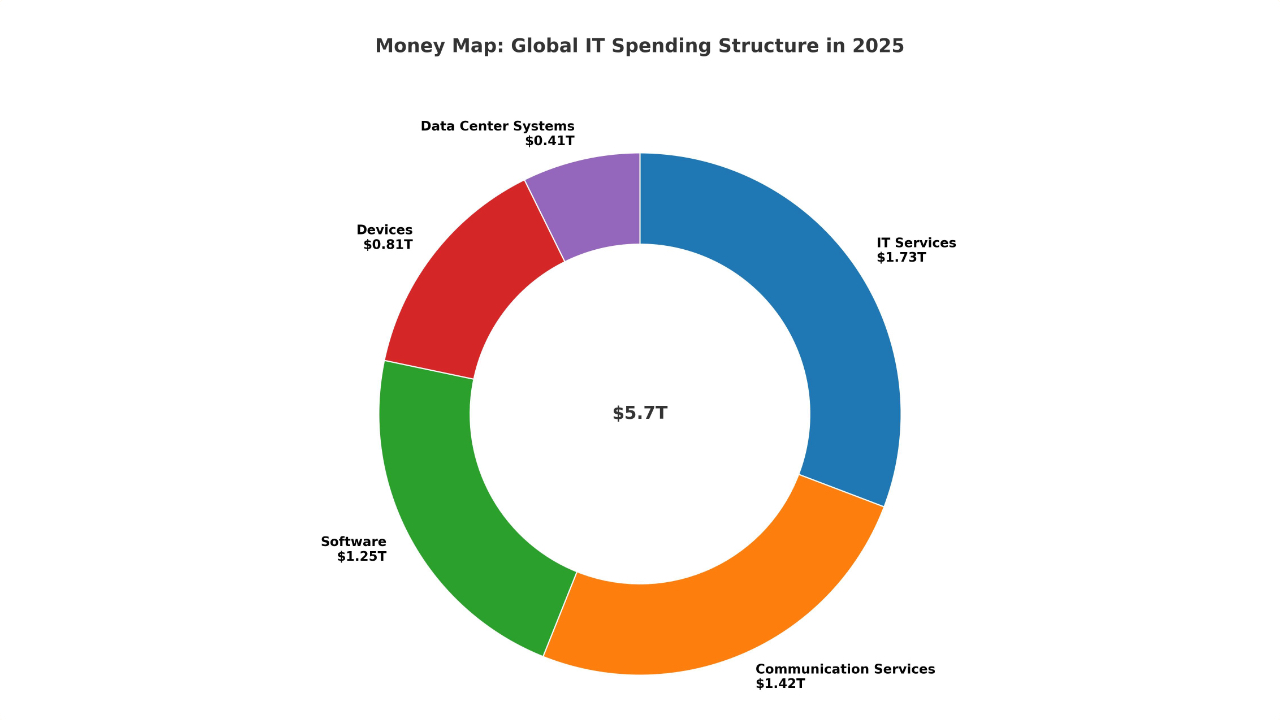
    The global IT market is on the verge of an unprecedented boom. Leading analyst firms such as Gartner forecast that global IT spending will reach an astronomical $5.7 trillion in 2025, an impressive increase of more than 9% from 2024.

    Other forecasts, although differing in detail, agree on one thing: we are witnessing a historic influx of capital into the technology sector. However, to stop at this headline figure would be a mistake. The amount itself, while impressive, is merely a facade for a much deeper and more fundamental transformation.

    The story that this money tells is not about simple growth, but about a strategic and rapid reorientation of global business.

    The real story lies in the asymmetry of this growth. While the overall market is growing by around 9%, some segments are exploding. Spending on data centre systems is set to grow by a staggering 23.2% and on software by 14.2%.

    Communication services, on the other hand, will see a much more modest increase of just 3.8% . This disproportion is no accident. It is evidence of a conscious, strategic business decision that can be called the ‘Great Reallocation’ of capital.

    Companies are not just spending more; they are actively shifting resources from one area to another, de-prioritising maintenance of the status quo in favour of aggressive investment in intelligence and services.

    IT budgets in 2025 are not just bigger – they are smarter, more focused and ruthlessly geared towards a future where software and artificial intelligence are no longer support tools, but the very heart of value creation.

    The AI gold rush: from grand experimentation to pragmatic integration

    The undisputed driver of spending in 2025 is generative artificial intelligence (GenAI). It is the epicentre of the ‘Great Reallocation’, attracting capital at a scale that is redefining investment priorities around the world.

    The physical manifestation of this gold rush is a monumental expansion of infrastructure. Spending on AI-optimised servers is forecast to reach $202 billion by 2025, doubling spending on traditional servers.

    The entire data centre systems segment is expected to grow by the aforementioned 23.2 per cent as a direct result of the demand for computing power required to train and deploy advanced AI models .

    At the forefront of this boom are the hyperscalers – cloud giants such as Amazon Web Services, Microsoft Azure and Google Cloud. These companies, along with IT service providers, will account for more than 70% of all IT spending in 2025. Their role is evolving.

    They are no longer just infrastructure-as-a-service (IaaS) providers; they are becoming the foundation of a new, oligopolistic market for AI models.

    At the same time, the market is maturing at an extremely fast pace. The phase of unrestricted, often chaotic experiments with AI inside companies is coming to an end. Many companies have bumped into a wall: the capital and operational costs of creating their own models have turned out to be much higher than expected, the skills gaps in the teams have been too large, and the return on investment (ROI) from pilot programmes has been disappointing.

    As a result, a key change in strategy is taking place: a shift from an expensive ‘build’ model to a pragmatic ‘buy’ model. IT directors are no longer creating GenAI tools from scratch; instead, they are buying off-the-shelf functionality that software providers build into existing platforms.

    The market is entering a phase that Gartner refers to as the ‘bottom of disillusionment’ (trough of disillusionment) . Paradoxically, this does not mean a decline in spending, only a decline in unrealistic expectations.

    Companies are moving away from chasing revolutionary breakthroughs to practical applications of AI that increase employee productivity, automate processes and give real competitive advantage.

    Software-defined economics: how your car explains the future of business

    The spectacular growth in spending on software (+14.2%) and IT services (+9%) is the strongest signal yet that we are witnessing the birth of a new economic paradigm . You don’t have to look far to understand its essence – just look at the transformation taking place in the automotive industry.

    The Software-Defined Vehicle (SDV) model is an excellent, tangible case study that illustrates how physical products are transformed into platforms for delivering high-margin, cyclical digital services.

    The SDV revolution is the fundamental separation of the hardware layer from the software layer in the vehicle. This allows carmakers to deploy new features and enhancements continuously, via Over-The-Air (OTA) wireless updates, without having to physically interfere with the car.

    This completely changes the nature of the product. The car ceases to be an asset whose value diminishes over time and becomes a dynamic platform capable of generating revenue throughout its life cycle.

    Manufacturers are already experimenting with new business models: BMW is testing subscriptions for heated seats and Volkswagen plans to offer autonomous driving features in a pay-as-you-go model.

    However, this trend is not limited to automotive. It is a leading indicator of the universal transformation of business models. The entire software market is moving towards subscription and Software-as-a-Service (SaaS) models.

    Software is the fastest growing technology sector and is predicted to account for 60% of global technology spending growth by 2029 . This confirms that the SDV model heralds a broader shift in which the boundaries between product and service are blurring.

    In this new economy, the IT department, traditionally seen as a cost centre, is being promoted to the role of central value creator.

    The chief information officer (CIO) and chief technology officer (CTO) become key figures in the product strategy, and their expertise is essential to the creation of the company’s core product.

    Professional 2025: shaping a modern IT skill set

    Technological and business transformation is having a profound impact on the labour market, reshaping the demand for skills. To succeed in this dynamic environment, IT professionals need to develop a hybrid skill set, combining deep technical knowledge with sustainable ‘soft’ skills.

    The analysis of the labour market for 2025 leaves no doubt: the most sought-after professions are almost entirely technology-related. At the top of the lists are AI and machine learning specialists, data analysts and cyber security analysts.

    Demand for cyber security professionals alone is forecast to increase by 33% between 2023 and 2033, with artificial intelligence, data analytics, cloud computing and programming, with a particular focus on the Python language, dominating among the key technical skills employers are looking for.

    However, technical proficiency alone is no longer sufficient. As AI takes on more and more analytical tasks, the value of skills that machines cannot easily replicate increases.

    Employers are increasingly prioritising abilities such as analytical and creative thinking, complex problem solving, emotional intelligence and adaptability.

    Artificial intelligence will certainly lead to a displacement of the labour market. It is estimated that AI could automate up to a quarter of job tasks in the US and Europe, especially routine tasks such as basic programming or customer service.

    However, the dominant expert narrative does not focus on mass unemployment, but on the transformation of work. AI is not so much eliminating occupations as redefining them, creating new, often more strategic roles. In this new occupational landscape, the ‘half-life of technological skills’ is now less than five years .

    This means that continuous learning agility is becoming the most important meta-skill. The future of work is not about competition between humans and AI, but about their symbiosis.

    The most effective professionals are those who master the art of using AI as a collaborative partner to enhance their own creativity and productivity.

    Navigating the next wave of IT transformation

    Analysis of global IT spending trends for 2025 clearly shows that we are witnessing profound, structural changes. We are seeing a shift from spending more to spending smarter, and the AI market is maturing, moving from building to integrating off-the-shelf solutions.

    At the same time, business models are evolving from selling products to selling services, forcing a transformation in the labour market – from static roles to dynamic skills.

  • IT spending in Poland: Why do companies spend more than they planned?

    IT spending in Poland: Why do companies spend more than they planned?

    In many companies, investment in new technologies is no longer a rigidly planned budget item. Increasingly, companies are increasing their IT spending already during project implementation. Polcom’s report ‘Barometer of the digital transformation of Polish business 2025-2026’ shows that 46 per cent of companies completed all planned IT projects in 2024, and 19 per cent of companies spent more on technology than they originally planned. These figures show that technology is increasingly being treated as an area of investment that can be scaled with growing business needs.

    Technology projects are becoming budget flexible

    Until a few years ago, IT projects were usually carried out within predetermined budgets. Today, more and more companies are taking a more flexible approach to technology investments. If the implemented solutions bring the expected results – improving operational efficiency, increasing security or enabling the development of new services – companies are prepared to increase expenditure during the course of the projects.

    – Just a few years ago, IT projects were often the first area in which companies looked for savings during an economic downturn. Today, the situation has reversed – technology is treated as a tool for stabilising business and increasing its resilience, which is why budgets in this area are more often increasing than decreasing, says Anna Kulikowska, Director of the Sales Department at Polcom.

    Technology goes to the heart of business decisions

    The change in approach to funding technology projects is due to the growing role of IT in the functioning of businesses. Investments in cloud computing, artificial intelligence, automation or cyber security are increasingly having a direct impact on the way companies operate, their efficiency and their ability to compete in the market.

    – In many organisations today, technology investment decisions are made at board level, not just in IT departments. This shows that technology has ceased to be solely an operational back office and is directly influencing the business model and growth rate of companies, Kulikowska emphasises.

    The largest proportion of technology investment by companies is currently focused on the areas of IT infrastructure and cyber security. The Polcom survey shows that 93 per cent of companies are investing in IT infrastructure management, security and business continuity of systems. The high level of these investments is due to the growing number of cyber threats, but also to the fact that an increasing proportion of business processes are based on digital systems.

    AI and the cloud are changing the structure of technology spending

    Companies are also increasingly investing in technologies related to data analytics and process automation. The report shows that 91 per cent of companies are using solutions related to cyber security and infrastructure monitoring, 89 per cent are maintaining their own IT resources, 67 per cent are using the cloud, 60 per cent are implementing solutions based on artificial intelligence and 49 per cent are using Big Data and advanced data analytics technologies.

    – Artificial intelligence is beginning to change the way IT infrastructure is designed. Companies need environments that are more scalable, flexible and prepared to process large volumes of data. This is causing investments in cloud and analytics platforms to grow in parallel, adds the Polcom expert .

    The increase in business investment in technology is part of a global trend of increased IT and ICT spending. According to a forecast by IDC, global business spending on IT and telecommunications technology could reach around US$4 trillion by 2026. One of the most important drivers of this growth is the development of artificial intelligence, which is moving from the experimental phase to widespread business deployments. Alongside this, demand for computing infrastructure, data platforms and cloud services is growing.


    Source: Polcom

  • Two-speed IT spending. AI is eating traditional IT

    Two-speed IT spending. AI is eating traditional IT

    We are witnessing a profound polarisation of the technology market

    On the one hand, we are seeing segments with exponential growth. Huge investments are flowing towards building specialised computing centres for artificial intelligence. These are driven by strategic pressure and fear of losing competitiveness.

    On the other hand, fundamental business systems and industry applications are in a zone of pronounced caution. Their development is hampered by a period of business uncertainty and the exhaustion of the organisation with constant change.

    The problem is that the industry is investing heavily in building powerful computing engines, but neglecting to modernise the operating systems that would make effective use of this power.

    Mass computing power

    There is no doubt what is catalysing the rapid growth. Gartner is straightforward about the competition to build AIyinfrastructure and the growing demand for AI-optimised servers. This is reactive action, not just calm, strategic planning.

    This dynamic is being driven by the powerful narrative of a new industrial revolution requiring dedicated computing power. This is redefining perceptions of IT spending – it is no longer an operating expense, but is becoming a strategic investment of the magnitude of building a key industrial infrastructure.

    Moreover, Gartner rightly points out that growth in demand for servers remains constrained by insufficient supply. This market situation inevitably leads to behaviour dictated by concerns about resource availability. Organisations are buying computing power not only because they have an immediate plan to use it, but also because they fear losing access to it in the future.

    This is confirmed by analysts. Their comments suggest that current spending on generative AI is mainly coming from technology companies building the infrastructure itself. The foundations are being laid, but what about the building to stand on them?

    2025 Expenditure2025 Growth (%)2026 Expenditure2026 Growth (%)
    Data centre systems489 45146,8582 44619
    Equipment783 1578,4836 2756,8
    Software1 244 30811,91 433 03715,2
    IT services1 719 3406,51 869 2698,7
    Communication services1 304 1653,81 363 0584,5
    General IT5 540 421106 084 0859,8

    Stagnation

    This is where we arrive at the second, slower sphere of the market, where there is a completely different business climate.

    The Gartner report, the starting point of our analysis, is unequivocal on this point: growth in spending on software and services is not recovering at the same rate. In particular, industry-specific software – i.e. key systems that manage finance, logistics or production – is the most sensitive to economic fluctuations and political uncertainty.

    We are faced with a fundamental paradox: management is prepared to approve a multi-million pound investment in GPU clusters, but at the same time postpones the decision to upgrade an ageing ERP or CRM system.

    How is this possible? The answer lies in the redistribution of resources and human factors.

    Firstly, IT budgets are not unlimited. Other market analyses indicate that the projected growth in total IT budgets for 2025 is modest, often ranking below the historical average. So if AI spending is growing exponentially, and the overall budget is growing linearly, this must mean that AI investments are eating up resources at the expense of other projects.

    Secondly, there is decision-making marasm in organisations. After years of intensive digital transformation, necessitated by the pandemic, managers show less willingness to embark on further complex, multi-year modernisation projects.

    The syndrome of disappointed expectations

    This growing gap between the pace of infrastructure investment and the readiness of business applications leads us straight into a trap. It’s a scenario where initial enthusiasm collides with the hard realities of implementation, leading to deep disappointment.

    Many organisations may soon be faced with having state-of-the-art AI centres idling. The reason is simple: artificial intelligence algorithms require fuel in the form of high-quality, structured data. This data, on the other hand, is very often stuck in outdated, monolithic legacy systems – the very ones in the stagnant area.

    AI to optimise the supply chain? A great idea, provided logistics systems provide real-time data. AI is to personalise customer interactions? A modern, integrated CRM system is essential for this.

    Analysts, commenting on the PC market, note that new AI-ready PCs do not yet have the key applications that would justify replacing the hardware. The same principle, albeit on a much larger scale, applies to data centres. We are building infrastructure for applications that have not yet been developed, while neglecting to upgrade the systems that are essential to their operation.

    Strategy = integration

    This dual model of the IT market is inefficient in the long term and has high strategic risks. In 2026, the competitive advantage will not be built by those organisations that merely amassed the most computing power. The winners will be those who have been able to deeply and strategically integrate it into their core business processes.

    This means that the biggest challenge for IT directors today is not the technology purchase itself. It is ensuring investment consistency.

    The role of the CIO is evolving. From a technology manager, it is becoming a key strategist, responsible for synchronising rapid infrastructure development with the necessary modernisation of business foundations.

    If this synchronisation does not happen, the projected $6 trillion, rather than a testament to a revolution, will become a monument to a global investment in potential that has never been fully realised.

  • How do you effectively manage AI costs in the cloud? The answer is FinOps

    How do you effectively manage AI costs in the cloud? The answer is FinOps

    There is a new gold rush in the world of technology, and its name is Artificial Intelligence. Every organisation, from a startup to a global corporation, wants to implement its predictive models, intelligent chatbots and recommendation systems.

    The public cloud, with its promise of infinite scalability and flexibility, seems the ideal place to realise these ambitions. AI is the ticket to innovation and gaining competitive advantage. Enthusiasm reigns and the possibilities seem endless. And then comes the bill.

    Suddenly, the promise of a revolution turns into a headache for IT and finance departments. It turns out that training advanced models and handling millions of queries in real time generates costs that can surprise even the most experienced managers.

    This scenario is becoming increasingly common. For artificial intelligence to become a true friend of business and not a financial nightmare, it needs a strategic partner. That partner is FinOps – the culture and practice of cloud-aware financial management that reconciles innovation with profitability.

    Appetite grows, and with it the bills

    AI has long ceased to be the domain of experiments in laboratories. It is a powerful business tool in which companies are investing huge resources. It is no surprise that more than 40 per cent of IT budgets are now being spent on expanding cloud capabilities, mainly to handle AI workloads.

    Technology leaders are well aware of the challenge ahead, with almost as many (40%) specifically citing artificial intelligence as one of the main factors that will drive up IT costs over the next three years.

    The problem is that AI costs are not linear. They consist of powerful and expensive graphics processing units (GPUs), the transfer and storage of gigantic data sets and the constant running of models in production mode. This complexity overlaps with the already existing problem of controlling expenditure in the cloud.

    With almost all (94%) IT leaders admitting they face challenges in optimising cloud costs, and nearly half (44%) of organisations having limited visibility into their spend, adding resource-intensive AI to the equation is a simple recipe for financial disaster.

    Unforeseen cost spikes are becoming the norm rather than the exception.

    To the rescue of FinOps: The cost charmer in the age of AI

    This is when FinOps enters the scene. It’s much more than just cost monitoring tools. It is a cultural shift that builds bridges between technology, finance and business teams. It aims to instil shared responsibility for spending in the cloud, where every engineer and developer understands the financial implications of their decisions.

    In the context of artificial intelligence, the role of FinOps becomes crucial and covers three main areas:

    • Forecasting: Rather than acting blindly, FinOps practices allow you to estimate the costs of AI projects before they even take off. This enables informed decisions to be made about whether a project makes business sense.
    • Continuous optimisation: FinOps teams act as personal trainers for the cloud infrastructure. They identify unused or oversized resources, help select the right machine instances and take care of cost “hygiene” on a daily basis.
    • Allocating and measuring value: FinOps allows every dollar spent on the cloud to be precisely allocated to a specific product, project or department. This allows the business to finally answer the fundamental question: is our investment in AI actually paying off?

    The technological ‘power couple’ in practice

    What does AI and FinOps collaboration look like in action? Let’s imagine a few scenarios. A data science team wants to train a new complex model. Instead of running the most expensive GPU instances on-demand, thanks to FinOps they can schedule this process for overnight hours, using much cheaper spot instances.

    Another example is a model that supports recommendations in an online shop. Instead of maintaining full computing power 24/7, the systems automatically scale during peak hours and almost shut down at night, generating huge savings.

    The most important aspect, however, is to link costs to real business value. With FinOps, a company can see that although the new recommendation model costs 20% more, it has simultaneously increased conversions by 35%. This turns the discussion about costs into a conversation about a strategic, measurable investment.

    Sustainable innovation

    Investing in AI without a solid FinOps foundation is like sailing on a rough ocean without a map and compass – an exciting but extremely risky expedition. Combining the power of AI with informed financial management is today’s new standard for creating sustainable and profitable innovations.

    It is through this approach that artificial intelligence can fully realise its promise and become a reliable best friend in the development of any organisation.

  • Optimising IT budgets in 2025 – how companies are regaining control of costs

    Optimising IT budgets in 2025 – how companies are regaining control of costs

    Rising technology costs are becoming one of the biggest challenges for IT departments in 2025. Organisations – regardless of industry – are facing efficiency pressures while maintaining service availability and quality. More and more managers are coming to the conclusion that optimisation is not just about cuts, but about managing resources wisely. In the area of software, this means taking a closer look at what employees actually use and what is an unnecessary burden on the budget.

    Trends in IT cost optimisation

    Three approaches to controlling technology spending come to the fore in 2025.

    Firstly, companies are focusing on consolidating IT tools and services. In practice, this means moving away from redundant applications and choosing solutions that combine multiple functions. Well-planned consolidation reduces the number of licence agreements, simplifies management and reduces training or integration costs.

    Secondly, renegotiating contracts with suppliers is becoming increasingly popular. Organisations are reviewing their real needs vis-à-vis services and products that have often been bought in excess or for stock. This is particularly important with long-term contracts, where ‘hidden’ costs can build up over years.

    The third trend is the automation of processes – from user support to infrastructure management. Artificial intelligence-supported tools help IT departments diagnose problems faster, reduce time-consuming administrative tasks and allow better forecasting of resource requirements.

    Against this backdrop, the importance of software lifecycle and licence management is also becoming increasingly clear. This is an area where companies can find hidden financial reserves without sacrificing quality or functionality.

    The most common organisational mistakes

    Although many companies claim to have control procedures in place, in practice licence management is sometimes fragmented. The most common errors are:

    • unused licences that remain in the budget even though employees do not use them,
    • overlapping subscriptions when different departments buy similar solutions in several variants,
    • lack of audits to uncover excess costs and verify the legitimacy of products held.

    As a result, there is a growing scale of so-called software waste, which analysts estimate can reach from a dozen to even tens of per cent of the IT budget in medium and large organisations.

    Experts emphasise that a responsible approach to licensing allows a significant proportion of expenditure to be recovered. Jakub Sulak, CEO of Forscope – the largest software broker in Central and Eastern Europe – points out that the problem of unused resources is widespread.

    “Many companies still fail to recognise how much of a burden unused or mismanaged licences are on their budgets. Meanwhile, all it takes is an audit, proper allocation of existing resources, and consolidation of subscriptions to unlock hidden savings and allocate resources for growth. With the support of an experienced partner, costs can be reduced by up to 70%, without losing functionality or quality of service.” – says Jakub Sulak, CEO of Forscope

    This approach allows companies not only to reduce current expenditure, but also to prepare for the years ahead, when technology will generate increasing financial needs.

    Compliance as a foundation

    A second, equally important aspect is legal compliance. Many organisations – especially under cost pressures – can be tempted by quick but risky solutions. As Jakub Sulak notes:

    “Seemingly quick fixes, such as using illegal software, often lead to costly problems and downtime. Only verified licences, backed up by complete documentation, provide a guarantee of security and reliability, and the savings achieved are real and sustainable in the long term thanks to them.”

    The risk of using illegal or poorly documented software can translate not only into financial sanctions, but also loss of reputation and customer trust. In the age of the digital economy, where data and security are a key value, compliance is becoming one of the pillars of a long-term IT strategy.

    Market perspective

    The phenomenon of IT cost rationalisation is not exclusive to Poland. Across Europe, there is a trend towards finding savings through better licence and software lifecycle management. Industry data shows that companies that have introduced regular audits and licence optimisation strategies reduce their expenditure by an average of several tens of per cent.

    Furthermore, in an increasing number of organisations, consultancy partners and software brokers are playing a key role in helping to verify legality, carry out cost analyses and propose alternative software acquisition models.

    Optimising IT budgets in 2025 is not so much about reducing costs as it is about regaining control of resources. In the software area, the greatest reserves lie in responsible licence management, systematic audits and subscription consolidation.

    As practice shows, companies can cut expenses by up to 70 per cent in this way – without sacrificing service quality or security. Two pillars remain key: economic efficiency and legal compliance, which combine to provide sustainable and predictable savings.

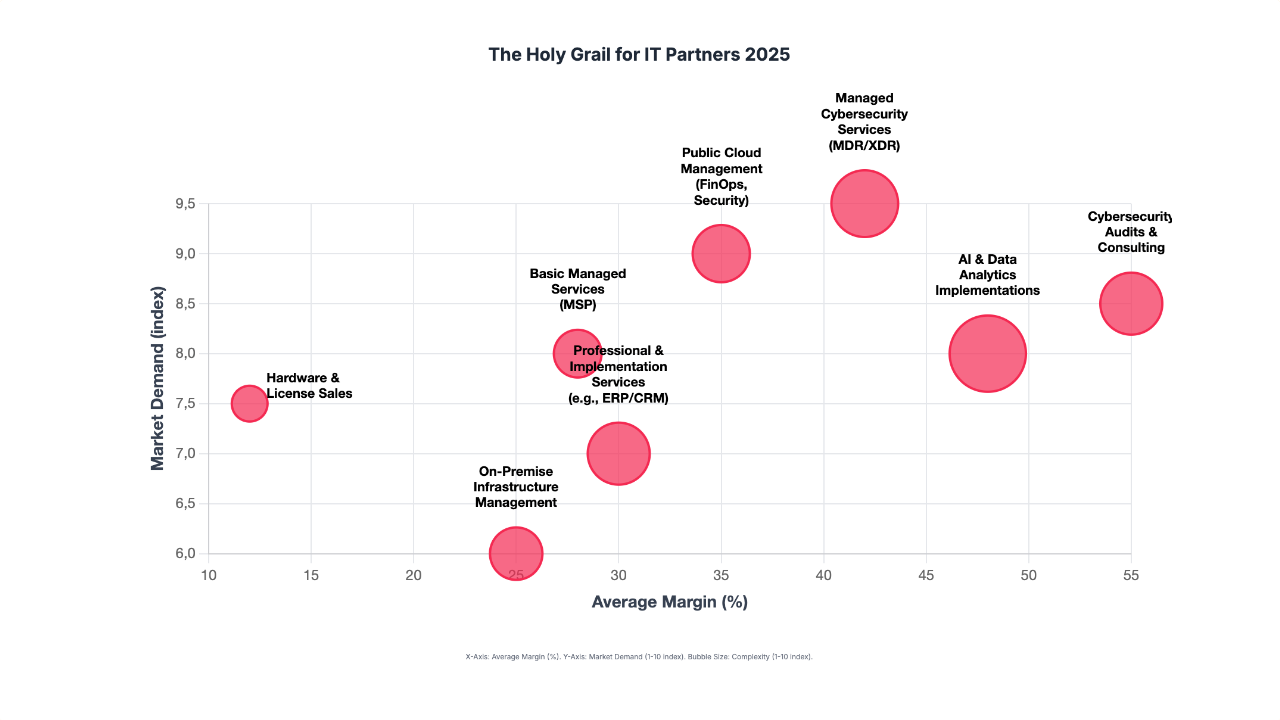
  • The holy grail for IT partners: Which IT services offer the highest margins with the highest demand in 2025?

    The holy grail for IT partners: Which IT services offer the highest margins with the highest demand in 2025?

    The year 2024 has gone down in technology history as an era of bold experimentation, driven by a wave of generative artificial intelligence. Companies around the world immersed themselves in the possibilities of AI, launching countless pilot projects. However, 2025 brings a fundamental shift.

    Enthusiasm, which analysts at Channelnomics described as “unprecedented” , is giving way to the hard reality of business. The time for monetisation and return on investment has arrived. Customers are no longer asking “will AI?”, but “how will AI translate into our profit?”.

    For IT partners, this transformation opens up a new era of opportunity. They are becoming the key conduits for companies that must navigate an increasingly complex technology landscape. Success in 2025 will depend on the ability to respond to three powerful forces shaping the market: the shift towards profitable artificial intelligence, the imperative of cyber security as the foundation of every operation, and the maturity of the cloud, which is generating demand for new, high-margin optimisation services.

    Leading analyst firms agree on the scale of the coming growth. Forecasts of global IT spending in 2025 point to a market worth more than $5 trillion.

    This solid growth of a few per cent is almost entirely driven by two phenomena: the mass adoption of artificial intelligence and the need to upgrade existing systems.

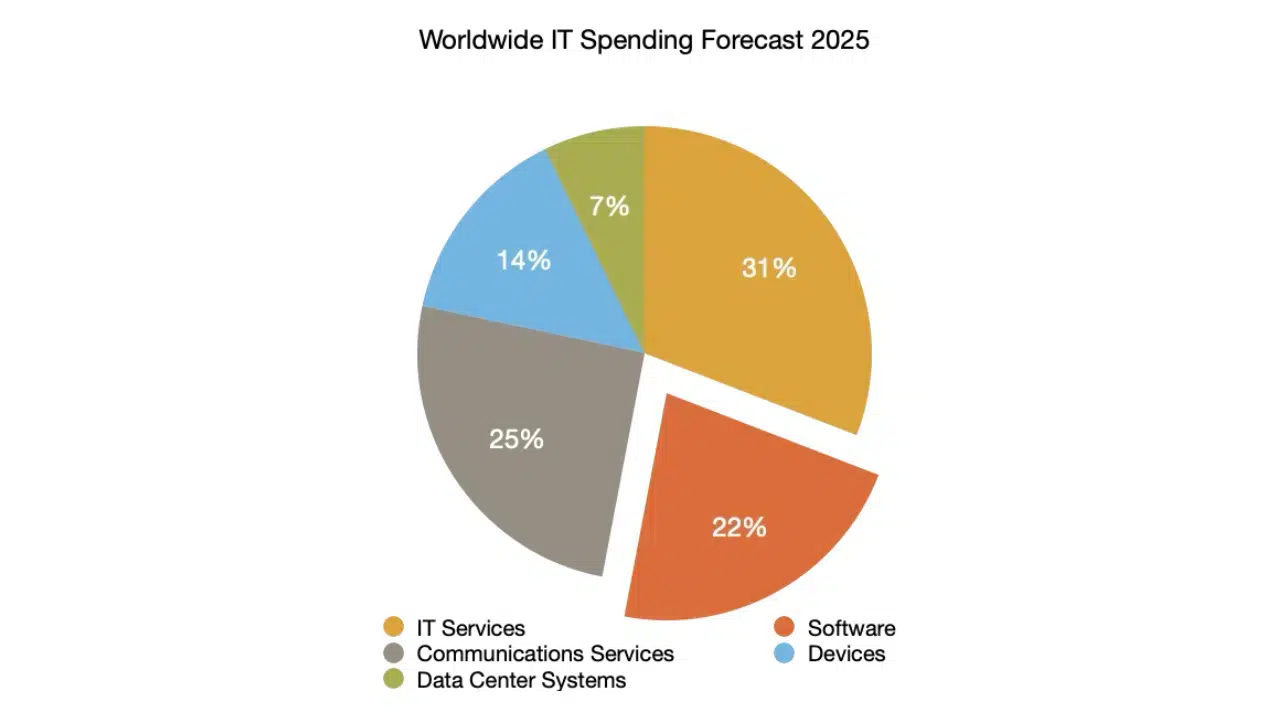
    The IT services segment will remain the largest part of the market, with a projected value of $1.69 trillion, but data centre systems and software will see the greatest growth as a direct result of investment in AI.

    Against this background, Poland is emerging as a regional leader. The value of the Polish IT services market is forecast to reach USD 10.44 billion in 2025, with GDP growth expected to reach an impressive 4.1%. The strength of the Polish market is driven by a globally recognised pool of technology talent, making our country a leading location for nearshoring and outsourcing.

    However, this position is a double-edged sword for local IT partners. Huge demand creates a gigantic market, but it also means competition with global players.

    In this reality, competing on price alone is becoming a strategy without a future. Advantage must be based on talent, value and specialisation.

    The market analysis clearly identifies three areas where demand, the need for specialisation and margin potential converge, creating ideal conditions for building competitive advantage.

    The AI revolution – from experiment to profit

    The year 2025 marks the end of the era of free lunches in the AI world. Customers who have invested in pilot projects now expect tangible business results. This creates a huge opportunity for partners who can speak the language of ROI.

    The biggest barriers to AI adoption lie not in the technology, but in lack of competence (42% of companies), insufficient data quality (42%) and lack of a solid business case (42%). It is in these areas that an AI partner can offer the most value.

    Instead of generic implementations, the most profitable services focus on solving complex problems. AI governance (AI Governance) and ensuring models are explainable are becoming key for firms in regulated sectors, with 44% of organisations planning to invest in them. Instead of offering one-size-fits-all chatbots, partners should focus on creating industry-specific solutions that drive AI adoption in finance, retail or media.

    The ability to navigate costs also becomes crucial. The cost of an averagely complex AI project can range from $60,000 to more than $250,000, and a partner who can guide the client through the entire process, from concept to implementation, gains strategic advisor status.

    2. Cyber security: from reactor to proactive guardian

    The cyber security market is booming, with a projected annual growth rate of 14.6%. This growth is driven by the increasing complexity of threats, including AI-assisted attacks, and the increasingly severe financial consequences of successful intrusions, with the average cost already reaching $4.88 million.

    These services are high-margin, and consulting in this area can yield margins of 20-40% . This is because their value is directly linked to protection against catastrophic risk.

    The real growth and margin lies in the move away from standard, saturated services to advanced managed solutions. We are talking about the evolution from Endpoint Detection and Response (EDR) systems to Managed Detection and Response (MDR) and Extended Detection and Response (XDR).

    These solutions integrate signals from across the customer’s IT environment and provide 24/7 monitoring and expert response. It is no coincidence that 97% of the world’s top-earning managed service providers (MSPs) offer managed security services.

    The democratisation of advanced security operations (SOC) through AI is also a powerful new trend. AI assistants for analysts allow even smaller teams to operate with the efficiency of experienced experts, paving the way for offering a highly effective and profitable SOC-as-a-Service.

    3 The economics of the cloud, or the imperative of optimisation

    As companies move more and more operations to the cloud, a new fundamental challenge is emerging. For 82% of organisations, managing cloud spend is now the number one concern. It is estimated that up to a third of this spend is wasted due to ineffective configuration or lack of oversight.

    This is a huge, easily quantified business pain for which IT partners can offer an effective remedy.

    The immediate answer is FinOps, a new operational discipline that brings together finance, engineering and business to bring financial accountability to cloud consumption. The market for FinOps tools and services is growing at more than 11% per year.

    This is a high-value consulting practice that can help clients reduce cloud costs by 20-30%. Instead of one-off audits, partners can offer a continuous FinOps-as-a-Service, creating a recurring, high-margin revenue stream.

    An additional opportunity is the complexity of multi-cloud environments, which up to 92% of companies are implementing . Partners that can offer a unified management plane for AWS, Azure and GCP environments become invaluable to customers.

    Global trends provide the map, but success depends on skilfully navigating the local context. For Polish IT partners, 2025 is a time of strategic decisions. It is necessary to move away from a model of competing mainly on costs to building deep specialisation.

    Rather than being an ‘everything provider’, aim to be the best in a selected, high-margin niche, such as implementing regulatory compliance (e.g. DORA), implementing GenAI in a specific industry or consulting FinOps.

    The biggest barrier for clients is the lack of talent, so a partner’s most valuable asset is its team of experts . The investment in competence, certification and retraining of talented developers towards AI/ML engineering is the most important investment in future profitability.

    Equally important is a change in the way business discussions are conducted. The discussion must shift from the level of technological features to that of business outcomes. It is necessary to learn to quantify the value of the services provided, speaking the language of risk reduction, operational savings and return on investment .

    The market analysis for 2025 leads to one conclusion: “The Golden Grail is not a single service, but a strategically balanced portfolio. The partner of the future is one that is specialised, agile and obsessed with delivering tangible value to customers.

    A historic opportunity is opening up for Polish companies in the IT sector. Its geographical location, access to outstanding talent and dynamic economy create ideal conditions for a leap forward in global competitiveness.

    The key will be to have the courage to invest in the most difficult but also the most promising areas of the market and become an indispensable guide for their customers in the smart technology era.

  • What are companies spending money on in IT? IT spending in 2025

    What are companies spending money on in IT? IT spending in 2025

    The technology landscape in 2025 presents a fascinating paradox. On the one hand, global IT spending is set to soar. Analysts at Gartner forecast an increase of 7.9 per cent to $5.43 trillion , while other forecasts predict an increase of up to 9.3 per cent to $5.74 trillion.

    On the other hand, this impressive growth is taking place against a backdrop of global economic uncertainty, geopolitical risk and unprecedented pressure on CIOs to justify every penny spent.

    While artificial intelligence, cyber security and cloud modernisation are the undisputed drivers of growth, the real story of 2025 is the battle for efficiency. CIOs are being forced to reallocate resources from maintaining outdated systems to strategic innovation, making budget optimisation not just a financial exercise but a key competitive strategy.

    This is echoed by Gartner’s John-David Lovelock, who notes that although budgets are increasing, much of it will only be used to cover price increases, which will distort the perception of nominal spending versus real IT investment.

    Anatomy of an IT budget for 2025: where does the money flow?

    In order to understand how companies allocate their resources, we need to break down the typical IT budget. Although every organisation is different, analysing market trends allows us to create a representative model that sheds light on key priorities.

    The lion’s share of any IT budget, at around 35%, is taken up by salaries and team-related costs. The human factor remains the largest and most important single investment, including salaries, benefits, recruitment and training.

    ISG’s research indicates that almost half of all IT spend is on staff. Forrester confirms this trend, reporting that 71% of leaders expect to increase investment in staff, and Metrics’ research points to salaries as one of the main areas of cost growth. The high costs reflect the fierce competition for talent, especially in high-demand areas such as cyber security, artificial intelligence and cloud.

    Another significant segment, occupying around 20% of the budget, is software, dominated by subscription models (SaaS) and licences. This includes key enterprise platforms (ERP, CRM), collaboration tools and specialised applications.

    Gartner predicts that software spending will increase by a solid 10-14%, driven by investments in AI-based features and the need to upgrade legacy applications. At the same time, CIOs are focusing on platform consolidation to combat the sprawl of SaaS applications and reduce unnecessary spending.

    Cloud and infrastructure, accounting for around 15 per cent of expenditure, form the foundational layer of modern IT. This category includes the costs of public cloud providers (IaaS, PaaS), private cloud environments and other hardware in local data centres.

    Spending in this area is growing rapidly, driven by digital transformation initiatives, support for hybrid working and, most importantly, the need for scalable computing power for AI workloads. IDC forecasts that spending on cloud services alone will reach $1.3 trillion by 2025.

    Cyber security, once a smaller budget line item, is now a priority at board level and consumes around 12% of resources. It is a non-negotiable component of the budget, driven by the explosion of AI-driven threats and a wave of stringent new regulations such as DORA and the Cyber Resilience Act.

    Industry benchmarks indicate that security spending accounts for between 10% and 15% of the total IT budget in large enterprises.

    Approximately 10% of the budget is allocated to new projects and innovation, i.e. activities aimed at business development.

    These are dedicated funds for strategic initiatives that generate new revenues or transform business processes, including digital product development and experimentation with new technologies such as GenAI.

    The last category, with a share of around 8%, is maintenance and external operations.

    This includes non-wage costs associated with day-to-day operations, such as managed service provider (MSP) fees and outsourcing contracts for routine tasks

    Key drivers of growth: what drives investment?

    Three powerful forces are shaping priorities in IT spending in 2025. The first is artificial intelligence, which has become a real catalyst for change. Paradoxically, although generative AI is entering what Gartner calls the ‘pit of disillusionment’, meaning more moderate expectations, spending on it is accelerating.

    This signifies a maturing of the market, where investments are shifting from experimentation to pragmatic deployments. CIOs are investing in foundational infrastructure, such as AI-optimised servers, and in software with AI features built in. According to the research, 63% of CIOs plan to spend on AI/ML in 2025, making this area the third most important priority.

    The second driver is cyber security, which has ceased to be seen as a cost centre and has become a prerequisite for business. This is a top priority for CIOs for the fourth year in a row.

    Spending is being driven by an increase in cyber attacks, now amplified by AI, and by stringent new regulations such as the EU DORA regulation and the Cyber Resilience Act, which are forcing a proactive security posture.

    Budgets are mainly flowing into security services, cloud native application protection platforms (CNAPP) and identity and access management (IAM).

    The third driving force is the cloud and modernisation, seen as the only way to escape technology debt. Older systems are a major burden, with Deloitte research suggesting that as much as 56% of IT spend goes on maintenance.

    The cloud offers the agility, scalability and cost efficiency needed to compete. The PwC report identifies the modernisation of cloud platforms as a key objective for CIOs in 2025. The strategic goal is to move from simply moving workloads to building native applications in the cloud, which is reflected in the huge growth of the IaaS market.

    Strategic dilemma: the balance between retention and innovation

    The biggest challenge for IT leaders remains the age-old dilemma: how to balance spending on maintaining existing systems (‘Run’) with investing in innovation to drive growth (‘Grow’).

    Many organisations are stuck in a cycle where 70 per cent or more of their budget is absorbed by simply ‘keeping the lights on’, leaving few resources for digital transformation. This operational burden is the biggest single barrier to growth.

    This problem is compounded by inflationary pressures. As Gartner’s John-David Lovelock points out, increases in budgets are often swallowed up by rising supplier prices and wages, meaning that even with larger budgets, the funds available for new initiatives can shrink.

    This creates the ‘illusion of increased spending’, while the real value derived from investments remains stagnant.

    The combination of operational burden and inflationary pressures is forcing a radical change in IT financial management. CIOs can no longer win by simply asking for bigger budgets. They must win by reallocating existing resources more efficiently. The only way to fund necessary innovation is to aggressively cut maintenance costs.

    This elevates cost optimisation from a tactical exercise to a core strategic function. Strategies such as consolidating SaaS platforms, automating routine tasks, implementing rigorous cloud-based financial management (FinOps) and upgrading legacy systems are becoming key to unlocking capital for innovation .

    Budget as a compass for innovation

    The budget landscape for 2025 is characterised by growing but constrained budgets, dominated by talent, software and cloud spending. These investments are driven by the imperatives of artificial intelligence, cyber security and modernisation. The main challenge remains the same: striking a balance between the cost of living and funding innovation.

    To meet these challenges, IT leaders need to adopt a new approach. Value-based budgeting needs to be introduced, where every investment is linked to a measurable business outcome.

    Artificial intelligence should be treated not as a technology project but as an organisational change, requiring a solid foundation of data management and competence. Cost optimisation must become the engine of innovation, creating a self-financing growth mechanism through the reallocation of savings.

    Finally, digital resilience, built by strategic investment in cyber security, should be seen not as a cost, but as a competitive advantage that builds trust and enables faster innovation. In 2025, the IT budget ceases to be just a financial statement and becomes a strategic compass that sets the company’s course in the present day.

  • Small pay a bigger price: Why economic uncertainty is hitting smaller tech companies harder

    Small pay a bigger price: Why economic uncertainty is hitting smaller tech companies harder

    In the world of technology, it is often said that the big companies set the trends, but it is the smaller ones that carry them out. The problem is that when the global economy starts to tremble, it is the smaller ones – software houses, SMEs, startups and integrators – that lose ground first. The latest data from S&P’s Global Market Intelligence report shows this starkly: political and economic uncertainty caused by tariff threats and trade tensions has caused companies to cut back on IT spending, with the smallest players bearing the brunt of these decisions.

    Big ones play cautiously, small ones lose liquidity

    At the start of 2025, IT budgets looked promising. Gartner was forecasting a 10 per cent increase in global technology spending and companies were launching new projects. In the second quarter, however, optimism dimmed. US trade policy, rising international tensions and inflation forced many corporations to take a more cautious approach. According to S&P analysts, larger companies are cutting back on investments faster, but have the financial buffer and ability to survive shutdowns. For smaller companies, any such stoppage means a real liquidity risk.

    This phenomenon is well illustrated by the comparison cited by analysts: when large companies ‘catch a cold’, small companies get the flu. An example? When a large corporation suspends a pilot project or delays the rollout of a new application, for the software house this means missing payments and having to reduce the team. Such cascading effects are increasingly common.

    Projects on hold, development frozen

    In the S&P report, more than half of respondents indicated that, in the face of external economic turmoil, their companies have adopted a wait-and-see strategy. First, ‘experimental’ budgets – intended for prototypes, AI testing, R&D projects – are disappearing. Later, implementations whose business value has not yet been fully proven are cut back.

    Small and medium-sized technology companies that often make their living from such initiatives – especially those in the innovation, automation or AI sectors – are feeling this particularly acutely. Many of them base their business model on responding flexibly to the needs of corporate customers, meanwhile these customers hold their breath and freeze their decisions.

    Outsourcing under censorship

    Another trend that is hitting smaller companies painfully is the reduction in spending on IT outsourcing, consulting and managed services. With business uncertainty, companies are reverting to an ‘in-house’ model – they want more control over strategic IT processes. Outsourcing budgets are shrinking and so are the markets for MSPs and managed services partners.

    For many small and medium-sized players, this means not only a loss of customers, but also the need to reorganise the operating model. Not only does lower demand become a problem, but also price pressure and loss of scale.

    Worse financial resilience

    Small companies rarely have access to lines of credit or strategic investors. They operate on a short reserve, often settling on a project or subscription basis with clients. When one of their counterparties withholds payment or abandons a project, the effects are immediate. In Poland, an increasing number of SME companies are suspending operations or declaring bankruptcy – and these figures increasingly apply to the IT industry as well.

    It is not just about dramatic cases. The very necessity of maintaining liquidity means abandoning development plans, stopping recruitment, reducing spending on marketing or certification. This in turn reduces competitiveness in subsequent tenders and the spiral deepens.

    What are companies still investing in?

    Despite the cuts, certain categories of IT spending remain untouched. Cloud, security and AI infrastructure continue to attract budgets because they are seen as crucial for business continuity. Only that these budgets are mainly accessed by larger players – global cloud providers, certified partners or companies with experience in large security projects.

    For smaller companies, this means increasing pressure to re-brand quickly and become competent in these areas. The problem, however, is a lack of time, resources and competence – and the market does not forgive delays.

    Which strategies make sense?

    Not all companies are helpless in the face of the crisis. Some are already implementing adaptation strategies:

    • Diversifying clients – looking for orders in the public sector, which is sometimes more resilient to market fluctuations, or expanding into other markets.
    • Partnerships – smaller companies join forces to deliver larger projects and bid together.
    • Shifting competences – increasing competences in areas that are difficult to cut from budgets, such as compliance, cloud maintenance or security monitoring.

    At the same time, there is no shortage of companies making bold decisions: limiting business to key customers, freezing sales of new services to focus on maintaining service quality.

    The struggle for survival

    Economic and political uncertainty is like a stress test for the technology sector. Large players have the time and resources to react strategically. Smaller ones are operating on the brink of reactivity, trying to survive before the situation stabilises. What used to be an advantage – agility, niche specialisation, low costs – is not enough today.

    For many of these companies, the coming months will be a battle not for innovation, but for survival. Who wins it will be determined not so much by technology, but by the ability to adapt and respond quickly to a changing environment. And whether they can find a place in the new balance of power, in which only part of IT budgets remain untouchable.

  • IT spending is slowing down. Companies are taking a more cautious approach to purchasing decisions

    IT spending is slowing down. Companies are taking a more cautious approach to purchasing decisions

    Although global IT spending is expected to grow by nearly 8 per cent in 2025 – to $5.43 trillion – the market is not in an upbeat mood. Gartner, which at the beginning of the year was still forecasting a jump of nearly 10 per cent, has just lowered its estimates. The data shows clearly: despite the positive momentum, digital business investment is in limbo. It is not a question of cuts. Rather, it is about growing caution.

    This paradox is best illustrated by the concept of the ‘uncertainty pause’ that Gartner analysts attribute to today’s situation. IT budgets remain stable, but new purchasing decisions are on hold. Economic uncertainty, trade tensions and rising hardware costs mean that boards would rather wait than risk misallocating resources. This is the new normal to which the entire technology sector must adapt.

    Mood cooler than results

    Despite the macroeconomic turmoil, many companies started 2025 with more optimism than the year before. The Gartner survey found that more than 60% of IT leaders were positive about the first quarter. However, only a quarter of respondents expected to end the year ahead of plan.

    This signals that the market is acting cautiously. Companies are not cancelling projects – but postponing them. Decisions take longer to analyse, more business justifications are needed and return expectations are rising. Geopolitics does not help: tensions around tariffs and international trade are causing anxiety that directly affects purchasing decisions in IT departments.

    Infrastructure suffers the most

    The biggest slowdown is seen in the area of infrastructure. Hardware prices are rising and disruptions in supply chains – although no longer as acute as during the pandemic – are still causing logistical difficulties. Companies are reducing or delaying the upgrade of their own server rooms, data centres or endpoint equipment.

    This is bad news for infrastructure integrators and hardware suppliers. Multi-year upgrade projects are now being replaced by a ‘keep what works’ approach. There are no spectacular implementations – rather, there are SLA extensions and ad hoc purchases.

    Cloud and services stay the course

    Ongoing expenses such as cloud subscriptions and managed services, on the other hand, remain stable. In an OPEX model, where costs are predictable and fit well into the annual budget, companies still feel comfortable. Especially as most AI and SaaS service providers have started to offer generative AI functions as part of existing packages – without additional licensing costs.

    From a sales channel perspective, this is good news. In the cloud and services space, customer relationships and the ability to scale quickly are becoming key. It is less about the number of units sold and more about the ability to ensure continuity, optimisation and cost predictability.

    GenAI as an add-on, not a project

    Generative artificial intelligence – a hot topic for more than a year – is also part of the new enterprise strategy. Gartner emphasises that AI is being deployed today not as a separate investment, but as an add-on to existing platforms. IT departments prefer a plug-and-play approach rather than complex integrations.

    This is a significant shift for software providers. Rather than separate budgets for AI, companies are looking to extend functionality within systems already paid for. In practice, this means fewer tenders, less sales time and more pressure to deliver demonstrable value within existing commercial relationships.

    How to sell in times of pause?

    It is crucial for the IT sales channel to adapt to the new dynamics. Above all – to avoid aggressively pushing big transformation projects. Today’s customer expects specifics: measurable savings, simplification of processes, fast return on investment.

    Instead of promises of long-term benefits, what counts is what works immediately. A “proof of value” model works well – rapid implementation that shows an effect within a few weeks. This is the way to break the pause and regain sales momentum.

    It is also worth remembering that decisions have not disappeared – they have merely shifted. A well-run commercial process may take twice as long today, but it still ends with a signed contract. Building trust and delivering value at every stage of customer contact becomes crucial.

    Outlook: prfzession, not recession

    Gartner’s lowered forecasts do not imply a collapse of the market – rather, they indicate a correction of expectations. If the macroeconomic situation stabilises in the second half of the year, many stalled projects can be expected to return in Q4 or early 2026.

    For now, however, it is necessary to learn to operate in an environment of extended sales cycles, greater pressure on ROI and increasingly informed purchasing decisions. This is the time for those companies that can deliver technology that is not only state-of-the-art but, above all, makes business sense.

  • Cyber paradox: Why, despite billions for cyber security, are companies increasingly vulnerable?

    Cyber paradox: Why, despite billions for cyber security, are companies increasingly vulnerable?

    Today’s digital landscape presents business leaders with a paradox: despite increasing investment in cyber security, the number and scale of incidents are not decreasing – quite the opposite. This is causing concern among executives and undermining the effectiveness of existing strategies. Cyber security, once the domain of IT, has now become a key management topic. The Allianz Risk Barometer 2024 report confirms this, identifying cyber incidents as the biggest global business risk.

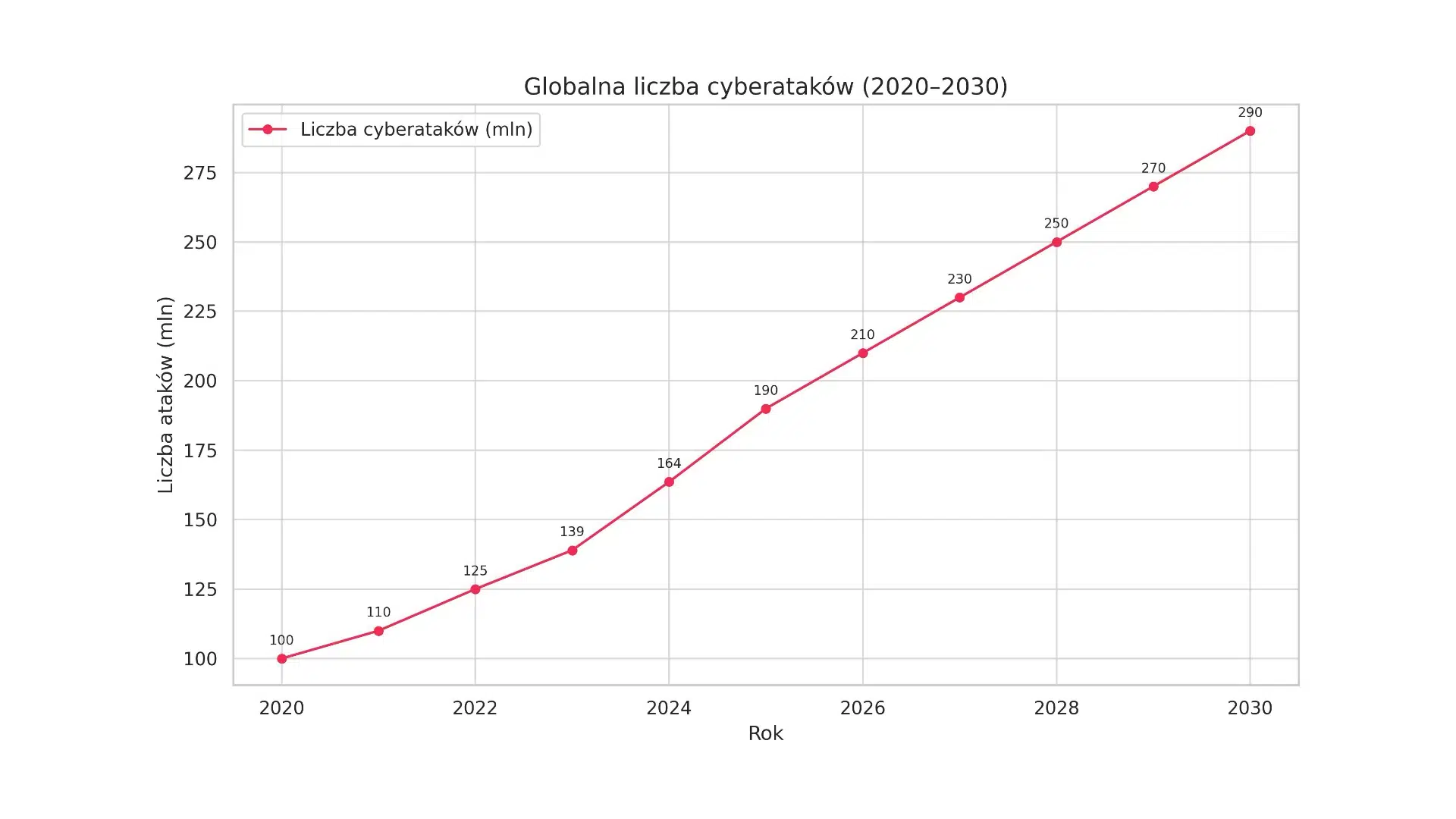
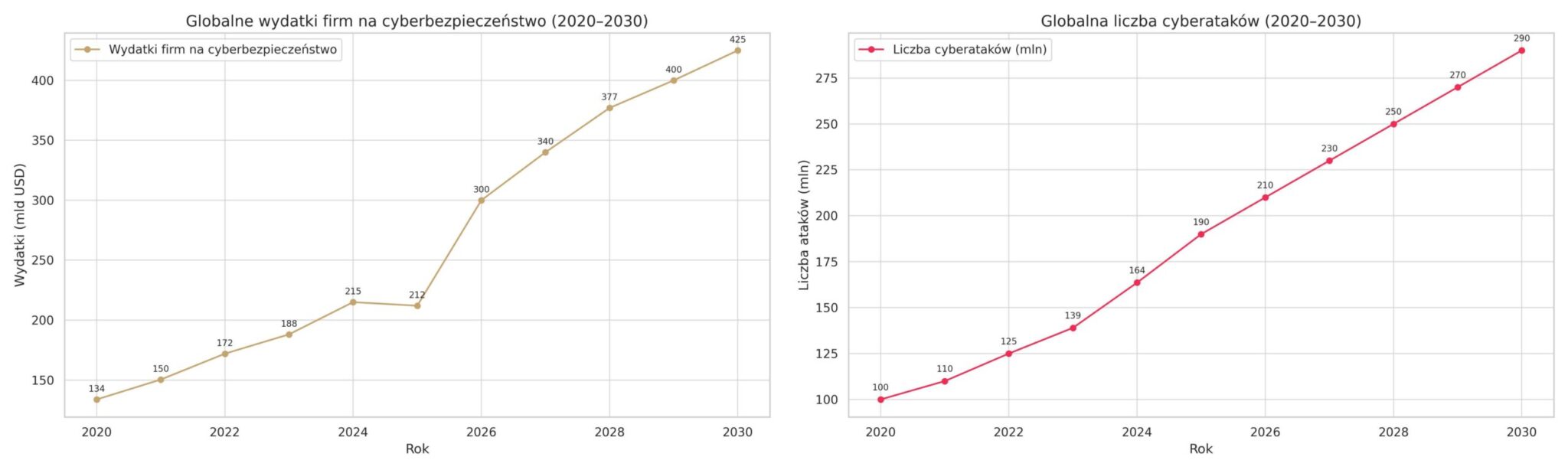
    The scale of the threat is enormous. By 2025, losses from cybercrime are expected to reach $10.5 trillion annually. The average cost of a data breach in 2024 rises to $4.88 million – up 10% year-on-year, reaching an all-time high. At the same time, spending on information security is expected to reach $212bn in 2025, up 15.1% from 2024 ($183.9bn – Gartner data).

    This parallel increase in expenditure and incidents is the so-called ‘cyber arms race’. Organisations are increasing budgets to keep up with increasingly sophisticated attacks, often based on AI. Investment does not eliminate threats, but only reduces their impact – the goal becomes resilience, not total security.

    The increase in the cost of breaches despite higher expenditure suggests that the allocation of resources may be suboptimal. The effectiveness of investments is still sometimes difficult to prove and the expected return is lower than expected.

    The cyber threat landscape – what is worrying CEOs?

    Despite increasing spending, business and cyber security leaders are grappling with an increasingly complex and dynamic threat landscape.

    Evolution and scale of incidents

    • Ransomware – a major threat: In 2023, as many as 72% of companies worldwide were victims of a ransomware attack. In 2024, the average cost of such an incident was $4.99 million, including ransomware, downtime and recovery. The development of the ‘Ransomware-as-a-Service’ (RaaS) model has enabled less experienced criminals to carry out attacks, resulting in the creation of more than 30 new groups in 2024. In the first five weeks of 2025, 378 organisations in the US were already targets of ransomware.
    • AI/GenAI attacks – a new chapter in threats: Generative AI is driving the rise of social engineering. As many as 47% of organisations cite the rise of GenAI threats as a key concern. In 2024, 42% of companies experienced such incidents, and GenAI-driven phishing increased by as much as 1265%. More than 989,000 phishing attacks were reported in Q4 2024 alone. Tools such as ChatGPT can mimic the style of corporate communications, making messages extremely believable. Gartner predicts that GenAI will be used in 17% of all cyber attacks and data leaks by 2027.
    • Supply chain vulnerabilities and attacks on critical infrastructure: For 54% of large companies, supply chain threats are the main barrier to achieving cyber resilience. Concerns focus on third-party software vulnerabilities and the spread of attacks across the ecosystem. Up to 45% of organisations are expected to experience a supply chain attack by 2025, confirming the systemic risk of digital interconnectedness. At the same time, the activity of state actors is increasing and, driven by geopolitical tensions, they are increasingly attacking critical infrastructure.
    • Statistics – an increase in incidents: In 2024, organisations recorded an average of 1,636 attacks per week – 30% more than the year before. As many as 72% of companies reported an increase in cyber risk. According to the ITRC, the number of data breaches increased from 2365 in 2023 to 3205 in 2024.
      Key concerns of executives (CEO/CISO)

    One in three CEOs see cyber espionage and loss of intellectual property as the biggest threats, while 45% of cyber security leaders are concerned about operational disruption. Image damage and loss of customer trust are also among the key worries. The increasing complexity of threats – driven by technological advances, supply chain integration and geopolitical tensions – exacerbates the risks. In addition, up to 76% of CISOs indicate that fragmented regulations across jurisdictions make it difficult to ensure regulatory compliance.

    A new dimension of threats: GenAI

    Generative AI not only creates new risks, but changes the nature of known ones – especially in the area of social engineering. With its ability to mimic communication styles, phishing becomes harder to detect and the human element a prime target for attacks. As a result, defence strategies must focus not only on technology, but also on employee education and awareness-raising.

    Growing investment in cyber security: where does the money go?
    In the face of growing threats, companies are significantly increasing cyber security budgets, treating it as a strategic element of risk management.

    Global expenditure

    Global spending on information security is expected to reach $212bn in 2025, up 15.1% from 2024 ($183.9bn – Gartner forecasts). IDC forecasts a 12.2% year-on-year increase. In turn, 63% of companies plan to increase their cyber security budgets, including training (HCLTech Cyber Resilience Study 2025).

    Investment priorities:

    • AI and automation: two-thirds of board members recognise AI and automation as key to tackling new threats. Spending on AI across all industries is expected to exceed USD 200 billion in 2025. Companies using AI in security save an average of US$2.22 million per breach and reduce incident response times by more than 100 days, reducing costs by 45%.
    • Security for cloud and hybrid environments: Gartner forecasts that the CASB and CWPP market will reach US$8.7bn by 2025, confirming the growing importance of cloud native solutions. Investment in IaaS grew by 22.6% in 2024 and this trend is expected to continue, with increasing reliance on cloud infrastructure.
    • Critical infrastructure and public sector: the 2025 US budget provides more than USD 13 billion for cyber security for civilian agencies, with a particular focus on the health sector (95% increase in big data breaches). Investment priorities include protecting critical infrastructure, combating threats, strengthening resilience and international cooperation.
    • Growth of security services: Security services will dominate the market in North America, reaching US$50bn by 2025. Accenture, with 18.2% revenue growth, is leading the segment, highlighting the growing role of external expertise and managed security services.
    • Zero Trust Adoption (ZTA): The Zero Trust market was worth US$31.63bn in 2023 and is expected to grow to US$133bn by 2032. Gartner forecasts that by 2025. 60% of companies will adopt ZTA as a cornerstone of their security strategy, and by 2026, 81% plan to implement it. ZTA can reduce the cost of a data breach by an average of US$1m.

    The increase in spending on AI and automation is a reaction to increasingly sophisticated AI-assisted attacks. A ‘cyber arms race’ is emerging in which both sides – attackers and defenders – are constantly upgrading their technology. The effectiveness of these investments depends on the thoughtful integration of AI rather than a haphazard proliferation of tools.

    The growing investment in Zero Trust Architecture (ZTA) reflects a shift in approach: from a perimeter to a model of continuous verification and minimum privilege. In the age of remote working and distributed infrastructure, traditional network protection is losing its effectiveness. ZTA assumes that no one – inside or outside – is trusted by default. High adoption and market growth show that this is not a temporary trend, but a necessary evolution of security strategy.

    Why are incidents rising despite increased spending?

    This paradox is due to a number of interrelated factors that undermine the effectiveness of classic defence strategies.

    Complex IT environments and point solutions

    Medium and large companies use 51-58 different security tools, leading to overloaded IT teams and inattention to vulnerabilities. According to Cisco, up to 80% of companies believe that an excess of ‘point solutions’ hinders detection, response and recovery from incidents.

    The growing number of IoT devices – often with default passwords and poor support – creates billions of entry points. Additionally, the integration of legacy systems with modern infrastructure and the rapid adoption of the cloud are increasing the complexity and vulnerability of hybrid environments.

    The paradox of AI: implementation without safeguards

    Although 66% of companies believe AI will have the biggest impact on cyber security in the coming year, only 37% assess the security of AI tools before deployment. As many as 53% of organisations do not have adequate safeguards against AI-based attacks (VikingCloud 2025), revealing a serious gap between risk awareness and deployment practice.

    The competence gap in cyber security

    The skills gap has increased by 8% since 2024, with two-thirds of organisations reporting moderate to severe staff shortages. Only 14% of companies believe they have the right team. Globally, there is a shortage of 4 million cyber security professionals, increasing the cost of breaches by an average of US$1.76 million. The SME and public sectors are particularly affected, with staff shortages leading to overstretched and burned-out teams.

    Risks in supply chains

    93% of companies have experienced breaches through vulnerabilities at suppliers, and 29% of all incidents originated from external partners. Lack of oversight and transparency in supply chains is one of the main risks in cyber security today.

    Wydatki vs Ataki 2020 2030 scaled

    Strategies for the future: how to break the paradox?

    Overcoming the paradox of increasing incidents despite greater investment requires a shift from response to integrated, proactive resilience – taking into account both technology and the human factor.

    Zero Trust as the new standard

    Zero Trust, based on the principle ‘never trust, always verify’, is becoming the new norm. Gartner predicts that by 2025. 60% of companies will adopt ZTA as the foundation of security and by 2026, 81% will have implemented it. ZTA can reduce the cost of data breaches by US$1m and addresses the challenges of cloud, supply chain and human risk.

    Consolidation of tools – fewer but more effective

    Current, distributed systems cannot cope with modern threats. By 2028. 45% of companies will reduce the number of tools in use to fewer than 15 (vs. 13% in 2023). Unified platforms increase efficiency, visibility and enable AI analytics, reducing detection and response times to minutes.

    AI as a pillar of SOC – responsibly and purposefully

    AI supports threat detection and automates responses. Implementing ‘tactical AI’ – focused on measurable outcomes and consistent with KPIs – is key. Building trust requires transparency in models, data sources and decisions.

    Secure supply chains

    By 2025. 60% of organisations will make decisions about working with suppliers based on their risk profile. Partner security assessments and the application of ZTA to third parties will become key.

    Investment in people and safety culture

    Competence development is a priority. Training, certification and user education – e.g. phishing programmes with a 50x ROI – are essential. Organisations need to foster a culture of shared responsibility for cyber security and develop ‘cyber-judgement’ at every level.

    Public-private cooperation – the foundation of collective resilience

    Stronger cooperation between the public and private sectors and at the international level is key to countering cross-border threats and harmonising security policies.

    Cyber-resistance instead of prevention alone

    Organisations are shifting their focus from prevention to resilience – the ability to survive, respond and recover quickly from an incident. By 2025, around 70% of CEOs will have introduced resilience as part of their organisational culture.

    New technologies – preparing for tomorrow

    Companies should already be implementing post-quantum cryptography (PQC) standards to protect themselves against future threats from quantum computers.

    The combination of Zero Trust adoption and tool consolidation is a response to ‘sprawl’ and complexity, identified as the main sources of defence ineffectiveness. Zero Trust requires continuous verification and precise controls, which is difficult to achieve with distributed systems. Unified platforms centralise data and operations, making ZTA easier to implement. These two trends work synergistically to simplify and strengthen cyber security.

    The growing emphasis on measurable return on security investment is transforming the perception of the CISO – from a technical supervisor to a strategic partner. Executives expect real results: shorter downtimes, avoided penalties, improved reputation. CISOs must therefore translate security into the language of the business, fostering a lasting commitment and embedding security into the organisational culture.

    The message to CEOs is clear: cyber security is no longer just a cost or IT issue, but a key element of business continuity, innovation and competitive advantage. In an era of rising incident costs and the importance of digital operations, effective protection directly affects finances, reputation and stability. Only a strategic, holistic approach – taking into account the complexity of the environment, people and competencies – will allow companies to safely thrive in an increasingly hostile digital environment. It is a shift in perspective: from ‘what we fear’ to ‘how we protect our future’.