Tag: Automation

  • IT recruitment: why are companies losing sight of the right people in the clutter of algorithms?

    IT recruitment: why are companies losing sight of the right people in the clutter of algorithms?

    The offices of technology companies resemble finely tuned organisms. Every process has a workflow, every line of code goes through rigorous quality testing and cost optimisation has become almost a religion. However, a crack is appearing in this near-perfect landscape that cannot be patched with another system update.

    This is the moment when, despite advanced instrumentation, key positions go unfilled for months, projects drift towards delays and teams work in a state of permanent overload. The simplest diagnosis, pointing to a talent shortage in the market, becomes a convenient screen in this context, hiding a deeper, systemic decision-making paralysis.

    The scale trap in the world of interfaces

    The IT industry has built its power on a foundation of scalability. This logic dictates that every challenge can be broken down into its constituent parts and then automated. Transferring this paradigm to recruitment seemed a natural evolutionary step. If systems can be replicated, why not do the same with the people acquisition process?

    Here, however, there is a fundamental cognitive error. While technology allows for unlimited expansion of ad coverage or mass filtering of applications, in the final analysis recruitment remains an interaction between operating systems of the highest complexity: human psyches.

    Good professionals rarely react to the information noise generated by automated funnels. For them, the excess of technology in the selection process is sometimes a warning sign. Instead of the promise of modernity, they see it as an attempt to avoid direct responsibility for human selection.

    As a result, companies investing in increasingly expensive sourcing platforms are only building a facade of efficiency, underneath which lies a lack of clarity about the real needs of the organisation.

    Dictatorship of speed and erosion of quality

    In a culture focused on delivering solutions in an ‘as soon as possible’ model, time has become the only recognised measure of effectiveness. This pressure permeates HR departments, forcing a pace that excludes in-depth reflection.

    Role profiles are created in a rush, often as a compilation of the wishful thinking of various stakeholders, leading to impossible job descriptions. The speed of the process becomes a fetish that obscures its original purpose.

    However, it is worth noting that a lightning-fast recruitment process, devoid of substantive density, is completely worthless to an experienced candidate. A fast track that does not lead to concrete declarations and does not clarify the responsibility structure within the company raises rightful suspicions about the stability of the future working environment.

    When performance replaces robust fit testing, both parties enter into a relationship based on guesswork, which in hindsight proves to be the most costly strategy a business can adopt.

    Symptoms of invisible chaos

    The phenomenon of candidates dropping out at the final stage of recruitment is often interpreted as a whim of the market or the effect of counteroffers. However, an analysis of the deeper layers of this situation reveals another regularity. Top experts have an extremely sensitive radar for inconsistency. For them, contradictory messages from managers, unclear competency frameworks or fuzzy decision-making during interviews are symptoms of a sickness that is affecting the inside of the company. Here, recruitment acts as a translation service: it is supposed to translate the culture and internal chaos of the organisation into a language the candidate can understand. If the translation is sloppy, the recipient simply refuses to read further.

    The uncertainty emitted by the organisation acts as a protective barrier through which only the determined or less experienced break through. Those who have a choice treat chaos in the recruitment process as a reliable predictor of chaos in project management.

    In this way, the company, seeking to avoid risk by automating and delegating decisions, paradoxically generates the greatest possible risk: adverse selection.

    Primacy of clarity over instrumentation

    Getting out of the impasse requires a painful abandonment of faith in the ‘magic button’ for many technology organisations. The real bottleneck in recruitment is not in the tool stack, but in the conceptual realm.

    Successful talent acquisition begins where optimising Excel tables ends and precisely defining roles begins. Companies that are successful in this field invest primarily in clarity of message and the courage to make clear decisions.

    Technology should play a servant role – structuring and accelerating what has already been thought through. However, it cannot replace the thought process of leaders. Consciously reducing complexity, abandoning exaggerated promises in favour of raw specifics and restoring personal responsibility for each new person in the team are steps that build genuine employer appeal.

    Cultural stability, manifested in a predictable and logical recruitment process, is a luxury good for which professionals are prepared to pay with loyalty.

  • Release people from being robots. How a mature RPA is redefining human capital

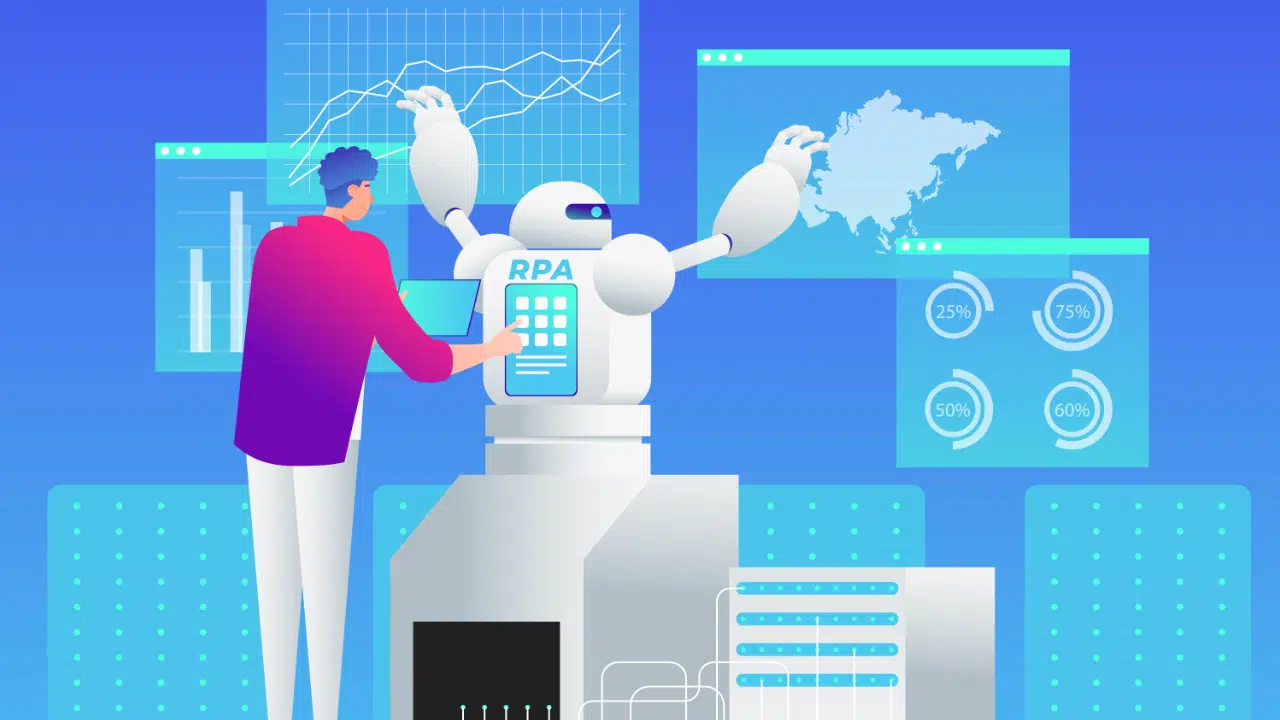
    Release people from being robots. How a mature RPA is redefining human capital

    For years, the discussion about business process automation was based on the fear of a technological revolution that would supposedly dominate labour markets. The reality of modern corporations, however, shows a very different picture. Employees in finance and administration departments are often drowning in repetitive bureaucracy, acting as living interfaces between incompatible systems.

    The real value of RPA’s mature technology, robotic process automation, is not in the absolute reduction of jobs, but in fundamentally changing the nature of human labour. RPA has become a consolidated accelerator of digital transformation that allows organisations to gain efficiencies and responsiveness without redesigning their entire technology ecosystem.

    The myth of the digital job thief versus organisational resistance

    The implementation of new technological solutions at the operational level is often met with natural resistance. It stems from an ingrained fear of the unknown and the perception of algorithms as direct rivals. However, business practice verifies these fears, proving that automation does not remove organisational functions, but changes their essence.

    The overcoming of internal resistance most often occurs when teams experience a drastic decrease in operational load first-hand. When frustrating, monotonous duties disappear and process transparency increases significantly, the software is no longer seen as a threat, becoming a welcome support.

    A new pyramid of competences, moving from routine to strategy

    Market experience shows that the best results are achieved by delegating high-volume, clear rules and low-risk tasks to machines. The greatest benefits are seen in departments managing huge flows of financial documents. Processes such as data capture, invoice validation, accounting imputation or bank reconciliation are performed by algorithms with a speed and consistency unavailable to humans.

    The time freed up by robotic automation represents pure strategic gain for the company. Employees can thus shift their attention to areas where cognitive competence remains irreplaceable.

    This primarily includes exception management, advanced data analytics, budget control and strategic planning. In this way, a perfect synergy is created, in which the robot prepares and cleanses information that provides a stable foundation for critical business decisions by specialist staff.

    RPA as a smart tool in the clash of exceptions

    The classic RPA’s environment is perfectly suited to stable and predictable conditions. However, it is important to remember that modern business is rarely fully homogeneous. The need to handle documents with variable formats and the need to interpret unstructured information requires technology with a higher degree of flexibility.

    The introduction of artificial intelligence and machine learning into robotic processes creates a whole new quality, transforming software into an operational intelligence tool.

    The ability to learn from data, recognise patterns and dynamically adapt to changing conditions makes RPA a solution that is alive and evolving with the organisation.

    Instead of merely following rigid rules, the system is able to anticipate anomalies and continually improve the quality of the information processed, while ensuring full compliance with strict regulations and simplifying audit processes.

    Change management as the foundation for successful implementation

    Implementing advanced systems is first and foremost a process of profound cultural transformation. Transparent communication from the first planning stages is the absolute basis for a successful strategy. Operational teams should have a clear understanding of the purpose of the innovations being introduced and their long-term benefits. As the role of employees evolves from mechanical data entry to analytical verification and optimisation, organisations need to ensure that they are adequately backed up by practical training.

    Operational agility and reliability are now key differentiators in the global market. The maturity of automation today is measured not only by the level of technology used, but above all by the organisation’s ability to adapt.

    A conversation about RPA-based digital transformation is in fact a discussion about building organisational resilience. Eliminating bottlenecks in repetitive workflows directly translates into data quality and stability. This, in turn, guarantees executives faster access to error-free management information. Integrating regulatory requirements into automated workflows reduces the risk of involuntary errors to a minimum.

    Automation has ceased to be just a way of optimising operating costs. It has become a strategic investment in human capital, allowing experts to focus on creating real added value for the business, rather than wasting time battling the inadequacies of the IT infrastructure.

  • Talent management in IT. How automation is changing the labour market

    Talent management in IT. How automation is changing the labour market

    Today’s technology industry has reached a point that goes far beyond the mere adaptation of new tools. There is a huge fascination in the market with the speed at which people with relatively little experience can deliver complex code, using generative artificial intelligence.

    However, this phenomenon creates a dangerous illusion of instant perfection. The enthralment of widespread automation, combined with the drastic reduction in recruitment for entry-level positions, is akin to taking out a high-interest mortgage on the future productivity of the organisation.

    This raises the crucial question for business continuity of who will take responsibility for strategic systems architecture in a decade’s time if the space for young talent to learn the craft is taken away today.

    Generative artificial intelligence excels as an advanced assistant, but it is a mistake to treat it as a substitute for a real expert. These tools allow lower-skilled profiles to solve repetitive problems efficiently, impressing decision-makers at first glance and having a positive impact on short-term metrics.

    However, generating a syntactically correct result is not the same as understanding it in depth. A programmer who relies solely on the prompts of the algorithm gradually loses his or her ability to make a critical assessment. It is then difficult to verify whether the proposed solution is optimal, safe and scalable in the long term.

    After all, the real value of software engineering lies not in knowing the syntax alone, but in being able to look at a system holistically and solve complex business problems.

    Market data from 2022 onwards mercilessly expose a worrying trend. The number of vacancies for junior positions is falling dramatically. Companies, in a natural reflex to optimise costs, are choosing to delegate the simplest tasks to language models.

    However, this closes a key testing ground. Technical mastery cannot simply be transferred to the human mind with a suitably formulated question.

    Proficiency is forged through hundreds of hours spent painstakingly analysing bugs, testing hypotheses and seeking answers to the fundamental question of why a piece of architecture is not working as intended. By eliminating this unimpressive early career stage, organisations are unwittingly dismantling the natural incubator in which future designers of advanced systems mature.

    In the face of these changes, the knowledge of experienced professionals becomes more valuable than ever. It is the senior experts who have the necessary business context to decide which processes are worth automating and how to integrate the fragments generated into a stable, secure ecosystem.

    However, the phenomenon of invisible work intensification arises here. When less experienced employees generate code en masse with the help of artificial intelligence, a gigantic bottleneck is created at the review stage. Instead of spending the freed up time on high-level innovation and mentoring, the best specialists are drowning in the processes of reviewing thousands of lines of code, trying to catch machine hallucinations and logic gaps.

    Working extended hours does not translate into higher productivity in this case, and the growing technological debt is beginning to overwhelm the most competent individuals in the company.

    The new definition of leadership in the age of artificial intelligence requires an understanding that digital transformation is not only about the smooth implementation of modern programming assistants. It is first and foremost a rigorous strategy for managing quality and generational knowledge within the company.

    Automation that is not accompanied by a talent reproduction plan leads the organisation down a dead end. It becomes necessary to consciously maintain mentoring programmes and space for the development of budding engineers, even if in the short term this seems financially a considerable burden.

    It is worth recalling at this point Seneca’s philosophical maxim that for a ship that knows no port of destination, no wind is auspicious. Similarly, in the technology business, artificial intelligence is only a powerful driving wind, not the ultimate goal.

    Market success will not be measured by the sheer volume of software generated or the hours saved. In the long term, the organisations that will win will be those that do not get carried away with speed, but maintain control over the quality of the products delivered, basing their structures on teams capable of critical and independent thinking.

  • Engineers are too expensive to watch over servers

    Engineers are too expensive to watch over servers

    If we look back, the common denominator of almost all of mankind’s revolutionary achievements was speed. From the invention of the wheel, to the internal combustion engine, to the printing press, which radically accelerated the distribution of knowledge. The internet closed this process by introducing real-time communication. However, history teaches us that the innovation race is no longer just about running faster. In the age of digital transformation, where technology life cycles are shortening from years to months, traditional five-year strategic plans have become a fiction. Today, the challenge for business is not the speed of response to failure, but the ability to anticipate the future before it arrives.

    For the technical teams, this race took a dizzying turn as virtualisation and the cloud redefined the concept of infrastructure. First we separated hardware from systems, and then the cloud freed us from physical server rooms. In theory, this gave CIOs the tools to respond to business needs at the speed of everyday emergencies. In practice, however, it has led to one of the biggest paradoxes of modern IT.

    The duality of the CIO: Between stability and chaos

    Today’s IT director operates in a state of perpetual disunity. On the one hand, he must be an innovator implementing the latest software development models. On the other, a guardian of the ‘digital open-air museum’, keeping legacy systems that have been responsible for key processes such as payroll or customer billing for years almost intact.

    This duality between the past and the future has forced companies to manage hybrid and extremely heterogeneous architectures. Combining cloud services from multiple providers with in-house on-premise environments has become the norm rather than the exception. While the cloud model has reached a maturity that allows for cost optimisation and compliance, it has brought with it a new layer of complexity. Managing an ecosystem where each element has its own tools, security policies and cost structures is becoming an operational nightmare.

    This is where agnostic technologies such as containerisation come to the rescue. They allow this complexity to be unified, creating an environment where the key is no longer where the workload is executed, but what requirements it meets. This is the first step to regaining control. The second is a fundamental shift in the management paradigm – from reactive to predictive.

    From reaction to prediction. AI as the analyst of the future

    With the consolidation of the cloud as the dominant operating model, it seemed that we had reached the speed limit. However, the next evolution is not about going faster, but getting ahead of the facts. Reactive systems management – putting out fires after they have broken out – is a model that is too costly and has too much business risk.

    The modern approach involves the use of artificial intelligence in IT operations. It is not about simple, static rules like ‘if CPU usage exceeds 80%, add a server’. Real intelligence in the cloud involves deep analysis and correlation of thousands of logs and metrics per second. These systems learn the ‘pulse’ of a company’s digital environment, identifying anomalous patterns before they realistically affect users.

    By provisioning the cloud with intelligence, it is possible not only to automate the resolution of basic incidents, but also to predict peaks and valleys of demand or even market trends themselves. This gives technical teams something invaluable: an understanding of what is about to happen in their infrastructure. In a world where everything is moving faster than ever, prediction is becoming the only real competitive advantage.

    Unleashing talent. Technology at the service of man

    However, the business value of the intelligent cloud goes far beyond server stability. More broadly, it is a key element of a modern talent management strategy. Automation and prediction mean freeing high-calibre professionals from operational pressures and routine tasks.

    When advanced algorithms take on the role of ‘digital gatekeeper’, the talent and energy of IT teams can be redirected to initiatives of much higher strategic value. Instead of monitoring performance metrics, engineers can focus on improving the customer experience (Customer Experience), implementing new functionalities or conducting pilot tests that simply lacked time in the reactive model.

    Business transformation is inextricably linked to changing the way we think and work. We need to be aware that equipping the cloud with intelligence is the next natural evolutionary step, similar to the migration to the cloud itself years ago. It is a tool that allows people to stop being the ‘mechanics’ of the system and become its architects.

    Transformation is a process, not a project

    It is crucial to understand that digital transformation is not a one-off implementation project with a start and end date. It is a process of continuous improvement, a continuous loop of improvements.

    The introduction of prediction and automation into IT environments is precisely part of this never-ending development. It allows companies to move out of survival mode and into proactive market shaping mode. Ultimately, technology is only (and as much as) a tool. The real purpose of the intelligent cloud is to create a space where human creativity, backed by computing power, is free to build the future of the organisation.

  • Automation and digital assistants. ORLEN is experimenting with an unmanned format in the Czech Republic

    Automation and digital assistants. ORLEN is experimenting with an unmanned format in the Czech Republic

    The Czech retail market has just become a testing ground for new technologies in the ORLEN Group portfolio. The group has launched its first fully self-service petrol station shop, located on the D7 motorway in Panenský Týnec, less than an hour’s drive from Prague. The move is part of a wider trend of retail automation seen across Europe to respond to rising labour costs and the changing habits of consumers expecting 24/7 availability of services.

    The project is in partnership with COOP, the largest retail chain in the Czech Republic, allowing the Polish fuel giant to synergise its partner’s grocery know-how. The outlet operates in hybrid or fully autonomous mode, allowing customers to refuel and shop – from Stop Cafe’s own brand to groceries – without the physical presence of staff. From a technological perspective, a key element of the implementation is an advanced video monitoring system and payment integration, which eliminates traditional barriers to the shopping process.

    ORLEN
    Source: ORLEN

    The most interesting piece of innovation to catch the attention of the IT industry is the implementation of a digital avatar named Míša. This solution, provided by Czech software house Next mind, goes beyond standard self-service kiosks. The avatar acts as a virtual assistant, with whom customers can communicate by voice or through a touchscreen interface, receiving assistance in navigating the shop or searching for promotions. This is one of the first instances in the CEE region where the AI interface has been so prominently displayed in a physical convenience retail space.

    Marek Balawejder, ORLEN board member for Consumers and Products, points out that the development of the non-fuel segment is not just an add-on, but a key driver of margin growth. The number of transactions in this sector is growing at a double-digit rate, which justifies investments in unmanned formats. They allow the expansion of retail services into smaller towns and cities, where maintaining full staffing levels is sometimes uneconomic.

    For ORLEN, which operates a network of more than 3,500 stations in Central Europe (including 443 in the Czech Republic, where it is the market leader), the success of this pilot could mean a green light for the wider digitisation of points of sale. The tested format at Panenský Týnec shows that the future of petrol stations is not only an energy transformation, but also a deep redefinition of the customer service model based on retailtech.

  • War for talent 4.0: Why are AI and robots as important as HR strategy today?

    War for talent 4.0: Why are AI and robots as important as HR strategy today?

    The problem of labour shortages has ceased to be a ‘soft’ HR challenge and has become a hard, strategic business roadblock. HR discussions used to take place at lower levels of management; today they have escalated to the top.

    The latest United Interim Economic Report 2025 leaves no illusions. More than three quarters of interim managers surveyed believe that HR deserves top priority and should have a permanent seat at the board table. The reason is simple: consistent integration of HR strategy with company strategy is the only way to effectively manage the demographic crisis.

    Traditional methods of tackling the skills shortage – such as activating women or seniors – are absolutely key. They are the foundation without which the whole structure will collapse. However, when faced with millions of dollars in losses and stalled projects in key industries, the foundation alone is no longer enough.

    The real answer to tomorrow’s challenges is the strategic marriage of HR and technology. Today, investment in artificial intelligence and humanoid robots is becoming as important as the classic HR strategy.

    Human foundation: Necessary but not sufficient

    Before we move on to technology, we must be clear: no robot can replace a well-thought-out human policy. This is a base that every company must make up. The report identifies three main reservoirs of untapped potential.

    Firstly, women. Experts estimate that up to two million women could be better integrated into the labour market by 2030. The key here is real, not feigned, flexibility. 63% of managers suggest expanding flexible working time models, home office options and – crucially – comprehensive childcare, supported by programmes for women in STEM industries.

    Secondly, experienced seniors. Concepts such as ‘active retirement’, where additional income remains tax-free and does not affect benefits, is a strategic move. It allows invaluable knowledge to be retained within the company and ensures a smooth transfer of competencies, while reducing the generation gap.

    Thirdly, migration. In the face of demographics, especially in countries such as Germany, an annual net immigration of 400,000 people is seen as a mathematical necessity to keep the workforce stable.

    These measures are necessary and right. However, they have one drawback: their full effects are spread out over time. Meanwhile, some industries are bleeding now.

    Red light: Here and now we are losing millions

    Let’s move on to the hard business. A human foundation is not enough when a company is bleeding because it lacks specialists in key operational positions. The talent shortage problem is no longer abstract – it has a very concrete price tag.

    The report brutally exposes the reality in key sectors. The construction industry alone is currently short of around 42,000 skilled workers, including building electricians and sanitary or heating technicians. The result? Up to 120,000 construction projects cannot be completed annually. This is not an HR problem, it is a financial and strategic problem that blocks infrastructure development.

    The situation is similar in mechanical and plant engineering. The lack of engineers and technicians generates an annual loss of turnover estimated at around €10 million.

    In these sectors, the gap is too large to be bridged by working time optimisation or generational recruitment alone. This is where traditional HR methods reach the wall.

    Technology accelerator: Silicon Valley rescue

    Since the human foundation is not enough to patch current operational holes, companies must reach for an accelerator. Experts point to three levers here: immigration, already discussed, and two technologies – artificial intelligence and humanoid robots. This is at the heart of the new HR 4.0 strategy.

    The role of AI* is not to replace people, but to empower them. AI is not a ‘new employee’ but a ‘productivity enhancer’. In mechanical engineering, it can take over thousands of hours of tedious analysis and optimisation, allowing engineers to focus on creative work and innovation. In construction, AI can manage logistics and predict downtime before it even happens.

    The role of humanoid robots is no longer the domain of science fiction. When we talk about the shortage of 42,000 blue-collar workers on construction sites or in manufacturing plants, we are talking about hard, repetitive and often dangerous work. This is the ideal breeding ground for next-generation automated systems and robots that can take over these tasks, allowing humans to perform supervisory functions.

    Companies need to stop thinking of AI in terms of a ‘gadget’ or ‘threat’. Today, it is a strategic tool for patching operational holes and scaling the competencies of owned teams.

    Clean your home before you buy a robot

    Finally, a key caution. Simply buying expensive robots or implementing the latest AI system won’t do anything if the company is drowning in bureaucracy and inefficient processes.

    A prerequisite for implementing a technology accelerator is optimisation. The report rightly emphasises that companies must at the same time reduce inefficient administrative structures and activities that do not add real value.

    For technology to work, the company must be ‘lean’ and ready for change. Resources – both human and financial – must be aggressively shifted from passive ‘maintenance’ to active ‘growth and productivity’.

    Strategic HR is not a choice: ‘people WHAT technology’. It is a synergy. The foundation remains people, their potential, flexibility and well-being. But the accelerator that will allow a company to survive and win in the face of the demographic crisis is intelligent automation.

  • The hidden brake of DevOps. Lack of CI/CD specialists blocks automation in IT

    The hidden brake of DevOps. Lack of CI/CD specialists blocks automation in IT

    In the world of business technology, automation is king. CI/CD (Continuous Integration / Continuous Delivery) and DevOps practices have become an absolute priority for companies, overtaking even hot topics like AI or cyber security. Research for 2025 shows that 52% of professionals identify CI/CD as a key area of use for open source software – more than for artificial intelligence (41%) or security (36%).

    The promise is enticing: full automation of software development and delivery processes. In practice, this means faster time-to-market, higher code quality, fewer bugs and failures, and therefore lower costs and higher competitiveness.

    The problem is that there is a deep chasm between ambition and realisation.

    Implementing CI/CD is not a simple installation of a new tool. It is a fundamental change in the way we work, and the data shows that companies are not ready for it.

    The main barrier holding back CI/CD adoption is not money or missing software, but the skills gap.

    Market analysis shows that more than 45% of organisations surveyed cite a lack of employee experience and skills as a key challenge. This is more than purely technical problems, such as complex configuration and upgrade of solutions (39%) or trouble keeping up with updates (35%).

    Interestingly, this problem is more acute in the largest organisations. In companies with more than 5,000 employees, as many as 50% of respondents complain about competency shortages, while in start-ups, only 34% do so.

    This paradox has a logical explanation. Implementing CI/CD is a cultural revolution that requires breaking down traditional organisational silos. As Tomasz Dziedzic, CTO of Linux Polska, notes, in large companies the process is more difficult both technically and organisationally.

    CI/CD forces seamless collaboration between developers, testers and system administrators. Implementing automation in a complex infrastructure that has been developed for years is a challenge, and decision-making and change approval processes take much longer than in agile, small teams.

    Companies are aware of the problem and have a plan to address it. The vast majority (66%) intend to increase the competencies and qualifications of existing employees in 2025. Only 21% plan to actively recruit new specialists and 13% intend to use external consultants.

    However, experts warn that technical training on tools alone is not enough. As Kamil Kwiatkowski, Senior Solutions Architect at Linux Polska, points out, it is crucial to promote a new organisational culture and engage employees in the change process. Teams need to feel confident in the new reality, and this requires not only knowledge of the technology, but above all understanding and acceptance of the new collaboration processes. The gap in CI/CD is as much a gap in soft skills and culture as it is in knowledge of specific platforms.

  • AI trapped in déjà vu: companies are repeating the mistakes of RPA and BPM again

    AI trapped in déjà vu: companies are repeating the mistakes of RPA and BPM again

    Generative artificial intelligence is entering business faster than many executives expected. According to the survey, more than 80% of companies are planning to implement new AI features in the next three years. Chatbots serving customers, assistants supporting developers, document analysis tools – in many organisations, these solutions are already in pilot or production.

    But with increasing pressure for quick results, a familiar problem is returning: the automation story seems to be repeating itself. Companies today face similar risks to those that accompanied RPA implementations a decade ago, and BPM systems before that. If CIOs and boards do not learn the lessons of that experience, AI could get stuck in the same ‘pilot trap’ from which it is difficult to escape.

    Technological déjà vu

    In the early 2000s, companies invested massively in business process management (BPM) systems. In theory, they were supposed to unify and streamline workflows across entire organisations. In practice, it soon became apparent that BPM tools enforced rigid rules that were difficult to adapt to business realities.

    A decade later, the RPA wave arrived. The promise was enticing: rapid automation of repetitive tasks without IT involvement. Companies began deploying bots that logged into systems, copied data and prepared reports. In the short term, the savings were noticeable, but the scale of the problems grew just as quickly. Bots operated in silos, without central oversight, and proved costly and inflexible to maintain.

    Today, history is repeating itself. Generative AI promises immediate value – from automated customer service to code generation. But without a coherent architecture and proper governance, the result can be the same as with BPM and RPA: technology that creates new barriers and technical debt instead of making life easier.

    The trap of quick success

    The most common mistake in AI implementations is the pursuit of immediate impact. Many companies see generative tools as a way to cut costs quickly – launching a chatbot in customer service or deploying an assistant to support sales teams.

    Initially, this works promisingly. But without central orchestration and a well-thought-out architecture, solutions quickly prove difficult to scale. Each new deployment scenario requires additional configuration, and integrations become increasingly expensive. The result is a collection of local experiments instead of a strategic transformation – working in the here and now, but without long-term value.

    Silos of automation versus orchestration

    The second problem is recurring technological fragmentation. Many companies are deploying different tools in different departments – one team is using document processing solutions, another is testing AI agents in marketing, another is running bots in financial systems.

    Each project can solve a local problem, but the lack of a common process architecture means that the whole does not work together. When the need for modifications arises – if only because of new regulations or system migrations – it turns out that each automation ‘island’ has to be rebuilt independently.

    AI is no exception. Without a central layer of orchestration that brings together people, systems and AI agents into a cohesive process, the organisation risks a repeat of South Africa’s history – an expensive patchwork, difficult to manage and inflexible to change.

    Rigidities as a barrier to innovation

    The third lesson relates to technological foundations. In the days of BPM, companies spent months documenting ‘ideal processes’, which in practice turned out to be inflexible and of little use.

    A similar mistake can be made today by designing AI systems within a closed, rigid framework. Tools that cannot evolve with the business quickly become a burden. When market conditions change, or a new product or regulation emerges, such solutions require entire processes to be rebuilt from scratch.

    The solution is a composable and dynamic approach. AI should operate in a flexible architecture that allows for rapid change, observability and continuous process improvement.

    Why is it risky right now

    In the case of BPM and RPA, the impact of errors was largely local – affecting individual departments or processes. In the case of AI, the scale is much larger.

    Today’s generative systems operate in real time, are in direct contact with customers and are subject to increasing scrutiny by regulators. Mistakes made in isolated implementations are therefore not just an IT problem – they can hit a company’s reputation and even expose it to legal liability.

    A strategic lesson for the CIO

    The history of automation shows that technology alone is not enough. As important as the tools are the architecture, governance and integration capability.

    AI should be treated not as a separate solution, but as part of a broader business process architecture. This means investing in orchestration, central observability and control mechanisms. In this way, organisations can not only implement new functions, but also monitor their performance, understand the decisions made by AI systems and intervene when needed.

    Companies that approach AI in this way have a chance to build a competitive advantage. Those that treat it as a ‘gadget’ implemented point-by-point will be stuck in the same place where South African projects stopped a decade ago – trapped in a pilot, with no real business value.

    Generative artificial intelligence has the potential to change the way businesses operate. But this potential will not be realised on its own. Without a coherent architecture and central orchestration, AI will remain another episode in the history of misguided IT implementations.

    Real success today is not about how quickly a company launches a chatbot or copilot, but how skilfully it builds AI into its processes – flexibly, transparently and at enterprise-wide scale.

  • The end of simple bots? How AI orchestration is revolutionising automation

    The end of simple bots? How AI orchestration is revolutionising automation

    Business process automation is undergoing a fundamental transformation that is forever changing the way we think about productivity, collaboration and strategy. The days when Robotic Process Automation (RPA) was mainly associated with simple bots mimicking clicks in system interfaces are irrevocably passing.

    We are entering an era in which competitive advantage is determined not so much by the ability to automate individual tasks, but by the ability to manage an entire ecosystem of digital workers. The driving force behind this revolution is artificial intelligence, which, by extension, has become the core of modern automation.

    Evolution: From digital hands to autonomous agents

    To understand where we are today, it is worth tracing the rapid evolution of this technology. In the beginning, there was the classic RPA – bots that acted as ‘digital hands’. They perfectly handled repetitive, rule-based tasks: copying data between systems, filling in forms or generating reports.

    They were reliable, fast and drastically reduced costs, but they had their limitations. They operated on the basis of rigid scenarios and could not deal with exceptions or unstructured data, such as the content of an email or a scan of an invoice.

    The next step was to enrich automation with artificial intelligence. Bots gained a ‘brain’. Thanks to technologies such as natural language processing (NLP) and machine vision (Computer Vision), they became capable of understanding the content of documents, analysing the sentiment of customer messages and making simple decisions.

    This has opened the door to automating much more complex processes that previously required human judgement.

    Today we stand at the threshold of the next wave, driven by Agentic AI. Agent AI is no longer just a bot executing commands. It is an autonomous system that can autonomously understand a target, create an action plan, select the right tools (including other bots) and perform multi-step tasks, adapting to changing conditions.

    It is this evolution that creates a new challenge: how do we manage a complex environment in which humans, simple RPA bots and sophisticated AI agents must work together?

    Key trend: AI orchestration as conductor of digital transformation

    Managing this complex ecosystem has become a key challenge and also the most important trend shaping the market. This is confirmed by an expert from UiPath, a global leader in automation.

    “Business automation is on an accelerated path of innovation – from Robotic Process Automation (RPA), to AI-supported automation, to Agentic AI. The key trend today is AI orchestration – bringing everything together: robots, agents and systems. It enables businesses to coordinate, control and optimise work across complex agent-based processes and systems. This powerful, integrated approach allows humans, AI agents and RPA robots to work together seamlessly, while paving the way for seamless collaboration with the digital workforce of the future.” – says Aleksander Kania, Regional Vice President at UiPath.

    What exactly is the AI orchestration mentioned by the expert? The best analogy is a conductor leading an orchestra. The conductor does not play any instrument himself, but his role is crucial. He or she is the one who ensures that each musician (in our case: employee, RPA bot, AI agent) joins in at the right moment, with the right dynamics and in perfect harmony with the rest of the ensemble.

    AI orchestration works similarly, performing three key functions:

    1. Coordination: the orchestration platform acts like an intelligent dispatcher. It analyses the task to be performed and decides who is best to carry it out. It will outsource a simple data transfer to a fast RPA bot. It will delegate the analysis of a complex contract to an AI agent specialised in NLP. And he will refer the approval of a non-standard discount to a manager.
    2. Control: Provides full visibility and oversight of all automated processes. Monitors the performance of digital employees, ensures regulatory compliance and manages authorisations, guaranteeing the security of operations.
    3. Optimisation: It constantly analyses process flows, identifying bottlenecks and opportunities for improvement. This ensures that automation is not a one-off project, but a continuous cycle of improvement.

    Towards a hybrid workforce

    The AI orchestration approach fundamentally changes the perception of automation. The goal is no longer simply to replace human labour in repetitive activities. The aim is to create a hybrid workforce in which humans and technology work seamlessly together, mutually reinforcing each other’s strongest points.

    In such a model, people can focus on tasks requiring creativity, empathy and strategic thinking, while their digital counterparts are busy analysing huge data sets and performing routine operations.

    It’s a synergy that allows companies to act faster, make smarter decisions and build real, sustainable competitive advantage in the digital age. Companies that understand the power of orchestration today will be the leaders of their industries tomorrow.

  • Digital Darwinism: The technologies that will decide who survives and who disappears

    Digital Darwinism: The technologies that will decide who survives and who disappears

    Until now, the business world resembled a stable, predictable climate. The rules were known and change occurred at a pace that allowed for calm adaptation. That era has just come to an end. A rapid, technological warming has arrived that has completely changed the landscape in just a few years. What we are witnessing is not another wave of innovation that can be waited out. It is digital Darwinism – a relentless process of natural selection that separates future leaders from digital fossils in real time. Is your organisation evolving to become an alpha predator in this new era, or is it on a straight path to business extinction?

    The anatomy of survival: essential evolutionary traits

    In the new digital ecosystem, survival depends on developing entirely new characteristics. Technologies have ceased to be mere tools – they have become key organs without which a modern company cannot function.

    Trait #1: Agility (movement pattern) – cloud foundation

    The old world is a sluggish, static on-premise infrastructure. It is like a thick armour that, while it gives a sense of security, in a dynamic environment it makes it impossible to react quickly, to escape or to chase a new opportunity. Today’s market requires lightning-fast manoeuvres. Cloud computing is the agile and flexible backbone of the modern organisation. It gives you the ability to scale resources instantly in response to demand, allows you to hunt for new opportunities through express deployment of services and dynamically manage costs. Without this fundamental feature, any company is slow, predictable and doomed to fail against more agile competitors.

    Feature #2: Intelligence (brain and senses) – the power of AI and data

    There is an ocean of data all around us, but most companies are still navigating it blindly, relying on outdated managerial intuition. This is an archaic method of navigating a world that demands precision. The evolutionary leap here is datafication (the conscious collection of data) combined with artificial intelligence (the ability to analyse it). It is like developing advanced senses – echolocation or thermal imaging. It allows you to ‘see’ hidden market patterns, predict customer behaviour and optimise internal processes with a precision that your competitors can only dream of. Data-driven companies don’t guess – they know.

    Feature #3: Efficiency (optimised metabolism) – the power of automation

    Every organisation wastes valuable energy on repetitive, manual processes. This is a metabolic burden that slows down growth and innovation. Automation, whether through Robotic Process Automation (RPA) or the Infrastructure as Code (IaC) concept, acts as a streamlining of a company’s internal metabolism. It frees the most valuable resource – human creativity and talent – from routine, trivial tasks. It allows an organisation to channel all its energy into what really drives evolution: strategy, development and dominance in its market niche.

    New predators: the evolution of the immune system

    The new, vibrant ecosystem also has its dark side. It is teeming with specialised predators – the cyber-predators. They are faster, smarter and more virulent than ever before. In such an environment, survival requires an evolution from passive defence (old walls and firewalls) to active resilience (resilience). Modern cyber security is an advanced immune system that not only blocks threats, but can rapidly detect, neutralise and recover from an attack. Approaches such as the Secure Software Development Lifecycle (S-SDLC) go a step further, building resilience directly into the ‘genetic code’ of company products and services.

    The evolutionary horizon: what awaits around the corner?

    Evolution never stops. Market leaders are already experimenting with features that could soon become standard. The Internet of Things (IoT) and Digital Twins are extending an organisation’s senses to the physical world around it, allowing simulation and optimisation on an unprecedented scale. Blockchain and Web3, on the other hand, are revolutionary experiments with new social structures based on decentralisation and trust. However, a key principle must be kept in mind: chasing these advanced features without mastering the absolute basics – agility, intelligence and resilience – is evolutionary suicide.

    Adapt or die

    Digital Darwinism is not a forecast – it is our present. Government initiatives and funding, such as Europe’s Next Generation EU, are merely attempts to stimulate this process, to provide the ecosystem with ‘nutrients’. However, it is up to each organisation to use them to build muscle or let the opportunity pass it by.

    The biggest threat in this new era is not better-funded competition. It is our own inaction, the belief that ‘it doesn’t concern us’ or ‘we still have time’. There is no room for sentiment in this game. The leaders of tomorrow will not be those who have the best product today, but those who demonstrate the greatest ability to adapt. Evolutionary history is a graveyard of great species that disappeared because they could not adapt.

  • Automation in HR IT: The symbiosis of AI effectiveness and human strategy

    Automation in HR IT: The symbiosis of AI effectiveness and human strategy

    HR departments face a double challenge: they must not only source the best talent, but also adapt the latest tools to do so effectively. Artificial intelligence and automation are revolutionising the industry, but do they aim to replace humans? On the contrary.

    Modern HR is a story of symbiosis, in which technology becomes a powerful tool in the hands of a human strategist.

    A new division of roles in modern HR

    Automation is redefining tasks in HR, creating a clear and logical division of responsibilities. AI and algorithms are taking over operational, analytical and repetitive tasks, allowing specialists to focus on what is human: building relationships, creative problem-solving and developing a talent strategy that realistically supports the business. This is an evolution of the role, not an elimination of it.

    Where does AI realistically support HR? A data-driven foundation

    Before moving on to strategic benefits, it is worth understanding where technology is already delivering the greatest value. Artificial intelligence is adept at processing huge sets of information, making it the ideal support for tasks that have previously taken up the lion’s share of HR teams’ time.

    “AI-supported HR process automation in IT mainly improves employee data management, performance monitoring, note-taking and correlating different data sources.” – says Karol Wasilewski, Head of Recruitment at RITS

    It is this solid foundation – structured and intelligently processed data – that allows better, more informed decisions to be made at higher levels.

    Recruitment with AI: An opportunity for efficiency and a risk for competence

    Recruitment is one of the first areas where AI has shown its capabilities. Analysing thousands of CVs in a few minutes or pre-assessing cultural fit is a huge help, but it also carries some risks.

    “AI can also assess CVs against requirements, but using AI alone can severely limit a recruiter’s competence if not taken care of in other ways. (…) Cultural matching using AI is helpful in analysing communication patterns and preferences, which supports recruitment and reduces turnover. However, AI cannot assess subtle soft skills and cultural nuances, so humans remain essential.” – highlights Karol Wasilewski, Head of Recruitment at RITS

    Technology can tell us whether a candidate meets the technical criteria, but only a human can assess how they will interact with the team, how they will handle pressure and whether their values align with the company culture. Over-reliance on a machine can dormant a recruiter’s most important sense – intuition backed by experience.

    The greatest value of automation: Human time

    The most important benefit of automation, then, is not the technology itself, but the resource it gives back – time. Time that can be devoted to activities with the highest added value.

    “Automation tools relieve the burden on HR teams by completing repetitive tasks, thus leaving time for creative meetings and relationship building, which increases motivation and employees have more space for constructive tasks.” – says Karol Wasilewski, Head of Recruitment at RITS

    When the algorithm schedules meetings, the recruiter can focus on preparing for the interview. When the system analyses the data, the HR Business Partner can spend time talking to the leader about their team’s development strategy. It is in these interactions that the true value of HR lies.

    The perfect balance – humans as strategist, AI as doer

    The AI revolution in HR is not leading to a world without people. On the contrary, it is creating an environment where human competencies – empathy, strategic thinking, creativity and relationship building – become more valuable than ever before.

    “In summary, AI is taking over operational/repeatable tasks, with humans taking on advisory and strategic roles, combining efficiency with retaining the human dimension.” – Karol Wasilewski concludes

    The ultimate goal is an intelligent symbiosis: the efficiency of machines combined with the wisdom and strategic insight of humans. This is the future of HR, which is happening before our eyes.

  • IT’s hidden enemy.  How is automation overcoming technology debt?

    IT’s hidden enemy. How is automation overcoming technology debt?

    IT departments find themselves in the eye of the cyclone. Growing macroeconomic pressures, the explosion of remote and hybrid working and ever-evolving cyber threats are creating an environment where traditional approaches to infrastructure management are no longer sufficient. IT teams must support increasingly complex ecosystems with shrinking budgets and limited human resources. The answer to this challenge, increasingly seen not as an option but a necessity, is strategic automation.

    Automation in IT is no longer just a fashionable buzzword. The global IT automation market, valued at more than $20 billion in 2023, is forecast to grow at a rate of several per cent per year, demonstrating the scale of the phenomenon. It is no longer just the domain of technology giants, but a key element in the strategy of companies of all sizes that want to remain competitive.

    At its core, automation is about using software to perform repetitive, time-consuming tasks without the need for human intervention. The spectrum of applications ranges from optimising daily workflows and handling helpdesk requests, to scaling complex administrative processes, to guaranteeing regulatory compliance and strengthening security.

    A classic example is endpoint management. In the era of remote working, the corporate network consists of hundreds or even thousands of laptops, smartphones and virtual devices. Manually configuring each of them, installing software and deploying security patches is not only a tedious process, but also one with a high risk of error. Automation allows these operations to be standardised, ensuring consistency and freeing up IT professionals for more strategic tasks. The aim is not to replace humans, but to enhance their capabilities.

    You won’t build a palace on a swamp

    However, the road to effective automation is full of pitfalls, the biggest being poor foundations. Implementing modern automation tools on outdated infrastructure and software is like fitting a jet engine to a century-old automobile. Over time, older systems, often lacking modern APIs and relying on closed protocols, become a source of so-called technology debt that cripples innovation.

    Companies face a choice: upgrade internally or work with an external partner to help migrate to the cloud and restructure processes. Whichever path is chosen, a key part of the preparation is organising the data. Automation feeds on data – it needs to be accurate, well-organised and categorised. Market analyses indicate that organisations that achieve a high degree of maturity in data management are able to automate up to 70% of their IT processes.

    Security as a starting point

    Another pillar is cyber security. Every automated process and connected device is a potential attack vector. Therefore, the implementation of security mechanisms at an early stage in the design of automation processes is absolutely crucial. The ‘Security by Design’ approach ensures that automated systems are not only efficient, but also resilient and trustworthy.

    Moreover, automation itself is becoming a powerful tool in the arsenal of security teams. Automated endpoint management platforms offer a complete view of the state of the entire infrastructure, both modern and legacy. This allows for faster identification of security gaps, inefficiencies and potential threats, as well as automatic incident response, reducing response times from hours to minutes.

    A process, not a one-off project

    The biggest mistake organisations can make is to treat automation as a one-off project with a defined end date. It’s an ongoing process that requires constant improvement and optimisation. An automated workflow that was effective a year ago may no longer fit with changing business objectives or new systems architecture today.

    Therefore, mature organisations establish regular review cycles for their automated processes. They analyse performance indicators (KPIs), look for bottlenecks and opportunities for further improvements. It is crucial that every automated task delivers measurable value – whether through cost reduction, increased productivity or improved safety levels.

  • Is the robot in the warehouse just a machine? Logistics is entering the IT/OT era

    Is the robot in the warehouse just a machine? Logistics is entering the IT/OT era

    Warehouses in which robots autonomously transport goods, recognise their surroundings and communicate with management systems were, until recently, a futuristic vision. Today, it is a reality that companies are increasingly testing or implementing on an operational scale. The automation of physical processes in logistics is becoming a strategic direction of development – both due to labour shortages and pressure for efficiency. But investments in machinery are followed by a new challenge: managing these machines like IT resources.

    A robot is no longer just an execution mechanism. It is also an operating system, a set of sensors, software, APIs, real-time data and the need for updates. It stops being a piece of hardware and becomes an active participant in the digital supply chain. In practice, this means that any company implementing robotics, regardless of industry, becomes an organisation with an IT/OT component – and needs to start thinking like a technology company.

    Robot in the warehouse = endpoint IT

    Today’s mobile robots (AMRs) are not just pallet-carrying devices. They are advanced hardware and software platforms: equipped with cameras, lidar, location systems, remote control and the ability to communicate with master systems such as WMS or ERP. Each functions like a mobile node in a network – it exchanges data, is subject to monitoring and, importantly, can be vulnerable to errors and threats.

    Unlike classic physical assets, a robot requires maintenance not only mechanically, but also digitally. Regular software updates, patching of security gaps, compatibility tests with other systems – these are all elements familiar from IT infrastructure management. Only that they now happen on the shop floor level.

    Convergence of IT and OT in practice

    The term IT/OT (Information Technology / Operational Technology) is entering the vocabulary of logistics managers in a new way. Just a few years ago, OT meant PLCs, sensors in production lines or SCADA systems. Today, this world meets modern IT: robots are integrated into business applications and their data analysed in the cloud.

    This process creates organisational tensions. Operations departments want efficiency, IT departments want control and security. The question arises: who is responsible for updating the robot? Who ensures that the data from its sensors is compliant with the RODO policy? And who implements patches when vulnerabilities are detected in the robot’s operating system?

    In a traditional organisation, no one. Because such roles simply don’t exist yet.

    Need for a new layer of governance

    Gartner warns that companies investing in robots often lack the organisational structure and knowledge to manage them effectively. As a result, robot fleets are growing faster than the competence of teams. There is a shortage not only of automation engineers, but also of IT architects who understand how to connect warehouse systems to the hardware layer and the network.

    This is why there is increasing talk of the need for robotics competence centres – internal units that will act as an integrator of technical, operational and IT knowledge. Not just an R&D department, but also a unit responsible for supplier selection, communication standards, API integration and security policy compliance. Without such a layer, robots in the warehouse will quickly become a source of frustration instead of innovation.

    New responsibilities for the IT department

    With robotisation, the role of IT departments in logistics companies is also changing. From IT system administrators, they are becoming custodians of the physical digital infrastructure. They must ensure the continuity of control systems, monitor the status of devices, manage access, respond to failures and even prepare backup procedures in the event of network or power failures.

    In addition, robots – like any networked device – are an attack vector. Taking control of a fleet of robots can paralyse warehouse operations as effectively as a server failure. For this reason, new security policies, penetration tests and incident response procedures – including the OT environment – are needed.

    The robotic warehouse is not just about hardware

    Companies implementing robotics often focus on the ROI of their equipment investment. They count how many robots will replace how many workers and after how long they will pay off. Meanwhile, it is worth taking a broader view: every robot is also a source of data that can be used for process optimisation, forecasting and automated decision-making. But for this data to be of value, it needs to be standardised, accessible, integrated with analytical systems – and this is already a task for IT departments.

    Robotics is not just about physical automation. It’s about building a digital twin of the warehouse, where every action – pallet movement, stopping time, reaction to an obstacle – becomes data for analysis. In this way, the robot becomes part of a wider digital transformation, rather than just a mechanical performer.

    Warehouse automation is not just a change in tools, but a paradigm shift for companies. Robots in logistics require a new approach – one that combines operational and technological competence. In this world, the line between machine and IT system is blurring. And this means that managing a fleet of robots is not a task at the margins of operations – it is the core of a digital supply chain transformation strategy.

  • AI won’t save a poorly designed process: How to map workflows before implementing automation

    AI won’t save a poorly designed process: How to map workflows before implementing automation

    Many organisations are enthusiastically investing in AI-based tools, hoping for immediate results – faster processes, time savings and increased productivity. Meanwhile, as with earlier waves of technology, it is not the technology itself that is the key to success, but how it is implemented. Or, more precisely, what processes it is embedded in.

    Artificial intelligence can speed up, automate, prompt and analyse. But it will not fix an inconsistent process. On the contrary, introducing AI into an ill-defined workflow can result in worsening operational chaos. Therefore, companies that want to realistically harness the potential of AI need to start not by choosing a tool, but by redesigning what they already do.

    AI is making its way into IT teams – but is IT ready for AI?

    In recent months, IT teams have begun to test generative AI solutions en masse: from coding assistants to automated data analysis to chatbot support. Often, however, these implementations have proved disappointing. Why? Because they operate based on processes that have never been formally mapped or standardised.

    A typical example: the implementation of AI in an IT helpdesk. The company implements a tool to automatically classify requests, but lacks clear categories, priority descriptions and escalation rules. The result? The system gets confused and user frustration grows. The problem is not AI, but a lack of operational foundations.

    Workflow as the foundation of automation

    The key to successful AI implementation is a well-designed workflow – one that is clearly defined, repeatable and measurable. One that can be described in steps, with a defined sequence, responsibilities and decision points.

    First the process, then the AI

    AI should not be seen as a way around operational problems. On the contrary, it should be embedded where processes are mature enough for AI to accelerate or automate them. Key principle: sort first, optimise later.

    A positive example: the data team at a medium-sized company sorted out the directory structure, metadata, permissions and access policies. Only then did it implement an AI tool to support data classification and description. The result – accelerated data onboarding and increased end-user satisfaction.

    A three-stage model for AI preparation

    To use AI effectively, IT teams can use a simple but effective model to prepare workflows:

    1. As-is mapping
      Identify what the process looks like today. Where are there downtimes? Where is data missing? Who is making decisions and on what basis?
    2. Target state design (to-be)
      Simplify what can be simplified. Reduce the number of steps. Identify new decision points – perhaps supported by AI. Rethink whether each step adds value.
    3. Choosing places to apply AI
      Identifywhere AI will realistically speed up the process. Data classification? Analysis of logs? Generating summaries? AI should support, not replace, the overall process.

    The new role of the CIO: flow architect

    In the context of AI, the CIO’s role goes beyond technology management. It becomes an operational architect who needs to understand business processes as much as the cloud architecture. AI is not another layer in the IT stack – it is a catalyst that forces a change in the approach to work design.

    Too often today, implementing AI is akin to buying a jet engine for a bicycle. Without a solid process backbone, not only will we fail to achieve the intended results – we could lead to an operational disaster.

    Recommendations for IT teams and technology partners

    • Conduct a process mapping workshop with end-users before you decide to automate.
    • Don’t invest in AI where the input data is inconsistent or outdated.
    • Treat AI implementation as part of a wider operational transformation – not just a technological one.
    • Ensure that operational teams understand how the new model works with AI – training on how to use the new tool is not enough.

    AI only speeds up what works

    The implementation of AI can be a powerful boost to efficiency. But only if the foundations are stable. Processes must be understandable, repeatable and measurable – otherwise artificial intelligence will only accelerate the mess.

    For CIOs and IT leaders, this means one thing: don’t start with AI. Start with yourself. And with the process.

  • Managed services need a new model. AI is already writing it

    Managed services need a new model. AI is already writing it

    Managed services are currently undergoing their biggest transformation since the emergence of the MSP model. MSPs are operating in an increasingly challenging environment – increasing competitive pressures, economic uncertainty and cyber security threats. In the face of these challenges, AI is becoming a key growth driver: up to 90% of MSPs consider AI solutions important or very important to their growth strategy. What’s more, most providers are already implementing AI in their operations – from infrastructure monitoring to customer service – redefining traditional service delivery models. This handout presents key trends and market data related to automation and AI in managed services, illustrating how the technology is changing MSPs’ efficiency, market dynamics and key areas of their business.

    AI adoption trends in the SME sector

    The percentage of companies declaring the use of AI in at least one business function increased from ~20% in 2017 to 78% in 2024. The rapid jump occurred especially between 2023 and 2024 due to the uptake of generative AI (pink line, 71% in 2024). For IT managers and service providers, this means that AI has become a common business tool on a global scale. This trend is also reflected in the SME industry – according to the survey, more than two-thirds of SMEs have implemented AI in areas such as systems monitoring or ticket automation. Importantly, the transformation is accelerating: in Q4 2023 alone. 62% of MSPs have expanded their use of AI, and analysts predict up to 11% growth in their revenues in 2024 thanks to these technologies. The world of managed services is thus entering a new era, where AI-supported automation is becoming the standard that defines competitiveness.

    Impact of AI on service efficiency and quality

    AI promises significant operational improvements for SME companies. By automating routine tasks and using machine learning, they can speed up responses and improve customer service. Suppliers report tangible benefits: AI-enhanced teams can handle more requests and issues in the same amount of time, reducing delays and errors.

    Impact of AI implementation on the operational efficiency of the SME. The baseline (100) represents team productivity without AI support. The use of AI tools raises this indicator to ~120, representing a ~20% increase in productivity. This order of magnitude improvement translates into faster incident resolution and reduced operational costs. For example, the introduction of AI-based automation has reduced the average time to resolve a ticket by up to 68%, and operational costs have fallen by ~20%. This allows staff to focus on more complex tasks and proactive customer support, which increases customer satisfaction. As a result, MSPs using AI are seeing a marked increase in internal productivity and the quality of services provided, building a competitive advantage.

    wzrost rynku msp 2020 2033 scaled

    Market dynamics of managed services in the AI era

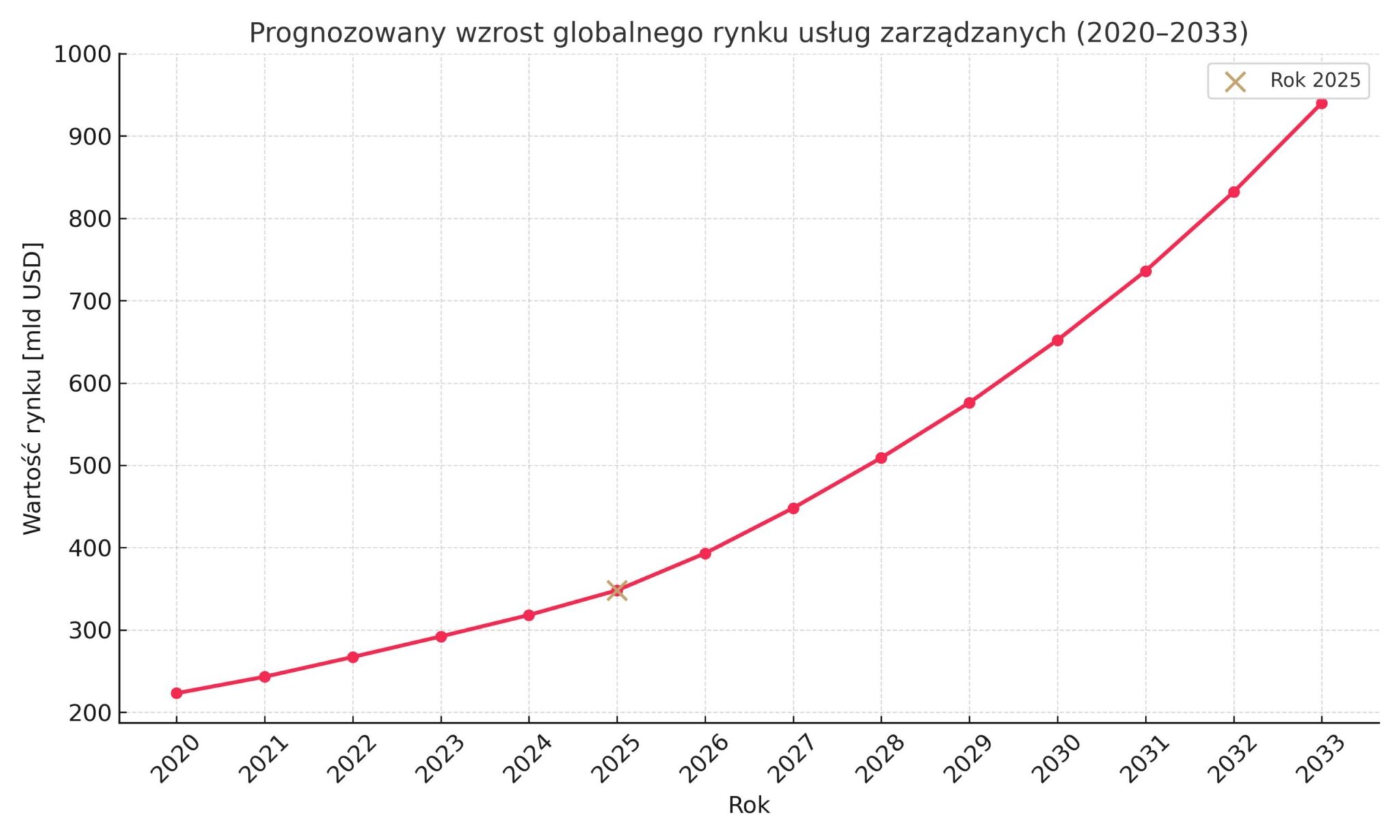
    Automation is driving not only efficiency, but also growth in the overall SME market. More and more companies are opting to outsource managed IT services, expecting providers to use modern AI technologies for better performance. Global forecasts indicate a continued high growth rate for this industry in the coming years. The global managed services market is forecast to grow from approximately USD 348 billion in 2024 to approximately USD 393 billion in 2025 and over USD 1 trillion by 2033. By 2030, the market could already reach approximately USD 730 billion, representing high double-digit average annual growth. Such rapid expansion reflects the growing demand for specialised IT services delivered efficiently and at scale. Automation and AI are a key driver of this growth – streamlining the work of SMBs, enabling new services and business models, and attracting customers looking for innovative solutions. According to experts, AI is becoming one of the main drivers of managed services, and providers investing in these technologies can expect a greater share of the rapidly growing market.

    afa973fc 04d8 4c94 8116 a42636e4bf9e

    Key application areas for AI in SME services

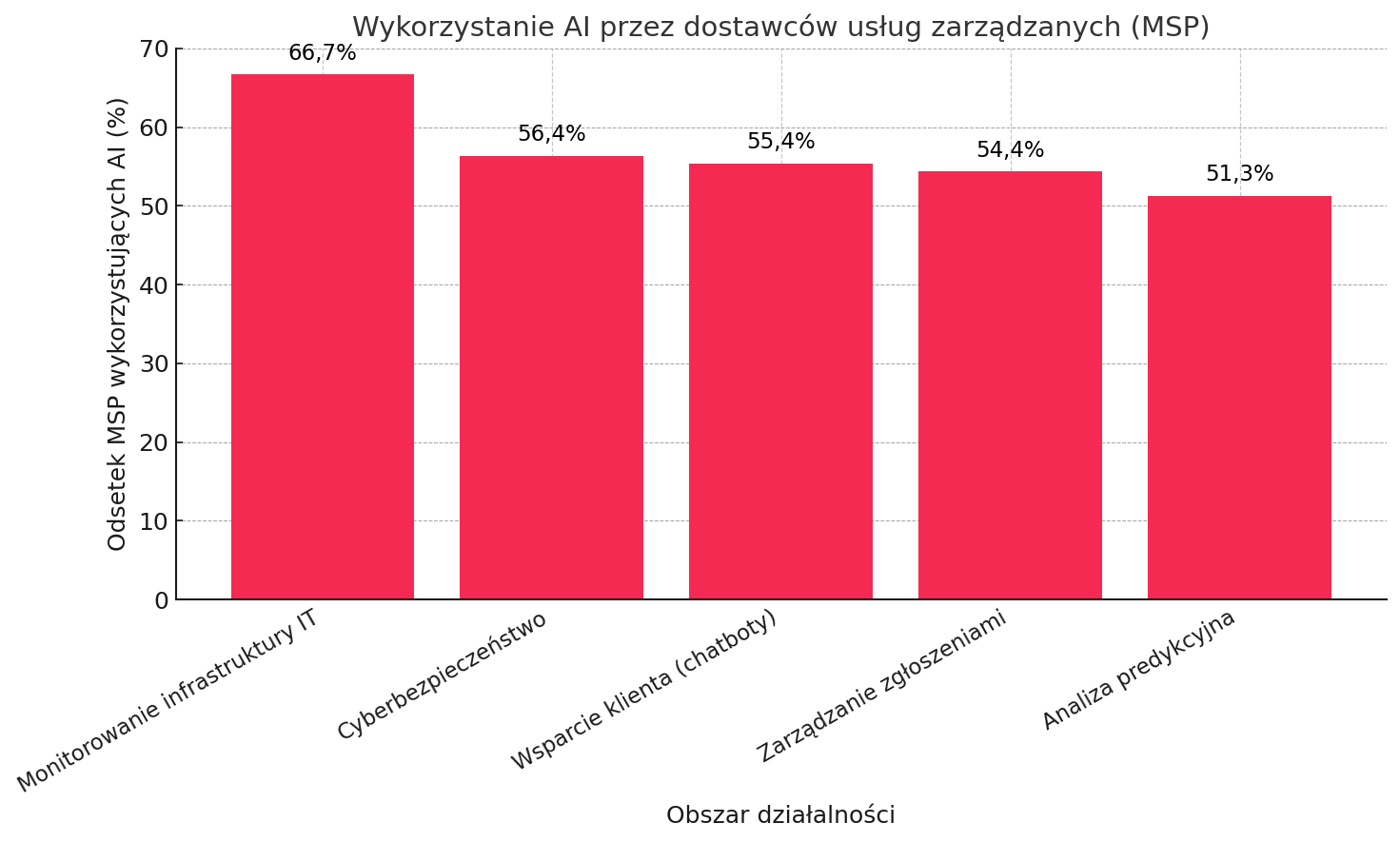
    AI is being applied to many aspects of managed service providers. The main domains in which automation and intelligent algorithms are changing the way MSPs deliver services, and the degree of adoption, are highlighted below. Percentage of MSPs using AI in different business domains. The most common use of AI is in infrastructure monitoring (67% of MSPs) and service request automation (54%). A slightly smaller percentage uses AI in the areas of cyber security (56%), customer support (chatbots – 55%) and predictive analytics (51% ). It is clear that IT systems monitoring and cyber security are at the forefront – AI here helps with 24/7 anomaly detection, threat detection and proactive incident response. Customer service automation (e.g. chatbots) relieves the burden on support teams, speeding up the resolution of common issues and improving customer satisfaction. Request and incident management gains agility thanks to AI – systems automatically categorise and prioritise tickets, reducing queues and response times. Predictive analytics tools, in turn, enable MSPs to predict failures or resource expansion needs before problems occur, minimising customer downtime.

    As can be seen from the data above, AI-supported automation covers the full range of managed IT services processes – from the basics of infrastructure maintenance to advanced analytics. In each of these areas, AI not only improves efficiency (e.g. fewer alerts slipping through the cracks, fewer false alarms in the SOC), but also expands the range of services that MSPs can offer (e.g. predictive customer optimisation recommendations, intelligent advice through assistants). This shows that AI has become a versatile tool to improve MSP operations on many fronts simultaneously.

    Challenges in implementing AI automation

    Despite the obvious benefits, implementing AI in managed services brings with it a number of challenges. IT managers need to consider these when planning automation strategies to avoid pitfalls and maximise return on investment. The main obstacles include:

    • Data quality and availability – AI requires large sets of reliable data to train models. Many companies struggle with scattered, incomplete or poor quality data, which limits the effectiveness of algorithms.
    • Complexity of integration – Implementing AI into existing processes and systems can be difficult. It is necessary to adapt the IT infrastructure, integrate with a variety of tools and ensure that the new solutions are compatible with current procedures.
    • Security and privacy – AI-based automation raises questions about data security (especially in the context of models that learn from customer data) and potential new attack vectors. MSPs need to ensure that the models they implement do not introduce additional security vulnerabilities.
    • Skills gaps – Effective use of AI requires expertise that may be lacking in typical SME teams. The problem is a shortage of machine learning experts and the need to train staff to use the new tools.
    • Costs and ROI – AI technology (from tool purchase to integration and maintenance) involves significant financial outlay. Companies must carefully calculate whether the expected improvements and savings will outweigh the costs incurred.
    • Ethical aspects and regulatory compliance – With the increasing use of AI, issues of accountability of algorithms, transparency of decisions made by models and compliance with regulations (e.g. RODO for automated processing of personal data) arise. MSPs need to develop appropriate AI management policies to maintain customer trust and meet regulatory requirements.

    Awareness of the above barriers is key to successful AI implementation. Technology leaders should prepare a comprehensive transformation plan, including phased implementation (e.g. piloting on a limited function), providing training for employees and selecting proven, secure AI solutions. This will ensure that automation becomes a permanent part of the MSP’s strategy and not just a one-off experiment.

    Prospects for the future

    Automation and AI are redefining the managed services model, but many changes are yet to come. In the coming years, expect the MSP offering to continue to evolve, with MSPs increasingly delivering AI-based services beyond the traditional framework. For example, the concepts of proactive, predictive services are already emerging: providers can anticipate customer needs and propose solutions before a problem arises (e.g. preventative upgrades before a failure occurs, automated suggestions for performance improvements). More integrated service platforms are also being developed, where the customer receives a personalised, adaptive set of managed services that adapt dynamically to their needs. All this means that MSPs that adopt AI quickly will gain an advantage. They will be able to offer innovative, higher value-added services that are difficult to achieve through traditional methods. In contrast, providers that delay investing in intelligent automation risk being left behind – their services may prove to be less efficient, more expensive and unable to meet growing customer expectations of proactivity and personalised service. As one industry report put it, this is only the beginning of the transformation: the most innovative MSPs will be able to provide services still unimaginable today, from ‘bespoke’ marketplaces that adapt to user needs to cyber security bordering on precognition (predicting and stopping breaches before they happen).

    In summary, automation and AI are becoming the new face of managed services. What this means for IT managers and technology decision makers is the need to boldly but thoughtfully enter the world of AI – to harness its potential to increase efficiency and create new value for the business, while consciously managing the challenges. MSPs that successfully integrate AI into their offerings can bring service quality to unprecedented levels, shaping the future of the entire industry. Conversely, those who stay with old methods risk losing competitiveness in the face of the coming automated future of IT services.