Tag: Germany

  • Gigantic investment in Amberg, Germany. New AI data centre for hundreds of millions of euros

    Gigantic investment in Amberg, Germany. New AI data centre for hundreds of millions of euros

    In the heart of Bavaria, in the less than 40,000-strong city of Amberg, a new vision of European technological independence is beginning to crystallise. German start-up Polarise has announced plans to build a data center dedicated to artificial intelligence, with a capacity of 30 megawatts in its first phase. While this figure may seem modest compared to the campuses of Google or AWS, the strategic importance of the investment goes far beyond dry technical parameters.

    Scheduled to be operational by mid-2027, the project hits a sensitive point in the European economy: the dramatic shortage of sovereign computing infrastructure. According to Bitkom Group, at the end of last year, the total capacity of AI data centres in Germany was around 530 MW. The problem is that the lion’s share of these resources is in the hands of players from outside the continent. In an era of rising geopolitical tensions, uncertainty over tariffs and divergent regulations on content moderation, relying solely on US clouds is becoming a strategic risk for European business.

    Polarise, which currently operates thirteen facilities, plans to eventually expand its Amberg centre to as much as 120MW. This is a scale that would allow it to enter a league hitherto occupied almost exclusively by global hyperscalers. However, these ambitions require a huge amount of capital. The company suggests that the costs of the first phase will close in the “triple-digit million euro range”. Significantly, Marc Gazivoda, Polarise’s marketing director, stresses that the project is developing without the support of state subsidies, relying on commercial demand from customers who either rent power or install their own equipment in the facility.

    Local players are beginning to see an opportunity in niches that previously seemed unconquerable. Building an in-house AI facility is not only a matter of prestige, but above all of data security and the stability of the digital service supply chain. If Polarise proves the project on schedule, Amberg could become a key point on the map of European Industry 4.0, offering an alternative for companies for whom geographical and jurisdictional proximity of servers is critical. The success of this investment will show whether Europe can realistically fight for control of the foundations of its own digital future, or whether it will remain merely an ambitious consumer of other people’s technology.


  • Google loses in Berlin. More than half a billion euro fine for destroying competition

    Google loses in Berlin. More than half a billion euro fine for destroying competition

    The regulatory front against Google in Europe has just gained strength. The regional court in Berlin (Landgericht Berlin) has ruled that the conglomerate must pay a total of €572 million in damages to two German price comparison sites for abusing its dominant position. This is the next chapter in a years-long battle to favour its own services in search results.

    The amount awarded will be split between Idealo (€465 million), a platform owned by the Axel Springer media group, and Producto (€107 million). The case concerned a practice known as ‘self-preferencing’, i.e. the unfair promotion of Google Shopping’s own service at the expense of competing sites, which were relegated to further search engine positions.

    During the trial, Google defended itself by pointing to adjustments made in 2017 after the intervention of the European Commission. These allowed other comparison sites to buy advertising space within the Google Shopping service. However, the Berlin court found this measure insufficient to compensate for the damage that competitors had suffered in the years preceding this change

    For Idealo, this judgment, although victorious, does not end the case. The company, which had originally claimed €3.3 billion, had already announced in February that the amount awarded was only a ‘fraction’ of the actual economic losses. Idealo representatives confirmed that they will continue their legal battle. Google, on the other hand, disagrees with the verdict and has announced that it will appeal.

    The Berlin court’s ruling is part of a wider picture of regulatory pressure on Big Tech in Europe. It is a so-called ‘follow-on claim’, building on the European Commission’s earlier findings on Google’s monopolistic practices.

    In the background, the Digital Markets Act (DMA), which is being implemented to systemically curb favouritism of its own services by digital ‘gatekeepers’, remains in place. Brussels, incidentally, is already conducting new investigations into potential DMA violations by Google. However, the conglomerate itself has consistently argued that the strict enforcement of the new rules is already adversely affecting the quality of search results and hitting European companies.

  • Germany bets on AI and digitalisation to stifle bureaucracy and restore competitiveness

    Germany bets on AI and digitalisation to stifle bureaucracy and restore competitiveness

    German Chancellor Friedrich Merz has unveiled a comprehensive plan to modernise the state, involving digitalisation, support for AI and a radical simplification of administrative procedures – the goal: to restore the competitiveness of Europe’s largest economy.

    Bureaucracy as a brake on growth

    A report by the Ifo Institute indicates that excessive bureaucracy in Germany generates annual economic losses of €146 billion. In its modernisation programme, the government plans to reduce the administrative burden by 25 per cent, which would save €16 billion.

    23 projects, from registration to immigration

    Key initiatives include: centralised online vehicle registration, a 24-hour business registration platform and AI tools to support court and visa procedures. The government is also betting on simplifying the recognition of foreign medical qualifications and creating a digital agency to facilitate the admission of professionals from abroad.

    This approach is part of a wider trend: the measurement of the so-called ‘bureaucracy index’ in Germany shows a systematic increase in the volume of regulation (by 60 per cent between 2010 and 2024).

    Challenges and conditions for success

    The implementation of the plan requires not only legislative amendments, but also a cultural change in the administrative apparatus – without real simplification, new regulations can generate new layers of complexity. Legal constraints on the reduction of civil servants are also being studied, especially in the regions and local authorities.

    In addition, the government has added the energy of the future to the programme, including approving €1.7 billion for the construction of a nuclear fusion reactor and the acceleration of hydrogen infrastructure.

    If the initiative passes the Bundestag and Bundesrat, Germany could become the laboratory of the digital state in Europe – provided the reform is not strangled by structural resistance and parliamentary bureaucracy.

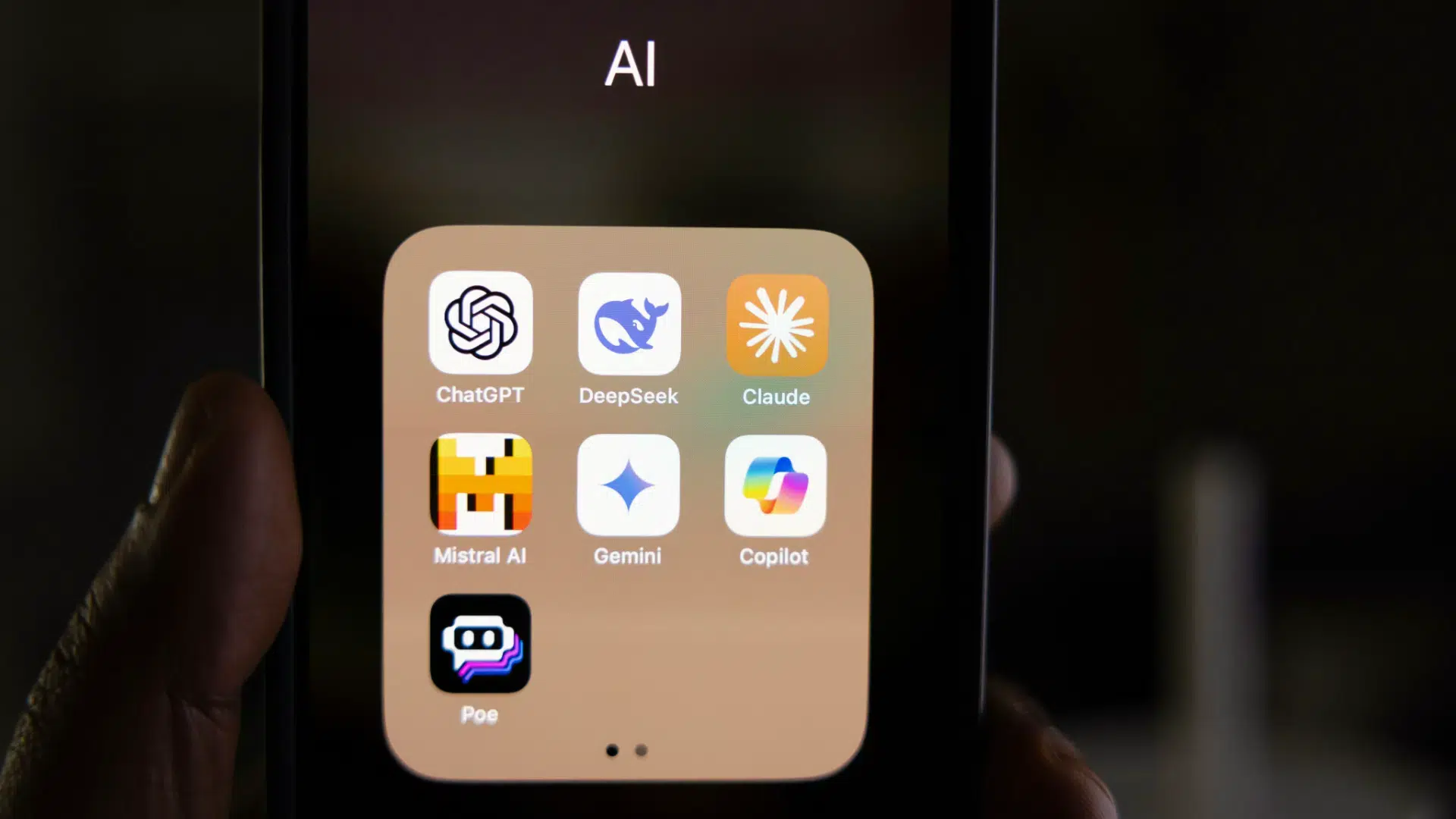
  • DeepSeek under the magnifying glass in Europe. Germany wants Chinese AI app removed from shops

    DeepSeek under the magnifying glass in Europe. Germany wants Chinese AI app removed from shops

    The rise of Chinese artificial intelligence models in Western markets is increasingly facing a barrier – not technological, but regulatory. The latest example comes from Germany, where the country’s data protection commissioner has demanded that Apple and Google remove the DeepSeek app from their shops over fears of breaches of European data protection law.

    It is another country after Italy, the Netherlands and Belgium that is questioning the security and transparency of a Chinese AI application. DeepSeek, a startup with ambitions to rival OpenAI and Anthropic, gained notoriety earlier in the year with claims of creating a competitive AI model at a much lower cost. In Europe, however, it is mainly faced with questions about where user data goes.

    The German supervisory authority found that DeepSeek stores personal data – including the content of queries or uploaded files – on servers in China, and the company was unable to demonstrate that it guarantees a level of data protection equal to Europe’s. And this is a key condition under the RODO. Also working in the background is the concern about the broad powers of the Chinese authorities to access data – even those processed by commercial entities.

    While the decision does not yet mean a formal ban – Apple and Google are to assess the situation themselves and take action – the pressure is mounting. Italian authorities have already ordered the app to be blocked. The Netherlands has banned its use on government devices and Belgium has recommended that officials avoid it. The UK government, on the other hand, remains with a ‘threat monitoring’ stance for now, as does Spain’s consumer protection agency.

    On a geopolitical level, the case is part of a broader trend: a growing distrust of Chinese technology providers. US lawmakers are planning to introduce legislation banning the use of AI models developed in China by federal agencies. In the background, there are also reports of DeepSeek’s links to Chinese military and intelligence operations.

    For Western platforms – such as Apple and Google – the situation is another test of their ability to operate in compliance with local regulations while balancing relationships with global partners. The DeepSeek decision could set a precedent for similar cases in the future, especially as Chinese AI models increasingly try to win users outside Asia.

    For users and companies in Europe, the key question remains not so much the performance of AI, but trust in the ecosystem in which it operates. And in this case – data, once transferred to China, may not come back under European jurisdiction.

  • Germany and Israel create a joint cyber security centre. The “Cyberdome” project is being established

    Germany and Israel create a joint cyber security centre. The “Cyberdome” project is being established

    Germany and Israel are planning to set up a joint cyber research centre to lay the foundation for deeper cooperation in the area of digital security and intelligence. There is a growing conviction in Berlin that in an era of growing threats from Russia and China, simply strengthening the armed forces is not enough – a parallel modernisation of civil defence and cyber capabilities is necessary.

    A proposal for the creation of a so-called ‘Cyberdome ‘ – a digital defence shield – was announced during a visit to Israel by German Interior Minister Alexander Dobrindt. The project envisages five key measures, including the development of threat detection technology, cooperation between intelligence agencies, the training of specialists and the transfer of Israeli know-how to German institutions. Germany clearly wants to accelerate the digitalisation of public security, building on the experience of a partner whose defence solutions – such as the famous ‘Iron Dome’ – have proven themselves under real threat.

    This move is another sign of a change in Berlin’s geopolitical course. After years of strategic caution, Germany is starting to take more decisive steps to increase its contribution to Europe’s security – including in the digital area. Defence spending is set to exceed 2% of GDP in 2025, and cyber security is increasingly appearing as an investment priority on the government’s agenda.

    For Israel, in turn, this means strengthening its position as a defence technology exporter and further institutionalising partnerships with European Union countries. Israeli companies – such as Elbit, Rafael and NSO – are already working intensively with European services in the fields of early warning systems, cyber intelligence or critical infrastructure protection.