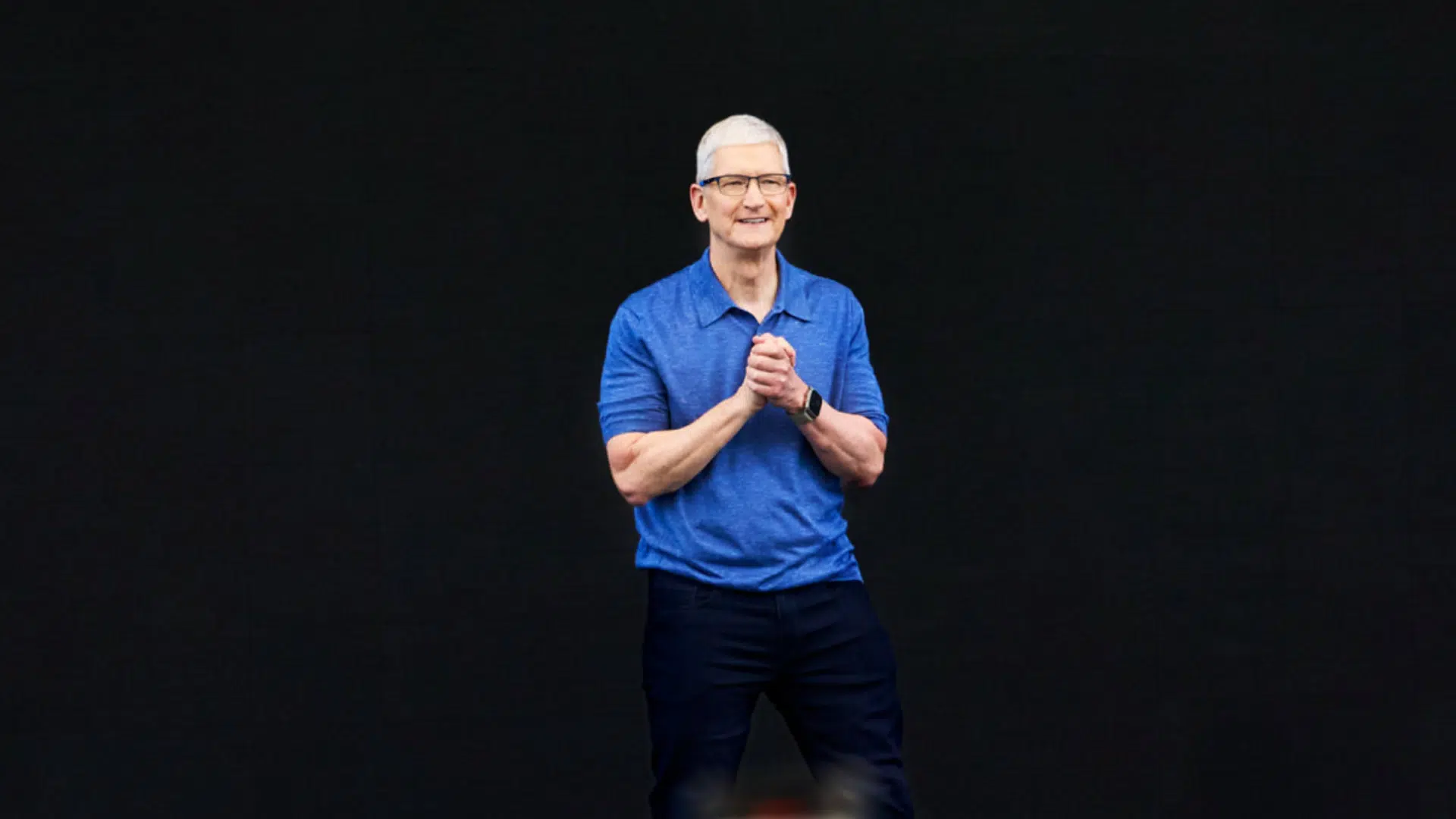
Apple has entered into preliminary talks with Intel and Samsung Electronics over the potential production of its core processors. According to reports from Bloomberg, executives from the Cupertino giant have already visited Samsung’s Texas factory and held independent consultations with Intel. Although negotiations are at an early stage and have not translated into concrete orders, the move is aimed at creating an alternative to Taiwan’s TSMC. The decision comes in the shadow of Tim Cook’s warnings about supply constraints on advanced chips, which have negatively impacted iPhone sales. The situation is compounded by the fact that Apple’s upcoming smartphone processors use technology shared with its most coveted AI chips.
Apple’s actions lead to a clear conclusion. The market’s deep dependence on a single supplier, as TSMC has become, raises powerful operational risks, especially in an era of massive demand for artificial intelligence architectures that are drastically shrinking available capacity. At the same time, Apple’s scepticism about the reliability standards and scale of alternative suppliers exposes a brutal truth: TSMC’s technological and logistical advantage creates a barrier that competitors cannot quickly overcome.
The strategic need to review purchasing processes in the high-tech sector is worth noting. Business leaders should calculate long-term deficits in state-of-the-art lithography nodes and treat diversification not as a fallback option but as a permanent part of the strategy. It is advisable to develop closer collaboration with alternative manufacturing partners early on in the design and R&D phase. Such an approach will minimise technological risks and make the hardware architecture more flexible, effectively securing the company’s business continuity in the face of further supply crises.
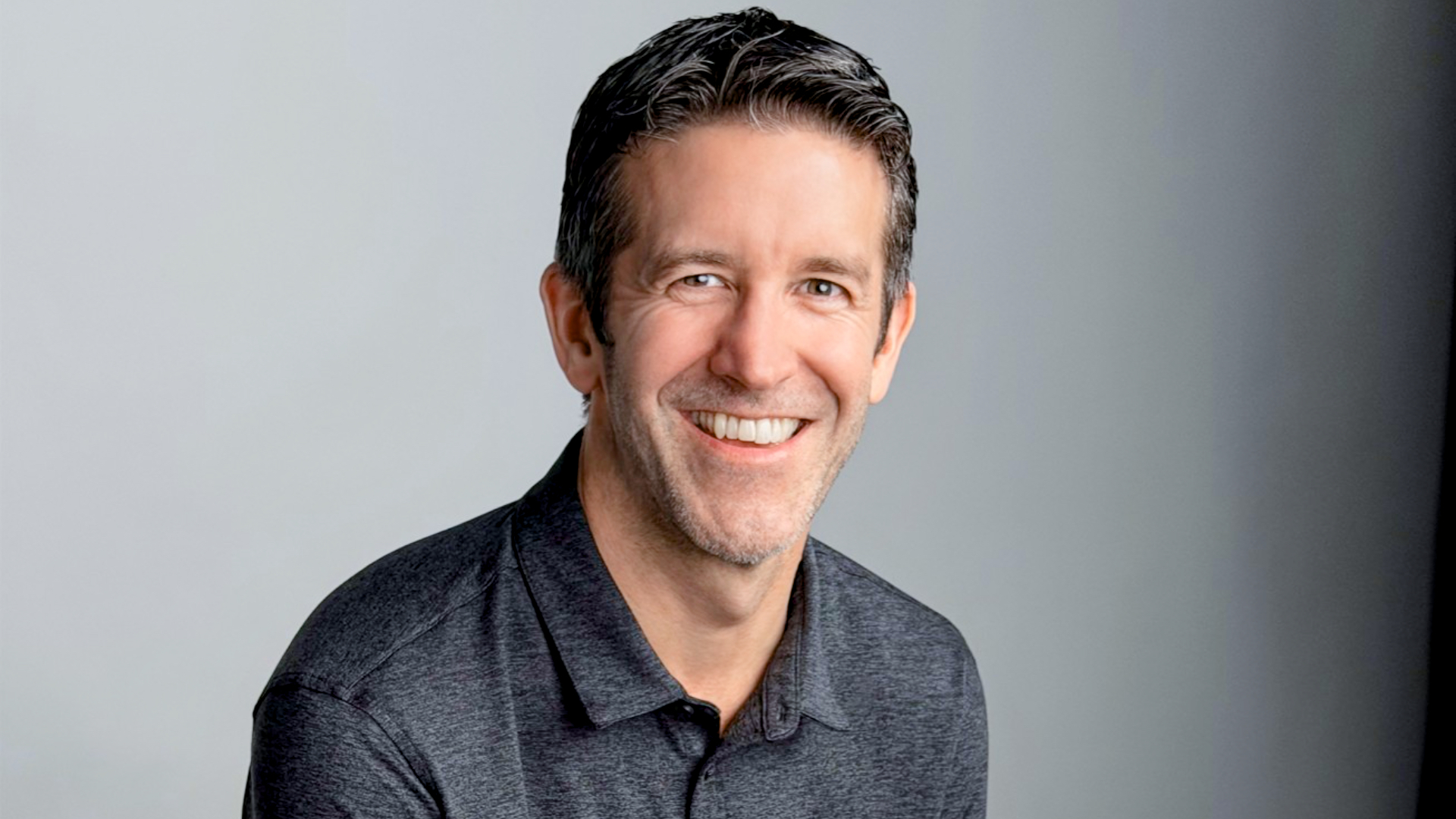
When John Ternus officially takes the helm in Cupertino on 1 September, Apple will not only have a new CEO, but also clearly declare its strategy for the most uncertain decade in Silicon Valley history. The appointment of the 50-year-old hardware engineering veteran as Tim Cook’s successor signals that, in a world awash with pure software AI, Apple intends to defend its position with a physical product.
Ternus takes the reins at a symbolic moment. Apple, long holding the title of the world’s most valuable company, has had to give way to Nvidia, the giant driving the artificial intelligence infrastructure. While Microsoft and Google spend billions integrating language models into every aspect of their ecosystems, Ternus brings a philosophy to the CEO’s office that can only be described as stubborn pragmatism. His approach, summarised in the slogan that Apple “doesn’t ship technology, it ships products”, suggests that the company is not going to race on the number of parameters in AI models, but on how the technology will change everyday interactions with an iPhone or Mac.
His track record builds a picture of a leader who can take risks where others look for safe solutions. It was Ternus who was behind the transition of the Mac line to Apple’s proprietary Silicon processors, ending years of dependence on Intel and breathing new life into the personal computer segment. He was also the one who oversaw the launch of the iPhone Air and the MacBook Neo – a device that, by using chips from the iPhone 16 Pro, aggressively competes for the market with a $599 price tag.
Internally, Ternus has a reputation for perfectionism that evokes the work ethos of Steve Jobs. Anecdotes of quarrels with suppliers over the number of grooves on a user-invisible display screw circulate through the corridors of Cupertino as evidence that Apple under his leadership is not about to give up its obsession with detail. Analysts point out that Ternus is widely liked and respected by executives, which could make it easier for him to guide the company through the difficult process of Siri transformation and integration with third-party models such as those from Google or OpenAI.
The question facing the new CEO, however, goes beyond hardware engineering. Rivals, from Samsung to Meta with its Ray-Ban AI glasses, are hoping that Apple’s focus on devices will prove to be their Achilles’ heel in an era where the operating system may be replaced by a smart assistant.
The challenge for Ternus is clear: he must prove that building great hardware is still the best way to protect the platform, and that artificial intelligence is just another tool in the hands of the engineer, not an end in itself. On 1 September, Apple under Ternus will enter a new era where pragmatism will be put to the ultimate market test.
Apple has officially confirmed what has long been whispered behind the scenes: Tim Cook is preparing to hand over the reins. John Ternus will become the company’s new CEO, and the whole process of handing over the reins will last until September 2026.
The choice of Ternus is a safe and substantive decision. As the previous head of hardware engineering, Ternus was behind the successes of Apple’s most important products – from iPhones to iPads and Macs. His promotion sends a clear message to investors and business partners: Apple remains a company focused first and foremost on a refined product. While Tim Cook made a name for himself as a brilliant logistician, Ternus brings to the CEO’s office direct experience in creating the technology that has shaped the modern marketplace.
Succession will not happen overnight, however. The plan, which the board of directors adopted unanimously, involves a long transition period. Until 1 September 2026, Tim Cook will remain in power, acting as a mentor for his successor. This time is intended to smoothly introduce Ternus to the complex processes of managing a global corporation and to establish relationships with key teams. With this approach, Apple avoids the turbulence typical of large companies that often accompanies a change of leadership.
Significantly, Tim Cook is not retiring from the company. He will take on the role of executive chairman of the board of directors after handing over as CEO. In his new role, he will focus on what he is currently unrivalled at – corporate diplomacy, dealing with politicians and supporting Apple’s strategic decisions. It’s a strategic move that will allow the company to retain Cook’s authority on the global stage, while giving the new leader room to operate.
The balance of power in the lower management structures is also changing. Ternus’ place in the hardware division is immediately taken by Johny Srouji, the architect of the success of Apple’s own processors. This change takes effect now, ensuring continuity of work on new devices without waiting for the succession finale in 2026.
On 1 September 2026, John Ternus will officially open a new chapter in the company’s history, but with the current strategy, the change will be almost imperceptible to most customers and partners. It is clear that stability and predictability remain the highest value in Cupertino.
In the first quarter of 2026, the mobile device market underwent a fundamental shift. While the global smartphone market shrank by 6 per cent year-on-year, Apple managed not only to resist the downward trend, but also to take over the leadership seat. With figures showing a 21 per cent market share, the Cupertino giant has proven that the premium segment is now the safest haven in uncertain times.
Apple’s success, manifested in a 5 per cent increase in shipments, contrasts with its competitors’ problems. Samsung, the traditional rival, recorded a 6 per cent decline, surrendering the lead with a share of 20 per cent. This result was mainly driven by the delayed launch of the flagship Galaxy S26 and weakness in the budget segment. Meanwhile, Apple recorded a spectacular 23 per cent increase in sales in China in the first weeks of the year, confirming the effectiveness of a strategy rooted in an ecosystem of services and a strong supply chain.
The most fascinating aspect of the current market situation, however, is the reason for the overall slowdown. As Counterpoint Research notes, it is not so much a lack of demand as a shift in priorities in the semiconductor sector that is responsible for the declines. Manufacturers of memory, a key component of any device, are increasingly redirecting their resources to AI-enabled data centres at the expense of consumer electronics.
For years, Apple’ s strategy has been to refine existing technologies rather than race to be a pioneer. However, recent reports from the supply chain suggest that this time the Cupertino giant’s engineering perfectionism has encountered a barrier that could significantly affect the company’s roadmap. According to reports from Nikkei Asia, initial engineering trials of the foldable iPhone have revealed technical issues that put the planned 2026 launch into question.
The challenges of the durability of the flexible displays and the mechanics of the hinge remain problematic even for a company with almost unlimited R&D resources. The engineering test phase, which the project is currently in, is crucial to setting a mass production schedule. The emergence of “more problems than expected” at this stage means that Apple must go back to the drawing board on issues that competitors such as Samsung and Huawei already have theoretically mastered.
From a market perspective, this delay has a twofold significance. On the one hand, Apple risks further ceding ground in the premium segment, where *foldable* devices are becoming a symbol of status and innovation, especially in the key Chinese market. On the other hand, a hasty debut of an unrefined product could damage the reputation of a brand that builds its value on reliability. Business pragmatism dictates that Tim Cook would rather postpone the launch by a few months, or even a year, than face the image disaster of faulty screens.
It is worth noting that 2026 is still in the offing as a date for updating the flagship iPhone line with larger displays and advanced camera systems. The foldable model was expected to be the ‘icing on the cake’ of this launch. If reports of delays are confirmed, Apple may be forced to base its autumn sales on evolutionary rather than revolutionary changes to the classic smartphone design. For the vendor ecosystem in Asia, this sends a clear message: Apple’s rigorous quality standards remain intact, even at the cost of lost time in the arms race.
Modern market analysts often operate in categories that seem dry and mathematically quantifiable: processor performance, network bandwidth or supply chain optimisation. Meanwhile, the story of Apple, the Cupertino giant, which injects a million dollars into its resources every ninety seconds, suggests the existence of a very different, almost metaphysical foundation for success.
For it turns out that in the world of high technology, the subjective – i.e. aesthetics, intuitiveness and design – can become the hardest and most measurable business parameter.
The origins of this philosophy go back to a time when computer technology was still the domain of hermetic laboratories and electronics enthusiasts. In the mid-1970s, computing systems resembled household appliances in size and required specialist knowledge to operate.
The breakthrough that Steve Wozniak and Steve Jobs made was not just the miniaturisation of integrated circuits, but a fundamental paradigm shift in how we view the work tool. The Apple II was not just another hobbyist motherboard; it was the first ‘off-the-shelf’ product to have an integrated keyboard and an aesthetically pleasing case.
This decision to move beyond the engineering environment towards the end user was the first lesson in the democratisation of technology. It showed that lowering the entry threshold through refined design is the most effective strategy for capturing the mass market.
Apple’ s history, however, is not only an unbroken string of successes, but above all a study of recovery from a deep crisis by returning to the roots of design. The nineties, marked by product chaos and a near-total loss of liquidity, exposed the weakness of a corporation lacking a clear visual identity. Only the return of Steve Jobs and the ennoblement of Jony Ive, a brilliant British designer, allowed the company to regain its steerage.
The key moment here was a shift in the status of the designer in the corporate hierarchy. The designer ceased to be the executor of imposed technical specifications and became the architect of experience. Models such as the iMac G3 and later the iPod proved that a product can evoke emotions that are worth much more to the consumer than the sum of the costs of the individual components. Aesthetics thus became a high-margin building tool, protecting the company from the devastating price war typical of generic hardware manufacturers.
The clearest proof of the superiority of intuitive design over raw performance came with the launch of the iPhone in two thousand seven. Giving up the physical keyboard in favour of a touch interface was a risky, even heretical move from the point of view of the mobile market leaders of the time.
Apple, however, placed a premium on the psychology of use. The introduction of gestures, such as the famous swipe to unlock the screen, was not just an embellishment. It was an element that built a deep, almost subconscious bond between the user and the device. In this way, the iPhone evolved from being a phone to becoming a personal command centre, becoming the foundation of an entire ecosystem of services that today generates record profits.
It is worth noting, however, that design visioning would not survive without the operational perfection that Tim Cook has brought to the organisation. This is a rare example in the business world, where ruthless logistical optimisation serves to protect an artistic vision. As a master of supply chain management, Cook has done the almost impossible: he has reduced stock holding time from two months to just two days.
This efficiency has allowed Apple to maintain enormous liquidity, which in turn funds the riskiest R&D projects. In this model, design defines the direction and logistics provide the fuel to make it happen. The contemporary success of products such as the Apple Watch and AirPods demonstrate the company’s ability to not only create new categories of devices, but to dominate them in no time, relying on the consistency of the entire system environment.
Today, the market is once again asking the question about the limits of usability of aesthetics. Will mixed reality glasses repeat the success of the smartphone, or will they remain merely a technological curiosity? The answer probably lies in the same principle that guided the founders in their garage in Palo Alto.
Design is not the colour of a case or the shape of an icon. It is the way a product solves real user problems, often before the user can name them.
Humanising technology is becoming the most important market differentiator. Apple has proven that the highest form of technological sophistication is simplicity, and that aesthetics, when supported by engineering soundness and logistical precision, is the most sustainable competitive advantage.
Building business value based on user experience is not idealism, but a tough, calculating and highly effective business strategy that has been redefining the boundaries of what is possible in the global IT industry for half a century.
For years, Apple ‘s strategy was based on building a ‘walled garden’ in which every element of the user experience was rigorously controlled by Cupertino engineers. However, with the rapid development of generative artificial intelligence, the Tim Cook-led giant seems to understand that the key to dominance is no longer exclusivity, but the role of master distributor. According to the latest reports, the upcoming iOS update is set to bring a fundamental change: Siri will cease to be just an interface for Apple services and ChatGPT, becoming an open platform for third-party AI models.
The planned integration with systems such as Gemini from Alphabet and Claude from Anthropic is a move that The Information style can describe as a pragmatic shift towards a platform model. Rather than forcing users to use a single proprietary solution, Apple is positioning the iPhone as a central hub where the consumer decides which ‘intelligence’ will best respond to their specific query. It’s a strategic acknowledgement that in a world of LLMs (Large Language Models), no company can maintain a sustainable advantage in everything from creative writing to advanced programming.
By allowing AI apps from the App Store to interact directly with Siri, Apple is creating a mechanism that could become the new standard for voice interaction. At the same time, the company is safeguarding its financial interests. Opening up Siri to external players is not only a nod to user convenience, but more importantly a new revenue path. Apple is likely to take a significant share of subscription fees from AI services integrated into its ecosystem, which could compensate for slowing hardware sales.
If these announcements are confirmed at the upcoming WWDC, we will see the transformation of Siri from a limited assistant to a powerful layer of service orchestration. Apple is no longer just trying to catch up with the competition in the model performance race; instead, it is building the infrastructure that every major AI company will need to be present to reach the billion iPhone users.
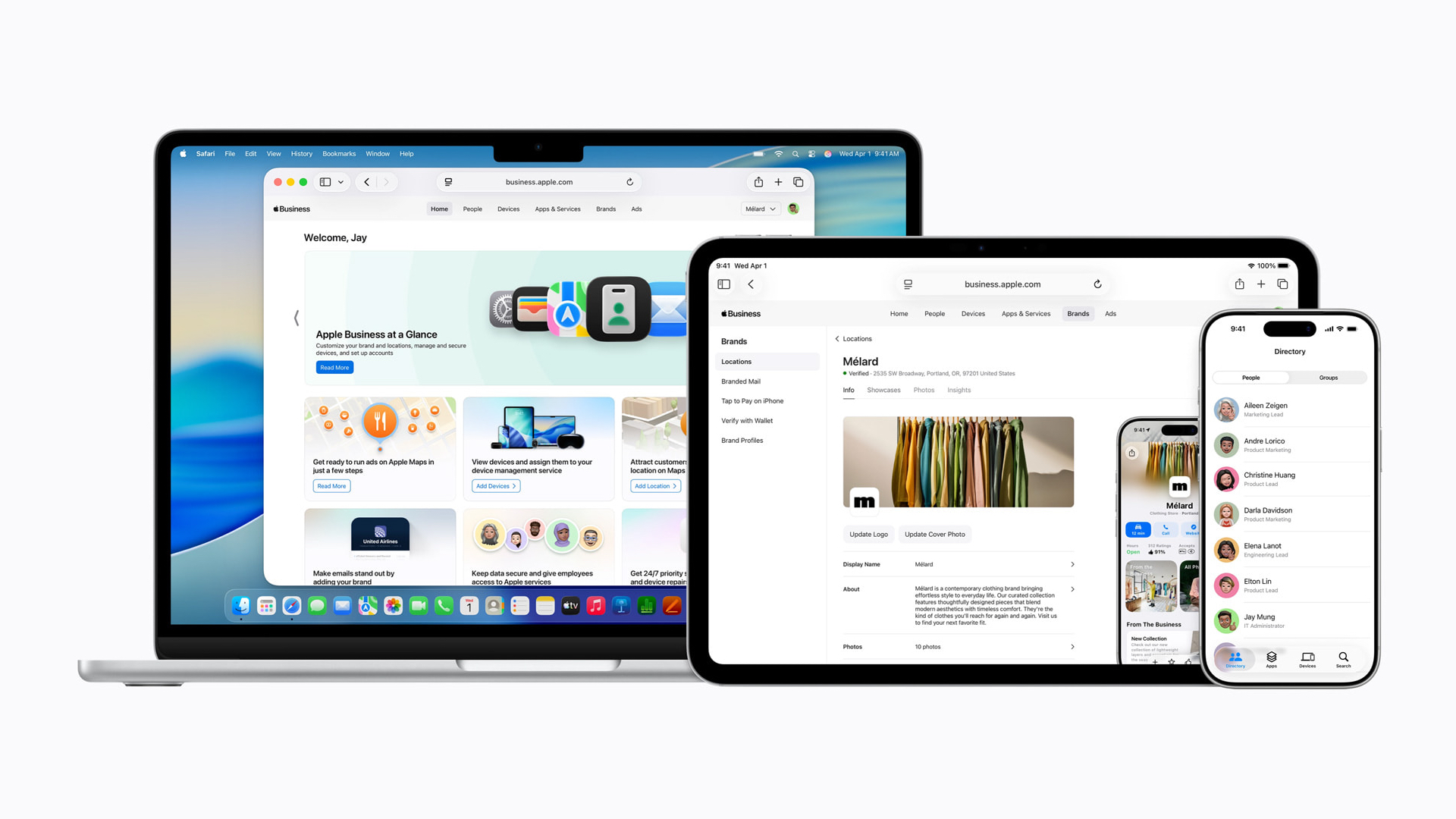
For years, Apple ‘s strategy towards its business customers has resembled a patchwork: robust devices, but fragmented management and marketing services. This is now changing. The announcement of the Apple Business platform, which will debut in April 2026, is not just a technical consolidation. It is a strategic move to take full control of the digital lives of small and medium-sized enterprises (SMEs), which until now have had to juggle between Google, Microsoft and third-party MDM solutions.
Apple’s decision to combine its hitherto dispersed tools – Essentials, Manager and Connect – into a single free body hits a sensitive point for smaller players: the lack of dedicated IT departments. The promise of ‘zero-touch deployment’ and automatic integration with Microsoft Entra ID or Google Workspace suggest that Apple wants to become the default operating system for start-ups. The ability to register a domain and run professional mail directly in the Apple ecosystem is a direct challenge to the Google Workspace suite.
The most interesting piece of this puzzle, however, is the entry into the local advertising segment of Apple Maps. From summer 2026, companies in the US and Canada will gain the ability to promote themselves in search results. While Apple places great emphasis on privacy, emphasising that location data does not leave the device, the direction is clear: the company is building its own advertising ecosystem. This is a logical extension of Business Connect, which allows brands to manage their presence in Maps or Wallet. Now this presence is gaining a commercial dimension.
From a business perspective, the removal of monthly Business Essentials fees and the simplification of the cost structure (now based primarily on iCloud space and AppleCare+ support) is a classic lock-in. Apple is lowering the barrier to entry to tie businesses more firmly to its hardware. Susan Prescott, Apple’s vice-president, calls it a “leap forward”, but for the market it is primarily a signal that Apple is no longer just a supplier of luxury laptops for graphic designers. It is becoming an end-to-end technology partner that wants to manage everything from an employee’s iPhone configuration to their email inbox to the advertising that will attract the customer down the street.
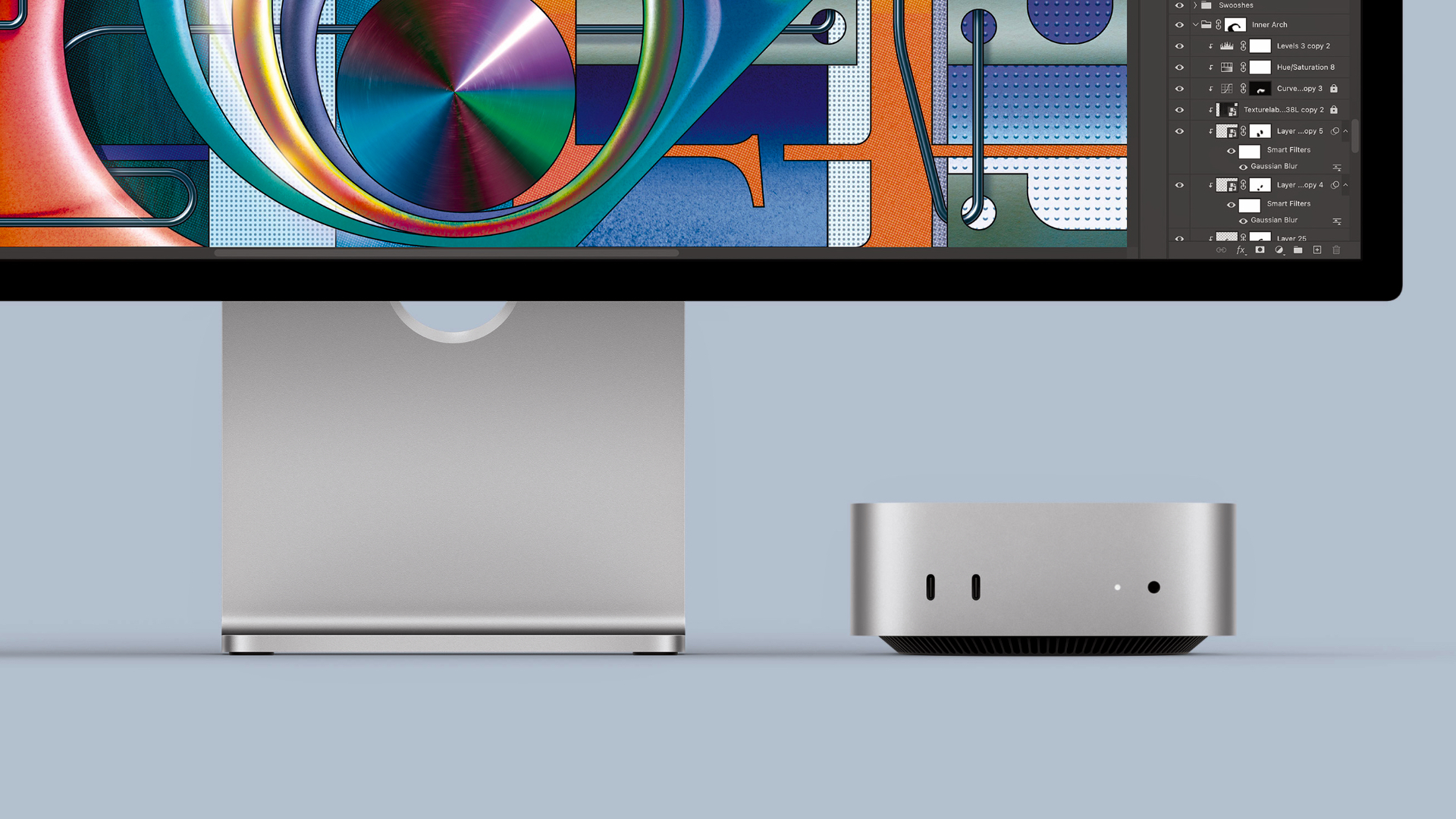
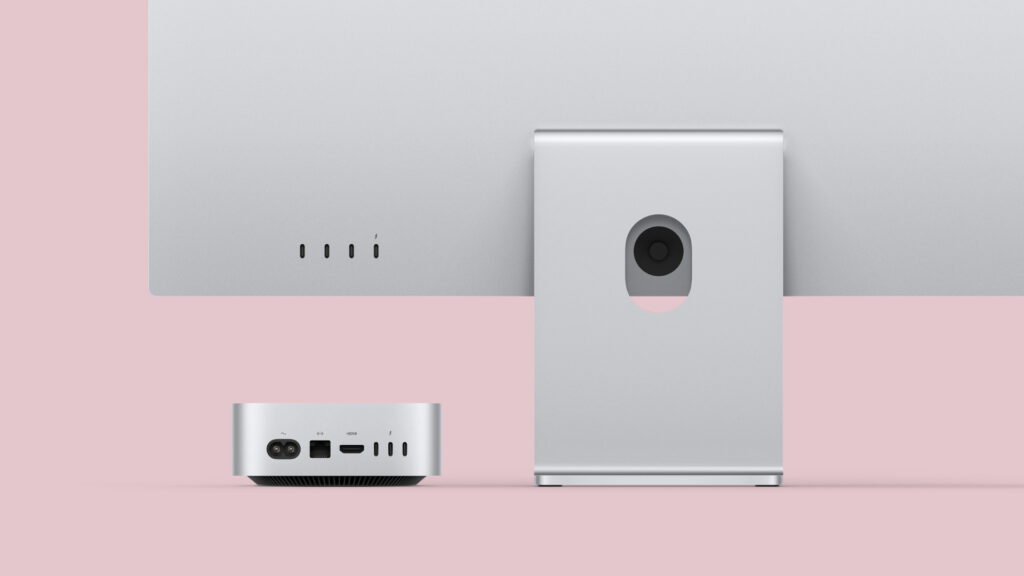
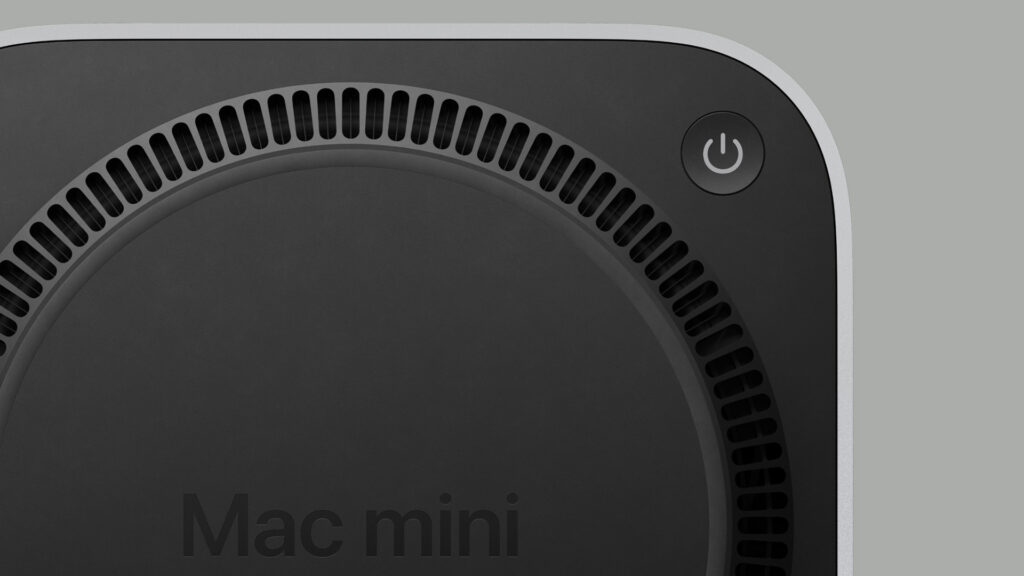
For years, the choice of hardware infrastructure was based on a dichotomy between pragmatism and prestige. Apple’s solutions, while prized for their work culture and aesthetics, have often been relegated to the budget margins as an expensive privilege reserved for niche creative departments. However, 2026 brings a fundamental shift in these optics. The Mac mini, equipped with M4 generation chips and upcoming M5 units, has become the most precise tool in the hands of finance and technology executives. It turns out that the device with the lowest threshold for entry into the Apple ecosystem, can generate the highest return on investment.
Revisiting the cost myth through the lens of TCO
The foundation of scepticism towards macOS deployment in a business environment has always been the unit purchase price. However, this is a short-sighted perspective that ignores the real life-cycle costs of the product. An economic analysis covering a four-year period shows that the initial, slightly higher investment in the Mac mini is rapidly amortised through a dramatic reduction in operating costs. The stability of the architecture, based on Apple’s proprietary silicon, means that support departments are seeing a reduction in incidents by nearly half. The reduced failure rate not only saves IT professionals man-hours, but eliminates costly downtime for operations teams.
Another pillar of this profitability is the residual value. Unlike standard PCs, which often lose almost all their market value after four years of use, the Mac mini remains a highly liquid asset. The ability to recoup a significant amount of capital when replacing the fleet with a newer generation drastically alters the bottom line, making this device a de facto cheaper solution than theoretically cost-effective alternatives.
Data sovereignty and the local power of AI
Today’s businesses face the challenge of integrating artificial intelligence into everyday processes, while maintaining strict privacy standards and compliance with RODO. This is where Mac mini reveals its second, strategic face. Thanks to Neural Engine, Apple Intelligence processes and agents like OpenClaw can operate locally, without the need to transfer sensitive corporate data to external cloud servers. Transforming a workstation into a private AI server allows automation of calendar management, correspondence sorting or documentation analysis in a secure, isolated environment.
An investment in M4 and M5 architecture is therefore an investment in digital sovereignty. The ability to process complex language models directly on the employee’s desk not only increases the speed of work, but also minimises the legal and reputational risks associated with potential data leaks from the cloud. In an age of increasing cybercrime, chip-integrated hardware security is a barrier that, when implemented in distributed PC environments, often requires the purchase of additional, expensive licences and filtering software.
Resource recovery through deployment automation
Managing a computer fleet in a large organisation can sometimes be a logistical nightmare, draining the energy of skilled technical staff. Mac mini, supported by the Apple Business Manager ecosystem, introduces the Zero-Touch Deployment standard, which redefines the role of the administrator. The process, in which the device goes directly from the vendor to the user and configures itself automatically when it first connects to the network, eliminates the need to manually prepare system images or install drivers.
The lack of hardware fragmentation – the fact that the same manufacturer is responsible for the processor, motherboard, and operating system – results in the near elimination of system conflicts. In an environment where stability is synonymous with profit, the predictability of the Mac mini becomes a key advantage. Freed from having to put out bug fires after operating system updates, IT departments can focus on higher-value-added projects, which translates directly into company-wide innovation.
Performance psychology and employee well-being
The human aspect is often overlooked when discussing corporate equipment, even though it determines the ultimate efficiency of processes. The choice of work tools is a clear signal sent to the team about the organisational culture and respect for the employee’s time. The Mac mini, with its silent operation even under heavy load and impeccable aesthetics, promotes an ergonomic and modern working environment.
High satisfaction with the equipment in use translates into talent retention, especially in sectors requiring high digital competence. An employee who has a tool that is responsive, reliable and integrated with modern SaaS solutions not only works faster, but also with greater engagement. From the CIO’s perspective, ensuring the smoothness of the interface and stability of connections to the cloud via standards such as Wi-Fi 7 or Thunderbolt 5 is a form of nurturing the continuity of business processes.
A new standard of pragmatism
The paradox of the Mac mini is that the device, perceived by the brand as a ‘premium’ product, actually promotes a lean approach. Maximising impact while minimising unnecessary resources – both time and money – makes this unit the ideal building block for a scalable business. With the upcoming M5 generation placing an even stronger bet on the autonomy of artificial intelligence, choosing this platform seems to be the most logical step for organisations aspiring to be leaders in digital transformation.
For years, Apple has pursued an acquisition strategy that rarely makes the financial headlines, but almost always redefines the working comfort of millions of professionals. The Cupertino giant’s latest move – the acquisition of Polish company MotionVFX of Bielsko-Biala – is a classic example of this philosophy.
Rather than chasing spectacular valuations in the AI or social media sector, Apple is choosing to precisely ‘glue’ the technology that already forms the backbone of its creative ecosystem.
MotionVFX, which has been around since 2009, has established itself as a standard in the world of video editing. Their plug-ins and templates for Final Cut Pro aren’t just add-ons; for many creatives, they’re what make Apple’s software a winner against Adobe Premiere or DaVinci Resolve.
The acquisition signals Apple’s intention to integrate the hardware layer even more tightly with the software, offering users of computers with Apple Silicon processors visual effects (VFX) tools optimised for the specific chip architecture.
From a business perspective, the move is part of a wider trend of consolidating creative tools. Apple doesn’t need MotionVFX as a separate revenue stream. It needs their talent and intellectual property to close the workflow in its own environment.
By eliminating the need for external extensions, the company is increasing the so-called ‘cost of change’ for professionals. An editor who has access to the best visual effects natively built into the system is less likely to look towards the competition.
This strategy, although less media-savvy than the multibillion-dollar purchases of Microsoft or Google, is characterised by exceptional efficiency. Apple chooses companies that share their obsession with design and performance. As market analysts note, integrating external innovation directly into Apple products allows the company to keep margins high while delivering real value to the ‘Pro’ segment, which is key to the brand image.
Although the financial terms of the transaction remain a secret, the significance of this acquisition for the Polish technology market is tangible. It confirms that domestic software houses and product companies have reached a level of maturity that attracts the world’s most demanding players.
For Apple, this is another step towards building a self-sustaining universe in which the boundary between hardware and creative tool becomes almost invisible.
For years, Apple has balanced a fine line between sophisticated design and hardware durability, often sacrificing the latter for aesthetics. But the launch of the MacBook Neo signals a pragmatic shift in Cupertino’s hardware philosophy. Priced at a competitive £2999, the device has been named Apple’s most repairable laptop since 2012, according to a recent analysis by iFixit.
For a company that once pioneered the implementation of proprietary pentalobe screws and aggressive adhesive bonds, the internal architecture of the Neo model is a surprising departure from the norm. Apple has replaced glue and rivets with traditional screws at the battery and keyboard mounts – a move that significantly lowers the entry threshold for servicing hardware. Key components such as the camera and Touch ID sensor have become modular, making them easier to replace in high-use environments such as school districts.
The challenge to Chromebooks
This design twist is not sentiment, but a battle for market share. By hitting the $500 price ceiling, Apple is entering directly into territory dominated by Google’s Chromebooks. In the education sector, the key indicator is total cost of ownership. As Kyle Wiens, CEO of iFixit, notes, schools often rely on interns to maintain hardware fleets. A laptop that requires a specialist tanner to open the case is a burden; a laptop that can be serviced with a simple screwdriver becomes a scalable asset.
The bottleneck of artificial intelligence
Despite these advances, Cupertino engineers haven’t completely abandoned their restrictive practices. The MacBook Neo received a 6/10 repairability rating from iFixit – a solid score for Apple, but still second only to the 9/10 marks regularly earned by the ThinkPad line from Lenovo.
The main point of contention remains the integration of 8GB of DRAM directly into the processor. While this unified memory architecture provides the speed that Apple is renowned for, it prevents any expansion after purchase. In an era where Apple is betting on private, local AI, this rigid memory limit could become a trap for premature product obsolescence. As local AI models go from strength to strength, 8GB may prove insufficient, limiting the Neo’s usefulness long before the physical case wears out.
For corporate and education customers, the MacBook Neo is a win in the durability category, but a calculated risk in terms of long-term performance. Apple has made servicing the hardware simpler, but the real test will be whether the components can keep up with the demands of software in the coming years.
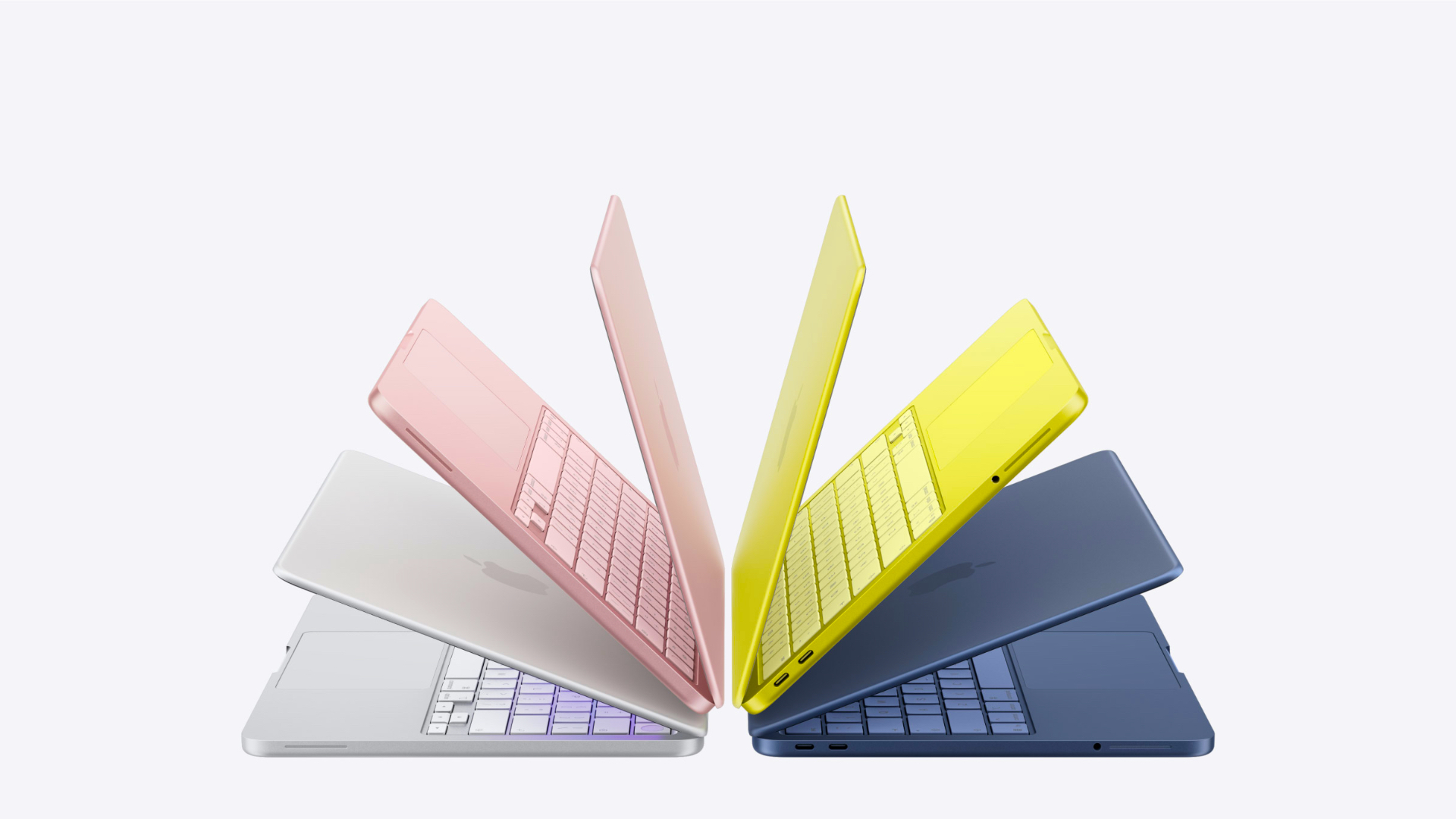
Apple has just made a move that shifts the centre of gravity away from pure computing power and towards local intelligence. The new MacBook Pro and MacBook Air models with M5-series chips just unveiled are more than a routine component refresh. It signals Cupertino’s intention to dominate the professional AI market by eliminating the delays associated with the cloud.
Fusion architecture: AI at the forefront
Key to the new performance is Apple’s proprietary Fusion architecture, which combines chips into an integrated SoC system in the M5 Pro and M5 Max chips. The biggest innovation is the introduction of Neural Accelerators directly into each GPU core. The result? Processing large language models (LLMs) on the new MacBook Pro is up to four times faster than the previous generation. For business, this means being able to safely train models and analyse sensitive data locally, without sending it to external servers.
MacBook Pro: A machine for engineers and creatives
The new MacBook Pro, available in 14-inch and 16-inch variants, redefines the concept of a workstation. In addition to record-breaking CPU performance, Apple has focused on eliminating data bottlenecks. RAM throughput on the M5 Max now reaches 614 GB/s and SSDs have doubled in speed to 14.5 GB/s transfers. From a managerial perspective, uptime is also important: up to 24 hours on battery means transatlantic travel no longer requires searching for an outlet, while maintaining the same performance as on a power supply.
MacBook Air: Business standard with dual storage
Equally significant changes have affected the MacBook Air, which remains the most popular choice in the Enterprise sector. The M5 chip model has received 512GB of storage as standard and Wi-Fi 7 support, making it a device ready for the modern office infrastructure. Apple is clearly targeting users switching from Intel processors, offering them a machine up to 9.5 times faster on AI tasks than the first M1 model.
All new devices run macOS Tahoe, which introduces the Liquid Glass interface and deep integration with Apple Intelligence. Pre-orders start on 4 March and the devices will be in the hands of users as early as 11 March. For the IT and creative sector, this sends a clear message: the era of on-device AI has just become the standard, not an option.
For decades, cyber security functioned in the collective business imagination as the digital equivalent of bolted doors and armoured safes. It was the domain of experts in dark rooms, a costly necessity that was entered into spreadsheets on the loss side, hoping that the policy purchased would never have to be paid out. However, the rapid evolution towards artificial intelligence, cloud computing and the Internet of Things (IoT) has made a fundamental paradigm shift. Security has ceased to be a cumbersome cost and has become the most valuable intangible asset – digital trust.
Strategy instead of instructions
The modern leader is no longer just asking how to protect data, but how to turn that protection into a sustainable competitive advantage. An example of an organisation that has elevated this philosophy to an art form is Apple. The Cupertino giant was one of the first to understand that in a world of widespread digital surveillance, privacy can become a luxury commodity.
By integrating privacy by design into every link of its value chain, Apple has not just secured devices; it has built a ‘loyalty architecture’. When the company declares that user data is not used to train advertising algorithms, it is not just making a technical promise – it is making an ethical statement. The result is a trust-based business model that keeps customers in the brand ecosystem not because of a lack of alternatives, but out of a sense of security. This is a classic example of turning defensive cyber security into an offensive market strategy.
Confidence mechanics in the income statement
Digital Trust has a direct impact on hard financial indicators. In a data-driven economy, trust acts as a catalyst for decision-making processes.
Optimising relational costs: Organisations that enjoy a high level of digital trust record significantly higher retention rates. A customer who does not fear for their data is less susceptible to aggressive pricing campaigns from competitors.
Ticket to regulated markets: As Amazon Web Services’ global expansion shows, the ability to underwrite operational transparency opens the door to the most highly regulated sectors – banking, healthcare or government. Where others see barriers to entry, companies operating with ‘trust currency’ see oceans of opportunity.
The facade trap
It is worth noting, however, that Digital Trust abhors shortcuts. In times of universal access to information, the phenomenon of “trust-washing” – i.e. declarative attention to security while lacking a solid technological foundation – ends in spectacular brand degradation. Trust must be sewn into the code, not just the marketing brochure.
Another challenge lies ahead: the post-quantum era. The disruptive potential of quantum computing will soon test classical cryptographic systems. For today’s management, preparing for this change is not a technological issue, but a matter of business continuity. Investing in state-of-the-art staff and next-generation cryptography is, in fact, reputational insurance for decades to come.
Conclusion: Trust as a compass
In times of global competition, with risks being systemic, trust is no longer an optional extra. It is today the most valuable reputational capital that defines the sustainability of a company.
This is the time to see digital trust as a technical requirement. It is a strategic resource that drives revenue, reduces costs and builds an organisation’s resilience to shocks. In 2026, trust is not just about security – it is the foundation on which the building blocks of modern success are erected.
The European Commission’s decision to exempt Apple Maps and Apple Ads from the restrictive Digital Markets Act (DMA) framework is a rare but significant victory for the Cupertino giant in its clash with EU bureaucracy. While Apple as a corporation remains under strict scrutiny, these particular services have escaped the ‘access gatekeeper’ label, which effectively means not having to open up their ecosystems to external competition.
Brussels acknowledged Apple’s argument, pointing to the relatively low market shares of both platforms in Europe. In a world dominated by Google Maps and the powerful ad networks of Meta or Google, Apple’s offering is not a critical ‘gateway’ connecting business to the end customer. For business strategists, this signals the EU’s ability to remain flexible and not impose flat-rate regulation on every Big Tech service.
This ruling allows Apple to retain full control over the user experience within the navigation and internal advertising of the App Store. At the same time, it underscores the Commission’s pragmatism: regulation is intended to strike where monopoly stifles innovation, not where the giant is still struggling to establish itself as a contender.
Apple is ditching its existing launch calendar to put everything on one card: the ultra-premium segment. According to the latest reports from Nikkei Asia, the Cupertino giant has decided to delay the release of the base iPhone 18 until 2027, prioritising the development of its first foldable device and two advanced Pro models. This is not just a logistical adjustment, but a fundamental shift in strategy to protect profitability in the face of rising component costs.
The decision comes at a time when supply chains are facing drastic price increases for memory chips. By focusing resources on the highest-margin models, Tim Cook is pursuing a proven revenue optimisation scenario. The foldable iPhone, which has been in development for years, is set to become a new status symbol and technological manifesto for the brand, justifying a price tag that is likely to significantly exceed current flagship thresholds.
For investors and business partners, the move signals that Apple is no longer chasing volumes in the entry-level segment and is beginning an aggressive fight for the most profitable fraction of the market. Delaying the standard model allows the company to minimise production risks associated with the complex engineering of foldable screens. Apple’s engineers have to solve problems with hinge durability and die bend visibility, which, with a limited supply of components, could cripple the simultaneous production of cheaper devices.
Despite Wall Street reacting positively to quarterly results and ‘staggering’ demand in China, Apple knows that user loyalty in the premium segment is their strongest currency. The postponement of the iPhone 18’s launch to the first half of 2027 suggests that the model could be positioned as the next-generation ‘entry-level’ device, while 2026 will belong solely to innovation and top selling prices. In a world where manufacturing costs are rising, Apple is taking the luxury route rather than compromising.
Apple is making one of the riskiest decisions in its recent software history, with plans to completely overhaul Siri later this year. According to reports from Bloomberg News, the Cupertino-based giant intends to replace the assistant’s current, outdated interface with a new solution codenamed ‘Campos’. The move is not just a product update, but a strategic necessity after last year’s implementation of the ‘Apple Intelligence’ suite was met with a cool reception from the market and investors, who are still waiting for a convincing answer to the dominance of OpenAI and Microsoft.
A key piece of this puzzle is Tim Cook’s surprising pragmatism. Apple, a company renowned for its vertical integration and self-sufficiency, struck a deal with Google earlier this month. Campos is to be powered by Gemini models, a significant win for Alphabet, but also a signal that Apple’s own language models are not yet ready to compete independently at the highest level. The new chatbot is to be based on technology comparable to Gemini 3, known internally at Apple as ‘Apple Foundation Models version 11’. This technological background is expected to allow Siri to switch seamlessly between voice and text modes, offering deep integration with iOS, iPadOS and macOS that has been missing from the ecosystem so far.
For businesses and developers, this represents a potential paradigm shift in the way users interact with apps on iPhones. If Campos does indeed offer the level of contextual understanding known from leading LLM models, the ‘app economy’ could evolve towards an ‘action economy’ performed directly by the assistant.
Apple’s ambitions go beyond smartphones alone, however. In parallel to the software work, a new category of hardware is being developed in Cupertino’s labs. The Information reports on a wearable device being designed – a pin powered by artificial intelligence, equipped with cameras and microphones. Although this device is not expected to be released until 2027, this indicates a long-term strategy in which AI frees the user from the screen. For now, however, the priority remains saving Siri’s reputation and proving to Wall Street that Apple can still define standards in the tech industry.
In a rare but pragmatic move that redefines the balance of power in Silicon Valley, Apple has finalised a billion-dollar-a-year deal with Google. The decision ends months of speculation about the future of Siri and confirms that Gemini models will become the fundamental engine driving the assistant in the iPhone ecosystem. For Apple, it’s a way to quickly catch up in the AI race without the gargantuan cost of building its own underlying infrastructure from scratch.
A key element of the agreement is a move away from a ‘one size fits all’ model. Rather than relying on a single giant algorithm, Apple will implement a multi-model strategy, taking advantage of the flexibility of the upcoming Gemini 3 series. The foundation is to be a modified, high-performance model with 1.2 billion parameters, designed for fast query processing. This approach allows Apple to precisely match computing power to the complexity of the task, drastically reducing the operational costs and infrastructure needed to handle billions of queries per day. Siri will now seamlessly switch between variants – from a lightweight Flash model to advanced Pro versions – depending on whether the user is setting a timer or needs help with multi-step trip planning.
The technical aspect of the collaboration reveals the hybrid nature of Apple’s new architecture. Although heavier workloads will be processed in Google Cloud, the Cupertino-based company has set tough privacy conditions. Apple Intelligence will continue to prioritise local processing and its own Private Cloud Compute system for sensitive data, ensuring that user information is deleted immediately after processing and that Google has no permanent access to it.
Importantly, the new agreement does not exclude existing players. The partnership with OpenAI around ChatGPT integration remains in place, suggesting that Apple is building an agnostic model in which it is the user or context that decides the choice of AI tool. The reaction of the markets was immediate and euphoric. News of the deal pushed Alphabet’s market capitalisation above the historic $4 trillion threshold, joining Google’s owner in the elite club of tech giants with an unprecedented valuation. For Google, this is not only a cash injection, but more importantly, the ultimate confirmation of the dominance of their technology in the mobile world.
The multi-year race for smartphone sales volume is approaching a turning point. According to the latest forecasts from analyst firm Counterpoint Research, Apple is on course to finally dethrone Samsung in 2025, taking the position of year-round market leader. Although the Korean giant continues to post increases, Cupertino’s momentum is proving to be unmatched by its competitors this year.
Analysts estimate that Apple will close the year with sales around 10 per cent higher than last year. In comparison, Samsung can expect growth of 4.6 per cent. Yang Wang of Counterpoint points out that a key driver of this acceleration is the market success of the iPhone 17 series, debuting in September. The device replacement cycle is not insignificant – consumers who bought electronics in large numbers at the start of the pandemic are just now deciding to upgrade their hardware, which naturally drives sales of the latest generations.
However, Apple’s strength is not solely based on new unit sales. Analysts point to the powerful ecosystem effect built by the secondary market. Between 2023 and mid-2025, as many as 358 million used iPhones went into secondary circulation. This is a strategic resource – these users represent a base that is likely to reach for new models with the bitten apple logo in the coming years. Through this mechanism, Counterpoint predicts that Apple can maintain its volume leadership until at least 2029.
The observed change in leadership also signals a broader transformation in the market structure itself. For years, Samsung has won with its broad portfolio and dominance of the budget segment. Now, however, market researchers are seeing a clear consumer shift towards more expensive premium devices that are used for longer. This trend, combined with the fact that manufacturers have stopped publishing accurate sales figures, means that the battle for dominance is shifting from quantity to value and customer loyalty – a field in which the US corporation has felt most secure for years.
Polish regulator joins global wave of scepticism over Apple‘s practices with allegations of abuse of dominance. At stake in the App Tracking Transparency game is not just data protection, but billions of zlotys from the mobile advertising market.
The President of the Office of Competition and Consumer Protection (OCCP), Tomasz Chróstny, has initiated antitrust proceedings against Apple. The axis of the dispute is the App Tracking Transparency (ATT) policy, implemented in 2021, which in the iOS and iPadOS ecosystems forces developers to obtain user consent to track their activity. While the move appears pro-privacy from a consumer perspective, the Polish regulator sees it as a mechanism for market-based elimination of competition. The essence of the problem is the dual role of the US giant, which acts simultaneously as a ‘guardian’ of the ecosystem (regulator) and an active participant in the advertising market, competing for budgets with third-party app publishers.
OCC analysts point to a fundamental asymmetry in user communication. In the case of independent developers, the iOS system displays a warning message asking permission to ‘track’, which evokes negative associations and drastically reduces conversion rates (opt-in). Meanwhile, Apple’s own services, pursuing the same de facto business objective, ask the user to enable ‘personalised ads’. This semantic and visual difference – ‘Ask not to be tracked’ versus ‘Enable’ buttons – creates an uneven playing field for those profiting from behavioural advertising.
In the opinion of the President of the OCCP, such action may constitute an abuse of a dominant position, punishable by a fine of up to 10 per cent of the company’s turnover. Significantly, the President of the OCC confirmed that ATT’s strict framework does not derive directly from data protection legislation, undermining the corporation’s line of defence based on legal necessity. The effects of these practices are felt most acutely by independent publishers and advertisers, for whom impeded access to data means a reduction in the value of advertising space and a weaker negotiating position.
The Polish investigation is part of a wider European trend. Similar proceedings are being conducted by antitrust authorities in Germany, Italy and Romania, and the French regulator has already taken decisions resulting in multi-million dollar fines. For the IT industry, the signal from Warsaw is clear: the privacy-first argument is no longer an absolute shield against interference with the business model of closed ecosystems.
Ruben Dalfovo, Investment Strategist at Saxo, writes in an analysis that for years Warren Buffett’s history with Google was a cautionary tale. He openly admitted that not buying their shares was a serious mistake, even though he saw the company turning internet search into a tool to monetise advertising. Now, just months before handing over the helm to Greg Abel, Berkshire Hathaway has quietly bought a stake worth billions of dollars in Google‘s parent company, Alphabet.
Alphabet’s Class C shares closed the 17 November session at $285.60, up 3.11% on the day, after reports of a new package helped push the stock to record levels. The stock is up around 50% since the start of 2025 and is the best among the so-called Magnificent Seven this year. When an investor known for avoiding following fashionable trends buys shares in a market leader whose price is approaching historic highs, the obvious question arises: what does he see that the rest of us might not?
From Apple to Alphabet
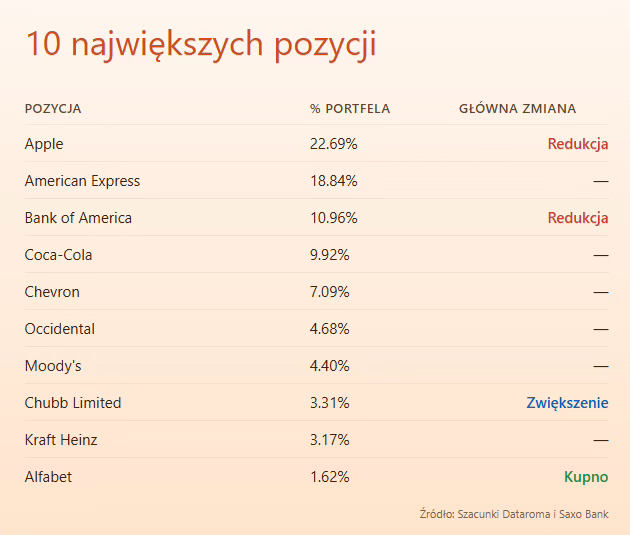
Berkshire has been a net seller of equities for twelve consecutive quarters, including the last. In that time, it has sold about $12.5bn of securities while buying about $6.4bn of shares, while allowing its cash holdings to grow to a record $381.7bn. This is not the behaviour of a man who thinks everything is cheap. However, there has been a major reshuffling within this overall reduction.
In the past quarter, Berkshire reduced its stake in Apple by around 15% and its position in Bank of America by around 6%. Alphabet, meanwhile, emerges as a new player in the top ten club. Regulatory documents and portfolio statements show that the holding now ranks roughly tenth in Berkshire’s equity portfolio, behind such classics as American Express, CocaCola and Chevron. This is a rare situation in the technology industry for a conglomerate that for decades has held shares in railways, insurers and basic goods companies, rather than fast-growing software giants.
What has changed, however, is not so much Buffett’s principles as the companies themselves. Apple, which he has always described as a consumer brand, now operates in a world where hardware upgrades rely heavily on AI-based features. At the same time, Alphabet is looking less and less like a speculative technology company and more like a sprawling infrastructure for the digital economy, with advertising and cloud revenues that are surprisingly stable for something built from lines of code.
Alphabet as AI infrastructure, not a gadget story
Alphabet is at the point where its artificial intelligence ambitions meet traditional cash generation. In the third quarter of 2025, the company reported around $102bn in revenue, above forecasts, and profits also beat expectations. The main driver of growth has been Google Cloud, which has evolved from a ‘nice-to-have’ into a business driver as companies developing AI rent its computing power.
In addition, Gemini models and AI-enhanced search reach hundreds of millions of users today. These tools run on a global network of data centres, proprietary chips and fibre optics, the expansion of which this year will consume a total of more than $90 billion in capital expenditure. Put simply: Alphabet wants to provide the ‘shovels and picks’ for the gold rush around AI.
The partnership with Anthropic adds another dimension. Google has invested billions in the startup and has entered into a major chip supply and cloud services agreement, which should direct future computing workloads to the Google Cloud. Berkshire’s package gives the company indirect exposure to this ecosystem: every Anthropic query run on Google’s infrastructure strengthens Alphabet’s position as an AI infrastructure.
The key point is that this expansion is based on a strong balance sheet. Alphabet is valued at around 25 times expected earnings, cheaper than some other megacaps, and continues to generate solid free cash flow from the search engine and from YouTube. This cash can fund data centres and still support share buybacks, which suits investors who prefer ‘great companies at fair prices’.
What does the ‘vote of confidence’ from Buffett really mean?
Buffett’s purchase of Alphabet is more than a simple seal of approval. It’s a concrete thesis about where AI profits will be concentrated. Alphabet makes its money from search ads, YouTube, maps, the app shop and the cloud. AI is not a separate product here. It is an enhancement that can increase user engagement and monetisation opportunities in existing businesses.
It is also a clear shift towards infrastructure rather than devices. Apple is betting on on-device intelligence, but is yet to refine its AI business model. Alphabet is already monetising AI through cloud contracts, advertising tools and office software. Reducing its position in Apple while increasing its stake in Alphabet suggests that Berkshire sees more future value of AI in data centres and platforms than in handset replacement cycles.
Finally, it is important to remember that ‘technology’ is not a single category. Alphabet may share the index with fast-growing artificial intelligence start-ups, but its competitive advantage, cash-generating ability and diversified revenues place it closer to companies that have consistently multiplied capital over the years, exactly the kind of companies Buffett has always favoured.
Risks that even Berkshire cannot ignore
The risks are real. Alphabet could over-invest in AI computing capacity if customers slow down projects or competitors snatch up big contracts. Google Cloud’s growth rate, margins and long-term investment guidelines are worth watching. The second threat remains regulation. Tougher antitrust or privacy laws in the US and Europe could hit search and advertising profitability or force changes in how data is used.
AI strategy execution will also be key. Alphabet stumbled at the start of the race for generative AI and is still playing catch-up, trying to regain the initiative with Gemini and other models. If users or corporate customers prefer the tools of the competition, all this spending on chips and data centres could result in lower-than-expected returns, even despite Buffett’s presence in the shareholding.
Closing the buckle: what Buffett’s bet on Alphabet really teaches
Buffett has said for years that not buying Google shares was one of his big mistakes. Alphabet was up for grabs, with search engine profits and solid cash flow, while he remained on the sidelines. By buying the shares, now that he is preparing to hand over as CEO, he is doing more than just a ‘neat final move’. It’s a discreet signal of what he thinks sustainable value in AI will look like.
For ordinary investors, the conclusion is not ‘buy what Buffett is buying’. The point is that even the most traditional value investor is happy to have exposure to AI – as long as it is built into a diversified platform generating strong cash flows that can be understood and rationally justified. The market will continue to argue whether Alphabet’s price is too high, too low or just right. A better question is one that Buffett has been asking for seven decades: which companies can you hold in good times and bad because you understand how they make money and why they can survive?
– Artificial intelligence remains one of the fastest growing market segments, while being distinguished by high volatility, risk of overheating and intense competition. The sector often reacts with rapid valuation movements, and the dynamics of innovation mean that market positions of leaders can change rapidly. Investing in stable assets outside the AI sector helps to keep a portfolio balanced, even when sentiment towards innovation declines. Therefore, in the long term, it is important to ensure portfolio diversification, e.g. by combining a bold approach to new technologies with sound and disciplined risk management, says Aleksander Mrózek, CEE key account relationship manager at Saxo Bank.
Speculation is growing in Cupertino about succession plans. According to reports in the Financial Times, Tim Cook, who has led Apple for 14 years and recently turned 65, could step down as early as next year. Although neither Cook nor Apple are commenting on these revelations, the board of directors is reportedly working hard on a plan to hand over power.
In the spotlight is John Ternus, the current senior vice president of hardware engineering. Ternus, who oversaw the company’s crucial transition of Macs to Apple’s proprietary Silicon chips, is increasingly seen as a favourite. His increasing responsibility and more frequent presence at product presentations signal a conscious building of his position within the company.
Speculation has gathered pace following the recent retirement of Jeff Williams, the long-standing chief operating officer (COO). Williams had been considered Cook’s natural successor for years, and his departure significantly reshuffles the internal name exchange. With Williams’ departure, Apple has undertaken a quiet reorganisation. Key managers such as Eddy Cue (Services), Craig Federighi (Software Engineering) and just Ternus were given expanded responsibilities.
Cook’s departure would end an era of steady, if less visionary, growth than under Jobs. Cook transformed Apple into a services giant and supply chain champion, largely through a strategy of outsourcing manufacturing. His successor, whoever he is, will face other challenges: increasing regulatory pressure, diversifying manufacturing out of China and finding the next ‘next big thing’ after the iPhone.
Cook himself has repeatedly stressed that Apple prefers internal candidates and has detailed succession plans. The selection of Ternus would signal a continued focus on product and engineering. While final decisions have not been made and the timetable is subject to change, preparation for a new era has clearly begun in Cupertino.
Zarządzaj swoją prywatnością
To provide the best experiences, we and our partners use technologies like cookies to store and/or access device information. Consenting to these technologies will allow us and our partners to process personal data such as browsing behavior or unique IDs on this site and show (non-) personalized ads. Not consenting or withdrawing consent, may adversely affect certain features and functions.
Click below to consent to the above or make granular choices. Your choices will be applied to this site only. You can change your settings at any time, including withdrawing your consent, by using the toggles on the Cookie Policy, or by clicking on the manage consent button at the bottom of the screen.
Funkcjonalne
Always active
Przechowywanie lub dostęp do danych technicznych jest ściśle konieczny do uzasadnionego celu umożliwienia korzystania z konkretnej usługi wyraźnie żądanej przez subskrybenta lub użytkownika, lub wyłącznie w celu przeprowadzenia transmisji komunikatu przez sieć łączności elektronicznej.
Preferencje
Przechowywanie lub dostęp techniczny jest niezbędny do uzasadnionego celu przechowywania preferencji, o które nie prosi subskrybent lub użytkownik.
Statystyka
Przechowywanie techniczne lub dostęp, który jest używany wyłącznie do celów statystycznych.Przechowywanie techniczne lub dostęp, który jest używany wyłącznie do anonimowych celów statystycznych. Bez wezwania do sądu, dobrowolnego podporządkowania się dostawcy usług internetowych lub dodatkowych zapisów od strony trzeciej, informacje przechowywane lub pobierane wyłącznie w tym celu zwykle nie mogą być wykorzystywane do identyfikacji użytkownika.
Marketing
Przechowywanie lub dostęp techniczny jest wymagany do tworzenia profili użytkowników w celu wysyłania reklam lub śledzenia użytkownika na stronie internetowej lub na kilku stronach internetowych w podobnych celach marketingowych.