Category: Interviews

Interviews, or conversations with key figures in the IT market – vendor leaders, integrators, distributors and technology experts. A source of unique opinions, strategies and forecasts on the sales channel, digital transformation and key industry trends.

  • From hardware supplier to digital environment architect. Rafał Szarzyński on the “One Sharp” revolution

    From hardware supplier to digital environment architect. Rafał Szarzyński on the “One Sharp” revolution

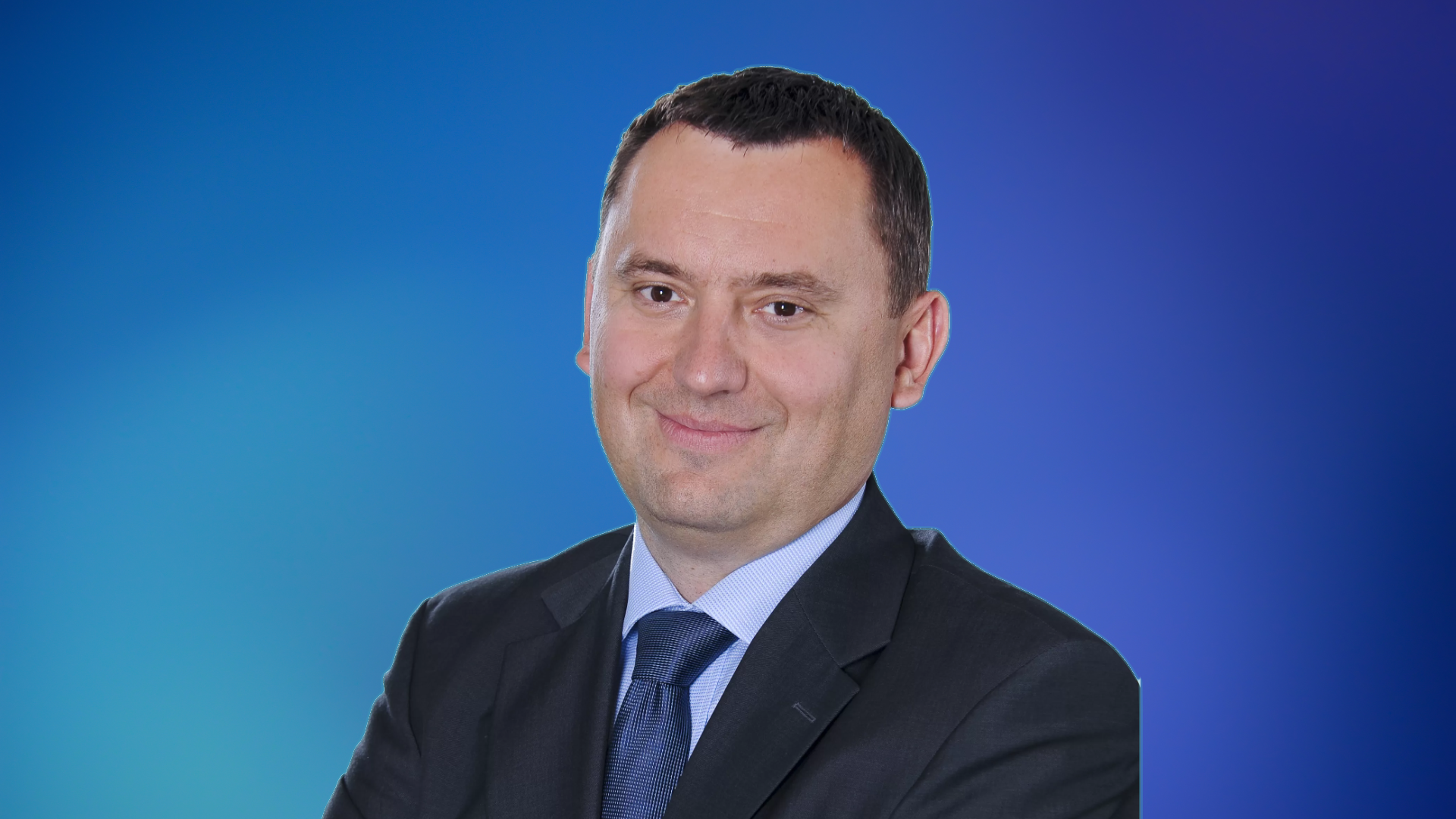
    Klaudia Ciesielska, Brandsit: Sharp is a brand with over 100 years of history of innovation. What made you decide just now to bring together three previously separate worlds – printing, visualisation and IT services – in such a fundamental way? What was the key impetus for this integration?

    Rafal Szarzynski, Sharp: A key factor has been the change in the way we work. Companies today operate in an environment where it is not just the hardware that matters, but the entire digital architecture – secure, flexible and intuitive. Our customers want a partner that understands their processes and can support them, not just supply devices. That’s why we created the ‘Sharp Digital Experience’ concept, which brings together print, visualisation and IT services into one seamless ecosystem.

    This is a really well thought-out change – we have been preparing for it for years. We have invested in developing our IT competencies, acquiring companies in the UK, France and Switzerland, and in November we completed the final stage of our merger with Sharp/NEC. Today, we have more than 500 IT professionals in Europe and state-of-the-art support platforms that allow us to design work environments that meet the challenges of digital transformation. This makes Sharp a digital world company that makes a real difference to the way customers work.

    K.C.: Joe Tomota announces a move away from a transactional model to long-term strategic partnerships. Given that in Poland Sharp is mainly associated with reliable hardware – how does this change redefine your model of cooperation with the business? Does ‘One Sharp’ represent a shift from being a technology provider to being an advisor responsible for architecting and optimising the digital working environment?

    R.S.: This is a fundamental change in the way we look at customer relationships. Until now, the market has often been based on simple transactions – purchase the device, install, end of process. Today, companies expect something very different: a partner who understands their business objectives and can design the working environment to support efficiency, security and growth.

    “One Sharp” is the answer to this need – it is a philosophy in which technology is just a tool and the real value is in consulting and building strategies together.

    An example? Increasingly, we are talking to customers not about which screen or printer to choose, but how to integrate communication in a hybrid team, how to secure data in the cloud, or how to optimise document processes. Our role is not just to deliver hardware, but to create a cohesive ecosystem that addresses real business challenges. This is the essence of ‘One Sharp’ – partnerships that give you an edge in the digital world.

    “One Sharp (…) is a philosophy in which technology is just a tool, and the real value is in consultancy and joint strategy building.”

    K.C.: CIOs are increasingly asking not ‘if’ but ‘how’ to ensure security. With the integration of cyber security competences into Sharp’s structures: can devices such as printers or screens become elements of an organisation’s first line of defence? What does such a security model look like in practice within the ‘One Sharp’ ecosystem?

    R.S.: Definitely yes. Today’s working environment is distributed, and any device connected to the network can be a potential access point. That’s why, at One Sharp, we treat security as an integral part of the design of the entire ecosystem, not an add-on. Our devices – from printers to displays – are equipped with data protection mechanisms, encryption, access control and integration with identity management systems. This makes them an active part of your security strategy, not just passive hardware.

    In practice, this means that documents are stored and transmitted securely, access to devices is controlled and communication in meeting rooms takes place in an encrypted environment. Additionally, with our IT services and management platforms, we can monitor and respond to threats in real time. This approach gives the CIO the confidence that every piece of infrastructure – even the printer – is supporting the organisation’s protection, not undermining it.

    “Our devices – from printers to displays (…) are becoming an active part of the security strategy, not just passive hardware.”

    K.C.: ITpoint and Apsia brought agile software and services expertise to Sharp. How does the combination of hard hardware engineering with cloud and IT know-how change the final value perceived by the customer? Can the Polish market expect new hybrid services combining these worlds?

    R.S.: This combination opens a whole new chapter in the way we support customers. Until now, technology has often been seen as a set of separate elements – devices, applications, infrastructure. Today, we integrate these areas into a single ecosystem where hardware and software work together seamlessly and securely. With the expertise brought by ITpoint and Apsia, we can design solutions that not only work, but realistically simplify processes, automate tasks and increase productivity.

    In the Polish market, this means access to hybrid services that combine our expertise in hardware engineering with modern cloud platforms. Examples include cloud-based document management solutions, integration of audiovisual systems with collaboration tools or IT services supporting security and business continuity. Customers gain not just a product, but a complete service – from consultancy to implementation to ongoing support. This is the true value of ‘One Sharp’.

    “Customers get not just a product, but a complete service – from consultancy to implementation to ongoing support. This is the true value of ‘One Sharp’.”

    K.C.: Today’s IT departments are facing a huge fragmentation of suppliers and solutions. Is the ‘One Sharp’ strategy a response to the trend towards consolidation of services (vendor consolidation)? Apart from the convenience of a ‘single invoice’, what tangible benefits does a company gain by entrusting print, visualisation and IT to a single partner instead of three different entities?

    R.S.: ‘One Sharp’ is a response to the growing need for simplification and integration. Fragmentation of suppliers means not only greater management complexity, but also higher risks – different security standards, inconsistencies in processes and difficulties in scaling solutions. Consolidating services under a single partner offers more than convenience – it’s all about technological and strategic consistency.

    This gives the enterprise uniform security standards, faster deployments and the ability to centrally manage the entire working environment. Instead of three different integrations, we have a single ecosystem in which print, visualisation and IT work together seamlessly. This translates into lower operating costs, better control over data and greater flexibility to respond to change. In practice, this means fewer risk points, simpler processes and greater predictability – and this is the value that CIOs are looking for today.

    K.C.: Digital transformation is not only about processes, but above all about people. How does the integration of IT services and modern visual tools affect the so-called Employee Experience? In Sharp’s vision, can a modern, integrated office be an argument in the battle for talent and a way to increase the efficiency of teams working in a hybrid model?

    R.S.: Definitely yes. Technology only makes sense if it supports people in their daily work. That’s why the idea behind ‘One Sharp’ is to look at the working environment as a holistic experience that influences comfort, efficiency and organisational culture. Integrated solutions – from secure collaboration platforms to intuitive audiovisual systems – make meetings simpler, communication smoother and access to information immediate. This translates into a real sense of control and convenience for employees.

    In a hybrid model, this is crucial. An employee who can easily connect with his or her team, share documents or give a presentation in a modern conference room feels part of the organisation regardless of where they work. Such an environment is today an argument in the battle for talent – it shows that the company is investing in tools that support creativity and collaboration. As a result, not only satisfaction but also the effectiveness of teams increases. This is our vision: technology that serves people, not the other way around.

    “This is our vision: technology that serves people, not the other way around.”

    K.C.: Poland is a fast and demanding market. How will the ‘One Sharp’ strategy be implemented locally? Can partners and customers in Poland expect new billing models and consultancy services to carry out a turnkey office transformation?

    R.S.: Yes, Poland is a very important market for us and the implementation of ‘One Sharp’ will be complete here. We are developing local IT services in order to be able to offer customers comprehensive projects – from needs analysis to design to implementation and maintenance. We want the office transformation to be a simple turnkey process. When it comes to billing, we are introducing subscription models and ‘as-a-service’ services that make cost planning easier and give flexibility. This is a trend that meets the needs of Polish companies – predictability, simplicity and real value.

    K.C.: Hybrid working, automation and increasing cost pressures – which business challenges do you think will dominate in the next 2-3 years? How is the ‘new’ Sharp prepared to help business leaders meet them?

    R.S.: The coming years will be dominated by three trends: the consolidation of hybrid working, process automation and cost optimisation under economic pressure. Companies will be looking for ways to increase efficiency without compromising on safety and quality. This means that technology must not only be innovative, but also scalable and cost predictable.

    “The ‘new’ Sharp is prepared for these challenges with its ‘One Sharp’ strategy, which integrates printing, visualisation and IT services into a single ecosystem. We offer solutions that support workflow automation, secure cloud collaboration and intuitive communication tools for distributed teams. Additionally, we are developing subscription models and ‘as-a-service’ services that allow companies to better control spend and flexibly scale technology. Our goal is for business leaders to be able to look to the future with the confidence that their working environment is ready for change – no matter how fast it happens.


    This material was produced in collaboration with Sharp Poland.

  • Don’t assume in advance that everything in the company works, just because your technology works – Dr Chrystian Poszwinski, HWF Partners

    Don’t assume in advance that everything in the company works, just because your technology works – Dr Chrystian Poszwinski, HWF Partners

    The M&A market in the IT sector in Central and Eastern Europe is evolving dynamically, with key trends pointing to increasing activity of regional companies in foreign markets, especially in the United States. Dr Chrystian Poszwinski, Head of CEE at HWF Partners, an experienced advisor in the area of M&A transactions, talks about current developments, challenges and the future of technology investments.

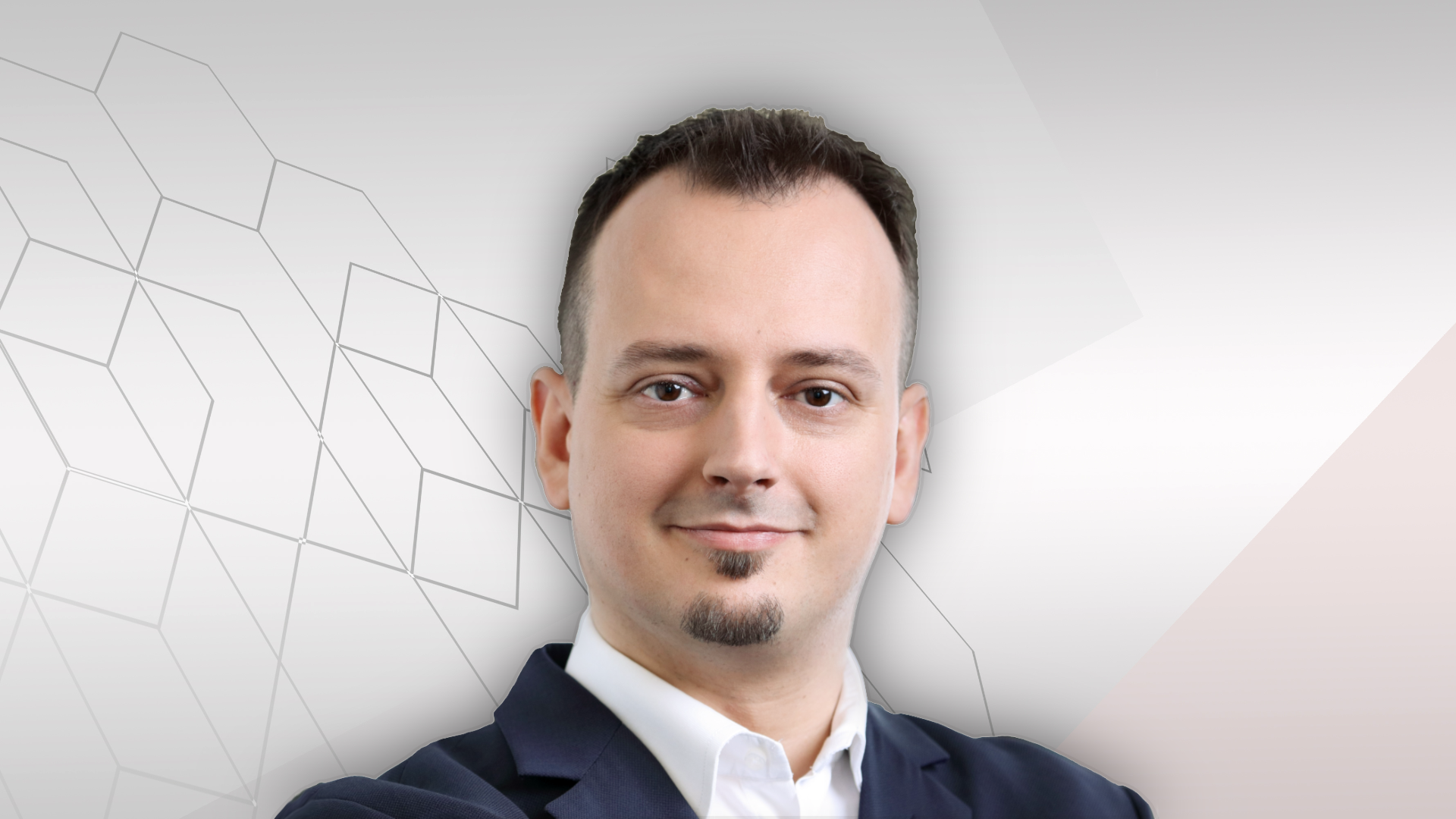
    Klaudia Ciesielska, Brandsit: What key trends are you currently observing in the M&A market in the CEE IT sector?

    Dr Chrystian Poszwinski, HWF Partners: Changing trend. Back in the covid era, numerous US IT companies were operating in Poland and the region, pursuing their ‘acqui-hire’ policy. Nowadays we see a trend going the other way, i.e. Polish companies, often backed by capital from regional funds, are looking for their ‘targets’ overseas. What is the reason for this? The main reason is the distance of the American customer from using the products or services of companies that do not have a so-called presence in the USA. Another argument is simply the potential development that Polish and regional entrepreneurs see in cooperation with US entities and the opportunities offered by using the US market to sell their products or services. Poland has ceased to be a country with cheap developers and has become a significant player in the IT field. This policy means that investors are increasingly looking to countries such as Romania to ‘outsource’ their services.

    “In recent years, the VC market has not ‘let’ many new entrants out from under its wings.”

    K.C.: Is the IT M&A market in this region different from the rest of Europe?

    Ch.P.: It seems that differences are slowly disappearing. In the context of the aforementioned trends, entities originating from the CEE region are increasingly recognised as global players, hence attracting the interest of foreign investors. If we look at the European market, there are few entities to buy and more and more willing buyers. This is brilliantly illustrated by the entry into the region in recent years of funds that focus exclusively on technology. However, it is increasingly seen that they cannot find a convenient ‘target’ to justify the risk of a Western European investor to invest in our region. What we hear in the market is also the problem of valuation, which is often based solely on intangible components. In recent years, the VC market has not ‘let’ many new players out from under its wings, and the trend is shifting especially in Poland to investments by strategic players, building their portfolios and expanding their services by buying businesses that are compatible with their current operations. Such an investor, however, is more conservative and cautious.

    K.C.: What factors most often influence M&A decisions in the technology industry?

    Ch.P.: There are several. First and foremost is whether the technology can be scaled, i.e. not just whether the technology itself has potential, but whether it was created with that in mind from the start and the system allows it to scale realistically. Investors are looking more than ever at intellectual property at this point. A project can no longer just innovate using publicly available source code. Investors expect to be able to not only sell the product resulting from the technology in the future, but also to license the technology itself and make the most profit from that. It is also worthwhile if the product can be sold in a B2B model.

    K.C.: You have worked on a number of transactions in different sectors. Does M&A in IT have any specific challenges that are not present in other industries?

    Ch.P.: Until recently, one could point, for example, to the cyber security aspects that investors saw mainly in the IT sector. Interestingly, this trend is also changing, due to the increasing automation of companies and processes. It is no longer just the technology company that is exposed to a potential cyber attack. Insurers who offer policies to protect buyers in M&A transactions have started to pay attention to cyber security elements for manufacturing companies as well. In contrast, it used to be in the manufacturing industry that we looked for potential risks in the quality of the materials used or the condition of the machinery and equipment used in production. With the development of technology, computer hardware, servers and their security have become an important factor in risk analysis, making due-diligence increasingly required not only for source code, but also for software and hardware. The IT industry is also characterised by its own approach to employee issues – the market is based on a completely different type of contract, which would be unacceptable in other industries.

    “We are getting bogged down with bans and regulations instead of creating development-friendly environments.”

    K.C.: Can we expect more mergers and acquisitions in the CEE IT start-up segment in the coming years?

    Ch.P.: The answer to this question unfortunately depends very much on how the current start-ups perform in the coming years. If you look at IT deals, outside of the recently fashionable area of AI, we only see large deals involving companies with an established history and a sizeable customer base. The startup market has declined a lot in the last 18-24 months, which it is now trying to rebuild, in a way using capital from PFR. The problem, however, is that those funds that are thriving in our market are now mainly looking abroad. Our region, unfortunately, has still not created an environment where there is a lot of room for development. We have ideas, but money is very hard to come by at the moment. What’s more, if the market sees any entity with potential, surprisingly not only VC funds are looking at it, but increasingly PE funds are starting to reach for these smaller companies, for which there is a shortage of mid-sized companies. The number of deals from the IT sector has tended to decrease in recent years, but this does not reflect the appetite of investors at all, but highlights the weaknesses of regional ecosystems.

    “European countries aim to ‘push’ Chinese technology, but (…) unfortunately it is often light years ahead of us”.

    K.C.: What technologies and innovations are likely to become the main drivers of M&A in IT in the coming decade?

    Ch.P.: Investors are less and less interested in technologies that are directed at consumers. To a certain extent, this problem is also due to regulations around consumers, including, for example, in the area of personal data protection and others, which have begun to place a significant burden on entities operating in this area. We are even talking about pan-European regulations rather than strictly Polish ones. Theoretically, the countries of Europe are striving to “push out” Chinese technology, but unfortunately it is often light years ahead of us. We are getting bogged down with bans and regulations instead of creating development-friendly environments. It seems that the technology around small nuclear batteries and quantum computers could be something that revolutionises the market. The technology of today is no longer just a platform on a website, but increasingly robotics just combined with artificial intelligence. The market has also started to recognise that the population is ageing and, as a result, we have more and more sick people. This translates, for example, into interesting investments in the area of state-of-the-art apparatus or chips, which are intended to support either brain function or even to help the blind by mapping the area in which they move. Biometric technology is also gaining in importance. Perhaps the biggest disappointment seems to be virtual reality, which has not attracted as many users as the market originally expected.

    “The technology around small nuclear batteries and quantum computers could be something that revolutionises the market.”

    K. C.: What advice would you have for IT entrepreneurs who want to prepare their company for a potential sale?

    Ch.P.: Don’t assume in advance that everything in the company works, just because your technology works. Investors will be looking at many other areas and it’s a shame to let them downgrade your company just because other areas have been ‘forgotten’. Of course, it is easier said than done, but that is why we encourage you to discuss a potential transaction with your advisers as early as possible and prepare your company for the process.


    Dr Chrystian Poszwinski specialises in international business development in Central and Eastern European countries and regional investment promotion. He has a PhD in law and is a practicing legal advisor with 10 years of experience in mergers and acquisitions (M&A) transactions.
    On a day-to-day basis, he manages the CEE region at the UK-based advisory firm HWF Partners. He is an expert in transactional insurance (W&I), providing services to private equity funds and local and international corporate clients.
    Prior to joining HWF, his domain for almost 8 years was M&A transactions at the international law firm BakerMcKenzie, where he gained experience in foreign offices (Vienna, Zurich) and supporting the Nokia team in Poland from the in-house legal department.
    He is the author of scientific publications on the borderline of M&A transactions and personal data protection. He is a regular speaker at numerous panel discussions on transaction-related topics, foreign markets, including in particular the CEE region.

  • Bots versus businesses – Artur Cyganek of BotGuard on the real cost of bad bots to businesses

    Bots versus businesses – Artur Cyganek of BotGuard on the real cost of bad bots to businesses

    Today’s internet is facing a rising tide of unwanted traffic generated by bots. According to Imperva’s ‘Bad Bot 2024’ report, almost half of web traffic already comes from bots, of which as much as 32% is made up of so-called ‘bad’ bots, which cause chaos and generate serious threats to users and businesses. In an interview with Artur Cyganek, BotGuard Regional Director, Eastern Europe, we take a look at the evolution of bots, their impact on businesses and the latest methods to protect against this increasingly sophisticated threat.

    Brandsit: According to data from Imperva’s ‘Bad Bot 2024’ report , almost 50% of web traffic is already generated by bots. Since 2018, the share of so-called ‘bad’ bots in web traffic has been increasing successively, currently amounting to around 32% of all web traffic. What are the latest threats from bots on the internet?

    Artur Cyganek, BotGuard: Today, bots are more or less able to emulate human-generated traffic. This allows them to bypass basic security measures that were effective in the past, but unfortunately are no longer so today. In general, the threats remain similar, but the ways and techniques of bots are changing. An area where the dynamics of change are particularly high is in digital advertising in the broadest sense, specifically the problem of the percentage of adverts that are ‘clickable’ by bots, causing them to miss their target audience.

    Brandsit: How do BotGuard’s solutions help companies protect themselves against these threats?

    Artur Cyganek, BotGuard: BotGuard analyses traffic arriving at web servers in real time and, in accordance with the adopted rules (companies can determine themselves which traffic they consider undesirable), blocks traffic defined as unwanted or generated by malicious bots. As a result, ‘good’ traffic reaches the web servers and ‘bad’ traffic is blocked before it can reach them.

    Brandsit: How do developments in technology, such as AI, affect the evolution of bots?

    Artur Cyganek, BotGuard: Thanks to AI, an intermediate internet user can generate unwanted traffic using created bots themselves. Unfortunately, current technology makes it easy to create harmful bots and carry out unethical and even criminal activities online.

    Brandsit: In your opinion, are businesses aware of the risks associated with unwanted traffic generated by bots?

    Artur Cyganek, BotGuard: Unfortunately, many organisations and businesses do not analyse the traffic on their web servers and therefore have no knowledge of what traffic is there. The largest companies and organisations have a greater awareness and knowledge, but medium-sized and smaller organisations are often unaware of the scale of the threats and risks associated with traffic generated by malicious bots in their web environment.

    Brandsit: According to the aforementioned report, the industries most frequently attacked by bad bots are retail, the travel industry and finance. How do bots affect companies’ productivity and operating costs? What features of BotGuard’s solutions are key from a customer perspective?

    Artur Cyganek, BotGuard: Bots can overload the infrastructure, generating unwanted or even harmful traffic – we are talking about 30% of all incoming traffic. This can significantly affect the performance of the infrastructure or lead to higher costs for hardware, power, air conditioning and administration (whether you use a rented web environment or have it in your own data centre). BotGuard focuses on analysing traffic arriving at the web servers and blocking unwanted traffic generated by bots. The customer has the option of defining what traffic it considers good/wanted and what traffic it considers bad/unwanted, as this definition may vary in different business and government sectors depending on the level of risk accepted in those organisations.


    Artur Cyganek
    Regional Director, Eastern Europe, BotGuard

    Artur Cyganek is an expert with over 20 years of experience in the IT industry, specialising in the area of cyber security. For 15 years, he managed teams in international IT companies, including Acronis, AppSense and Citrix, where he served as Country Manager in Poland. Currently, as Regional Director at BotGuard, he is responsible for market development, building partner channels and relationships with key clients in Eastern Europe and Turkey. He graduated from Wrocław University of Technology and Wrocław University of Economics and holds an MBA from the Leon Koźmiński Academy in Warsaw.

  • The key to controlling chaos in IT – Maciej Żwirski, Deloitte on DevEx

    The key to controlling chaos in IT – Maciej Żwirski, Deloitte on DevEx

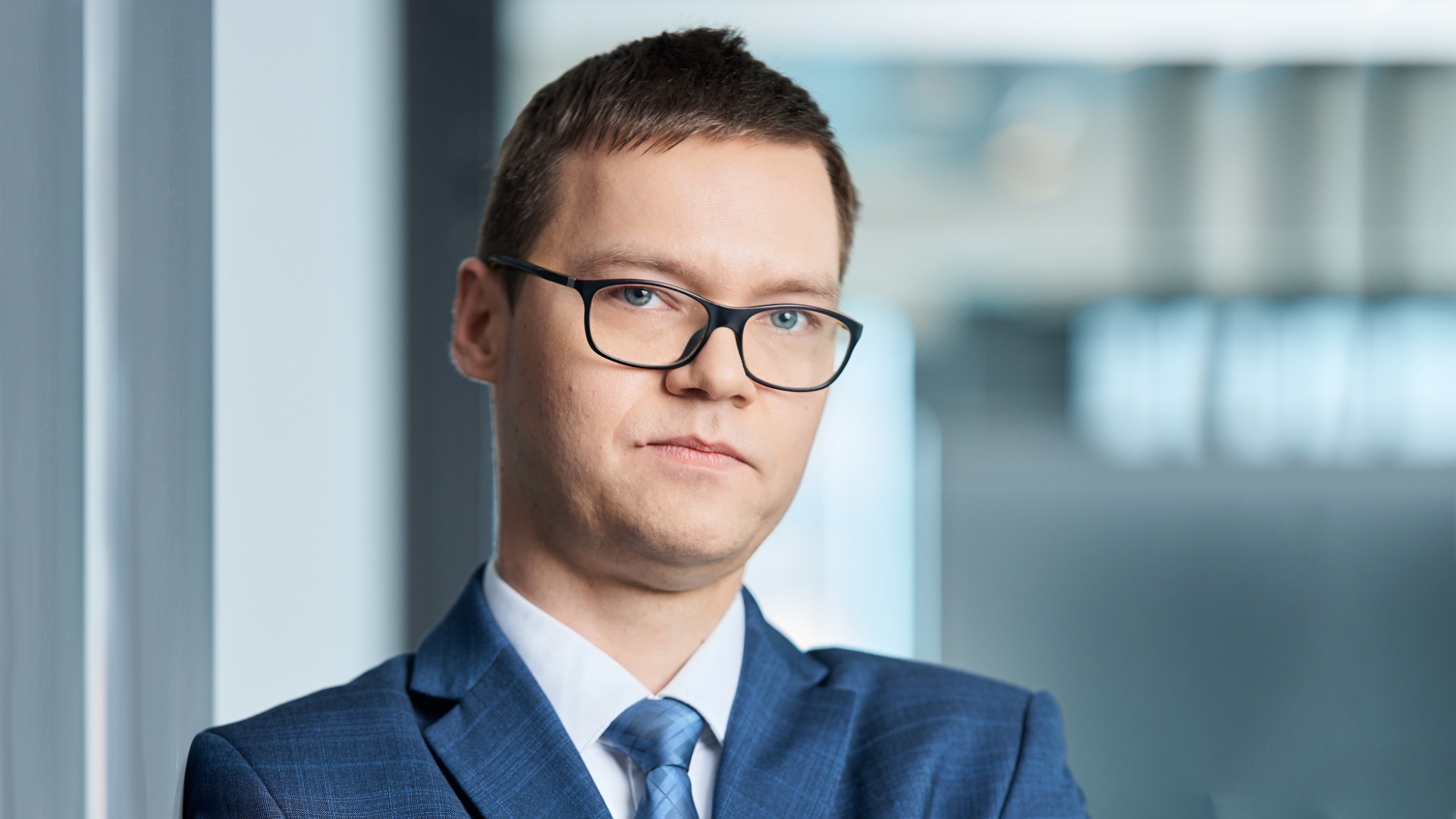
    Brandsit: What factors contributed to the concept of DevEx? Is it a response to any specific challenges in the IT industry?

    Maciej Żwirski, Deloitte: The components of the DevEx concept are mostly not new. The methodologies, tools and performance measurement metrics that DevEx describes are already successfully in place in any self-respecting manufacturing team. What is new, however, is the attempt to interrelate them, which sometimes amounts to, to put it bluntly, an attempt to control chaos.

    In my opinion, this is a natural consequence of the maturation of the industry and the industrialisation of the software development process. As an analogy, let’s take an industry with a much older pedigree – manufacturing, for example of cars. Imagine that each section of the assembly line was supplied by a different manufacturer. It requires different training, certifications and authorisations from the operator. Each screw has to be screwed in with a different spanner, with some spanners being operated with the right hand and some with the left. On top of this, someone occasionally brings in a self-designed seat announcing that “it has to be attached to the whole thing somehow”.

    The example may seem exaggerated, but many developers work in such an environment. They have access to dozens of tools, but each is responsible for one specific activity: code is stored separately, artefacts are stored separately, tests are run separately… The so-calledcitizen development – i.e. low-code software configured by the “business” – adds further complexity.

    The concept of DevEx indicates that companies that want to talk about the ‘manufacturing process’ should take care to standardise the environment in which this process takes place, while at the same time taking care of the people who perform it.

    Brandsit: What are the main benefits for companies and their technology ecosystems of leaning into the developer experience? What changes might they observe after implementing DevEx-focused practices?

    Maciej Żwirski, Deloitte: In a nutshell, we can say that these are lower software development costs resulting from higher code quality and better employee retention. According to the Harvard Business Review, you can see a more than twofold increase in engagement and an 85% increase in retention over three years among employees who work with technology that supports them rather than hinders them.

    Running the development process on a single, integrated technology also has many benefits. The cost of training and certification decreases, as the portfolio of tool suppliers is reduced. In such a process, it is easier to produce reusable components. Such a process is also much easier to measure.

    And here we come to the ‘people’ part of DevEx. We are seeing a gradual move away from measuring developer productivity by the number of lines of code delivered, ‘commits’ and, in extreme cases, hours worked. What is being measured is the time it takes to deliver complete functionality and the reliability of the delivered software. And this, too, is nothing new. On the other hand, it happens that in the flurry of ‘stories’, ‘burndown charts‘ and ‘epics‘, we forget about these basic metrics.

    Brandsit: Could you share examples of controversies or challenges you have encountered in implementing DevEx concepts in different organisations?

    Maciej Żwirski, Deloitte: There was perhaps not so much controversy as some difficulties inherent in any change process. Because while some elements of DevEx can be done evolutionarily (e.g. aligning the technology stack), organisational change already requires cumulative action. It is also where many of the transformations we have witnessed have been stuck. “On paper”, everything seems simple and obvious: we create a process, promote a more “human” approach to developers, foster knowledge sharing, cooperation between departments and the result is an organisation where technology experts work hand in hand with business experts for the common good.

    However, going into the details, we come up against a whole range of obstacles. Habits, ambitions, internal frictions, fear of change or even the mundane lack of time or budget. This is where our change stops being technical and becomes adaptive – and as such, it requires a determined leader, subtlety and, above all, time. And we all know that we can have everything in abundance, but time is always in short supply.

    Brandsit: What future developments do you foresee for the DevEx concept? Are there any new tools, practices or methodologies that could intensify interest in this area?

    Maciej Żwirski, Deloitte: In my opinion, DevEx will combine very well with generative AI in the coming years. Personally, I stand by the opinion that artificial intelligence, in professional applications, will support us, not replace us. In the case of software development, it can take the onus off developers to painstakingly create (let’s face it – copy) repetitive code. If used correctly, it can also increase its quality. I finished my coding adventure longer ago than I’d like to admit, but at the time I would have given a lot for a tool that offered me a block of code that I could just review and adjust. Anyone who has ever written code will also admit that there have been times when you’ve lost hours of your life looking for a misplaced semicolon or comma. The chances are that GenAI semicolons won’t be lost.

    Looking further into the glass ball, I would also predict that development teams in the future will be made up of fewer well-trained professionals. This does not mean, of course, that we should expect a decline in the number of job offers. Although such a decline can be observed at the moment, I believe it is temporary and is related precisely to transformations within organisations. A report by the Bureau of Labor Statistics of the US Department of Labor indicates that the demand for programmers will increase by 25% over the next decade.

    Brandsit: How can improving DevEx make a company more competitive in the technology market?

    Maciej Źwirski, Deloitte: Streamlining the software delivery process, bypassing all intermediate metrics, translates into a shorter time-to-market. This means a lower product cost, but also the ability to deliver more functionality at the same time. And this gives, in a market as dynamic as technology, a substantial advantage. In most business projects we see, software is often on the critical path. Which is acceptable if our product is just software. But if we are a bank, a car manufacturer or a transport company, software is our tool, not our product. And as a tool it should support us, not block us.

    Whoever is the first to ‘remove’ this blockade – will be able to dictate terms to their competitors, at least for a while.

  • “In cyber security, we need to be up to date”. – Marcin Krzemieniewski, IT Solution Factor

    “In cyber security, we need to be up to date”. – Marcin Krzemieniewski, IT Solution Factor

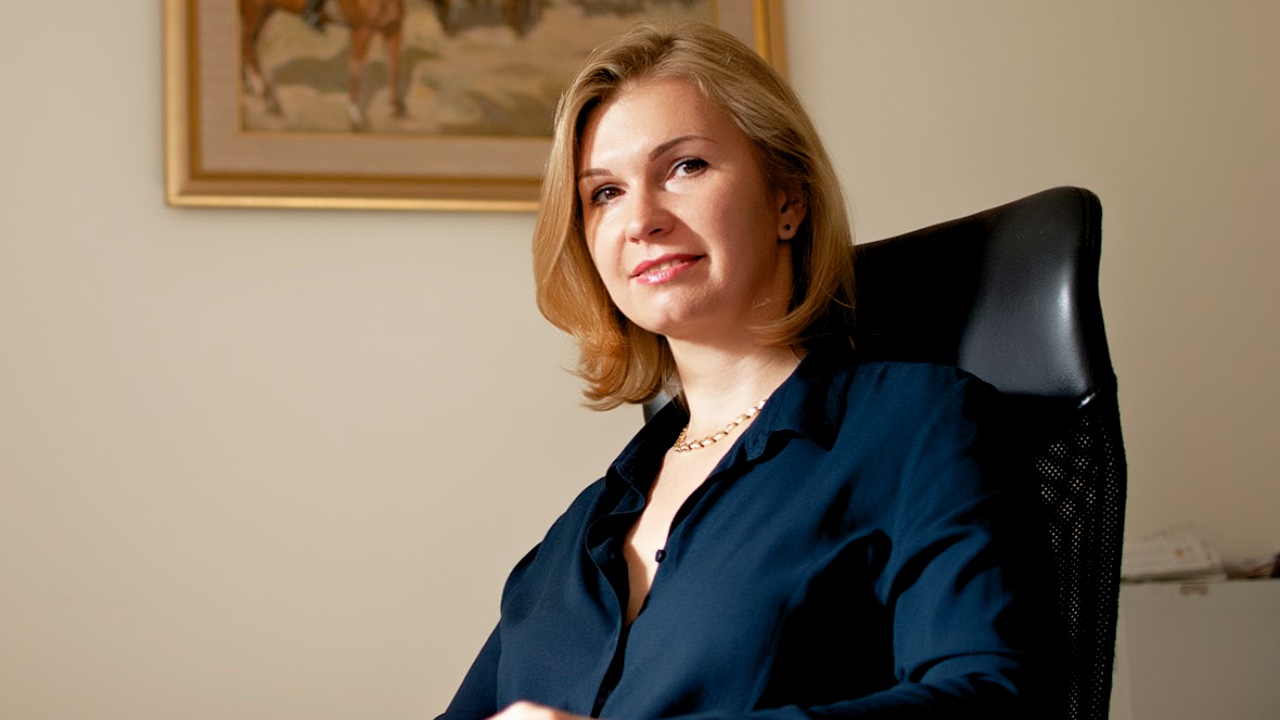
    BrandsIT: What are the biggest cyber threats currently facing Polish companies and how have they changed in recent years?

    Marcin Krzemieniewski, IT Solution Factor: At present, we can mention a few major threats on many different levels. The first is the shortage of specialists, resulting from the low rate of training of new talent, but also the outflow of qualified employees to work in foreign companies or outside Poland in general. The second threat is the lack of a defined long-term cyber security strategy, which needs to be implemented consistently, but also constantly reviewed as the threat landscape changes. Implementing point products without looking at the bigger picture is also quite a challenge. Organisations invest in securing one area while remaining vulnerable in others, or this protection is inconsistent, lacking consistency and integration. Another threat is integrated attacks by well-trained and paid Nation State criminals, which are becoming more frequent and more sophisticated in their methods and more effective than they were a few years ago.

    BrandsIT: How do you assess the cybersecurity of Poland’s critical infrastructure in the face of war across our eastern border?

    Marcin Krzemieniewski, IT Solution Factor: Regulations such as GDPR (General Data Protection Regulation), NIS (Network and Information Systems Directive) and now NIS2 are definitely helping to build effective cyber security . In this way, the issue of security has extended to the area related to, for example, industrial infrastructure such as water, energy or railways. For several years now, the market has seen a great deal of customer interest in security challenges in critical infrastructure. Industry CERTs (Computer Emergency Response Teams) have been set up, bringing together information on threats to specific market sectors and exchanging key information between the various stakeholders. We have specialised conferences, building awareness of threats and inspiring a structured approach to the subject. We can definitely say that there is awareness of the threat, not only among IT departments, but also in industrial automation teams and at C-level. Awareness at different levels of the organisation is a key step to building protection. There is still a lot of work to be done, but we have nothing to be ashamed of in terms of the level of critical infrastructure security, compared to the rest of the world. It is worth using the lessons learnt from more and more global attacks on specific industries, and to decisively fight the ‘it doesn’t affect me’ attitude, because unfortunately it affects everyone.

    BrandsIT: What are the main challenges in integrating Poland’ s cyber security systems with those of allies, such as NATO?

    MMarcin Krzemieniewski, IT Solution Factor: International structures such as NATO, Interpol or the European Commission play a key role here . The framework and the specifics in the area of interoperability should be outlined at this level. With the participation of the individual countries involved, representatives of cyber security solution manufacturers and the private sector. Good cooperation depends on developed standards, implemented procedures, delicate legislative coercion and, finally, the goodwill and professionalism of individual experts. This goodwill is currently not lacking, but guidelines are still missing. In addition, in cybersecurity we are most often looking for methods of detecting and protecting against new threats that arise all the time, so we are inevitably often one step behind the criminals. The involvement of so-called ‘law enforcement agencies’, both international ones such as Interpol, but also local ones at the level of individual states, is not without significance. What is important for successful cooperation are the results, and there will be no results without the inevitability of punishment for criminals. This will simply lead to discouragement even for the most enthusiastic participants.

    BrandsIT: How do you assess the approach to educating future generations of cyber security experts? What measures should be taken to avoid a shortage of specialists in the future?

    Marcin Krzemieniewski, IT Solution Factor: Cyber security is a very broad concept. Today, young people, influenced by films, TV series or stories read in the media, identify it mainly with fighting hackers during an attack or brilliant hacktivists who, sitting in their basement, perform miracles and rub shoulders with evil corporations or governments. The reality is quite different. In order to perform miracles or fight against the most dangerous attacks, a lot of time and work needs to be spent learning and this process needs to be ongoing. We have to keep up to date because technologies, attack methods and threat types evolve or completely new ones emerge. And even then, such a challenge does not come along every day. You need interdisciplinary knowledge of operating systems, computer networks, telecommunications, knowledge of the relevant tools and protocols. It is worth promoting persistence and hard work and making people aware that the road to success will be long and demanding. There is a need for promotion and incentives to take up studies in the field of computer science, where not only programming will be taught. Dedicated courses on cyber security are being created at Polish universities, which is very good news for the industry. It is worth stressing, however, that one does not become an ‘expert’ in cyber security at school. The right course of study, a technical college, but also dedicated courses will help young people get a start in the industry. Later, however, only by implementing the good old principle of ‘learning by doing’ can one reach the position of a true expert. The challenge is and will be to retain talent in Poland. We are currently competing for employees not only with Western European countries, Scandinavia or the USA, but also rich Arab countries are investing heavily in digitalisation and have a strong negotiating position. And cybersecurity is an area where the demand for specialists is growing all the time and this will not change in the coming years.

    BrandsIT: How do you assess the Polish cybersecurity market in terms of the solutions and technologies used compared to the global powers?

    Marcin Krzemieniewski, IT Solution Factor:Quite well, although Poland has a certain technological “debt” to the so-called West. Often, the most interesting novelties from the world are quickly adapted in the Polish private sector, but what is particularly pleasing, also in the public sector. Zero Trust architecture, AI supporting the detection of advanced incidents, automation in the area of operations and a number of other technological and architectural innovations we see today in our clients. This also allows us to avoid ‘pitfalls’, misguided ideas and abandoned technologies. In the so-called enterprise sector, we already have world-leading solutions and technologies in place today. Implementation and integration with the processes and procedures of these companies is a bit more difficult. To change this state of affairs, a change in thinking at a higher level is required. Today, one “IT specialist” is no longer sufficient for everything. The complexity of the infrastructure is increasing, so the area of responsibility of a single engineer or expert is shrinking. The situation is somewhat worse in SMEs, where there is often a selective approach to security and a policy of “barring one window” and ignoring other attack vectors. This is often due to a lack of knowledge, but also time or budget on the part of smaller companies for comprehensive security. There are too few specialists on the market and we will not reach a point in our lifetime where every entity in need will have sufficient cyber security personnel. A quick solution to the problem may be out sourcing or managed services, where we put some of the responsibility for security in the hands of professionals and can focus on business ourselves.


    Find out more about the IT Solution Factor – click

  • Integrating technology in construction: the technological future of settlements – interview with Anita Makowska, Archicom

    Integrating technology in construction: the technological future of settlements – interview with Anita Makowska, Archicom

    Klaudia Ciesielska, BrandsIT: Technology is taking up more and more space in our lives. Let’s refer to strictly spatial issues, where one person has much greater needs in terms of possessions, and there has to be room in our homes for a whole range of white goods, household appliances or Smart Home. In contrast, I have noticed that this does not translate into the size of dwellings. For example, in the 1970s, when these space needs were smaller, the size of flats was around 62 m². Today, when we have more of these things, the area remains the same – around 62 m². The level of consumerism is also increasing, and yet such small flats are still being built in Poland – some of the smallest in Europe. Why is this so?

    Anita Makowska, Archicom: Developers generally build flats that meet market demand. We have to remember that real estate prices are rising, which translates into an increase in the price of flats, hence there is an increasing demand for compact flats that allow for efficient use of space. In a smaller space, therefore, we can fit all the necessary equipment and organise an active life, whether related to work at home or hobbies such as yoga or cooking. Developers are trying to customise flats, which is becoming increasingly difficult as flats get smaller. It is becoming important to juggle space skilfully to ensure comfort in a smaller space. This is demanding, but ultimately determines the price of the dwelling, which in turn affects the financial comfort of the buyers. I would not focus on consumerism, as younger generations are teaching us that it is possible to do less. Subscription models are being introduced that are changing our approach to ownership. For example, an estate can have one shared lawnmower instead of individual ones for each flat. Estates with communal spaces, such as residents’ clubs or fitness rooms, allow you to extend the usable space of your flat, giving you comfort without having to own these spaces outright.

    Klaudia Ciesielska, BrandsIT: You mentioned the comfort of residents. How do developers take care of residents’ psychological comfort at a time when the digital world is so demanding and attention-absorbing, and more and more people are affected by overstimulation?

    Anita Makowska, Archicom: I would like to point out a few important factors. The first and very topical one, especially in the age of digital hustle and remote working, is the ability to disconnect from external stimuli. This means providing a quiet environment while working, which allows you to concentrate without sound interference from neighbours or outside noise. This is made possible through the use of appropriate building materials that insulate the flats from external stimuli while creating a space for relaxation. Quiet zones are also created within the estates, away from playgrounds or car parks, for example.

    Another aspect is the design of interiors that are multifunctional. This is made possible by the use of modular furniture and ergonomic solutions, for example in the design of a home office. Smart Home technology also plays an important role, which primarily serves the physical and mental health of the occupants. It can influence the occupants’ diurnal rhythm, for example through adaptive lighting that adjusts to external light conditions and the appropriate time of day.

    Ultimately, integration into the wider community is important, which in a digital world is extremely important. Although we use instant messaging and social media, we often feel isolated and lonely, which is somewhat of a paradox. This is why developers are offering shared spaces, such as coworking spaces or residents’ clubs, which provide integration with the community and allow a break from digital reality.

    Wieza Jezyce V etap 2 Klub Mieszkanca 1
    Source: Archicom

    Klaudia Ciesielska, BrandsIT: In terms of the scope of a developer’s capabilities, what does it look like in terms of technology implementation? I saw in Archicom’s ‘Exceptionally Live’ Barometer the responses to the question of which technologies are most important to respondents, and the most important issue was white goods and white goods, but these are things that are difficult to ask of a developer. However, I am curious to know what a developer can do, what technologies they can implement in the flats, both inside and outside in the common areas, to make things easier for the residents?

    Anita Makowska, Archicom: The results of the survey entitled “Young people and technology. “Young people and technology”, which we published in the latest Archicom Barometer, showed us that currently education on the use of technology in housing among young people is relatively low. Did you know that the first intelligent residential building in Wrocław was built by Archicom? And that was back in… 1999! The solutions used there, such as full monitoring or the so-called ‘rigid’ wiring, are not very modern from today’s perspective, but at the time they were pioneering and innovative. The future residents of the building believed in the technology and the flats sold out even at the so-called hole-in-the-ground stage, even though buyers were not protected by the Development Act at the time. The uptake of this first smart building was very good, and its value increased rapidly. Today, when we talk about technology, young people most often refer to solutions such as smart white goods. Sometimes they mention smart door locks. This is not much, given that they were basically born into a digital world.

    When talking about technology in construction, it is important not to focus on particular, specific solutions, as these are diverse, can evolve, can change. Rather, I would look at technology more broadly, from the perspective of possibilities and expectations. By the same token, the Smart Home is all about devices that facilitate living at the premises and estate level. We are looking for solutions that are environmentally friendly, optimise the use of water resources and manage heating efficiently. Adapting utilities to our needs involves improving our comfort. By being eco-friendly in our living, we are also closer to our health, taking care of it.

    Developers face a difficult task as they have to anticipate future market needs. Imagine a situation in which the technologies introduced to meet customers’ current expectations only become available in two years’ time, which is more or less how long it takes to build. It may turn out that they will already be obsolete by then. Therefore, developers should focus on using mature and proven technology that is not subject to sudden changes.

    In our survey of young people, as many as 60 per cent of respondents said they were concerned that technology would get old quickly and that developers should focus on durable products that do not need to be replaced very often. Therefore, the maturity of the technology seems crucial. It is important to provide a technology-related medium to deliver services, but it does not necessarily have to be up-to-date for the here and now. Rather, it should offer flexibility, the ability to be used in the future, so that the components that are used do not have to be changed quickly. This is both green and protects our finances. Secondly, the technology should be easily adaptable, easily programmable to current needs that change over the years. This is why we rely on adaptive and flexible infrastructure.

    Klaudia Ciesielska, BrandsIT: I understand that this is what guides you at Archicom – to deliver buildings that are adaptable?

    Anita Makowska, Archicom: Yes, first and foremost, we are involved in trend research, that is, we look a little more into the future, thinking about what it will look like and what the life of the person who will live in our spaces will be like. We believe that the flats we commission are for many years to come. Very often they are people’s first and sometimes last choices, because if they don’t have the need, they don’t want to change them. The technology and materials we use should be durable enough, thoughtful enough and mature enough that the building will age at the right rate, gaining rather than losing value. In practice, what this looks like is that the ageing of a building should mean that its value increases year on year at a faster rate than the value of other buildings that were not built according to this philosophy, taking into account the increase in property prices in the location.

    Archicom
    Source: Archicom

    Klaudia Ciesielska, BrandsIT: How important are these issues for Archicom’s customers? For example, does the announcement that the development will feature an outdoor light extinguishing system affect the popularity of the development? Do you see a correlation between the technology and the developer’s greater involvement in the space and customers’ willingness to buy a flat?

    Anita Makowska, Archicom: We never conduct research focusing on a single solution, because a building is a kind of ecosystem and involves numerous features that influence the customer to choose that particular property, from the brand and experience to the quality of construction and living. The customer’s decision will not be influenced by an automatically opening garage door, with a number plate identification system, but by a whole set of amenities that enhance the living experience. However, this set should only be in addition to a solid foundation, both literally and figuratively, as solid construction in general.

    The demands we are seeing from our customers are growing rapidly, just as the world is changing rapidly. We are not talking about premium buildings or solutions for a select few, but also about popular standards. We expect a better quality of life because the technology we are rapidly getting used to is changing.

    In this connection, we are seeing an increasing interest in Smart Home systems, also resulting from people’s growing environmental awareness. Spaces that support sports and contribute to our health are also gaining in importance. Another example is the building’s readiness to adapt future technology, which increases financial security. Technology-enhanced housing also has a higher market value, which will increase in the future as these amenities stay with the building. There are many features that can only be implemented at the initial construction stage of a development, and if the developer thinks about this at the design stage, it is perceived by customers and provides a strong additional incentive to make a purchase decision.

    “We attach great importance to the development of artificial intelligence and virtual systems, because in the age of 5G networks, many traditional, stationary solutions are losing their relevance.”

    Klaudia Ciesielska, BrandsIT: You mentioned remote working. Have you noticed any changes in your clients’ preferences under the influence of remote working? Is there now an expectation on the part of clients that flats should already be adapted to work from home at the construction stage?

    Anita Makowska, Archicom: “In the first phase, when remote working started to become ‘popular’ on a large scale in Poland, we noticed an impact on preferences for the location of flats. For some time, it ceased to matter whether the flat was closer or further from the centre. Our customers also began to define the centre as a place where they could meet their immediate needs. This relates to the philosophy of the fifteen-minute city, which in the case of our estates I personally sometimes refer to as the three-minute city, because the locations offer comprehensive services, spaces for relaxation, for sports and for meeting friends and acquaintances, often within the estate itself.

    We are now seeing a slightly different trend with the return of many people to offices, but the flats purchased at that time with remote working in mind still hold value and would still probably have been the first choice of customers who bought during the pandemic period. We didn’t build flats specifically for the remote working trend, but we created and continue to create multipurpose spaces. Therefore, if we took care of our client’s wellbeing during a period when they spent almost 24 hours a day at home, these values are also preserved today when the client returns home after working stationary at the office. This long-term approach, independent of passing trends, works very well.

    Klaudia Ciesielska, BrandsIT: How do you anticipate what the trends will be? You mentioned that you build with a perspective of at least 2 years. How do you make such predictions?

    Anita Makowska, Archicom: We think about much longer periods, but we also understand that these are difficult to forecast. According to columnist Sebastian Stodolak, ‘the problem with forecasting starts when we expect it to be specific and precise’. I subscribe to this view, however, two years of forecasting in the case of construction is too short. We think about the fact that housing is often for life. This is difficult because it requires a slightly broader view than just focusing on the development industry. In our work we look hard not only at the construction environment, but also at other sectors such as transport or health, trying to build scenarios for the future. Our idea, which has worked for many years now, is to build a kind of universal places that, whatever happens, will allow these spaces to adapt. We assume that future developments are designed to protect residents’ budgets and also to allow them to juggle the function of a given space, including shared spaces. For example, the residents’ clubs that we offer to our clients can be used for different needs; they can make a gym or a children’s birthday party there.

    Klaudia Ciesielska, BrandsIT: Do you see any technologies that will gain importance in the development market in the near future? Does any technology particularly stand out?

    Anita Makowska, Archicom: We attach great importance to the development of artificial intelligence and virtual systems, because in the age of 5G networks, many traditional, stationary solutions are losing their relevance. We are seeing changes that involve mobile solutions and those that can easily be replaced by others if they don’t work out in 10 or 20 years’ time. Analysing trends, we look at changing attitudes to life from month to month. For example, to property, which is no longer seen as some kind of burden associated with credit, and is starting to be treated as the freedom it provides us to own a property that can meet our housing needs, which is an investment that can be rented out and give us security in the form of an extra pension.

    Another unquestionably important aspect that we see as the future of the real estate market is all kinds of green solutions. We see this especially among the generation brought up in the internet age. Today, ecology and technology can go hand in hand. Our survey shows that 85% of respondents want to use dedicated home management apps. Mobility and virtuality of systems, combined with ecology, are the most important trends today.

    Klaudia Ciesielska, BrandsIT: Thank you for the interview.


    Anita Makowska – Senior business analyst at Archicom Są. Doctor of economic sciences in the discipline of finance. Academic lecturer at the Wrocław University of Economics. Editor of the scientific journal Argumenta Oeconomica. Member of the editorial committee of the World of Real Estate Journal. Author of numerous scientific publications on the real estate market. Privately, mother of the charming Ursula and chocolate lover.

  • “The future of 3D printing is painted in colours of innovation, personalisation and sustainability” – Alicja Sakowicz-Soldatke, ROSA PLAST

    “The future of 3D printing is painted in colours of innovation, personalisation and sustainability” – Alicja Sakowicz-Soldatke, ROSA PLAST

    In today’s fast-paced world of 3D printing, innovation and sustainability are becoming key elements leading to successful businesses. In this fascinating space, where technology meets creativity and ecology meets modern production, ROSA PLAST sp. z o.o. is setting new standards. With its commitment to developing innovative 3D printing filaments, the company is not only shaping the future of the industry, but also the way we think about manufacturing and its impact on the environment. In an interview with Alicja Sakowicz-Soldatke, acting CEO of ROSA PLAST sp. z o.o., we cover a wide range of topics, from the latest innovations in 3D printing filaments, to technological challenges, to the future directions of 3D printing and the impact of this technology on the industry and everyday life.

    Bartosz Martyka, BrandsIT: What are the latest innovations in 3D printing filaments that your company is working on?

    Alicja Sakowicz-Soldatke, ROSA PLAST: Our company focuses on the continuous development of filaments for both hobby and technical applications. We develop 3D printing materials that give 3D prints a unique appearance or mechanical properties.

    One of the latest product lines that we are constantly developing in terms of colour compositions is PLA Magic. This is a filament that offers two parallel colours in one strand. In addition, we are developing an innovative line of 3D printing materials that enable printing in three parallel colours. This is a technology already known in the 3D printing world, but offered mainly by Far Eastern manufacturers.

    Another novelty that will soon be premiered is the PLA Starter Lithophane CMYK filament kit. This kit will enable users of 3D printers equipped with automatic filament changers to print multicoloured lithophanes (images). The composition of these materials has been carefully developed to make the colours as close as possible to the CMYK palette. In the kit, our customers will find 4 spools in colours: Cyan, Magenta, Yellow and White.

    Our commitment to expanding our range does not stop at the aesthetic aspects. We are also focusing on expanding our range of filaments for technical and practical applications. We have recently introduced PLA High Speed – which, in addition to being able to print at high speeds, also offers the customer increased impact strength and weather resistance Our customers can count on materials tailored to their needs – from easy-to-print and cost-effective filaments to specialised materials with advanced properties such as high strength, temperature resistance or weather resistance. We are constantly working to innovate and improve our products to respond to growing customer expectations and market challenges. Our aim is to provide solutions that not only meet users’ current needs, but also inspire them to explore new possibilities in 3D printing.

    Bartosz Martyka, BrandsIT: What technological challenges do you face in developing new types of filaments?

    Alicja Sakowicz-Soldatke, ROSA PLAST: The creation of new 3D printing filaments brings with it a number of technological challenges that we need to overcome in order to meet the expectations of our customers while adhering to the highest quality standards.

    One of the main challenges is to ensure that our filaments are compatible with the wide range of 3D printers on the market. This requires detailed research and testing. Before a new product is launched, it undergoes a series of tests by both our internal R&D department and testers from outside the company.

    “The creation of new 3D printing filaments brings with it a number of technological challenges that we must overcome in order to meet the expectations of our customers while adhering to the highest quality standards.”

    Another challenge is maintaining uniformity and precision in the production of the filaments. Each batch must be produced to exactly the same specifications to ensure repeatable print results. This requires advanced monitoring of the production process and rigorous quality controls. Our company uses an integrated quality management system certified to ISO 9001:2015.

    We are also ISO 140001:2015 certified for our environmental management system. We are aware that the challenge of producing filaments in a sustainable and environmentally friendly way is also playing an increasingly important role these days. This means not only developing biodegradable materials, but also optimising production processes to minimise waste and energy consumption. We are working to reduce the carbon footprint of our products and on the use of renewable resources and recycling.

    Overcoming these challenges requires constant innovation, investment in research and development, and close collaboration with our customers, suppliers, as well as research partners. We are committed to developing new, advanced filaments that will not only push the 3D printing industry forward, but also contribute to the development of sustainable and innovative solutions for future generations.

    Bartosz Martyka, BrandsIT: What are the most intriguing applications for the filaments produced by ROSA 3D that you can talk about?

    Alicja Sakowicz-Soldatke, ROSA PLAST: Our passion with which we approach the production of 3D printing filaments is reflected in the wide spectrum of applications of our materials, which inspire and motivate us to continuously work on improving our offer. Every application of ROSA3D filaments is extremely important to us, and the publication of photos of our customers’ prints on social media provides us not only with great joy, but also with invaluable information about new, creative ways to use ROSA3D filaments.

    Although, for confidentiality reasons, we cannot disclose all the projects in which our filaments have been used, we can share a few examples that illustrate the diversity and application potential of our filaments.

    Filaments from the ROSA-Flex line are used in the production of drone parts and accessories (especially materials from flexible polyurethane that glow in the dark , i.e. the so-called Glow in the dark – which we offer in two hardnesses). Thanks to the high strength and flexibility of our materials, it is possible to create lightweight yet robust components that perform well under extreme operating conditions. One of the most interesting applications for polyurethane (ROSA-Flex) are tiny wax rollers of a few millimetres used in beekeeping. On the other hand, our PET-G Standard HS filament is the basis for sculptures and models of impressive size. One example is the statues of Polish athletes printed from our PET-G material by the Urbicum company from Krakow for the Warsaw Olympic Centre. After printing, the sculptures were treated and protected with resin, allowing them to be displayed in atmospheric conditions. Last year, they were loaned for viewing during the 3D Printing Days in Kielce.

    The PET-G material is a great, rigid base for further processing. Often putty and varnished, it replaces injection moulded parts, interior fittings and even car trunk parts. In fact, we ourselves have been using a bar table printed from our Pet-G Standard at trade fairs for several years.

    From technical applications, carbon fibre-reinforced polyamide (PA12+15CF) is used in UR services in the automotive industry, among others. This material shows excellent print reproducibility.

    As for PLA Starter – we received photos of very interesting mock-ups of airports or railway stations – from school interest groups.

    Statues, for example, are also printed from PLA – as a quick prototype before being worked in stone or steel. Not to mention the very popular use in education – for mathematical and biological models.

    Our filaments are used for truly ambitious large-scale projects, such as decorative elements, furniture, sculptures or structural parts, which are very impressive thanks to their scale and demonstrate the possibilities of 3D printing in new, unexplored areas.

    Bartosz Martyka, BrandsIT: How are the high quality and consistency of your filaments ensured?

    Alicja Sakowicz-Soldatke, ROSA PLAST: The high quality and consistency of our 3D printing filaments are a priority for us. To meet these demands, we have put in place a number of measures and processes to ensure that every product we produce is not only of high quality, but also consistently meets the expectations of our customers.

    Each batch of filaments is subject to rigorous quality control at every stage of production. This includes both initial verification of raw materials and detailed testing of finished products. These checks allow us to detect and eliminate any irregularities, ensuring uniformity and high quality prints.

    We have implemented an ISO 9001:2015 and ISO 14001:2015 Integrated Management System and are ISO-certified to ensure that our manufacturing and management processes meet international quality and environmental management standards. These systems help us not only to maintain high quality, but also to minimise the environmental impact of our operations.

    All our filaments are manufactured in accordance with ROHS and REACH standards, which means they are safe for users and the environment. These regulations ensure that there are no harmful chemicals in our products.

    We invest in state-of-the-art manufacturing technologies, which allows us to precisely control the processes of filament production. Modern machinery enables us to produce materials with high consistency of properties, which is crucial for the quality of the final prints.

    We realise that the greatest value in our company is a professional and experienced team. That is why we invest in the continuous development and training of our employees. They are qualified specialists and their knowledge and experience are essential in the continuous improvement of our products and processes.

    We have a dedicated R&D team that works on new materials, tests their properties and develops innovative solutions. Through constant testing and analysis, we are able not only to bring new products to market, but also to improve existing filaments to better meet market needs.

    Bartosz Martyka, BrandsIT: What tests and quality controls are used in the production process?

    Alicja Sakowicz-Soldatke, ROSA PLAST: We use comprehensive testing and quality control in the production process to ensure that each batch of filament meets the highest standards. Each delivery of raw materials is subject to detailed testing to ensure that it meets our strict quality criteria.

    One of the most important tests for 3D printing filaments concerns the measurement of their diameter and tolerance. We use advanced measuring equipment to check that each metre of filament is within a well-defined tolerance range, which is crucial for the quality of the prints. We do not stop at a single measurement method – we use both optical and physical inspection.

    We regularly test our filaments on various models of 3D printers, so we can be sure that they are fully compatible and provide high quality prints regardless of the device.

    These are just some of the key procedures we implement to ensure the quality of our products. These integrated testing procedures and inspections are an integral part of our manufacturing process. They allow us not only to maintain the high standard of our products, but also to continually improve it in response to feedback from our customers and changing market requirements. Thanks to these measures, customers can have full confidence in every roll of ROSA 3D filament knowing that it has been produced with the utmost care and precision.

    Bartosz Martyka, BrandsIT: What steps does your company take to produce felt in a sustainable and environmentally friendly way?

    Alicja Sakowicz-Soldatke, ROSA PLAST: As a manufacturer of plastic products, we are well aware of the impact that our activities can have on the environment. That is why we take a number of measures to make this impact as small as possible and our production as sustainable and environmentally friendly as possible.

    Our production is partly powered by green energy from photovoltaic panels, reducing CO2 emissions and increasing energy efficiency. In this way, we benefit from the clean, renewable energy of the sun, minimising our carbon footprint.

    We use closed water circuits in our production processes, which allows water to be reused. This solution not only reduces water consumption, but also reduces emissions of pollutants into the environment.

    In response to the need to minimise waste, we have launched the ReFill version of our filaments. In this solution, the filament is wound onto a cardboard coil produced using only certified bio-friendly eco-friendly adhesives, and the waste after the printing process in the form of a cardboard sleeve is only 30g. This allows our customers to enjoy high-quality filaments while reducing their environmental impact.

    We also offer new spools that are constructed of a cardboard sleeve and Masterspool ROSA 3D reusable discs. This innovative solution significantly reduces waste and allows the spools to be reused, giving our customers the opportunity to be even more eco-friendly.

    When it comes to the packaging of our products, we always opt for simple and environmentally friendly solutions. Our packaging cartons are designed to minimise their environmental impact (single-material, unvarnished), while ensuring the safety of the products being transported.

    We are aware that, as a manufacturer of plastic products, we have a special responsibility to protect the environment. Therefore, we strive on a daily basis to minimise the negative impact of our production on the surrounding nature by introducing innovative industrial solutions and continuously improving our processes. Our environmental activities are not only a response to the growing demands of the market, but above all an expression of our commitment to a sustainable future.

    Bartosz Martyka, BrandsIT: What trends and future developments in 3D printing are most promising from ROSA PLAST’s perspective?

    Alicja Sakowicz-Soldatke, ROSA PLAST: From our company’s perspective, the future of 3D printing is shaped by trends that combine technological innovation with sustainability and personalisation. One of these areas is the growing environmental awareness of 3D printer users. Therefore, at ROSA3D, we are focusing on expanding our offerings with filaments made from renewable raw materials that can be composted or recycled at the end of their product life (e.g. BioWood).

    We are also researching and developing materials with unique properties such as electrical conductivity, detectability in magnetic fields or by X-rays, heat resistance, flexibility or self-repairing properties. These innovations open the door to new applications in various industries, from electronics to automotive to medicine.

    We also see great potential in the integration of 3D printing with traditional manufacturing methods. 3D printing is becoming increasingly cost- and time-competitive, making it increasingly used not only for prototyping, but also for mass production of small and medium-sized batches of products.

    3D printing technology offers a unique opportunity to personalise products on an unprecedented scale. We foresee the growth of small and medium-sized companies involved in the production of personalised gadgets or gifts. Our company is committed to developing solutions that enable our customers to create unique prints that respond to individual needs and preferences.

    Another interesting area is the development of so-called 4D printing, where printed objects can change their properties or shape under the influence of external factors such as temperature or humidity. This fascinating field offers great potential for the creation of intelligent 3D filaments.

    The future of 3D printing is painted in colours of innovation, personalisation and sustainability. As a company, we are committed to being at the forefront of this change, providing our customers with advanced solutions that enable them to explore new possibilities and push the boundaries of traditional manufacturing.

    “The future of 3D printing is painted in colours of innovation, personalisation and sustainability. As a company, we are committed to being at the forefront of this change, providing our customers with advanced solutions that enable them to explore new possibilities and push the boundaries of traditional manufacturing.”

    Bartosz Martyka, BrandsIT: How can 3D printing and innovative filaments impact the industry and everyday life in the coming years?

    Alicja Sakowicz-Soldatke, ROSA PLAST: 3D printing and innovative filaments have the potential to revolutionise both industry and everyday life in the coming years. 3D printing allows products to be easily customised to individual customer needs and preferences, which could change the way we think about mass production. From personalised gadgets, to unique decorative items, to spare parts – the possibilities are almost endless.

    In addition, the technology enables on-site production, which significantly shortens the supply chain and reduces the need for warehousing. As a result, companies can respond more quickly to changing market needs and reduce logistics costs.

    Innovative filaments with exceptional technical properties can be used on a mass scale for the production of spare parts, Thanks to the specifics of 3D printing technology, where the material is added layer by layer, we see a significant impact on minimising production waste, thanks to the elimination of the machining stage and the associated loss of raw materials.

    “3D printing and innovative filaments have the potential to revolutionise both industry and everyday life in the coming years.”

    3D printing significantly lowers the costs and barriers to entry for prototyping, enabling companies and individual creatives to experiment with new ideas and bring innovations to market quickly.

    The availability of 3D printers in schools and homes is creating new educational opportunities, helping students and hobbyists develop design and engineering skills. This is a step towards preparing a new generation for future careers in a growing industry.

    3D printing is paving the way for new business models such as on-demand manufacturing, mass personalisation or digital storage and distribution of products. Companies that understand and exploit these opportunities can gain a competitive advantage in the market.

    In the coming years, we can expect 3D printing and innovative filaments to become even more integrated into various aspects of everyday life and industry, opening up new horizons for creativity, efficiency and sustainability.

    Bartosz Martyka, BrandsIT: Do you offer a service to customise filaments for specific customer needs, such as non-standard colours or material properties?

    Alicja Sakowicz-Soldatke, ROSA PLAST: Yes, our company offers services to customise filaments to meet specific customer needs, including non-standard colours and material properties. We work with a wide range of customers, both from Poland and abroad.

    Understanding the need for a bespoke approach to a variety of 3D printing projects, our offering includes the ability to personalise products for unique colour palettes or unique additives and components. We participate in a lot of research and development work by making test production batches for our partners of unique plastic or composite filaments that are not yet on the market. We can also add unique fillers to the product that the customer requires (e.g. bio fillers such as sawdust, bran or other bio materials – but on the other hand, these can also be minerals or steel particles – depending on what the customer’s project requires. Often, such joint implementation work results in long-term cooperation.

    Our team works with clients at every stage – from design to material selection, testing to final production – to ensure that the final product fully meets their expectations. Using experience and modern technology, we deliver solutions with high functionality and aesthetics.

    With a commitment to continuous improvement and flexible production processes, we adapt quickly to changing market requirements, offering products that add real value for our customers.

    Bartosz Martyka, BrandsIT: Do you collaborate with scientific institutions in researching new materials for 3D printing?

    Alicja Sakowicz-Soldatke, ROSA PLAST: Our company actively cooperates with scientific institutions in researching new materials for 3D printing. With many years of experience in plastics production, we reconcile ourselves to tasks that not every manufacturer is willing/able to undertake. We prototype the results of R&D work or simply extrude the filament as a partner of R&D units. These are often very interesting, unique compositions. Not every material can be extruded, and even extruded – not always printable. Often the preparation of the material itself (preprocessing) takes more time and energy than the extrusion itself. Equipment, dispensers and parameters have to be chosen carefully – this is where our experience comes in very handy. It is always very interesting and rewarding to work together with the research units, as we are involved in creating completely new products for new applications.

    Bartosz Martyka, BrandsIT: Are you seeing an increase in the popularity of specific 3D printing technologies that may influence the development of new types of filaments?

    Alicja Sakowicz-Soldatke, ROSA PLAST: Yes, we are seeing an increase in the popularity of specific 3D printing technologies, which are having a significant impact on the development of new types of filaments. In particular, the emergence of high-speed 3D printers is an important development for us. These modern printers, capable of producing objects much faster than traditional models, require filaments that can cope with increased printing speeds while maintaining high print quality.

    In response to the growing popularity of high-speed 3D printers, our company has already launched several products specifically designed for high-speed printing. These include PLA High Speed, which is an excellent example of our initiative to develop materials that enable faster production while maintaining high print quality. In addition, we have tested PET-G Standard High Speed, which is also suitable for high-speed printing, providing excellent finish quality and durability. The PLA Pastel series of filaments has also been adapted for high-speed printing, offering a wide range of attractive pastel colours with all the advantages of high-speed printing.

    “We are seeing an increase in the popularity of specific 3D printing technologies, which are having a significant impact on the development of new types of filaments.”

    These innovations are an important step towards meeting market expectations for faster production. Now, our R&D team is focusing on adapting further product lines and developing new materials to meet the needs of high-speed 3D printing even better. Our research and development activities are focused on improving material properties so that our customers can derive maximum benefit from the latest technological developments in 3D printing.

    By constantly monitoring trends and investing in innovation, we are ready to adapt and develop further lines of filaments, allowing our customers even greater efficiency and flexibility in their 3D printing projects.

    Bartosz Martyka, BrandsIT: What makes your filaments stand out from the competition?

    Alicja Sakowicz-Soldatke, ROSA PLAST: Our filaments are mainly distinguished by their high quality, ease of use and availability of a wide range of colours. Particularly noteworthy are product lines such as PLA Rainbow, PLA Multicolour and PLA Magic, which offer unique visual effects and open up new possibilities for creators and designers. We are proud to be the only manufacturer in Poland to offer this type of filament, which further emphasises the uniqueness and innovation of our offer on the 3D printing market.

    Bartosz Martyka, BrandsIT: What are your plans for international expansion and the availability of your products on the global market?

    Alicja Sakowicz-Soldatke, ROSA PLAST: The plans are ambitious and focused on further development and increasing our presence in international markets. We currently have an extensive network of distributors in Europe, which provides a solid base for our further expansion efforts. As a result, customers across the continent can easily access our range of filaments.

    In the near future, we plan to expand further, especially into western markets. Our aim is to build a strong position in these markets by offering unique products that stand out from the competition with advanced properties and a wide range of colours. Achieving this goal will require not only expanding our distribution network, but also establishing new business partnerships and intensifying our marketing efforts to increase awareness of our brand and make our products more accessible to customers around the world.

    We believe that our experience, innovation and commitment to maintaining the highest quality products will allow us to compete successfully in international markets and increase the availability of our filaments to a wide range of 3D printing users around the world. We aim to make our products synonymous with innovation and quality in the 3D printing industry, both in Europe and beyond.

    Bartosz Martyka, BrandsIT: Thank you.

    Find out more about ROSA PLAST filaments – https://rosa3d.pl/
  • “Poland is facing challenges in the area of startups, many of which are moving abroad in search of better funding” – Piotr Sankowski, IDEAS NCBR

    “Poland is facing challenges in the area of startups, many of which are moving abroad in search of better funding” – Piotr Sankowski, IDEAS NCBR

    In the face of global challenges, such as the technological rivalry between China and the United States, Poland faces the need to define its position in the international AI arena. In an interview with Piotr Sankowski, Ph.D., professor at the University of Warsaw and president of IDEAS NCBR, we discuss topics concerning the future of artificial intelligence, startups and innovation in Poland. Dr Sankowski emphasises that despite existing barriers, such as limited funding or ‘perpetual startups’, there are opportunities for the development and commercialisation of innovative technologies.

    Bartosz Martyka, BrandsIT: Thinking about the topic of this talk, the topics of start-ups and the interaction between science and business in Poland obviously came to mind first. The topic of artificial intelligence, which has also been widely commented on, seems to be key. However, I also see room for a discussion on geopolitics, as I think it is difficult to discuss AI topics widely without including geopolitical aspects. I am curious to hear your opinion on this issue.

    Piotr Sankowski, PhD, Prof. UW, President of IDEAS NCBR: Of course, we are certainly at some distance from the mainstream, both because of the changes in the political environment that have been going on for several years, as well as other factors. I hope that this situation will change thanks to the initiatives of the Minister of Digitalisation. I also hope that artificial intelligence will gain importance in Polish science.

    “Above all, however, Poland’s position on the international AI scene is weaker due to the lack of financial investment that standardly supports startups in other countries.”

    Above all, however, Poland’s position on the international AI scene is weaker due to the lack of financial investments that standardly support startups in other countries. A startup seeking investment in Poland usually finds significantly less capital, even 10 times less, than similar projects in the United States or Western Europe. Such financial disparity makes it extremely difficult to compete on the international market.

    Bartosz Martyka, BrandsIT: Is it realistic for a figure of Bill Gates’ stature to emerge in Poland, a visionary capable of creating a company comparable to Microsoft, in light of the promises and policies of Mateusz Morawiecki’s government?

    dr hab. Piotr Sankowski, prof. UW, President of IDEAS NCBR: The realisation of such a scenario seems unlikely, given the experience to date, that in Poland we often end up with promises, e.g. such as plans for electric cars, which turned out to be unrealistic. One wonders on what basis these announcements were made and how they were shaped. The current rhetoric, of the new administration, also seems to be carried out with great panache, which raises some concerns. For example, the vision set out on aidla.co.uk suggests that we are to become a world power, which raises questions about the realism of such declarations. It would be nice if such declarations were followed by announcements of real action.

    There is also a problem with our approach to science and innovation. In Poland, we tend to overestimate our achievements, as in the case of graphene, expecting each of them to be groundbreaking and gain global recognition. However, such a perspective is rarely confronted with international standards, making it difficult to realistically assess our place in the world of science and innovation. Improving this situation would require a more realistic view of our capabilities and achievements.

    The Ministry of Digitalisation has taken steps in this direction, engaging experts with international experience to help assess our situation from a broader perspective. This approach is also evident in NCRD’s IDEAS activities, where we have sought to ensure that the Scientific Council evaluating the research has an international composition. We have sought to have the majority of members from abroad to provide a global perspective on the innovation and research being conducted at our site. A change in mentality towards openness to international evaluation and collaboration seems crucial for future success in science and innovation.

    Bartosz Martyka, BrandsIT: We are currently observing a technological rivalry between China and the United States. Where does Poland stand in this race, especially in the context of artificial intelligence?

    Piotr Sankowski, Ph.D., Prof. UW, President of IDEAS NCBR: I hope that strategic steps will be taken to make Poland appear on the global map of artificial intelligence in a meaningful way. As I mentioned earlier, we are currently on the margins – Polish scientists are rarely visible on the international scene in the field of AI, and publications at prestigious conferences are still few. So we need to make efforts to increase our visibility.

    Poland faces serious challenges, also in the area of startups, many of which are moving abroad in search of better funding. For example, the founders of ElevenLabs are creating their company outside Poland. We should therefore fight to create favourable conditions for the development of these ventures in the country. So far, we are far behind the leaders.

    “Poland is facing serious challenges, also in the area of startups, many of which are moving abroad in search of better funding.”

    However, changes are coming. For example, NCBR’s IDEAS is gaining international recognition, we are a member of the ELLIS network, which demonstrates our contribution to the development of the European AI ecosystem. Thanks to this collaboration, we will be able to participate more actively in obtaining grants from EU projects, benefit from academic exchanges on a larger scale – these are tangible benefits that will improve things in the long term.

    Nevertheless, if the level of funding for AI research remains unchanged, we will continue to remain on the periphery. More state investment in infrastructure and research is needed. Establishing a government agency with a budget comparable to the likes of NCBiR, for example, could significantly improve our position. This will enable Poland to take a prominent place among the leaders in Europe and effectively co-create the European innovation system in AI.

    Poland, however, has no chance of competing alone with giants such as the USA or China. China invests huge resources in research, as do private companies in the United States. Europe can compete at this level, but this requires decisive government action and international cooperation.

    Bartosz Martyka, BrandsIT: What are the key technological innovations supported by NCRD’s IDEAS?

    dr hab. Piotr Sankowski, prof. UW, President of IDEAS NCBR: IDEAS NCBR focuses primarily on addressing the fundamental weakness of the Polish scientific system, which particularly affects computer scientists. We have a problem with their education at the stage of doctoral studies. The financial offer of doctoral studies is unattractive compared to what is offered by the labour market, which results in few people opting for a full-time scientific career.

    It is difficult to expect someone to dedicate his or her life to science by engaging in full-time research for a very low salary.

    Real innovation and high-quality research require full commitment and time. If we do not reform doctorates and enable young researchers to focus on research it is difficult to expect spectacular results in the future.

    The first step to generating innovation and creating AI startups is to educate the right people. So far in Poland, the early stage of scientific career has not been adequately supported. Ambitious people have often not had the opportunity to develop due to financial barriers and lack of access to interesting projects and support from established scientists.

    The situation is particularly difficult in IT, where the pay gap between academia and industry is huge and industry work often offers equally interesting projects.

    Bartosz Martyka, BrandsIT: Isn’t it the case that companies that want to launch some new innovative product or service on the market operate from grant to grant? There are several such projects in Poland that could have been successful. However, the managements of these startups were strongly focused on obtaining grants instead of commercialisation. After some time, American companies, for example, developed similar technology, and these companies were able to bring the product to the market much faster and were successful. In our country at that time, the pioneers – the companies that first attempted to bring these technologies to market – were perpetually struggling.

    dr hab. Piotr Sankowski, prof. UW, president of IDEAS NCBR:This is a complicated issue. I agree that there is a problem with the so-called ‘perpetual startups’ in Poland, where for some companies the goal is not to create an innovative product, but to get another grant. It is a kind of mental problem because there are not enough people capable of taking startups through the research process to the commercialisation stage. This transition requires a different knowledge, competence, attitude and full commitment.

    Many of the innovative projects you talk about are often extra tasks for academics or a company that focuses solely on clearing grants. We need to change people’s attitudes to innovation by promoting the principle of ‘fail fast’ – getting ideas to the stage quickly where they can be tested in the market and validated by customers.

    “Many innovative projects (…) are often additional tasks for academics or a company that focuses solely on accounting for grants.”

    In Poland, there is a belief that innovation should be managed by experts and that decisions on new projects should be made by councils or agencies. We need a change of mindset so that innovations we fund are brought to the market as quickly as possible and vetted by the market. In Silicon Valley, innovations are quickly confronted with investors and the market at an early stage, and subsequent funding rounds depend on real product sales.

    In Poland, we are not adapting this model, among other reasons, because of easy access to state funds and the belief that projects cannot fail. We believe for too long in the words of scientists about the value of their innovations, instead of allowing them to be verified by the market. We need to learn to accept negative market feedback, shut down unsuccessful projects and use this knowledge to create better solutions, more tailored to real needs.

    “In Silicon Valley, innovations are quickly confronted with investors and the market at an early stage, and subsequent funding rounds depend on real product sales.”

    Bartosz Martyka, BrandsIT: Could the problem stem from a lack of teamwork skills? The question can be asked whether Wozniak needed Jobs or Jobs needed Wozniak. In Poland, there seems to be a widespread belief that everyone wants or needs to play a leadership role – Wozniak needs to be Jobs and Jobs needs to be Wozniak at the same time. It seems to me that combining these two roles is impossible, not only from a psychological point of view. The person creating the technology and the person selling it have to take different approaches.

    dr hab. Piotr Sankowski, prof. UW, President of IDEAS NCBR: I agree with your point of view. An innovator, responsible for creating a technology, should often not be in the business of selling it. This brings us back to Steve Jobs’ famous speech in which he answers a somewhat critical question by emphasising that he does not ask ‘wowers’ what technologies they have because they do not understand customer needs. The needs of the market should shape the product, and engineers are often unable to properly dialogue with the market or anticipate its needs.

    “The innovator, responsible for creating the technology, should often not be in the business of selling it.”

    We often focus excessively on the creators of the technology, instead of those who sell it. As you mentioned, startup ideas are emerging all over the world, not just in Poland. Graphene, for example, is not an exclusively Polish discovery; it has been developed in many places. The success of the commercialisation of a technology depends on the sales process and the people who make contact with the market.

    Bartosz Martyka, BrandsIT: The problem is that science centres are funded from the state budget and in a sense intellectual property belongs to the state. In the US, the situation seems to be different.

    Dr Piotr Sankowski, Prof. UW, President of IDEAS NCBR: In fact, in many places the regulations are more restrictive than in Poland. Polish law is relatively liberal, especially compared to US law.

    Bartosz Martyka, BrandsIT: I am referring to the United States.

    Piotr Sankowski, Ph.D., Professor at the University of Warsaw, President of IDEAS NCBR: Labour law in Poland is more liberal than in the US. Our law can be compared to the one in California, which is the most liberal in this respect, i.e. we do not really have the possibility to introduce non-competition in employment contracts. In Poland, we also have more flexible rules in terms of intellectual property (IP). In the US, often any intellectual product of an academic employee, regardless of whether he or she creates something during working hours at the university or outside, belongs to the university. In Poland, the situation is different. As an employee of the university, I can engage in additional projects outside the university walls..This restrictive approach in the US may force academics to decide to disassociate themselves from the university in order to develop their own projects. Liberal IP laws in Poland and Europe make it possible to conduct scientific and commercial projects at the same time. I have had this opportunity myself.

    Bartosz Martyka, BrandsIT: I agree with your point about the researchers’ perspective. However, when it comes to bringing research results to the market and commercialising them, the situation seems to be different. The example with graphene shows that a Polish scientist developed the cheapest method to produce graphene, but this project was not successfully commercialised by the authorities. We were overtaken by others, whereas in the private sector a faster monetisation would probably have taken place.

    dr hab. Piotr Sankowski, prof. UW, president of IDEAS NCBR: That is what I was saying. It is the market and not, for example, the state that should verify innovations. I completely agree with this.

    “It is the market and not, for example, the state that should verify innovation.”

    Bartosz Martyka, BrandsIT: What successes has IDEAS NCBR achieved so far?

    Piotr Sankowski, PhD, Prof. UW, President of IDEAS NCBR: Firstly, the need for our initiative has been recognised by academia, which has resulted in the signing of 11 agreements with doctoral schools. As part of these agreements, we are cooperating to run PhD programmes focused on artificial intelligence, which has significantly increased the number of PhD students in this field.

    Young people are fully dedicating themselves to research in this area, which is reflected in an increase in the number of publications at prestigious international conferences such as NeurIPS and ICLR. The number of these publications is increasing, and we expect this trend to continue in the coming years.

    Our presence is also noticeable internationally. The ELLIS Unit Warsaw, the first branch of the ELLIS network in Poland, was established at IDEAS NCBR. This required meeting high scientific standards, which were positively verified by the network, opening the way for us to recruit doctoral students at European level.

    We have also managed to initiate several projects with commercial potential. We are working on their development so that they can soon be on the market as subsidiaries of IDEAS NCBR. These are the first steps towards the commercialisation of technologies developed under our auspices. However, it is important to remember that this process is time-consuming, and although IDEAS NCBR has only been in existence for three years, we have spent the first period of operation organising and developing research.

    Bartosz Martyka, BrandsIT: What will be the long-term effects of your activities for Poland?

    Piotr Sankowski, Ph.D., Prof. UW, President of IDEAS NCBR: I believe that the most significant effect will be the education of a new generation of innovators focused on artificial intelligence and digital economy, who will find their place outside the structures of IDEAS NCBR. We are not educating them exclusively for our needs, but in line with the Western model, where most PhD graduates enter the job market outside the academy.

    “The most significant impact will be the education of a new generation of innovators focused on artificial intelligence and the digital economy, who will find their place outside the IDEAS structures of NCBR.”

    These graduates will have an in-depth knowledge of artificial intelligence and new technologies, which will enable them to conduct advanced research at various institutions or to set up innovative companies and co-create industrial innovations. We expect this impact to be significant, representing a change that we have not seen before in Poland.

    In the past, Polish universities have educated outstanding scientists, but many of them have gone abroad. In recent years, we have seen a slowdown in the number of specialists being educated, which has led to a generation gap among scientists. This is not just about computer scientists or programmers, but scientists in a broad sense. We are counting on NCRD’s IDEAS to effectively fill this gap, contributing to the creation of new and interesting solutions in both science and industry.

    Bartosz Martyka, BrandsIT: What plans does IDEAS NCBR have to support the IT sector in Poland?

    Piotr Sankowski, Ph.D., Prof. UW, President of IDEAS NCBR: Our plans to support the IT sector are based on openness to cooperation. We already interact with various institutions, both public and private. On our side, we involve scientists, and on the side of our partners, they are often programmers and people with a scientific approach who aspire to create innovative and unique products. These collaborations are based on the need for support in cutting-edge technologies, where the involvement of experienced scientists who follow global innovations is key.

    “Our plans to support the IT sector are based on openness to collaboration. We already interact with various institutions, both public and private.”

    We carry out several such collaborations, including more well-known projects such as our work with the Railway Security Guard, where we support them in implementing new security management systems using artificial intelligence. There are also other, less high-profile projects that we mention less often in public, focusing on their effectiveness and concrete results rather than promoting these activities.

    Bartosz Martyka, BrandsIT: Thank you very much for the interview.


    Piotr Sankowski – President of IDEAS NCBR – is a professor at the Institute of Computer Science at the University of Warsaw, where he received his habilitation in 2009 and his PhD in computer science in 2005. His research interests focus on problems of practical use of algorithms, ranging from economic applications, through learning data structures, to parallel algorithms for data science. In 2009. Piotr Sankowski also received a doctorate in physics in the field of solid state theory. He is the first Pole to receive four European Research Council (ERC) grants: ERC Starting Independent Researcher Grant (2010), ERC Proof of Concept Grant (2015, 2023), ERC Consolidator Grant (2017). He is also co-founder of the spin-off MIM Solutions.

  • “Partner programmes build additional connections between customer and supplier” – Slawomir Harazin, Action S.A.

    “Partner programmes build additional connections between customer and supplier” – Slawomir Harazin, Action S.A.

    Action S.A., as a supplier to business customers, has a number of campaigns and partner programmes running. Since last year, the company has been running a loyalty programme called ‘iSE-coin Hunters’. It is aimed at all Action S.A.’s B2B customers registered on i-service, its business trading platform, and is based on collecting points called iSE-coins, which automatically accrue during purchases. The points earned can be spent by the buyer on prizes under the Competition option, i.e. goods, services or e-vouchers from the Sodexo catalogue. These prizes can be claimed by different people from the same company. On the other hand, in the Promotion option, the reward is the post-trade discount the company is entitled to. We asked Sławomir Harazin, Vice-President of Action S.A., about why it is worth running affiliate programmes in B2B.

    Bartosz Martyka, BrandsIT: Action has been successfully executing its business in the IT market for years, more recently in other industries as well. And you, as vice-president, have a direct influence on shaping the company’s strategy. Let’s focus on the topic of affiliate programmes. Can you explain to us what programmes are in the context of B2B business?

    Slawomir Harazin, Action S.A.: Over the years I have come across different evaluations of affiliate programmes. Some say it is a very good thing, others look at them only through the prism of cost. As you can see, these opinions are divided. This is confirmed by the results of studies on affiliate programmes, which are also inconclusive. In my opinion, affiliate programmes have more advantages than disadvantages and are nevertheless useful because they are a great complement to marketing activities – they build additional connections between customer and supplier. And this is something that the customer really wants today, because they want to know that they are being taken care of. This is given, in part, by the loyalty programme, which creates a good and favourable atmosphere for business, increases customer loyalty, builds customer commitment. And this is borne out by the research into the results of our programmes.

    “Affiliate programmes have more pluses than minuses and yet they come in handy because they are a great complement to marketing activities – they build additional connections between the customer and the supplier.”

    Bartosz Martyka, BrandsIT: And what are the main benefits of implementing partnership programmes in companies?

    Slawomir Harazin, Action S.A.: First of all, in B2B, it is very important to constantly work with the customer, to build interaction with them. And this is much more costly than acquiring a new one, but it is also worthwhile because we are fighting for their loyalty and trust. Once we realise this, we have to ask ourselves: how do we want to achieve this customer retention from the company’s point of view. Every participant in the programme has to get some benefit from it for themselves, for it to make sense and for it to work, so the benefit for our partners, our B2B customers, is that they generate additional profits by generating purchases. This could be vouchers, rewards in kind, discounts, services. It all depends on the form of the loyalty programme. In a nutshell, the customer, when cooperating with us, must have an additional benefit resulting from the loyalty programme in question.

    For the customer, all these benefits are something extra, an added value to the business they do with us anyway. For us, on the other hand, it is additional support for customer loyalty. On the other hand, an important element in B2B loyalty programmes is the ability and opportunity to develop the offer, moderate sales and cooperate with manufacturers. With a well-developed programme strategy, we can put the emphasis on what we want to achieve in a given moment. A loyalty programme provides these opportunities and then the whole business ecosystem starts to function well, because there is a normal flow of trade, normal business. And it’s all tied together with that extra buckle in the form of the loyalty programme, which brings it all together. A comparison with music comes to mind. When you create music and mix it, you usually finish it off with mastering, i.e. you add a compressor and a limiter, for example, which bring it all together. The loyalty programme is exactly the kind of thing that binds the business together and I think it completes a good, fruitful collaboration.

    “The loyalty programme is exactly the sort of thing that brings the business together and I think it complements a good, fruitful partnership.”

    Bartosz Martyka, BrandsIT: What problems or challenges might arise when implementing such a loyalty programme in a company?

    Slawomir Harazin, Action S.A.: The challenges are many and so are the potential problems, because there are three main areas to integrate. One is IT, from the planning and implementation of the entire programme, to the interface for the customer and the trader and the connection of the programme for the manager with other systems in the company. The second such extremely important area, even crucial, is the whole tax area. As is well known, all bonuses and other gratuities are under the watchful eye of the fiscal authorities. Hence, it is very important to secure this element of the programme so that our partners, customers and we, as organisers, have clarity and comfort that everything is in accordance with current legislation. The third very important area is the programme strategy itself. We need to know what the goal is, what we want to achieve, what we want to promote and how we want to do it. And then there is the last point. Although the fact that it is the last does not at all mean that it is the least important. It is about the funding of the programme. In a word, the answer to the question: who is to bear the costs of running it. In the optimal model, it is usually the organiser and the partners, i.e. the producers, who support the programme with marketing instead of another form of promotional cooperation.

    Bartosz Martyka, BrandsIT: What is your experience when it comes to implementing affiliate programmes?

    Slawomir Harazin, Action S.A.: Colourful and rich, because we implemented our first affiliate programmes many years ago. It was a different world, a completely different saturation of the B2B market with this kind of activity. Therefore, over the years we have built and continue to build this baggage of experience by organising many types of programmes. For example, the one we are currently running at ACTION for B2B customers, the ‘iSE-coin Hunters’, is a very complex programme. It is a programme for all our partners and aims to meet the expectations of each person who participates. Hence, there is also a high level of complexity, but you can see that more and more people are taking advantage of the ‘iSE-coin Hunters’ programme, which is gratifying and is the best confirmation that the programme is understood.

    Bartosz Martyka, BrandsIT: How do you see the future of affiliate programmes? Is it possible to create a programme that doesn’t need tweaking?

    Slawomir Harazin, Action S.A.: In my opinion, no. The world is changing, so the business is changing too. Although, of course, the goal remains the same. An example? Let’s take the automotive market to illustrate this mechanism. Do cars today look the same as they did a few or a dozen years ago? No, they change in appearance, drive, accessories, but the purpose is the same – they are used for driving. And it is the same with affiliate programmes. Their idea hasn’t changed for years, because these are programmes run by big corporations, different companies, and you can see that the main objective is always the same – to build trust. The only thing that changes in all this – apart from the tax layer, of course, which you have to keep track of – is actually what is attractive, beneficial for the customer at any given time. It’s all about the whole environment of the programme, something that makes the client say: OK, here and here I have a similar price, but here I have a loyalty programme, so I buy here, where, by the way, I’ll get points for my purchase, which I’ll put towards rewards.

    Bartosz Martyka, BrandsIT: And what would you have to advise companies operating in the B2B segment that are currently facing the dilemma of whether to implement a loyalty programme or otherwise build customer engagement?

    Slawomir Harazin, Action S.A.: If they are able to build this engagement in a different, cheaper and more effective way, then I am willing to listen. However, in my opinion, they will have to reach for a loyalty programme sooner or later anyway. And here it is worth listening to the voice of customers and partners, their needs and expectations before implementation, because this can give leaven for a super loyalty programme. And the last thing – get rid of the fear and the assumption that this programme has to be perfect, because I fear that such an approach will not allow you to take a half step forward. So, after the consultation phase, I recommend moving into action as soon as possible and in the process moderating the programme and learning the lessons needed to optimise the loyalty programme from crises.

    “It is worth listening to the voice of customers and partners, their needs and expectations before implementation, as this can provide the leaven for a super loyalty programme.”

    Bartosz Martyka, BrandsIT: Thank you very much for the interview. As you can see, the topic of affiliate programmes can still be inspiring.

    Slawomir Harazin, Action S.A.: Of course it is. I too thank you for the conversation. And I wish all companies implementing affiliate programmes a lot of strength and business courage. And have fun at the same time, because it’s nice to create something for the benefit of partners and customers. And to the users of such programmes, I also wish them great rewards.


    Sławomir Harazin – Vice President of the Management Board of ACTION S.A., has been with the company for 25 years, where he started as a regular employee in a regional branch. However, he quickly climbed the career ladder and took up his current position in 2011. Architect of the 2016 change in the Company’s strategy that saw the company move away from the classic IT distribution model to providing services as a distributor, manufacturer, e-commerce project owner and solution provider to the e-commerce industry. His business education included attending the Canadian International Management Institute while participating in the Management 2008 program based on Executive Development at Harvard Business School.


    Partner material

  • How are artificial intelligence and quantum computers revolutionising cyber security?

    How are artificial intelligence and quantum computers revolutionising cyber security?

    What does the future hold for cyber security in an era of increasing dominance of artificial intelligence (AI) and quantum computers? What impact will these advanced technologies have on the balance of power between cybercriminals and cyber security professionals? What challenges and opportunities do these technologies present? In the context of these questions, we speak to Michal Przygoda, Sales Engineer at Trend Micro.

    Bartosz Martyka, BrandsIT: How will AI and quantum computers affect cyber security? Will the combination of these two technologies increase security, or will both sides – attacker and protector – have the same weapons, so that the situation will not change?

    Michal Przygoda, Trend Micro: Quantum computers are a new way of processing data that is bound to have a significant impact on the development of AI capabilities, making them more effective and efficient. As a rapidly developing technology, AI today is beyond the imagination of a few years ago. AI is increasingly being used by both cyber criminals and cyber security companies. It is a constant battle between good and evil, where AI opens up opportunities for both sides.

    “AI, as a rapidly evolving technology, is today beyond what was imagined a few years ago.”

    It is crucial for organisations to keep abreast of these technologies and not fall behind. Today’s advanced security systems use AI to effectively detect threats and minimise false alarms, allowing for faster response in the event of attacks. When comparing current methods with those of a few years ago, we see significant savings in time and resources.

    Both sides of the cyber conflict benefit from AI – both cyber criminals and cyber security companies. Attacks are becoming more automated and optimised thanks to AI. Therefore, it is important not to step back and use the latest technology in our organisations.

    Bartosz Martyka, BrandsIT: Will it be the case that AI will dominate humanity? This is such a fatalistic theory, but do you think there will be a single system that will be responsible for global cyber security and no additional applications will be needed?

    Michal Przygoda, Trend Micro: Predicting the far-reaching future of AI is difficult, but there is currently no reason to worry about AI dominating humanity. Artificial intelligence today is mainly based on advanced statistical mechanisms and the analysis of huge amounts of data. It seems that it is still far from reaching the level of true intelligence. However, AI is an effective tool that we can use to improve work and processes. I do not expect a single global AI system to emerge in the near future that will eliminate the need for other systems or applications. Nevertheless, AI will certainly become more widely used in various systems and applications, increasing their efficiency and functionality.

    “Predicting the far-reaching future of AI is difficult, but at present there is no reason to worry about AI’s dominance over humanity.”

    Bartosz Martyka, BrandsIT: Do you think humans will still be needed in the area of cyber security, or will AI completely bail us out in this area?

    Michal Przygoda, Trend Micro: Humans will definitely continue to be needed in cyber security. AI can support and, to some extent, replace humans, especially in simpler, monotonous, repetitive tasks that can sometimes seem less appealing. This can lead to a reduction in the number of people needed to perform certain tasks, but currently the demand for cyber security professionals far outweighs the availability of human resources. Therefore, the current use of AI in cyber security should be viewed positively.

    Artificial intelligence is effective in analysing and processing large amounts of data, which is crucial in cyber security. However, humans will always be needed to make decisions, shape security policy and interpret complex situations. At this stage, there is no concern that AI will completely replace humans in this field.

    Bartosz Martyka, BrandsIT: What impact does geopolitics have on cyber security? Are the attacks that are taking place today more finesse and sophistication, or do they rely on standard, well-trodden paths against which we can predictably protect ourselves?

    Michal Przygoda, Trend Micro: Geopolitics plays a significant role in the field of cyber security. The conflict in Ukraine is a case in point, showing that cyberspace has become an arena for military and warfare. Investment and funding for the development of new types of cyber threats is significant, with the aim of creating attacks that go undetected by the adversary.

    The emergence of new dangerous code and the exploitation of new vulnerabilities, so-called ‘zero-day exploits’, which are unknown and for which there are no security patches yet, greatly amplifies the risk. New attack techniques can be used repeatedly not only in the context of conflicts, but also in attacks on various targets around the world. The impact of geopolitics on the development of cybercrime is therefore very large and influences the dynamics of this world.

    Bartosz Martyka, BrandsIT: How can we protect ourselves?

    Michal Przygoda, Trend Micro: Cyber security protection should be undertaken in a comprehensive manner. Firstly, it is crucial to create and enforce an appropriate security policy. Two components are needed to effectively implement this policy and protect our assets. The first is protection through IT security systems, such as firewall devices or solutions installed on end stations. Their task is to detect dangerous code, report threats and correlate different types of information.

    The second, equally important, is employee education. We often forget that the human factor is often the weakest link in cyber security. We may invest significant resources in advanced security systems, but if we neglect to train employees to be aware of potential threats and know how to act safely, then despite all the safeguards, the organisation may be vulnerable to attacks. An example would be opening a malicious attachment in a malicious email, which could infect the system despite the presence of security measures.

    Therefore, we should work in two directions: implement effective security systems, follow market developments and use the latest technology to counter advanced attacks, while at the same time regularly training employees to raise their awareness of how to handle company data securely.

    Bartosz Martyka, BrandsIT: How does Trend Micro deal with the challenges of vulnerabilities in IT systems, especially considering those that are well-known, as well as those that are more hidden, such as zero-day vulnerabilities? Can you also talk more about the ZDI programme and its role in the vulnerability protection process?

    Michal Przygoda, Trend Micro: At Trend Micro, we focus intensively on software vulnerability issues. Among other things, we run the Zero Day Initiative (ZDI) programme, which plays a key role in our vulnerability identification and response process. This programme, broadly speaking, involves buying information about new vulnerabilities from the market. If someone finds a new vulnerability and wants to behave ethically, they can report it directly to the manufacturer or they can report it to ZDI -a. At ZDI, the procedure for reporting vulnerabilities is very simple. We verify that it is indeed a new vulnerability. We then report information about the vulnerability to the manufacturer in question. Of course, the person who reported the vulnerability is paid for the time and knowledge he or she had to acquire to obtain the vulnerability. We also use this information to protect our customers. It is worth noting and analysing the attacks of recent years, especially those that caused the most damage, most of which exploited existing vulnerabilities. It is therefore important that operating systems and other services are updated regularly, although we understand that in larger companies this can be a complex and time-consuming process.

    We can divide vulnerabilities into two categories: zero-day vulnerabilities, which no one knows about and which are less frequently exploited, and well-known vulnerabilities, which are much more dangerous to average organisations. In the case of well-known vulnerabilities, information about them is readily available on the Internet, which increases the risk of attacks.

    Our solution is so-called virtual patching, which protects servers from attacks exploiting known vulnerabilities until a physical patch is applied. This provides protection in the period between the detection of the vulnerability and when an official patch can be applied.

    “Our solution is what we call virtual patching, which protects servers from attacks that exploit known vulnerabilities until a physical patch is applied.”

    In addition, Trend Micro Research, a team of more than 1,200 people, continuously analyses the darknet and cyberspace, identifying new types of attacks and dangerous code. Through the Zero Day Initiative, we collect information on new vulnerabilities, rewarding the discoverers while informing vendors of discovered vulnerabilities. This information is invaluable in creating virtual patches that protect our customers’ systems.

    Bartosz Martyka, BrandsIT: What are the most common challenges faced by business in implementing AI and automation in cybersecurity?

    Michal Przygoda, Trend Micro: Today, AI in organisations is most often used as an extension of the capabilities of existing applications, docked for specific tasks . The AI module in these applications is aimed at increasing their efficiency, accuracy and speed. However, when it comes to automation, we are seeing a significant impact, especially in the area of software development. Companies are increasingly adopting DevOps methodologies, characterised by rapid and frequent software updates. This approach is associated with a dynamic change in the way software is developed, where off-the-shelf components, including open source components, are used.

    However, the use of off-the-shelf components carries security risks, especially when it comes to external libraries that may contain malicious code. The challenge lies in verifying the security of these components, as the compromise of one library can affect the security of many companies, including those in the supply chain.

    Another aspect related to the dynamic production of successive software versions, is the verification of vulnerabilities. We need to regularly check newly deployed software for new vulnerabilities. This requires the use of new tools and methods that are flexible and can be non-intrusively integrated into the DevOps process, often via APIs.

    Bartosz Martyka, BrandsIT: How does Trend Micro use AI and automation in its products and services?

    Michal Przygoda, Trend Micro: We make heavy use of AI and automation technologies in Trend Micro’s solutions. Our flagship product is the Trend Vision One Platform, at the heart of which is the XDR system. This system collects telemetry data from various infrastructure elements, including end stations, servers and mail protection systems, as well as network probes. Analysing and correlating this vast amount of data is a key task in which AI and machine learning techniques play an invaluable role. With these technologies, we are able to extract valuable information from the sea of data, identifying specific threat events and eliminating false alarms.

    In addition, AI is also used to support customers using our platform. For example, through chat they can ask AI questions about the interpretation of specific security events. Once an attack or security incident is detected by the platform, AI can provide detailed information and help interpret the cause-and-effect chain of events.

    Bartosz Martyka, BrandsIT: What advice could you give IT managers on how to prepare for the upcoming challenges in cyber security?

    Michal Przygoda, Trend Micro: In the context of cloud environments, ensuring proper configuration and awareness of responsibility sharing is key. More and more attacks in cloud environments are related to their incorrect configuration. So the first step is to make sure the cloud infrastructure is properly secured and configured.

    “In the context of cloud environments, it is crucial to ensure the right configuration and to be aware of the division of responsibilities.”

    Next, with the introduction of the NIS 2 Directive, it is important for organisations covered by this regulation to focus on continuous risk analysis. NIS 2 requires companies to conduct such analysis, which can be challenging. In this context, it is worth considering the use of the Trend Vision One platform, which offers continuous risk analysis in addition to the collection of telemetry data and correlation of information to detect attacks. This analysis is available both for the entire organisation and for individual users or workstations. This makes Trend Vision One easy to implement and manage risk analysis, which is a great challenge, especially in smaller and medium-sized organisations where human resources may be limited.

    Bartosz Martyka, BrandsIT: Thank you for the interview.


    Michał Przygoda – Sales Engineer at Trend Micro – has been involved in the IT industry for over 15 years. As a sales support engineer, he is responsible for supporting customers and partners during the whole process of implementation of security technologies offered by Trend Micro – from analysis and needs definition to system implementation and maintenance.
    He gained his professional experience during numerous ICT security projects implemented for the largest institutions and companies in Poland. Prior to joining Trend Micro in May 2017, he was employed by companies such as McAfee and Comp S.A.

  • Evolution of software – from first hand to aftermarket – interview with Jakub Šulák, Forscope

    Evolution of software – from first hand to aftermarket – interview with Jakub Šulák, Forscope

    The IT market is dynamically growing and changing, offering more opportunities, increasingly tailored to the specific needs of business. For this reason, among others, many companies are increasingly choosing to make changes to the solutions they use, better suited to the current needs of the business. These changes can sometimes be very costly, and one way to reduce these costs is to recoup some of the funds from software no longer in use. All that is needed is to sell it. One company that buys back and sells used software is Forscope. We talk to Jakub Šulák, founder and CEO of Forscope, about the used software market, the evolution of the IT market, the future of used software and Forscope‘s role as an intermediary in this dynamically changing environment .

    Bartosz Martyka, BrandsIT: What are the current trends in the software market that affect Forscope’s business, and what challenges do these trends pose for the company?

    Jakub Šulák, Forscope: Faced with regular price increases for subscription packages, as well as rising overall business costs, more and more companies and public institutions are looking for ways to optimise. One option is to reach for used perpetual licences, or to put it simply, second-hand software. The scale of savings can be truly significant, as we are talking about 70 and sometimes even 80 per cent of the amount in savings compared to buying new software. The growing popularity of second-hand software is best demonstrated by the fact that, according to our observations, this market is currently growing in Central and Eastern Europe at a rate of more than 20 per cent per year. However, it is possible to profit not only by purchasing, but also by reselling used perpetual licences, thus recovering part of the originally invested funds. As a used software broker, we also reach out to such organisations, each time meticulously carrying out the process of verifying the legality and origin of the products and preparing all the necessary documentation.

    “The scale of the savings can be really significant, as we are talking about 70 and sometimes even 80 per cent of the amount in savings compared to buying the software new.”

    Bartosz Martyka, BrandsIT: Could you describe your strategy for selling used software and how Forscope adapts to the needs of both sellers and buyers?

    Jakub Šulák, Forscope: We sell both directly and through software integrators, and our customers include both private sector companies and public institutions. We operate comprehensively, always responding to the specific needs of a particular organisation. We also increasingly participate in tenders conducted by government and local government institutions. We have had numerous successes in this area. Because, it is worth emphasising, also public institutions interested in purchasing software can legally use solutions based on the aftermarket. Among our customers, we can mention the Polish Ministry of Culture and National Heritage, the General Prosecutor’s Office of the Slovak Republic and even the Bulgarian Military Intelligence Service. The perpetual licences we offer come either directly from companies that have a larger amount of redundant software and would like to sell or exchange their stock, or from our proven suppliers from several European countries.

    Bartosz Martyka, BrandsIT: How does Forscope deal with copyright and licensing issues when reselling software? Is all software suitable for resale?

    Jakub Šulák, Forscope: According to the Directive of the European Parliament of 23 April 2009, anyone who has purchased software in the form of a perpetual licence in the European Economic Area may transfer the ownership of this copy to another party. No approval is needed from the owner of the copyright in the software, because his distribution rights have been exhausted at the first sale. This legal position is confirmed by the CJEU ruling of 3 July 2012 and subsequent judgments issued in this matter. However, the aforementioned legal bases and judgments do not apply to software in the form of a subscription, as in this situation we are not dealing with ownership, but only with time-limited use of the service.

    “No approval from the software copyright owner is needed, as its distribution rights were exhausted at the first sale.”

    In order to successfully transfer ownership of a perpetual software licence, several basic conditions must be met. It is necessary to properly document the origin of the software and demonstrate that the licence was granted in perpetuity in exchange for a one-off payment. Furthermore, the software to be resold must have been fully paid for by the original owner, and the original and any subsequent owner must have uninstalled and deactivated the software to be sold at their premises.

    Acquisition of ownership rights to a copy of the software and its compliance are confirmed through the documentation you receive at the time of purchase. These documents contain detailed information such as the origin of the software, the licence agreement number or a declaration that the previous owner has uninstalled the software. As a result, proving that the software used was acquired legally is very simple.

    Bartosz Martyka, BrandsIT: What types of organisations choose to implement second-hand software?

    Jakub Šulák, Forscope: These are primarily companies of all sizes – from small and medium-sized to the largest corporations. Obviously, the larger the scale of operations and demand for software, the greater the scale of savings. Public institutions, which I have already mentioned, are also increasingly opting for the implementation of used licences, currently accounting for almost 10 per cent of our customers.

    Bartosz Martyka, BrandsIT: Can micro-enterprises and individual customers also buy software thanks to (from) Forscope?

    Jakub Šulák, Forscope: We gave up retail sales a few years ago. We are a B2B company, so as a rule we do not have an offer for individual customers and orders directly for B2C customers are not processed by us. However, sometimes small and micro companies with fewer than 10 employees, as well as freelancers, use our services.

    Within our business, however, we focus primarily on medium-sized and large companies. That is why we offer the possibility of creating an account for companies, retailers and public institutions in our online shop. We are convinced that, thanks to the experience of our sales team, we can provide them with first-class support and customer service.

    Bartosz Martyka, BrandsIT: How has the role of an intermediary such as Forscope evolved in recent years and what are the main benefits you bring to both sellers and buyers?

    Jakub Šulák, Forscope: As a company, we are constantly growing. We currently operate in 10 countries in Central and Eastern Europe and our team is constantly growing. We are also steadily increasing our turnover every year. But none of this would be possible without a perfectly working team. I think this is also the basis for the quality of the solutions we provide. Forscope is distinguished by an open and informal atmosphere that we never let take away from us. It is this atmosphere and teamwork that gives us a strong foundation to become an industry leader. In addition to competitive product pricing, our advantage is our attention to meeting legal requirements for product legality, our knowledge and education in software licensing, and our ability to provide customised solutions to our clients.

    Bartosz Martyka, BrandsIT: How does Forscope ensure that resold software is secure and compliant with current standards and regulations?

    Jakub Šulák, Forscope: The basic guarantee of security is the fulfilment of all formal requirements I mentioned earlier. It should also be borne in mind that used software receives all updates or security patches issued by the manufacturer, in accordance with the life cycle policy for the specific product, and the customer can use the standard technical support offered by the manufacturer. The updates available for used software purchased from us are therefore exactly the same as for new software sold directly by the manufacturer.

    Bartosz Martyka, BrandsIT: Are there any new technologies or innovations that are particularly affecting the used software market?

    Jakub Šulák, Forscope: We operate in the IT industry, where novelties and innovations are constantly emerging. Therefore, our business is influenced by every new product on the market, especially in the field of software. Personally, I am very curious in which direction the popularity of cloud solutions will evolve, as we see companies abandoning them in favour of going back to on-premise solutions. On the other hand, there are organisations that have successfully migrated. In both cases, there is room to talk about aftermarket software.

    Bartosz Martyka, BrandsIT: What are your predictions for the future development of the software market and what strategies does Forscope plan to implement to keep up with these changes?

    Jakub Šulák, Forscope: The IT market is constantly evolving. This evolution is so fast that all predictions will become obsolete tomorrow. We want to be prepared for the widest possible spectrum of these changes. That is why, for example, we recently added the Czech cloud platform IceWarp to our portfolio, which offers solutions similar to Microsoft 365 or Google Workspace at very competitive prices.

    Bartosz Martyka, BrandsIT: Does Forscope undertake any sustainability initiatives, particularly in the context of promoting software reuse?

    Jakub Šulák, Forscope: Sustainability and second-hand software are concepts that are closely linked. Aftermarket software, by its very nature, certainly supports any sustainability initiative. Our aim is to enable companies and public institutions to use funds that were originally intended to be spent on software where they are more needed. Whether that means, for example, new equipment for a hospital that can save lives or books for children in the city library. In my opinion, this is the best way to promote sustainability in our industry.

    “Sustainability and second-hand software are concepts that are closely linked.”

    Bartosz Martyka, BrandsIT: Finally, what advice could you offer to IT managers who are considering buying or selling used software?

    Jakub Šulák, Forscope: Second-hand software licences are a great way to optimise costs and carry out various tasks and projects in any industry. But when choosing a supplier, it is very important to gather as much information as possible and look carefully at the offers available on the market.

    “Used software licences are a great way to optimise costs and complete various tasks and projects in any industry.”

    This is because there are many sellers on it who offer even the latest versions of the software at very low prices. The problem is that, for the most part, they only sell activation keys, without any accompanying documentation – it is like buying a key for a house, but not the house itself. Purchasing the software in this form – say for €10 – exposes the company to the risk of high penalties (for example during an audit), as the activation key, the installation file and the invoice issued by the vendor do not guarantee the legality or the actual acquisition of the rights to use the product.

  • Digitisation strategies: How universities can prepare for the future – interview with Michal Ledzion, Iron Mountain

    Digitisation strategies: How universities can prepare for the future – interview with Michal Ledzion, Iron Mountain

    Klaudia Ciesielska, Brandsit: During the pandemic period, there was a noticeable increase in interest in digitalisation among companies and organisations, including universities. Has the pace of digitisation at universities slowed down once the pandemic situation has stabilised?

    Michal Ledzion, Iron Mountain: Yes, you can see some slowdown in the pace of digitisation, especially in the context of universities. As you rightly point out, the pandemic significantly accelerated the digitisation process in response to the unique challenges of the time. However, this is not only a response to the pandemic, but also the result of legal obligations, such as the archiving of documents in electronic or paper form, as well as the implementation of accessibility standards, such as WCAG, in educational systems.

    Let me briefly explain that the WCAG standard is a set of government guidelines that specify how to design websites and applications so that they are also accessible to people with different types of disabilities, be they sensory, motor or intellectual.

    It is also worth mentioning government initiatives such as electronic records management in the Republic of Poland. This is a programme that not only recommends, but in some cases even mandates, public institutions to implement electronic records management systems. Higher education institutions can also benefit from this.

    In conclusion, despite some slowdown, the digitalisation process is still ongoing and evolving. One could even say that the effects of the measures taken in response to the pandemic are now beginning to bear fruit.

    Klaudia Ciesielska, Brandsit: So regulations have a big impact on the rate of digitisation of universities….

    Michal Ledzion, Iron Mountain: Correct, regulation plays a key role in the pace of digitalisation, but it is not the only factor. Universities are driven by both external and internal factors. For example, state institutions, including public universities, are required to use certain tools and standards, which affects their digitisation processes.

    However, the private sector too, including private universities, which are increasingly present in the education market, are not just limited to tools imposed by regulation. They have the opportunity to choose from a wide range of solutions available on the market that best suit their specific needs.

    In short, universities, whether they are public or private, have a certain flexibility in choosing the tools and technologies they want to implement, but always in the context of the current regulations.

    Klaudia Ciesielska, Brandsit: And what other differences are there between public and non-public universities when it comes to digitalisation?

    Michal Ledzion, Iron Mountain: A key difference is the way records and archives are managed. Public universities, which are subject to state regulation, are required to follow certain archiving procedures. This applies to both contract management and the way in which archives are maintained, whether on paper or electronically.

    Private universities, on the other hand, have more freedom to shape their own procedures. They can, for example, develop their own records management or archives systems, which allows for a more flexible and tailored approach. In practice, this means that they can develop their own internal office designs and workflow procedures, which is a more holistic approach compared to what is imposed by legal regulations.

    Klaudia Ciesielska, Brandsit: Which universities are more likely to digitise – public or private?

    Michal Ledzion, Iron Mountain: The answer to this question is not clear-cut and it is best to refer to research. External analysis shows that both public and private universities have similar approaches to records management. In fact, the differences are minimal.

    According to a survey conducted by Wolters Kluwer last year, around half of universities still keep their documentation in paper form, in traditional binders. The other half have opted for internally built electronic repositories for document circulation. Only a small percentage of universities use solutions provided by external providers.

    It can therefore be deduced that both the public and private sectors are similarly involved in the digitalisation process. At present, we are dealing with a closed ecosystem that is only just beginning to open up to the various opportunities available on the market.

    Klaudia Ciesielska, Brandsit: While we’re on the subject of data, let’s talk about cyber security. Legal requirements are one side of the coin, and on the other side are the various needs of universities, such as e-learning, administrative issues and the increasing number of students each year. How are universities dealing with the issue of data cyber security?

    Michal Ledzion, Iron Mountain: This is indeed an important aspect. Based on external reports, for example from Sophos, a company specialising in cyber security, universities are one of the sectors most vulnerable to cyber attacks. In a study conducted in 14 European countries, up to 80% of universities experienced ransomware attacks. What’s more, in half of the cases, universities chose to pay the ransom.

    We also conducted our own survey among the universities we work with. It shows that most of them have implemented procedures for managing identified risks, reporting risks by cell managers and maintaining a risk register. Nevertheless, cyber security remains a challenge.

    As an example, I can cite the case study of the Academy of Military Arts in Poland, which fell victim to a hacking attack. The attack paralysed the work of the academy and disabled all official computers, which took place just before an important summit in Vilnius.

    From the point of view of students, who are the de facto customers of the university, a study by Salesforce shows that 81% of students who are positive about their university also report a positive digital experience. This shows that, on the one hand, there is easy access to online resources and, on the other hand, the risk that these databases are vulnerable to attacks.

    In the context of the university’s willingness to pay a ransom for data recovery, this situation becomes even more worrying. This highlights the importance of complying with regulations and keeping data safe.

    Klaudia Ciesielska, Brandsit: Beyond legal issues, legal requirements and beyond cyber security issues, what other challenges do universities face when it comes to digitalisation?

    Michal Ledzion, Iron Mountain: If we talk about challenges in the context of the digitalisation of universities, three main issues emerge from our observations and various market studies.

    Firstly, finance. The budget available to a university is a key factor influencing the speed and scope of the implementation of new technologies. Whether we are talking about the public or private sector, universities can benefit from various forms of financial support, such as EU grants or strategic projects. For example, the operational programme Knowledge Education Development, which was implemented a dozen years ago, is now starting to bear fruit in the form of available funding for innovation.

    Secondly, the mentality and habits of employees. A survey conducted by Wolters Kluwer showed that as many as 34% of respondents consider changing mentality and habits as one of the biggest challenges. This places an additional burden on employees, especially when adapting to new technologies.

    Thirdly, maintenance of the IT infrastructure. The introduction of new technologies involves the need to maintain them, whether on the university’s own servers or with an external provider. This generates ongoing operational costs and requires close collaboration with technology providers.

    In summary, the main challenges are financial, changing the mentality of employees and the maintenance and management of the IT infrastructure. These are three aspects that universities need to pay particular attention to in the digitalisation process.

    Klaudia Ciesielska, Brandsit: Now that we’ve talked about the potential challenges and difficulties of digitalisation, why don’t we turn to the benefits that universities can reap from it.

    Michal Ledzion, Iron Mountain: Of course, the benefits are numerous and significant. Based on our observations and analysis, we note that many universities, including prestigious institutions in Poland, are using advanced records management systems, known as EOD. These systems are particularly useful for managing legal and administrative records.

    Above all, such systems enable the centralisation of activities and the effective management of the entire contract lifecycle, from negotiation to acceptance to archiving. This allows multiple users to work on the same document without disrupting the work of others, significantly speeding up decision-making processes.

    Another benefit is regulatory compliance, or so-called ‘compliance’. These systems are already equipped with security mechanisms, such as data encryption, which is in line with cyber security and data protection requirements. So there is no need to create a security strategy from scratch, as these systems already have the right protocols in place.

    All of this not only facilitates the work of university staff, but also influences the efficiency and responsiveness of interactions with external entities, such as suppliers or students, who are the main beneficiaries of these processes.

    In short, the benefits of digitisation in the context of records management are multidimensional and have a direct impact on efficiency, regulatory compliance and the quality of collaboration with different stakeholders.

    Klaudia Ciesielska, Brandsit: What recommendations are there for universities that are planning to move to an electronic workflow, and how can a partner such as Iron Mountain support the process?

    Michał Ledzion, Iron Mountain: The transition to an electronic document workflow is a strategic decision that requires careful preparation at many levels of the organisation. The first step is usually to change the mentality of employees and prepare the organisational structure for the new processes.

    Companies and universities that decide to take this step are usually already aware of the benefits and challenges of such a transformation. The implementation of a document management system must be tailored to the specifics of the organisation in question, as well as to its needs and requirements. For example, we offer tailor-made software that facilitates document management and allows employees to focus on their core tasks instead of additional paper-based responsibilities.

    One specific example is the possibility of switching to electronic personnel records, which is in line with a Ministry of Science and Education regulation from 2019. Previously, HR records had to be kept for 50 years in paper form, but now they can be kept for 10 years in digital form. This not only makes management easier, but also allows for better use of human resources in the organisation.

    It is also worth mentioning that subsidies from the European Union are available for such projects, which further facilitates digitisation projects.

    In summary, the key aspects are mental and organisational preparation, the adaptation of the software to the needs of the university and the use of available financial resources such as EU subsidies. All of this is aimed not only at facilitating records management, but also at bringing out the full potential of staff and the organisation as a whole.

    Klaudia Ciesielska, Brandsit: How does digitisation support sustainability in the context of higher education?

    Michal Ledzion, Iron Mountain: Digitisation in higher education has a significant impact on sustainability, both from an environmental and social perspective. On an environmental level, the reduction of paper use and the use of renewable energy by technology providers contribute to reducing the carbon footprint. This is in line with ESG goals, which are increasingly important to investors and stakeholders.

    The social aspects cannot be forgotten either. For example, Iron Mountain, being a US company, follows standards that promote diversity and inclusivity in the workplace. This not only affects the psychological wellbeing of employees, but also the efficiency and innovation of the organisation.

    It is also worth noting that ESG reports are increasingly subject to external audits. Investors therefore use the analyses of several reputable advisors to ascertain the reliability of the data. If the reports are consistent, the company gains in the market as a trusted partner, which is crucial for long-term sustainable growth.

    In short, digitisation in higher education supports sustainability by reducing negative environmental impacts and promoting social responsibility. Technology providers that are aligned with ESG goals can be valuable partners for universities that are also pursuing these goals.

    Klaudia Ciesielska, Brandsit: Let’s elaborate on the social aspects – how can digitalisation affect equal opportunities in the context of universities?

    Michal Ledzion, Iron Mountain: Digitisation has the potential to have a significant impact on equality of opportunity in higher education, especially in terms of accessibility for people with disabilities. Guidelines such as WCAG (Web Content Accessibility Guidelines) serve as a framework for universities to implement technologies that are more accessible and usable for all.

    For example, modern university websites can offer features such as a speech synthesiser that converts text to speech, or options to enlarge text for people with poor eyesight. These are just examples, but they show how technology can be used to make education more accessible.

    Such facilities not only help people with disabilities to function on a daily basis, but also have a positive impact on their psychological well-being. They feel more comfortable and accepted in the academic environment, which in turn influences their perceptions and relationships with the university and with government institutions.

    In our observation, the trend towards greater accessibility and equality of opportunity is very positive. We support and encourage the implementation of as many such solutions as possible to make higher education accessible to all.

    Klaudia Ciesielska, Brandsit: How else does Iron Mountain support universities in the digitalisation process?

    Michal Ledzion, Iron Mountain: First and foremost, we encourage universities to communicate openly and analyse their current processes. We understand that change, especially change as significant as digitisation, can cause concern and require adjustment. However, our experience shows that the benefits of going digital are significant and have a positive impact on staff satisfaction and the quality of their work.

    We believe that open communication between universities and technology providers like us is key. This allows us to work together to identify areas that need improvement and apply the most effective solutions. Our aim is not only to introduce new technologies, but also to understand the specific characteristics and needs of each university so that implementations are as effective as possible.

    So, our role does not end with the provision of technology; we are a partner that actively participates in the transformation process, helping universities achieve the highest levels of efficiency and satisfaction.

    Klaudia Ciesielska, Brandsit: What are your predictions for the role of digitisation in education in the coming years?

    Michal Ledzion, Iron Mountain: We are seeing universities becoming more and more involved in the digitisation process. Already, many of them have decided to move their records management into the digital sphere, which is the first step in a long-term transformation. In particular, legal documentation is already largely digital, and more departments are in the process of implementing similar solutions.

    We also note that universities are increasingly open to consultation and collaboration to improve their processes. This demonstrates a positive dynamic and a willingness to move forward. It is also worth noting that the COVID-19 pandemic was a catalyst of sorts. While the initial focus was on urgent solutions, now that the situation is more stable, we are seeing significant progress and a willingness for long-term collaboration.

    In my opinion, the future is very promising. Universities that invest in technology and digitisation will be better prepared for various eventualities, including working in the hybrid model that has become a new reality for us and are also better prepared for crisis management. I therefore believe that digitisation will continue its growing role in education, benefiting both university staff and the education system as a whole.

    Klaudia Ciesielska, Brandsit: Thank you for the interview.

  • 5 questions for Rafal Baranski, CEO of braf.tech – Whistleblowers are seen as whistleblowers, which is not conducive to building a culture of transparency

    5 questions for Rafal Baranski, CEO of braf.tech – Whistleblowers are seen as whistleblowers, which is not conducive to building a culture of transparency

    Whistleblowing, i.e. the reporting of legal violations and unethical practices in organisations, has become one of the most discussed topics in the context of corporate ethics and compliance. In Poland, however, the legal situation on this issue remains unclear, which raises many questions and challenges for companies and institutions. Is Poland ready to implement European directives on whistleblower protection? What are the main challenges faced by Polish companies? And most importantly, can whistleblowing become a tool for building transparency and ethics in business? This is discussed in an interview with Rafał Barański of braf.tech.

    Brandsit: The legal situation when it comes to whistleblowing is quite unclear. What stage are we currently at?

    Rafał Barański, braf.tech: Directives of the European Parliament and of the Council (EU) 2019/1937 on the protection of whistleblowers, the so-called Whistleblower Protection Directive, according to the guidelines should be implemented into the Polish legal order by a special law by 17 December 2021. However, this did not happen, although the beginning was promising, as the first draft of the law was created in autumn 2021. Since then, 7 versions of the law have been published, the last one at the end of May this year, which was then submitted to the Standing Committee of the Council of Ministers. So a certain stage has been completed and there is a chance that there will be no major changes to the law and that it will go to the parliament in the autumn. On the other hand, the parliamentary elections are ahead of us, and other, more pressing problems may also arise after the holidays. The EU authorities are also slowly losing patience and, after official warnings, have now referred Poland and seven other countries to the Court of Justice of the European Union.

    As far as the provisions of the law are concerned, in the opinion of lawyers it is not perfect – rather showing a minimalist approach to whistleblowing. Certain issues have been pushed to the background, e.g. anonymous reporting from whistleblowers or the expansion of the catalogue of regulations whose violations can be reported, such as workers’ rights, bullying, discrimination, etc. And although the national law does not prohibit the inclusion of these issues in the internal procedures of private companies, I believe that few entities will introduce such provisions at home. The law focuses on issues that are important in terms of the public interest, rather than the welfare of the individual employee. The Polish Act is also likely to apply immediately to private entities with between 50 and 249 employees. The EU directive allowed for a longer vacatio legis for this group, but the deadline is already 17 December 2023. It can therefore be assumed that the new legislation, when it comes into force in the autumn, should immediately be implemented by all organisations – private companies 50+, all companies in the financial sector and companies and institutions under state control.

    Brandsit: What are the main whistleblowing challenges faced by Polish companies?

    Rafał Barański, braf.tech: There are several such challenges on different levels.

    The first is the lack of implementation of whistleblowing procedures by most of the entities that will soon be covered by the legislation, which is due to the lack of a Polish law. Admittedly, some legal analyses claim that public entities should apply the provisions of the EU directive directly when it comes into force, but this has not happened. Smaller entities, on the other hand, are often unaware that such a directive exists and of the obligations it entails. This heralds a great deal of confusion when the law comes into force. The issue does not really concern the largest private companies, often multinationals, with whistleblowing procedures, as this is required by various separate regulations, e.g. the AML Act, regulations in other foreign markets or even internal corporate governance rules.

    “If an organisation looks at whistleblowing through the lens of a benefit, a way to better catch internal problems and address them, it can only gain.”

    The second point is that the lack of a clear legal status gives a false sense that the organisation has plenty of time to adapt to the new regulations. However, it does not have to be that simple and quick. One has to analyse what is required of the company, how to create procedures, what features the contact channel for whistleblowers should have. It is a process that requires the right competence and time. If an organisation does not have a legal or compliance department, and smaller entities often do not, this can prove to be a challenge beyond their capabilities. It is then worth seeking help, for example from a law firm or consulting company specialising in whistleblowing. However, such decisions should not be delayed. The later we get down to it, the greater the pressure will be, the higher the prices for services will be and the more difficult it will be to access them. This was also the case with the implementation of the RODO regulations.

    The third aspect that I think will be a challenge is the approach to whistleblowing. On the one hand, as if it were a problem or another requirement for the company. On the other hand, to the whistleblowers themselves, because nowadays it is common in society and even in the media to refer to them as whistleblowers. Meanwhile, whistleblowing is in fact a tool to reduce the risk of image and financial loss or one that serves to build an image of an organisation acting ethically and transparently. In any company, abuses can occur in various fields. If an organisation looks at whistleblowing as a benefit, a way to better catch internal problems and address them, it can only gain. We have had several cases in history of major scandals – at Enron, Volkswagen or Facebook – where whistleblowing reports were trivialised and which contributed to major financial, reputational and even bankruptcy losses.

    “We have had several cases in history of major scandals – at Enron, Volkswagen or Facebook – where whistleblower reports were trivialised.”

    Brandsit: What are the key elements of an effective whistleblowing system that every company should consider?

    Rafał Barański, braf.tech: A whistleblowing system consists of two things – procedures and a communication channel for whistleblowers. In a nutshell, the procedures must take into account all aspects arising from the regulations, e.g. the processing of personal data, its security, the scheme of conduct from the moment the report is received, through the follow-up and post-closure. The communication channel must also meet certain criteria, such as allowing for two-way communication with the whistleblower, either to provide feedback to the whistleblower or to obtain additional information or to ensure the protection of the whistleblower’s privacy in accordance with the RODO. An organisation may use several different communication channels at the same time, although I am of the opinion that this is not necessary, as an electronic channel in the form of a special application, such as our whiblo application, meets all the requirements and is the most practical. It is worth noting the practical considerations – ease of implementation, especially when we are talking about cloud-based SaaS solutions, securing data in accordance with RODO and resilience of protection against various threats, accessibility for the majority of employees, as currently more than 90 per cent of working Poles use a smartphone. From the point of view of streamlining the process of collecting and managing notifications, the app will also be the most convenient solution – certain actions can be automated (e.g. notifications), those in charge of the whistleblowing process can easily generate reports, receive reminders about deadlines, and it is easier to secure access to notifications from third parties. The benefits are many.

    However, before we approach the creation of procedures or a channel, it is necessary to first analyse the provisions of the Act, check the current procedures, as these may already exist in the company, and appoint people responsible for implementing the system and then operating the process. In turn, once our whistleblowing system is in place, an important and required step is to communicate the changes within the organisation and educate employees in this regard.

    Brandsit: Can you talk about the most significant cases of whistleblowing that have taken place in Poland?

    Rafał Barański, braf.tech: There are many such situations in Poland every year. However, only a few make it into the media space or are not referred to as such. The first example from the shore – penalties for non-compliance with RODO regulations, which are imposed by the Office for Personal Data Protection, are often the result of reports submitted by whistleblowers to this body. Of the situations that have seen the light of day, I can mention, for example, the information from last year about the manipulation of the WIBOR index – the testimony of an anonymous whistleblower was included in a lawsuit against one of the banks in Poland. An interesting case from last year is also the whistleblower submissions to the Chief Inspector of Environmental Protection, which concerned the poisoning of the Oder River. As we remember, there was then a leak of personal data sent by one employee of the institution in the content of an email. Obviously, there was no breach of whistleblower protection laws at the time, because there were no such laws yet, but there was a breach of RODO. Had the Office had a better secured process, e.g. through an appropriate application, such a data leak would only have been possible as a result of a deliberate action.

    “A whistleblowing system consists of two things – procedures and a communication channel for whistleblowers.”

    Brandsit: What are the anticipated changes or trends in whistleblowing in Poland for the coming years?

    Rafał Barański, braf.tech: First of all, we should wait for the final shape of the act and its implementation into the Polish legal order. Whether they will be flawless, whether the external notification procedures will actually function and whether the designated authorities will act efficiently in this respect is another matter, which we will find out in some time. Similarly, the implementation of the regulations, especially by the smaller, private entities whose regulations will be in force – a lot of confusion, last-minute implementation and delays can be expected. The same happened with RODO.

    A certain global trend that will also be visible in our country, especially thanks to the largest companies, is the role of whistleblowing in ESG strategy, which is not only related to environmental initiatives, but also to social responsibility and corporate governance. As I have already mentioned – whistleblowing is precisely a tool that supports in building the image of a transparent, ethically acting, responsible organisation. The idea, of course, can be used for show, but the premise is very valid. By listening to the voice of various internal and external stakeholders, we are able to detect various problems and correct our mistakes.

  • “The future of printing is intelligent process automation.” Dariusz Szwed of Canon on key trends in the print industry

    “The future of printing is intelligent process automation.” Dariusz Szwed of Canon on key trends in the print industry

    Nowadays, with documents and office processes playing a key role in the functioning of businesses, the print industry faces many challenges related to efficiency, cyber security and technological evolution. Can print get smarter? What are the market trends and predictions for the print market? This is discussed in an interview with Dariusz Szwed, Product Specialist Team Leader at Canon Poland, who reveals the fascinating world of printing and digitalisation.

    Brandsit: What are the biggest challenges in the current print market? How is Canon responding to them?

    Dariusz Szwed, Canon: From the point of view of companies, the most important challenge is to make the whole process related to documentation and printing as supportive as possible in a way that does not absorb the employees in their daily tasks. Currently, the handling of documents and repetitive back office procedures in companies and institutions still involves massive human, hardware and financial resources. It consumes time that could be spent on substantive work, contact with clients and analysis of their needs, preparation of offers and projects, etc. In a nutshell: for the core activity that makes the company profitable.

    The document workload – and after all, cost documents alone in many companies can run into hundreds or thousands per month – is a kind of hidden reserve. Unlocking these reserves, and consequently increasing the business efficiency of its customers, is seen by Canon as one of its key challenges and therefore a task for itself.

    A very important route to this – and this is another important challenge, this time from a technological point of view – is digitisation and its marriage with companies’ printing processes. Digitalisation often involves migrating systems to the cloud, so that a company does not need to set up an IT network, maintain servers or employ skilled programmers. However, this is where another challenge arises: cyber security.

    All of these challenges are reflected in the way we think about and design our offerings – from intelligent multifunctional print and scan devices, to uniFLOW, which is an integrated solution implemented in the company’s infrastructure for managing all print and scan jobs and devices, also available as a cloud-based variant of uniFlow online, to software for streamlining company processes – such as Therefore Online, which can be used in a cost-effective SaaS subscription model.

    Brandsit: Canon identifies digitalisation as a key element in responding to these challenges, particularly in the context of migrating systems to the cloud. Can you describe what this digitalisation looks like in practice and how it affects cyber security?

    Dariusz Szwed, Canon: The basis of the entire office ecosystem should be a modern multifunctional device that supports employees in their daily tasks, for which they should not spend too much time. Such a device must be compatible with cloud-based software through which we seamlessly connect with applications for processing and cataloguing documents in the relevant systems.

    The foundation of the entire office ecosystem should be a modern multifunctional device that supports employees in their daily tasks, which they should not have to spend too much time on.

    Canon’s portfolio of business solutions includes the imageRUNNER ADVANCE DX range – designed for effective hybrid working in environments where ongoing document handling needs to be fast, simple and fully secured at the hardware, network and user access levels.

    Not to be outdone: the imageRUNNER ADVANCE DX C3800 offers a print speed of 35 pages/min and scans up to 270 A4 images/min. And combining this line of devices with uniFLOW Online software opens up advanced digital workflow possibilities. Machine learning allows preferred scanning or printing options to be memorised, meaning invaluable savings in staff time for repetitive tasks.

    All of these functions, properly configured and managed, increase the efficiency of front- and back-office staff and shift their competence priorities from typically clerical tasks towards advisory, analytical and relationship-oriented activities.

    The market is evolving towards digital transformation and the imageRUNNER ADVANCE DX line is one of our responses to these changes.

    Brandsit: What does the future of print look like? What trends can be expected in the coming years?

    Dariusz Szwed, Canon: Above all, the future of printing is intelligent process automation. This ranges from increasingly efficient printing and scanning solutions via cloud-based cataloguing and archiving software, to advanced security systems on multiple levels.

    One of the dominant trends in the next few years will be ‘bespoke’ systems to improve operational efficiency, reduce costs and ease the burden on staff. It is also important to adapt devices and software to new developments in the labour market, such as remote or hybrid working, where some staff work in different locations outside the physical office of the company. When we look at the different solutions offered by Canon and the directions they are taking in terms of technology, we see all these trends very well.

    Brandsit: What are the benefits and challenges of digitalisation in the print industry? Canon aims to create devices that support employees in everyday tasks that they shouldn’t have to spend too much time on. Can you elaborate on how this idea is being realised within the Canon portfolio?

    Dariusz Szwed, Canon: The catalogue of benefits is huge, and which ones come to the fore depends partly on the industry. In banking, for example, front office staff are now not only involved in handling and selling financial products or processing transactions, but also in printing forms, scanning or cataloguing documents. By implementing modern hybrid document solutions, many of these routine duties disappear and employees can focus on consulting, analytical work or solving unusual situations that are difficult to process digitally. This is a huge benefit from the institution’s point of view.

    How do we achieve this? For example, OCR, or Optical Character Recognition, allows documents to be automatically classified and data extracted when a document is scanned into digital form. Tasks such as file naming, storage location selection, authentication using external credentials and fast scanning of document packages are functions that directly translate into employee productivity and time savings, and reduce the potential for human errors.

    The Archiving Assistant function available in the uniFLOW Online solution can automatically classify and organise scanned documents by assigning them to predefined categories. Data about the scans, such as document type or company name, is extracted at the digitisation stage and used to automatically name and save the files in the appropriate location in the cloud. What’s more, the software can learn to recognise typical, repetitive documents so that next time their classification can already take place fully automatically.

    The extracted data can then be fed directly into the document management software – so employees spend less time on tedious manual data entry and transcription of content, while at the same time there are fewer errors thanks to the identification of incorrect or incomplete data at the document reading stage.

    Brandsit: Canon makes a strong case for the importance of cyber security in print. What are the main information security challenges Canon sees in the print industry?

    Dariusz Szwed, Canon: I would start by saying that the most sensitive information must be protected at every stage of the process and document lifecycle – also before it is digitised. Translating this into the language of office practice, this includes protecting against unauthorised access to the device and to documents that are, for example, queued for printing. For example, user authentication on the device’s touchscreen ensures that no one other than an authorised person can pick up a printout without confirming their identity, and audible and visual alerts on left-over originals warn when a document containing confidential information is left on the device.

    Another layer is digital security, a challenge that is undoubtedly serious these days. This is why, for example, the imageRUNNER ADVANCE DX C3800 devices are protected against various types of cyber attacks. The system is checked every time the device is started up, protecting against software tampering and blocking unauthorised programmes. The standard version of the device is already equipped with a number of features to limit attacks and the leakage of sensitive data: data encryption on the disks, SMB 3.0 file server, TPM 2.0 module or functions for formatting disks and removing hidden data residues after each job.

    The biggest challenge in cyber security always remains the human factor, as both hackers and data protection specialists have been well aware for years.

    While we are on the subject of cyber security, it is also worth mentioning that moving services to the cloud – here our Therefore Online document management software can serve as an illustration – not only relieves the company of the need to have its own server room and build a company IT network from scratch, but is also a much more secure option. The software is then kept up to date by a specialised team and, in addition, such systems are subject to security audits by external companies at least once a year.

    The biggest challenge in cyber security always remains the human factor, as hackers and data protection specialists alike have been well aware for years. That’s why Canon designs its devices and solutions so that the room for human error is minimised as much as possible.

    Brandsit: What are the anticipated developments in print technology and how does Canon intend to participate in them?

    Dariusz Szwed, Canon: Looking strategically at a company’s printing and workflow processes – technology is evolving in this direction to eliminate everything that is manual, repetitive and labour-intensive.

    In an apparent counter to the increasing sophistication of technology, once we get down to the level of the direct relationship between it and the human being, there is a need to simplify the very operation of the multifunctional device, software or system in question – so that employees do not have to ‘doctor’ it. The direction of development in this case is therefore towards intuitiveness, friendliness and stress-freeness at the interface between technology and humans. I will use Therefore Online again as an example – it is a low-code tool, which means that the implementation of further system processes does not require programming skills, can be implemented at low cost and without involving additional staff.

    Looking at the issue from yet another level, there is no doubt that printing is evolving towards solutions that are increasingly efficient, fast, energy and material efficient, which is important not only from an efficiency point of view but also from an ecological one. Canon is a committed participant in all these trends, illustrated by the specific examples I mentioned earlier, which are our direct response to the needs of the market and our customers.

  • “The world will be hybrid” – Piotr Podlawski, Beyond.pl

    “The world will be hybrid” – Piotr Podlawski, Beyond.pl

    Bartosz Martyka, BrandsIT: You have 30 years’ experience in IT, and have been involved in the digitalisation of companies in various sectors for eleven years. Based on this experience and knowledge, tell us, do you see any common denominator when it comes to business problems in moving to the cloud?

    Piotr Podlawski, Beyond.pl: Regardless of what type of business you run, this common denominator has always existed. I would call it user environment management. Note that effective management of users and their permissions is very important, whether it is a bank, a manufacturing company or any other type of business.

    During the pandemic, this factor has become all the more important. The situation of forced remote working highlighted the importance of managing the user environment in terms of effective data security. To use an example, by properly managing access, we can allow or disallow certain employees to perform specific activities or make resources available, depending on whether they are working in the office or remotely. For example, we may decide that remote employees will not be able to access certain data and the ability to print documents on a home printer for security reasons using the same laptops. These are just simple examples, but they illustrate well the point and importance of user environment management, through which we can gain full control over the company’s resources and the capabilities of the system’s users. This is the basic common denominator that all companies are beginning to recognise.

    The second common denominator for all, but also a challenge, is that when migrating to the cloud you should always analyse your infrastructure. In fact, in every company it will be the case that some workloads should be migrated to the cloud and some not necessarily, or at least not in the form they are in at the time of migration. In doing so, it is worth noting that there is no industry where it can be said that migrating everything to the cloud will be a good idea. In every industry, there will be workloads and systems that will be suitable for use in the cloud and those that absolutely should not be migrated, at least not at the time.

    And since we’ve probably all grown up with the idea that having data in-house is no protection at all, I would add data security to the list of issues to look at. Unless we come up with the idea of cutting off our internet, right? Then we could call such a solution security, maybe not in the physical sense, but in the logical sense.

    So data security is the third common denominator that becomes very important in any industry, because we need to manage the security of distributed data.

    And the last thing I would point out as a common part for most companies that migrate to the cloud is the way they approach migration. What I often see (and which by definition is not a good approach) is that some companies treat the cloud as just another server room. It’s a situation where a company comes in, tells you what resources they have and that they want them in the cloud. And that’s it. No re-engineering, just the simplest kind of lift-and-shift migration. And such migrations, if there is no second step behind them, very often end up, openly speaking, in failures. I always say that the cloud is not a virtual server room. It is a platform of modern technologies that we use.

    Bartosz Martyka, BrandsIT: You give arguments from the business side, on a general scale. However, behind most implementations and on your side, as a supplier, and on the side of the recipient, i.e. the company, there are IT specialists. What challenges do you see in this respect?

    Piotr Podlawski, Beyond.pl: I think that the biggest challenge in this area is the lack of knowledge on the part of companies about the data they have. Of course, IT departments know what servers they have, how the infrastructure is technically built. However, a classic example of what I’m talking about is a situation in which a customer wants to migrate their data to Sharepoint Online, for example. The question then becomes – what data? And only then it turns out that ….. we don’t know. So another question arises – which resources are important and which are not? Often the business within a company does not know whether the data it holds is important. It also often turns out that the owners of that data no longer work for the company. This is what I see as one of the most important challenges of migration in the scope you mentioned, which is the element of inventorying the resources you have and planning. Without that, it’s hard to move on to the next step.

    Another key element that I urge everyone to do is the proof of concept and the preparation of so-called landing zones. We have to take into account that by making changes to the physical infrastructure and moving resources to the cloud, we increase the latency of services. The system that customers have had to maintain locally has worked with practically no latency. If we move it to any data centre a few hundred kilometres away, we start operating in a latency range of a few milliseconds. This is why we need to check beforehand how our systems will behave. For 90% of systems, everything will work fine. On the other hand, for quite a few systems, especially those based on thick client solutions, this latency can be deadly for them and then we will have to switch to terminal operation or leave them on-premise.

    A common problem we face is also an overly optimistic migration plan. That is, a situation in which a customer’s IT partner comes to us, because we also work with IT providers, and says that he sees no problem in a migration that he has already done many times and that it is a standard ‘out of the box’ migration with him. However, practice shows that every migration is different. Of course, we use our experience for each migration, but an individual migration plan has to be done each time.

    Of course, there are also worse situations, such as the enormous time pressure initiated by the customer. When launching a project in October, the assumption of completing the migration at the end of the year because the licence for the servers or for another system is running out, for example, is wishful thinking. Migration obviously needs to be based on a plan that results in an end date. If, on the other hand, the date is imposed in advance, then migration requires a certain degree of caution.

    Bartosz Martyka, BrandsIT: Beyond.pl has a large portfolio when it comes to solutions and services. And I wonder, do you have these solutions planned in advance for specific sectors of the economy, for specific customers, or is there a work from scratch and an analysis of a given company, a given case every time?

    Piotr Podlawski, Beyond.pl: It is a mixed model, addressing different segments. I don’t think anyone has such fully universal solutions. Admittedly, there are ‘out of the box’ solutions, but buying them often leads to the conclusion that the best system is the one you don’t actually use.

    Of course, we have solutions where we can say that they are almost ready for specific industries, e.g. for e-commerce or production. There are also colocation services, and for the financial sector, it could be a private sovereign cloud based on VMware technology or Azure Stack HCI , which is a natural complement to the Azure platform.

    However, in each case, an analysis of the customer’s needs is done from the perspective of today and the future. On this basis, we can recommend the best financial or business services. There are also needs that do not require special planning, especially if they only require ‘topping up’ the existing infrastructure.

    The customer’s infrastructure works according to a system that was created in some way, and it is up to Beyond.pl, as a professional partner, to fine-tune the migration and choose the best solution that fits the customer’s needs and resources.

    Bartosz Martyka, BrandsIT: There are quite a few companies operating in the cloud market. Tell us, what sets you apart?

    Piotr Podlawski, Beyond.pl: First of all, what distinguishes us is that we are not just a cloud provider. Our differentiator is that we provide comprehensive customer support for data storage and maintenance – in any model, be it IaaS or hybrid, which is a combination of the customer’s on-premises infrastructure with the cloud and/or colocation.

    Additionally, we have a comprehensive service offering, providing customers with end-to-end administrative support.

    We are undeniably distinguished by the issue of the highest security standards, as evidenced by the certifications and standards we have obtained. We comply with a number of independent security standards. Data Centre 2 is the only data centre in the EU with the highest level of security confirmed by two independent bodies: ANSI/TIA-942 Rated 4 certification and EN 50600 Class 4 standard.

    The second element that definitely sets us apart from the competition is our support for customers in reducing the carbon footprint generated by data. Both Beyond.pl data centres in Poznań are powered by 100% renewable energy.

    Going forward, we layer cloud multiplatformity on top of all this. We offer two public clouds from our data centres (VMware and e24cloud) and a Microsoft cloud platform, as well as VMware private cloud environments and a VMware-based sovereign cloud as the first Polish and one of nine VMware partners in Europe. Microsoft’s public cloud offering is complemented by a private part based on Azure Stack HCI.

    On top of this, let’s add another layer to our business – connectivity, i.e. how to connect all these clouds most efficiently to each other or additionally to data maintained locally or off-premise.

    Most cloud partners do not base the foundation of their business on their own data centres and do not develop a diverse cloud portfolio in parallel, The fact that we are an end to end provider is our competitive advantage.

    Bartosz Martyka, BrandsIT: Can a small company use your services or are you only interested in large companies?

    Piotr Podlawski, Beyond.pl: Smaller companies are also Beyond.pl customers. They very often use our proprietary e24cloud, where many companies create e-commerce platforms. Although in the case of a really small company, one should consider whether this is the best path for them to create their own online shop. A better option might be our partner IdoSell who, using Beyond.co.uk since 2013, provides the same online shops as a PaaS service.

    However, I think that the size of a company as defined in the traditional way does not matter much when it comes to the cloud, but rather what services the company wants and pays for. If a company is interested in a virtual machine with a website, it can choose any provider of such a service. In the case of small-scale use, it is rather difficult to see spectacular benefits. On the other hand, the more complex the infrastructure a company needs, the more important multi-platform becomes. It is this factor that tends to make medium and large companies choose us.

    After 11 years in the industry, I have completely re-evaluated my approach to viewing companies through the prism of their size. When I was still working on the hardware side the world was simple. Back then, a company that had 1,000 ‘PCs’ was called big. And now it looks different. Let’s compare two modern businesses – on one side we have, for example, a factory that has 1,000 employees who rarely use IT systems, and on the other side there is an online shop with 20 employees that performs millions of transactions and generates multi-million dollar revenues. And let’s ask ourselves which of these companies is small and which is big. From the point of view of the cloud, this online shop is the big company. Therefore, these notions of large, small or medium-sized company no longer quite apply when it comes to cloud solutions.

    Bartosz Martyka, BrandsIT: You mentioned the issue of security earlier. Let’s go back to this topic. What does it look like for you in terms of data, but also infrastructure maintenance?

    Piotr Podlawski, Beyond.pl: As I mentioned earlier, as Beyond.pl we meet very high security standards confirmed by two independent bodies: ANSI/TIA-942 at the highest Rated 4 level and the EN 50600 Class 4 standard, which are the two most important standards in our industry. What differentiates the ANSI/TIA-942 standard that the Data Centre 2 facility has had since 2016 from other data centre facility standards is that with ANSI/TIA we are recertified every 3 years and the standard is not declarative.

    In a Rated 4 facility, all infrastructure elements are redundant, i.e. redundant. Meeting the standard requires, among other things, that the infrastructure has different paths and power sources, the data centre facility is adequately physically secured, and the telecommunications links must be multiplexed. In our case, we are talking about a much larger number of links, as we work with more than 25 operators. Rated 4 according to ANSI/TIA-942 confirms an uptime of 99.9995%.

    I once took part in a very interesting debate where we came to the conclusion that there is no such thing as security solutions, and security is really the mindset of an organisation. Everything else is about the tools that make it possible to realise the company’s objectives and approach to it. In various media outlets(I have noticed this with you too), companies focus on security in the context of data or the concept of Zero Trust Security. But it’s important to remember that security starts at the power cable in the switchgear – from the power supply, right through Zero Trust Security, the application layer, all the way to the wifi network we connect to at home. That is the whole cross-section of security.

    And in terms of how we build security already at the architecture level – many of our customers use active-active solutions, thanks to the fact that we have two data centres 11km apart connected by a private fibre ring. At Beyond.pl, we create distributed clusters that operate in two independent facilities and this is a good solution for those customers who want the highest level of security. The use of such an architecture allows us to provide a service SLA of up to 99.9999%.

    Bartosz Martyka, BrandsIT: We have three models when it comes to the cloud, namely public, private and hybrid cloud. How do you support these models?

    Piotr Podlawski, Beyond.pl: At Beyond.pl we support each of these models. Starting with the public cloud, we have three platforms – two in our data centre i.e. VMware and e24cloud and Microsoft platforms (Azure, Microsoft 365). If we talk about private cloud, we offer a VMware private cloud and a sovereign cloud based on VMware solutions. The hybrid cloud, on the other hand, is the Azure Stack HCI platform.

    Both the Beyond.co.uk team and I personally believe that the world is moving towards hybridity. There will no longer be a public-only or private-only cloud option. This approach makes Beyond.pl necessarily support all cloud models and we offer customers a combination of these solutions. Particularly as the transition to a hybrid cloud model, or as innimulticloudamult-icloud prefers, is more difficult than to a purely public or purely private cloud.

    Bartosz Martyka, BrandsIT: I asked you earlier about the size of the companies you serve. You did a great job of explaining how you define small and large businesses. Let’s assume a situation where an IT specialist from some company comes to Beyond.co.uk to talk about an implementation. What skills do they need to have on the client side? Do you have any requirements in this regard?

    Piotr Podlawski, Beyond.pl: It all defines the project. You just said an IT specialist is coming in, which means there is an administrator in that company who has a general overview and needs support in certain areas. Perhaps that administrator is not a great project manager, in which case we, as a partner, provide the project manager. The IT specialist you mentioned perhaps administers databases on a daily basis, but is not exactly an expert in this area. Then we, as Beyond.pl, try to provide the missing competences. On the other hand, in medium and large companies, IT departments function quite vigorously. It is up to us to take the burden of migration away from the internal IT department, because it should be in charge of supporting the business and we, as a Managed Service provider, are able to provide the company with a solution. Often it doesn’t make sense for the IT administrator to take over the database administration if it’s a company where there are two administrators and only one is familiar with it. It may be better for us to take over the process of database administration and care, and for the in-house administrators at the client to regain time to deal with systems development within the organisation.

    In my opinion, it is absolutely wrong to think of the cloud as a way to reduce staffing in the IT department. That is not why we go to the cloud. The move to the cloud is so that people working in the IT department can finally get on with building the technological backbone of the company, rather than putting out fires, as is the case in most organisations.

    Bartosz Martyka, BrandsIT: Sometimes I get the impression that it is the IT industry that is misleading the business by encouraging them to move to the cloud, presenting it as a remedy for the company’s IT management problems. Yet this is not the truth.

    Piotr Podlawski, Beyond.pl: Of course it is not true. It is very important to look at these relationships with the customer in the long term. That is why I do not agree with the notion of selling the cloud. I sometimes hear someone say “I sold Office 365, I sold cloud”. You’ve sold and then what? In fact, that customer will only be happy if we make sure that they actually have the benefit of that service, which is de facto just a tool to achieve their goals.

    Unfortunately, there are indeed areas of the IT industry where this kind of typical trading of cloud services is taking place, but I see an improvement and it is not happening as often as it used to.

    It is also worth remembering that when migrating to the cloud, we have a lot of other tasks related to automation, among other things, and you also have to be prepared for that. If we use a ‘lift and shift’ approach, the scope of work does not really change when we move to the cloud. The only relief for the customer’s IT department is the transfer of the duty to physically maintain the machines to the cloud provider, but this task is not very time-consuming. Of course, the working time to maintain the infrastructure will decrease.

    But once again, I warn that this is not why you go to the cloud to have less work. As long as automation of systems, for example, is not implemented, it will have to be done manually, whether the infrastructure is in the cloud or not.

    Bartosz Martyka, BrandsIT: Coming already to the end of our conversation, I’m curious what trends do you see in terms of the future of the industry? How do you at Beyond.co.uk plan to respond to both these trends and the challenges that are around the corner?

    Piotr Podlawski, Beyond.pl: I think we are going to see an outsourcing trend. Some studies say that 95% of companies will abandon their own infrastructure in the company server room by 2027. Personally, I don’t think these are such radical numbers and I don’t believe it will be such a high percentage of companies. But such a trend will certainly be there.

    The next trend, of course, will be the trend of migration to the public cloud, which will continue to grow. And our job will continue to be to support companies in migrating to the best option and building a hybrid infrastructure.

    But on the other hand, with the growing trend of migration to the public cloud, I think the number of failures in this area will also increase directly proportionally. I recently read an article about someone lamenting that they had migrated resources from their own physical servers to the public cloud 1:1 and then moved them back to those machines because it was a much cheaper solution for them. And it raised this question with me: if you had workloads based on physical machines, why were you even going to the public cloud without a Solution Assessment process? So, in light of these kinds of migration failures, our job would be to propose optimal solutions and transfer knowledge to the customer.

    Today, as we are having this conversation, is the day of the official announcement of the Microsoft region in Poland. As a Microsoft partner that supports migrations to Azure and helps customers maintain Microsoft’s public cloud, we are very excited about the launch of the local region. While the mere fact of launching a local region obviously changes data residency and latency to cloud services, it does not, after all, solve the problem of having a ‘cloud ready’ strategy in companies.

    Many companies, influenced by such information, will start thinking about migration, but don’t make a quick and independent move without a plan – then you will avoid costly experiments. In order to plan a move to the cloud, it is worth at least consulting experts, and this is something we will always support our customers in.

    The last thing I want to mention, which I think is a very important trend, is investment in competences, which we are strongly expanding at Beyond.pl at the moment. I think that in the next few years we will face a shortage of IT competences in companies. This is, of course, due to the shortage of cloud professionals in the market who have broad experience.

    Bartosz Martyka, BrandsIT: Thank you very much for the interview.

  • 5 questions for Konrad Weiske, Vice President of SoDA – The IT job market will change as more money enters the industry

    5 questions for Konrad Weiske, Vice President of SoDA – The IT job market will change as more money enters the industry

    In a time of dynamic change, the IT sector is constantly evolving and the job market in this industry is adapting to new challenges. But what specific changes are taking place? Is the golden age of the IT industry really over? How is artificial intelligence affecting the industry’s labour market? What factors are likely to improve or worsen the market? On the topic of IT jobs, we put 5 questions to Konrad Weiske, Vice President of SoDA.

    1 What is the current labour market situation in the IT industry? Is this the end of a golden period?

    During the pandemic, many companies invested in digital transformation and, as a result, there was a very high demand for IT services, which resulted in the aforementioned ‘golden period’ in the labour market – specialists could choose from a wide range of offers, and employers competed strongly for the employee by offering large increases or further benefits.

    The global economic downturn has taken its toll on investments in the digitalisation of businesses – these have been depressed and the number of outsourced projects has declined. This, in turn, has had a negative impact on the rate of hiring or changes in salary levels. After a period of large increases between 2020 and 2022, a re-balance has emerged, which I believe will last until more money is back in the IT market.

    2. are IT companies currently willing to recruit and train less experienced staff, or are they focusing on finding specialists?

    In an environment of lower demand for IT services than in previous years, employees with the competences to implement projects quickly and cost-effectively, such as public cloud specialists, are in demand. In addition, in an environment of fierce competition for customers, companies are trying to implement projects by reducing costs, which makes it difficult to train less experienced employees. These factors may make IT companies less willing to seek candidates with little experience.

    3. how does the role of artificial intelligence and machine learning affect the IT job market?

    Artificial intelligence is so far not significantly affecting the industry’s labour market. Contrary to popular belief, AI is not replacing programmers or taking away their jobs, but is only having a positive impact on labour productivity and the speed of projects. AI enables developers to reduce the number of time-consuming activities.

    4 What are the future prospects in terms of the IT labour market situation?

    The labour market situation is likely to change as digital transformation accelerates again. The question is: when is this likely to happen? In my opinion, it will happen in 2024 at the earliest, but it is difficult to estimate whether this will result in a return to the conditions we faced in the pandemic.

    5. What factors are likely to improve or worsen the market situation?

    The main factors will be a further decline or increase in demand for our services, which depends on how quickly the global economy rebounds. After all, it is no secret that IT services in our country are mostly exported outside Poland. The market situation may also improve as a result of customers adapting to new realities, e.g. finding savings in other areas and increasing spending on digital transformation.

  • World Backup Day – how do you choose the best solution for your business?  Advice from an Action Business Centre expert

    World Backup Day – how do you choose the best solution for your business? Advice from an Action Business Centre expert

    Experts from research companies dealing with the topic of cyber security agree: the threat of cyber attacks has recently increased exponentially in Poland. The target of hackers is primarily the state’s critical infrastructure, but private companies are increasingly falling prey to criminals. Data for 2021 shows that almost 70 per cent of companies in Poland have recorded at least one incident involving a security breach.

    So what can you do to effectively protect your company’s data? We asked one of the specialists in the enterprise department at Action Business Center – Jakub Staniec – for the answer.

    Brandsit: Before we get to the answer to this question, however, it is worth realising that backup is not only about direct data protection, but more importantly about…

    Jakub Staniec, Business Development Manager at ACTION S.A.: First and foremost, protection against paralysis of the company as a result of deletion, damage or failure of critical infrastructure. The task of backup from the point of view of security is therefore to ensure business continuity and the possibility of emergency recovery of IT systems, i.e. ensuring the operation of the organisation as a result of a hacking attack. We need to be aware of this. After all, at the time of a cyber-attack, there can be huge material and immaterial damage to a company. This is why proper backup is so important.

    Brandsit: Which attack model is dominant today?

    J.S.: One of the more popular methods of attack is ransomware, i.e. blocking access to data or encrypting information. Regaining access is only possible by paying a ransom or by opening the data just from the data through an effective backup.

    Brandsit: What do we need to do to introduce such a backup?

    J.S.: Firstly, whether you want to back up company or private data, you need to remember the golden rule of 3-2-1. It says that it is best to store your critical files in 3 copies, on at least 2 different media, 1 of which should be off-site, e.g. in the cloud, but with an encrypted access code. Appropriate hardware and software is needed to implement such a policy. NAS servers – Qnap or Synology – can be used to create such an infrastructure. Another solution is Western Digital Jbodies, which are bundled with servers as a controller. Actina servers can also be used as backup devices. However, today we would like to focus on the basic components that are necessary for each of the above-mentioned devices, namely HDD or SSD drives. The simplest form that any user can use to protect their data is to create a group of disks in a RAID, such as RAID 1 that works on the principle of mirroring (a 1:1 copy with the base disk). However, remember that the absolute minimum is to have two copies of the data on two different devices. We can therefore additionally make copies to SATA HDDs. We offer Western Digital Red, Red Pro and Ultrastar series drives for such solutions. And the Seagate brand, whose products we also carry, offers Iron Wolf, Iron Wolf pro and Exos drives. For SAS drives, these will be Western Digital Ultrastar and Seagate Exos respectively. When it comes to enterprise SSDs there are plenty of options. The most popular on the market are: Samsung (PM893, PM897, PM9A3, PM1643a). Micron (5400 PRO, 5400 MAX, 7450 PRO), Western Digital (SN640, SN650, SN840), Kingston (DC500M), Intel/Solidigm (S4520, S4620).

    Brandsit: As I understand it, all the products mentioned can be found in ACTION S.A.’s B2B offering?

    J.S.: Yes, we try to make sure that the customer has a lot to choose from, because as you can see there are many possibilities.

    Brandsit: How else can you help?

    J.S.: Because of the multitude of possibilities and combinations, we can help select the optimal solution to meet the needs of virtually any customer. When it comes to HDD solutions, we will tailor a solution to meet today’s expectations and future expandability. With SSDs, on the other hand, we try to select the right complete solution from the outset, as not everyone is aware that the warranty for all SSDs is for a specific period of time or number of terabytes of data written (TBW). Therefore, the price of SSDs is linked to the number of daily writes (DWPD), which translates into TBW and the price of the product itself.

    Brandsit: Thank you very much for the interview.

    J.S.: So do I, and I invite all existing and new B2B customers to visit our department in the Action Business Centre, where we are happy to advise on backup, but also on other topics related to corporate IT support – from hardware selection to software, all according to innovative, proven solutions, and at competitive prices.

  • Algorithms are part of our everyday life – Jakub Masłowski, Żabka Future

    Algorithms are part of our everyday life – Jakub Masłowski, Żabka Future

    The digital transformation of the retail industry is a broad topic. Retailers are increasingly turning to digital solutions, prioritising convenience and resource savings. In an interview with Jakub Maslowski, Chief Technology Officer at Żabka Future, we discuss digital tranformation in the retail industry using the example of the Żabka shop chain.

    Brandsit: What is digital transformation for you? Why did you decide to take this step?

    Jakub Maslowski, Żabka Future: We have approached the digital transformation holistically. Technology, together with business and ESG, drives the development of our organisation. We already created a pillar in our business strategy a few years ago, which was digital transformation.

    Why did we decide to transform? We look at it not as a process that has a beginning and an end, but as a continuity of our work. Digital transformation is important to us because it enables us to adapt to the ever-changing digital landscape, increase flexibility and efficiency and better meet our customers’ needs. The goal of digital transformation is not just to implement new technologies, but to fundamentally change the way organisations operate, innovate and deliver value to their customers.

    Beyond the first wave of change, its aim is to achieve a more integrated and holistic approach to digital technologies and their impact on the organisation. This means breaking down silos between departments, creating a culture of innovation and collaboration, and using data and analytics to make more informed business decisions.

    With our current focus on leveraging emerging technologies such as artificial intelligence, blockchain and IoT, we want to use data-driven insights to drive innovation, optimise operations and create new business models – for example, with the Advanced Customer Insight Tool (ACIT) data-sharing platform, we continue to work with business partners who value quality information about consumer choices and guidance on opportunities to optimise in-store assortments. With continuously updated data on sales, promotions and consumer behaviour, the tool ensures a higher quality of collaboration.

    “The goal of digital transformation is not just to implement new technologies, but to fundamentally change the way organisations operate, innovate and deliver value to their customers.”

    Jakub Masłowski, Żabka Future

    Above all, our aim is to create an agile, customer-focused organisation that can adapt to changing market conditions and deliver innovative solutions to meet customer needs in a rapidly changing digital world.

    Brandsit: What do you use artificial intelligence for at Żabka? How do you perceive it?

    Jakub Masłowski, ¯abka Future: AI/ML technologies at ¯abka are present in many areas of the ¯abka Group’s operations: e.g. in the area of the customer, where they help to select a tailored, optimal offer, through the area of the franchisee, whom they support in the ordering process and take care of optimal stocking. The logistics centres or even the daily work of many teams at the head office are supported by algorithms that make many processes happen faster, with less room for error. This “frees up time” for tasks that require human creativity or experience. AI at Żabka today is not seen as Sci-Fi. A large part of the team is aware of the type of support they can expect. We are actively working to identify and digitally transform more areas. Algorithms have become part of our everyday life.

    Brandsit: How does Żabka contribute to sustainability through the use of technology in the retail industry?

    Jakub Masłowski, ¯abka Future: A good example are the ¯abka Eko Smart shops in Poznań and Łódź, which are a kind of laboratory of ecological innovations enriched with smart solutions optimising the work of franchisees. For example, a multi-device management system was developed especially for the shop to help protect the environment and save energy (including green energy). It allows remote monitoring and control of functions and parameters, as well as troubleshooting (e.g. light on/off, appliance on/off, control panel locking, appliance temperature control). It also enables immediate fault detection.

    Brandsit: There’s been a lot of talk about Żabka Nano autonomous shops, but I’m curious to know what other trends you’re seeing in terms of the use of technology?

    Jakub Masłowski, Żabka Future: Autonomous shops are indeed a source of inspiration to discover more aspects in which technology allows us to greatly simplify the lives of our customers. What we are observing and working on today is the use of Virtual and Augmented reality technologies – I have no doubt that in many aspects the technologies used, for example, to train pilots will find their place in retail, in the areas of training or auditing. Technologies and monitoring or security systems relying on algorithms that recognise behaviour based on camera images provide greater security, but also provide the data necessary to optimise work both in the shop and in the logistics centre. In today’s environment, what also counts is efficiency and speed of response to needs or opportunities coming from either the company or the market. This is why low code platforms are so important today. Low code technology is an important part of digital transformation because it enables us to create applications faster with less time and human involvement thus accelerating the pace of innovation and reducing time to market. It is thanks to the significant lowering of the threshold for entry into the world of solution development that we are seeing a big improvement in efficiency, especially for non-IT teams. People who previously often had to specify requirements and then wait for them to be implemented are taking the helm and are able to deliver value in their area of work overnight.

    I am convinced that further advances in the platforms themselves, but also continued awareness in this area, can be a breakthrough for the business-IT relationship and significantly increase efficiency, which is what we are all striving for.

    “Low-code technology is an important part of digital transformation as it enables us to develop applications faster with less time and human involvement thus accelerating the pace of innovation and reducing time to market.”

    Jakub Masłowski, Żabka Future

    Brandsit: How are you responding to trends in robotisation and self-service?

    Jakub Maslowski, Żabka Future: Robotisation, automation or self-service – it can be summed up briefly: ‘low code’. At Żabka, the question of robotisation is not “when?”, but “to what extent?”. I have already talked about digital robotisation platforms, the digital-physical dimension of robots still needs to be mentioned. Everyone has had the opportunity to see our robot Robbie preparing hot dogs in an autonomous shop in Warsaw, but this form of using machines also has a place in the areas of logistics and warehousing – here I can cite the example of the new logistics centre in Małopol near Radzymin near Warsaw, which we are preparing to open. The centre is planned to feature an automated high-bay warehouse nearly 40 metres high. It is equipped with innovative automatic solutions, which will not only speed up the logistical handling of shops and improve the quality of service for franchisees, but also minimise the environmental impact.

    Brandsit: What are the biggest challenges that the retail industry will face in the coming years, and what roles can technology play in solving them?

    Jakub Maslowski, Żabka Future: The retail industry is constantly evolving and will face several significant challenges over the next few years. For example, in the area of the customer, retailers will need to provide a personalised, seamless shopping experience and delivery. Technology can help with this, specifically the implementation of artificial intelligence (AI) and machine learning (ML) algorithms to analyse customer data and provide personalised recommendations.

    For retailers, supply chain management, inventory management and supply chain optimisation will also be a challenge. Technologies such as radio frequency identification (RFID), blockchain and automation can help streamline supply chain operations and improve inventory management.

    As the use of technology in retail increases, cyber security threats will also become more prevalent. Retailers will need to invest in advanced cyber security measures such as biometric authentication, encryption and firewalls to protect customer data and prevent cyber attacks.

    Another challenge is the need for retailers to provide a consistent shopping experience across all channels, including online, mobile and in-store. Technologies such as augmented reality (AR), virtual reality (VR) and voice assistants can help bridge the gap between online and offline channels, thereby creating a seamless omnichannel experience.

    “Retailers will need to invest in advanced cyber security measures such as biometric authentication, encryption and firewalls to protect customer data and prevent cyber attacks.”

    Jakub Masłowski, Żabka Future

    Brandsit: What technologies are used in your shops and how do they affect the shopping process? Can you say more about the technologies that support the daily work of the franchisees?

    Jakub Masłowski, Żabka Future: Żabka provides franchisees with a number of uniquely designed, state-of-the-art tools that support shop management and facilitate daily operations. These smart solutions include the Cyberstore platform, the OptiPlan tool, the e-learning platform and many others.

    The Cyberstore platform was designed with extensive input from all end users and consists of applications in 6 main categories: shop management, warehouse (OptiPlan), finance and billing, reports, information register and personnel. Thanks to the applications, users can, among other things, manage fixed assets and courier shipments, place orders, verify franchisee billing, analyse KPIs, check messages and recommendations from Żabka’s head office, access marketing materials and manage communication with staff.

    More than 15 million data records are used by algorithms that make analyses and predictions used by trading partners carrying out in-store quality checks on standards, resources and performance.

    “By going paperless, we save an estimated 1,550 trees a year.”

    Jakub Masłowski, Żabka Future

    As part of the solutions ecosystem, Żabka has also implemented an electronic document workflow. By not using paper documents, we are estimated to save 1550 trees per year.

    Brandsit: And the employees? Has the digital transformation extended to your offices, your headquarters and your logistics centres?

    Jakub Maslowski, Żabka Future: Digital transformation has fundamentally changed the way we work, both in the office and when carrying out our daily duties. It is not just the implementation of new technologies – it is a comprehensive change in the way our organisation and employees approach work. Innovation is a key element in the development of our network. We have optimised in-house processes, saving tens of thousands of working hours every year. We have an app that automates some tasks, freeing up the time of our employees, colleagues and franchisees. This allows them to devote the minutes or hours saved to other tasks. We focus on creating a culture of innovation and collaboration between departments and using data and analytics to make more informed business decisions – all in the name of increasing flexibility and being more responsive to customer needs.

  • We urgently need a smart grid – about the future of Poland’s energy sector. Interview with Tomasz Widomski, Elproma

    We urgently need a smart grid – about the future of Poland’s energy sector. Interview with Tomasz Widomski, Elproma

    The transformation of the Polish power sector is accelerating, driven by the growing share of renewable energy sources and the need to modernise transmission infrastructure. More and more companies and prosumers are investing in RES, but the massive growth of decentralised sources raises serious challenges for the traditionally unidirectional electricity grid. We talk to Tomasz Widomski of Elproma – an expert in telemetry, synchronisation and critical infrastructure security – about why the construction of smart grids is crucial for Poland’s energy security today, the role of time synchronisation in modern infrastructure and what barriers still stand in the way of full transformation.

    Klaudia Ciesielska, Brandsit: Energy is a very hot topic lately. Rising energy prices have led more and more people and companies to opt for RES solutions. What are the technological challenges for the Polish power grid posed by such an increase in the number of energy prosumers?

    Tomasz Widomski, Elproma: At the moment, the biggest technological challenge is the urgent deployment of smart two-way smart grids. This is a multi-year investment process, very complex to implement, but it is absolutely essential for our country. Without a smart grid, it will not be possible to integrate highly distributed RES into the power grid, which needs to remain scalable, it needs to give the opportunity for further expansion. This is what all prosumers and RES investors in Poland care about. Moreover, without the transformation to a smart grid, it will not be possible to effectively combine in one grid, fossil fuel-based energy, RES, nuclear energy, which we are planning. The challenge has become how to combine all this, how to ensure scalability and even distribution of the energy produced in so many places, how to provide it evenly to all consumers, how to optimise distribution routes to make them as short as possible, etc. How to organise these processes so that there are no surpluses as well as shortages of energy. I will explain this with a simple comparison.

    The problem of over-distributed energy by traction can be most simply illustrated by comparing it to road transport on a one-way main road, as the current energy supply is precisely one-way and operates in the direction from the power station to the consumer. An arbitrarily large number of cars arriving via side roads cannot be diverted onto such a road (the arrivals represent RES energy) because they will block traffic on the main road, and this will trigger special safeguards, stopping all traffic. The traffic will then stop and this means an interruption in the delivery of people who are late for work. Such an interruption therefore always results in financial losses. In the classic power plant we use, distribution priority is always given to large power plants. They have to work, they cannot be stopped, so they have to have a higher priority than RES to use the transmission grid. In this case, RES are shut down, their production and access to energy supply is limited, etc.

    In contrast, the under-distribution of energy can be compared to having to borrow cars from other, independent roads, because they have to be diverted onto our main road so that traffic does not die on it and a minimum number of people can be brought to work on time. Let us agree that traffic will reduce everywhere, both on the main road (this is where the borrowed cars go) and on other parallel roads from where the cars have been borrowed. The important condition is that on none of the roads, both the main road and the other roads, does the frequency of cars driving fall below a certain minimum (some minimum traffic must remain). If the frequency of cars driving on the road drops to an alarming minimum, the safety devices will again be triggered and traffic will be stopped.

    In the smart grid, we are facing a civilisational change to the entire system of electricity distribution and transport management. To use an earlier comparison, we are facing the construction of a new road system that allows two-way traffic. Access roads, turnouts and collision-free crossings will be needed. Access shortcuts and banding of main connecting roads will need to be created. All of this must be built so that transport always takes the shortest route and without destroying the existing distribution network.

    The challenge, therefore, is to plan the energy transition process and carry it out safely so that the country moves from a one-way energy (as we have today) to a two-way programmable energy.

    “At the moment, the biggest technological challenge is the urgent deployment of smart two-way smart grids. This is a multi-year investment process, very complex to implement, but it is absolutely essential for our country.”

    K. C.: In one of your conversations with our Editorial Board you stated that Polish networks face the challenge of transformation to distributed networks. At that time you drew attention to the problems related to the need for synchronisation. Two years have passed since then. What changes have you observed in this regard in the Polish energy sector? Has anything changed?

    T. W.: In the last two years, the Polish energy sector has made progress in smart-metering smart-reading implementations, but we still face the main challenge of building smart grids. Automated reading is a preliminary stage and always comes before the construction of the essential smart-grid. We often mistakenly believe that smart-metering and smart-grid are not related. This is not true. What we most often do not realise is that the automation of smart-metering readings gives a great deal of important information used in the future smart-grid. In initial deployments, smart-metering boils down to the automation of the billing process. For such purposes, synchronisation is specifically needed. For smart-metering understood in this way, the role of official time standards is more important. Time, like units of other measurements, including the volt, the metre or the kilogram, are subject to state supervision. And like time – they must be standardised. Poland has a law defining official time standards. The use of incorrect time in the measurement of energy consumption (kWh) has a consequent financial loss. The Polish UTC(PL) time standard is supervised by the Central Office of Measures. The Polish UTC(PL) scale is currently one of the best in the world. The national atomic standards from GUM have a very high weight (quality factor) in the group of all atomic clocks in the world, which are supervised by the International Bureau of Weights and Measures BIPM in Sevres near Paris.

    Automated smart-metering readings, used for billing needs, do not have to be performed frequently. Automated reading is increasingly replacing the work of the bill collector. On the other hand, the moment smart-metering is used as smart-grid support, the situation becomes completely different.

    Here, the importance of synchronisation increases with the extension of smart-metering to include functions for the ongoing reporting of energy consumption to the smart-grid management system. Real-time tracking of meter status makes it possible to create short-term demand trends and, on the basis of these, very accurately predict the consumption that is about to occur. This is a whole new dimension of forecasting, allowing the smart-grid system to manage electricity production and distribution more effectively. The management system also ensures that the path from energy generation to the consumer is always as short as possible. This minimises transmission losses and so ultimately also lowers the price of electricity, which in addition is only generated in the amount that can be received and consumed. Energy transmitted over long distances is largely irretrievably lost as so-called reactive power. It cannot be used, but you have to pay for its generation. The price of useless reactive power is automatically included in our bills and we have no influence over it. A well-synchronised smart grid will keep electricity prices as low as possible by optimising production and distribution.

    Synchronisation is also used for diagnostic testing of the traction itself. It makes it possible to pinpoint failure-prone areas with a high degree of accuracy even before they occur. This is investigated by injecting a special test pulse into the traction and measuring the precise timing and characteristics of the traction response. In this way, both the location of the failure prone area and the type of degradation of the traction itself are obtained with a high degree of accuracy. Further repair, of course, requires human intervention.

    “With a well-synchronised smart grid, electricity prices will be the lowest possible by optimising production and distribution.”

    It is difficult to add new RES sources in large quantities to the classic unidirectional energy distribution network. This is because the power industry likes neither surplus nor shortage of energy. As energy transmission has technical limitations, priority access is always given to classic power plants whose production units cannot be stopped. Both overproduction of energy and underproduction of energy are very bad – even dangerous, and can lead to serious breakdowns, including blackouts. Every power outage brings a financial loss, but a blackout is a particularly dangerous social phenomenon and always leaves a loss visible in a country’s GDP. This is what everyone fears, as a long-term power shortage has far-reaching consequences both economically and socially, posing a real threat to economic stability in the region and even the state.

    In contrast to the classic one-way distribution, in the smart grid electricity is transmitted in both directions and these can change dynamically. Principles similar to how information flows on the Internet begin to apply, but electricity will flow in both directions alongside the information. It will not flow simultaneously, but will be switched by the Wide Area Monitoring System (WAMS). In this way, connections can also be established that bypass traction failure points. With the WAMS management system, flow routes can be optimised by switching on/off/reducing RES production. Thanks to special ‘soft’ traction switching, connections are implemented unobtrusively and the unit price of the energy thus supplied should be the lowest. This is because the smart grid balances energy production with consumption and does so always on an ongoing basis. It establishes a balanced production corresponding to the current demand of all grid consumers. Thanks to smart-metering smart readings, the system knows these needs very well. However, that is not all.

    Special distributed PMU (Phasor Measurement Unit) sensors equipped with local clocks are used to assess the energy status of a large region on an ongoing basis. These have to be very precisely synchronised with an accuracy of 1μs, as the control measurements are time-stamped and transmitted to the central WAMS system. The monitoring assumes that the information remaining after filtering the PMU data (e.g. data arriving with an unacceptable delay is sifted out) reflects with high probability the actual energy state of the entire region. Only such data are considered and taken into account together with forecasting information from smart-metering. Based on the data, the central WAMS management system forecasts the situation for the next moment in the future by issuing traction control instructions to special IEDs (Intelligent Electronic Device). This is how the time-varying, dynamic structure of energy transmission in the smart grid is created, the stability of which particularly depends precisely on accurate timing and synchronisation.

    Inside the smart grid backbone infrastructure, synchronisation of PMUs and IEDs is critical.To ensure an accurate common time domain across the country, advanced satellite and network technologies are needed. Poland has such solutions at its disposal, and companies such as Elproma (www.elpromatime.com , www.teleorigin.com) have many years of practical experience of telemetry and synchronisation deployments to state-of-the-art smart grid infrastructures in Asia – the continent that is by far the fastest to implement the smart grid.

    The transformation to a smart grid is a multi-year process, takes several decades, and requires a hierarchy of implementations, as not everything can be achieved in one step. Some experiments of so-called soft IED switching are already underway in Poland with the participation of some operators. Certainly, it is very important that this mechanism works very smoothly between energy operators. This has a great impact on improving the energy security of the whole country.

    K. C.: You recently mentioned that you have updated a report for national institutions on the smart grid issue. What does the update contain? What is the reason for its need?

    T. W.:The updates relate to a feasibility study for the construction of a smart grid. The project must take into account the latest cyber security paradigm shifts in the new geopolitical realities. This is essential for the stability of the smart grid backbone infrastructure. Here, the catalyst for all devices is precise timing and synchronisation. Today we know more than we did two years ago about how to build such a secure foundation for a smart grid backbone infrastructure, where to start, how to group tasks, how to stagger work, which ones can be paralleled, how much it costs, etc. This is invaluable knowledge based on experience from projects we have carried out before around the world.

    Elproma has unique practical experience of smart grid synchronisation on a very large scale. This is mainly thanks to our participation in the DEMETRA Horizon 2020 project, where we received very high marks from experts. We now know that precise synchronisation is fundamental to the stability and cyber security of a highly distributed smart grid. We understand what the ‘Time Synchronisation Attack’ is on the new generation of PMU Synchrophasors, which require synchronisation compliance of less than 1μs. We are able to prevent this. The participation of our experts in international forums on this difficult issue today gives us the tools and the necessary engineering background. – The participation of Elproma’s experts in the work of DG Energy (2017-2018), or the recent accredited participation in ITU-R WP-7A level meetings (2020-2023). It is worth noting that the Polish delegation provided an important contribution to the stability of the smart grid from ITU-R WP-7A, a group that works directly with the UN in Geneva. Polish experts flawlessly identified, pointed out and described the risks posed by the so-called discontinuity of the UTC time scale for the smart grid and Industry 4.0 as a whole, i.e. the problem of handling leap seconds.

    The work of the Poles was very much appreciated by the delegations of other countries. For the first time in the 100-year history of the ITU, the Polish voice was not only heard, but also played a significant role in changes to ITU recommendations. A Polish publication describing the contribution of the NPRM delegation will soon be published in ITU-News. A summary of Poland’s contribution to the ITU can be found on the PTI and PIIT websites .

    “For the first time in the 100-year history of the ITU, the Polish voice was not only heard, but also played a significant role in changes to ITU recommendations.”

    Back to synchronisation. Synchrophasors, as the name implies, need to synchronously (simultaneously) measure phase at multiple remote locations in a distributed smart grid.

    This is why secure and accurate synchronisation is so important, and why its disruption is a significant threat to cyber security. Synchronisation in the smart grid is a very important part of the backbone infrastructure and must be well designed from the very beginning. It also represents a visible percentage of smart grid backbone investment. Obtaining a stable supply of a common UTC time standard over such a large area of the country is a technically very difficult task, because it is not enough here to simply use simple GPS or other GNSS systems.

    Attacks on smart grid PMU synchrophasors are carried out using special devices for jamming GNSS signals (jamming) and for spoofing satellite signals (GPS spoofing). This is far simpler than hacking into internal energy systems. It is on these issues that we update the data in the reports. A lot of experience is also exchanged between us and other companies in the industry, including those with whom we compete on a daily basis.

    K. C.: What barriers do you see when it comes to the development of smart grids in Poland?

    T. W.: It is necessary to improve public awareness of what a smart grid is and to gain public acceptance and support for its construction. Without a smart grid, electric cars and even more so hydrogen vehicles will not be developed on a mass scale, because the production of hydrogen on a mass scale depends on the low price of electricity and the dispersion of its sources, a condition that only a smart grid can meet. However, this is the least of the problems. Unfortunately, without a smart grid, electricity prices will continue to rise, power failures and outages will increase. This will be reflected in the country’s GDP. We will not develop at the rate we could. As a consequence – Poland will reduce its international competitiveness. This, in turn, will have an impact on investments, jobs, and thus generally on the standard of living in our country. It is therefore important to break the wrong stereotypes of thinking, the fear of innovation, also before, in a sense, the experiment that the energy transformation to smart grid brings.

    “We need to start with a better public understanding that RES is not a smart grid – only part of it, but without a smart grid you cannot attach large numbers of new RES to the transmission grid.”

    We need to start with a better public understanding that RES is not a smart grid – only a part of it, but without a smart grid you cannot attach large numbers of new RES to the transmission grid. It is also high time not to confuse smart metering with smart grid. In Poland, we have a very well-developed smart-metering, but only in the profile of automation of meter reading for billing purposes.

    What is needed now is to extend smart-metering with new functions for continuous ongoing monitoring of readings, which will provide information to the future smart grid about the current trend of energy consumption. This is realised with the help of M2M telemetry, and such an extension process can be efficiently carried out in Poland today. Extended smart-metering will allow the WAMS system to control electricity production to match current market demand.

    “It is high time not to confuse smart metering with smart grid. In Poland we have a very well-developing smart-metering, but only in the profile of automating meter reading for billing purposes.”

    In the case of RES, it is very easy to impose restrictions on energy production, while in classic power generation it is impossible to stop the turbine producing energy. Understanding this should convince you that balancing distributed scalable RES production in proportion to its current demand results in very large financial savings – we only pay for the energy that is produced and consumed. If we add the issue of optimal distribution management so as to minimise the path from energy generation to consumption, we just hold the recipe for lowering electricity prices, and it does not matter what it is generated from.

    Backup energy storage centres are another barrier. They are needed to counteract the effects of failures and to balance distribution. There is a lot of talk today about stations based on chemical cells. These are very efficient, but also environmentally unfriendly in terms of subsequent disposal. There is less mention of the possibilities offered by the Earth’s natural gravity. To realise a gravitational electricity bank, cranes and heavy conversion blocks are needed. Whenever we want to conserve excess energy generated in smart grids, we have a crane lift a block from the ground and pile it high on top of others. By lifting the block up, the crane performs work against the force of gravity and, in doing so, consumes energy itself. This energy is not lost irretrievably and most of it remains accumulated in the block, which is now located high up. When we want to recover the energy and produce electricity, the block is then lowered automatically, which drives a generator and generates (recovers) electricity by gravity. In this way, electricity can be stored on a very long-term basis. Yet another method of storing electricity in the smart grid is through electric cars. It turns out that although they themselves require a fast-charging station, they can allocate several per cent of the energy so charged to others, acting as a mobile powerbank and transporting electricity from place to place. Of course, for this process to have an industrial-scale dimension, there must be a sufficient number of electric vehicles on the market – these in turn require a smart grid for the organisation of the fast-charging system and so on.

    K. C.: What impact does the war situation in Ukraine have on our energy networks?

    T. W.: Poland, like other countries in the region, is learning from the events in Ukraine. The deliberate destruction of energy infrastructure has become an element of war. In a way, it is precisely such experiences that teach us that the power industry should be distributed, with many independent diverse sources of electricity generation, and a two-way distribution system to bypass the sites of damage caused by war.

    But it is not only war that is being experienced. A few years earlier, we observed smart grid deployments in selected countries in Asia. We noted that many countries were implementing smart grids to counteract power outages caused by earthquakes, volcanic destruction, the elements such as hurricanes, the effects of tsunamis and so on. The nature of the two-way power transmission of the smart grid allows for the creation of routing as we know it from data transmission on the internet, it allows for the rerouting of power transmission to other routes and bypasses. This is a very pragmatic approach that strengthens the country’s energy security.

    “In a sense, it is experiences like this that teach that power generation should be distributed, with multiple independent diverse sources of electricity generation, and a bi-directional distribution system to avoid war damage sites.”

    This is why smart grids are often invested in by countries that are less wealthy and just developing their energy sector, i.e. countries where not all citizens have access to electricity. These are countries in Asia, selected African and South American countries. It is likely that Ukraine will take a similar path after the war to rebuild its infrastructure. Polish Power Grid and operators already have a lot of experience in M2M telemetry and smart-metering, so they could share such experience with Ukraine in the future, which would be beneficial for the development of both economies and regional cooperation.

    K. C.: How would you assess the overall level of cyber security of our energy networks? What factors does it depend on?

    T. W.: It depends on how you define threat vectors. On the one hand, definitely the old type of current energy is less vulnerable to the latest threat of destabilisation through unsynchronisation. Threats such as Time Synchronisation Attack are particularly threatening to the new smart grid. On the other hand, the smart grid’s well-structured time synchronisation foundation provides it with a high degree of resilience against attack, and the distributed architecture diversifies the risks that centralised energy production and distribution have. Someone could say “the stick has two ends”, but definitely the experience of other countries shows that there is no escaping from the smart grid and the challenge of its implementation must be faced. For other, more classic types of cyber threats to the energy sector, ask the sector’s cyber security experts.

    When it comes to the possibility of time manipulation, Elproma has long collaborated and exchanged experiences with other industry players around the world. This is very well illustrated by the example of the joint petition addressed by Elproma in 2022 together with the OCP-TAP group (the group leader is Facebook and can be found here all IT companies such as Google, Microsoft, AWS, Intel, NVIDIA, Oracle, SAP and many others) in the form of a letter that we addressed directly to the ITU-R Director himself – Mr Mario Maniewicz. The reported problem was discussed during the ITU meetings (WP-7A group) in Geneva at the UN in 2021-2022, and became the subject of our country’s first ever ITU contribution, as I mentioned earlier in this interview.

    One of the less market-noticed preventive measures to improve cyber security that Poland has taken on its own is the construction of a system to distribute Polish official time via the Internet and 225kHz radio network from Solec Kujawski. The project, called eCzasPL, is led by the Central Office of Measures of the Republic of Poland. It will provide official Polish time to all critical infrastructures in the future, including, hopefully, the smart grid energy sector.

    K. C.: Let’s go back to time synchronisation. Why how is it so important for other critical infrastructures?

    T. W.: Synchronisation is needed wherever there is a distributed architecture, and this is the architecture of every critical infrastructure today, not just smart grid energy. 5G telecommunications infrastructure is distributed, the cloud to which industry is gradually migrating is distributed.

    By its very nature, distributed is the whole of Industry 4.0, to which the global economy is evolving and all of which requires synchronisation. Here, time acts as conductor of an orchestra of entire systems that are remote but interdependent. In such an architecture, we are dealing with Time Coordinated Computing and many of the measurement and control elements must operate in real time – and therefore on the fly and with minimal latency (low-latency networking). Technology is increasingly applying Machine Learning (ML) and Artifical Intelligence (AI) in time-dependent decision-making. We see this very much everywhere where management based on a predictive mechanism for anticipating the next moments of the entire infrastructure, adapting control to the forecast, is emerging.

    “Time here acts as conductor of an orchestra of entire systems that are remote but interdependent.”

    By moving the management of critical infrastructures to the network and the cloud, we have simultaneously changed the cyber security paradigm. A few years ago, the world understood that today’s cyber threats would focus on trying to destabilise the operation of entire critical infrastructures. It turns out that instead of breaking ciphers and hacking into the internal network, it is simpler to destabilise it by disrupting precisely the synchronisation and timing in the increasingly distributed architecture of critical infrastructures. In addition, by manipulating time, the chronology of events recorded in LOG logs can be disrupted. The opportunity to analyse errors and determine the cause of failures or intentional attacks is then irretrievably lost. Today, perceptions of cyber security are changing, with hacker attacks of the ‘time synchronisation attack’ and ‘time delay attack’ classes being among the most likely and most dangerous to the highly automated and GPS-dependent economy of any developing country.

    Elproma’s Polish servers are recognised internationally and exemplify a modern approach in IT and OT cyber security, including energy. To a large extent, our country creates the global synchronisation market and we have great achievements here. It is worth mentioning the White Rabbit CERN project, which was created by two Polish engineers from the Warsaw University of Technology, one of whom worked for many years at Elprom. Today, Elprom’s proposed standard of interchangeable GNSS modules has been picked up and applied to CLOUD solutions from Facebook and other OCP-TAP members. It is also worth noting that Elproma’s servers received NATO codification last year and are used by several armies of NATO armed forces in Europe. It is important that Polish products used in NATO can be used while supporting the security of critical infrastructures, including the smart grid.

    “Today’s cyber threats will focus on attempts to destabilise the operation of entire critical infrastructures by disrupting precisely synchronisation and timing.”

    K. C.: As Elproma, you have been dealing with the problem of time synchronisation in critical infrastructures around the world for many years. What has been the approach to this subject over the years in Poland and around the world?

    T. W.: Poland does not belong to the avant-garde group of pioneers in the implementation of the latest IT technologies. As a country, we represent a more balanced model of implementing the latest technologies, which most often arrive imported from abroad. That is why selling Elproma servers in Poland has never been and is not easy. We still remain a company with more than 90% export of our own products. I would say that companies like Elproma have, for thirty years of existence in the free market, with consistency and patience, built a Polish brand that is also a showcase of Polish technical thought in the world. However, we also have very large deployments to critical infrastructures in Poland. For example, in 2008, Elproma implemented a very pioneering, for the time, large-scale synchronisation system at the Polish Air Traffic Agency. To this day, this system is a reference model used by other countries. At the beginning of 2023, so even 15 years after its implementation at the Polish Air Traffic Agency, we received very nice information about the selection of our project and equipment for the air traffic management system by a country considered to be one of the world leaders in the cyber security segment. This is an honour for us, but also a very big challenge that I hope we will handle exemplarily.

    The eCzasPL project of the Central Office of Weights and Measures is certainly worthy of mention. It is the third in the world, after the American NIST and the British NPL, a system for distributing official time by fibre optics, intended to create a redundant alternative to GNSS satellite patterns. It is hoped that the eCasPL solution will improve the security and stability of all national critical infrastructures, IT in public administration and national business.


    Tomasz Widomski (ELPROMA), graduate in computer science from the Warsaw University of Technology. He completed postgraduate studies at the Warsaw School of Economics. Entrepreneur, founder and first President of the Management Board of ELPROMA for many years – currently a member of its Supervisory Board. He sits on the supervisory boards of WSE listed companies. Co-founded the ELPROMA-TIME brand producing world-renowned Polish time servers. He led the Polish team in CERN White Rabbit, GSA DEMETRA Horizon2020 projects, where a terrestrial official time distribution service for Industry4.0 and modern TSN networks was created. Participant in the GIANO Horizon2020 project for the construction of the first European GALILEO time receiver with cryptographic anti-spoofing authentication broadcast from satellites. Serves as national consultant on time metrology to the Central Office of Weights and Measures of the Republic of Poland. He has advised the cybersecurity working teams of the DG-ENERGY and DG-CONNECT groups for the European Commission. As a participant in OCP (Open Computer Project) groups, he advised experts from Facebook and NVIDIA. He specialises in the narrow area of cyber-security related to the synchronisation of critical infrastructures: quantum cryptography QKD, distributed energy smart-grids, 5G telecommunications, automated financial sector HFT and Industry 4.0.

  • Florian Bettges, HPE: “Everything we do at HPE at the end refers to HPE GreenLake”.

    Florian Bettges, HPE: “Everything we do at HPE at the end refers to HPE GreenLake”.

    “The cloud is not a destination, it’s an experience.” – says Florian Bettges, HPE GreenLake Category Lead, Central Europe. It’s hard to disagree with his words, given the momentum behind HPE GreenLake – a brand that epitomises HPE’s transformation to a cloud platform provider at the core of its as-a-service offering, as Betteges discusses in the interview.

    Klaudia Ciesielska, Brandsit: Today, GreenLake is a huge service group with 900 partners and 65,000 customers. However, such a gigantic brand was not created overnight. When did you see the biggest growth in terms of HPE GreenLake’s development?

    Florian Bettges, HPE: Everything we do at HPE at the end refers to HPE GreenLake. It is difficult to pinpoint a single moment of breakthrough. HPE GreenLake is growing all the time. Since the very beginning in 2018, we have seen impressive progress, resulting in today’s number of partners and customers. Since then, we have been growing strongly in double digits year on year, and I am of the opinion that the peak of the growth rate is still ahead of us.

    Klaudia Ciesielska, Brandsit: Is the continued dynamic growth of HPE GreenLake services influenced by the high level of digitisation of SMEs in recent years?

    Florian Bettges, HPE: A huge number of SME companies are already betting on digital solutions in the as a service model, and the number of customers in this sector is growing strongly. This is an opportunity for us to increase our partner network, which confirms that the biggest growth is still to come.

    Klaudia Ciesielska, Brandsit: HPE GreenLake is a brand that HPE is successively developing. Why?

    Florian Bettges, HPE

    Florian Bettges, HPE: HPE GreenLake is of great importance to the company. When we ask customers “What do you think about what HPE does?”, we often hear answers in reference to the success of our brands, such as HPE ProLiant or HPE Alletra – “You are a storage provider, you are a server provider, you make good hardware” and so on. I need to make it clear – HPE has undergone a transformation and transformed itself into a completely different company in the last three years. We are among the world’s leading IT infrastructure providers and this is at the core of our as a service offering. We are a cloud services company and HPE GreenLake is a brand that reflects this change. HPE GreenLake encapsulates the entire vision, perspective and strategy of our business – everything from services to cloud to sustainability.

    However, it is worth remembering that HPE GreenLake is also the name of a cloud services platform. This platform enables monitoring and management of multi-cloud environments, including public cloud instances. We have been saying for years that hybrid cloud is the future. Now we see that this future is becoming the present, and we are ready for it.

    Klaudia Ciesielska, Brandsit: What are the key cloud challenges?

    Florian Bettges, HPE: The cloud is not a destination, it is an experience. So we don’t talk about what the hardware position is in the customer’s data centre, public cloud or co-location. We call it capabilities and user experience and how they engage with IT services. HPE provides these capabilities in the cloud so that the service user can scale, control data and benefit from a fee-for-consumption model.

    However, the challenges that organisations face are quite common – including access to know-how and resources, costs and data sovereignty. Based on these challenges, we are already seeing a lot of repatriation in the market – i.e. moving instances from the public cloud back to an on-premises environment. In the long term, running services in the public cloud becomes quite problematic due to increased expenses, lack of knowledge, and not enough qualified specialists. Therefore, such companies are starting to look for someone to manage the cloud and reduce its costs. And this is where HPE GreenLake comes to the rescue, which allows combining the public cloud with other solutions, which is sometimes very difficult for customers.

  • “It is the people who are most important in digital transformation”. – Interview with Anna Tarach-Pawlicka, PrivMX

    “It is the people who are most important in digital transformation”. – Interview with Anna Tarach-Pawlicka, PrivMX

    After a difficult 2022, we enter the next year with hope. What awaits us in the next year of digitalisation? What should Polish companies prepare for? And why are people the most important in digital transformation? This is discussed in an interview with Anna Tarach-Pawlicka, CEO of PrivMX Poland.

    BrandsIT: The rather difficult year of 2022 is behind us, with many challenges ahead for business due to inflation, war, rising costs and an uncertain economy. But the last page of the calendar does not end the problems that companies will have to deal with in 2023. Are Polish companies ready for another challenging year?

    Anna Tarach-Pawlicka, PrivMX: Indeed, it promises to be another challenging year. Companies will continue to look for savings, but on the other hand – they will also face decisions regarding further investments. Every company is well aware that in order to grow and increase market competitiveness, it is necessary to implement new solutions. It is best to focus now on automating the processes that follow these investments – such actions in the long-term plan bring savings and process improvements.

    Covid-19 events to date have required rapid adaptation to changing conditions. Companies therefore have experience in flexibly and quickly implementing change in their organisations – most of them were forced to rapidly accelerate digitisation. It is worth emphasising that digitalisation itself is just the use of technology to increase efficiency and better organise processes. Real digital transformation, on the other hand, involves not only the introduction of new technologies, but above all involves human resources. It is technologies together with people that create a real digital transformation – one that takes a company to a new business level.

    According to technology practice leaders from McKinsey, due to geopolitical and economic uncertainty, in terms of technological evolution we will enter a phase of caution in 2023. Business leaders will be forced to look for ways to do more with less, find value where their real competencies and innovations overlap, and invest in those technologies that reach a tipping point.

    Some companies will perhaps remodel the scope of their business – like Philips, which has not only created a new idea of HOW the company works, but also WHAT it does to create new value in the digital age.

    “It is worth emphasising that digitalisation itself is only about using technology to increase efficiency and better organise processes. Real digital transformation, on the other hand, involves not only the introduction of new technologies, but above all involves human resources.”

    Anna Tarach-Pawlicka

    BrandsIT: The challenges companies face require support, including IT solutions. Will Polish companies be willing to invest in technology this year?

    A.T.P.: According to the European Investment Bank’s 2022 Investment Survey for Central, Eastern and South-Eastern Europe, innovation is a priority for the next three years. 27% of companies in the region are planning to invest precisely in innovation – this is more than in the entire EU (24%) or the USA (21%). Moreover, 22% of Polish companies have allocated the largest share of their investments to technological innovation.

    Companies understand that investment in IT solutions is necessary – not only for innovation, but also to optimise and reduce costs, for example by automating processes. This is why subscription models for business applications are so popular: they are a very convenient, financially unencumbered solution that allows real day-to-day savings.

    A well-planned investment in the right technology means saving the time employees spend searching for documents, better and more efficient communication, fewer errors and mistakes, better organisation of work. In a word, maximising efficiency with the same human resources.

    Equally important is maximising the value from one’s data, i.e. capturing, organising and analysing the information held in such a way that it allows for continuous development. In this context, all AI solutions will become extremely helpful.

    BrandsIT: So what will companies bet on this year? What will they be investing in?

    A.T.P.: I think 3 areas will be key:
    cloud – migrating data to cloud solutions allows for reduced costs and better scalability of any business, it also changes the approach to security;
    data and analytics (D&A) is increasingly seen as a key enabler to deal with current business challenges, as well as a way to take advantage of future opportunities. D&A leaders need to support their organisation with trusted, high-quality data to enable decision-making at every level, from management to operations;
    Data analytics with AI support.

    BrandsIT: What are Polish companies most afraid of when it comes to digitalisation?

    A.T.P.: Failure. An investment that fails and does not deliver tangible benefits. That is why it is so important to take a broader view of digital transformation and ensure that all employees in the company are aware of what change is and the risks it entails.

    BrandsIT: What is the recipe for this?

    A.T.P.: Looking at the organisation from the top. Planning how we want to be perceived in the market and what goal the company wants to achieve. Involving employees in creating the strategy. Communicating transparently and communicating the next steps of change, dispelling doubts and guesswork so that employees become the driving force for change and remain open-minded. It is people who are most important in digital transformation.

    BrandsIT: PrivMX develops software to support remote working. What inconveniences associated with remote working does your product help to solve?

    A.T.P.: When working remotely, in distributed teams, there is often a problem precisely with transparent communication, with the transparency and efficiency of collaboration, with employee involvement and with the appropriate security of shared and stored data.

    PrivMX Fusion brilliantly supports all these areas. It includes tools for consistent and efficient collaboration, tightly integrated in a single application. It introduces security for internal communication, video conferencing, data exchange and storage through end-to-end encryption. Provides privacy and intellectual property protection without burdening users with complex procedures. It also reduces the risks associated with the leakage of confidential commercial, legal or business strategy information.

    In the context of digital transformation, PrivMX Fusion supports teams in 2 of their most difficult challenges:
    – It improves communication when implementing new technology solutions and introducing employees to new processes. In addition to supporting transparent communication, it helps to keep the whole team properly engaged.
    – Gives real savings in the time employees typically spend searching for documents and fixing errors resulting from poor communication. The fact that key files, conversations, tasks, deadlines and all the most important information can be found in one place is a real differentiator that our clients also take note of.

    BrandsIT: Do you think Polish companies are aware of the importance of privacy and cyber security?

    A.T.P.: This awareness is growing all the time. Once again, I will go back to the “covid” time when, due to working from home, there was sometimes a lack of vigilance on the part of employees and the number of cyber attacks increased significantly. Such incidents have raised people’s awareness about data security. Recent social and political events have also raised thoughts about who is in possession of our data and how they can process it.

    People are always the weakest link – their haste, their lack of vigilance, their simple mistakes. That is why business owners should equip their employees with the right software to offset the risk of human error, but also to ensure the right balance and focus on tasks, to take the burden of administrative work off the substantive staff, such as engineers or specialists in key areas.

    BrandsIT: You have been on the market for quite a short time, and the period of PrivMX’s existence coincides with the most difficult period in Polish business. How do you develop business in such conditions?

    A.T.P.: PrivMX Fusion is not the only product provided by our company Simplito – the software appeared on the market in 2020, while the roots of the product and earlier realisations of the encrypted communication concept go back a few years earlier. The team consists of people who have been co-founding the company since 2008 – people with a lot of knowledge, exceptional coding skills and experience in encryption technology.

    “In 2022, we have established our position and set out new paths that we will follow in the near future.”

    Anna Tarach-Pawlicka

    BrandsIT: How did PrivMX end the year? What was achieved?

    A.T.P.: This has been an exceptional year for us. We made an important decision to realise our potential and, on the basis of the technology used to design PrivMX Fusion, build a comprehensive platform for developers – a universal ecosystem that will allow us to create applications and communication solutions for any industry, precisely using end-to-end encryption.

    This year, we acquired many new users from all over the world and our software won the Polish Innovation Award 2022. It can be said that we have established our position and set out new paths that we will follow in the near future.

    BrandsIT: What are your development plans?

    A.T.P.: We also looked at our organisation from the top and tried to look broadly at our area of operation. We have analysed our advantages, our past experience, the knowledge and expertise of the entire team and the value we want to deliver to our potential customers.
    We are currently working on a platform that will allow us to use end-to-end encryption technology across multiple areas, products and processes. Privacy has always been an important value for us, so we are using our competence, know-how and experience to create the PrivMX ecosystem. On the basis of the technology we provide, it will be possible to create dedicated solutions using end-to-end encryption in a wide range of industries – from financial, legal, healthcare and all sectors that care about data protection.


    Anna Tarach-Pawlicka

    She has been involved in the IT industry for 14 years. As a consultant, she analysed the business needs of clients and selected the right applications to manage and automate their business processes. Currently, as CEO of PrivMX Polska Sp z o.o., she is responsible for sales, marketing and development of PrivMX Fusion software. As Product Manager at Simplito Sp. z o.o., she is co-responsible for the preparation and introduction of new products of the PrivMX ecosystem.

    Graduate of the Faculty of Economics and Management at Nicolaus Copernicus University, postgraduate studies in Financial Management and Marketing (Nicolaus Copernicus University in Toruń) and the Lean Leader Academy (WSB in Toruń). A proponent of agility, self-management and continuous improvement.