Tag: Sharp

  • The printer as a ‘Trojan horse’ in the corporate network? How to turn the weakest link into a secure part of the IT ecosystem

    The printer as a ‘Trojan horse’ in the corporate network? How to turn the weakest link into a secure part of the IT ecosystem

    Digital transformation in the SME sector has reached a tipping point, but in this technological rush, one of the most obvious elements of office infrastructure has been forgotten. While the attention of IT departments is focused on securing the cloud, implementing AI and protecting employee laptops, there are ‘sleeper agents’ in the corners of offices – multifunction devices (MFPs). Today, the printer is no longer just a simple peripheral; it is an advanced endpoint with its own processor, hard drive and operating system, permanently connected to the heart of the corporate network.

    This makes printing devices the biggest ‘blind spot’ (blind spot) of modern cyber security. The data is unforgiving: according to Quocirca’s Managed Print Services Landscape report, more than 60% of organisations admitted to having experienced a data security breach linked directly to their print infrastructure in the past year.

    Why do hackers ‘love’ printers so much? The answer is painful in its simplicity. These devices are rarely covered by log monitoring systems (SIEM), their firmware tends to be updated sporadically, and in many companies – horror of horrors – they still operate on default administrator passwords. For a cybercriminal, an unsecured printer is the perfect ‘Trojan horse’ – a silent port of entry that allows them to infiltrate a network without sounding the alarm on major defence systems.

    Anatomy of an attack: How does a printer become a base of operations?

    Today’s cybercriminal rarely attacks the most heavily guarded ‘front door’ of the IT infrastructure. Instead, he or she looks for a side entrance, which increasingly turns out to be an unsecured multifunctional device (MFP). The attack through the printer is a textbook example of a lateral movement strategy – once the device has been infiltrated, the attacker uses it as a base to silently scan the internal network and escalate privileges. Because MFPs rarely come under the magnifying glass of monitoring systems (SIEM), a hacker can spend months intercepting scanned documents or stealing data from the device’s hard drive, remaining completely invisible to traditional anti-viruses.

    Nor should we forget the simplest, physical dimension of risk. Confidential financial reports or personal data left unattended on a receiving tray is an invitation to a data leak, which can have dramatic consequences under the RODO regime. Sharp expert Szymon Trela points out that the foundation of defence here is rigorous configuration hygiene, which still remains the biggest challenge for IT departments:

    “Among the most important mistakes in the configuration of MFPs is the lack of settings to restrict access to the device. It is worth considering defining IP or MAC addresses of devices with print privileges and blocking unused ports, which significantly reduces the field of attack. A very restrictive but effective setting is also to create a list of applications and processes that can communicate with the MFP. The second group of settings are encryption issues – both network communication and data stored by the device, always using the latest versions of the protocols. And finally, automatic system software updates are key. New firmware versions respond to emerging threats and address critical security issues. These updates are downloaded from the manufacturer’s trusted servers, which in the case of Sharp is a standard option for our customers,” – says Szymon Trela, Product Manager at Sharp Systems Business Poland.

    From ‘weakest link’ to active protection

    In 2026, the endpoint protection paradigm has shifted from defensive access blocking towards active analytics and real-time anomaly detection. Modern MFPs have ceased to be passive recipients of data and have become intelligent security sensors. Thanks to the Security by Design architecture, solutions such as integration with antivirus engines (e.g. Bitdefender) or TPM (Trusted Platform Module) modules allow system integrity to be verified at the boot stage. If the system software has been compromised, the device will simply not boot, preventing the spread of infections within the network.

    However, the real revolution is happening in the active monitoring layer. In the age of AI-driven automated attacks, humans cannot react fast enough. Therefore, it is the device itself that must take on the role of gatekeeper. This approach turns the MFP from a potential ‘Trojan horse’ into an advanced defence post that not only protects itself, but also alerts the entire organisation to danger.

    Szymon Trela, Sharp
    source: Sharp

    “There are a number of solutions in modern MFPs that help to monitor IT networks for security. One example is the anti-virus software installed on the device. Its primary task is, of course, to detect viruses that may appear in the print data. But in addition to this function, it also monitors the device’s system software and detects potential attempts to infect it with viruses or malware. In addition to this, it scans all network traffic passing through the device, blocking attempts to use the MFP to break into the corporate network. Of course, any suspicious events can be reported to those responsible. This solution is extremely useful in smaller organisations that do not have dedicated departments responsible for security. Another solution is the detection of attempted DoS attacks. If too many communication attempts from the same IP addresses are detected within a certain time period, the device automatically blocks the suspicious addresses, creating a list of them. This process takes place in the background, but it is also possible to report these events to the relevant people. For corporate customers, it is extremely important to integrate MFPs with SIEM class systems, which report any incidents in real time.” – comments Szymon Trela, Product Manager at Sharp Systems Business Poland.

    The use of anti-virus software directly on the MFP is a ‘game changer’ for the SME sector. In small businesses, where one person often combines the roles of IT manager, administrator and technical support, any automation is at a premium. A device that blocks Denial of Service (DoS) attacks and cuts off suspicious IP addresses on its own acts like an invisible bodyguard.

    For the big players, on the other hand, integration with SIEM systems closes the infrastructure visibility gap that has been treated as an audit blind spot for years. It brings printer logs into the same dashboard as data from servers or firewalls, allowing for full event correlation and instant NIS2-compliant incident response. In this way, the MFP becomes a fully-fledged, active component of the cyber security ecosystem.

    Printer in the NIS2 and RODO regime: Technical standards

    In 2026, ‘compliance’ has become a matter of business survival. The entry into force of the stringent requirements of the NIS2 Directive and the evolving interpretation of RODO have meant that any gap in the infrastructure – including that ‘standing in the corner of the corridor’ – can give rise to severe financial penalties. For an auditor, a printer is no longer a peripheral device; it is a data processing node that must meet so-called state-of-the-art cyber security standards.

    The biggest challenge for security engineers today is to ensure the so-called Root of Trust, i.e. an unchanging foundation of trust in the hardware. Standard software security is not enough. If a device’s firmware is altered by an attacker, no amount of file encryption will help.

    “It is extremely important to have functionalities that guarantee the integrity of the device, i.e. to ensure that the device systems have not been altered in an unauthorised way. For this reason, features that automatically detect the correctness of the system software and BIOS and, if they are changed, automatically restore the correct version are of great importance. This protects the device at the most basic level and ensures overall security. The second extremely important issue is the reporting of any suspicious events to the responsible persons, and it is important, even in the smallest organisation, to designate such persons and establish a procedure to deal with such cases. Finally, it should be noted that the technical aspects are only part of the security problem. In order to manage it properly, especially in the context of RODO, it is necessary to introduce other measures, related to the protection of documents, primarily these are: secure printing and user authorisation.” – says Szymon Trela, Product Manager at Sharp Systems Business Poland.

    The approach mentioned by the expert fits perfectly with the Security by Design concept. The mechanisms of a ‘self-healing’ BIOS (Self-Healing BIOS) is a key parameter that procurement departments should look at today. From a NIS2 perspective, a device that can detect manipulation in its own code and restore a secure version of the software drastically reduces risk in the supply chain.

    However, technology is only half the battle. RODO requires evidence of data protection at every point of contact. That’s why features such as Secure Print, which requires a contactless card to be swiped or a PIN to be entered at the device, are ceasing to be a convenient add-on and becoming an essential means of control. Without them, every payroll or contract left on a collection tray is a potential security incident that, in 2026, you must report to a supervisory authority within 72 hours.
  • SME cyber security 2026: How to build 360° resilience?

    SME cyber security 2026: How to build 360° resilience?

    As we enter the second quarter of 2026, the threat landscape for the SME sector resembles a minefield where the mines themselves can look for a target. According to the latest ENISA Threat Landscape report, cybercrime has undergone the ultimate metamorphosis: from guerrilla attacks to a fully professionalised Ransomware-as-a-Service (RaaS) model. Nowadays, the aggressor does not need to be a brilliant programmer – all they need is a purchased subscription and AI algorithms that scan the network with surgical precision for the smallest cracks.

    The statistics are merciless: as many as 43% of all cyber attacks target small and medium-sized companies directly. Most striking, however, is the distance between risk and preparedness – only 14% of businesses in this sector feel realistically prepared to fend off an incident.

    This is because the notion that security is ‘an IT department problem’ is still being perpetuated. True security requires a radical paradigm shift: moving from protecting the devices themselves to protecting processes, identities and data flows. If you only protect the ‘boxes’, you are leaving the door open to the heart of your business.

    Extended definition of endpoint

    In the traditional security model that prevailed just a few years ago, the ‘endpoint’ was a static and easily defined concept – usually a laptop in an employee’s bag or a workstation connected to a company cable. However, in 2026, this framing is a dangerous oversimplification. Today’s endpoint is any piece of infrastructure with an IP address and access to data resources: from smart CCTV cameras and environmental sensors, to private smartphones (BYOD), to sophisticated printing and document digitisation systems.

    It is the latter, often treated as ‘background devices’, that are becoming a favourite gateway for cybercriminals. The modern MFP is in reality a powerful computer with its own operating system, hard drive and direct access to the user directory. Poorly secured, it becomes the ideal launching point for a lateral movement attack. A hacker does not need to break into the best-protected server; all he needs to do is take control of the printer and, from within it, silently and methodically scan the internal network for vulnerabilities in other devices.

    Understanding these dynamics requires decision-makers in the SME sector to abandon the ‘box protection’ mindset in favour of protecting the entire information flow cycle.

    “In many SME companies, security is still mainly associated with the employee’s laptop and the antivirus installed on it. The problem is that today’s IT environment has long ceased to end with the PC. From our perspective, what is most often overlooked are those elements that “just run in the background” – network devices, servers, printers or access to cloud systems from private devices. A very often underestimated area is also the user accounts themselves – because today it is the identity, not the device, that is the main target of attack. The key change is that a cyber-attack no longer has to ‘enter via a virus’. A single hijacked account or employee inattention is enough. Therefore, classic antivirus, while still necessary, no longer provides the full picture. It protects a fragment of the environment, but does not show what is happening in the entire company ecosystem. And today, security is precisely the ability to combine all these elements into one coherent whole.” – says Roman Porechin, Business Development Manager at Sharp Systems Business Poland.

    Zero Trust architecture as a foundation for SMEs

    The traditional security model, based on building a ‘digital fortress’ and trusting everything inside the corporate network, has become an anachronism. It is worth noting that, at a time when distributed team-based and hybrid working models are becoming popular, the notion of a secure office perimeter no longer exists. A solution that has gone from the enterprise segment to ‘under the thatch’ of smaller companies is the Zero Trust architecture. Its foundation is a simple but relentless principle: ‘never trust, always verify’.

    For the SME sector, implementing Zero Trust is a hard economic calculation. Citing data from IBM’s Cost of a Data Breach report, companies that have implemented this model save an average of USD 1.5 million on the impact of potential data leaks compared to organisations relying on legacy systems.

    However, the biggest barrier to implementing rigorous policies in smaller companies is the fear of decreased efficiency. Decision makers fear that additional layers of verification will turn work into a constant battle with the system. And how are business systems designed to combine high levels of restriction with the fluidity and intuitiveness of working in a hybrid environment?

    Roman Porechin Sharp
    Roman Porechin, Sharp Systems Business Poland

    “At Sharp we take a very practical approach. We start by analysing the way the organisation works, rather than imposing ready-made security policies. We first identify the key processes and access to systems, and then build the policies in such a way that they are least impactful on the user. We place great emphasis on ensuring that the employee has access to exactly what they need – without excessive privileges, but also without unnecessary barriers. In practice, this means, among other things, using mechanisms that simplify work, such as single sign-on or a contextual approach to access. The system itself assesses whether a login is secure and when additional steps are required. In this way, security works ‘in the background’ and the user sees an orderly and predictable environment rather than additional complications. In many cases, customers even notice an improved user experience after implementation, because we eliminate access chaos and unnecessary infrastructure elements,” comments Roman Porechin, Sharp Systems Business Polska.

    From the perspective of the modern SME, Zero Trust is therefore not just a ‘shield’, but an optimisation tool. Rather than building walls that make it difficult for employees themselves to move around, smart systems use contextual security. If an employee logs in from the office at 9am from a trusted laptop, the system will not harass them with ten levels of verification. However, if the same attempt is made at 3am from another continent, the barriers will be immediately raised.

    Infrastructure management and the role of AI

    The SME sector is facing a painful paradox: on the one hand, cyber threats have become more sophisticated than ever; on the other, the shortage of skilled IT staff has reached a critical level. Small and medium-sized companies can rarely afford to maintain their own 24/7 Security Operations Centre (SOC). In this reality, Managed Security Services, the outsourcing of security to specialised partners, has become the dominant model. It allows organisations to benefit from professional security without having to fight for scarce and expensive experts in the labour market.

    Another pillar of modern defence is artificial intelligence, which has ceased to be a marketing buzzword and has become a necessity. Because attacks today are automated and driven by AI, defences must react at machine speed. Predictive systems do not wait for an incident to occur – they analyse billions of signals in real time, detecting anomalies in the behaviour of users or devices before these turn into real data leaks.

    However, in this whole technological arms race, the most serious change has been in the philosophy of risk management itself. However, technology is only part of the success – the change in attitude of decision-makers is key.

    “Until recently, the prevailing approach was ‘let’s protect ourselves so that nothing happens’. Today we know that this is not a realistic assumption. The focus has changed – from prevention alone to the ability to detect and respond quickly. Because, in practice, it is not a question of whether an incident happens, but when and how quickly it is noticed. The companies that do best do not necessarily have the most tools. Instead, they have a structured approach and know what to do when there is a problem. For SME companies with limited budgets, the key is to focus on the fundamentals:
    – securing access to systems,
    – regular updates,
    – a working and tested backup.
    Only on this can the next elements be built. The biggest mistake is to try to ‘buy security’ as a single solution. In practice, it’s always a process and it’s consistency in building it that makes the biggest difference.” – Roman Porechin, Business Development Manager at Sharp Systems Business Poland, concludes.

    Security as a process

    It is thus becoming clear that cyber security has ceased to be a purely ‘technical’ domain and has become a strategic foundation for any modern SME. The most important lesson from our analysis is simple: security is not a product that can be bought and forgotten about, but a process that needs to be managed on an ongoing basis. Predictions for the coming years point to a further escalation of attacks using deep machine learning, which will make the line between a genuine message and a phishing attempt almost invisible to the human eye.

  • Sharp focuses on DX: Japanese giant’s new strategy in the fight for the European IT market

    Sharp focuses on DX: Japanese giant’s new strategy in the fight for the European IT market

    The debut of the Sharp DX brand marks the finale of a multi-year transformation for the Japanese giant, which is challenging Europe’s largest IT integrators through a series of acquisitions and the consolidation of more than 500 experts. This strategic stab at the managed services market is set to transform the traditional hardware provider into a key partner for corporations looking for end-to-end cloud, cyber security and AI solutions.

    The structure just announced is a direct implementation of the ‘One Sharp’ concept unveiled at the end of 2025. In line with the vision of Sharp Europe President Joe Tomota, the company has abandoned its fragmented structure in favour of a single, coherent identity. A key element of this change was the integration of Sharp Display Solutions Europe (SDSE) directly into the core service portfolio. As a result, Sharp DX not only manages data in the cloud, but also integrates it with advanced audiovisual technologies, responding to the growing demand for the visual and sensory aspects of digital work.

    The creation of Sharp DX is not a sudden turnaround, but the culmination of an investment cycle. Through the acquisitions of key players – Swiss-based ITpoint and the Apsia Group – Sharp has built a critical mass, combining infrastructure management expertise with business application expertise. Today, the new unit has an army of specialists serving 1,500 organisations, allowing it to eliminate operational silos and offer a consistent consulting model across Europe.

    From a business point of view, the foundation of this puzzle is Warsaw. Sharp has announced a doubling of the resources of its support centre in the Polish capital, which, combined with a set of Microsoft Solutions Partner certifications, positions the company as a player ready for large-scale AI projects.

    The challenge will be to seamlessly merge the different organisational cultures of the acquired companies. If this integration is successful, the ‘One Sharp’ concept materialised in the form of Sharp DX will become a model of how traditional technology corporations can successfully evolve into managed services, offering a synergy between hardware and highly specialised software that is rare in the market.

  • One Sharp at ISE 2026: The visual technology giant’s new strategy

    One Sharp at ISE 2026: The visual technology giant’s new strategy

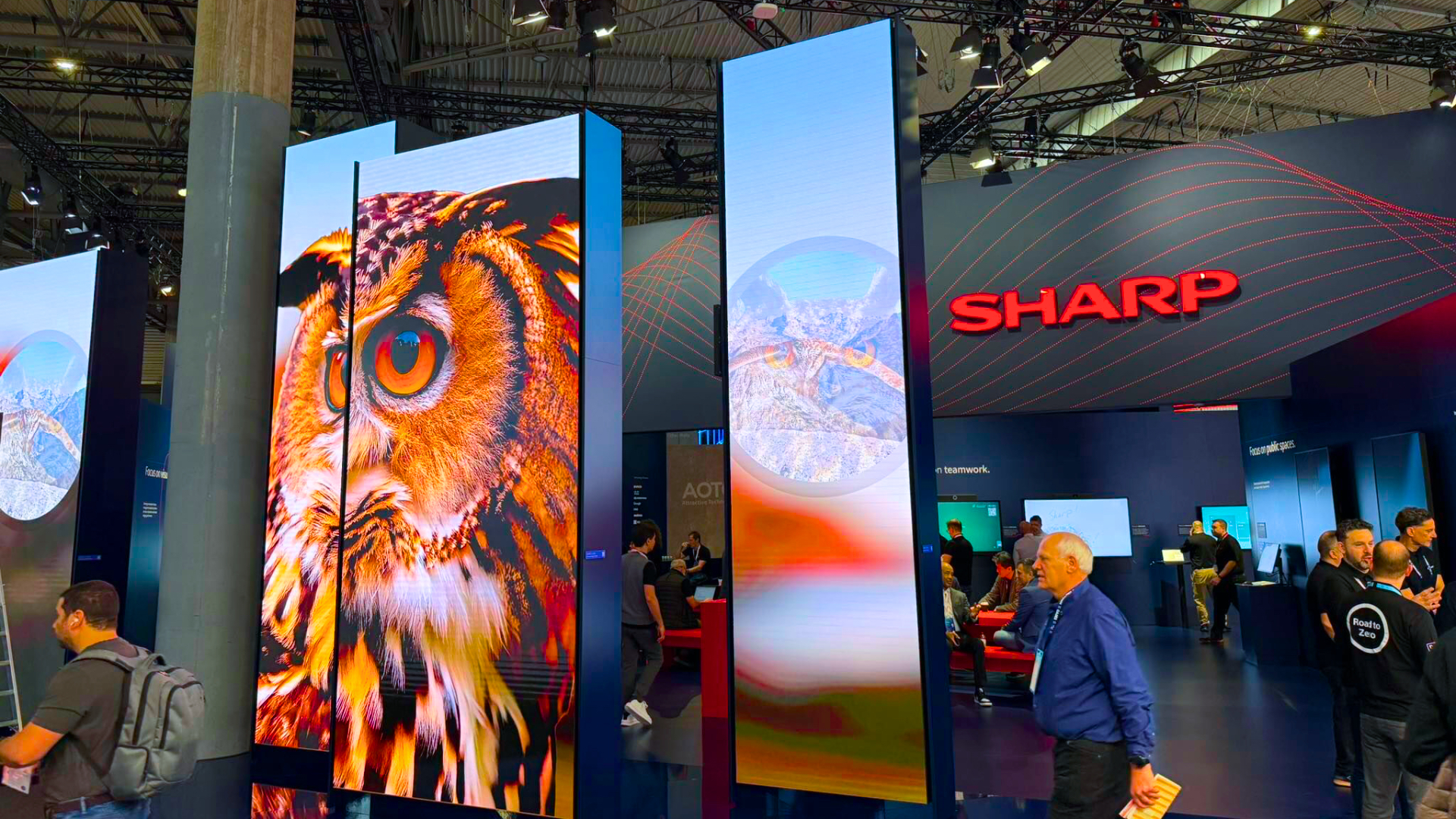
    At this year’s Integrated Systems Europe (ISE) show in Barcelona, Sharp Display Solutions Europe sent a clear signal to the market: the era of dispersed competence is over. The ‘One Sharp’ strategy, the culmination of the integration of the engineering resources of the former NEC with the global scale of the Japanese giant, has become the foundation of the company’s new business offering.

    For decision-makers from the IT and AV sector, the Barcelona exhibition under the theme ‘Focus – Now and Beyond’ was more than just a showcase of technological innovations. It was a presentation of a consolidated ecosystem in which display technology, multifunctional printing and a wide range of IT services operate under one banner. From an operational perspective, this means simplified purchasing and service processes for corporate customers and access to unified support from hundreds of specialists across Europe.

    Performance-oriented engineering

    The biggest winner of the event was the new Sharp EC dvLED series, which won the prestigious Best of Show award in the installation category. This success is no coincidence, but the result of Chip-on-Board (CoB) technology. In business practice, this translates into higher energy efficiency and durability of digital surfaces, which directly hits one of the most important investment parameters – total cost of ownership (TCO).

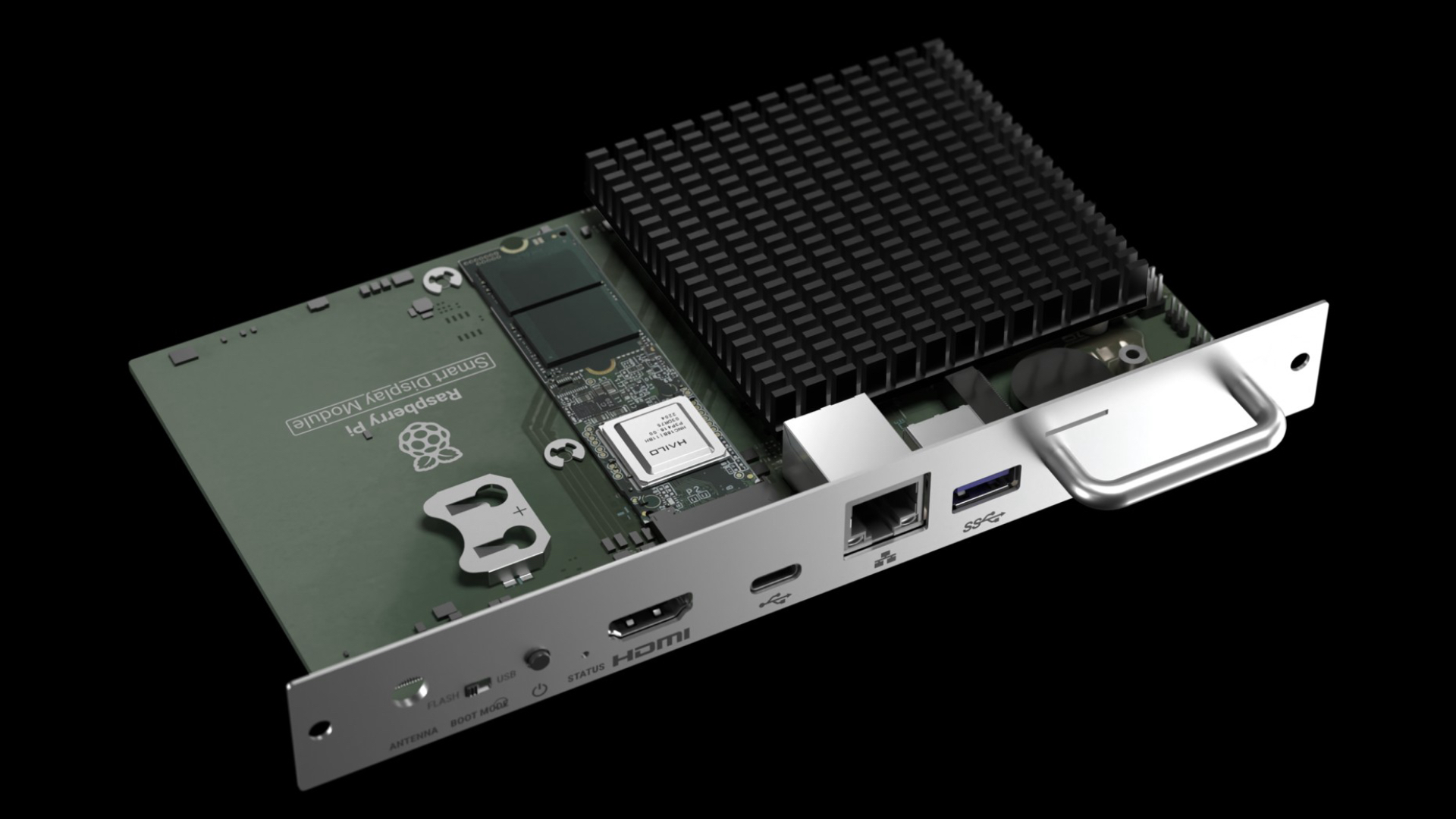
    Sharp is also committed to modularity, as can be seen in the new SDM MPi5 kit based on the Raspberry Pi Compute Module 5. This approach allows companies to ‘future-proof’ digital signage installations, where replacing the computing unit itself does not require dismantling the entire display system.

    Sustainability as an operational standard

    At ISE 2026, the theme of ecology was prevalent, but for Sharp, sustainability is closely linked to build quality. Instead of transient trends, the company offers devices with an extended life cycle and low power consumption – from the LB3 series of interactive displays to the advanced RB laser projectors.

    As the company’s management emphasises, the integration with NEC has allowed the company to combine precision engineering with flexibility of supply. For a modern company looking for a stable partner in an uncertain market environment, ‘One Sharp’ may prove to be the overwhelming argument for choosing a technology that not only impresses with its performance, but above all guarantees business continuity.

    Read more about the One Sharp strategy in an interview with Rafał Szarzyński, Sales Director Sharp Business Systems Poland.

  • Sharp Europe’s strategic turnaround: Full AI and Security accreditation from Microsoft

    Sharp Europe’s strategic turnaround: Full AI and Security accreditation from Microsoft

    It is rare for a company historically associated with office equipment to make such a radical and effective turn towards highly specialised digital consultancy. Sharp Europe, through its Sharp DX unit, has just sent a clear signal to the market by winning a set of six Microsoft Solutions Partner certifications. This achievement places the company in a small group of global players capable of comprehensively supporting the Redmond-based giant’s ecosystem.

    From a business perspective, this is not just a marketing gesture. In an era of increasing cloud complexity and stringent data regulation, enterprise customers are moving away from working with a range of niche providers to end-to-end partners. With accreditations in areas ranging from security and modern working to Azure infrastructure and data and AI, Sharp is positioning itself as a strategic integrator. For CIOs, this means less implementation risk and technology consistency, which in highly regulated industries is a more valuable currency than ever.

    This success is the result of a consistent consolidation of the company’s European IT structures. Under the Sharp DX banner, regional competences from markets such as the UK, France and Switzerland have been integrated, supported by a strong technology centre in Warsaw. This structure makes it possible to combine a local presence with a powerful operational scale, which, in the Microsoft AI Cloud Partner Program model, is crucial to support large-scale transformation processes.

    Roland Singer, Vice President of Sharp DX Europe, rightly points out that these certifications are the foundation for the next phase: the AI era. With the upcoming Microsoft AI Tour in 2026, Sharp is moving from being seen as a device supplier to becoming an architect of the digital workplace. The company’s strategy shows that survival in modern business depends on the ability to manage data and security in the cloud, rather than just providing hardware.

  • Artificial intelligence without the cloud: Sharp and Hailo bring ‘edge’ analytics to city centres

    Artificial intelligence without the cloud: Sharp and Hailo bring ‘edge’ analytics to city centres

    While the technology industry’s attention is often focused on powerful data centres, the real transformation of the visual infrastructure is taking place much closer to the user – directly inside the screen. At the upcoming ISE 2026 in Barcelona, Sharp Display Solutions Europe intends to prove that the future of professional displays does not belong to closed systems, but to open architecture and edge computing.

    Key to this strategy is the new SDM MPi5 kit, the fruit of a collaboration with Raspberry Pi Ltd. Based on the Compute Module 5, this device bridges the gap between the flexibility known from the Linux ecosystem and the rigorous requirements of the corporate sector. Using the Intel Smart Display Module (SDM) standard, Sharp enables the seamless integration of ARM compute units into the M2 and P6 series of professional monitors.

    For business decision-makers managing critical infrastructures – such as airport information systems (FIDS) or complex wayfinding networks – this move means, above all, greater control. Unlike off-the-shelf, integrated System-on-Chip (SoC) solutions, the MPi5’s modular SDM design allows the computing unit to be easily replaced without having to dispose of the entire panel. This not only saves operating costs, but also responds to growing pressures regarding sustainability and product life cycle.

    The most significant element of the new platform, however, is its readiness to support artificial intelligence. Thanks to integration with Hailo accelerators via the M.2 socket, the system can process advanced image analytics locally. This allows for functions such as anonymous crowd counting or real-time content personalisation, without the need to send data to the cloud. In an era of tightening privacy regulations, this privacy-by-design architecture is becoming an important competitive advantage.

    Eben Upton, CEO of Raspberry Pi, rightly points out that the collaboration with Sharp signals a growing business appetite for energy-efficient ARM solutions in professional environments. Offering additional storage space for large libraries of content and the ability to support a second, independent video stream via HDMI, the SDM MPi5 kit becomes more than a player – it’s a standalone point of contact with the client.

    Sharp reminds us that hardware still matters, as long as it is flexible enough to keep up with the pace of innovation in AI.

  • From hardware supplier to digital environment architect. Rafał Szarzyński on the “One Sharp” revolution

    From hardware supplier to digital environment architect. Rafał Szarzyński on the “One Sharp” revolution

    Klaudia Ciesielska, Brandsit: Sharp is a brand with over 100 years of history of innovation. What made you decide just now to bring together three previously separate worlds – printing, visualisation and IT services – in such a fundamental way? What was the key impetus for this integration?

    Rafal Szarzynski, Sharp: A key factor has been the change in the way we work. Companies today operate in an environment where it is not just the hardware that matters, but the entire digital architecture – secure, flexible and intuitive. Our customers want a partner that understands their processes and can support them, not just supply devices. That’s why we created the ‘Sharp Digital Experience’ concept, which brings together print, visualisation and IT services into one seamless ecosystem.

    This is a really well thought-out change – we have been preparing for it for years. We have invested in developing our IT competencies, acquiring companies in the UK, France and Switzerland, and in November we completed the final stage of our merger with Sharp/NEC. Today, we have more than 500 IT professionals in Europe and state-of-the-art support platforms that allow us to design work environments that meet the challenges of digital transformation. This makes Sharp a digital world company that makes a real difference to the way customers work.

    K.C.: Joe Tomota announces a move away from a transactional model to long-term strategic partnerships. Given that in Poland Sharp is mainly associated with reliable hardware – how does this change redefine your model of cooperation with the business? Does ‘One Sharp’ represent a shift from being a technology provider to being an advisor responsible for architecting and optimising the digital working environment?

    R.S.: This is a fundamental change in the way we look at customer relationships. Until now, the market has often been based on simple transactions – purchase the device, install, end of process. Today, companies expect something very different: a partner who understands their business objectives and can design the working environment to support efficiency, security and growth.

    “One Sharp” is the answer to this need – it is a philosophy in which technology is just a tool and the real value is in consulting and building strategies together.

    An example? Increasingly, we are talking to customers not about which screen or printer to choose, but how to integrate communication in a hybrid team, how to secure data in the cloud, or how to optimise document processes. Our role is not just to deliver hardware, but to create a cohesive ecosystem that addresses real business challenges. This is the essence of ‘One Sharp’ – partnerships that give you an edge in the digital world.

    “One Sharp (…) is a philosophy in which technology is just a tool, and the real value is in consultancy and joint strategy building.”

    K.C.: CIOs are increasingly asking not ‘if’ but ‘how’ to ensure security. With the integration of cyber security competences into Sharp’s structures: can devices such as printers or screens become elements of an organisation’s first line of defence? What does such a security model look like in practice within the ‘One Sharp’ ecosystem?

    R.S.: Definitely yes. Today’s working environment is distributed, and any device connected to the network can be a potential access point. That’s why, at One Sharp, we treat security as an integral part of the design of the entire ecosystem, not an add-on. Our devices – from printers to displays – are equipped with data protection mechanisms, encryption, access control and integration with identity management systems. This makes them an active part of your security strategy, not just passive hardware.

    In practice, this means that documents are stored and transmitted securely, access to devices is controlled and communication in meeting rooms takes place in an encrypted environment. Additionally, with our IT services and management platforms, we can monitor and respond to threats in real time. This approach gives the CIO the confidence that every piece of infrastructure – even the printer – is supporting the organisation’s protection, not undermining it.

    “Our devices – from printers to displays (…) are becoming an active part of the security strategy, not just passive hardware.”

    K.C.: ITpoint and Apsia brought agile software and services expertise to Sharp. How does the combination of hard hardware engineering with cloud and IT know-how change the final value perceived by the customer? Can the Polish market expect new hybrid services combining these worlds?

    R.S.: This combination opens a whole new chapter in the way we support customers. Until now, technology has often been seen as a set of separate elements – devices, applications, infrastructure. Today, we integrate these areas into a single ecosystem where hardware and software work together seamlessly and securely. With the expertise brought by ITpoint and Apsia, we can design solutions that not only work, but realistically simplify processes, automate tasks and increase productivity.

    In the Polish market, this means access to hybrid services that combine our expertise in hardware engineering with modern cloud platforms. Examples include cloud-based document management solutions, integration of audiovisual systems with collaboration tools or IT services supporting security and business continuity. Customers gain not just a product, but a complete service – from consultancy to implementation to ongoing support. This is the true value of ‘One Sharp’.

    “Customers get not just a product, but a complete service – from consultancy to implementation to ongoing support. This is the true value of ‘One Sharp’.”

    K.C.: Today’s IT departments are facing a huge fragmentation of suppliers and solutions. Is the ‘One Sharp’ strategy a response to the trend towards consolidation of services (vendor consolidation)? Apart from the convenience of a ‘single invoice’, what tangible benefits does a company gain by entrusting print, visualisation and IT to a single partner instead of three different entities?

    R.S.: ‘One Sharp’ is a response to the growing need for simplification and integration. Fragmentation of suppliers means not only greater management complexity, but also higher risks – different security standards, inconsistencies in processes and difficulties in scaling solutions. Consolidating services under a single partner offers more than convenience – it’s all about technological and strategic consistency.

    This gives the enterprise uniform security standards, faster deployments and the ability to centrally manage the entire working environment. Instead of three different integrations, we have a single ecosystem in which print, visualisation and IT work together seamlessly. This translates into lower operating costs, better control over data and greater flexibility to respond to change. In practice, this means fewer risk points, simpler processes and greater predictability – and this is the value that CIOs are looking for today.

    K.C.: Digital transformation is not only about processes, but above all about people. How does the integration of IT services and modern visual tools affect the so-called Employee Experience? In Sharp’s vision, can a modern, integrated office be an argument in the battle for talent and a way to increase the efficiency of teams working in a hybrid model?

    R.S.: Definitely yes. Technology only makes sense if it supports people in their daily work. That’s why the idea behind ‘One Sharp’ is to look at the working environment as a holistic experience that influences comfort, efficiency and organisational culture. Integrated solutions – from secure collaboration platforms to intuitive audiovisual systems – make meetings simpler, communication smoother and access to information immediate. This translates into a real sense of control and convenience for employees.

    In a hybrid model, this is crucial. An employee who can easily connect with his or her team, share documents or give a presentation in a modern conference room feels part of the organisation regardless of where they work. Such an environment is today an argument in the battle for talent – it shows that the company is investing in tools that support creativity and collaboration. As a result, not only satisfaction but also the effectiveness of teams increases. This is our vision: technology that serves people, not the other way around.

    “This is our vision: technology that serves people, not the other way around.”

    K.C.: Poland is a fast and demanding market. How will the ‘One Sharp’ strategy be implemented locally? Can partners and customers in Poland expect new billing models and consultancy services to carry out a turnkey office transformation?

    R.S.: Yes, Poland is a very important market for us and the implementation of ‘One Sharp’ will be complete here. We are developing local IT services in order to be able to offer customers comprehensive projects – from needs analysis to design to implementation and maintenance. We want the office transformation to be a simple turnkey process. When it comes to billing, we are introducing subscription models and ‘as-a-service’ services that make cost planning easier and give flexibility. This is a trend that meets the needs of Polish companies – predictability, simplicity and real value.

    K.C.: Hybrid working, automation and increasing cost pressures – which business challenges do you think will dominate in the next 2-3 years? How is the ‘new’ Sharp prepared to help business leaders meet them?

    R.S.: The coming years will be dominated by three trends: the consolidation of hybrid working, process automation and cost optimisation under economic pressure. Companies will be looking for ways to increase efficiency without compromising on safety and quality. This means that technology must not only be innovative, but also scalable and cost predictable.

    “The ‘new’ Sharp is prepared for these challenges with its ‘One Sharp’ strategy, which integrates printing, visualisation and IT services into a single ecosystem. We offer solutions that support workflow automation, secure cloud collaboration and intuitive communication tools for distributed teams. Additionally, we are developing subscription models and ‘as-a-service’ services that allow companies to better control spend and flexibly scale technology. Our goal is for business leaders to be able to look to the future with the confidence that their working environment is ready for change – no matter how fast it happens.


    This material was produced in collaboration with Sharp Poland.

  • Shadow AI on the rise: 56% of employees are implementing artificial intelligence behind their bosses’ backs

    Shadow AI on the rise: 56% of employees are implementing artificial intelligence behind their bosses’ backs

    For the European SME sector, artificial intelligence has ceased to be a technological curiosity and has become a macroeconomic necessity. The latest data coming out of the market points to a clear turning point: in the face of economic uncertainty and competitive pressures, AI is no longer a ‘nice-to-have’ option, but part of a survival strategy. However, research conducted by Sharp Europe on a group of 2,500 business leaders reveals a significant disconnect between growing confidence in the technology and the ability of organisations to absorb it effectively and safely.

    Although three quarters of European SME owners today give AI more confidence than they did a year ago, this enthusiasm is mixed with operational concerns. More than half of decision-makers admit that the main drivers for investment are the fear of falling behind the competition and the need to optimise costs in a difficult market environment. Roland Singer, vice president of IT services at Sharp Europe, notes that companies have stopped asking questions about the sense of deployment, focusing solely on the speed at which solutions scale. Despite this, 55 per cent of leaders are concerned that their organisations are not realising the potential of the tools they have purchased, and almost half still lack clear governance and security guidelines.

    Against this background, Poland is emerging as one of the leaders of digital courage in Europe, although the specifics of our market differ from our western neighbours. According to the data, as many as 62.8 per cent of Polish companies declare full integration of AI in key processes. Importantly, the motivations over the Vistula are eminently pragmatic. While companies in France or Germany prioritise security and regulatory issues, Polish SMEs focus on hard economic indicators: ROI, employment cost reduction and productivity growth.

    However, this aggressive course towards efficiency comes at a price in the form of the ‘Shadow AI’ phenomenon. As many as 56 per cent of Polish employees are using artificial intelligence tools on their own, often without the knowledge of their superiors and outside the control of IT departments. While this is indicative of bottom-up innovation by human resources, for integrators and service providers it is a wake-up call about data leakage and lack of tightness in procedures. Employees fear that the use of AI will be perceived as ‘taking shortcuts’, which paradoxically inhibits official system adoption in favour of implicit use.

    The lesson is clear for the channel market: selling licences or cloud infrastructure alone is no longer enough. SME customers, despite their stated investment in training (39 per cent of companies) and data security, are still navigating in the dark. The skills gap and employees’ lack of confidence in the results generated by algorithms create space for technology partners who will offer not only a product, but above all a security policy framework and change management advice. Companies integrating document management services with cyber security as part of a ‘one Sharp’ strategy, indicate the direction in which the market is moving – from hardware provider to architect of the digital working environment.

  • Repositioning the Sharp brand and building lasting partnerships

    Repositioning the Sharp brand and building lasting partnerships

    This change is particularly evident in meeting rooms. Workplaces, public spaces, transport hubs and catering facilities are all looking for new ways to remain modern, viable and connected. There has been a need for a new look at what ‘business as usual’ means, opening the door to new ideas and opportunities for growth.

    Remote working, cyber vulnerabilities, sustainability requirements and growing expectations of audio-visual infotainment systems mean that companies are demanding more than IT tools and hardware. They need trusted and customer-focused technology partners like Sharp to help them understand the new challenges. As companies look to the future, they are often moving away from a simple transactional model and instead looking for deeper, more meaningful business relationships that drive sustainable success and progress.

    Technological challenges are no longer one-dimensional

    We know this because at Sharp we operate on the front line with our customers and partners. On the one hand, they tell us that collaboration and flexibility require seamless digital tools. On the other hand, security, compliance, economic efficiency and environmental responsibility are described as an absolute priority. Finding the right balance between these two aspects, while at the same time reducing the number of suppliers, is a challenge in the quest for a real return on investment.

    A bold new promise, built on over 100 years of trust

    This challenge is our vocation. Founded in 1912, Sharp has a rich history of technological innovation. We know that we have what it takes to be a trusted technology partner for our customers who want to introduce new ideas. These qualities, in fact, perfectly reflect our corporate values of ‘Sincerity and Creativity’. Whether it’s a smarter, safer multifunction printer or groundbreaking (and sustainable) display technologies such as our e-Paper, which we unveiled at ISE 2024, the Sharp name has long been synonymous with quality and reliability.

    We have shown that Sharp is not just focused on solving single problems, but on offering companies comprehensive tools – from intelligent workflows to immersive displays to support collaboration in hybrid teams.

    This multi-faceted reality has emboldened us to redefine what we stand for. The world around us is changing rapidly, and we are not going to wait for it to stabilise. We call this the ‘Sharp Digital Experience’, a clear endorsement of the direction we are heading in at Sharp Europe.

    Sharp Europe: A new identity for a dynamic future

    This new direction signals the beginning of an exciting era at Sharp Europe. The world of technology is evolving faster than ever before, and our brand will now reflect the energy, creativity and forward-thinking spirit that drives us.

    We are excited to present a new brand identity that will help customers and partners use our business solutions with confidence. With a clearer ‘one Sharp’ proposition and consistent visual resources, our products and services form a unified identity. Customers can now expect an even stronger partnership with Sharp. One that focuses on their changing needs and is reinforced with new energy to help them succeed in a dynamic marketplace.

    An example of this unification of services is our ‘Pulse’ design theme – ‘The Pulse’ – which symbolises how our company connects people to technology in a seamless way. Made up of interconnected elements, it constantly adapts and evolves to showcase our wide range of products and services – from IT services to multifunctional devices to innovative display solutions. “Impulse” also illustrates the communication and proximity we have with our customers, symbolising digital conversations through our wide range of technology devices and digital interfaces.

    Visual features aside, our repositioning is not just a new look – it’s a bold statement about who we are and where we’re going. Sharp has very strong connections with people and businesses around the world, and this strategic shift signals our continued investment in innovation and commitment to helping organisations become more efficient and open up new opportunities, no matter what their size.

    From devices to environments

    What can our customers and partners expect from the ‘Sharp Digital Experience’ as we strengthen our trusted partnerships and communicate our brand positioning?

    Imagine the scene. Clients enter the conference room, their attention is caught by a Sharp dvLED screen from the doorway. After a moment, they see that their presentation is ready to go, securely stored in the cloud and accessible via the Sharp Synappx platform. During the meeting, ideas are exchanged not only between those in the meeting room, but also among those participating remotely from 10 other countries around the world. On the Sharp large-format display, everyone can see everything clearly. Discussions run smoothly, decisions are made and supporting documents are printed securely and in top quality with the latest Sharp MFP.

    This is the future we intend to achieve. A world based on intuitive experiences that connect seamlessly to allow businesses to focus on what they do best. This concept also guides our new visual communications, where ‘impulse’ permeates our imagery to show how technology not only connects and talks to each other, but also interacts seamlessly with people.

    Innovation with a message

    By combining its IT services, monitors, printing devices and workplace solutions, Sharp Europe is creating a communication platform that fuses ideas with actions, people with technology, and today’s challenges with tomorrow’s opportunities. The result? Companies that are more resilient. Teams that are more empowered. Workplaces that are more inspiring. And that’s what the future of workplaces and public spaces is all about. Not just faster networks or smarter screens, but better experiences for people.

    Technology alone will not build the future of work. It will be built on how we use the technology. How we design, imagine and integrate it to serve human potential. By combining all its strengths, Sharp Europe is not only developing as a brand. It is becoming something that companies can truly believe in. A trusted partner that supports both our existing customers and those we will engage through our new identity, so that they can navigate emerging complexities with confidence, creativity and honesty.

    The world is changing fast, but with the right technology partner, the future doesn’t have to be daunting. It can actually be inspiring. That is what Sharp Europe wants to prove with expert advice and tailor-made solutions and secure technology.

  • Sharp Europe consolidates and repositions its brand under the slogan: “One Sharp” Digital Experience

    Sharp Europe consolidates and repositions its brand under the slogan: “One Sharp” Digital Experience

    Sharp Europe has announced the launch of a new brand concept: “One Sharp” Digital Experience. This strategic shift, reinforced by a new visual identity, marks a significant milestone in Sharp Europe’s new business direction.

    Drawing on more than a century of experience in innovation, Sharp Europe is opening a new chapter in customer-focused IT services. The new offering builds on a comprehensive portfolio of cyber security and digital transformation solutions, strengthened by the acquisition of ITpoint, a leading managed services provider, and Apsia, an expert in integrating business applications in the cloud.

    The consolidation also includes the integration of Sharp Display Solutions Europe (SDSE) into the Sharp Electronics Europe (SEE) portfolio, strengthening the brand’s technology offering.

    Commenting on Sharp’s vision for its new activities in the world of digital services, Joe Tomota, President Sharp Europe, said: “We know that our brand is very close to people and businesses around the world. This business consolidation and brand repositioning are emblematic of where we are heading. We are bringing together Sharp ‘s expertise in IT services, document and print management services, audiovisual technology and workplace solutions under one cohesive identity.”

    “With years of experience in delivering innovative products and audiovisual solutions across multiple industries, we now have the opportunity to shape the wider digital landscape. Our world is becoming increasingly visual and sensory and we need to respond to this.
    As Sharp Europe integrates the most cutting-edge Sharp solutions in the display industry under one brand, we are creating a future where technology, creativity and collaboration come together to help our customers truly thrive,” Tomota concludes.

    This change reaffirms Sharp’s continued investment in innovation and the company’s commitment to helping organisations secure business, increase efficiency and explore new opportunities – as a trusted technology partner for businesses of all sizes.


    Source: Sharp

  • Printing in SMEs: from an operating cost to a strategic business tool

    Printing in SMEs: from an operating cost to a strategic business tool

    For years, the main criterion for the selection of printing devices in small and medium-sized businesses has been price – both purchase and operation. However, rising business costs and changing expectations of office technology have meant that this pattern is changing.

    Today, functionality related to document process automation, cyber security and flexible financing models are increasingly determining the choice.

    As Rafał Szarzyński, Sales Director Sharp Business Systems Polska, points out, this shift in priorities is clearly visible in conversations with customers from the SME sector.

    “Financial aspects such as the cost of equipment or operation have always been and will continue to be important to customers. Particularly customers in the SME sector, the most affected by the increase in operating costs of doing business. It is worth noting that companies in this sector, are looking to different financing models, from the standard leasing/rental of equipment to the increasingly popular fee per page printed or the new subscription model. However, it is the other two key aspects of print systems that are starting to be the priority ones for users.”Rafał Szarzyński, Sharp Business Systems Polska, emphasises.

    Document process automation – gain in time and quality

    One of these priorities is the automation of simple, repetitive workflow activities.

    In practice, this means implementing printing solutions equipped with OCR systems that can recognise text on scanned documents, extract metadata from them and automatically transfer them to external systems – from finance and accounting to workflow platforms.

    “Therefore, printing solutions that incorporate OCR systems and provide streamlined document workflows, use the metadata extracted from the documents and automatically transfer them to external systems such as finance and accounting or workflow systems are becoming increasingly popular.”Sharp Business Systems Polska expert adds.

    For SMEs, this not only saves time, but also means less risk of errors, faster posting of invoices or better control over project documentation. In many companies, such improvements are becoming the cornerstone of digital transformation.

    Printers as fully fledged network devices

    The second key area that is growing in importance is security. And not in the sense of protecting against unauthorised access to printouts, but in the context of cyber threats. In the modern IT environment, the printer is a fully functional point on the network – and that means it can become a target for attack.

    Rafał Szarzyński, Sharp

    “The other functionality that is starting to become important in print environments is security issues, and more in terms of cyber threats than unauthorised access issues. In fact, the standard in organisations looking after aspects of this is to treat devices, not as mere print or scan sites, but as full-fledged network devices. Devices through which the client’s infrastructure can be hacked which can result in large losses for the organisation.” Rafal Szarzynski adds.

    Therefore, manufacturers are increasingly implementing features such as data encryption, user authentication, regular firmware updates or real-time access monitoring.

    These are elements that were the domain of large corporations only a few years ago, but are now becoming standard in SMEs as well.

    Mobility and cloud integration – barrier-free hybrid working

    The shift in working patterns towards a hybrid model has made mobile access to printing and scanning devices as important as their technical performance.

    The ability to print or scan from anywhere, using popular cloud solutions, has become not just a convenience but a business requirement.

    “It is also worth bearing in mind the issues of mobility and printing or scanning using cloud solutions. Today’s SME market is successfully using popular solutions based on Dropbox or M365. This type of functionality has become very popular in recent years.”says Rafał Szarzyński, Sharp Business Systems Polska.

    Integration with platforms such as Microsoft 365 and Google Workspace allows documents to be transferred quickly between the office and remote workers, and facilitates collaboration with clients and partners.

    Growing popularity of MPS and the “as-a-service” model

    Not only are the functions of devices changing, but also the way companies use them. Managed print services (MPS) and subscription models are gaining the upper hand over traditional hardware purchases. The reason? A combination of predictable costs and access to the latest technology.

    “It is the aforementioned financial aspect that is one of the main factors making SMEs increasingly opt for managed services – such as print services. The benefits of buying any service (not a product) are now a dominant aspect in the decision-making process and the choice between: buy or rent.” says an expert from Sharp Business Systems Polska.

    The ‘as-a-service’ model gives companies flexibility – you can easily increase or decrease the number of devices as required, and service and consumables are included in the subscription. This is particularly important in dynamic sectors where staff numbers and print volumes can change from month to month.

    From device to IT strategy

    Printing in SMEs is no longer just about office equipment – it is becoming part of the IT strategy, affecting the security, efficiency and flexibility of the entire organisation.

    Automating document processes reduces working time and minimises errors, while new security standards protect against real cyber threats.

    At the same time, the growing popularity of service models allows companies to take advantage of the latest solutions without high capital expenditure.

    As Sharp’s experience shows, it is the combination of automation, security and flexible finance that defines the modern printing environment in the SME sector today.

  • Sharp targets offices with limited space. BP-22C25: Small printer, big ambitions

    Sharp targets offices with limited space. BP-22C25: Small printer, big ambitions

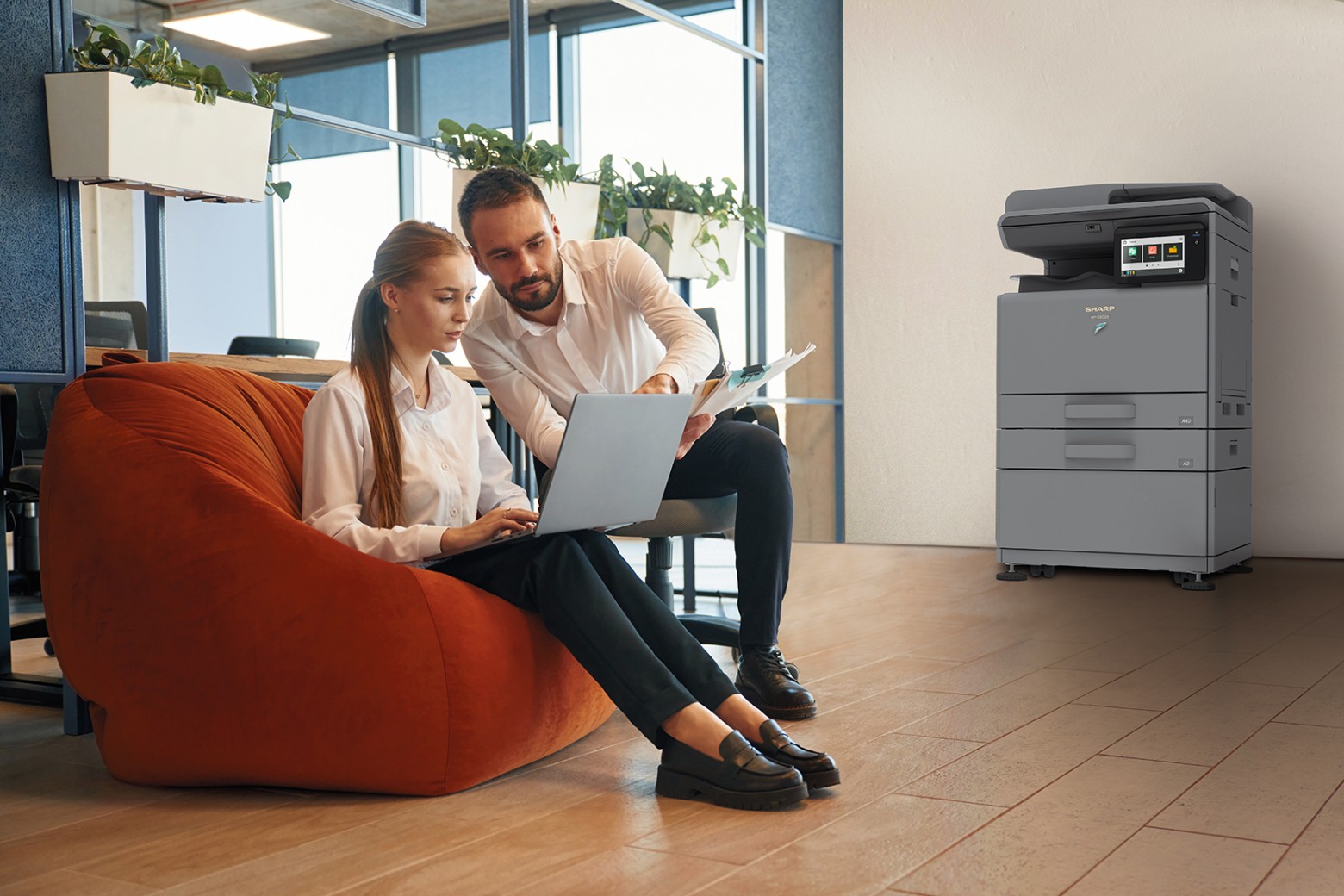
    At a time when office space is an increasingly valuable resource and the need for flexibility and digital productivity is becoming standard, Sharp is responding to these challenges with the introduction of its A3 multifunction printer, the BP-22C25. This device is distinguished not only by its size – the smallest in its class, according to the manufacturer – but also by a feature set more typical of higher-end equipment.

    The BP-22C25 is the answer to the needs of small and medium-sized businesses that expect more from a printer than just basic copy or print functions. A 7-inch touchscreen, support for popular mobile printing standards and a suite of ergonomic tools make it a product that can make a real difference in environments with limited space – from reception desks to administrative departments.

    It is worth noting, however, that Sharp has been consistently transferring features from its higher-end models to the entry-level segment, thus fitting in with the wider trend towards the democratisation of office technology. Devices that once required a lot of money and space are now becoming more accessible – both physically and in terms of price. The BP-22C25 seems to fit in well with this trend: compact, intuitive and secure.

    From an IT and compliance perspective, data security features are important. Built-in encryption, TLS 1.3 and SMB 3.1.1 protocols and the possibility of remote hardware updates are already almost mandatory for printing devices in the business sector. Sharp clearly understands that data protection is becoming no less important than print quality.

    Although the A3 MFP market is no longer growing rapidly, its evolution towards smaller, more integrated solutions is a reality. The BP-22C25 is a piece of equipment that could become popular in the SME sector, especially where the trade-off between size, functionality and reliability matters. It is an example of how even in a mature product category it is possible to innovate sensibly.