Tag: NASA

  • Satellite connectivity and AI: AMD collaborates with NEC and NASA on new technologies

    Satellite connectivity and AI: AMD collaborates with NEC and NASA on new technologies

    As NASA shifts its focus from short exploration missions to a sustained presence on the moon, the frontline of the battle for technological supremacy shifts to where data latency becomes a critical bottleneck. In the new reality, where distance from Earth’s server rooms makes ongoing data analysis impossible, the key to success is becoming ‘intelligent edge’ (edge computing) – and it is here that AMD sees its chance to define the standards of the new space age.

    The Santa Clara giant’s strategy is based on a simple premise: in order for America to lead in space, it must have an edge in the production of advanced chips capable of operating in extreme conditions. The traditional approach of sending raw data back to Earth is no longer efficient for projects such as the NISAR mission or the Artemis programme. The solution is the Versal series of adaptive SoCs, which combine programmable logic with AI engines, allowing information to be processed directly on board the spacecraft.

    For commercial partners such as Blue Origin, the choice of AMD technology is not only a question of performance, but above all flexibility. The flight computers powering the Mark 2 lander test vehicle need to be ready to update AI algorithms after launch, something that was previously impossible with rigid hardware architectures. The ability to reconfigure systems on orbit allows the mission to be optimised in response to unforeseen challenges, dramatically increasing the return on investment for multi-year space programmes.

    The application of these technologies goes beyond NASA’s ambitions. Japan’s NEC is using adaptive AMD chips to build a constellation of optical communications satellites, which is set to revolutionise data routing in extraterrestrial space. This shows that the competition for silicon in space is not just a matter of national prestige, but a real market for infrastructure services.

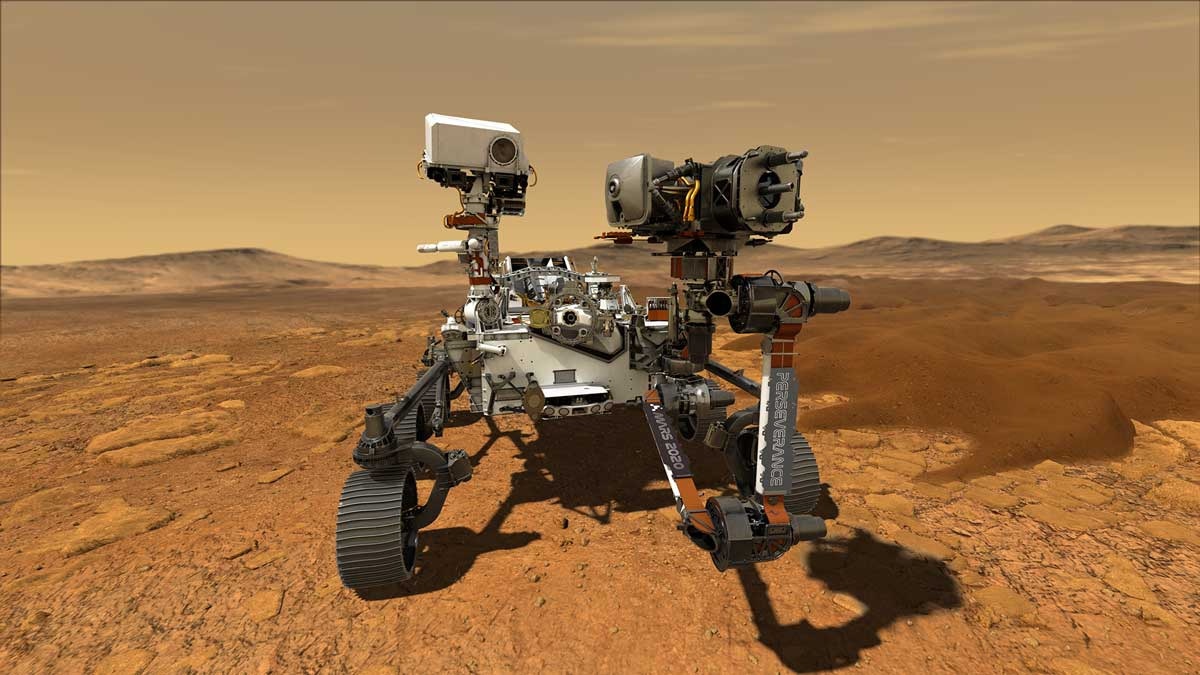
    AMD’s success on Mars, where FPGAs supported the Perseverance rover’s navigation, provides a solid foundation of confidence. However, the real test for the company will be the coming decade, where autonomous systems will have to cope with radiation and extreme temperatures without support from the base. In this high-margin sector, where reliability is more valuable than raw computing power, AMD is positioning itself as an essential architect of the new orbital data economy.

  • New space law in Poland opens new chapter for VC and deep tech

    New space law in Poland opens new chapter for VC and deep tech

    For years, the Polish space sector functioned in a kind of regulatory vacuum. Although indigenous companies successfully provided instruments for ESA or NASA missions, there was a lack of a national legal framework to define the rules of the game in orbit. The Act on Space Activities adopted by the Sejm on 13 February changes this state of affairs, transforming Poland from an ambitious observer into a fully-fledged player on the map of the global extraterrestrial economy.

    For investors and entrepreneurs, the most important signal coming from Warsaw is predictability. The law introduces a clear definition of space activities, encompassing launch, exploitation and – crucially in an era of the growing problem of space junk – deorbit of objects. This approach encapsulates the life cycle of a mission in a legal framework, which is essential for obtaining debt financing or commercial insurance.

    Unlike many European counterparts, the Polish regulation relies on flexibility. The abandonment of rigid capital thresholds in favour of assessing the risk of a specific mission is a nod to the NewSpace sector. Instead of blocking young spin-off companies from entering the market with prohibitive financial requirements, the President of the Polish Space Agency (POLSA) will assess the entity’s real operational capabilities.

    Equally important is the issue of civil liability. The law limits the maximum sum insured to €60 million, which is a reasonable amount on the scale of the global space industry. This protects smaller players from costs that could stifle innovation at the prototyping stage. In addition, limiting the liability of subcontractors to wilful misconduct only builds a safe ecosystem for a wide supply chain – from sensor manufacturers to software providers.

    The National Register of Space Objects (NROK) is becoming a key oversight tool. Registering an object under the Polish flag means bringing it under the jurisdiction of the Republic of Poland, which, from an international perspective, brings order to issues of ownership and state responsibility. At the same time, POLSA is emerging as a central administrator of satellite data, which is expected to stimulate the market for downstream applications – using data from orbit in agriculture, logistics or insurance.

    The Polish law is not just a formality, but a strategic foundation. By creating a stable legal environment, Warsaw is sending a clear message to VC funds: Polish deep tech is ready to scale beyond the atmosphere, and legal risk is no longer a barrier to entry.