
Tag: PARP

  • PLN 40 million for startup acceleration: Startup Booster Poland call is launched

    PLN 40 million for startup acceleration: Startup Booster Poland call is launched

    The Polish Agency for Enterprise Development (PARP) is making a significant move towards professionalising the domestic innovation ecosystem by launching a call for applications in the Startup Booster Poland – Tech Impact programme. With a total budget of PLN 40 million, funded by the European Funds for the Modern Economy (FENG), the initiative is focused on identifying specialised operators who will take on the burden of guiding young companies through the most risky stage of their development. Organisations such as technology transfer centres, technology parks or incubators can apply for funding of between PLN 15 and 20 million. The deadline for applications is 17 July, and what is at stake is not only capital, but above all a change in the survival statistics of young companies.

    The current landscape of the Polish SME sector, which accounts for almost half of the country’s GDP, shows a clear gap in the resilience of the youngest players. Only 68 per cent of startups continue to operate after the first year, while for two-year-old companies the figure rises sharply to 91 per cent. This data sheds new light on PARP’s strategy – the Tech Impact programme is not just another grant mechanism, but an attempt to systemically secure the ‘valley of death’. The focus on *impact* projects, i.e. solutions to the social and environmental challenges of the UN’s Agenda 2030, suggests that the Polish administration is beginning to see sustainability as a real competitive advantage, not just a regulatory requirement.

    In view of these developments, it is worth noting the need for future operators to build interdisciplinary mentoring teams. Successful acceleration in the area of Tech Impact today requires a combination of hard business competencies and expertise in ESG reporting or environmental certification. It also seems reasonable for operators applying for operator status to integrate their activities with private investors already at the application stage, which will allow startups to make a smoother transition from the incubation phase to market funding rounds.

    Greater intensification of educational activities aimed at traditional business should also be considered; after all, the role of the operator is only successful when the innovative solution finds a viable customer or strategic partner. Building such bridges between science, startups and mature industry may prove to be a key factor that will determine the sustainability of the effects of this programme in the long term business perspective.

    Innovation actors with relevant experience in the implementation of acceleration programmes, in particular, can apply for funding:

    • technology transfer centres,
    • innovation centres
    • technology incubators
    • academic business incubators,
    • technology parks.

    How to apply? Applications for the operators of the FENG Startup Booster Poland – Tech Impact programme are accepted until 17 July via the LSI platform: https://lsi.parp.gov.pl.

    More information about the call can be found on the PARP website.
  • Grants for green transformation: How to fund green AI in your company?

    Grants for green transformation: How to fund green AI in your company?

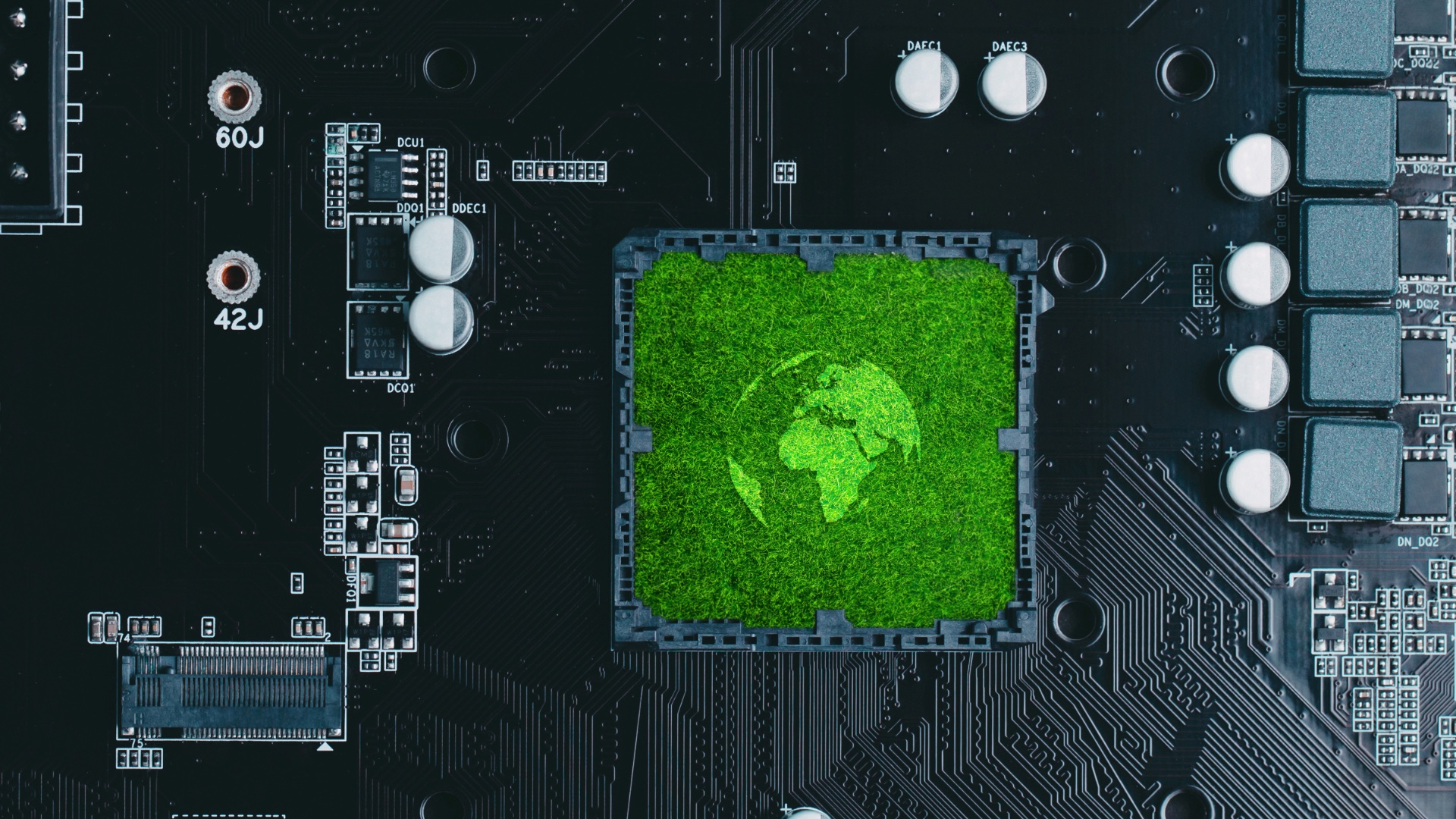
    Artificial intelligence today faces a paradox that defines a new era of technology. On the one hand, it promises to optimise resources; on the other, it is becoming one of the most energy-intensive sectors of the economy.

    The ICT sector already accounts for 5-9% of global power consumption, and data centres, driving the AI arms race, could consume up to 8% of global energy by 2030. In the US, the scale of the problem is forcing radical steps: from the reactivation of old oil-fired power plants to the construction of private power grids by tech giants.

    It becomes crucial to distinguish between two concepts: green AI and AI for Green. The first is about technological hygiene itself – designing algorithms to be energy efficient (which can reduce energy consumption by up to 90%) and conscious auditing of infrastructure. The second is about using AI as a tool to fix the world.

    Examples are coming from the Polish startup ecosystem supported by PARP. Systems such as the Planter System from Agri 4 Zero optimise precision farming by reducing fertiliser and water consumption, while Waterly’s autonomous buoys monitor the quality of water bodies in real time.

    The foundation for this transformation is data from IoT sensors. The use of energy harvesting technology, which derives energy from machine vibrations or temperature differences, allows building management systems (HVAC) to be implemented without generating additional operating costs.

    At the scale of a large enterprise, optimising temperature and lighting with AI translates into savings of 20-30%, which means hundreds of thousands per year and real support for CSRD reporting.

    However, the real challenge remains to move away from ‘AI fashion’ to substantive implementation. Krzysztof Gulda, President of the Polish Agency for Enterprise Development (PARP), emphasises that efficiency must not overshadow responsibility. There are a number of support programmes available to companies, such as ‘GOZ – it pays‘ or ‘Green Recommendations‘, which fund consultancy on the circular economy.

  • Why are fewer and fewer companies being established in Poland?

    Why are fewer and fewer companies being established in Poland?

    Start-up rates are often treated as a barometer of the health of the economy. However, the latest Global Entrepreneurship Monitor(GEM) report ‘From Uncertainty To Opportunity’ sheds new light on this statistic. Covering 53 countries accounting for more than half of global GDP, the document suggests that the era of fascination with the sheer number of startups is coming to an end. Today, the key challenge is no longer how many companies are created, but how many of them can survive the ‘valley of death’ and adopt artificial intelligence.

    Polish anomaly: Maturity instead of youth

    The situation in Poland looks paradoxical compared to the world. While in countries such as Canada or Chile, one in four adults runs a young company, in Poland the rate is three times lower. As recently as 15 years ago, there were two novices for every one mature business owner. Today, these proportions have radically reversed: for every young company, there are four established businesses.

    However, this state of affairs is not just a warning signal. Experts from the Polish Agency for Enterprise Development (PARP) point to a complex structural background. The Polish economy has advanced and a saturated labour market with rising wages has become a safe alternative to risky self-employment. At the same time, the entry threshold has increased dramatically. Today’s market requires not only an idea, but massive investment in innovation and technology, which naturally rewards players already embedded in the system.

    Two gaps: Survival and AI

    The GEM report diagnoses two critical phenomena that could determine the balance of power in the global economy over the next decade: the survival gap and the AI readiness gap.

    The first is due to systemic barriers. Although the world is being flooded by a wave of new initiatives, too few of them develop into stable organisations. It is not only the lack of funding that is to blame, but above all the deficiencies in business education. Companies often ‘choke’ in the early growth stage, unable to scale operations.

    The second gap – technological – is creating a two-speed economy. Interestingly, optimism about AI is not coming from Europe. The countries where one in two entrepreneurs recognise AI as the key to the future lie outside the Old Continent. In Europe, the rate is much lower, which may herald a loss of competitiveness to markets more aggressively adopting new tools. As GEM’s Aileen Ionescu-Somers notes, the ability to use AI is now the foundation of productivity, not a technological add-on.

    Value capital

    Despite technological challenges, Poland excels in the area of values. More than 90% of young entrepreneurs on the Vistula include social and environmental impact in their business decisions, which is above the global average. Women’s activity also remains stable, almost matching that of men in Poland, which is one of the strongest foundations of the local ecosystem.

  • PLN 700 million for technological SMEs. PARP launches a call under the new FENG formula

    PLN 700 million for technological SMEs. PARP launches a call under the new FENG formula

    The Polish Agency for Enterprise Development(PARP) is opening another chapter in the history of the SMART Path programme, allocating PLN 700 million to support innovation in the SME sector. Although the amount is impressive, it is not the scale of the funding, but the fundamental change in the structure of the programme that attracts the attention of market analysts. In response to voices from the business community, the agency has decided to move away from complex modularity towards a transparent division of investment processes.

    Strategic evolution instead of bureaucracy

    So far, the SMART formula has sometimes been logistically challenging for entrepreneurs. The new edition, under the FENG 2021-2027 programme, relies on linearity: the current call focuses exclusively on the research and development (R&D) phase, while the commercialisation of results will be covered by separate competitions in the future. This strategic move allows companies to focus on the most difficult phase – the creation of new technological value – without having to immediately plan a full implementation line.

    The key criterion remains to fit into the National Intelligent Specialisations. PARP is looking for projects that not only digitise processes or automate production, but bring a new quality on a national scale. Funding covers a wide range of costs: from the salaries of research staff, through equipment depreciation, to intellectual property protection and team competence development.

    Entry barrier and risk premium

    The programme is aimed at entities with an established technological vision. The minimum threshold for eligible expenditure is set at PLN 3 million, which, with an upper limit of PLN 50 million, clearly defines the target group as ambitious technology and manufacturing companies. The level of co-financing is flexible – the base 50% for industrial research can rise to as much as 80% once certain conditions are met, providing an important capital shield for risky experimental projects.

    However, it is worth noting the strict definitions of research work. PARP clearly cuts off funding for routine IT work, such as developing simple applications or debugging. The new edition of the SMART path is a tool for those who push technological boundaries rather than replicate proven schemes.

    The time to prepare documentation is short. The transfer window for applications opens on 26 February and closes as early as 31 March 2026.