Tag: IPO

  • SpaceX valuation could reach $1.75 trillion. Record-breaking IPO on the horizon

    SpaceX valuation could reach $1.75 trillion. Record-breaking IPO on the horizon

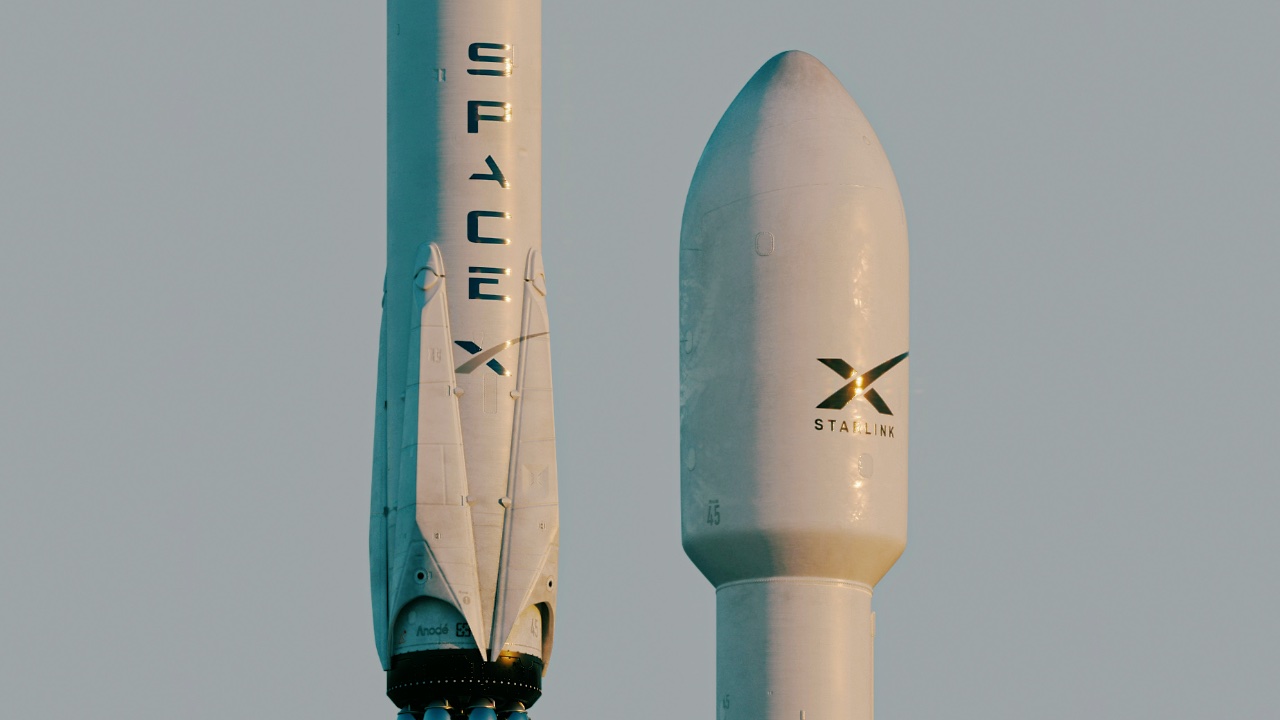
    When SpaceX filed a confidential prospectus, the market expected numbers beyond Earth’s atmosphere. However, the latest details of the operation, accessed by the media, suggest that Elon Musk is not just planning an IPO, but building the most centralised and ambitious technology conglomerate in history. With a valuation targeting $1.75 trillion, SpaceX is no longer seen solely as a transportation company, becoming the foundation for next-generation artificial intelligence infrastructure.

    Underpinning this transformation is the founder’s tightening of control. Last year, Musk bought back $1.4 billion worth of shares from current and former employees, a signal of confidence sent to internal stakeholders just before the public opening. The post-IPO corporate governance model leaves no illusions about who will hold the reins. With a two-class capital structure, Class B shares grant Musk and a small group of trustees ten times the voting power of standard shares offered to public investors. This arrangement, while familiar from Silicon Valley, in this case cements Musk’s power as CEO, technical director and chairman of the board in an almost absolute way.

    However, the company’s finances reveal some tension between a profitable satellite business and huge investment appetites. Starlink, generating $4.42 billion in operating profit, has become a ‘milking cow’ to fund integration with xAI – Musk’s artificial intelligence company. Although SpaceX reported a consolidated loss of nearly $5 billion in 2025, this is mainly due to an aggressive pivot towards AI. Capital spending increased fivefold in two years to $20.7 billion, more than half of which was spent on computing infrastructure.

    This is where the most futuristic element of the strategy comes in: building data centres in space. This plan is not just a technological curiosity, but a condition for activating a gigantic incentive package for Musk. The billionaire can receive an additional 60 million shares if the company’s capitalisation rises to an unimaginable $6.6 trillion and the space server project for AI developers is realised.

    For Wall Street investors about to meet with executives in Texas, SpaceX thus becomes a unique hybrid. On the one hand, it offers stable revenues from its dominance of the launch market and satellite internet, while on the other, it is a huge leverage for AI development. Musk apparently assumes that since he has managed to monopolise access to orbit, the next step must be to move the brains of the global digital economy there. Although the structure of the IPO limits the influence of shareholders on the strategy, the scale of the potential returns means that the queue of applicants for Class A shares is likely to break all records.

  • Creotech Quantum will make its debut on the WSE. The first such company in Europe

    Creotech Quantum will make its debut on the WSE. The first such company in Europe

    Creotech Quantum ‘s debut on the main floor of the Warsaw Stock Exchange is a moment of significance beyond the local capital market. It signals that the European deep tech sector is no longer the domain of laboratories and venture capital funds alone, and is beginning to seek validation on the public market. As the first public company in Europe to focus on quantum technologies, Creotech is throwing down the gauntlet to US players who have been trading at valuations running into billions of dollars on the New York stock exchanges for years.

    CEO Anna Kaminska’s strategy is based on a pragmatic transition from the research phase to hard commercialisation. Central to this plan is the quantum key distribution (QKD) system, whose market debut the company announces later this year. In an era of growing concerns about cyber security and the potential ability of quantum computers to break classical ciphers, QKD offers a solution based on the laws of physics, not just the complexity of algorithms. For sectors such as finance, logistics and defence, it is no longer just a futuristic vision, but a viable tool for data protection.

    The company’s strength lies in its skilful diversification and synergies with its parent Creotech Instruments. Creotech Quantum is not limited to theory; it provides the infrastructure necessary to build a quantum ecosystem. A portfolio including precision White Rabbit timing systems and high-speed CMOS cameras for monitoring quantum processors positions the company as a key component supplier. What’s more, ambitions extend to orbit – collaboration on space-based QKD systems could give the company a unique competitive advantage on a global scale.

    Investors must remember, however, that the quantum market is a long-distance and extremely capital-intensive game. While the debut is an image success, the real test will be to prove the announced commercial deployments. If Creotech Quantum successfully commercialises its systems in the coming months, it could become a role model for other European technology players who have so far been cautious about the stock market. The stakes are high: what is at stake is not just returns, but whether Europe manages to build its own pillars in the most crucial technological area of the 21st century.

  • SpaceX goes public. What do we know about the biggest IPO ever?

    SpaceX goes public. What do we know about the biggest IPO ever?

    SpaceX is preparing to go public. According to reports from Reuters, Elon Musk’s company has confidentially filed for an initial public offering (IPO) in what could become the largest IPO in history. With a potential valuation in excess of $1.75 trillion, SpaceX has the potential to dethrone Saudi Aramco and permanently change the landscape of the technology sector.

    Valuation fundamentals: From rockets to AI infrastructure

    While Starship’s spectacular rocket launches attract media attention, for institutional investors the key asset remains Starlink. Already with nine million subscribers and lucrative defence contracts, the satellite communications system is the company’s stable revenue engine. It is Starlink’s predictability that makes the astronomical valuation substantively defensible.

    A new strategic pillar of the company is its integration with xAI, Musk’s artificial intelligence startup. Plans to build solar-powered orbital data centres suggest that SpaceX is no longer just a transportation company. It is becoming a critical infrastructure provider, combining satellite connectivity with AI computing power beyond Earth’s borders.

    The mechanics of ‘Musonomics’

    SpaceX’s debut is not only a test for the space sector, but also a test of confidence in Elon Musk’s management model. “Musonomics” – as analysts refer to the network of relationships between Tesla, xAI and SpaceX – raises as much enthusiasm as questions about corporate governance. The planned two-class share structure is likely to allow Musk to retain full operational control while raising public capital, estimated at more than $50 billion.

    Despite concerns about the leader’s burden of multiple projects, SpaceX stands out from the billionaire’s other ventures for its operational maturity. Last year’s profit of $8 billion on revenues of $16 billion shows that the company has achieved profitability that is rare in this sector.

    Impetus for the capital market

    The analyst day and financial model sessions scheduled for 21 April will be a key turning point. SpaceX’s success could revive the dormant IPO market, encouraging other giants such as OpenAI and Anthropic to emerge from the shadows of the private markets. For investors, this is a rare opportunity for exposure not only to the new era of the space race, but more importantly to the complex technology ecosystem that defines the strategic economic advantage of the next decade.

  • A billion valuation and an appetite for acquisitions. Euvic enters NewConnect through the back door

    A billion valuation and an appetite for acquisitions. Euvic enters NewConnect through the back door

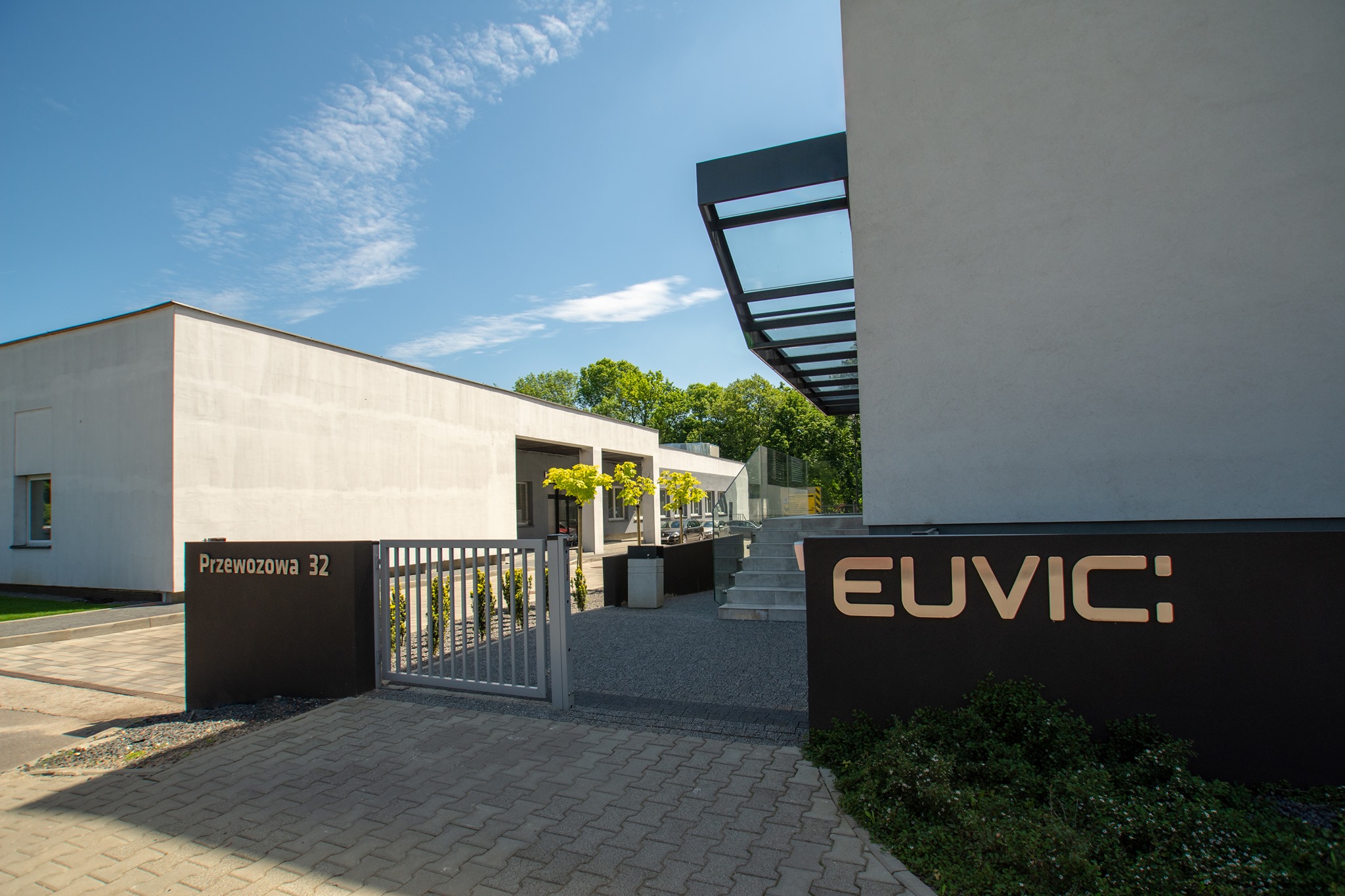
    When eo Networks opened trading on the NewConnect market on 2 January 2026 with a price of PLN 29.8, investors were no longer looking at the company they had known until then. As a result of the reverse takeover finalised at the beginning of the year, the Euvic Group made its de facto debut on the Warsaw trading floor .

    This is a heavyweight entry – with a market capitalisation of around PLN 1 billion, the Gliwice-based technology giant has instantly become one of the largest entities on the small stock market, fundamentally changing the balance of power in the segment of IT companies listed on the alternative market.

    For Euvic, built for more than two decades in a federated model, the stock exchange listing is not an end in itself, but a tool for further financial and operational engineering. The company’s management announced that it will present a detailed strategic plan in the coming weeks.

    However, it is already clear that entry to the trading floor is expected to catalyse two key growth trajectories: further consolidation of the fragmented Polish IT market and, crucially for margins, more aggressive foreign acquisitions.

    The merger mechanism with eo Networks allowed the group to quickly acquire public company status, bypassing the lengthy procedure of a traditional IPO. The acquisition of management and operational functions by Euvic is a signal that the company feels mature enough to undergo the rigours of the capital market in exchange for easier access to financing. Management representatives emphasise that the business is fundamentally sound and has grown in the local market, but ambitions extend to building a strong international presence.

    The debut comes at a time when the Polish IT sector is looking for new growth impulses in the face of rising wage pressures and a changing global economy. Euvic, which integrates the design, build and implementation of complex systems, is betting on scale.

    The current valuation gives the group a strong bargaining chip in discussions with potential acquisition targets, both at home and abroad. Investors now await the specifics of the strategy, which will show how quickly the billion-dollar capitalisation can translate into real expansion in Western markets.

  • Netskope IPO: Company raises share price and targets $7bn

    Netskope IPO: Company raises share price and targets $7bn

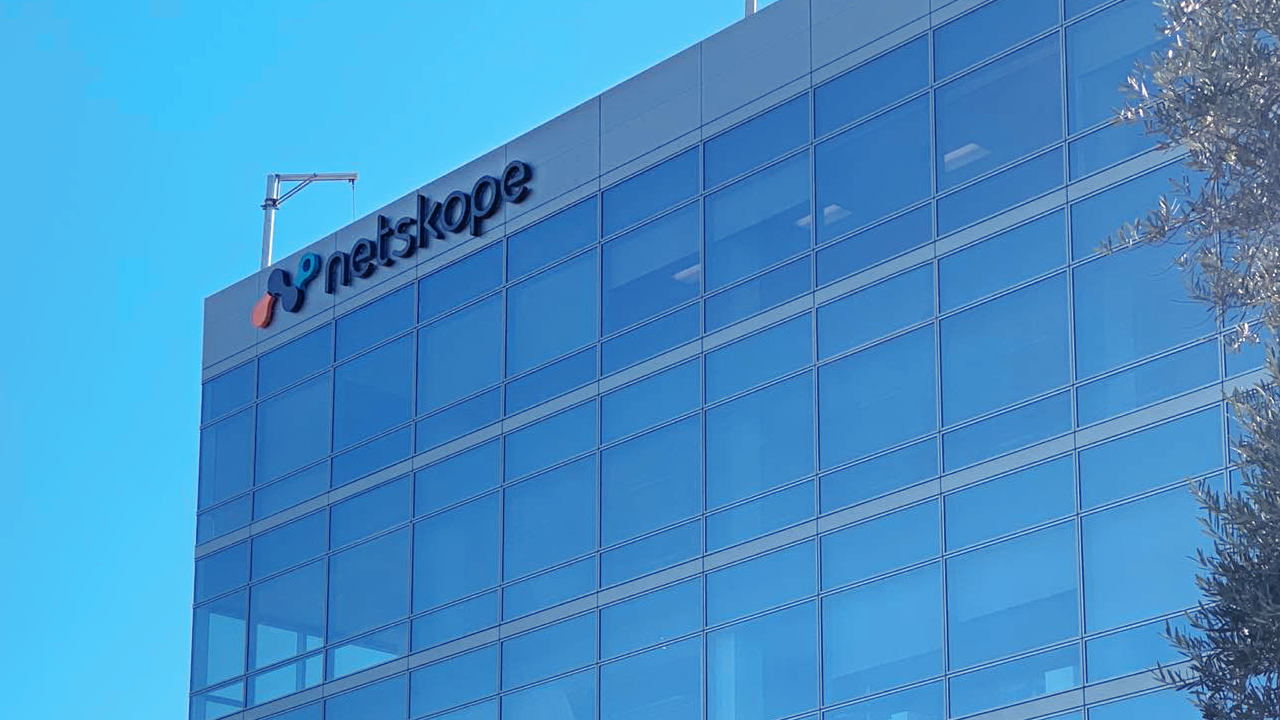
    Netskope, the cyber security company, has raised the projected share price range for its initial public offering, signalling growing confidence in investors’ appetite for technology companies with high growth potential. The IPO will be a closely watched indicator of the health of the IPO market, particularly in the cyber security sector.

    The Santa Clara, California-based company plans to raise up to $908.2 million by offering 47.8 million shares at a new, higher price range of $17 to $19 apiece. Previously, the price was assumed to be in the range of $15 to $17. At the maximum price from the new offering, Netskope’s valuation could reach $7.26bn.

    It is worth noting that the new target valuation is slightly lower than the $7.5 billion the company achieved during the 2021 funding round led by the ICONIQ fund. This adjustment reflects more challenging market conditions compared to the peak of the technology bull market.

    The decision to raise the offer price is based on solid market fundamentals. Growing cyber threats driven by artificial intelligence and increasingly stringent data privacy regulations are increasing demand for advanced cloud solutions.

    Netskope is one of the key players in the rapidly growing SASE (Secure Access Service Edge) market, where it competes with giants such as Palo Alto Networks, Zscaler, Cisco and Broadcom.

    The company’s financial figures show a promising trajectory. In the six months ended 31 July, Netskope’s revenues rose to $328 million from $251 million a year earlier.

    At the same time, the company has managed to reduce its net loss from $207m to $170m, suggesting improved operational efficiency as the business scales.

    Netskope’s IPO is the second significant IPO in the cyber security industry in 2025, following SailPoint’s February offering. Although SailPoint managed to price its shares at the upper end of the spectrum, its secondary market listing failed to deliver the expected upside for investors.

    This experience provides an important benchmark for investors assessing Netskope’s prospects.

    The offering is being managed by leading investment banks, Morgan Stanley and J.P. Morgan. The company’s shares will be listed on Nasdaq under the symbol ‘NTSK’.

    The upcoming IPO will be a key test for the sector as a whole and could set the sentiment for more technology companies planning to go public.

  • Netskope is heading for the stock market. Results up, losses down, but valuation lower than 2021

    Netskope is heading for the stock market. Results up, losses down, but valuation lower than 2021

    Netskope, which operates in the cloud cybersecurity sector, has filed a prospectus, unveiling solid revenue growth and declining losses. The company plans to list on the Nasdaq this autumn, hoping to raise more than $500 million from its initial public offering (IPO).

    For the first half of fiscal 2026, which ended on 31 July, Netskope reported revenues of $328.5 million, up 30.7 per cent from $251.3 million in the same period last year. At the same time, the company managed to reduce its net loss to $169.5 million from $206.7 million a year earlier. This signals to investors that the company is not only scaling dynamically, but also improving its profitability, which is crucial in the current market climate.

    However, the expected valuation in the IPO, estimated at more than $5 billion, is noticeably lower than the **$7.5 billion** valuation the company achieved during the 2021 funding round. The difference reflects a correction in technology markets and a more conservative approach by public investors compared to the heated private market of a few years ago.

    Netskope’s IPO is part of a recovery in the IPO market, with the cyber security sector remaining one of the most attractive for investors. The recent successful debut of Rubrik, whose shares have more than doubled since last year’s IPO, is a positive indicator.

    The offering will be led by Morgan Stanley and J.P. Morgan, and the company’s shares will be listed under the symbol NTSK.

  • Netskope is preparing for an IPO. Is the US IPO market back in play?

    Netskope is preparing for an IPO. Is the US IPO market back in play?

    Netskope, one of the leading players in the cloud-based cyber security solutions market, has hired Morgan Stanley as an advisor for its planned IPO. According to unofficial information, the IPO could launch as early as the third quarter of 2025 and raise more than $500 million for the company. The expected valuation? At least $5bn – although this is clearly less than the $7.5bn at which Netskope was still valued at the peak of the market boom in 2021.

    Netskope’s decision is part of a trend of large private technology companies returning to stock market plans. After months of uncertainty related to geopolitics, inflation and trade tensions, the US IPO market is slowly starting to stabilise. This can be seen, for example, in the resumption of preparations by companies such as Chime and eToro. In this context, Netskope’s move could be another sign that the second half of the year will bring a recovery in the primary market.

    Netskope is today one of the most important providers of SASE (Secure Access Service Edge) solutions, and its products secure SaaS applications, websites and corporate user data. Its customer portfolio includes Ross Stores and Yamaha, among others. The company competes with the likes of Zscaler and Rubrik, and its shareholders include Goldman Sachs, CPP Investments and Canadian pension funds.

    Despite the growing demand for advanced cyber security solutions – especially in an era of widespread adoption of AI, remote working and hybrid infrastructure – investors remain cautious. Valuations of technology unicorns have undergone a painful correction, and IPO success is increasingly determined not by the promise of growth alone, but by hard financial results and a clear path to profitability.

    If Netskope decides to go for an IPO in 2025, it will be an important test of investor sentiment towards the cyber security sector. A successful IPO could set off a wave of further offerings in this segment, which – despite the general cooling of the technology market – remains one of the most promising.

  • eoptimo: ‘We are determined to stand out strongly in the distribution market’ (interview)

    eoptimo: ‘We are determined to stand out strongly in the distribution market’ (interview)

    Is there still room in the IT distribution market for a completely new company, with a completely new approach to distribution? With its innovative approach, targeting gaming products and services, eoptimo wants to stand out in this difficult market. I talk to the company’s Executive Director Rafal Zoltanski about the strategy, the company’s approach to sales and the experience eoptimo draws on when building its business.

    Przemysław Kucharzewski, BrandsIT: Today I am talking to Rafał Żółtański, Executive Director at eoptimo Sp. z o.o. in the company’s Wrocław office. Rafał, my first question is – where did the idea for another distributor in Poland come from?

    Rafał Żółtański: First of all, I would like to point out that it is not another distributor, but a specialised distributor. The idea came from years of work and observation of how distributors in our country operate. Because the market is changing strongly, the area of gaming in particular, which we specialise in, is developing, so we see a lot of potential here. In addition, looking at how distributors, especially broadliners, operate and how they approach manufacturers of gaming products and accessories, we have found that we will operate in a different way. For the big distributors, the priority is the leading global brands that generate multi-million dollar revenues, supported by the right activities at the right intensity to deliver results. Any other smaller manufacturer, whether in the gaming area or elsewhere, is merely an add-on. Manufacturers very often make the assumption that because such a large distributor has such a large reach, it will ensure their sales at a satisfactory level. However, it often turns out that introducing a product to a large distributor is not enough to achieve business objectives. It is not uncommon for the largest distributors to take a passive position, but we at eoptimo rely on an active sales department. We inspire and advise our trade partners – just as a category leader should.

    BrandsIT: How do you then want to differentiate yourself from these large distributors?

    Rafał Żółtanski: We want to provide added value for smaller manufacturers, who generate a turnover of a few million a year. In the case of a large distributor, such values represent percentages of total revenue. Such business parameters are not satisfactory for large ones due to business indicators that are taken “under the magnifying glass” by investors.

    BrandsIT: And where exactly did the idea for gaming come from. Was this choice influenced by the pandemic?

    Rafal Zoltanski: Certainly, during the lockdown period and even now we are seeing dynamic growth in the gaming sector, both in terms of hardware solutions and digital distribution, i.e. e.g. game keys, gift cards, recharge cards, various additional services in entertainment services. But at the same time, we based our business decisions on market research and, for example, the gaming business generated $118 billion in 2018, thus surpassing revenues from TV – $108 billion or cinema – $41 billion.

    BrandsIT: Indeed, these are impressive figures.

    Rafal Zoltanski: Forecasts for the following years are much higher, for 2023 there is talk of a figure of more than $200 billion. We are talking about a figure that combines revenues from the sale of both gaming hardware and digital distribution, whose share of the total market is growing quarter by quarter. Digital distribution has no territorial restrictions – we can buy and sell services electronically globally.

    BrandsIT: Do you have an online system ready to distribute digital products?

    Rafal Zoltanski: We have started building such a system and it is a very important part of the whole business for us. We want to launch this system early next year. It requires us to invest quite a lot of time and money. Of course, the system will integrate with the sales systems of our business partners in order to reach the widest possible range of end customers. In the other direction, we also want to integrate with our digital service providers so that the whole distribution process is fully automatic.

    BrandsIT: Do you think revenues from digital distribution will exceed those from traditional distribution of gaming accessories and peripherals?

    Rafal Zoltanski: The market is changing a lot and it will definitely happen soon. Certainly the pandemic has had an impact on this. Comparing March 2020 to March of the previous year, the growth in total sales of gaming solutions was over 60%. Most of the growth was achieved through a sizable share of digital services sales. I estimate that digital services are more than 60% of the total. The pandemic and the need to stay at home has led to consumers choosing to buy keys for services rather than physical products such as games in boxes. We can receive electronic licences practically immediately, while boxed software can be picked up after a few days, whether at a parcel machine or from a courier. The most important thing in purchasing games is the impulse, which makes the fact of immediate purchase and receipt of the ordered service in the form of a key very important and, for example, we can play our favourite game within a few minutes of purchasing a licence key, previously downloading the installation version from the software publisher’s website.

    BrandsIT: Let me return perhaps to the topic of distribution: do you think that as eoptimo you have no competition on the Polish market?

    Rafał Żółtański: If I thought so, I would be a hypocrite, because any company that sells in the channel, be it game-related hardware or game licence codes, is competition for us. However, we are determined to stand out strongly in the market, based on the work of myself and my team and the experience we have gained with other distribution companies or manufacturers. Above all, we want to avoid the mistakes that the big distributors make. At eoptimo we avoid convoluted procedures and long decision-making chains. We go to great lengths to make working with us both profitable and enjoyable.

    BrandsIT: And how do you relate to smaller gaming distributors in Poland?

    Rafał Żółtanski: To be honest, I think there are no such distributors. There is one company which is active in digital distribution, but I think that our approach to the distribution of this particular range is comprehensive enough for us to take over quite a large piece of the market.

    BrandsIT: I have also heard another opinion that you are a broker, but do you focus on so-called ‘kosher’ distribution, based on direct contracts with manufacturers?

    Rafał Żółtanski: We have 10 official exclusive distributors at the moment, and by the end of September we will have signed six new contracts. There are plans to introduce further distribution brands and to take over several manufacturers from other distributors operating in Poland. Obviously, we are reinforcing the purchase of some brands on a good price basis, buying goods from suppliers all over the world. Is this brokerage? In my opinion, no – it is simply normal business behaviour. We have an open market, in the case of such purchases they are usually branded products, so if there is an opportunity, we do it. And in such cases, we are more price-competitive to the prices offered by the official distribution of these manufacturers in our country. But it’s more a problem of the pricing policy of manufacturers and distributors.

    BrandsIT: Do you plan to operate only in Poland or do you want to go out to foreign markets as well?

    Rafał Żółtanski: We are already active in other countries. In the case of signed distribution contracts, we have exclusive rights to Poland and often also to other countries in the CEE region. Even at the contract negotiation stage, this is a prerequisite for us to obtain exclusivity. For us, this is the key to getting heavily involved and achieving the agreed sales plans without cannibalising the market or engaging in price wars, thereby eroding margins in the sales channel. In the case of countries outside Poland, if the manufacturer gives the opportunity, we also decide to sign a contract covering another country.

    BrandsIT: Do you have plans to open branches in other countries outside Poland?

    Rafał Żółtański: For the time being, the plan is for the entire sales structure to be located in Wrocław, while our warehouse and service centre is in Łódź. At the moment there are 21 people working for eoptimo. As far as branches in other countries are concerned, for the time being we do not have an expansion plan, we are more focused on companies that can be called sub-distributors. We are constantly looking for people to work for eoptimo, combining commercial competence and a passion for this entertainment sector.

    BrandsIT: And where did the idea for the name eoptimo come from? After all, there is a company called Eptimo on the market.

    Rafał Żółtański: The name had to have positive associations, so to begin with it was to be “optimo”, and then I added the letter “e”, which is associated with electronics or e-commerce. In my opinion, the name should also be pronounced in the same way as it is written, as this often causes difficulties on the part of co-operators.

    BrandsIT: Before the interview, you mentioned the investor you acquired – it seems to me that this is a very important issue for this type of business. Was it easy to get an investor? Is it someone from either the gaming industry or from another part of the IT sector?

    Rafał Żółtański: We found an investor who is mentally close to the topic of gaming, because they are relatively young people, operating in quite a different sector, but interested in investing in different areas. The meeting where we presented our business plan took only a few hours, after which a decision was immediately made on the investor’s side. The investor believes in the project and simply ‘feels’ it.

    BrandsIT: In that case, congratulations. In my experience, usually investment processes with funds take up to a few months, but it is certainly easier to close investments with private investors, whether institutional or individuals, rather than with typical VCs. Tell me, what are your goals for the coming months and for the whole of 2021?

    Rafal Zoltanski: Our main goal is to become a recognisable gaming distributor. If a reseller thinks about this sector, we want them to direct their steps straight to eoptimo. We have an offer of good-quality manufacturers, which we scrupulously verify. These are also products that have differentiators; we often initiate talks with new manufacturers because we see market potential. Our advantage is also the fact that all the people working here come from the IT industry and have seen how the distribution sector has changed, how margins have changed, sales systems, what mistakes the biggest ones have made. The entry of retail chains, which dominated the consumer electronics market, certainly had a big impact on the market. The next stage was the spread of e-commerce.

    BrandsIT: Exactly, let me interrupt you – do you sell to retail chains, specialised chains?

    Rafał Żółtański: Yes, we have a number of contracts signed with chains and we are in talks with more.

    BrandsIT: Aren’ t you worried about the problems associated with this, in particular the impact on business with smaller resellers and online shops?

    Rafał Żółtanski: Above all, we focus on a selectively chosen product portfolio available in retail chains, chosen in such a way that it does not compete with products that are sold by smaller resellers. This approach stems from our experience of working with other distributors or manufacturers. It is very important to have a well-configured product policy so as to avoid a price battle.

    BrandsIT: You also talked about the development of the GSM offering. Is this already taking place?

    Rafal Zoltanski: Yes, at the moment we have two distribution contracts signed, including one with a very high-end manufacturer – it is PanzerGlass – it is a manufacturer of glass for smartphones, you could say it is such a Lamborghini in this area. There are a lot of glass manufacturers, but we try to find high-end solutions, or solutions that stand out with features that the competition does not have. We avoid similarity in our offering to other distributors.

    BrandsIT: And finally, perhaps you would like to add something else from yourself?

    Rafał Żółtański: It remains for me to invite resellers to cooperate with us, we offer favourable pricing conditions, we provide financing for the credit line – we cooperate with the leading insurer on the market. I believe that the coming year will be a breakthrough year for the gaming industry, which will translate into business for our reseller partners.

    BrandsIT: Thank you for the interview.

  • Technologies that help make the mobile workplace work (Interview)

    Technologies that help make the mobile workplace work (Interview)

    What do companies have to face when wanting to implement remote working and what tools are helpful for the smooth functioning of a mobile workstation? – in an interview with Krzysztof Wyszyński, IT Architect, Net-o-logy sp. z o.o.

    Przemysław Kucharzewski, BrandsIT: The coronavirus outbreak has dominated the discussion not only among epidemiologists and at the highest levels of government. The thread is running through conversations in many fields and it is no different in the IT industry. What is most often discussed?

    Krzysztof Wyszyński, IT Architect, Net-o-logy Sp. z o.o.: I will answer this question from my own perspective, based on conversations I have had with customers and business partners. In the first weeks of the outbreak, remote working issues came to the fore, which is somewhat understandable as organisations were keen to ensure business continuity despite the unusual situation. However, let’s remember that digital transformation has been an ongoing process for many years and some companies were somewhat prepared to operate in the kind of environment we have today. Others, on the other hand, were faced with a fait accompli and the need to act ad hoc.

    BrandsIT: Can you say a bit more about the remote working model in companies for which the road to digital transformation has been a long one?

    Krzysztof Wyszynski: Some companies are trying to extend the remote working model to as many employees as possible, which can improve financial parameters related to renting and adapting office space or facilitating the implementation of the increasingly popular task-based working time accounting system.

    We can consider remote working itself in three aspects, which we will simultaneously treat as successive stages.
    1. meetings and teleconferences.
    2. secure access to company applications and data.
    3. mobile workstation.

    BrandsIT: The issue seems obvious to most IT professionals, but it would be good to clarify what is behind the above terms. Can you briefly introduce them?

    Krzysztof Wyszynski: Of course. The first aspect seems to be firmly established, known and applied. There are a number of solutions available on the market, both cloud-based and on-premise, that allow you to attend a meeting from anywhere using a smartphone, tablet or laptop.

    The second area is solutions for being able to remotely connect to the corporate network to access data or applications. Here, all kinds of VPN-class solutions that have been known and used for years are leading the way.

    The third aspect can be considered the most crucial, as the first two do not guarantee secure working and do not provide a complete remote working solution for the office worker. The workstation, whether in the form of a laptop or desktop, is one of the most common attack vectors for organisations.

    BrandsIT: Let’s pause for a moment on the third point. What exactly is a mobile workstation and what technologies are being used?

    Krzysztof Wyszynski: Among decision-makers responsible for the IT area in organisations, the most popular solution is the VDI (Virtual Desktop Infrastructure) class products, which are simple to administer and use, and at the same time feature a holistic approach to remote working. It definitely has more advantages than the commonly used VPN, and combining VDI with a VPN gives us a complete solution that increases the security of data and applications used in the company.

    BrandsIT: If you were to point out the most important advantages of a VDI solution, what are the most noteworthy?

    Krzysztof Wyszynski: VDI enforces standards in the workstation area, but also allows us to reduce the technology stack required to secure the workstation. At the same time, we separate the end station (laptop, tablet, any desktop) from the data and applications, which is particularly important if we consider the previously mentioned attack vectors on the so-called ‘ends’.

    BrandsIT: What benefits does this bring?

    Krzysztof Wyszynski: The benefits concern both system administrators and end users. The former will appreciate the native and central management of workstations and the simple scaling of the infrastructure according to users. It also gives them the option of using simple, inexpensive end devices with a long life, regardless of the user’s requirements (e.g. a designer with advanced 3D can work on a standard end station or even a simple home PC with the same performance as in the office). In addition, VPN-class solutions combined with MFA are an add-on layer to the ecosystem, not a requirement.

    The latter, on the other hand, will appreciate the increased convenience compared to a VPN alone. The end user also always has access to the same workstation and in the same way, regardless of the end device the user is using.

    BrandsIT: Scalability is certainly an undoubted advantage of a VDI solution. What exactly does it mean?

    Krzysztof Wyszynski: You can build a project based on the total cost of ownership of the solution per user. Moreover, the cost of a typical office user may be different from that of a specialist, 3D designer or any other position requiring specific applications or increased performance. This makes it much easier to build an organisation’s catalogue of IT services.

    Pricing scaling varies depending on the number of users and the system software required. It is possible to build a project with a TCO, including a maintenance service with SLA, in the order of PLN 1000-2000 net per user per year.

    BrandsIT: Sounds interesting. I’m curious about another issue related to VDI, which may have already been hinted at during our conversation. What advantage does this solution have over others in the area of remote working in the current epidemic situation?

    Krzysztof Wyszyński: In the case of the necessity to face the situation of fast implementation of remote work mechanisms, VDI class solutions have an unquestionable advantage thanks to which users can work from home using any equipment they have, without the need to secure it. No application or data access is served on the endpoint, only the transfer of images from the data centre. The workstation’s communication with the corporate network takes place entirely in the data centre.

    BrandsIT: Thank you very much for an interesting conversation. I wish you a safe time of isolation and a return to the pre-Cronavirus situation as soon as possible.

    Krzysztof Wyszynski: Thank you also for the conversation and I wish you good health.